News
Tesla upgrades Model 3 and Model Y in China, hikes price for long-range sedan
Tesla’s long-range Model 3 now comes with a higher CLTC-rated range of 753 km (468 miles).

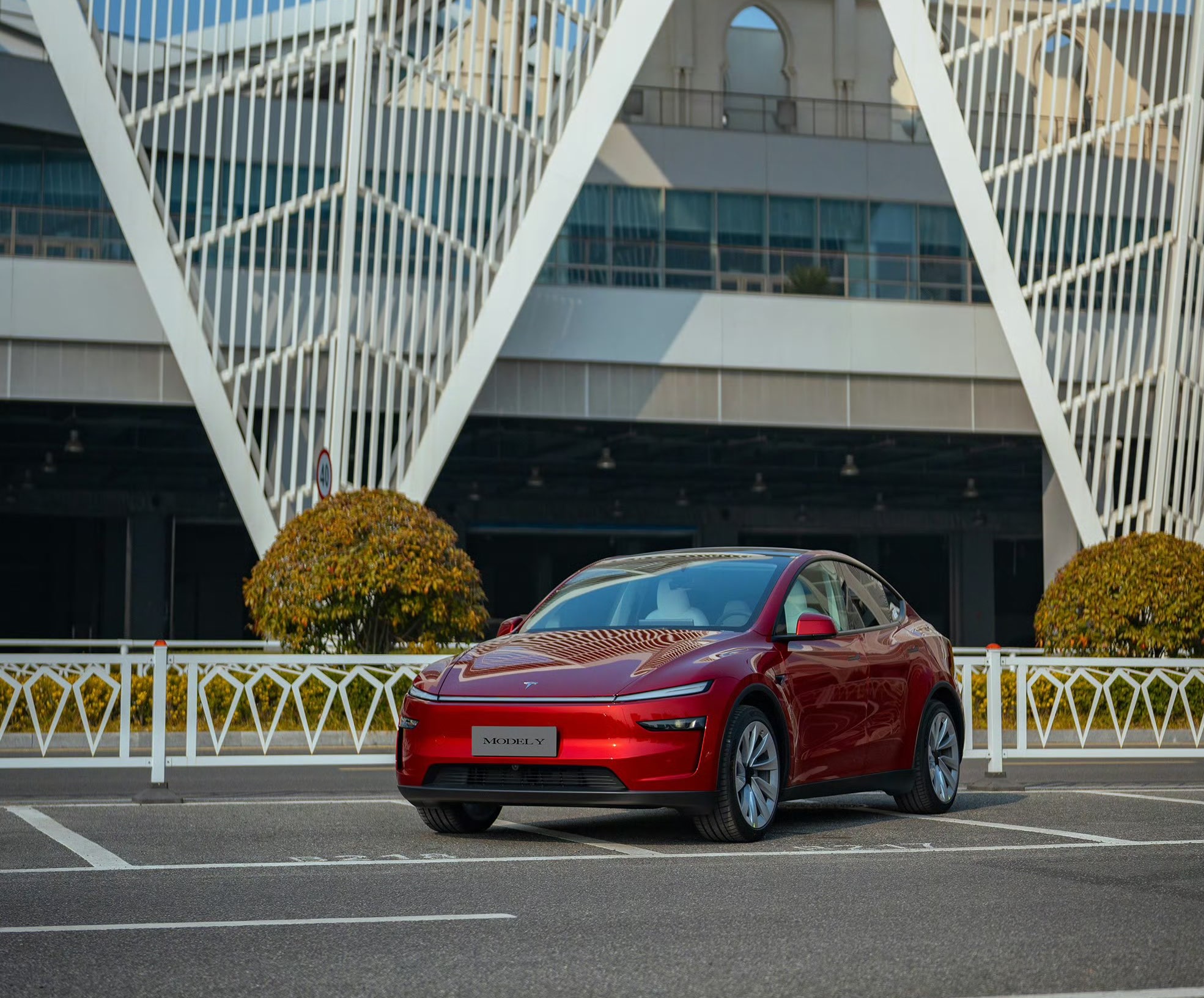
Tesla has rolled out a series of quiet upgrades to its Model 3 and Model Y in China, enhancing range and performance for long-range variants. The updates come with a price hike for the Model 3 Long Range All-Wheel Drive, which now costs RMB 285,500 (about $39,300), up RMB 10,000 ($1,400) from the previous price.
Model 3 gets acceleration boost, extended range
Tesla’s long-range Model 3 now comes with a higher CLTC-rated range of 753 km (468 miles), up from 713 km (443 miles), and a faster 0–100 km/h acceleration time of 3.8 seconds, down from 4.4 seconds. These changes suggest that Tesla has bundled the previously optional Acceleration Boost for the Model 3, once priced at RMB 14,100 ($1,968), as a standard feature.
Delivery wait times for the long-range Model 3 have also been shortened, from 3–5 weeks to just 1–3 weeks, as per CNEV Post. No changes were made to the entry-level RWD or Performance versions, which retain their RMB 235,500 and RMB 339,500 price points, respectively. Wait times for those trims also remain at 1–3 weeks and 8–10 weeks.
Model Y range increases, pricing holds steady
The Model Y Long Range has also seen its CLTC-rated range increase from 719 km (447 miles) to 750 km (466 miles), though its price remains unchanged at RMB 313,500 ($43,759). The model maintains a 0–100 km/h time of 4.3 seconds.
Tesla also updated delivery times for the Model Y lineup. The Long Range variant now shows a wait time of 1–3 weeks, an improvement from the previous 3–5 weeks. The entry-level RWD version maintained its starting price of RMB 263,500, though its delivery window is now shorter at 2–4 weeks.
Tesla continues to offer several purchase incentives in China, including an RMB 8,000 discount for select paint options, an RMB 8,000 insurance subsidy, and five years of interest-free financing for eligible variants.


Elon Musk
Elon Musk reveals date of Tesla Full Self-Driving’s next massive release
Initially planned for a January or February release, v14.3 aims to add some reasoning and logic to the decisions that Full Self-Driving makes, which could improve a lot of things, including Navigation, which is a major complaint of many owners currently.

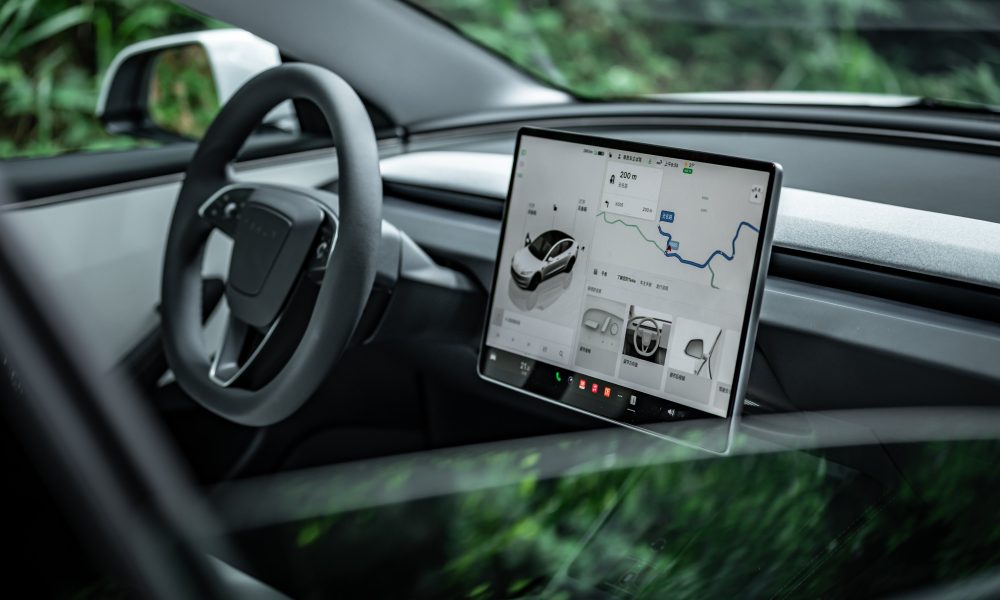
Tesla CEO Elon Musk revealed the date of Full Self-Driving’s next massive release: v14.3.
For months, Tesla owners with Hardware 4 have been utilizing Full Self-Driving v14.2 and subsequent releases. Currently, the most up-to-date FSD version is v14.2.2.5, which has definitely brought out mixed reviews. With releases, some things get better, and other things might regress slightly.
For the most part, things are better in terms of overall behavior.
However, many owners have been looking forward to the next release, which is v14.3, about which Musk has said many great things. Back in November, Musk said that v14.3 “is where the last big piece of the puzzle lands.”
He added:
“We’re gonna add a lot of reasoning and RL (reinforcement learning). To get to serious scale, Tesla will probably need to build a giant chip fab. To have a few hundred gigawatts of AI chips per year, I don’t see that capability coming online fast enough, so we will probably have to build a fab.”
Initially planned for a January or February release, v14.3 aims to add some reasoning and logic to the decisions that Full Self-Driving makes, which could improve a lot of things, including Navigation, which is a major complaint of many owners currently.
Tesla Full Self-Driving v14.2 is a considerable improvement from early versions of the suite, but we have written about the somewhat confusing updates that have come with recent versions.
Tesla Full Self-Driving v14.2.2.5 might be the most confusing release ever
They’ve been incredibly difficult to gauge in terms of progress because some things have gotten better, but there seems to be some real regression on a handful of things, especially with confidence and assertiveness.
Musk confirmed today on X that Tesla is already testing v14.3 internally right now. It will hit a wide release “in a few weeks,” so we should probably expect it by late April.
It’s in testing right now. Wide release in a few weeks.
— Elon Musk (@elonmusk) March 19, 2026
Overall, there are high hopes that v14.3 could be a true game changer for Tesla Full Self-Driving, as many believe it could be the version that Robotaxis in Austin, Texas, some of which are driverless and unsupervised, are running.
It could also include some major additions, including “Banish,” also referred to as “Reverse Summon,” which would go find a parking spot after dropping occupants off at their destination.
What Tesla will roll out, and when exactly it arrives, all remain to be seen, but fans have been ready for a new version as v14.2.2.5 has definitely run its course. We have had a lot of readers tell us their biggest request is to fix Navigation errors, which seem to be one of the most universal complaints among daily FSD users.
Cybertruck
Chattanooga Charge: Tesla and EV fans ready for the Southeast’s wildest Tesla party
From Cybertruck Convoys to Kid-Friendly Fun Zones: The Chattanooga Charge Has Something for Everyone

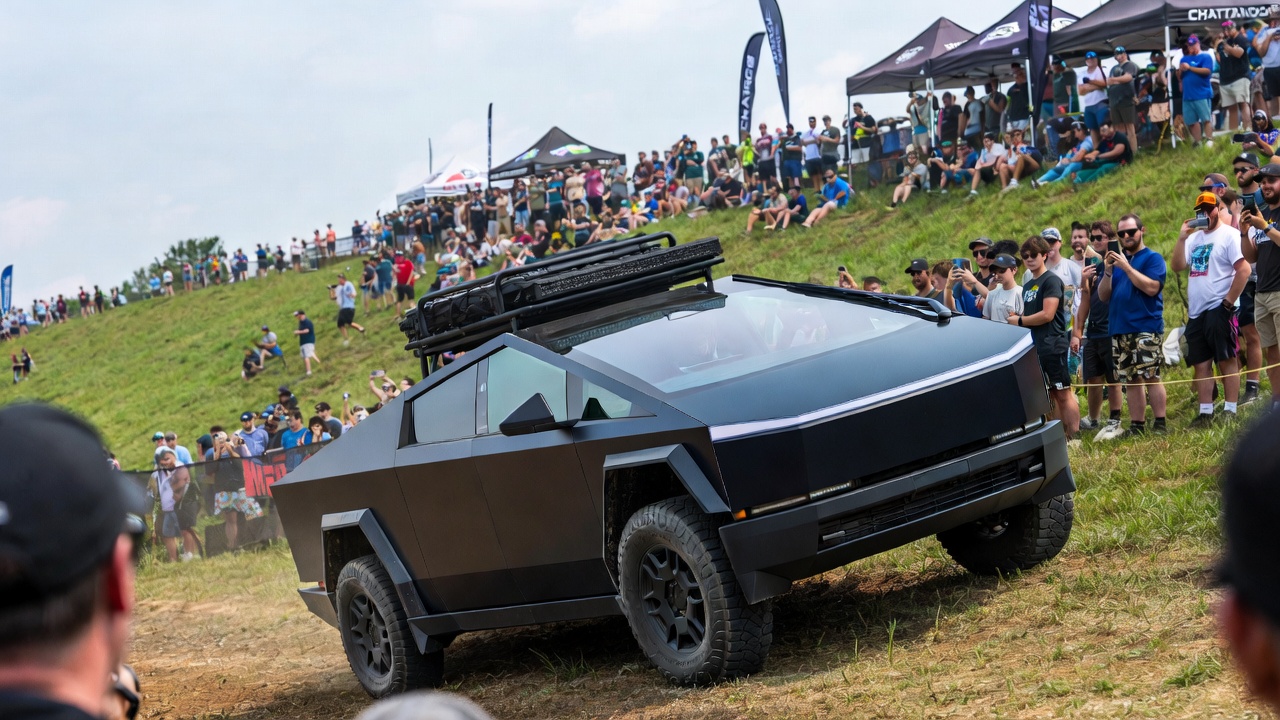
Hundreds of like-minded Tesla and EV enthusiasts are descending on Chattanooga Charge this weekend for the largest Tesla meet in the Southeast. Taking place on March 20–22, 2026 at the stunning Tennessee Riverpark.
If you were there last year, you’ll know that it’s the ultimate experience to see the wildest Teslas in action, see the best in EV tech, and arguably the most fun – finally put a name to the face and connect with those social media buddies IRL! Oh, and that epic night time Tesla light show is a once-in-a-lifetime experience that will transform the Riverpark into something out of a sci-fi film that’s remarkably unforgettable and must be seen in person.
This year’s event takes everything up a notch, with over 100 Cybertrucks expected to be on display, many sporting jaw-dropping modifications and custom wraps that push the boundaries of what these stainless steel beasts can look like.
Whether you’re a diehard Tesla fan, EV supporter, or just EV-mod-curious, the sheer spectacle is worth the drive.
The Chattanooga Charge doesn’t wait until Saturday morning to get started. The weekend technically kicks off Friday, March 20th, and the venue sets the tone immediately. Come share roadtrip stories over drinks at the W-XYZ Rooftop Bar on the top floor of the Aloft Chattanooga Hamilton Place Hotel, with sunset views over the city.
Come morning, nurse your hangover with a some good coffee, and convoy with hundreds of other Tesla and EV drivers through Chattanooga to the event for some morning meet and greets before the speaker panel starts and the food trucks fire up.
Tesla owner clubs travel from across the country to be here, not just to show off their vehicles,, but to connect, share, and celebrate a shared passion for the future of driving.
Sounds like a plan to me. See you there, guys. Don’t miss it. Get your tickets at ChattanoogaCharge.com and join the charge. 🔋⚡
Chattanooga Charge is a premier Tesla and EV gathering inspired by the X Takeover, known as one of the largest Tesla event gatherings. What began as a bold idea from the team at DIY Wraps/TESBROS, hosted in their hometown of Chattanooga, Tennessee, the event quickly became a movement across social media. The first annual Chattanooga Charge united over 16 Tesla clubs from 16 states, proof that the EV community was hungry for something big in the South. Year after year, the event has grown in scale, ambition, and heart.
News
Tesla Full Self-Driving gets latest bit of scrutiny from NHTSA
The analysis impacts roughly 3.2 million vehicles across the company’s entire lineup, and aims to identify how the suite’s degradation detection systems work and how effective they are when the cars encounter difficult visibility conditions.
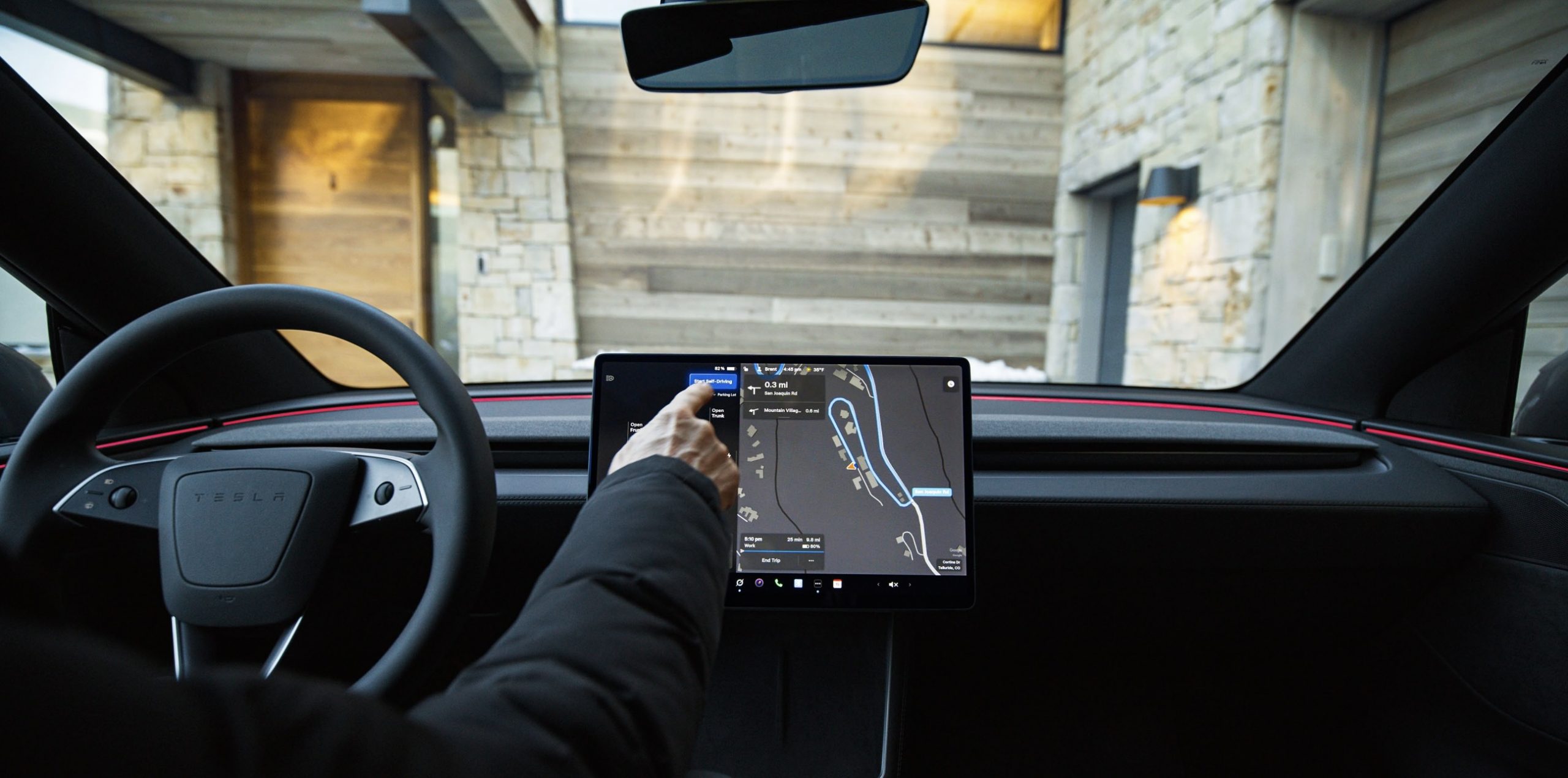
The National Highway Traffic Safety Administration (NHTSA) has elevated its probe into Tesla’s Full Self-Driving (Supervised) suite to an Engineering Analysis.
The analysis impacts roughly 3.2 million vehicles across the company’s entire lineup, and aims to identify how the suite’s degradation detection systems work and how effective they are when the cars encounter difficult visibility conditions.
The step up into an Engineering Analysis is often required before the NHTSA will tell an automaker to issue a recall. However, this is not a guarantee that a recall will be issued.
🚨 The NHTSA said it was upgrading a probe into Tesla’s Full Self-Driving (Supervised) platform to an “engineering analysis”
It will examine 3.2 million vehicles and aims to determine its effectiveness in evaluating degraded road conditions pic.twitter.com/2dkrv1mR8o
— TESLARATI (@Teslarati) March 19, 2026
The NTHSA wants to examine Tesla FSD’s ability to assess road conditions that have reduced visibility, as well as detect degradation to alert the driver with sufficient time to respond.
The Office of Defects Investigation (ODI) will evaluate the performance of FSD in degraded roadway conditions and the updates or modifications Tesla makes to the degradation detection system, including the timing, purpose, and capabilities of the updates.
Tesla routinely ships software updates to improve the capabilities of the FSD suite, so it will be interesting to see if various versions of FSD are tested. Interestingly, you can find many examples from real-world users of FSD handling snow-covered roads, heavy rain, and single-lane backroads.
However, there are incidents that the NHTSA has used to determine the need for this probe, at least for now. The agency said:
“Available incident data raise concerns that Tesla’s degradation detection system, both as originally deployed and later updated, fails to detect and/or warn the driver appropriately under degraded visibility conditions such as glare and airborne obscurants. In the crashes that ODI has reviewed, the system did not detect common roadway conditions that impaired camera visibility and/or provide alerts when camera performance had deteriorated until immediately before the crash occurred.”
It continues to say in its report that a review of Tesla’s responses revealed additional crashes that occurred in similar environments showed FSD “did not detect a degraded state, and/or it did not present the driver with an alert with adequate time for the driver to react. In each of these crashes, FSD also lost track of or never detected a lead vehicle in its path.”
The next steps of the NHTSA Engineering Analysis require the agency to gather further information on Tesla’s attempts to upgrade the degradation detection system. It will also analyze six recent potentially related incidents.
The investigation is listed as EA26002.

Elon Musk reveals date of Tesla Full Self-Driving’s next massive release

Chattanooga Charge: Tesla and EV fans ready for the Southeast’s wildest Tesla party


