News
The Battle of the Supercharger: Congestion in the face of increased Model 3 production

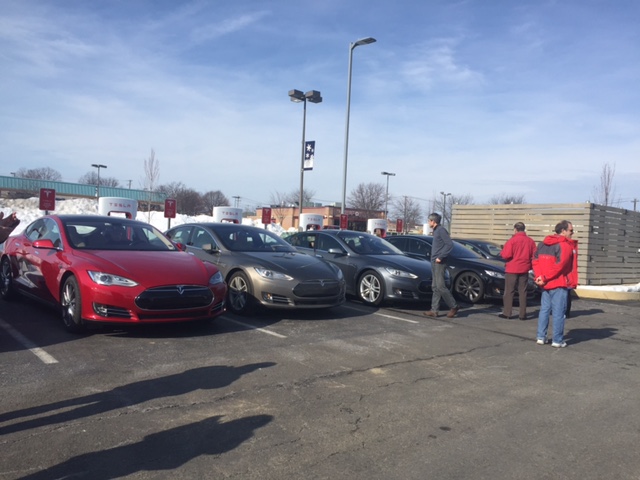
Tesla Supercharger in Allentown, PA
The will they or won’t they argument about free Supercharging for life with Model 3 has been debated backward and forward. Fears have been accelerated since last week’s news of an ambitious goal to get 100,000-200,000 Model 3 vehicles on the road in 2017. Elon’s exact words at the unveil have been analyzed and rehashed time and time again. I won’t venture to assume I know what Tesla will decide, or even give my opinion on how they should price or restrict access. What I can say is that we need a strategy and we need it fast. I call it: etiquette education.
We needn’t mince words here. We’re all adults. We also needn’t take sides on the already exhaustive debate of whether or not it’s proper to charge locally just to save a few bucks. (Opponents argue it’s contrary to the point of chargers, while those for it stand on the ground that they paid for “free for life” access.) All we need to do is spell out good etiquette. I mean really spell it out.
Truth 1: Superchargers are intended to enable long distance travel.
Rule 1
Travel on the network as often as you like, anywhere your 4 wheels can take you.
Truth 2: Superchargers are for charging, not parking.
Rule 2
Charge as much as you need, or even a bit more, then promptly move your vehicle. Do not park overnight, do not go on a shopping spree and absolutely do not use it as a premium parking space without even plugging in.
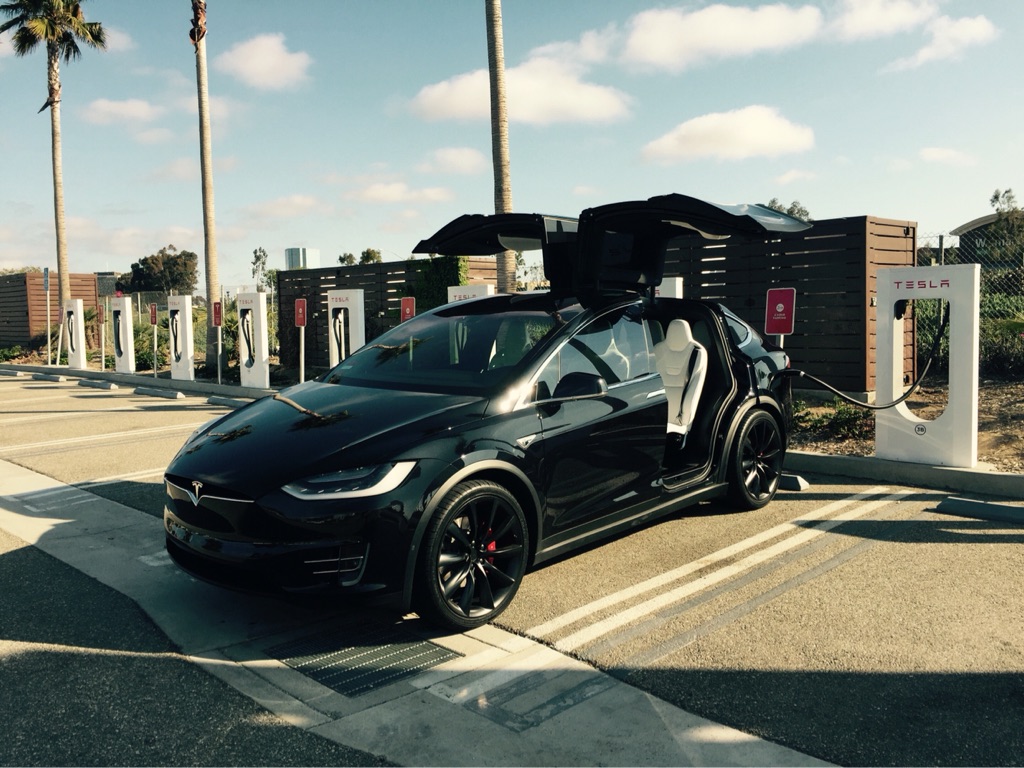
Tesla Model X at the Oxnard, CA Supercharger via app check-in
Truth 3: Charge rates dramatically slow down after you’ve reached approximately 90% charge. You will thus occupy a stall for much longer than you did for any other 10% portion of your charge.
Rule 3
Do not charge beyond 90% at a Supercharger unless you absolutely need it to get to your next destination (including a buffer of course) or there are many other open stalls.
Truth 4: Waiting in line to charge when you’re on a road trip can derail plans, exacerbate tiredness from traveling, and would all around suck.
Rule 4
If you are charging close to home (whether returning from a road trip or otherwise) and have enough to get there, stay with your car and immediately vacate if or when all of the stalls at that location are occupied.
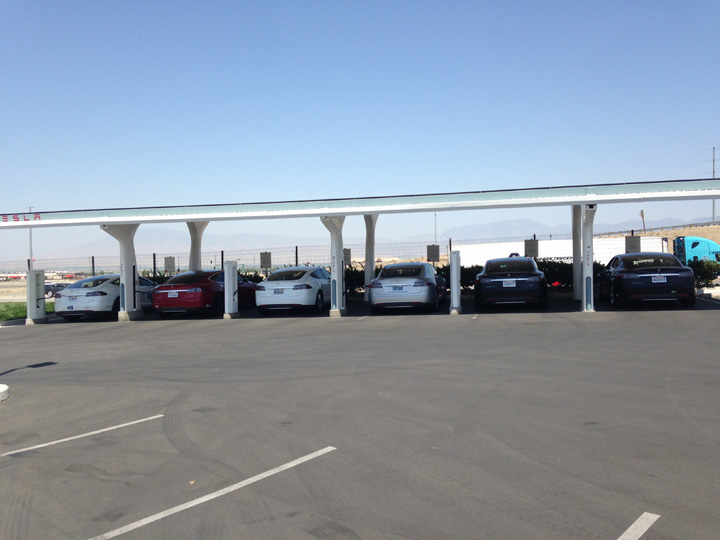
Long queues known to form around the Tejon Ranch Supercharger
Truth 5: Someone out there either needs or wants to save a few bucks on electricity. Someone out there has no home charging solution available. Someone out there accidentally fried their home charger with a failed DIY attempt and can’t get it fixed until next week.
Rule 5
If intending to visit a local charger just for the sake of charging (eg: not returning from a trip), do so off peak. Do not go during known commuting hours, holidays or busier weekend hours. Plan to charge in the evening, mid-weekday or early morning hours. (Tesla should consider releasing peak charging times per SC location for this and trip planning purposes.) Also refer to rule 2. If you fall into the camp of visiting a local charger just for sake of charging, do not leave your vehicle unattended. Immediately vacate the charging space if or when all of the stalls at that location are occupied.
Truth 6: Tesla knows or can figure out who uses local Superchargers “rather aggressively.”
Rule 6
You may receive a warning letter – with attached peak charging schedule for your local location – that you have been identified as using your local charger aggressively. The letter will remind you that the Supercharger network was intended to enable long distance travel, set Tesla apart from the rest of the industry and bring in sales which ultimately benefits us all and provides funds for additional chargers. (Okay, this one is speculation and wishful thinking on my part. But I think this paired with a rigorous educational program as spelled out above would go a long way.)
No, Model S and X owners don’t deserve some kind of priority and shouldn’t bellyache about the presumed onslaught of Model 3 drivers hogging up all the chargers. After all, a successful Tesla Motors is good for everyone. However even today, we all need a stern lecture on proper Supercharger etiquette and Tesla should feel no shame in very clearly spelling it out to us and the rest of the world. Education is the missing piece here, not some complicated pay-per-use or tiered charging access.


News
It’s official: SpaceX takes aim at Verizon, AT&T, and T-Mobile
SpaceX is buying 800 MHz spectrum from Grain to turn Starlink Mobile into a carrier.

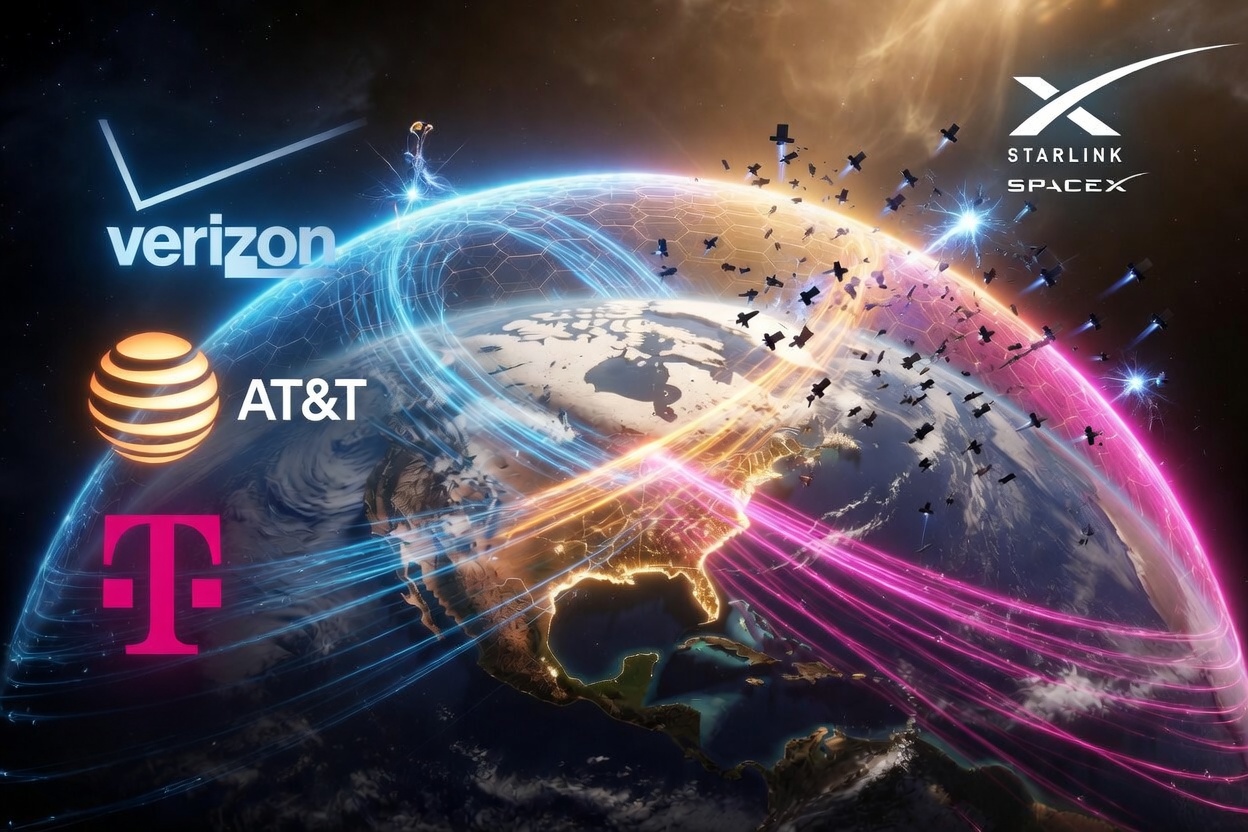
SpaceX has agreed to buy a nationwide block of low band wireless spectrum, a deal the company says will let Starlink Mobile operate as a full US carrier rather than a satellite add-on for someone else’s network.
The company announced the agreement on X on Thursday afternoon, saying it will “pave the way for @Starlink to become a major mobile carrier in the US.” The seller is Grain Management, a private investment firm that confirmed in a statement that SpaceX will acquire 100% of its nationwide 800 MHz portfolio. That covers up to 14 MHz of paired spectrum in the 817 to 824 MHz and 862 to 869 MHz bands. Neither side disclosed a price, and the deal still needs FCC approval.
We announced an agreement to acquire a nationwide low-band spectrum license portfolio that will pave the way for @Starlink to become a major mobile carrier in the US.
With this new spectrum and our Gen2 constellation, Starlink Mobile can ensure Americans have access to high-speed mobile broadband no matter where they are → https://t.co/1Uaf48v5pm
— SpaceX (@SpaceX) October 8, 2026
Grain only recently picked up the licenses itself. It bought the portfolio from T-Mobile in a transaction that closed in August, paying cash plus its own 600 MHz spectrum. Rival AST SpaceMobile had been testing satellites on the same bands before SpaceX stepped in.
SpaceX said its 2 GHz spectrum will handle high bandwidth capacity, while the new 800 MHz layer “ensures Starlink Mobile’s signal penetrates through obstacles, such as walls, and can provide service to customers’ devices even when they are in buildings.” The company added that most existing phones already support the band, so customers would not need new hardware to use it.
That 2 GHz spectrum came from SpaceX’s EchoStar acquisition last year, which gave the company exclusive S band rights in the US and global Mobile Satellite Service licenses. The Grain spectrum is different in an important way: it is tailored for service from ground towers, not satellites. SpaceX said that combination would make Starlink Mobile “the first network operator to deploy both satellite and terrestrial spectrum.”
The announcement also follows a key regulatory win. Earlier this week, the FCC approved SpaceX’s plan to deploy 15,000 second generation Starlink Mobile satellites, which the company has said will carry up to 100 times the data density of the current system, as Teslarati previously reported.
Shares of AT&T, Verizon and T-Mobile fell in extended trading after the announcement. T-Mobile is currently SpaceX’s launch partner for Starlink Mobile in the US, which makes its position the most complicated of the three.
SpaceX has not been subtle about its plans. During the company’s August earnings call, President and COO Gwynne Shotwell said she expected Starlink Mobile to win over customers from the major carriers. “I anticipate us to be able to acquire quite a few of their customers because I think our service will be better,” she said, pointing to dead zone coverage and resilience during disasters. Shotwell also described plans for low cost cellular base stations that could pair with existing Starlink dishes.
SpaceX has targeted 2027 for deployment of its next generation Starlink Mobile satellites, with upgraded service expected by the end of that year. The FCC review of the Grain deal now determines when the terrestrial half of that network can come online.
Elon Musk
Elon Musk’s Boring Company lands a new Middle East deal, and Nashville is about to get faster
The Boring Company signs Abu Dhabi tunnel agreement while adding more Prufrock machines in Nashville.
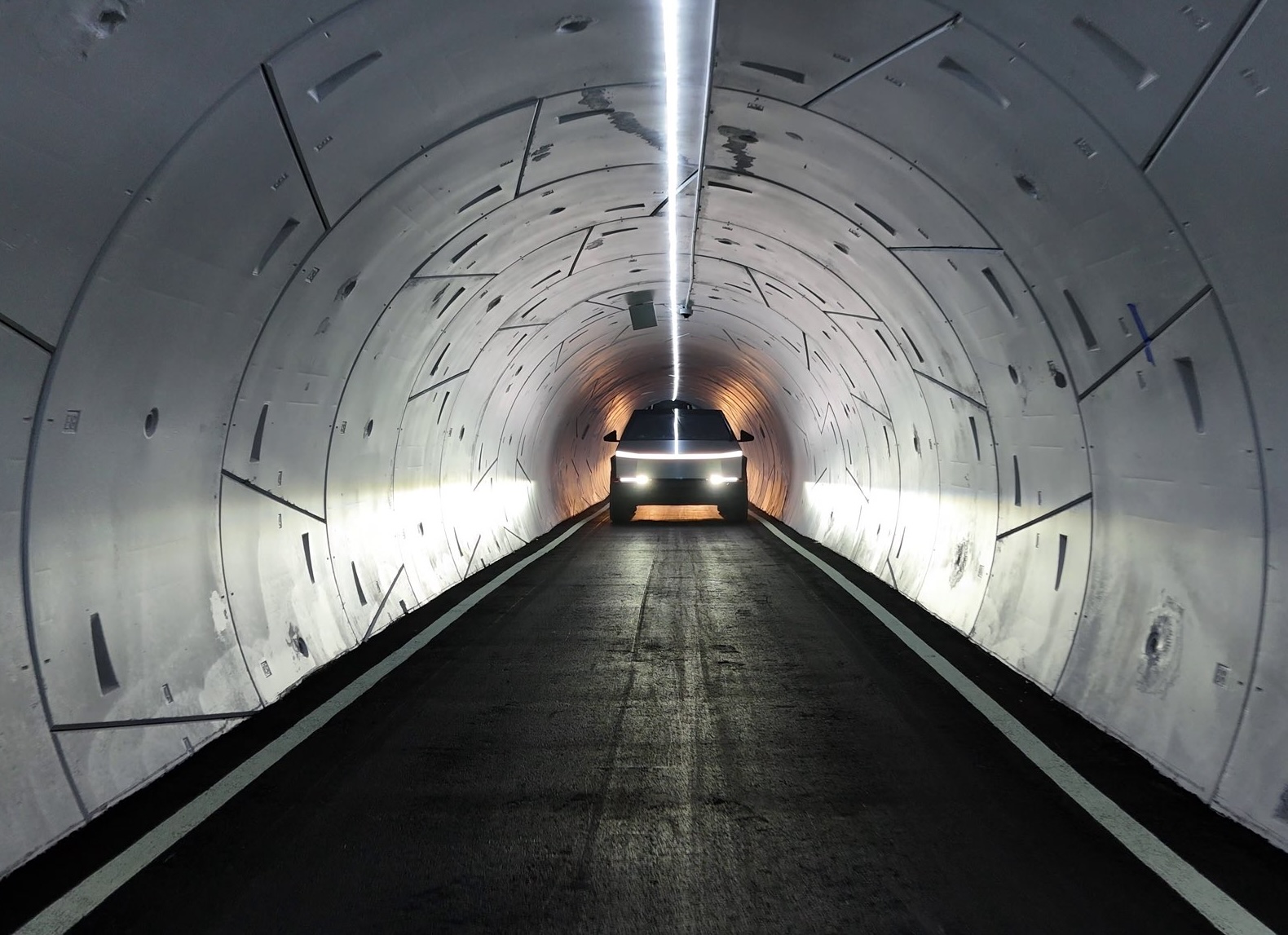
The Boring Company has signed an agreement with Abu Dhabi to study underground transport and utility tunnels across the emirate, adding a second UAE city to its pipeline as it prepares to also scale up tunneling back home in Nashville.
The deal was signed Thursday at the Liveability and Investment Exhibition (LIVEX 2026) by Boring Company President Steve Davis and Maysarah Mahmoud Salim Eid, director general of the Abu Dhabi Projects and Infrastructure Centre (ADPIC), according to the Abu Dhabi Media Office. Mohamed Ali Al Shorafa, chairman of the emirate’s Department of Municipalities and Transport, attended the signing.
Under the agreement, the two sides will assess feasibility, delivery and operating models for tunnels that could carry passengers or utilities. They will also look at Abu Dhabi’s potential as a regional hub for tunneling work. The current phase is exploratory, and no construction commitment or project budget has been announced.
“Abu Dhabi provides an ideal environment to explore the next generation of underground infrastructure solutions, supported by its ambitious growth vision and strong commitment to advanced technologies,”
Davis said. He added that the company wants to assess how tunnels can “expand urban capacity more efficiently, and enable better use of available space.”
The timing lines up with the money, considering last month, The Boring Company closed a $3 billion Series D led by the UAE and affiliated investors, valuing the company at $23 billion, as Teslarati reported. That round came with a commitment to build more than 150 kilometers of tunnel across the UAE, separate from the Dubai Loop pilot already under contract with Dubai’s Roads and Transport Authority. That pilot covers 6.4 kilometers and four stations linking DIFC and Dubai Mall at a cost of about $154 million.
Back home, The Boring Company projects in Nashville are also scaling up, with the company telling local NewsChannel 5 that a third Prufrock machine could start digging the Music City Loop in late October. A fourth is also targeted before the end of the year. Two machines are already mining Nashville limestone at the same time, and work is underway on a new launch site for the third.
The company said it has made more than 300 design and performance upgrades to its original Nashville machine. It is also working with property owners on more than 40 planned stations, with approvals in place for a future Nashville International Airport connection, a downtown station near the Music City Center, and stops at residential towers and the JW Marriott.
Construction on the Music City Loop began the same evening Tennessee and federal regulators approved the project’s lease in February, and the company targeted its first operational segment for late 2026. Back in Las Vegas, The Boring Company has said it plans to double its Vegas Loop station count by year’s end.
News
SpaceX brings four astronauts home after 8 months in space, and the return was flawless
SpaceX Crew Dragon Freedom returned four Crew-12 astronauts home after 237 days aboard the station.
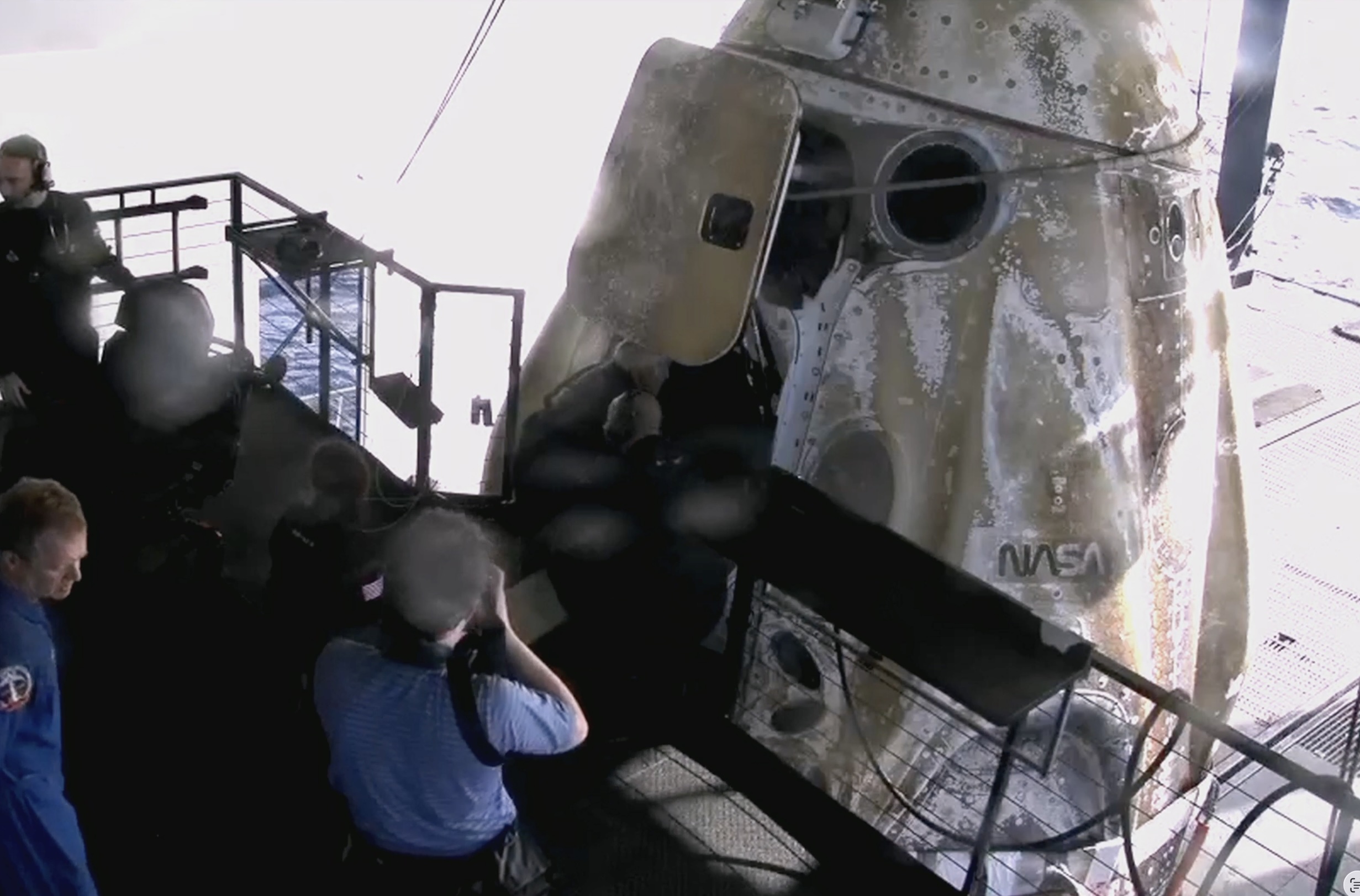
Four Crew-12 members are back on Earth after 237 days at the International Space Station. SpaceX’s Crew Dragon Freedom splashed down in the Pacific Ocean about 50 miles west of Los Angeles at 11:34 a.m. ET on Thursday.
NASA astronauts Jessica Meir and Jack Hathaway, ESA astronaut Sophie Adenot, and Roscosmos cosmonaut Andrey Fedyaev landed one day after undocking from the station’s Harmony module at 8:05 a.m. ET on Wednesday. NASA confirmed the splashdown minutes later. SpaceX had flagged the 27.5 hour trip home on X while Dragon was still firing its departure burns away from the station.
The descent ran on schedule when Freedom started a nine minute deorbit burn at 10:46 a.m. ET, then hit the thicker atmosphere about 36 minutes later at nearly five miles per second. Chutes deployed at around 18,000 feet, and four main parachutes brought the capsule down to roughly 15 mph at splashdown.
SpaceX fast boats secured Dragon before the recovery ship Shannon hoisted it onto the deck with the crew still inside. Flight surgeons on board ran initial medical checks. All four crew members will be flown ashore by helicopter and then head to NASA’s Johnson Space Center in Houston for rehabilitation.
Splashdown of Dragon confirmed! https://t.co/P2o7A3Gytf
— SpaceX (@SpaceX) October 8, 2026
Crew-12 launched on February 13 from Space Launch Complex 40 at Cape Canaveral, a flight that also marked the first Falcon 9 booster landing at SpaceX’s new LZ-40 pad. Over the mission, the crew completed 3,792 orbits, covered nearly 101 million miles, and carried out four spacewalks to maintain and upgrade the station.
Meir now has 440 cumulative days in space, which places her in NASA’s top 10. This was the first spaceflight for Hathaway and for Adenot, a French Air Force colonel and former helicopter pilot. Fedyaev, who spent 186 days in orbit on Crew-6 in 2023, has now flown two long duration Dragon missions.
The return closes out a busy stretch of Dragon traffic. Crew-13 arrived on October 1 aboard Crew Dragon Grace, which docked just 7 hours and 55 minutes after liftoff, the fastest launch to docking of any U.S. spacecraft in ISS history. Commander Jessica Watkins, pilot Luke Delaney, Canadian Space Agency astronaut Joshua Kutryk, and cosmonaut Sergey Teteryatnikov remain aboard alongside the three person Soyuz MS-29 crew.
With Crew-12 gone, the port is clear for CRS-35, a cargo Dragon carrying the final pair of ISS Roll-Out Solar Arrays. NASA is holding a post-splashdown teleconference at 1:15 p.m. ET covering both the crew’s return and the upcoming cargo launch.

It’s official: SpaceX takes aim at Verizon, AT&T, and T-Mobile

Elon Musk’s Boring Company lands a new Middle East deal, and Nashville is about to get faster

SpaceX brings four astronauts home after 8 months in space, and the return was flawless

The Pentagon taps Elon Musk to design the battlefield of the future

Tesla Roadster’s new patent preps white-knuckle speeds, keeping it grounded


