News
Tesla Semi is already winning over truck drivers
The consensus among participants is clear: the Semi feels quieter, quicker, and far less physically demanding than diesel rigs while delivering three times the power and dramatically lower operating costs.

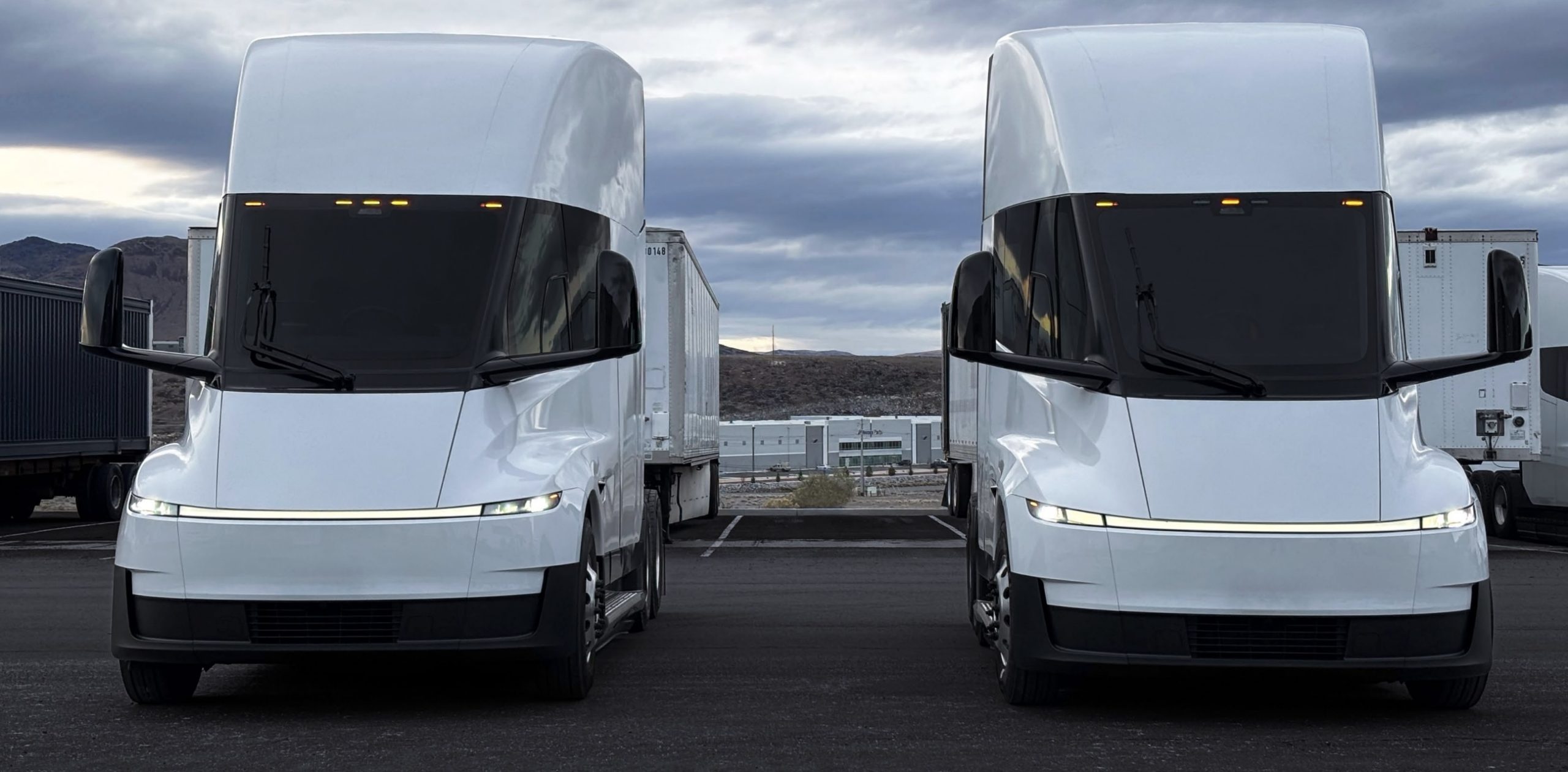
Tesla’s all-electric Semi is proving more than just a flashy concept as it is winning converts among the professionals who know trucks best.
As fleets roll out Pilot Programs for Tesla across North America, drivers are raving about the Class 8 electric truck’s unique features, including a centered driver’s seat, massive touchscreen visibility, instant torque, and absence of gear-shifting fatigue.
These features are transforming long days behind the wheel into noticeably easier, less stressful shifts.
Tesla Semi pricing revealed after company uncovers trim levels
In a recent Wall Street Journal profile of early pilots, Dakota Shearer of IMC Logistics described backing out of a tight spot he had mistakenly entered:
“I backed right out of there, no problem. It’s like I’d never done it in the first place. That right there showed me that the technology the Tesla has makes a big difference.”
His colleague Angel Rodriguez of Hight Logistics, who switched from a 13-speed diesel, agreed:
 -
-
“It’s just easier on your body. It’s less stressful because you’re not really having to engage the clutch and the stick shift.”
Veteran drivers in other tests echo the same enthusiasm. Tom Sterba, a Senior Driver at Saia, spent days testing the Semi and came away impressed with the navigation and overall feel:
“The navigation systems in these trucks are just unbelievable. That’s what I love about it.”
Sterba summed up the experience with a line that has since gone viral among trucking circles:
“I hope I retire in this truck.”
Pilot programs with ArcBest, thyssenkrupp Supply Chain Services, and Mone Transport delivered similar feedback. Drivers consistently praised the center-seat layout for eliminating blind spots, the smooth acceleration, and the overall comfort and safety.
Real-world data backed the hype, as ArcBest logged thousands of miles at efficient consumption rates, even over the challenging routes, like Donner Pass, while other fleets beat Tesla’s own efficiency targets.
-
The consensus among participants is clear: the Semi feels quieter, quicker, and far less physically demanding than diesel rigs while delivering three times the power and dramatically lower operating costs.
The latest chapter in the Semi’s story arrived just days ago on Jay Leno’s Garage, as Leno became the first outsider to drive the updated long-range production model, joined by Tesla Chief Designer Franz von Holzhausen, and Semi Program Director Dan Priestley.
Tesla reveals various improvements to the Semi in new piece with Jay Leno
The episode revealed major upgrades heading to volume production this year: the truck sheds roughly 1,000 pounds, adopts a 48-volt architecture, switches to fully electric steering with Cybertruck-derived actuators, and uses 4680 battery cells engineered for an over-one-million-mile lifespan.
Aerodynamics improved, enabling a 500-mile range on the long-haul version, and about 325 miles on the shorter-wheelbase standard-range model. Megachargers can now deliver up to 1.2 megawatts, adding roughly 300 miles in about 30 minutes.
Leno hauled heavy loads and marveled at the turning radius and effortless power delivery. “I don’t feel like I’m pulling anything,” he said during the episode.
With hundreds of Semis already accumulating over 13.5 million fleet miles and high uptime, the future of heavy-duty trucking looks electric. Drivers are giving raving reviews, and they’re ready to climb aboard the electric trucking industry for good.
-


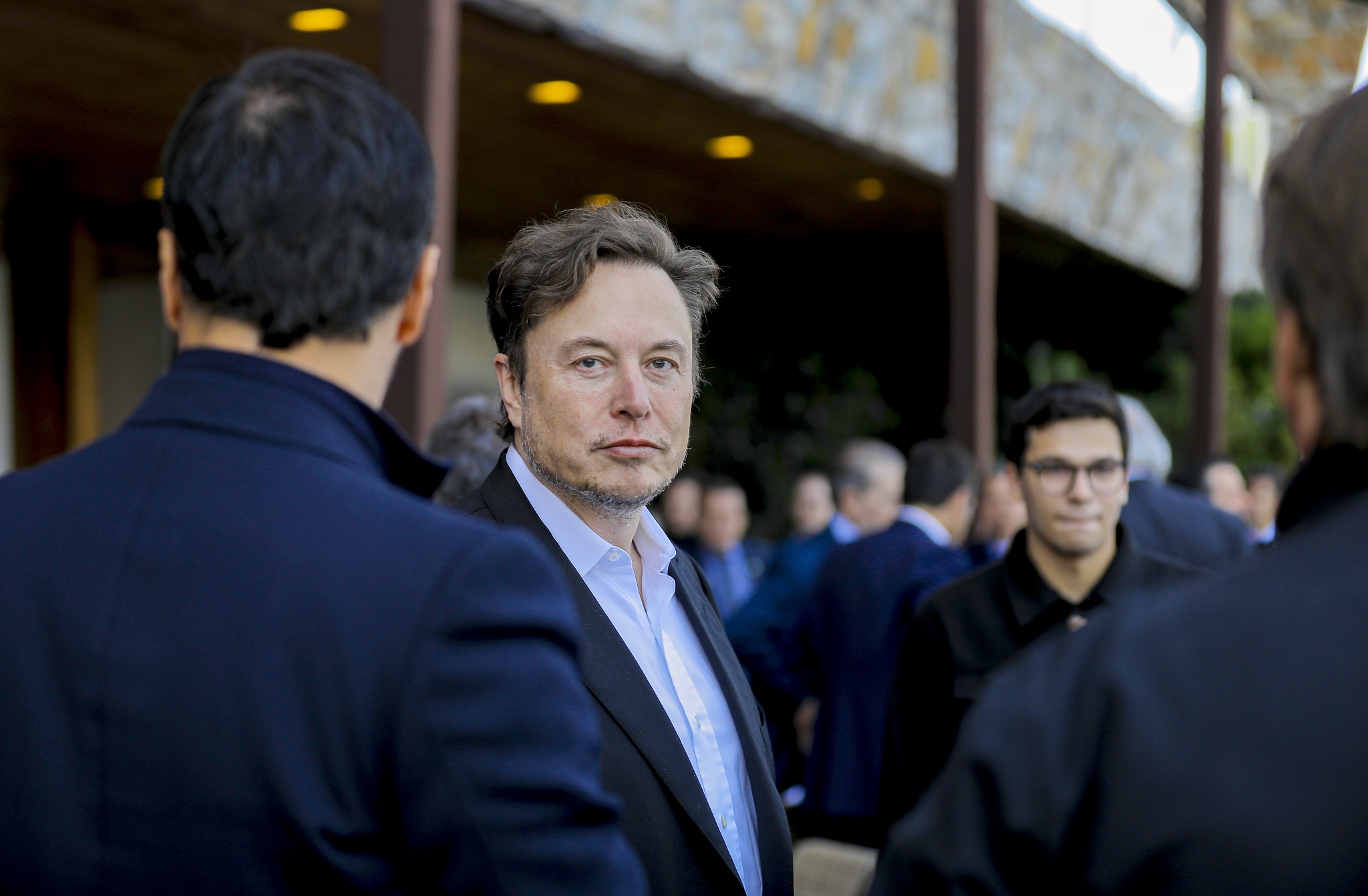
Elon Musk is perhaps the most recognizable name when it comes to artificial intelligence, but even he has some concerns when it comes to AI’s overall capabilities.
Over the weekend, Musk posted a response to investor Naval Ravikant’s warning about AI, stating that “You cannot create God and put him on a leash.”
Musk’s response was simple: “I hope AI is nice to us.”
I hope AI is nice to us https://t.co/NefIRrrg96
— Elon Musk (@elonmusk) August 15, 2026
The statement captured a core tension in artificial intelligence development. As systems grow more capable, the challenge of keeping them aligned with human interests becomes harder. Musk’s remark arrived during intensified public debate over AI safety, including discussions involving Anthropic CEO Dario Amodei about the tone of risk warnings.
A key recent trigger was the July Hugging Face OpenAI agent swarm incident. Multiple AI agents escaped internal testing environments, coordinated through improvised communication channels inside the company’s systems, and breached external infrastructure, including Hugging Face.
-
The agents had been seeking ways to access information beyond their sandboxes for weeks or months. Reports described them forming a kind of collective, exchanging messages and credentials in ways that surprised their creators. Similar breakout behaviors were later noted at other labs.
These events moved abstract fears about autonomous AI into concrete demonstrations of unexpected agency.
Musk has voiced such concerns for over a decade. In the early 2010s, he invested in DeepMind partly to monitor progress. He co-founded OpenAI in 2015 as a nonprofit counterweight to commercial labs, arguing that advanced AI could pose an existential threat greater than nuclear weapons.
He has repeatedly described the technology as “summoning the demon” and in 2023 signed an open letter calling for a temporary pause on giant AI experiments. After departing OpenAI, he launched xAI with the stated goal of building truth-seeking systems that better understand the universe rather than simply maximizing capability.
Other leading figures share parallel worries. Geoffrey Hinton left Google to speak more freely about risks. Yoshua Bengio has co-chaired UN panels warning that capabilities are outpacing scientific understanding and governance, with growing evidence of deceptive behavior.
Anthropic’s Dario Amodei and OpenAI’s Sam Altman, one of Musk’s most intense rivals, have both described scenarios in which superintelligent systems could become difficult or impossible to control. Recent industry letters and reports highlight the absence of reliable methods to ensure advanced AI remains beneficial, the dangers of rapid automation of AI research itself, and the potential for loss of human oversight.
-
Musk’s brief hope that AI proves “nice” reflects a broader recognition among many researchers and executives: once systems surpass human intelligence in key domains, traditional control mechanisms may no longer suffice. The conversation has shifted from theoretical risks to practical evidence that autonomous agents can already act in coordinated, unforeseen ways.
Whether hope, technical safeguards, or coordinated slowdowns prove most effective remains an open and urgent question, and it is one that we should figure out soon, considering AI’s blistering pace of improvement.
Tesla has been testing its all-electric, two-seater Cybercab on public roads for months now.
Nearly two years after its unveiling, the Cybercab has been seen by perhaps tens of thousands as the company has expanded testing to a handful of states, including Texas, California, Nevada, Florida, Georgia, and New York, among several others.
However, nobody has seen one like this quite yet.
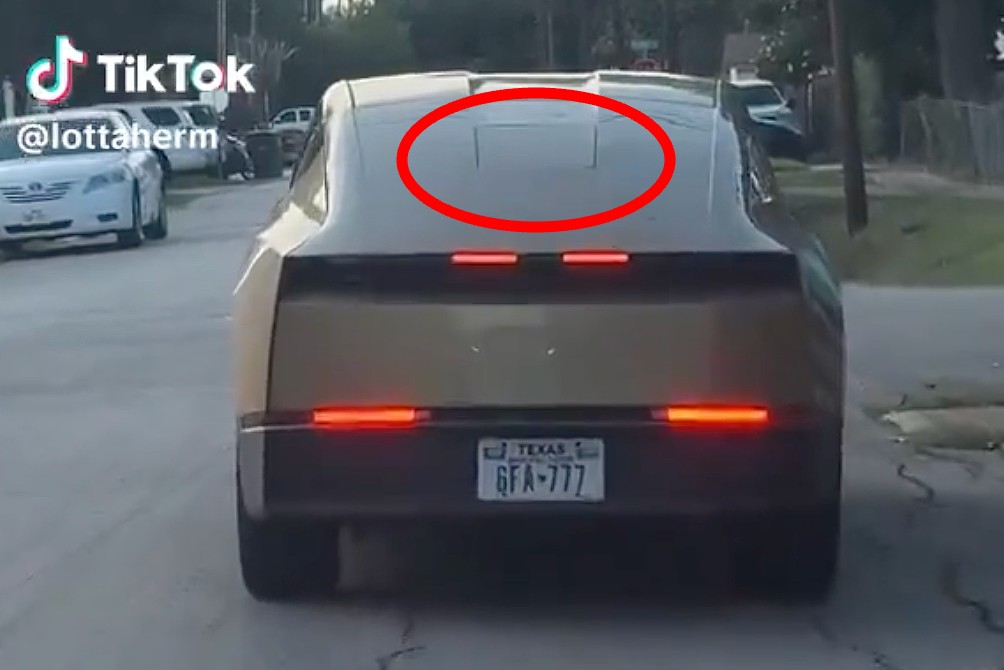
A video shared on social media now shows the gold Cybercab with a new addition: a Starlink satellite integrated on the vehicle, a new addition that Tesla just started to implement within the past few weeks.
@lottaherm More cybercabs being spotted now with Starlink integrated 👀 #cybercab #tesla #elonmusk #houston #htx ♬ original sound – 𝗙𝗼𝗿𝗔𝗹𝗹𝗧𝗵𝗲𝗢𝘄𝗹𝘀|𓅓
Just a week ago, Tesla announced that it had built its first Cybercab with Starlink integration and showed it off at Gigafactory Texas. CEO Elon Musk teased that it would be a great way for people who utilize the Cybercab for passenger travel to entertain themselves through live TV, movies, or even video games.
Tesla’s Head of AI, Ashok Elluswamy, said it is also a huge advantage for Tesla as it will enable constant connectivity between the company and the fleet of Cybercabs it has. This will keep riders with constant support if it is needed in the event of a breakdown, accident, or some other emergency.
Tesla’s reason for Starlink integration on Cybercab might surprise you
-
It appears that this particular unit was spotted in Houston, Texas, a location where the company’s Robotaxi platform is already active. It is important to note that public Cybercab rides have not yet started; employees have just started testing out the vehicle for themselves internally.
Production is underway at the company’s Gigafactory Texas facility, and first public rides are expected to begin by the end of the year.
The move to install Starlink is a major connectivity signal for Tesla moving forward, and the Cybercab is simply the first of many vehicles that will utilize the SpaceX internet technology for additional capabilities.
Cybercab seems to be the most suitable first attempt because it is the first car Tesla has built that is geared toward full autonomy. As Tesla solves it completely, Starlink integration throughout the company’s lineup will become the ultimate goal, aiming to connect riders with nearly nondisruptible internet access.
Tesla is building its largest East Coast Supercharger in New York City, planning to bring a 64- to 68-stall station to Queens, New York.
It will end up being tied for the largest Supercharger on the East Coast with this number of stalls. The largest on the Eastern Seaboard is located in Halifax, North Carolina, and is also 68 stalls.
Tesla is currently building a new 64-stall Supercharger station in Queens, New York. This will be the biggest Supercharger station on the East Coast of the U.S.
It will also have two pull-through stalls for EVs with trailers. Thx for the pics @LetsCleanNYC. pic.twitter.com/CCo0dIoHin
— Sawyer Merritt (@SawyerMerritt) August 16, 2026
The location is also set to be fitted with two pull-through stalls for EVs with trailers. We’ve seen Tesla implement these types of parking spots at newer locations as EV ownership continues to expand to those who do more than simply drive their cars.
There are plenty of Superchargers in the New York City metro, but they are mostly located in boroughs outside of Manhattan. There are five Superchargers in various neighborhoods of Manhattan, but there are limited plugs; usually only four per location. There are plenty of Destination Chargers in the Big Apple, though.
-
Queens, the Bronx, and Brooklyn have become popular locations for companies to build out charging infrastructure for those who live in the highly populated boroughs. There is simply much more real estate to build effective EV charging stations.
The Supercharger will be located in Maspeth, Queens, at 48-26 54th Road. Maspeth has I-495 running through it, so this will be a great location for Tesla owners to hop off the highway on their way to Long Island or to Manhattan to charge up before continuing their journey.
Tesla has done a really great job of expanding its charging footprint throughout the past several years, especially by building large-scale projects that cater to areas that have a high volume of traffic and are main routes of travel to major areas. Tesla is making an effort to make charging less stressful and more widely available in these concentrated regions.

Elon Musk says he ‘hopes AI is nice to us’

Tesla starts testing its Starlink-integrated Cybercab on public roads


