Lifestyle
Energy expert explains why Tesla and the electric car industry is here to stay

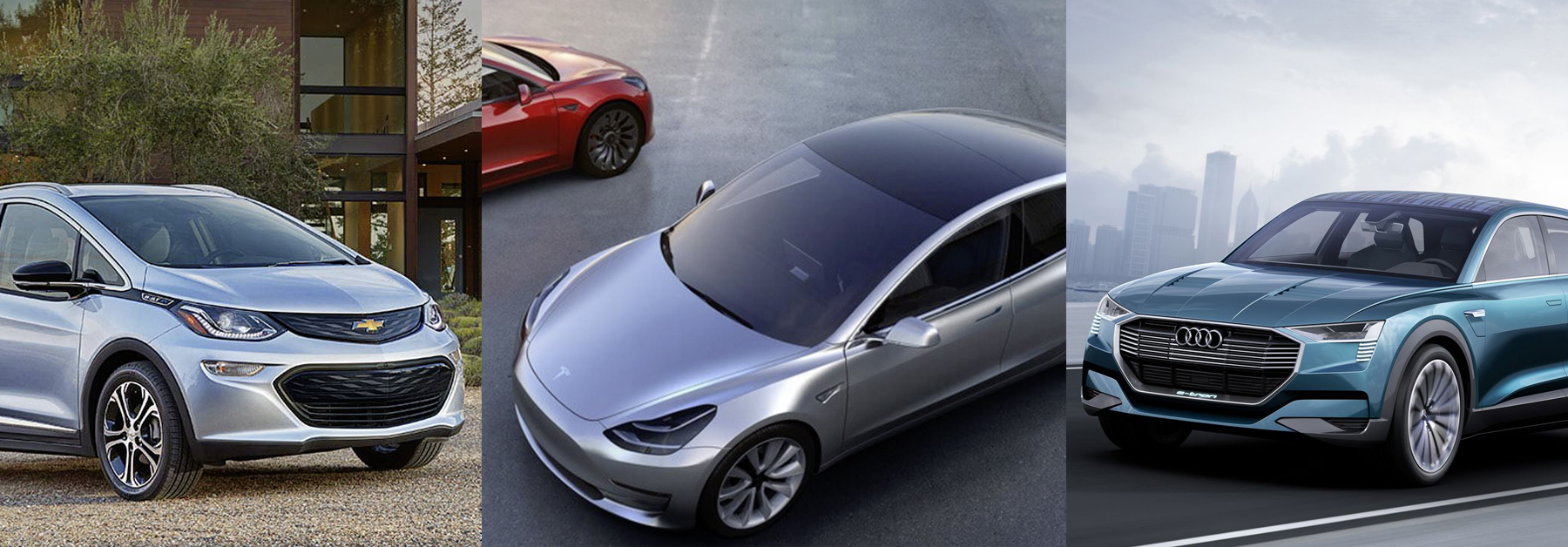
Electric vehicles will be hugely beneficial for our environment but that’s not always what you read. There’s a lot of misinformation out there, with too many articles pushing old myths and bad data. It’s time to set the record straight. As an engineer working in the field of energy and sustainability I’m going to give it a shot.
In all fairness the story of electric vehicles has been advancing rather quickly. Battery costs have fallen 80% since 2010 and affordable long range EVs are beginning to hit the market. But this is just the start. Nearly all major manufacturers are now feverishly working on electric models, with companies like Mercedes, BMW, and VW expecting 25% of their sales to be electric by 2025 and then there’s Tesla, the patron saint of sustainability, targeting production of 500,000 electric vehicles as soon as next year. This information and the benefits however are not universally appreciated, far from it.
Electric vehicles are coming, they’re shaking up long-established industries, and it’s happening much more quickly than people expected. This is a good thing. Here’s why:
1. Our electricity grid is actually pretty clean… and getting cleaner
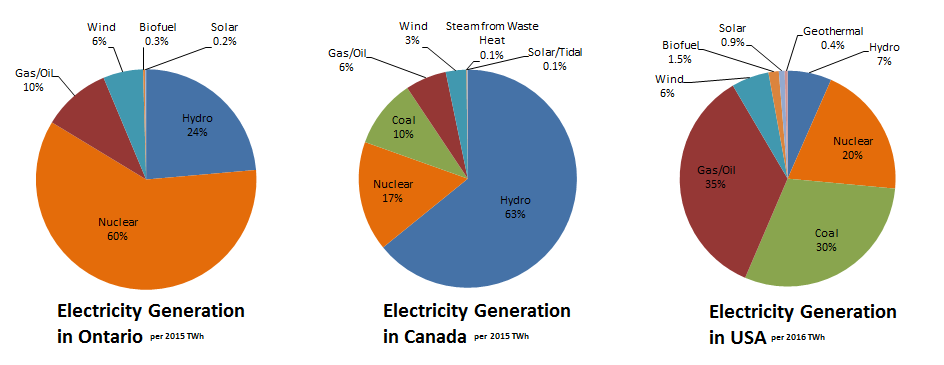
The myth “you’re using fossil fuels to power your electric car” is false. In Ontario Canada, where I live, we have an electricity mix that includes no coal and only 10% from natural gas. Canada-wide 63% of electricity comes from hydro and only 16% from fossil fuels. That’s a lot of carbon free power.
The US average doesn’t look quite as good but it’s improving all the time. A short time ago over 40% of electricity in the United States came from coal (2011). Last year it was 30%, with 34% from natural gas, 20% nuclear, 7% hydro, and 8% from other renewables. That will continue to improve every year as more coal plants are shut down and more renewables are installed. Want proof? From 2014 to 2017 electricity from coal dropped by 23% while solar power generation increased 102%. In 2016 alone US solar capacity went from 28GW to 42GW.
Electricity Mix – Ontario, Canada, USA
2. Using electricity to power your car is way more efficient than gas or diesel
I recently read a Canadian newspaper article that said “burning a fossil fuel to power an electric car is nowhere near as efficient as burning that fuel to power the car directly”. That’s simply not true but more importantly it’s not even a real scenario. Just look at the electricity mixes above. Fossil fuels are not our only source of electricity; in Canada they make up only 16%. Even in the US where fossil fuel use is much higher, natural gas is a cleaner, lower carbon option compared to gas, diesel, or coal. Not all fossil fuels are equal.
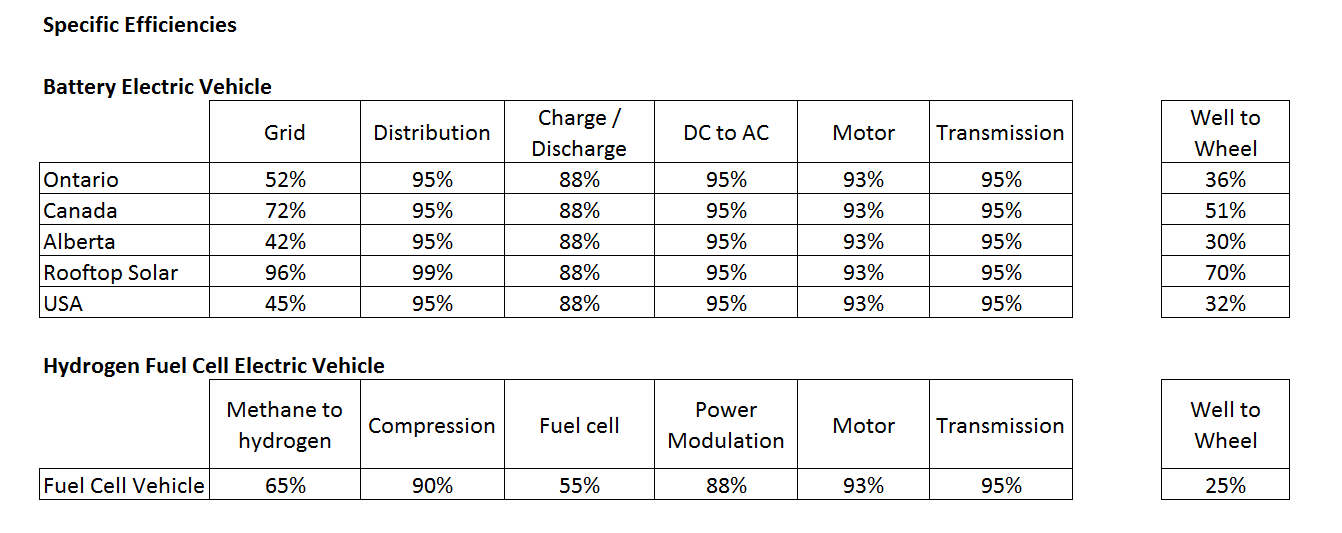
Electric and combustion vehicles are very different so comparing their efficiencies directly, apples to apples, isn’t straightforward. The best way to do it is using “Well to Wheel” efficiency; it’s the total system efficiency right from fuel extraction to the point where power is delivered to the wheels (and all the losses in between). No hiding losses in this calculation.
There’s a lot of background information that goes into the calculations and if you like you can check out the details at the end of the article. The results however are tabulated below. Electric vehicle efficiency on the Ontario grid is double that of diesel and triple that of gasoline. The efficiency goes up if the grid uses more hydro or other renewables, as you can see in the Canadian average or for residential solar. TLDR: it’s the combustion efficiency that’s “nowhere near as efficient”.
Table 1: Vehicle Efficiency Comparison
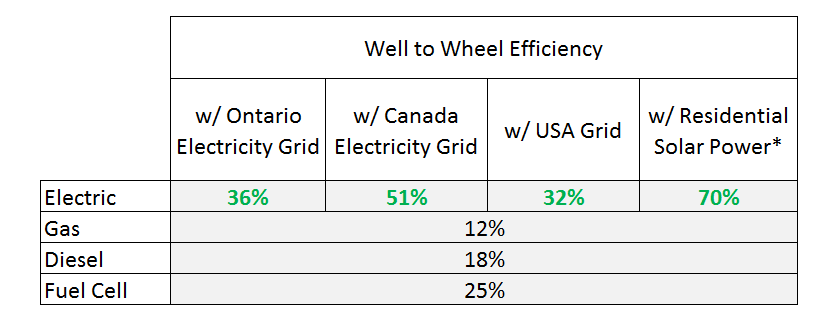
*Efficiency in this situation does not include the conversion of light to electricity since that light energy is not ‘wasted’ but goes on to perform its regular function providing light and heat.
This is clearly a positive result, it means we’re using energy more wisely with electric vehicles. But efficiency is not the same thing as ‘environmentally friendly’. An engine that’s 100% efficient but runs on whale oil isn’t very friendly, at least not to whales. Thus the next section looks at the carbon intensity of the fuel sources.
3. Electric vehicles will reduce emissions… by a lot
There seems to be a large amount of distrust for this, as if electric cars are some sort of scam to hoodwink unsuspecting millennials. Let’s clear that up because it’s a big driver for EVs.
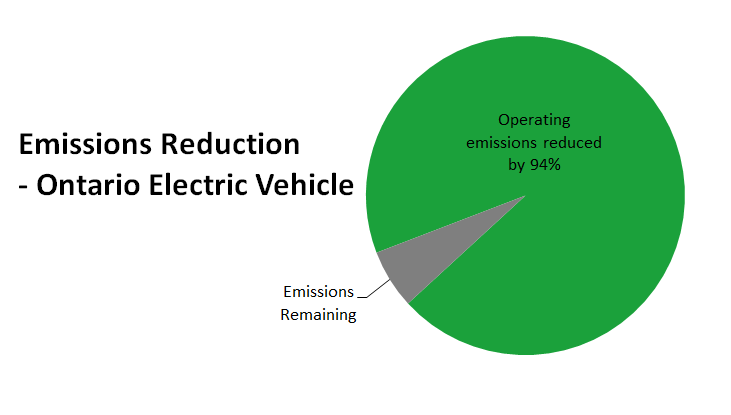
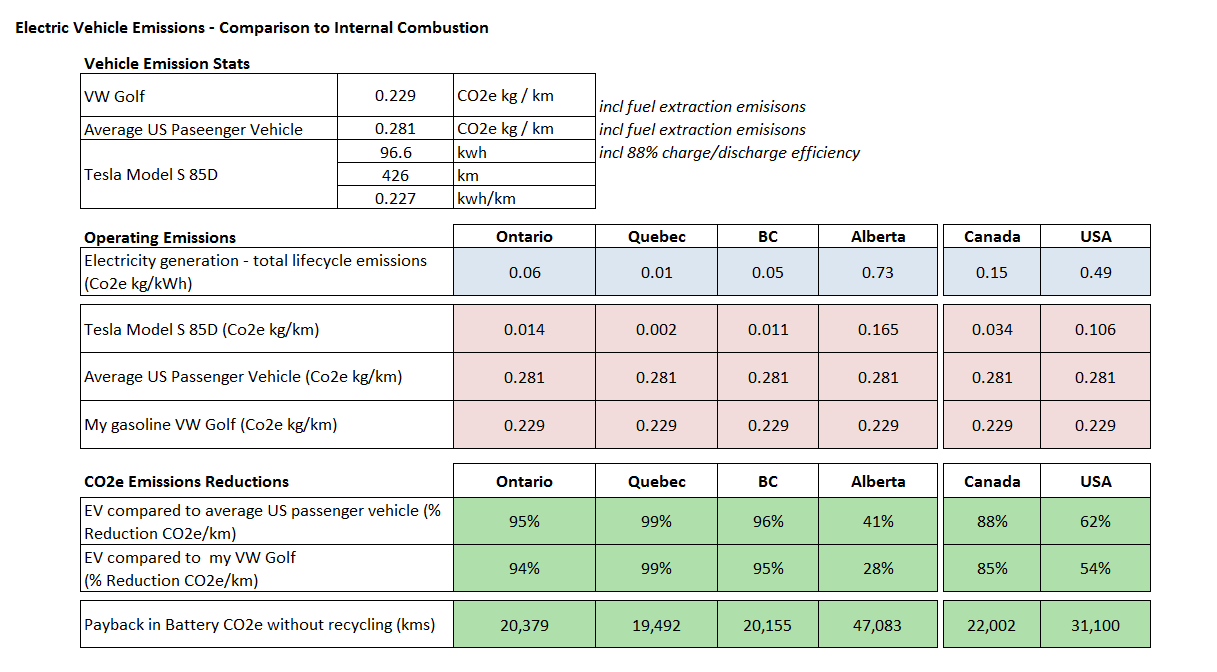
“There’s a 94% reduction in the CO2 equivalent emissions from swapping my gas powered Golf for the Tesla.”
First I assembled the the ‘fuel’ economies of the average US vehicle, my VW Golf, and a Tesla Model S 85D. Those are the three vehicles I wanted to compare. I then determined the CO2e emissions per km for the combustion vehicles and then did the same for the Tesla. Since the fuel source for the Model S is electricity I had to calculate the emissions from each electricity grid. To do that I used the median lifecycle emissions factors from the Special Report on Renewable Energy Sources and Climate Change Mitigation (SRREN), and then compared them to reports specific to Ontario. Then it was a simple matter of comparing the emissions per km of each vehicle. The results surprised even me.
As a resident of Ontario there’s a 94% reduction in the CO2 equivalent emissions from swapping my gas powered Golf for the Tesla. And before you start talking about manufacturing emissions, I looked at those too. The extra manufacturing emissions for the Tesla total approximately 5440 kg of CO2e, almost entirely from the battery. Those emissions would be ‘paid back’ through driving emission reductions by around 20,000 km. This happens to be the average distance driven by a Canadian in a year.
In addition to Ontario, I also ran the numbers for the four most populated provinces in Canada, the Canadian average, and the US average (see table below). All show significant reductions, though coal heavy Alberta has lots of room to improve.
Table 2: Comparison of Vehicle CO2e Emissions
4. Transport emissions are a big part of our national emissions
There are some that claim transport emissions aren’t significant and we should be focusing on other areas. They say this as though our civilization can only do one thing at a time and we weren’t already working on those areas (we are!). One article even stated EVs could never offset more than 12% of Canada’s emissions. This is all very misleading and fundamentally incorrect.
Environment Canada Data – GHG Emissions by Sector
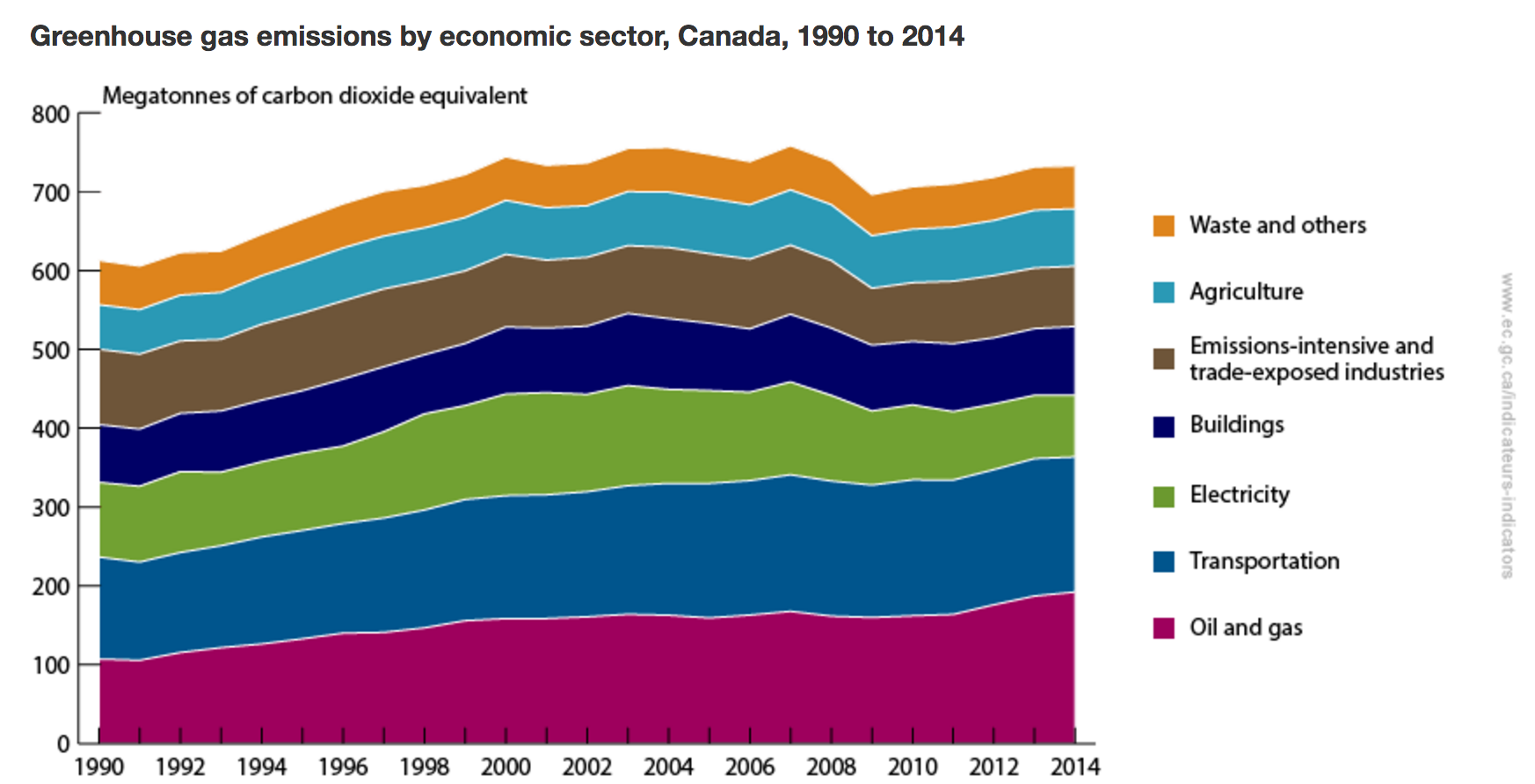
Environment Canada data shows transportation CO2 equivalent emissions are 23% of Canada’s total. Since roughly half of that is attributed to passenger vehicles that works out to the 12% number above, but that’s not the whole story. Not even close. That number excludes buses and freight truck transport, which would see electrification or equivalent. Once included the total rises to approximately 20% of Canada’s national greenhouse gas emissions.
Wait, there’s more.
It leaves out how we got the fuel in the first place. The oil and gas sector, which accounts for 26% of our total national emissions. If we break out the amount related to oil processing for passenger vehicles, buses, and freight trucks the result is another 10%.
Adding the 20% from direct vehicle emissions to the 10% for oil processing, results in a total of 30% of our national CO2e emissions. Thirty Percent! That’s a big deal.
5. Incentives will help make EVs more affordable for everyone, speeding up their adoption across the world
The purpose of incentives is to help a technology mature more quickly so that it will become economically viable for a much broader sector of the public. Thus the benefits of that technology can be had for many more people and much sooner than would otherwise be possible.
Incentives are arguably one of the most democratic ways of advancing a technology; if people don’t want EVs then government money doesn’t go there. Governments also invest in the development of new technologies through things like tax rebates or grants. To decry the incentives for EVs while giving a pass to traditional automakers receiving hundreds of millions in factory rebates or conveniently forgetting the automotive industry bailout is cherry picking the facts.
There are many spin-off benefits from electric vehicle adoption that make them a good public investment. More electric vehicles help balance our electricity demand between day and night, make better use of our resources, grow our economy by replacing old technologies, create new jobs, and reduce pollution which improves quality of life while reducing healthcare costs. I could go on.
6. Electric car batteries can, and are, being recycled.
There are articles that claim “electric car batteries are toxic sludge”. Well Tesla has published a good deal of information about their batteries and recycling programs. Their batteries are RoHS compliant and fully recyclable. RoHS refers to the restriction of hazardous substances directive for electrical and electronic equipment, adopted in 2003 by the EU. Tesla recycles their batteries 100% within Europe and at ~60% in the US, according to their blog. They are also building a new recycling facility at the Nevada Gigafactory. Seems like there won’t be much “toxic sludge” to worry about after all.
7. Show me a better option
There isn’t one. I think it’s fair to say Dieselgate proved that clean diesel wasn’t what we thought (or were told). And fuel cells, for all their promise still have very large hurdles to overcome. To that point I think it’s worth naming a few.
Virtually all hydrogen today is produced through the inefficient steam reformation of fossil fuel methane. And while it’s possible to generate hydrogen from water, it’s extremely expensive. Even if it does get cheaper we would then be using the electricity to create a highly explosive fuel before converting it back into electricity. That might not be so unreasonable if fuel cells were more efficient, or if they didn’t require a battery to regulate the power. There’s also the storage and distribution issue. Hydrogen requires strong pressure vessels to store as a liquid (it’s a gas under normal earthly conditions). Existing gas stations won’t work without massive upgrades (read: new tanks, new pumps). All this is not to say there won’t be applications for fuel cells but for passenger vehicles does it really make sense?
Look, there are some big industries that would love for you to believe the technology to replace them ‘just isn’t there yet’. It’s a common tactic. Remember the cigarette industry that for decades said the research just wasn’t conclusive, all to keep you smoking. Fact is we may not have another 10, 20, 30 years to figure this out. We need to start making real changes today. EVs are part of that change. They are here now and looking better every day.
The breakthroughs have been incremental with the improvements compounding rapidly. It’s happening so fast that people are caught off guard. Today Tesla Supercharger stations can add 270 km in 30 minutes while next generation stations will triple that rate. Batteries are improving every year, with faster charging, higher capacities, lighter weight, and lower cost. Just this year Tesla began manufacturing their new 2170 battery format with a reported 30% improvement in energy density over their 2012 battery cell. Product announcements from other manufacturers suggest another 30% is expected by 2020. This has led to a new benchmark for electric vehicles – affordable battery powered cars with 400km in range. The Chevy Bolt and Tesla Model 3 are but the first of many.
With major automotive manufacturers now committed to EVs, this is truly just the start. Look at VW, BMW, Jaguar, Mercedes, Toyota, Ford, Nissan, Tesla, the list goes on. This broader commercialization will bring larger investments and even more rapid improvements. We are on the cusp of a paradigm shift in our transportation and energy sectors. A shift that will help reduce the effects of climate change, improve our air quality, and preserve our wonderful planet for future generations. To disregard electric vehicles as a fleeting fringe technology is to ignore all indicators to the contrary. Electric vehicles are coming.
Oh and they cost a lot less to operate too.
———————————————————————
Notes:
Wherever possible I completed most of the calculations using raw data. I used multiple sources to justify calculation inputs and to compare the results to other publications as part of my validation exercise. I also performed a sensitivity analysis to determine the relative impact of parameters, such as in the CO2e calculations. I’ve made my best effort to use accurate, representative data and present the information to offer a realistic view of the environmental benefits.
1 Vehicle Efficiency Comparison:
Notes:
- The results for combustion engines are taken from a 2010 MIT study as noted below.
- Tank to wheel efficiency for electric vehicle efficiency includes battery charge/discharge efficiency (~88%), motor (~93%), inverter (95%), and drivetrain transmission efficiency (~95%).
- Well to Wheel for battery electric and fuel cell electric vehicles are calculated per the information below. It should be noted the overall grid efficiency affects the battery electric vehicles efficiency, which is ~74% for Canada due to the large amount of hydro and in Ontario is lower ~52% because nuclear power stations are relatively lower thermal efficiencies of 33% (according to the US EIA, which also shows natural gas stations are 44% efficient). I’ve accounted for fuel extraction energy which did not have a meaningful impact on final efficiencies. Also note that comparing renewable energy efficiencies are somewhat different than fossil fuels or nuclear. In solar and wind the losses are in uncaptured or unconverted solar or wind energy. That energy continues to serve its intended function on the planet. There are system losses however which are accounted for.


Lifestyle
Tesla hit by Iranian missile debris in Israel
A Tesla in Israel absorbed a direct hit from missile debris, and the glassroof held.

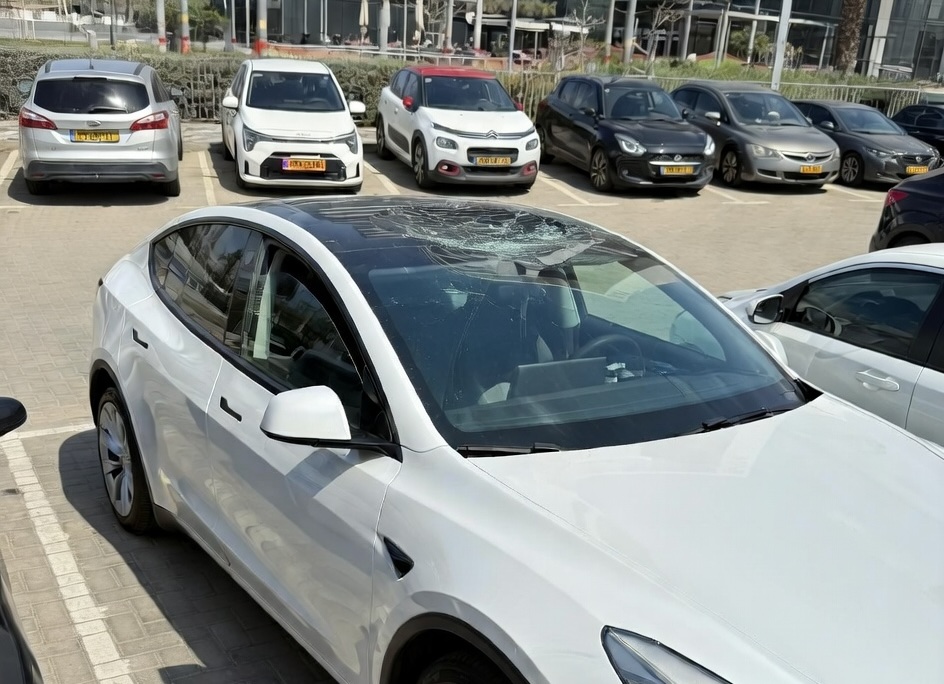
On March 30, 2026, Lara Shusterman was in Netanya, Israel when Iranian ballistic missiles triggered air raid sirens across the city. While she remained in safety, her 2024 Tesla Model Y did not escape untouched. A heavy piece of missile debris struck the car’s massive glass roof, leaving a deep crater but without shattering. In a Facebook post to the Tesla Israel community the following morning, Shusterman described what happened: “The glass did not shatter into dangerous shards. She stopped the damage and pushed the metal part to the ground.” She closed by thanking Elon Musk and the Tesla team for building what she called “security and a sense of trust even in extreme situations.”
Netanya is a coastal city in central Israel, roughly 18 miles north of Tel Aviv and has been among the areas most frequently struck during Iran’s ongoing missile campaign, following coordinated U.S. and Israeli strikes on Iranian military infrastructure. Falling shrapnel from intercepted missiles is a common occurrence.
-

- Tesla Model Y glass roof shattered from a piece of falling Iranian missile debris
-

- A piece of Iranian missile debris that struck Lara Shusterman’s Tesla Model Y in Netanya, Israel on March 30, 2026, after being intercepted by Israeli air defenses.
-

- Tesla Model Y glass roof shattered from a piece of falling Iranian missile debris
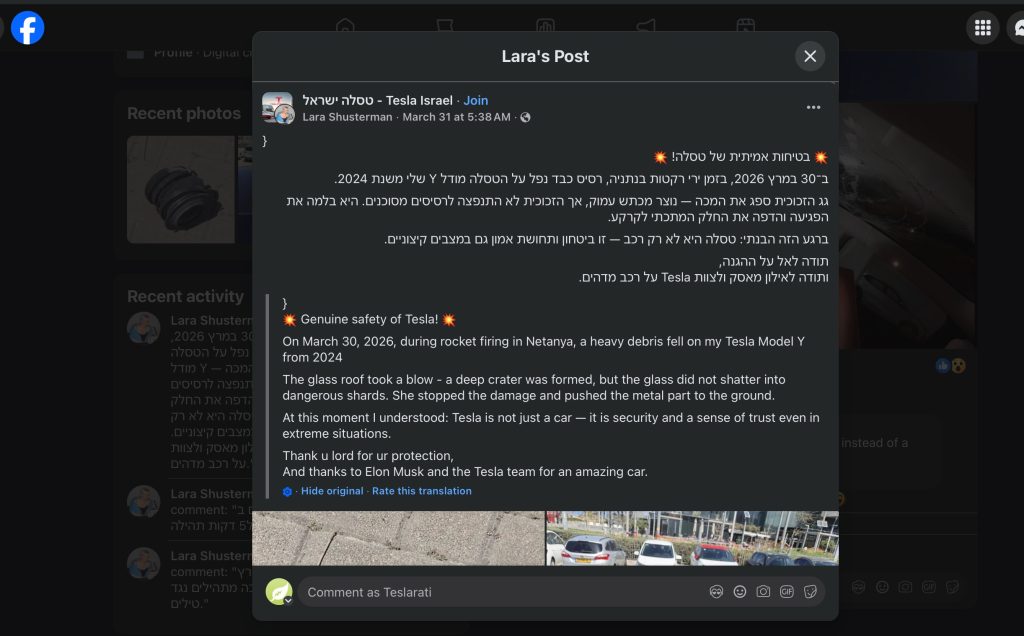
Source: Tesla Israel Facebook Group
The incident is a testament to Tesla’s structural engineering. Tesla’s glass roof is designed to support over four times the vehicle’s own weight. That strength has shown up in real-world accidents too. In 2021, a Model Y in California was struck by a falling tree during a storm, with the glass roof holding firm and the cabin remaining intact. In another widely reported incident, a Tesla Model Y plunged 250 feet off the cliff at Devil’s Slide in California in January 2023, with all four occupants, including two young children, surviving.
Disturbing details about Tesla’s 250-foot cliff drop emerge amid initial investigation
Tesla officially launched sales in Israel in early 2021 and captured over 60 percent of Israel’s EV market in the first year. The brand’s foothold in Israel remains significant. Tens of thousands of Teslas are now on Israeli roads, making incidents like Shusterman’s easy to corroborate. On the same week her Model Y took the hit, the U.S. Space Force awarded SpaceX a $178.5 million contract to launch missile tracking satellites, a separate but fitting reminder of how intertwined the Musk ecosystem has become with the realities of modern conflict.
Elon Musk
NASA sends humans to the Moon for the first time since 1972 – Here’s what’s next
NASA’s Artemis II launched four astronauts toward the Moon on the first crewed lunar mission since 1972.
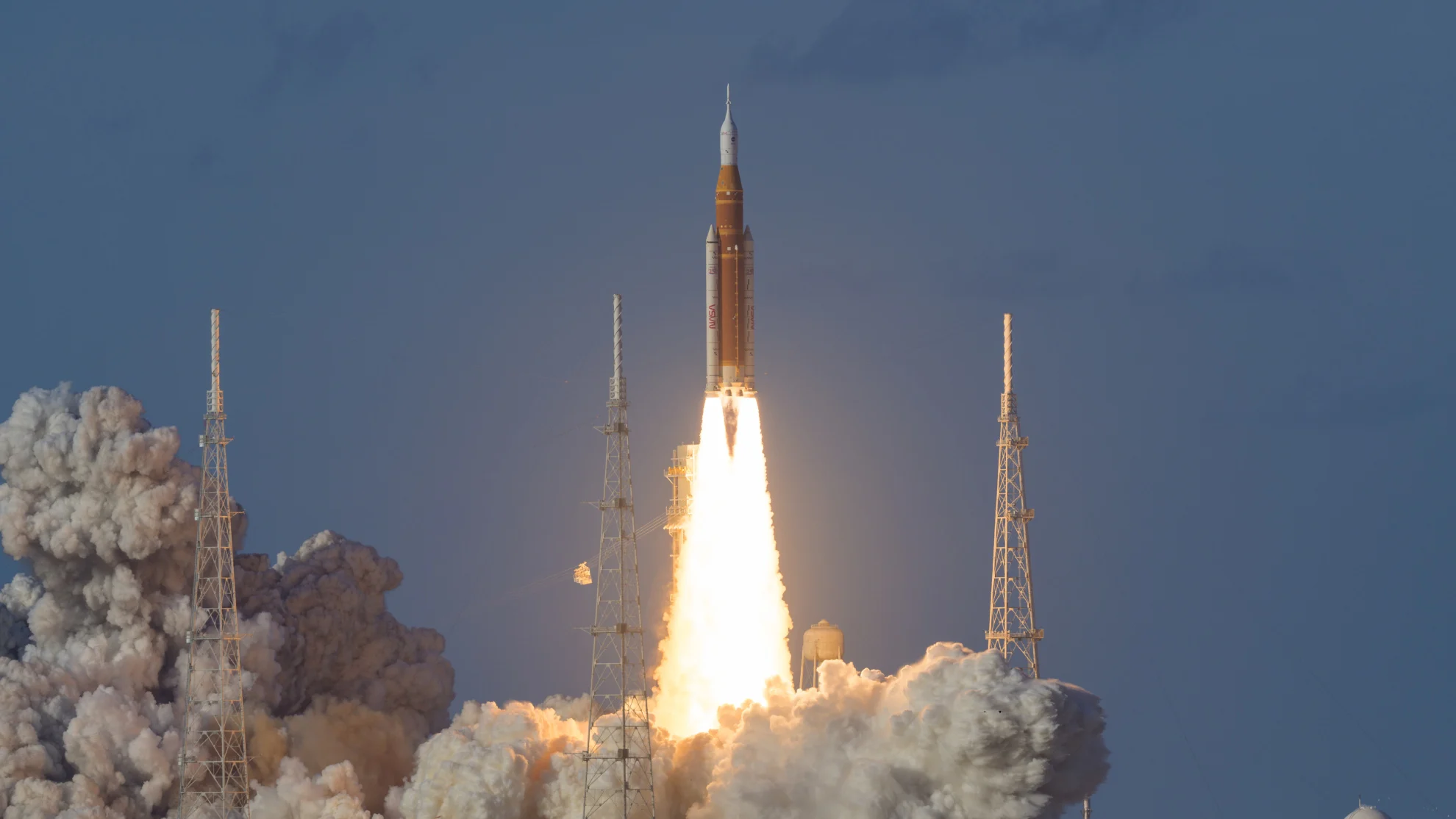
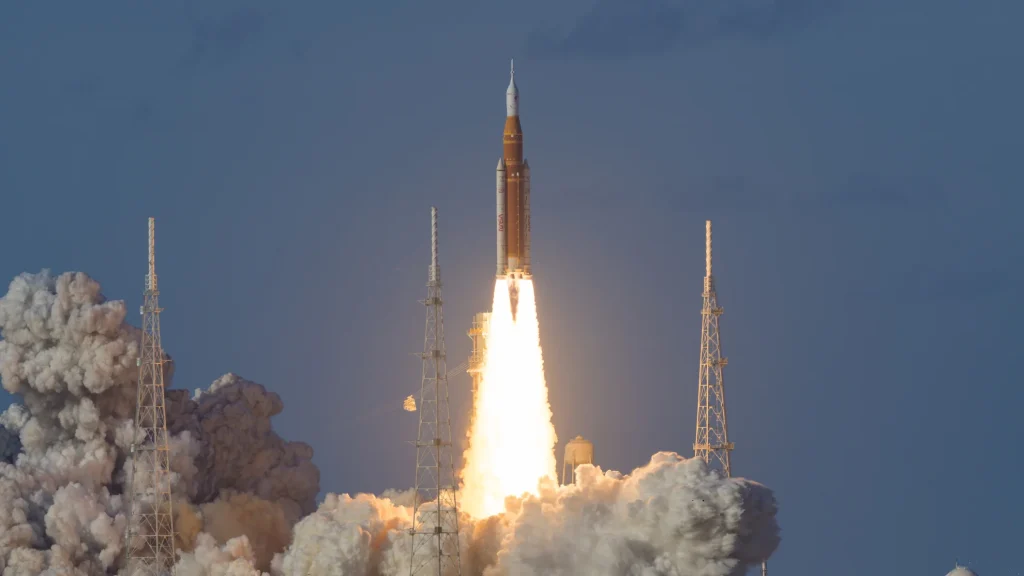
NASA’s Space Launch System rocket launches carrying the Orion spacecraft with NASA astronauts Reid Wiseman, commander; Victor Glover, pilot; Christina Koch, mission specialist; and CSA (Canadian Space Agency) astronaut Jeremy Hansen, mission specialist on NASA’s Artemis II mission, Wednesday, April 1, 2026, from Operations and Support Building II at NASA’s Kennedy Space Center in Florida. NASA’s Artemis II mission will take Wiseman, Glover, Koch, and Hansen on a 10-day journey around the Moon and back aboard SLS rocket and Orion spacecraft launched at 6:35pm EDT from Launch Complex 39B. (NASA/Bill Ingalls)
NASA launched four astronauts toward the Moon on April 1, 2026, marking the first crewed lunar mission since Apollo 17 in December 1972. The Artemis II mission lifted off from Kennedy Space Center aboard the Space Launch System rocket at 6:35 p.m. EDT, sending commander Reid Wiseman, pilot Victor Glover, mission specialist Christina Koch, and Canadian astronaut Jeremy Hansen on a 10-day journey around the far side of the Moon and back.
The mission does not include a lunar landing. It is a test flight designed to validate the Orion spacecraft’s life support systems, navigation, and communications in deep space with a crew aboard for the first time. If the crew reaches the planned distance of 252,000 miles from Earth, they will set a new record for the farthest any human has ever traveled, surpassing even the Apollo 13 distance record.
As Teslarati reported, SpaceX holds a central role in what comes next. The Starship Human Landing System is under contract to carry astronauts to the lunar surface for Artemis IV, now targeting 2028, after NASA restructured its mission sequence due to delays in Starship’s orbital refueling demonstration. Before any Moon landing happens, SpaceX must prove it can transfer propellant between two Starships in orbit, something no rocket program has done at this scale.
The last time humans left Earth’s orbit was 53 years ago. Gene Cernan and Harrison Schmitt of Apollo 17 were the final people to walk on the Moon, a record that stands to this day. Elon Musk has long argued that returning is not optional. “It’s been now almost half a century since humans were last on the Moon,” Musk said. “That’s too long, we need to get back there and have a permanent base on the Moon.”
The Artemis program involves 60 countries signed onto the Artemis Accords, and this mission sets several firsts beyond distance. Glover becomes the first person of color to travel beyond low Earth orbit, Koch the first woman, and Hansen the first non-American astronaut to reach the Moon’s vicinity. According to NASA’s live mission updates, the spacecraft’s solar arrays deployed successfully after liftoff and the crew completed a proximity operations demonstration within the first hours of flight.
Artemis II is step one. The Moon landing and the permanent lunar base come later. But after more than five decades, humans are heading back.
Elon Musk
Tesla Optimus Gen 3 is coming to the Tesla Diner with new ambitions
Tesla’s Optimus robot left the Hollywood Diner within months of opening. Now Musk is planning its return with a bigger role and a major Gen 3 upgrade underway.
![Tesla Optimus Gen 3 [Credit: Tesla]](https://www.teslarati.com/wp-content/uploads/2026/03/tesla-optimus-gen3-diner.jpg)
Tesla’s Optimus robot was one of the most talked-about features when the Tesla Diner opened on Santa Monica Boulevard in Hollywood on July 21, 2025. Dubbed “Poptimus” by Tesla fans, the Gen 2 robot stood upstairs at the retro-futuristic, drive-in theater and Tesla Supercharging station, scooping popcorn into bags and handing them to guests with a wave.
The diner itself had been years in the making. Elon Musk first floated the idea in 2018 with a tweet about building an “old-school drive-in, roller skates & rock restaurant” at a Hollywood Supercharger. What eventually opened was a unique two-story neon-lit space, with 80 EV charging stalls, and Optimus serving as a live demonstration of where Tesla’s ambitions were headed.
If our retro-futuristic diner turns out well, which I think it will, @Tesla will establish these in major cities around the world, as well as at Supercharger sites on long distance routes.
An island of good food, good vibes & entertainment, all while Supercharging! https://t.co/zmbv6GfqKf
— Elon Musk (@elonmusk) July 21, 2025
But Optimus did not stay long, and was gone by December 2025.
Now, the robot is set to return with a more demanding job. Musk has ambitions for Optimus to take on a food runner role in 2026, delivering meals directly to cars at the Supercharger stalls. While the latest Gen 3 Optimus is likely to initially take on its previous popcorn-serving role, it wouldn’t be out of the question for Optimus to see a quick promotion. With improved hand dexterity that features 50 total actuators and 22 degrees of freedom per hand, and significantly more powerful processing through Tesla’s latest AI5 chip that includes Grok-powered voice interaction, Musk described Optimus at the Abundance Summit on March 12, 2026, as “by far the most advanced robot in the world, Nothing’s even close.”
Back to work
See you at Tesla Diner tomorrow pic.twitter.com/H3tTajrUbu
— Tesla Optimus (@Tesla_Optimus) March 30, 2026
That confidence is backed by a major manufacturing shift. At the Q4 2025 earnings call in January, Musk announced Tesla would discontinue the Model S and Model X and convert those Fremont production lines to build Optimus. “It’s time to basically bring the Model S and X programs to an end,” he said, calling for a pivot that reflects where the Tesla’s future lies.

Tesla stock gets hit with shock move from Wall Street analysts

Tesla Full Self-Driving feature probe closed by NHTSA


