Elon Musk
Elon Musk’s Boring Co. Tunnel Vision Challenge ends with a surprise for Louisiana, Maryland and Dallas
The Boring Company stunned three cities today, awarding New Orleans, Baltimore, and Dallas free underground Loop tunnels.

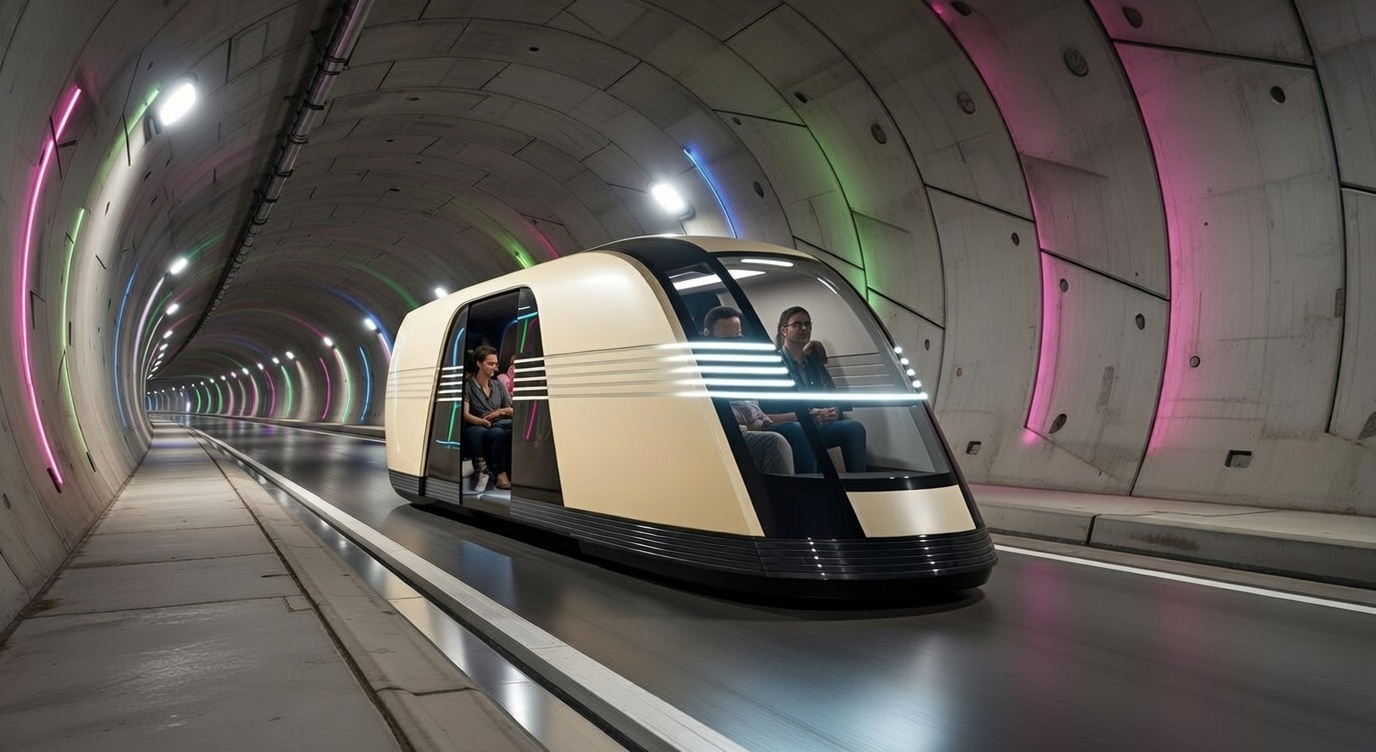
Elon Musk’s The Boring Company (TBC) announced today that it is building free underground Loop tunnels in three American cities: New Orleans, Louisiana; Baltimore, Maryland; and Dallas, Texas. The company had promised one winner when it launched the Tunnel Vision Challenge in January. After receiving 487 submissions, it selected three, committing to fund and construct all of them pending a feasibility review, entirely at its own expense. For a company that has faced years of skepticism over the gap between its promises and its delivered projects, choosing to expand its commitment rather than narrow it is a notable shift in both scale and accountability.
All three projects will now enter a rigorous, fully funded diligence phase that includes meetings with elected officials, regulators, community and business leaders, geotechnical borings, and a complete investigation of subsurface utilities and infrastructure. TBC confirmed that all costs associated with this diligence process are 100% funded by the company. If all three projects pass feasibility, all three get built. If only one clears the bar, that one gets built. The company’s willingness to fund the due diligence regardless of outcome removes one of the most common early-stage barriers that kills promising infrastructure proposals before they leave a spreadsheet.
Beyond the three winners, TBC announced it will continue working with two additional entrants it found compelling enough to pursue independently: the Hendersonville Utility Tunnel in Hendersonville, Tennessee, and the Morgan’s Wonderland Tunnel in San Antonio, Texas, which would notably serve one of the nation’s premier theme parks built specifically for guests with special needs.
The challenge also coincides with TBC’s most active construction period to date. The company recently began drilling on the Music City Loop near the Tennessee State Capitol in Nashville, and in February it broke ground on a Loop in Dubai. Musk has long argued that the fundamental problem with urban infrastructure is cost and bureaucratic inertia, not engineering. “The key to solving traffic is making going 3D either up or down,” he said in 2018, a conviction now reflected in a company structure built to absorb the financial risk that typically stalls public projects for years.
Music City Loop could highlight The Boring Company’s real disruption
The Tunnel Vision Challenge’s most underappreciated element may be what it produced beyond three winners. Submissions came from individuals, companies, and governments across states including Alaska, Arkansas, Colorado, Kansas, Louisiana, Maryland, New York, and Texas, as well as from international entrants. Musk captured the underlying logic years ago when he said, “Traffic is driving me nuts. I’m going to build a tunnel boring machine and just start digging.” Today, three American cities are counting on exactly that.
Tunnel Vision Challenge results!
We’ve been overwhelmed with the amazing submissions…so we are announcing three winners!
The Thrilling Three are:
– NOLA Loop (New Orleans, LA)
– Ravens Loop (Baltimore, MD)
– University Hills Loop (Dallas, TX)What happens next? TBC and the… https://t.co/cY2ULftfiK
— The Boring Company (@boringcompany) March 24, 2026



Tesla (NASDAQ: TSLA) reported its earnings for the third quarter of 2026, marking a reasonable performance on the various financial metrics. Tesla still plans to hold a call that will field investor questions at 5:30 p.m. ET, 4:30 p.m. CT.
Here’s where Earnings came in:
- Total Revenues: $28.046 reported vs. $28.34B expected
- Non-GAAP EPS: $0.48 reported vs. $0.45 expected
- Operating Margin: 2.6 % reported vs. 2.5% expected
- Operating Income: $718M reported vs. $721M expected
- Free Cash Flow: $1.531B reported vs. ~-$4.51B expected
Tesla $TSLA Earnings Results:
Revenues: $28.046B
Non-GAAP EPS: $0.48
Operating Margin: 2.6%
Operating Income: $718M
FCF: $1.531B— TESLARATI (@Teslarati) October 21, 2026
Major Takeaways
Full Self-Driving (Supervised)
“FSD (Supervised)⁴ attach rate continued to grow, reaching over 75% of new vehicle deliveries in North America – our most mature market – a nearly twenty percentage point sequential increase. We believe that FSD is driving demand in markets where it is available, and we continue to work with regulators to get it approved in other markets.”
Tesla Semi
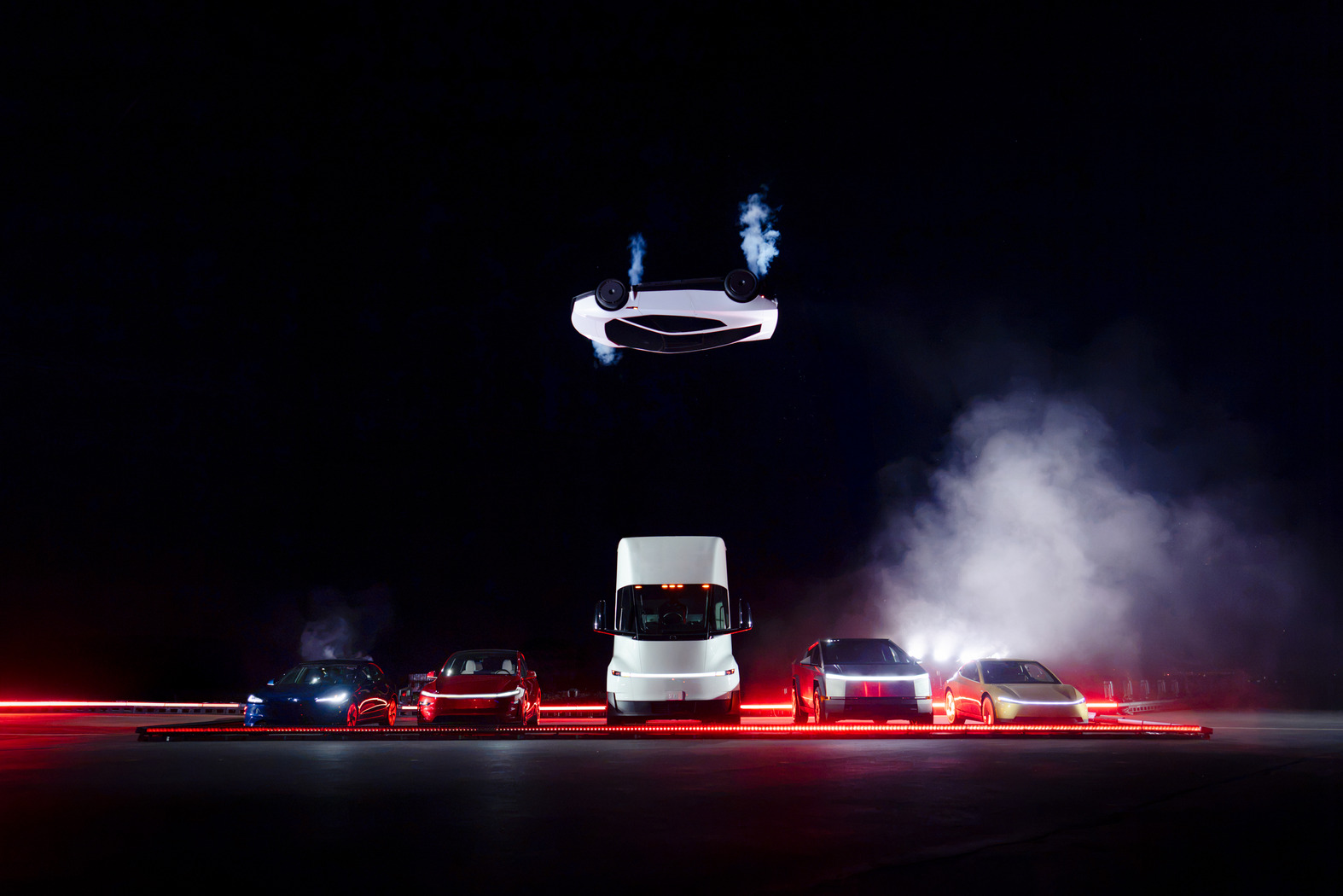
“We began volume production of Tesla Semi, our Class 8 heavy-duty truck. The top variant can go 500 miles at full 82,000 lbs gross combination weight while achieving an efficiency of 1.7 kWh/mile. That efficiency allows the Tesla Semi to use a third of the energy used by a comparable diesel truck to haul the same payload. In a transportation market where energy is one of the largest components of total cost per mile, this will provide a meaningful advantage to Tesla Semi operators.”
SI Compute
“We plan to reach 400 MW of SI training compute by the end of the year, supporting the development of both vehicle and humanoid robot autonomy software. Additionally, we continued construction for the Austin Fab, where we plan to start commissioning equipment in 2027.”
Robotaxi
“We began deployment of Cybercab into our Robotaxi fleet in Austin. We reached nearly two million cumulative unsupervised miles for our Robotaxi service as of the end of the quarter. Operating hours in Austin are now 6am to midnight, and we expect to reduce wait times via increased fleet supply and improvement of Robotaxi orchestration algorithms. Grok is available in Cybercab with access to Grok Bot and Connectors, which allows users to manage their inbox, calendars, files, chats and tasks – all hands free via voice command – making Cybercab a mode of transport, a productivity space and, with our entertainment options, a second living room.”
Interested in ordering a Tesla? Use my referral code for three free months of Full Self-Driving (Supervised) here.
Elon Musk
SpaceX showcases exactly how it plans to catch Starship next month
SpaceX played a new Starship Flight 15 simulation showing the ship caught by tower chopsticks.
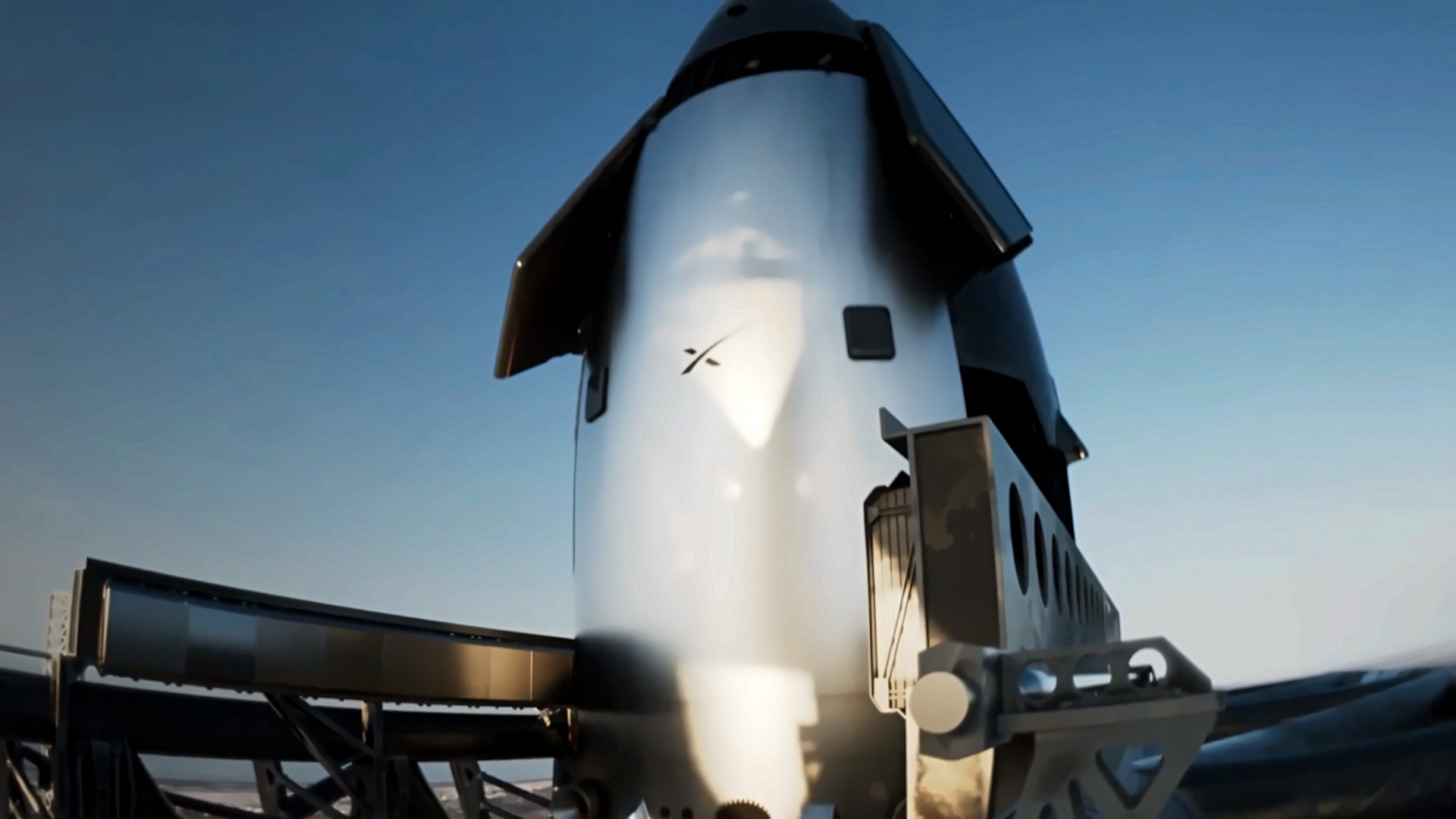
SpaceX gave its clearest look yet at how it plans to catch a Starship upper stage, playing a roughly 80 second animation of the maneuver during its third quarter earnings webcast on Tuesday. The clip ran under an “Up Next: Ship Catch” banner moments after Elon Musk confirmed that Flight 15, expected next month, will try to catch both the Super Heavy booster and the ship with the launch tower.
The animation opens at ground level, looking up through the launch mount at a tower with its chopstick arms spread wide. It then cuts to the ship gliding back through the atmosphere in its horizontal belly flop position, with its forward and aft flaps steering the descent. A wide shot from the Starbase shoreline follows, where the ship is a small dot in the sky before it swings vertical and drops toward the launch towers. The final shots show the ship sliding down past the top of the tower, a close view of the hardware along its side meeting the arms, and the vehicle hanging in the chopsticks.
SpaceX has released a new Starship tower catch animation for the upcoming Flight 15! https://t.co/kStn01Da8u — Truthful🛰️ (@Truthful_ast) October 20, 2026
Musk called the catch the step that closes Starship’s reuse loop. “If we succeed, it will be the first time that an orbital launch vehicle has been fully recovered,” he said. He put the odds of success on the first attempt at “more likely than not,” and said SpaceX has “a steady stream of Starship flight attempts through the end of this year” if Flight 15 falls short.
The sequence mirrors work SpaceX has already done with real hardware. In September, Ship 42, the vehicle assigned to Flight 15, was lifted by the Pad 2 chopsticks into a simulated catch position, where crews cycled the arms and connected the ship quick disconnect arm while it hung from the tower. NASASpaceflight has since reported that SpaceX removed Ship 42’s engines before its static fire and sent it back for another cryogenic test.
Gwynne Shotwell covered the regulatory side on the same call. After what she called “significant constructive engagement with the FAA,” SpaceX expects the Flight 15 license “to include return to launch site and tower catch for both stages.” Bringing the ship home means reentering toward land instead of the open ocean, which Musk said in February would only happen once the chance of the ship breaking up over land was very low, after two perfect soft landings at sea.
SpaceX has caught Super Heavy with the tower three times, on Flights 5, 7 and 8, but the ship returns from orbit at far higher speed and has never been caught. Flight 14 on September 28 was the first Starship to reach orbit, and it deployed 26 Starlink V3 satellites before splashing down, a mission SpaceX counted as its first revenue flight in the Q3 results it reported Tuesday.
The timing lines up with what Musk told the crowd at Giga Texas earlier this month, when he said Flight 15 would probably launch a little before Thanksgiving and that Flight 16 could refly both stages. On Tuesday’s call he went further, saying Starship should fly weekly at some point in the first half of 2027 and twice weekly or more by the end of next year as SpaceX works toward landing a rocket and launching it again with no refurbishment.
Elon Musk
Elon Musk just confirmed the Tesla and SpaceX merger step everyone was waiting for
Tesla and SpaceX formed special committees to weigh a merger, and Elon Musk supports it.
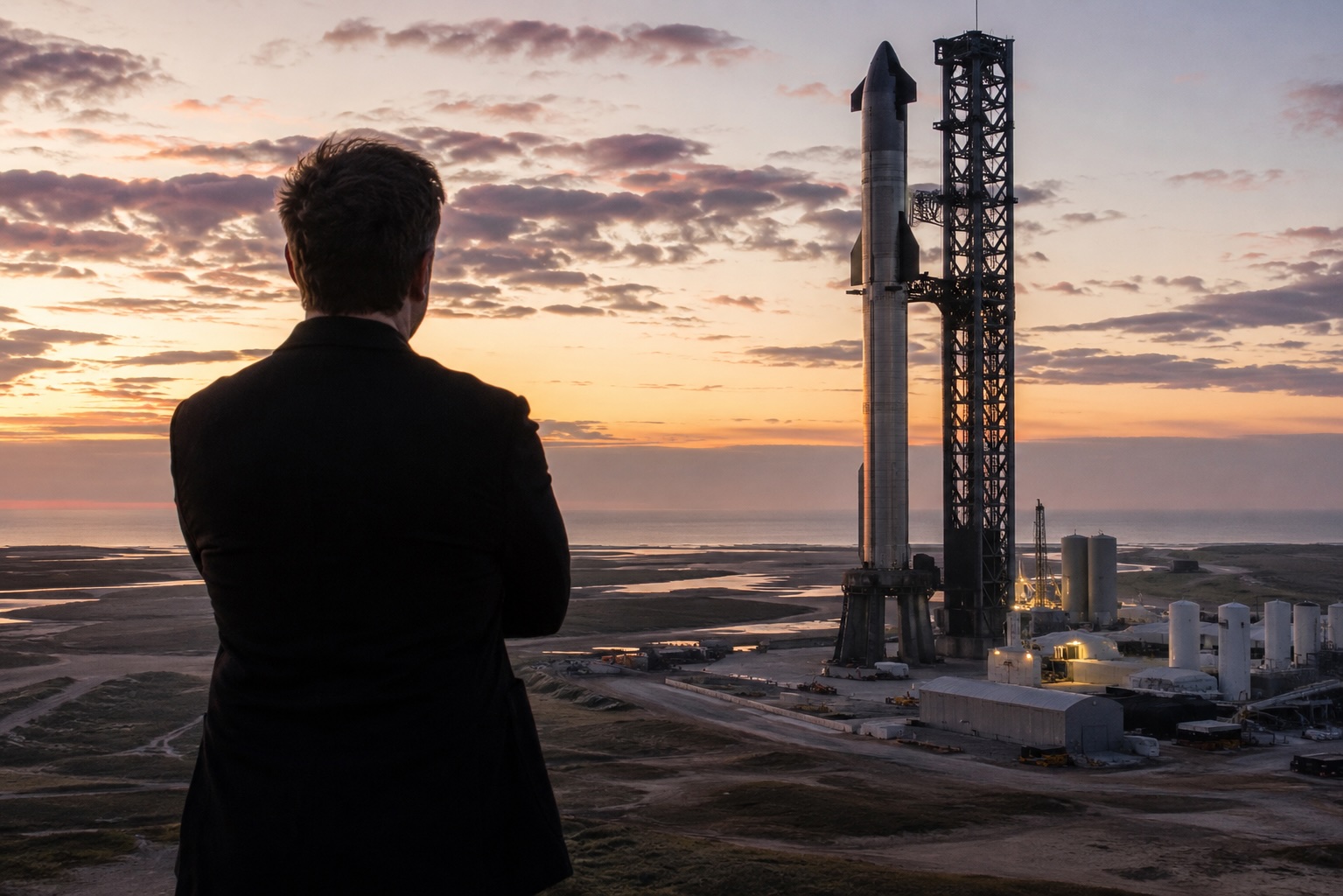
Elon Musk confirmed Tuesday that Tesla and SpaceX have each formed special committees of independent directors to study a possible merger, the first formal step toward combining the two companies after months of speculation.
Musk made the disclosure during SpaceX’s third quarter earnings call. “Both SpaceX and Tesla have formed special committees to discuss this idea at the request of shareholders,” he said. “Because I’m a conflicted party, I can’t actually be in the discussions of the special committees.” He described the setup as “an odd kabuki dance where two groups of people are talking and I can’t be in the conversation.”
Musk did not hide where he stands. “Do I think it would be a good idea? Yes,” he said, pointing to shared work on super intelligence software, chip design, the Terafab facility in Austin, robotics, mass to orbit and connectivity. “I do think there’s a lot of merit to combining the companies as we are pretty much in the super intelligence singularity.”
He also tried to cool expectations. The committees have not agreed on terms for any transaction, and Musk said assuming a merger is a certainty “would be overstating it.” Any deal would go to shareholders, and on the Tesla side it would need approval from 50 percent of all outstanding shares, not just the shares that are voted. Musk called that “quite a high hurdle.”
That bar has tripped Tesla up before. The company’s 2025 attempt to declassify its board won support from only 39.4 percent of outstanding shares and failed. Musk’s own voting stake sits near 20 percent after he exercised his 2018 options in June, so a deal would need broad backing from institutions and a retail base that often leaves votes uncast.
Timing is another open question. Tesla filed its proxy statement Monday for its December 3 annual meeting, and the ballot has only three items: director elections for Musk, Robyn Denholm and JB Straubel, a say on pay vote and auditor ratification. Barclays analyst Dan Levy had argued that an announcement would need to land by late October or early November to make the annual meeting, as Teslarati noted in its SpaceX earnings preview. With no terms agreed, any vote would likely require its own special meeting.
Elon Musk gives his most telling Tesla-SpaceX merger conversation yet
Musk has been edging toward this for weeks. At the All-In Summit in September, he asked “who can imagine what action one might take when there’s so much close collaboration,” Teslarati reported. Last week’s Roadster unveil, built around SpaceX derived cold gas thrusters, pushed the talk further. The two companies already share the Terafab chip project, and Tesla holds a small SpaceX stake that came from its earlier investment in xAI.
SpaceX brought strong numbers to the conversation. It reported Q3 revenue of $14.58 billion, up 161 percent year over year, with its Super Intelligence segment now its largest at $7.56 billion. A higher SpaceX valuation would shape any exchange ratio Tesla holders are offered.
Tesla reports its own third quarter results after the close on Wednesday, October 21. Investors had already ranked merger timing among the top retail questions for SpaceX’s call, and the committees will almost certainly come up again on Tesla’s.

Tesla Cybercab gets a for sale date at last

Tesla Q3 2026 Earnings results: in-line revenues, slight beat on EPS


