News
Future Teslas Could Come “Energy Included”

Future Teslas could come “energy included”, no matter how much you drive, for the life of the car. Crazy as it sounds, Tesla can actually make money giving Tesla owners free energy at home not just at Superchargers. Key components are already on the road or under development at Tesla. So, how would this work, when will it happen and what does it mean for Tesla owners and Tesla investors?
How it works
Tesla can provide grid regulation and stabilization services worth as much as the energy used for charging, or more, by centrally controlling the time and rate at which Tesla cars are charged. Embedding a modest up-front cost increment into the price of a special Tesla charging connector, pays energy cost in excess of earnings from grid regulation and stabilization as an “annuity”, and can leave a lot of money in Tesla’s pocket, too. This model is similar to Tesla’s Supercharger business – there is a detailed analysis of Tesla’s Supercharger business I did a while back on Seeking Alpha.
Owners will handle charging differently. Instead of setting charging current, normal or range charging, and (optionally) the charging start time, the owner will instead set a time for charging to be completed and whether a normal or range charge is needed by that time. The Tesla charging control center will then match the charging rate of each Tesla car using over-the-air communication links to earn grid regulation fees and capture the best electric rates while making sure each car is recharged when the owner needs to drive off.
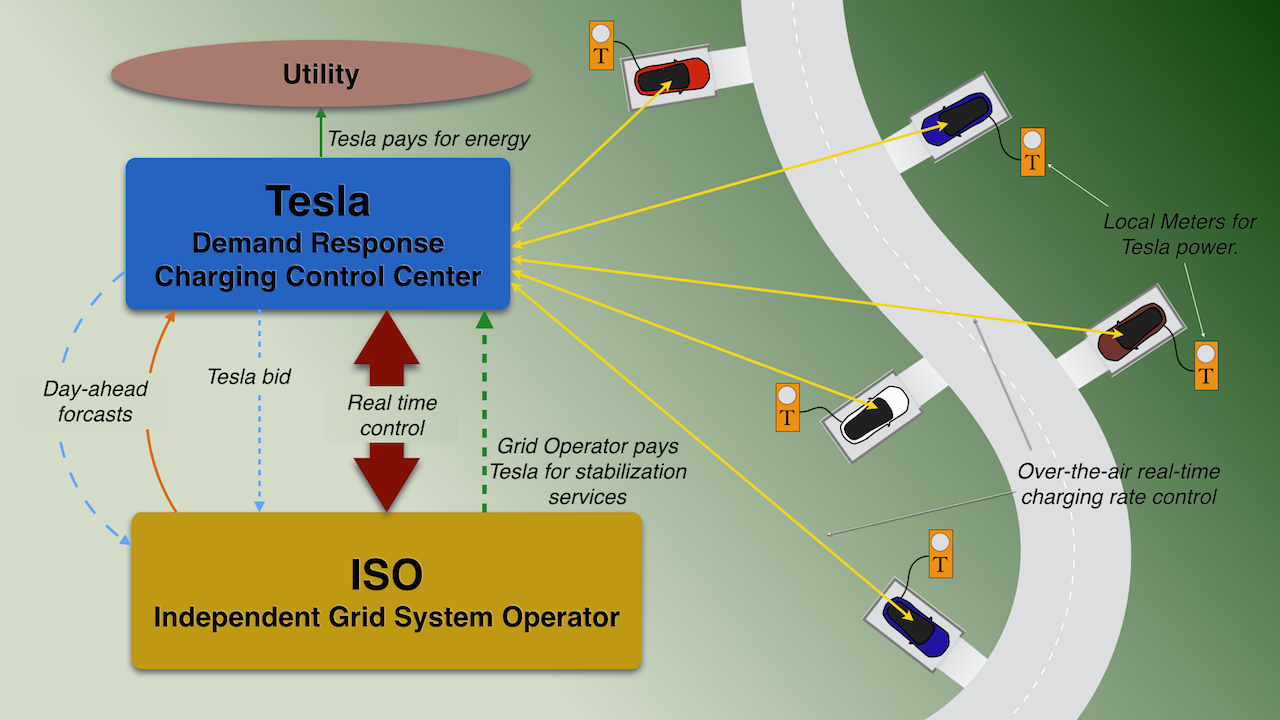
Central Control of Charging Rate Provides Grid Stabilization
Your garage charging connector will be fed from a separate meter and the connector will “identify itself” to the car to enable Tesla controlled charging.
Two things make this scheme economically viable. There is flexibility in exactly when your Tesla charges because most days the charging time is much less than the time your car spends plugged in overnight. This flexibility lets charging be “timed” to help regulate the grid. When wind generation surges due to gusts, or when system load suddenly drops, chargers can be switched on to “swallow” the power surge. The grid system operator, working through the Tesla charging control center can rapidly adjust the charging load to help stabilize the grid.
Rapid adjustment of loads on the grid is valuable because it allows the grid to use more wind power with less fossil generation online as “spinning reserve”. When a large number of car chargers quickly switch on to “swallow” a surge in wind generated power, the value of the “regulation down” can actually be greater than that of the energy used by the chargers. At these times, the system operator will actually pay to have cars charge!
When will free home charging happen?
The answer is, we aren’t there yet. Utilities are only beginning to wrestle with what happens when large amounts of battery storage get connected to the grid. This turns out to be quite complicated. This Sierra Club Energy-Storage Cost-Effectiveness paper offers a summary of the results of several grid storage studies done for the California Independent System Operator (CAISO). At this point we can’t do a specific financial model because technologies, rate structures and even how grid regulation will work with attached storage have not been set.
There are also, at this point, too few Tesla cars on the road to make their charging a significant source of grid regulation. And so far, there is no central control system in place to coordinate the charging of Tesla cars. But times are changing.
CAISO now operates a unified energy imbalance market (EIM) across all or parts of seven states (CA, ID, NV, OR, UT, WA, WY). Within a few years one can imagine upwards of half a million Teslas registered in these states. When these cars are (mostly) plugged in for charging at night, they together represent several giga-watts of load that can be switched on or off in seconds, using the central charging control scheme. That’s a lot of wind regulation capability that requires almost no additional capital investment. It just might get us “free” energy to charge Tesla cars in their owner’s garages.
Status: Where are we on the path to free energy?
Tesla is doing a lot more with grid connected storage and grid regulation than many Tesla owners, and even many Tesla investors realize. In May of this year, J.B. Straubel, Tesla’s Chief Technology Officer made the keynote presentation at Silicon Valley/ SEEDZ Energy Storage Symposium. He discussed a surprising array of Tesla storage products already being made and installed in grid applications, from small residential storage systems being rolled out by SolarCity to large industrial units delivering hundreds of kilowatts. Video of JB’s presentation is available on YouTube here.
A lot of the hardware needed for central charging control of Tesla cars is already part of every Tesla. Every Model S already has a big battery, of course. And high power 10kW or 20kW chargers that are controlled through the touchscreen and the car’s computer. Every Tesla car has a broadband communication link to Tesla company computers that is used to download software updates. These links are available to control charging on a car-by-car basis. Tesla already makes a high power wall connector (HPWC) that can be installed with connection through a standard utility meter. Buying and installing one of these will probably be a requirement to get “free” charging at home.
The only part of the remote charging scheme that isn’t online today is the central control system for “aggregating” car charging so it can be controlled by the grid system operator. Everything else needed to implement aggregated charge control for Tesla cars is either already in production at Tesla or available off the shelf as commercial products or communication services.
In his talk, JB describes aggregation of many residential storage systems to allow the grid operator to use that distributed resource in much the same way aggregated car charging control might be used to stabilize and regulate the grid. At the end of his talk, there is a Q and A session. Someone asks what Tesla’s plans are for eventually implementing the aggregated control center JB described. His answer, “We are building it now.”
Should Tesla owners / investors care about this?
Probably, but some caution is warranted. Tesla owners already talk to their ICE driving friends about how much less electricity costs compared to gasoline or diesel fuel. If in the future all Tesla charging is free, both at home and from Superchargers when traveling long distances, Tesla owners will be left with literally “nothing” to talk about – something their fossil fueled friends may (or may not) appreciate.
For Tesla investors, the prospect of making all the energy for Tesla cars free has some big implications. If the economics parallel those of the Supercharger business, Tesla could see very large additional profit (billions of dollars at least) for something that would require negligible new capital investment by Tesla.
There will be indirect benefits for Tesla, too. Already Tesla cars offer the advantage of much lower energy cost compared to ICE cars, and even hybrids. Free charging at home and at Superchargers would make Tesla cars energy cost even lower than other electric cars which get charged on the owner’s electric meter. While the absolute economic advantage of free charging, compared to other electric cars, will be modest, the emotional value of getting energy for free should never be underestimated as a competitive edge in the market place.
And of course there is the plain, simple novelty of offering a car that costs nothing to run. This is a feature no other car is likely to have, and which no other car (with the exception of soap box derby and solar-car competition cars) has had before. It is newsworthy, people will talk and write about it and it will produce a lot of buzz and free advertising for Tesla. Tesla investors need to be careful not to be overcome with hysteria as the shares go up, yet again.
Disclosure: Author is long Tesla.



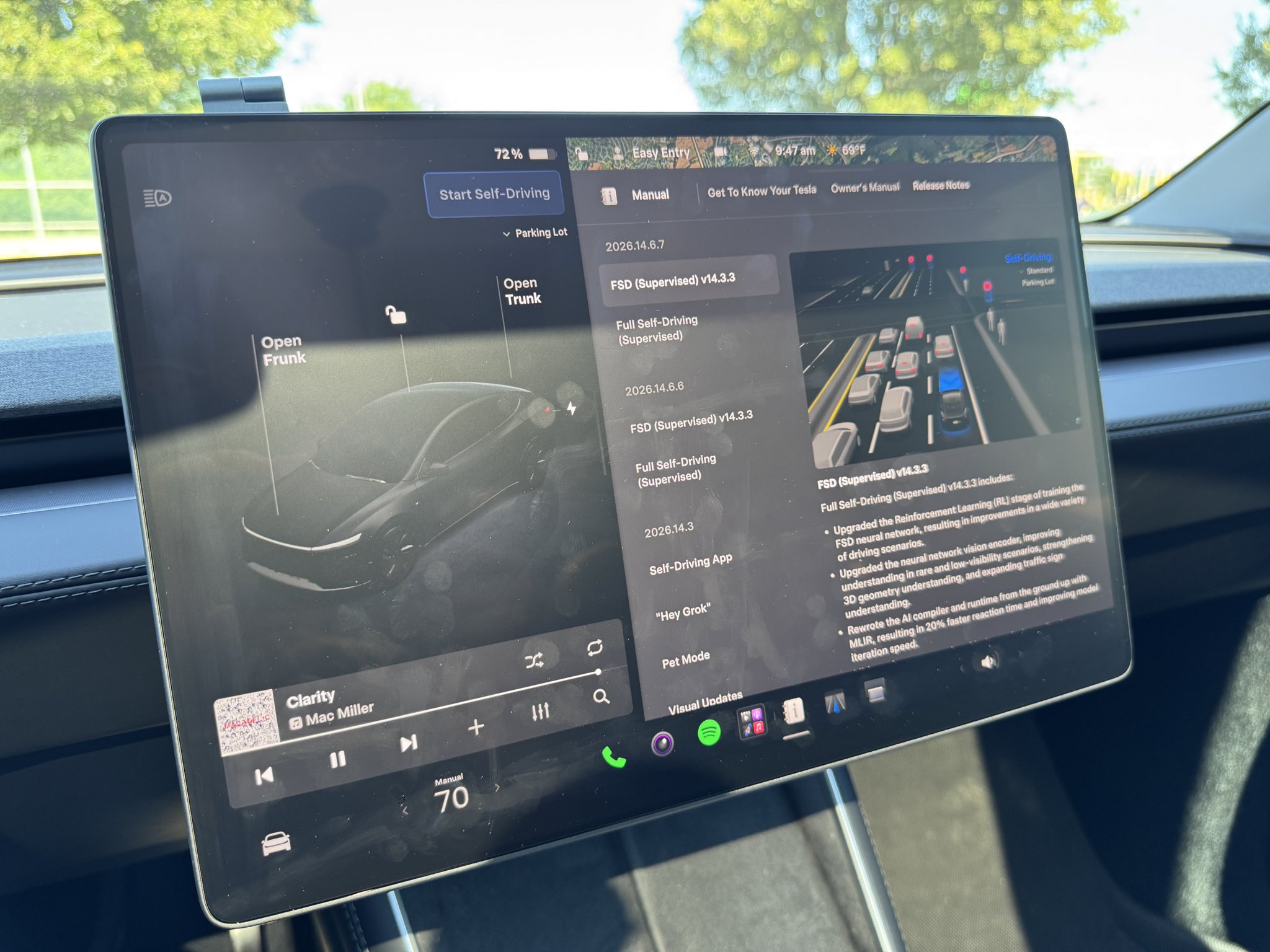
Tesla Full Self-Driving v14.3.3 driver monitoring was reportedly scaled back in recent releases, but a new version that was released in the early hours of June 3 aimed to do a better job of keeping those in control of their cars honest, according to release notes.
The release notes for FSD v14.3.3, via Software Version 2026.14.6.7 added:
“Improved driver monitoring system sensitivity with better eye gaze tracking, eye wear handling, and higher accuracy in variable lighting conditions.”
However, Tesla said this was already enabled in the first rollout of FSD v14.3.3 in late May. We tested it anyway, especially as the Standard Speed Profile seemed less-than-worried about what you were doing during operation.
I decided to try out the Hurry and Mad Max Speed Profiles for this test, and it gave me results that I would have expected. Tesla has evidently ramped up driver monitoring based on the Speed Profile you are using to travel.
The more aggressive the Speed Profile, the more on the hook you will be for taking your attention away from the road. Our testing showed that Mad Max was less likely to allow you to do normal things like change music or adjust navigation without getting an on-screen warning or nag from the driver monitoring system.
Hurry Mode Results
On Hurry, the driver monitoring system on FSD v14.3.3, via Software Version 2026.14.6.7, was more restrictive than Standard but less restrictive than Mad Max. I found that I could scroll through music options for a considerable amount of time, more than 30 seconds:
Roughly :31 between first touching the center screen and getting the first nag
— TESLARATI (@Teslarati) June 3, 2026
Standard gave me about 80 seconds of phone scrolling with absolutely no nags or warnings in a previous test. It is worth noting that this was a previous branch of v14.3.3, but Standard is such a goodie-two-shoes on the road that it is my impression it would not change much.
Here’s an 80-second phone nag test on Tesla FSD v14.3.3.
No alerts, no nagging, no annoyance. https://t.co/1dxvTOw5Cn pic.twitter.com/vYViFpjfoK
— TESLARATI (@Teslarati) May 29, 2026
Mad Max Results
I spent the majority of the drive on Mad Max to see how it truly reacted to the driver having their attention elsewhere. While I did do a short phone test, I am aiming to steer away from those and use the center screen. I think it is a valid criticism that the phone test is dangerous and, not to mention, illegal in Pennsylvania. Changing the navigation and music is a more reasonable, more responsible, and safer test.
With Mad Max being the fastest and most aggressive Speed Profile, I anticipated this being the quickest mode to give me an alert that I needed to look at the road. That was the case with music:
🎥 Testing Tesla FSD v14.3.3 (via 2026.14.6.7) nags on Mad Max https://t.co/qZALU2OujY pic.twitter.com/XddOJ0D47x
— TESLARATI (@Teslarati) June 3, 2026
As well as adjusting Navigation, when I received two nags:
🎥 Testing Tesla FSD v14.3.3 (via 2026.14.6.7) nag while adjusting navigation
Two nags here https://t.co/qZALU2OujY pic.twitter.com/xa3dtaDG1L
— TESLARATI (@Teslarati) June 3, 2026
These nags were more than reasonable, and I think it’s probably good that Tesla is ramping up the driver monitoring. I do believe that it should be relatively strict across all of the Speed Profiles, especially with phone use. When using the center screen, the nag intervals should be based on the speed profile you are utilizing at the time.
These driver monitoring adjustments are a great thing to have while FSD is still under its “Supervised” moniker, but I expect Tesla to continue pushing the limits on what it will allow, especially considering CEO Elon Musk has hinted that phone use is capable with the more recent versions.
You can watch the full drive on YouTube below:
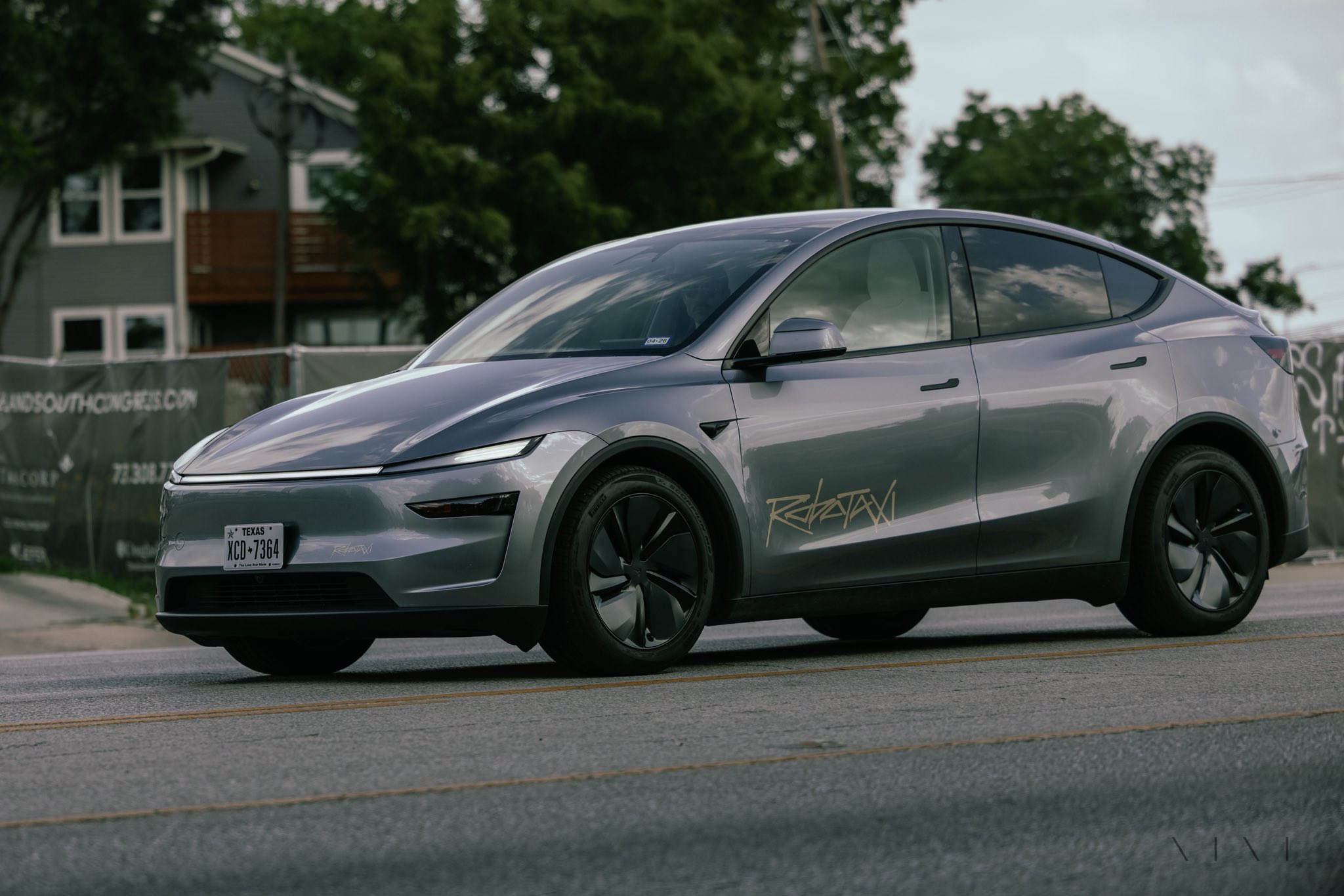
Tesla has responded to the skeptics of its Robotaxi program by launching a massive expansion of the unsupervised program in its initial rollout city of Austin.
The company’s geofence, the enabled area of operation for rides, now covers the entire Austin Metropolitan area, an incredible move just days after media headlines attempted to discredit the ride-hailing service.
Those who have access to the Tesla Robotaxi app on their smartphones can now request a ride in any portion of the Austin Metro area. The company confirmed this on the social media platform X:
Unsupervised Robotaxi now in the entire Austin Metro area https://t.co/eXNBdarvVS
— Tesla Robotaxi (@robotaxi) June 3, 2026
This is Tesla’s fifth expansion of the geofence, with the others occurring in July, early August, late August, and late October 2025. It has remained at that size since October 26, but Tesla has now more than doubled that size.
It is now covering the entire area, including suburbs like Pflugerville and Manor, as well as I-35 highways, Gigafactory Texas, and the Austin-Bergstrom Airport.
The move comes just days after various media outlets highlighted the small fleet size of Tesla’s Robotaxi fleet in Austin, something that is a reasonable criticism but an understandable move on the company’s part to prioritize safety.
Tesla has expanded its Robotaxi geofence many times, but its fleet has remained at a relatively conservative size as the company continues to push safety as its most crucial metric.
The latest expansion is a key indicator of Tesla’s comfort level to expand the ride-hailing service. The move shows Tesla is scaling unsupervised autonomy, as it demonstrates that the company’s Full Self-Driving system has reached sufficient reliability for a broader real-world deployment, which is something the company has worked on extensively.
It also shows Tesla is game for a competition with its rivals in the autonomous ride-hailing sector. Tesla has often matched or exceeded competitors like Waymo in coverage area, despite its smaller fleet. This step highlights Tesla’s iterative, data-driven progress toward a high-margin, app-based Robotaxi network.
It’s not the absolute largest area expansion ever, but achieving full unsupervised operations across a major metro is a key moment in the Robotaxi story. It shifts the program from limited pilot/testing toward a more mature commercial service, while gathering the miles needed for faster growth.
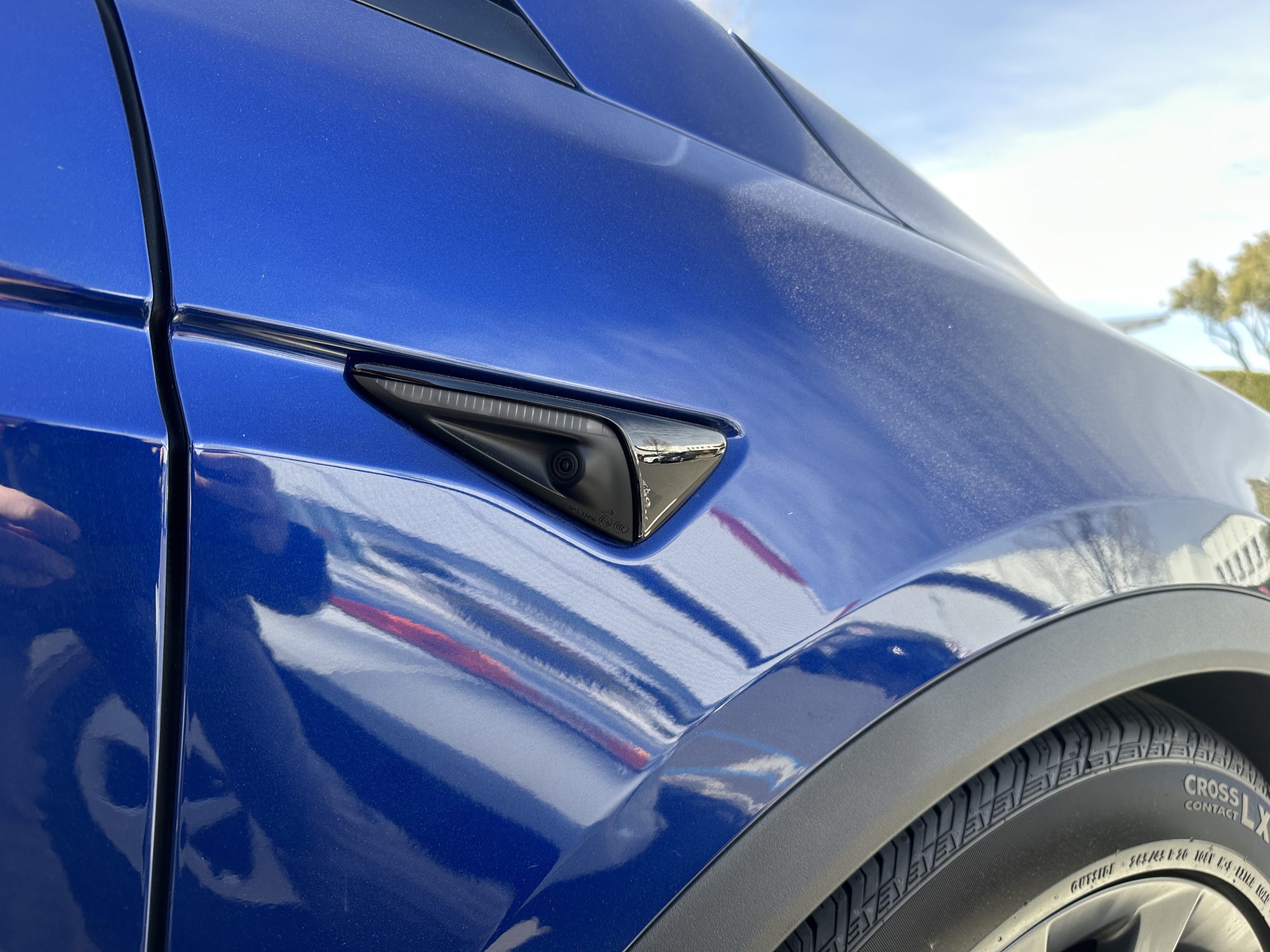
Tesla has improved Dashcam playback with an awesome new addition, as the company has launched a web-based version that is potentially easier to navigate and operate.
The tool is available at dashcam.tesla.com and will be enabled as your vehicle receives the 2026.20 Software Version. Clips that are captured by your Tesla will be available on the Online Dashcam Clip Viewer once the files on your car’s storage drive are encrypted.
Not a Tesla App first noticed the new feature, and states that once your Tesla updates to 2026.20, the car will automatically protect the clips with an encryption key that is uniquely tied to your owner account.
Tesla Launches New Web-Based Dashcam Viewer https://t.co/AlJKXYxujJ pic.twitter.com/4igicYpvkX
— Not a Tesla App (@NotATeslaApp) June 2, 2026
The web-based viewer should be easier to operate for most. All you will do is head over to dashcam.tesla.com and log in using your account credentials.
Ensure your vehicle is updated to 2026.20 in order for the web-based viewer tool to fetch your vehicle’s saved dashcam clips.
Currently, only a small percentage of owners are updated to this, so it may be a couple of weeks until a majority of owners in the fleet are able to access this feature.
Watching Dashcam clips on the Tesla smartphone app is quick and convenient, as they can also be easily downloaded and stored right on your smartphone.
However, the clips are sometimes tougher to navigate, and in order to get details like self-driving activation, speed, and turn signals, owners have to screen record the Tesla app and crop out the rest of the screen.
It could also be a massive storage saver as you’ll be able to download the Dashcam clips from the online viewer and save them to your laptop, desktop, a flash drive, or even an external hard drive. This will keep all your clips in one place.

Tesla Full Self-Driving v14.3.3 driver monitoring: We tested it

Tesla responds to Robotaxi skeptics with a massive move in Austin


