Elon Musk
Tesla Full Self-Driving v14.2.1 texting and driving: we tested it
We decided to test it, and our main objective was to try to determine a more definitive label for when it would allow you to grab your phone and look at it without any nudge from the in-car driver monitoring system.

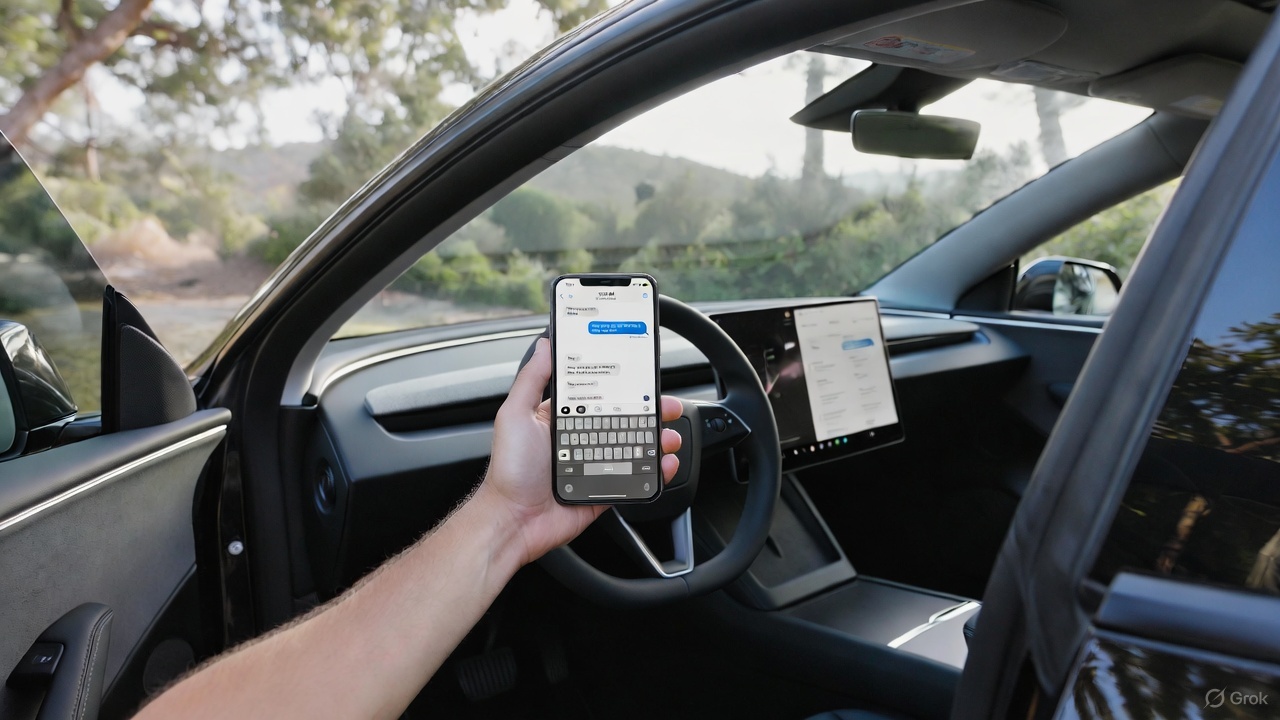
On Thursday, Tesla CEO Elon Musk said that Full Self-Driving v14.2.1 would enable texting and driving “depending on [the] context of surrounding traffic.”
Tesla CEO Elon Musk announces major update with texting and driving on FSD
We decided to test it, and our main objective was to try to determine a more definitive label for when it would allow you to grab your phone and look at it without any nudge from the in-car driver monitoring system.
I’d also like to add that, while Tesla had said back in early November that it hoped to allow this capability within one to two months, I still would not recommend you do it. Even if Tesla or Musk says it will allow you to do so, you should take into account the fact that many laws do not allow you to look at your phone. Be sure to refer to your local regulations surrounding texting and driving, and stay attentive to the road and its surroundings.
The Process
Based on Musk’s post on X, which said the ability to text and drive would be totally dependent on the “context of surrounding traffic,” I decided to try and find three levels of congestion: low, medium, and high.
I also tried as best as I could to always glance up at the road, a natural reaction, but I spent most of my time, during the spans of when it was in my hand, looking at my phone screen. I limited my time looking at the phone screen to a few seconds, five to seven at most. On local roads, I didn’t go over five seconds; once I got to the highway, I ensured the vehicle had no other cars directly in front of me.
Also, at any time I saw a pedestrian, I put my phone down and was fully attentive to the road. I also made sure there were no law enforcement officers around; I am still very aware of the law, which is why I would never do this myself if I were not testing it.
I also limited the testing to no more than one minute per attempt.
I am fully aware that this test might ruffle some feathers. I’m not one to text and drive, and I tried to keep this test as abbreviated as possible while still getting some insight on how often it would require me to look at the road once again.
The Results
Low Congestion Area
I picked a local road close to where I live at a time when I knew there would be very little traffic. I grabbed my phone and looked at it for no more than five seconds before I would glance up at the road to ensure everything was okay:
In full: the Low Congestion Area pic.twitter.com/6DqlBnekPn
— TESLARATI (@Teslarati) December 4, 2025
Looking up at the road was still regular in frequency; I would glance up at the road after hitting that five-second threshold. Then I would look back down.
I had no nudges during this portion of the test. Traffic was far from even a light volume, and other vehicles around were very infrequently seen.
Medium Congestion Area
This area had significantly more traffic and included a stop at a traffic light. I still kept the consecutive time of looking at my phone to about five seconds.
I would quickly glance at the road to ensure everything was okay, then look back down at my phone, spending enough time looking at a post on Instagram, X, or Facebook to determine what it was about, before then peeking at the road again.
There was once again no alert to look at the road, and I started to question whether I was even looking at my phone long enough to get an alert:
In full: the Medium Congestion Area pic.twitter.com/gnhIfBVe6Q
— TESLARATI (@Teslarati) December 4, 2025
Based on past versions of Full Self-Driving, especially dating back to v13, even looking out the window for too long would get me a nudge, and it was about the same amount of time, sometimes more, sometimes less, I would look out of a window to look at a house or a view.
High Congestion Area
I decided to use the highway as a High Congestion Area, and it finally gave me an alert to look at the road.
As strange as it is, I felt more comfortable looking down at my phone for a longer amount of time on the highway, especially considering there is a lower chance of a sudden stop or a dangerous maneuver by another car, especially as I was traveling just 5 MPH over in the left lane.
This is where I finally got an alert from the driver monitoring system, and I immediately put my phone down and returned to looking at the road:
In full: the High Congestion Area pic.twitter.com/K9rIn4ROvm
— TESLARATI (@Teslarati) December 4, 2025
Once I was able to trigger an alert, I considered the testing over with. I think in the future I’d like to try this again with someone else in the car to keep their eyes on the road, but I’m more than aware that we can’t always have company while driving.
My True Thoughts
Although this is apparently enabled based on what was said, I still do not feel totally comfortable with it. I would not ever consider shooting a text or responding to messages because Full Self-Driving is enabled, and there are two reasons for that.
The first is the fact that if an accident were to happen, it would be my fault. Although it would be my fault, people would take it as Tesla’s fault, just based on what media headlines usually are with accidents involving these cars.
Secondly, I am still well aware that it’s against the law to use your phone while driving. In Pennsylvania, we have the Paul Miller Law, which prohibits people from even holding their phones, even at stop lights.
I’d feel much more comfortable using my phone if liability were taken off of me in case of an accident. I trust FSD, but I am still erring on the side of caution, especially considering Tesla’s website still indicates vehicle operators have to remain attentive while using either FSD or Autopilot.
Check out our full test below:


Elon Musk
Elon Musk’s surprise addition to the X Takeover lineup has fans talking
Elon Musk will join Saturday’s X Takeover at Giga Texas for a live virtual interview.

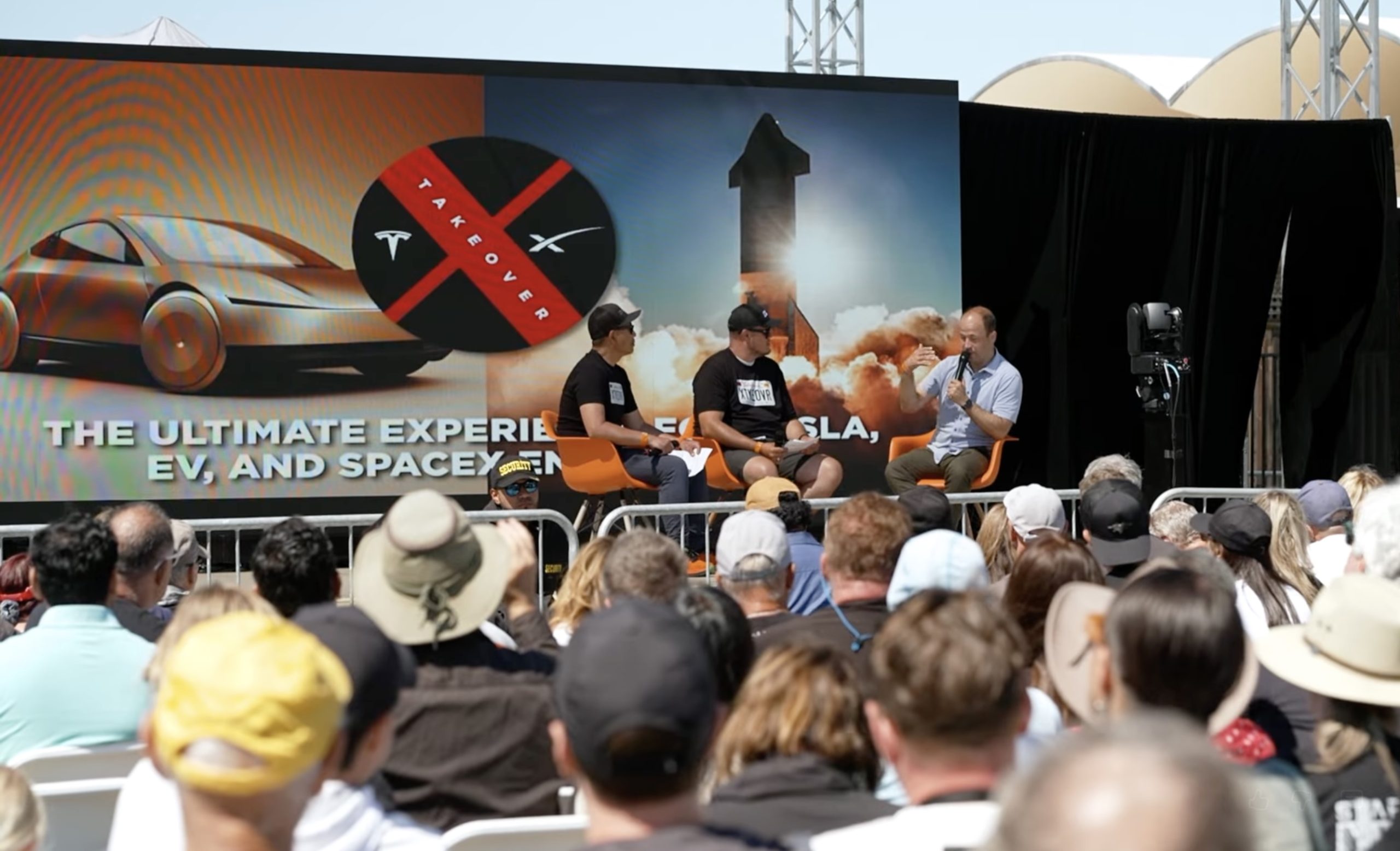
Elon Musk will join X Takeover at Giga Texas on Saturday for a live virtual interview, according to Sawyer Merritt, who shared the news late Thursday. Musk will not be on stage in Austin. The conversation is set to stream for free on the @teslaownersSV account on X.
Organizers had kept expectations in check. In a September update, Tesla Owners Silicon Valley said Musk had appeared at the event twice before but was not promising a third appearance, even as fans hoped he would walk the Giga Texas grounds in person. A virtual spot matches 2024, when Musk gave a surprise interview of about an hour to the crowd in San Luis Obispo, as Teslarati reported at the time.
Wasn’t expecting this 🫡
— Tesla Owners Silicon Valley (@teslaownersSV) October 9, 2026
This year’s edition is a first in several ways. It is the first X Takeover held outside California and the first at a Tesla facility, with tickets selling out in eight days. Tesla provides the venue, but the event is produced independently by Tesla Owners Silicon Valley. The main event runs from 10 a.m. to 6 p.m. CT, followed by a drone and light show at 9 p.m. Maye Musk is the keynote speaker, Franz von Holzhausen is set for a virtual keynote, and Nicki Minaj is the special guest. Joe Tegtmeyer, whose drone footage Teslarati used to track the Optimus factory steel frame at Giga Texas, is also on the speaker list.
Musk’s interview topics have not been revealed, but the backdrop is busy. Tesla doubled its Cybercab fleet in Austin in late September, and last week Musk explained why Robotaxi hours only moved from 10 p.m. to 11 p.m.. Merritt also reported Thursday that Texas DMV records now show 319 registered Cybercabs, up from 169. NHTSA’s deadline for Tesla’s sworn answers on Cybercab certification is October 30, and Tesla reports third quarter earnings on October 21.
Fans who cannot make it to Austin can watch the livestream on X. Musk tends to say more in unscripted settings than he does in prepared remarks, which is the reason this one is worth having open on Saturday.
Elon Musk
Trump presents Elon Musk with National Medal of Science, calls him “modern-day Thomas Edison”
Trump gave Elon Musk the National Medal of Science and compared him to Thomas Edison.
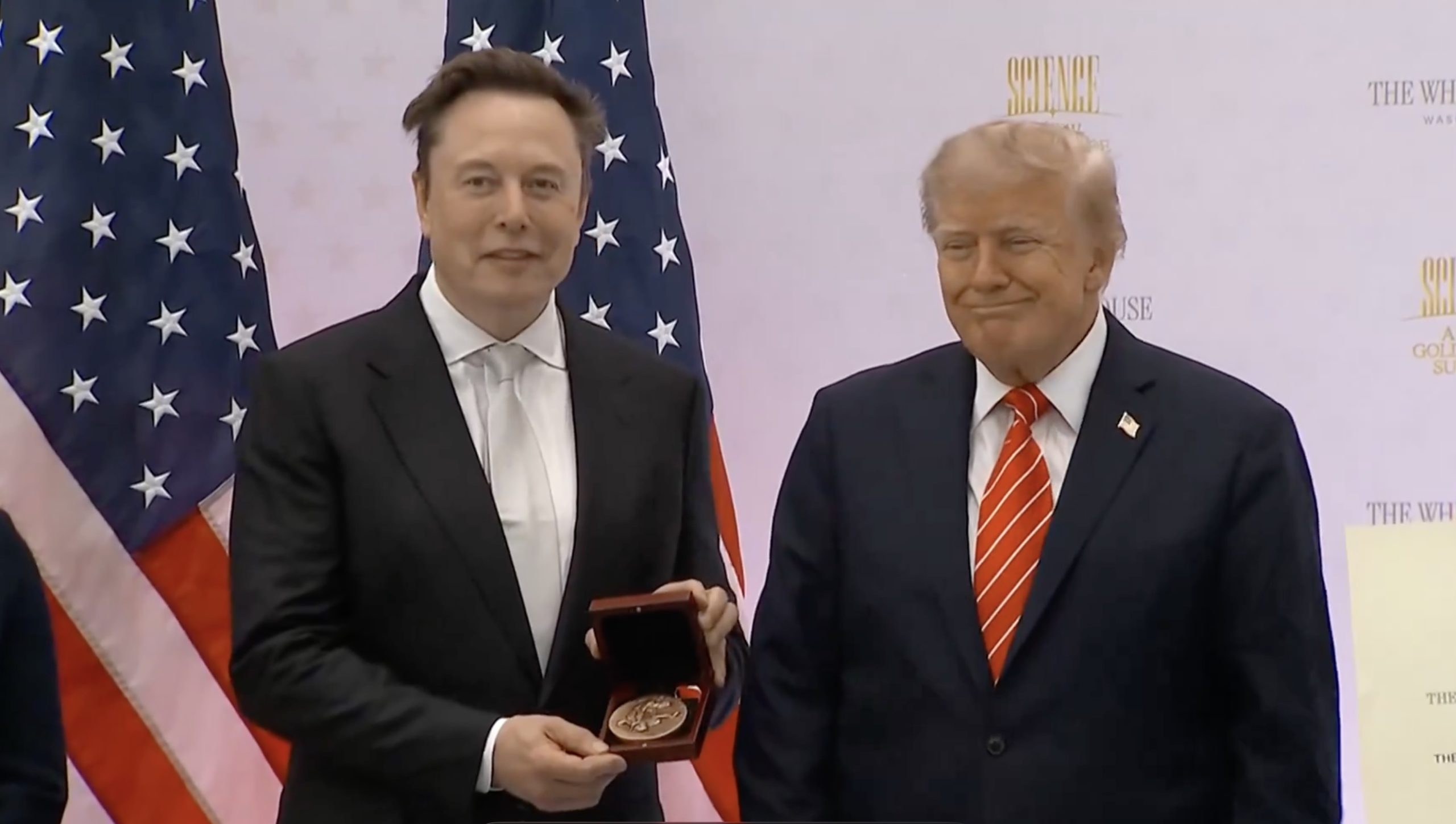
Elon Musk now has the highest honor the U.S. government gives to scientists and engineers. President Donald Trump presented him with the National Medal of Science on Thursday at the White House’s “Science: A New Golden Age” summit, held at the Institute of Peace in Washington, according to the White House.
Trump called Musk a “national treasure” and “our modern-day Thomas Edison.” “Few Americans in history have done more to advance America’s national interest than Elon in one field after another,” the president said. He also described Musk as an “industrial titan, brilliant engineer and one of the greatest technology founders to ever live.”
The official citation credits Musk “for engineering achievements of extraordinary ambition and scale that have pushed the frontiers of space exploration, intelligent systems, communications, and beyond, renewing American technological leadership and opening a new chapter in American manufacturing.” Tesla is not named in it, but “intelligent systems” and “American manufacturing” cover a lot of ground that Tesla and the Terafab chip project occupy.
Google co-founder Sergey Brin, Nvidia CEO Jensen Huang and AMD CEO Lisa Su received the same medal. Microsoft CEO Satya Nadella and Dell Technologies CEO Michael Dell were given the National Medal of Technology and Innovation. It was the first time Trump has handed out either award in his two terms. As Teslarati noted when the list was first reported on Wednesday, the National Science Foundation says 529 people have received the Medal of Science since Congress created it in 1959.
🚨 IT’S OFFICIAL: President Trump just PERSONALLY presented Elon Musk the National Medal of Science for his INCREDIBLE contributions to our nation
I can’t think of ANYONE who deserves this honor more 👏🏻
Congratulations, @elonmusk! https://t.co/GkAaVp9wb9
— Nick Sortor (@nicksortor) October 8, 2026
The ceremony closes a loop that opened in 2025, when Musk left DOGE and criticized the “Big Beautiful Bill,” sparking a public feud. Al Jazeera noted that Musk was the largest contributor to Trump’s 2024 campaign, and CNBC reported that all of the honorees have given financially to Trump or Republican causes in some form. The reconciliation has moved quickly in recent weeks. Musk sat at Trump’s left at the September 29 White House AI lunch, was named to help lead the Pentagon’s Project Meridian study on the future of warfare, and adopted the administration’s “super intelligence” wording when he said SpaceXAI will become SpaceXSI.
For Tesla and SpaceX shareholders, the practical question is what the closer relationship means for federal approvals. Tesla’s Robotaxi and Cybercab expansion depends on national autonomy rules, and SpaceX’s Starship and Starlink plans run through the FAA, FCC and NASA. Thursday’s ceremony did not change any of that directly.
Elon Musk
Elon Musk’s Boring Company lands a new Middle East deal, and Nashville is about to get faster
The Boring Company signs Abu Dhabi tunnel agreement while adding more Prufrock machines in Nashville.
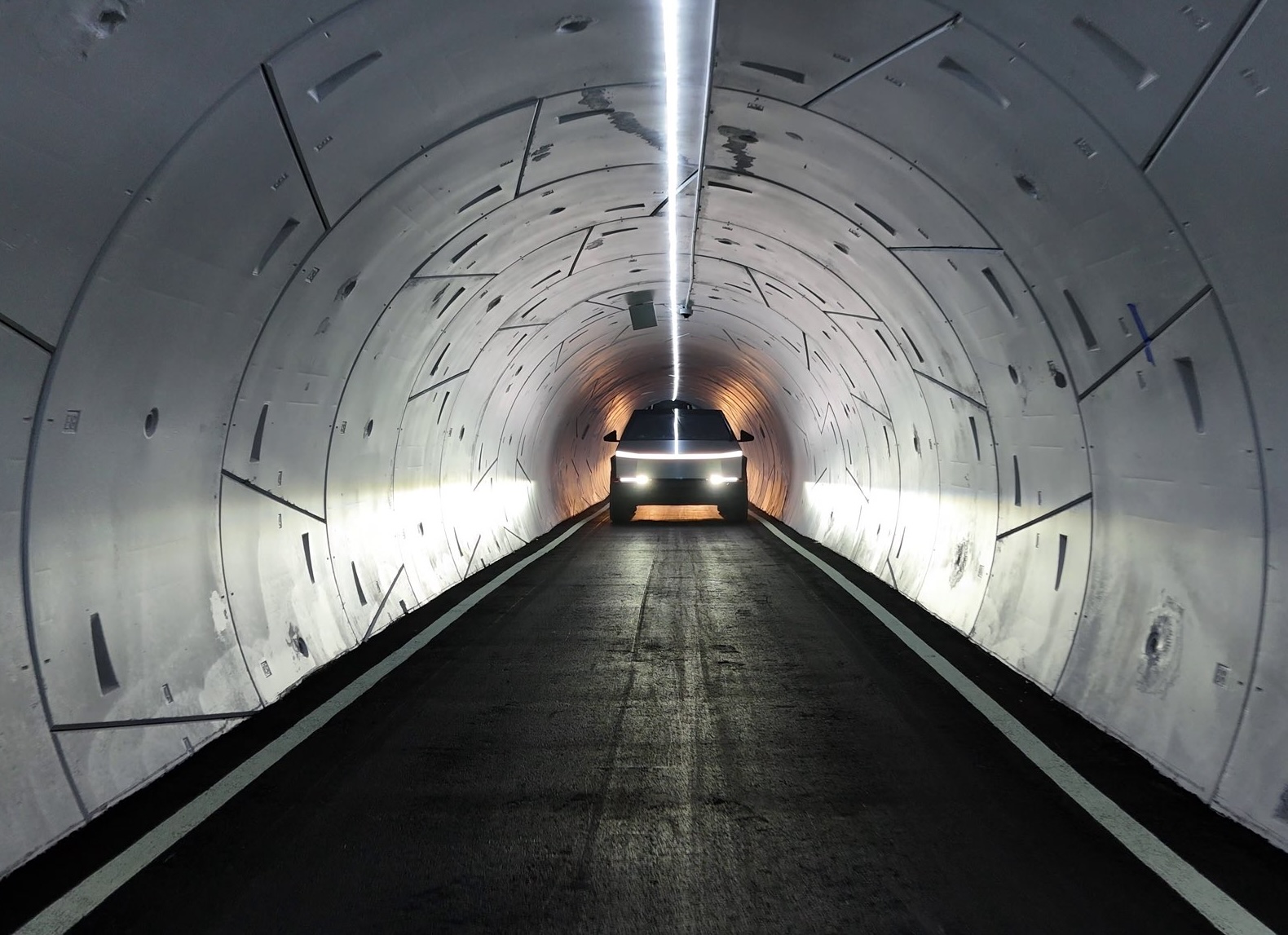
The Boring Company has signed an agreement with Abu Dhabi to study underground transport and utility tunnels across the emirate, adding a second UAE city to its pipeline as it prepares to also scale up tunneling back home in Nashville.
The deal was signed Thursday at the Liveability and Investment Exhibition (LIVEX 2026) by Boring Company President Steve Davis and Maysarah Mahmoud Salim Eid, director general of the Abu Dhabi Projects and Infrastructure Centre (ADPIC), according to the Abu Dhabi Media Office. Mohamed Ali Al Shorafa, chairman of the emirate’s Department of Municipalities and Transport, attended the signing.
Under the agreement, the two sides will assess feasibility, delivery and operating models for tunnels that could carry passengers or utilities. They will also look at Abu Dhabi’s potential as a regional hub for tunneling work. The current phase is exploratory, and no construction commitment or project budget has been announced.
“Abu Dhabi provides an ideal environment to explore the next generation of underground infrastructure solutions, supported by its ambitious growth vision and strong commitment to advanced technologies,”
Davis said. He added that the company wants to assess how tunnels can “expand urban capacity more efficiently, and enable better use of available space.”
The timing lines up with the money, considering last month, The Boring Company closed a $3 billion Series D led by the UAE and affiliated investors, valuing the company at $23 billion, as Teslarati reported. That round came with a commitment to build more than 150 kilometers of tunnel across the UAE, separate from the Dubai Loop pilot already under contract with Dubai’s Roads and Transport Authority. That pilot covers 6.4 kilometers and four stations linking DIFC and Dubai Mall at a cost of about $154 million.
Back home, The Boring Company projects in Nashville are also scaling up, with the company telling local NewsChannel 5 that a third Prufrock machine could start digging the Music City Loop in late October. A fourth is also targeted before the end of the year. Two machines are already mining Nashville limestone at the same time, and work is underway on a new launch site for the third.
The company said it has made more than 300 design and performance upgrades to its original Nashville machine. It is also working with property owners on more than 40 planned stations, with approvals in place for a future Nashville International Airport connection, a downtown station near the Music City Center, and stops at residential towers and the JW Marriott.
Construction on the Music City Loop began the same evening Tennessee and federal regulators approved the project’s lease in February, and the company targeted its first operational segment for late 2026. Back in Las Vegas, The Boring Company has said it plans to double its Vegas Loop station count by year’s end.

Elon Musk’s surprise addition to the X Takeover lineup has fans talking

It’s official: SpaceX takes aim at Verizon, AT&T, and T-Mobile

Trump presents Elon Musk with National Medal of Science, calls him “modern-day Thomas Edison”

The Pentagon taps Elon Musk to design the battlefield of the future

Tesla Roadster’s new patent preps white-knuckle speeds, keeping it grounded


