Lifestyle
Tesla Network could bring radical change to the way we own cars

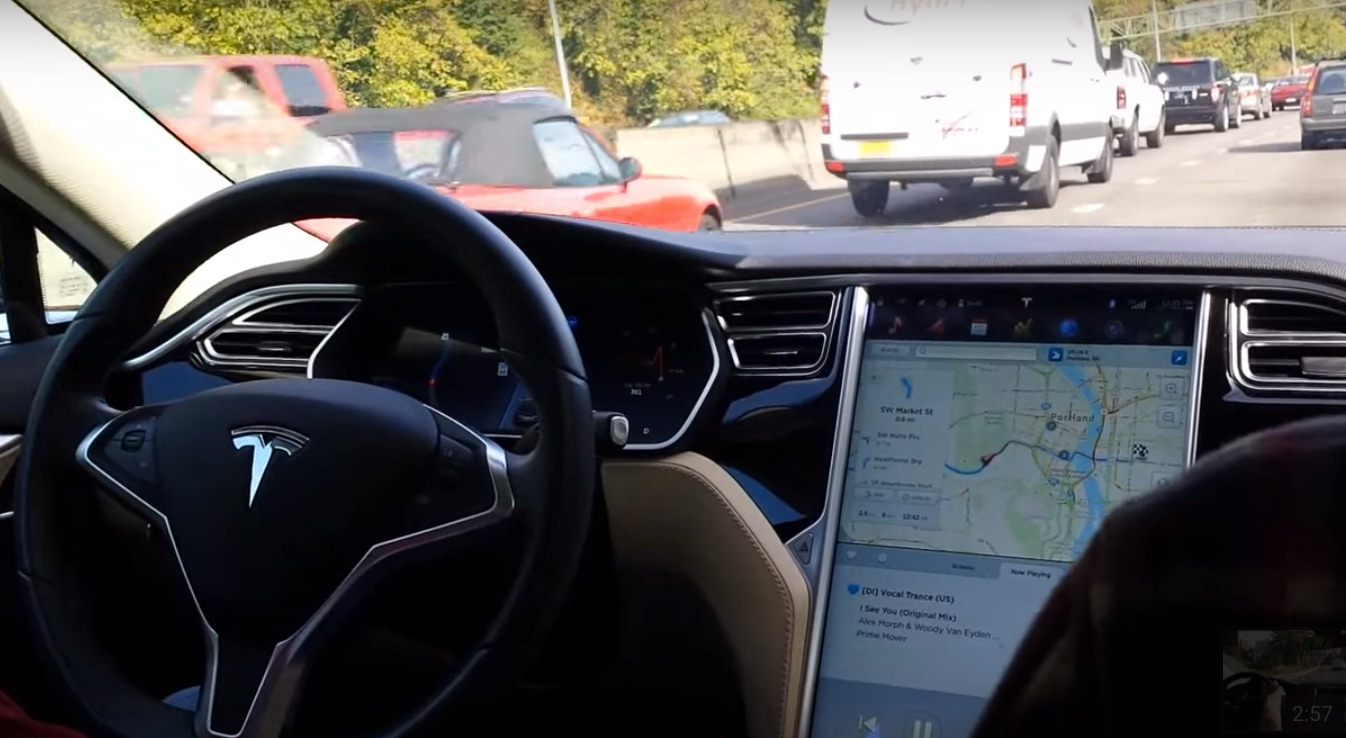
Just one tap on your phone could summon a Tesla right to your house as you enjoy your morning coffee. Not a morning person? Don’t worry about needing to make small talk with your driver—this car is driving itself. Take your coffee with you, hop in, and travel in comfort and style wherever you want to go. All that, and your trip costs less than a bus ticket.
That is the future according to Elon Musk with his proposed autonomous ride-sharing “Tesla Network.”
The ambitious Tesla CEO expects all new cars to be fully autonomous within the next 10 years and that owning a “regular” non-self-driving car will be akin to owning a horse. According to Musk’s “Master Plan, Part Deux”— which he released in summer 2016 as a follow up to his 2006 “Secret Tesla Motors Master Plan”— Tesla’s objectives include the official development of “a self-driving capability that is 10X safer than manual via massive fleet learning” and the ability of “car to make money for you when you aren’t using it.” Given that the typical car owner only uses their vehicle during about 5 to 10 percent of the day, having your car make money for the other 90 to 95 percent of the day could be a pretty sweet deal. While you’re at work, asleep, or even on vacation, your Tesla could be driving around the city, picking up and dropping off passengers without any extra effort on your part.
Tesla ride-sharing
The Tesla Network has the potential to upset the established ride-hailing giants, like Uber, in significant ways. Yet, it also has the potential to simply never materialize. Which road the Tesla Network ends up driving down depends on how quickly Tesla can develop its autonomous technology— and how quickly people can begin to trust it with their lives.
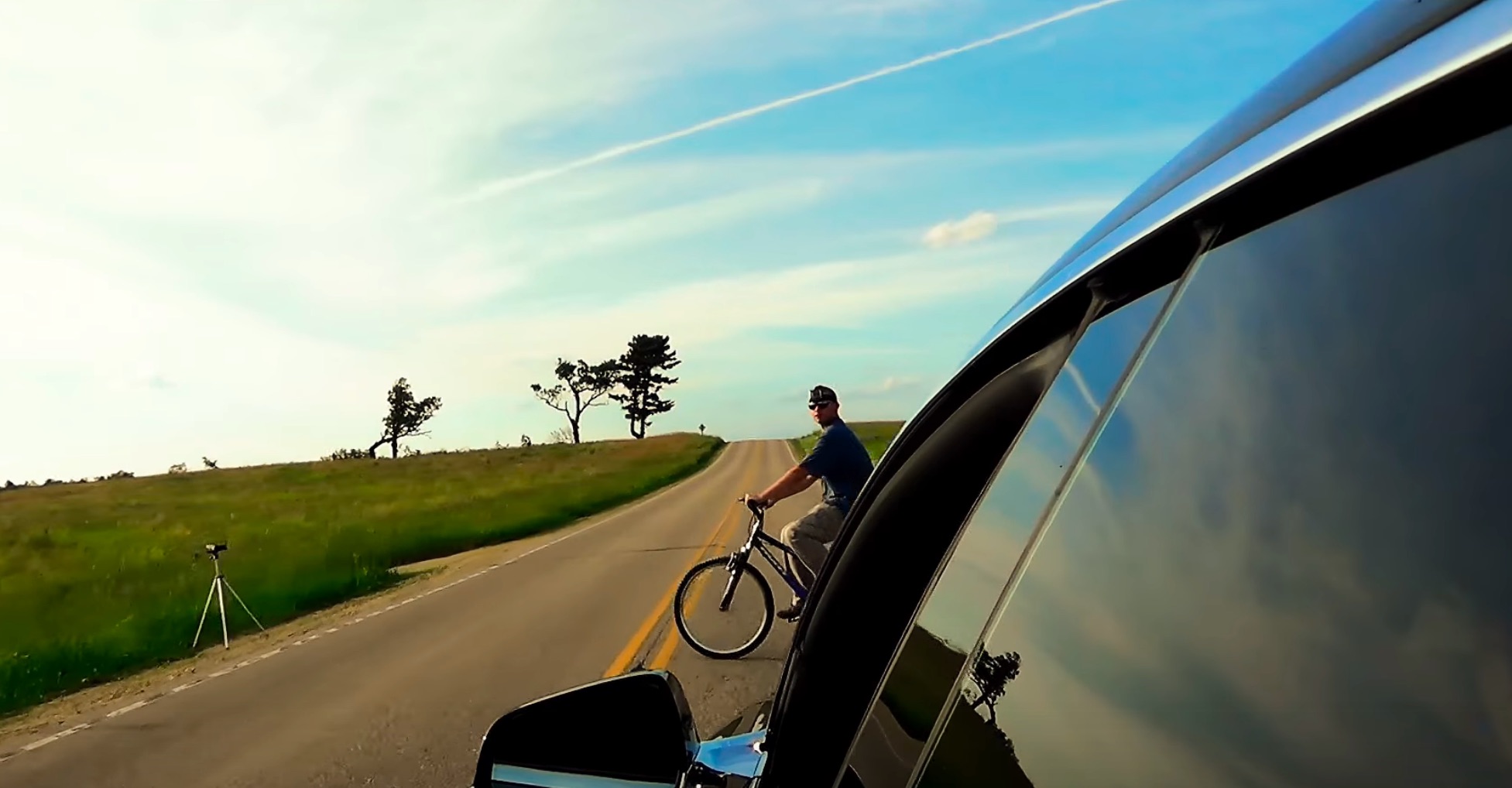
Tesla Model S owner tests human detection capabilities of Autopilot 2.0
All Tesla vehicles currently in production are equipped with the hardware necessary to support full autonomous driving in the future. For now, while Autopilot is impressive— it can change lanes, navigate traffic jams, and brake for obstacles with no human guidance needed—, it is far from perfect. The program is still technically in “public beta” testing, and rated by the National Transportation Safety Board as a 2 out of 5 on its scale of autonomy. To make up an effective fleet of self-driving vehicles riding around town while their owners are at work, Autopilot needs to be rated as a Level 5 on the NTSB’s scale. Musk predicts that Autopilot will be at true Level 5 autonomy within just two years. Even more ambitiously, he has announced that a Tesla will be able to drive completely autonomously from California to New York City by the end of this year.
Having this fleet could radically change the way that people get around each day. In a recent TED Talk, Musk said that the Tesla Network will provide cheaper transportation than public transport. This outcome would require both a large number of autonomous vehicles to be available to the public and would also require a large number of the public to use those vehicles. If both of these conditions are met, costs would plummet, potentially enough that Musk’s claim that riding on the Network “would cost less than a bus ticket” will come true. The owners of the Tesla Network fleet may have even more to benefit from the enterprise. By capitalizing on the average 95% of time their cars are simply parked in a garage or lot, Tesla hopes owners will be able to offset the relatively high cost of their vehicles or even exceed the cost and actually make profit.
However, just because one can own a Tesla with “Full Self-Driving Capability,” does not mean that they’re given free rein over the way they use that facility. Included in their order is a short, but important, disclaimer to sign: “Please note that using a self-driving Tesla for car sharing and ride hailing for friends and family is fine, but doing so for revenue purposes will only be permissible on the Tesla Network.”
The Competition
Musk is set on ensuring that the Tesla Network and its reputation grows in a controlled and organized fashion— and that the owner can’t use their car to support other competitors, like Uber or Lyft.
For those competitors, the Tesla Network threatens to disrupt their established leadership of the ride-hailing industry. Uber and Lyft, as well as automakers such as Cadillac, Audi, and Volvo, are furiously working to release their own Level 5 self-driving fleets of vehicles first, to take control of the market before anyone else can.
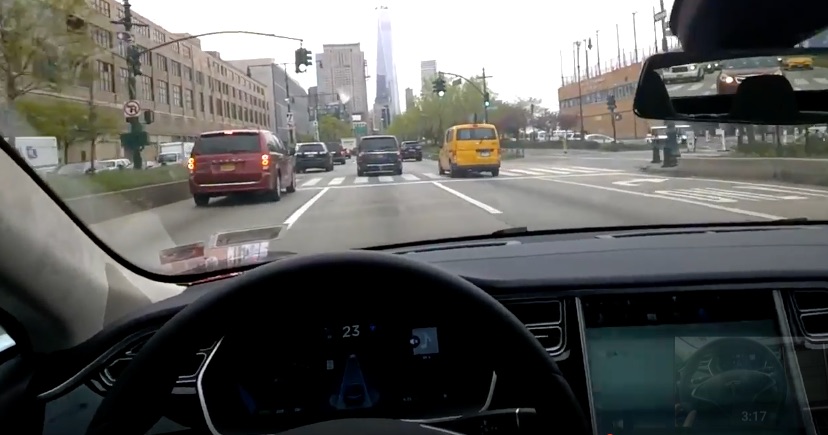
In a Business Insider interview, the president of GM, Dan Ammann, said most people won’t have their first autonomous vehicle experience in a car they actually own. Rather, he believes “it’s very clear that the first application of autonomous vehicles is in a ride-sharing setting.” GM has recently partnered with Lyft to develop autonomous vehicles. Tesla, meanwhile, is effectively locking Uber, Lyft, and other similar enterprises out of its Autopilot technology with its prohibition on using Tesla self-driving tech for revenue outside of the Network. Musk has implied that Tesla is not looking to be a direct competitor of Uber, saying, “It’s not Tesla versus Uber, it’s the people versus Uber.” On the other hand, Tesla rebuffed an offer last year by Uber’s former-CEO Travis Kalanick to partner in self-driving projects, as reported by Bloomberg.
Many people will use the Tesla Network to simply have experience riding in a Tesla that they may not be able to afford on their own. But for those who do own the coveted cars, how many will be willing to let others use their Teslas without supervision? Matthew DeBord of Business Insider notes, “Musk and his team are clearly thinking economically when they think about the Tesla Network. But they might not be thinking about how people really own cars — especially Teslas, which have around them a Ferrari-like halo of desirability.” Musk’s idea rests on the assumption that people’s desire to make extra money will outweigh their protective instincts of their Tesla. Of course, the advent of the mass-market Model 3, with a lower sticker price and higher availability, could affect this protectionism.
Safety First
The extent to which people are comfortable loaning their Teslas out will also depend on the degree to which the company is prepared to protect them from financial loss. When asked who bears the responsibility in a crash of a self-driving Tesla on the Tesla Network, Musk placed the majority of the burden on the owner of the vehicle. “I think it would be up to the individual’s insurance,” said Musk. “If it’s something endemic to our design, certainly we would take responsibility for that.” Uber and Lyft expanded their insurance coverage in 2015 to include liability insurance for drivers while they are “on duty.” It’s unclear whether Tesla owners would have a similar, if limited, safety net.
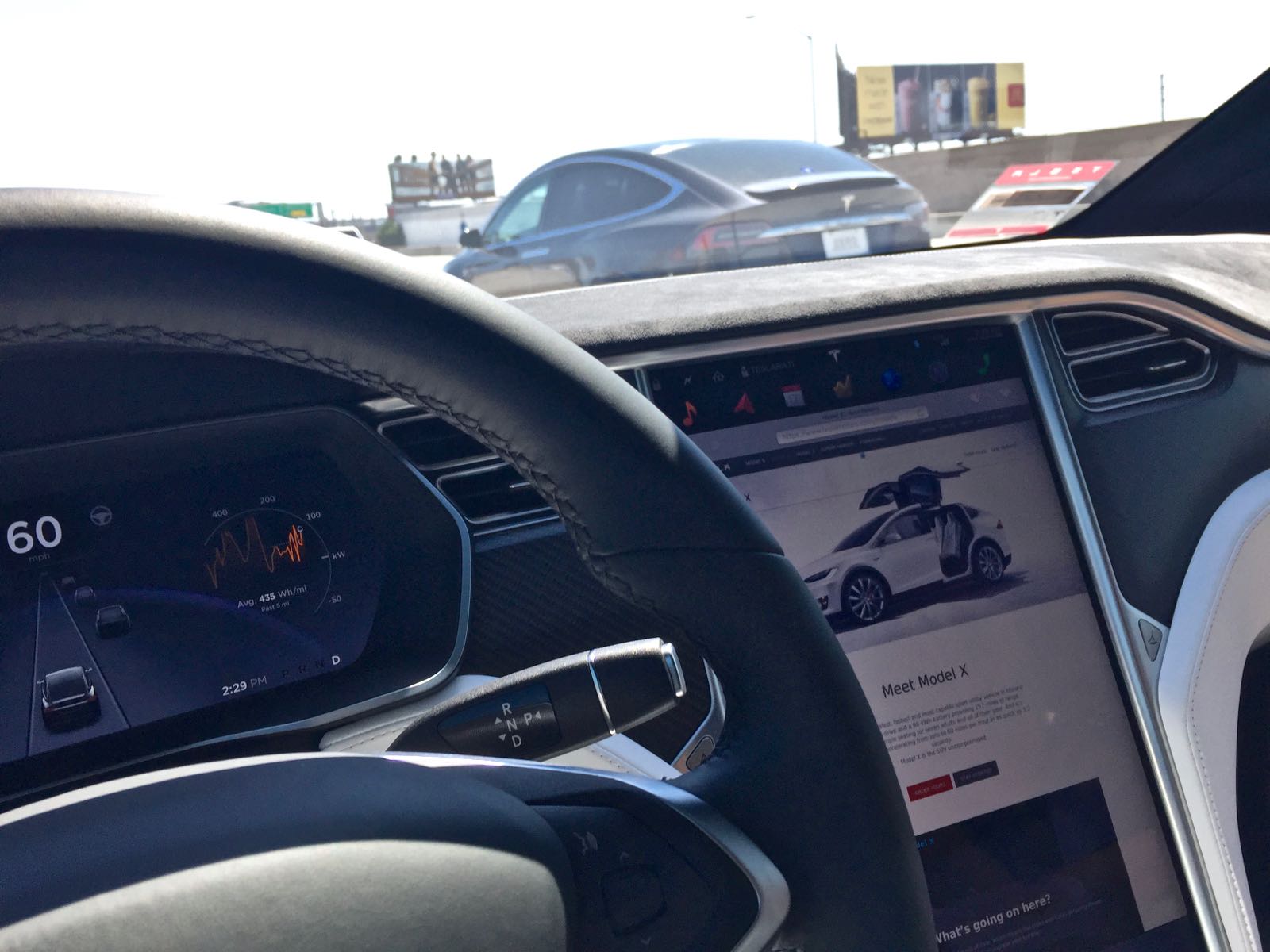
Of course, questions of insurance, liability, and use all depend on states giving permission to Tesla and others to use widespread self-driving technology first. Only a few states have any semblance of laws guiding self-driving cars’ testing and application, but Capitol Hill seems to be finally exploring the issue. A new bill being circulated in Washington would give federal regulators the power over self-driving tech, taking that authority from the states. Moving away from the patchwork of regulations, bans, and limitations between cities and states into a cohesive federal policy will help Musk’s Tesla Network grow in an organized and connected manner.
And even if regulators figure out how they want to control autonomous vehicles, Tesla still has to win the public’s trust to make the Tesla Network a widespread success. A 2017 Deloitte study shows that 74 percent of Americans don’t currently trust self-driving cars. Whether this is an easy fear to overcome or not is yet to be seen. But Musk’s ventures have consistently seen success in innovating first and asking questions second. The electric car, the reusable rocket, the solar roof, and the Tesla Network. The future is coming for us whether we’re ready or not.


Lifestyle
Tesla hit by Iranian missile debris in Israel
A Tesla in Israel absorbed a direct hit from missile debris, and the glassroof held.

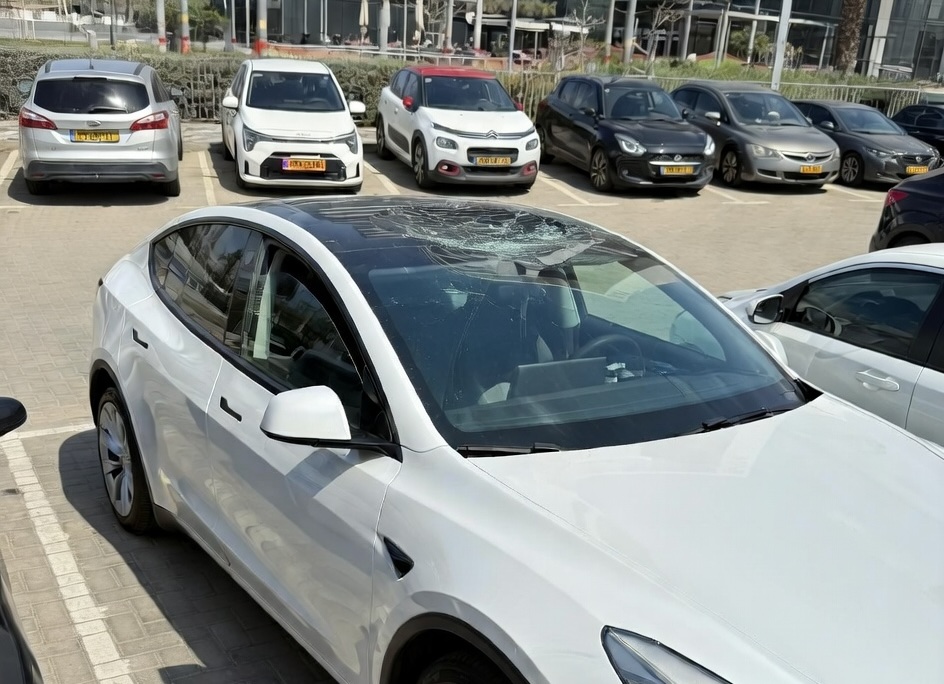
On March 30, 2026, Lara Shusterman was in Netanya, Israel when Iranian ballistic missiles triggered air raid sirens across the city. While she remained in safety, her 2024 Tesla Model Y did not escape untouched. A heavy piece of missile debris struck the car’s massive glass roof, leaving a deep crater but without shattering. In a Facebook post to the Tesla Israel community the following morning, Shusterman described what happened: “The glass did not shatter into dangerous shards. She stopped the damage and pushed the metal part to the ground.” She closed by thanking Elon Musk and the Tesla team for building what she called “security and a sense of trust even in extreme situations.”
Netanya is a coastal city in central Israel, roughly 18 miles north of Tel Aviv and has been among the areas most frequently struck during Iran’s ongoing missile campaign, following coordinated U.S. and Israeli strikes on Iranian military infrastructure. Falling shrapnel from intercepted missiles is a common occurrence.
-
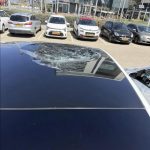
- Tesla Model Y glass roof shattered from a piece of falling Iranian missile debris
-
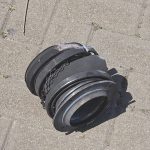
- A piece of Iranian missile debris that struck Lara Shusterman’s Tesla Model Y in Netanya, Israel on March 30, 2026, after being intercepted by Israeli air defenses.
-
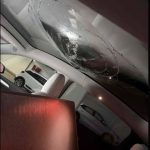
- Tesla Model Y glass roof shattered from a piece of falling Iranian missile debris
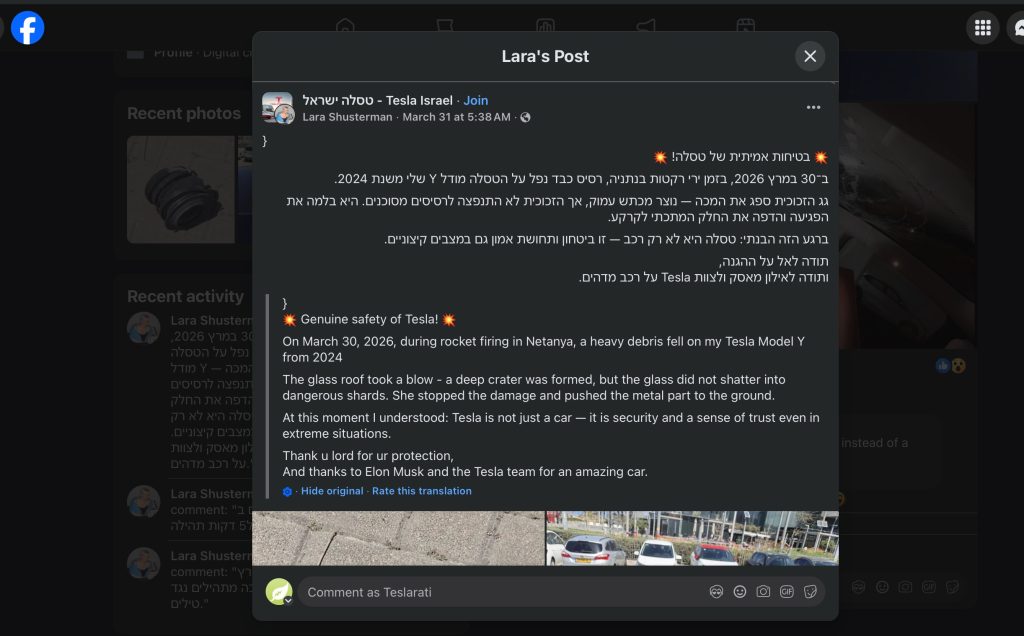
Source: Tesla Israel Facebook Group
The incident is a testament to Tesla’s structural engineering. Tesla’s glass roof is designed to support over four times the vehicle’s own weight. That strength has shown up in real-world accidents too. In 2021, a Model Y in California was struck by a falling tree during a storm, with the glass roof holding firm and the cabin remaining intact. In another widely reported incident, a Tesla Model Y plunged 250 feet off the cliff at Devil’s Slide in California in January 2023, with all four occupants, including two young children, surviving.
Disturbing details about Tesla’s 250-foot cliff drop emerge amid initial investigation
Tesla officially launched sales in Israel in early 2021 and captured over 60 percent of Israel’s EV market in the first year. The brand’s foothold in Israel remains significant. Tens of thousands of Teslas are now on Israeli roads, making incidents like Shusterman’s easy to corroborate. On the same week her Model Y took the hit, the U.S. Space Force awarded SpaceX a $178.5 million contract to launch missile tracking satellites, a separate but fitting reminder of how intertwined the Musk ecosystem has become with the realities of modern conflict.
Elon Musk
NASA sends humans to the Moon for the first time since 1972 – Here’s what’s next
NASA’s Artemis II launched four astronauts toward the Moon on the first crewed lunar mission since 1972.
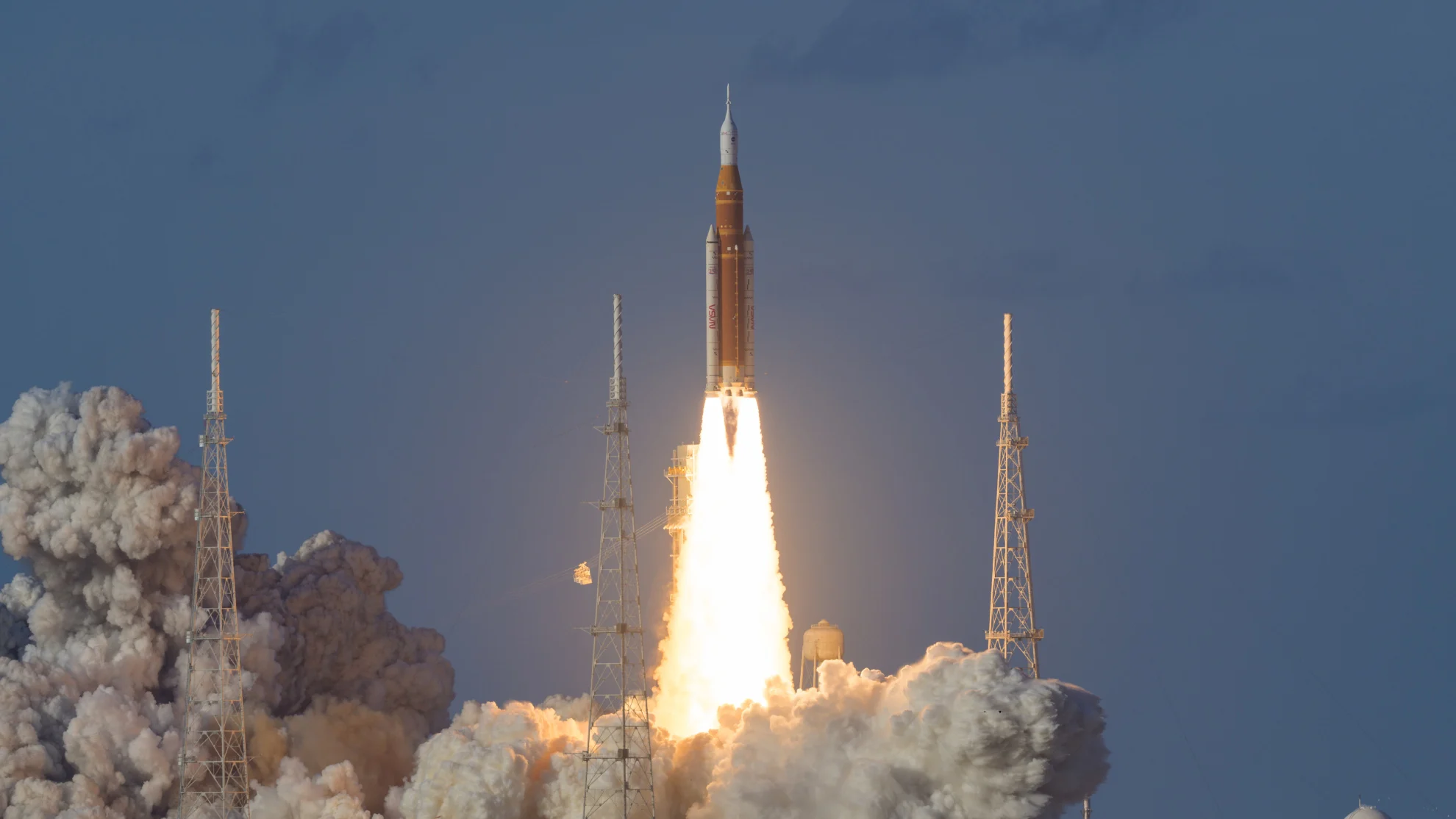
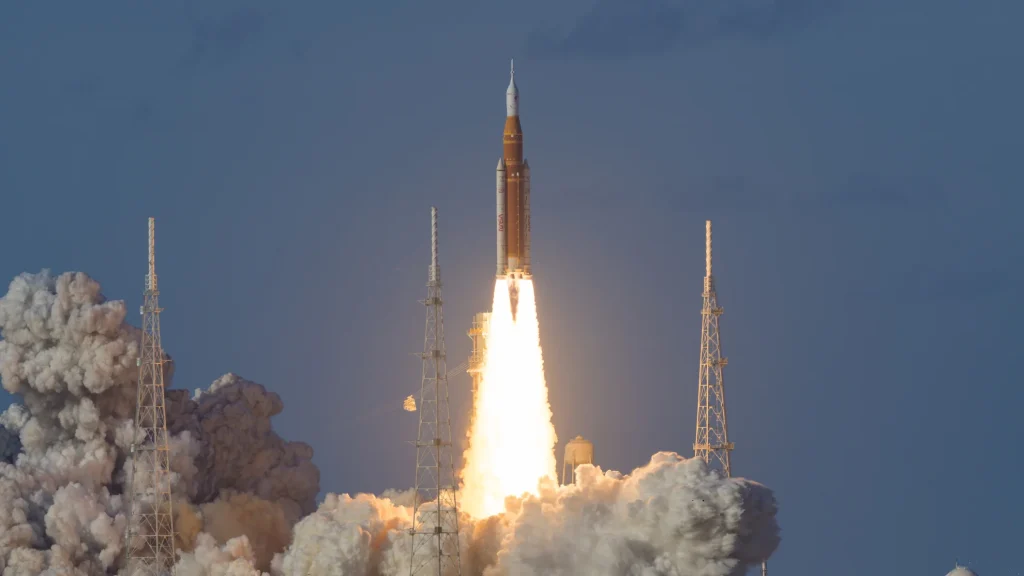
NASA’s Space Launch System rocket launches carrying the Orion spacecraft with NASA astronauts Reid Wiseman, commander; Victor Glover, pilot; Christina Koch, mission specialist; and CSA (Canadian Space Agency) astronaut Jeremy Hansen, mission specialist on NASA’s Artemis II mission, Wednesday, April 1, 2026, from Operations and Support Building II at NASA’s Kennedy Space Center in Florida. NASA’s Artemis II mission will take Wiseman, Glover, Koch, and Hansen on a 10-day journey around the Moon and back aboard SLS rocket and Orion spacecraft launched at 6:35pm EDT from Launch Complex 39B. (NASA/Bill Ingalls)
NASA launched four astronauts toward the Moon on April 1, 2026, marking the first crewed lunar mission since Apollo 17 in December 1972. The Artemis II mission lifted off from Kennedy Space Center aboard the Space Launch System rocket at 6:35 p.m. EDT, sending commander Reid Wiseman, pilot Victor Glover, mission specialist Christina Koch, and Canadian astronaut Jeremy Hansen on a 10-day journey around the far side of the Moon and back.
The mission does not include a lunar landing. It is a test flight designed to validate the Orion spacecraft’s life support systems, navigation, and communications in deep space with a crew aboard for the first time. If the crew reaches the planned distance of 252,000 miles from Earth, they will set a new record for the farthest any human has ever traveled, surpassing even the Apollo 13 distance record.
As Teslarati reported, SpaceX holds a central role in what comes next. The Starship Human Landing System is under contract to carry astronauts to the lunar surface for Artemis IV, now targeting 2028, after NASA restructured its mission sequence due to delays in Starship’s orbital refueling demonstration. Before any Moon landing happens, SpaceX must prove it can transfer propellant between two Starships in orbit, something no rocket program has done at this scale.
The last time humans left Earth’s orbit was 53 years ago. Gene Cernan and Harrison Schmitt of Apollo 17 were the final people to walk on the Moon, a record that stands to this day. Elon Musk has long argued that returning is not optional. “It’s been now almost half a century since humans were last on the Moon,” Musk said. “That’s too long, we need to get back there and have a permanent base on the Moon.”
The Artemis program involves 60 countries signed onto the Artemis Accords, and this mission sets several firsts beyond distance. Glover becomes the first person of color to travel beyond low Earth orbit, Koch the first woman, and Hansen the first non-American astronaut to reach the Moon’s vicinity. According to NASA’s live mission updates, the spacecraft’s solar arrays deployed successfully after liftoff and the crew completed a proximity operations demonstration within the first hours of flight.
Artemis II is step one. The Moon landing and the permanent lunar base come later. But after more than five decades, humans are heading back.
Elon Musk
Tesla Optimus Gen 3 is coming to the Tesla Diner with new ambitions
Tesla’s Optimus robot left the Hollywood Diner within months of opening. Now Musk is planning its return with a bigger role and a major Gen 3 upgrade underway.
![Tesla Optimus Gen 3 [Credit: Tesla]](https://www.teslarati.com/wp-content/uploads/2026/03/tesla-optimus-gen3-diner.jpg)
Tesla’s Optimus robot was one of the most talked-about features when the Tesla Diner opened on Santa Monica Boulevard in Hollywood on July 21, 2025. Dubbed “Poptimus” by Tesla fans, the Gen 2 robot stood upstairs at the retro-futuristic, drive-in theater and Tesla Supercharging station, scooping popcorn into bags and handing them to guests with a wave.
The diner itself had been years in the making. Elon Musk first floated the idea in 2018 with a tweet about building an “old-school drive-in, roller skates & rock restaurant” at a Hollywood Supercharger. What eventually opened was a unique two-story neon-lit space, with 80 EV charging stalls, and Optimus serving as a live demonstration of where Tesla’s ambitions were headed.
If our retro-futuristic diner turns out well, which I think it will, @Tesla will establish these in major cities around the world, as well as at Supercharger sites on long distance routes.
An island of good food, good vibes & entertainment, all while Supercharging! https://t.co/zmbv6GfqKf
— Elon Musk (@elonmusk) July 21, 2025
But Optimus did not stay long, and was gone by December 2025.
Now, the robot is set to return with a more demanding job. Musk has ambitions for Optimus to take on a food runner role in 2026, delivering meals directly to cars at the Supercharger stalls. While the latest Gen 3 Optimus is likely to initially take on its previous popcorn-serving role, it wouldn’t be out of the question for Optimus to see a quick promotion. With improved hand dexterity that features 50 total actuators and 22 degrees of freedom per hand, and significantly more powerful processing through Tesla’s latest AI5 chip that includes Grok-powered voice interaction, Musk described Optimus at the Abundance Summit on March 12, 2026, as “by far the most advanced robot in the world, Nothing’s even close.”
Back to work
See you at Tesla Diner tomorrow pic.twitter.com/H3tTajrUbu
— Tesla Optimus (@Tesla_Optimus) March 30, 2026
That confidence is backed by a major manufacturing shift. At the Q4 2025 earnings call in January, Musk announced Tesla would discontinue the Model S and Model X and convert those Fremont production lines to build Optimus. “It’s time to basically bring the Model S and X programs to an end,” he said, calling for a pivot that reflects where the Tesla’s future lies.

Tesla broadens most-wanted Model Y to eight new markets

Tesla hit by Iranian missile debris in Israel


