Energy
Tesla reportedly closing in on China deal to produce cars from local factory

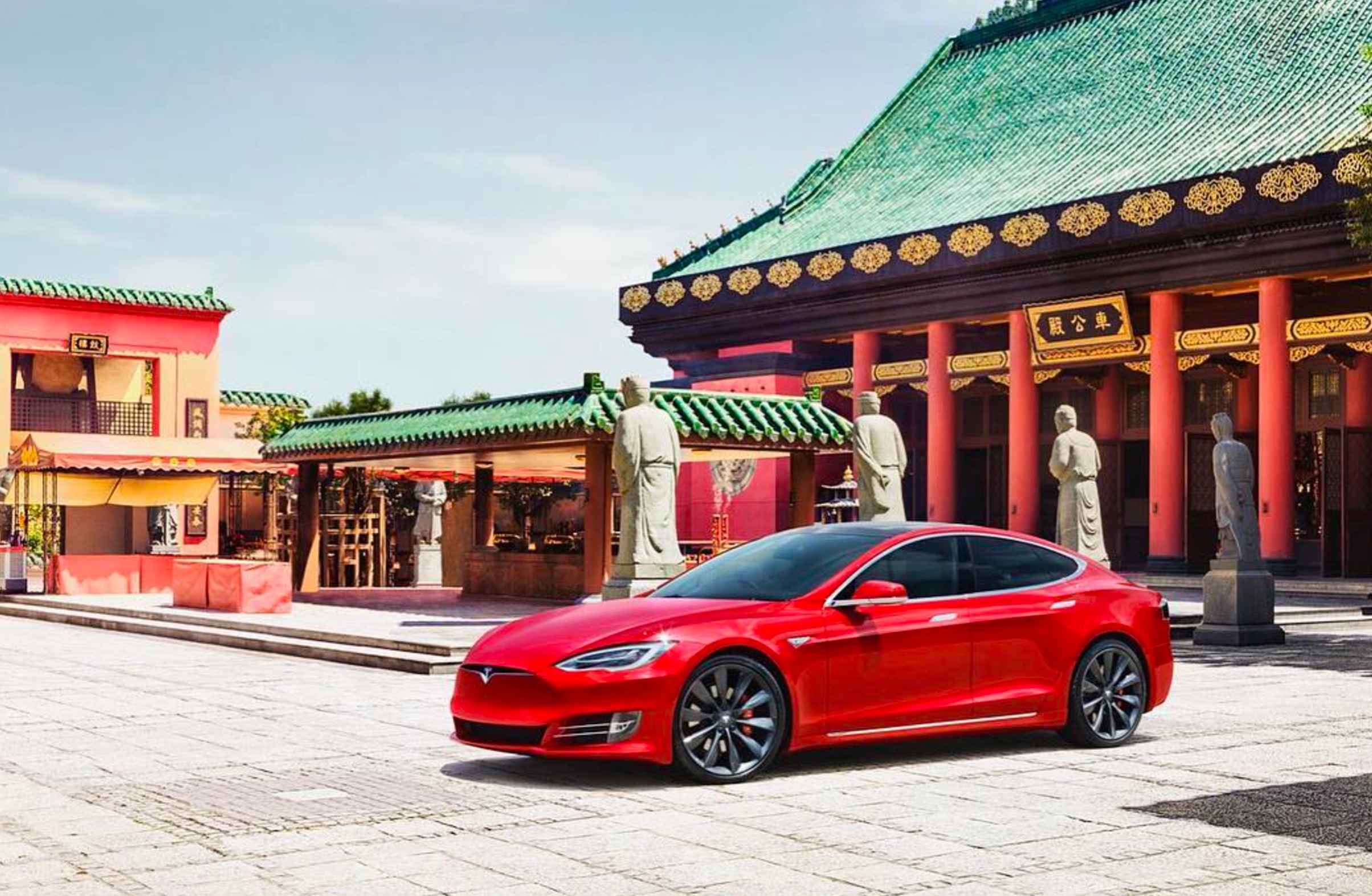
Tesla is close to securing a deal with the city of Shanghai that would allow the Silicon Valley-based electric carmaker to produce vehicles in China, according to a newly published report by Bloomberg.
Chinese regulations require Tesla to enter into a joint venture with a local company to manufacture vehicles in the country. Having a presence in the world’s largest electric vehicle market is a critical next step for Tesla as it seeks to scale production globally. Tesla has previously shared that it is looking to build vehicles and batteries in China which would allow the company to avoid a 25% tariff on vehicles it sold in the country. Last year, Tesla’s sales in China tripled to over $1 billion, or roughly 1/7th of its total sales.
[Photo credit: Tesla]
With China serving as a hotbed for plug-in vehicles and manufacturing, it would be an ideal location for Tesla to lay down the framework for its customers in Asia. China is also home to 1/6th of the world population, and with its ever growing middle class represents a large market for its upcoming affordable Model 3 sedan.
The Chinese plug-in vehicle market is on the rise, as the country seeks to pivot away from smog producing internal combustion vehicles in favor of clean energy vehicles like Tesla’s Model S and Model X. To support these clean energy vehicles, China has exempted buyers from paying sales tax which can reach upwards of 115% of the purchase price of the vehicle.
The report by Bloomberg comes on the heels of the announcement that more than 6% of Tesla’s global sales were in Hong Kong, of which 7% of all vehicles sold were Teslas. That will likely change if proposed changes to the EV incentives are put into effect which would nearly double the price of a new Tesla.
~7% of cars sold in Hong Kong in 2016 were Tesla – Bloomberg https://t.co/TX6W2RoKqo pic.twitter.com/VSoHaomeTl
— Evans Electric (@tsport100) June 20, 2017
Tesla currently builds all of its vehicles in its Fremont factory in northern California and ships them to customers across the globe, though the other half of its supply chain is firmly rooted in batteries. Production of its newest 2170 lithium ion battery cells – the same cells being used in Tesla’s Model 3 – is taking place exclusively at Gigafactory 1 in Sparks, Nevada. Contrary to early beliefs that Tesla would migrate the 2170 cell to its flagship vehicles, Tesla CEO Elon Musk confirmed that Model S and Model X battery packs would not be updated from the existing 18650 battery cell form factor.
Building a Gigafactory in close proximity to Panasonic’s existing Chinese factories like its recently opened factory in Dalian, China would drastically cut the length of the supply chain and minimize potential disruptions.
We have reached out to Tesla for comment and will update this story accordingly as we learn more.


Elon Musk
Tesla Supercharger for Business exposes jaw-dropping ROI gap between best and worst locations
Tesla’s new Supercharger for Business calculator reveals an eye-opening all-in cost and location-based ROI projections.

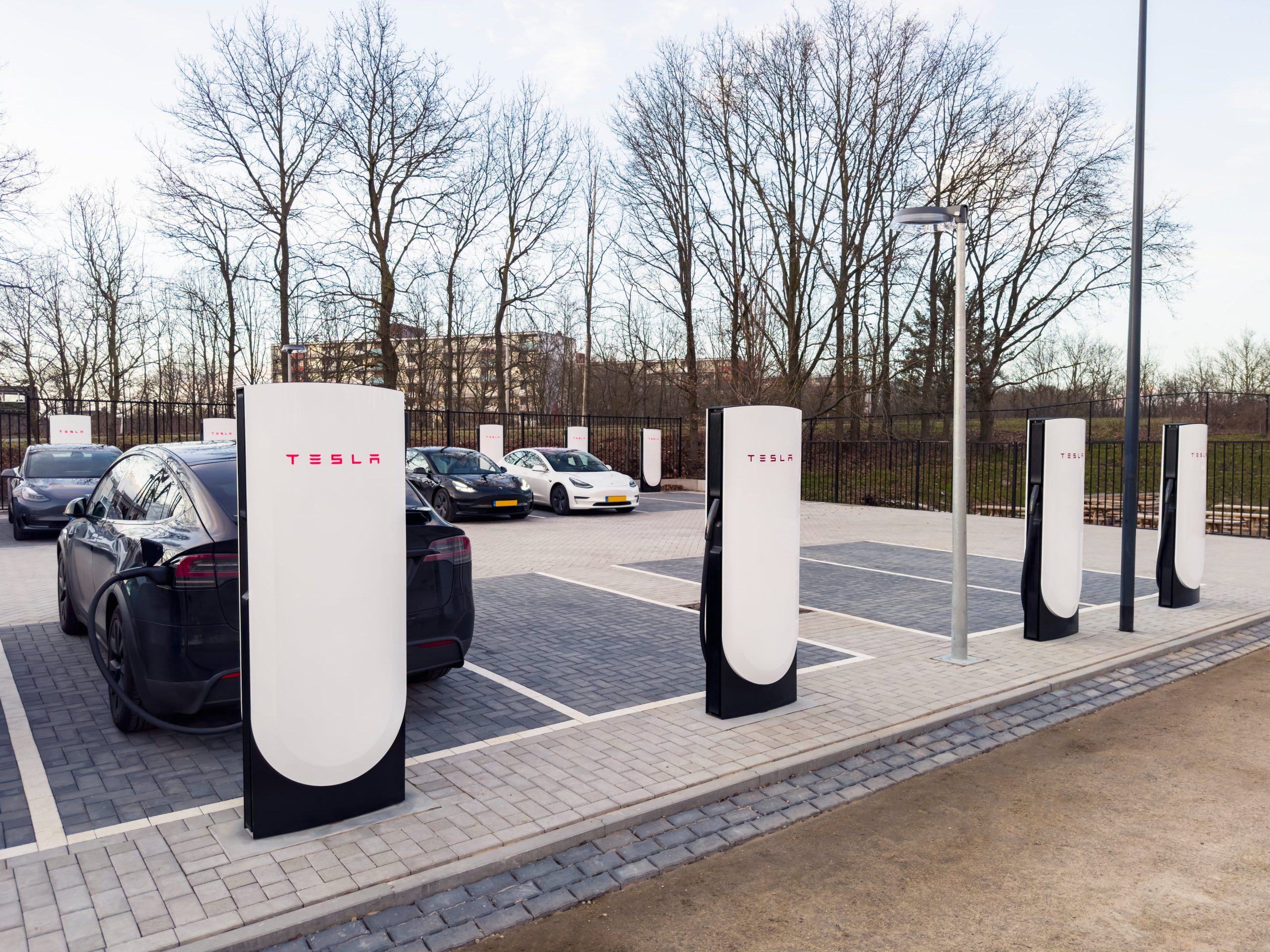
Tesla has launched an online calculator for its Supercharger for Business program, giving property owners their first transparent look at what it really costs to install Superchargers on site and what kind of return they can expect.
The program itself launched in September 2025, allowing businesses to purchase and operate Supercharger hardware on their own property while Tesla handles installation, maintenance, software, and 24/7 driver support. As Teslarati reported at launch, hosts also get their logo placed on the chargers and their location integrated into Tesla’s in-car navigation, meaning drivers are actively routed there. The stalls are open to all EVs, not just Teslas.
We launched Supercharger for Business in 2025 to help companies get charging right. We found simplicity and transparency to be a problem in this industry.
We’re now sharing pricing and a financial calculator to help make informed decisions. The goal is to accelerate investments,…
— Tesla Charging (@TeslaCharging) April 8, 2026
The new online calculator, announced by Tesla on Wednesday with the note that “simplicity and transparency” have been a problem in the industry, lets any business enter a U.S. address and get a real cost and revenue model. A standard 8-stall V4 Supercharger site runs approximately $500,000 in hardware and $55,000 per post for installation, bringing an all-in price just shy of $1 million. Tesla charges a flat $0.10 per kWh fee to cover software, billing, and network operations. Businesses set their own retail price and keep the margin above that fee.
Taking a look at Tesla’s Supercharger for Business online calculator, we can see that ROI is not uniform, and the gap between a strong location and a poor one can stretch the breakeven point by several years.
The biggest driver is foot traffic and how long people stay. A busy rest station, hotel, or outlet mall brings in repeat visitors who need to charge while they’re already stopped, pushing utilization numbers higher and shortening payback time.
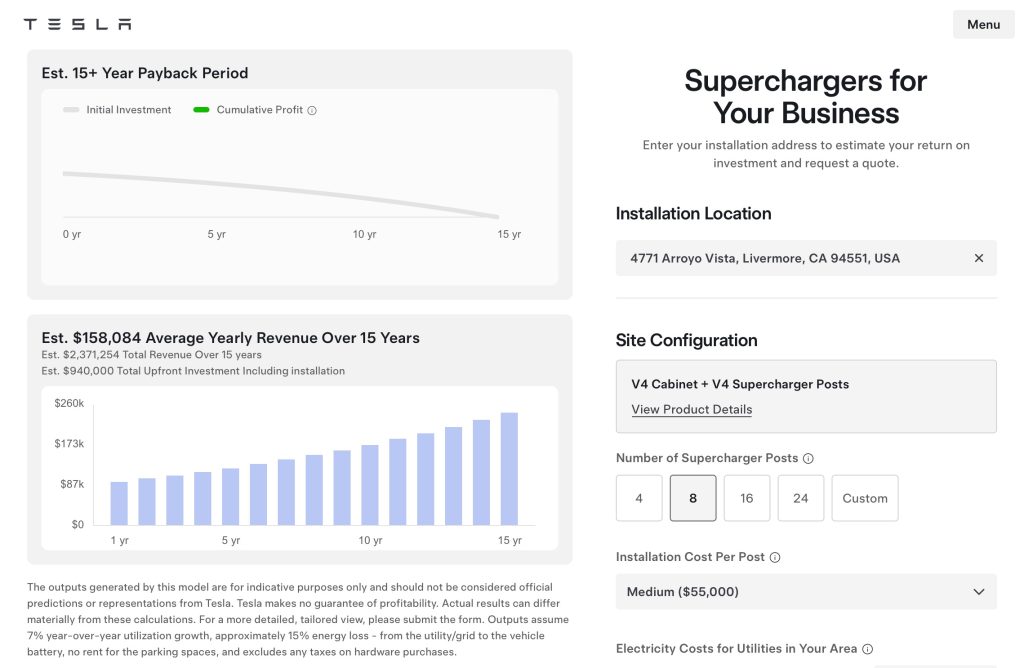
Tesla Supercharger for Business ROI calculator
Local electricity rates matter just as much on the cost side. Markets like California carry some of the highest commercial electricity rates in the country, which eats into the margin between what a host pays per kWh and what they charge drivers. At the same time, dense urban areas with high EV adoption tend to support higher retail charging prices, which can offset that cost if demand is strong enough. Weather also plays a role. Cold climates reduce battery efficiency and increase charging frequency, but they can also suppress utilization in winter months if drivers avoid stopping in exposed outdoor locations. Suburban and rural sites face a different problem: lower baseline EV traffic, which means a site with cheaper power and lower operating costs can still take longer to pay back simply because the stalls sit idle more often. Tesla’s calculator uses real fleet data to pre-fill utilization estimates by ZIP code, so businesses can run their specific address against these variables rather than relying on averages.
The program has seen real adoption. Wawa, already the largest host of Tesla Superchargers with over 2,100 stalls across 223 locations, opened its first fully owned and branded site in Alachua, Florida earlier this year. Francis Energy of Oklahoma and the city of Alpharetta, Georgia have also deployed branded stations through the program, as Teslarati covered in January.
Tesla now exceeds 80,000 Supercharger stalls worldwide, and the calculator makes the economic case for accelerating that number through private investment rather than company-owned sites alone.
Energy
Tesla’s newest “Folding V4 Superchargers” are key to its most aggressive expansion yet
Tesla’s folding V4 Supercharger ships 33% more per truck, cuts deployment time and cost significantly.
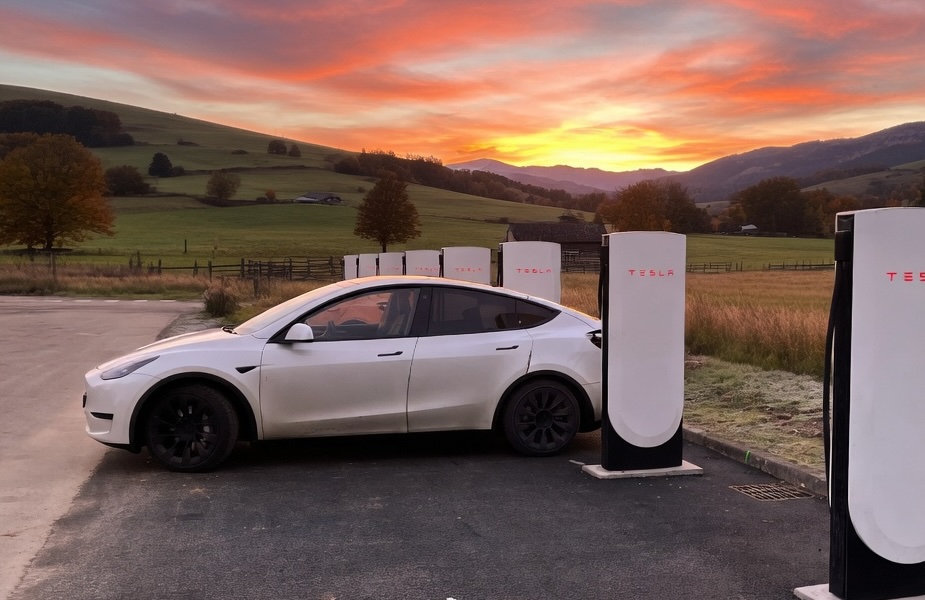
Tesla is rolling out a folding V4 Supercharger design, an engineering change that allows 33% more units to fit on a single delivery truck, cuts deployment time in half, and reduces overall installation cost by roughly 20%.
The folding mechanism addresses one of the least glamorous but most consequential bottlenecks in charging infrastructure: getting hardware from factory floor to job site efficiently. By collapsing the form factor for transit and unfolding into an operational configuration on arrival, the new design dramatically reduces the logistics overhead that has historically slowed Supercharger rollouts, particularly at large or remote sites where multiple units are needed simultaneously.
The timing aligns with a broader acceleration in Tesla’s network strategy. In March 2026, Tesla’s Gigafactory New York produced its final V3 Supercharger cabinet after more than seven years and 15,000 units, pivoting entirely to V4 cabinet production. The V4 cabinet itself is already a generational leap, delivering up to 500 kW per stall for passenger vehicles and up to 1.2 MW for the Tesla Semi, while supporting twice the stalls per cabinet at three times the power density of its predecessor. The folding transport innovation layers logistical efficiency on top of that technical foundation.
Tesla launches first ‘true’ East Coast V4 Supercharger: here’s what that means
Tesla Charging’s Director Max de Zegher, commenting on the V4 cabinet when it launched, captured the operational philosophy behind these changes: “Posts can peak up to 500kW for cars, but we need less than 1MW across 8 posts to deliver maximum power to cars 99% of the time.” The design philosophy has always been about maximizing real-world throughput, not just peak specs, and the folding transport upgrade extends that thinking into the supply chain itself.
Posts can peak up to 500kW for cars, but we need less than 1MW across 8 posts to deliver maximum power to cars 99% of the time.
No more DC busbar between cabinets. Power comes from a single V4 cabinet to 8 stalls. Easier to install, cheaper, more reliable.
Introducing Folding Unit Superchargers
– V4 cabinet with 500kW charging
– 8 posts per unit
– 2 units per truck
– 2 configurations: folded, unfoldedFaster. Cheaper. Better. pic.twitter.com/YyALz0U5cA
— Tesla Charging (@TeslaCharging) March 25, 2026
The network is expanding rapidly on multiple fronts. The first true 500 kW V4 Supercharger on the East Coast opened in Kissimmee, Florida in March 2026, followed closely by a new site in Nashville, Tennessee. A public Megacharger for the Tesla Semi launched in Ontario, California in early March, with 37 additional Megacharger sites targeted for completion by end of year. Meanwhile, more than 27,500 Supercharger stalls are now accessible to non-Tesla EVs from brands including Ford, GM, Rivian, Hyundai, and most recently Stellantis, whose Dodge, Jeep, Ram, Fiat, and Maserati BEV customers gained access in March 2026.
As Tesla pushes toward a denser, faster, and more open charging network, innovations like the folding V4 Supercharger reflect the company’s growing focus on deployment velocity, not just hardware performance. Getting chargers to the ground faster, cheaper, and in greater volume per shipment may ultimately matter as much as the kilowatts they deliver.
Elon Musk
Tesla’s $2.9 billion bet: Why Elon Musk is turning to China to build America’s solar future
Tesla looks to bring solar manufacturing to the US, with latest $2.9 billion bet to acquire Chinese solar equipment.
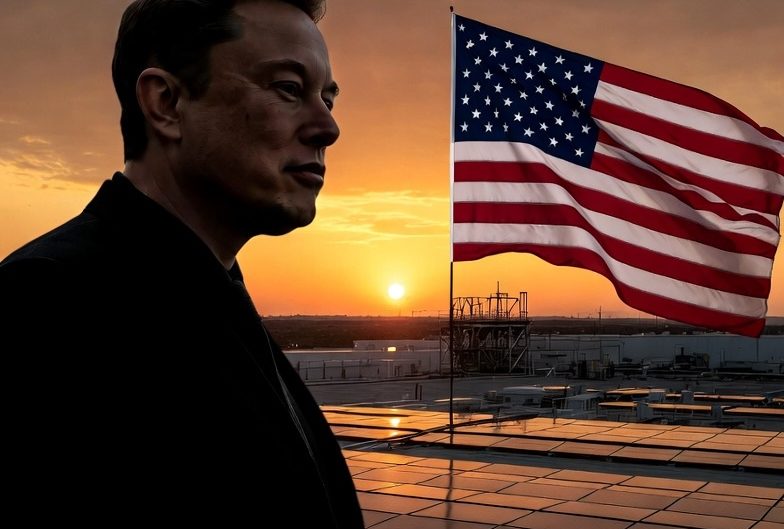
Tesla is reportedly in talks to purchase $2.9 billion worth of solar manufacturing equipment from a group of Chinese suppliers, including Suzhou Maxwell Technologies, which is the world’s largest producer of screen-printing equipment used in solar cell production. According to Reuters sources, the equipment is expected to be delivered before autumn and shipped to Texas, where Tesla plans to anchor its next phase of domestic solar production.
The move is a direct extension of a vision Elon Musk has been building for months. At the World Economic Forum in Davos this past January, Musk announced that both Tesla and SpaceX were independently working to establish 100 gigawatts of annual solar manufacturing capacity inside the United States. Days later, on Tesla’s Q4 2025 earnings call, he made the ambition concrete: “We’re going to work toward getting 100 GW a year of solar cell production, integrating across the entire supply chain from raw materials all the way to finished solar panels.”
Job postings on Tesla’s website reflect that same target, with language explicitly calling for 100 GW of “solar manufacturing from raw materials on American soil before the end of 2028.”
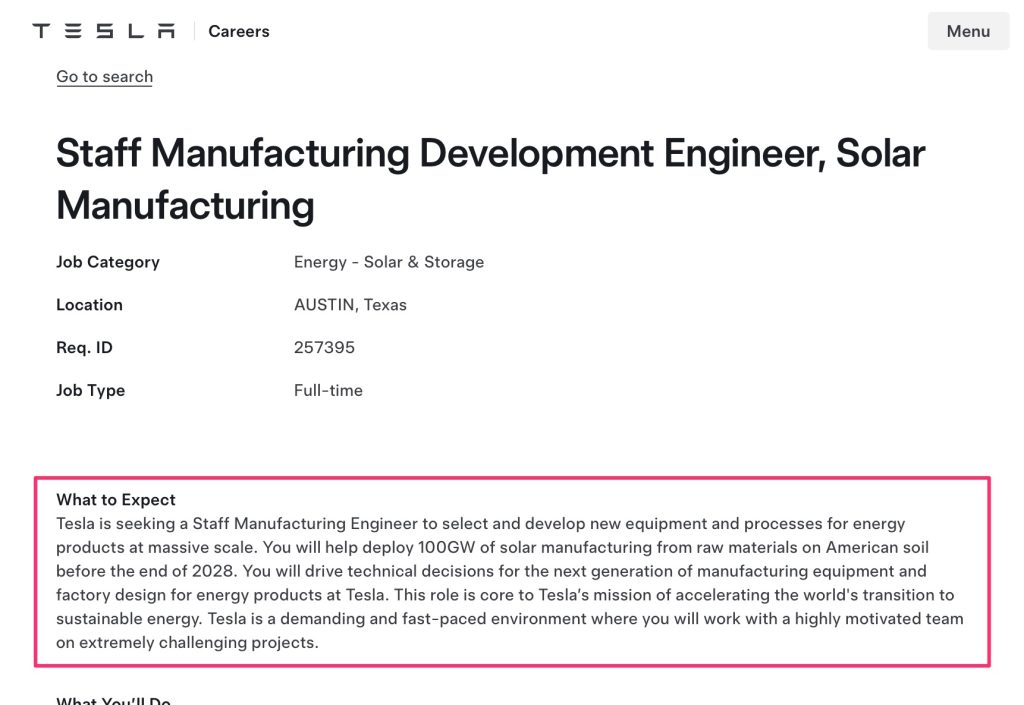
Tesla job listing for Staff Manufacturing Development Engineer, Solar Manufacturing
The urgency behind the latest solar manufacturing target is rooted in a set of rapidly emerging pressures related to AI and Tesla’s own energy business. U.S. power consumption hit its second consecutive record high in 2025 and is projected to climb further through 2026 and 2027, driven largely by the explosion in AI data centers and the broader electrification of transportation. Tesla’s own energy division, which produces the Megapack utility-scale battery storage system, has been growing rapidly, and solar supply is a critical companion component for the business to scale. Musk has argued that solar is not just a clean energy option but the only one that makes economic sense at the scale AI infrastructure demands.
Tesla lands in Texas for latest Megapack production facility
Ironically, the path to domestic solar independence currently runs through China. Sort of.
Despite Tesla’s stated push to localize its supply chain, mirrored recently by the company’s plan for a $4.3 billion LFP battery manufacturing partnership with LG Energy Solution in Michigan, Tesla still relies on China-based suppliers to keep its cost structure intact.
The $2.9 billion equipment deal underscores a tension Musk himself acknowledged at Davos: “Unfortunately, in the U.S. the tariff barriers for solar are extremely high and that makes the economics of deploying solar artificially high, because China makes almost all the solar.” Building the factory in America requires buying the machinery from the country Tesla is trying to reduce its dependence on.
Tesla named by U.S. Gov. in $4.3B battery deal for American-made cells
The regulatory pathway adds another layer of complexity. Suzhou Maxwell has been seeking export approval from China’s commerce ministry, and it remains unclear how quickly that clearance will come. Still, the market has already reacted, with shares in the Chinese firms reportedly involved in the talks surged more than 7% following the Reuters report that broke the story.
Whether Tesla can hit its 2028 target of 100GW of solar manufacturing remains an open question. Though that scale may seem staggering, especially in such a short timeframe, we know that Musk has a documented history of “always pulling it off” in the face of ambitious deadlines that may slip. But, rest assured – it’ll get done.

SpaceX is keeping the Space Station alive again this weekend

Tesla hits FSD hackers with surprise move


