Lifestyle
5 lessons learned from a long-distance Tesla road trip

Having logged over 60,000 miles in the past two years with my Model S, I figured my upcoming journey from Boston to Tampa Bay, Florida would be a pretty routine run-of-the-mill Tesla road trip, but soon found out that I still had plenty more lessons to learn when it came to long distance travel.
Update/Note: I realized after I saw a number of comments to this post that I neglected to mention that I didn’t use Autopilot for any of this trip. My Model S, an April 2014 build, sadly doesn’t have the hardware or capability. The trip would have taken the same time with Autopilot but would likely have had some other kinds of experiences to share (good and bad i’m sure).
Trip Routing
Before embarking on my road trip, I mapped out my entire drive using Google directions which indicated that the drive from Boston, MA to Tampa, FL would take approximately 20 hours. Google factors in traffic and speed of travel, but doesn’t add any time to refuel, eat, etc. If you’re adventurous you can simply hop in your Tesla, input your destination address into the onboard Nav without much planning and begin driving. The Tesla navigation system will guide you to your destination while making use of Superchargers along the way. If you get tired you can always find a hotel, take a pit stop and then carry on the next day.
For many of us, this casual and unplanned approach to a lengthy trip isn’t always ideal. We want to know where we’ll be staying the night and know we’ll have a bed in a nice hotel that offers food at the time we’ll be arriving at. Doing the preparation while sitting in front of your Tesla navigation screen could be frustrating. And if you want to add a stop somewhere along the way, forget it, Tesla doesn’t support that.
Also, beware the onboard Tesla trip planner can be steadfast in its ways. For instance it flat out refused to route us through a convenient charger in Paramus, NJ because of a temporarily “Closed” Supercharger.
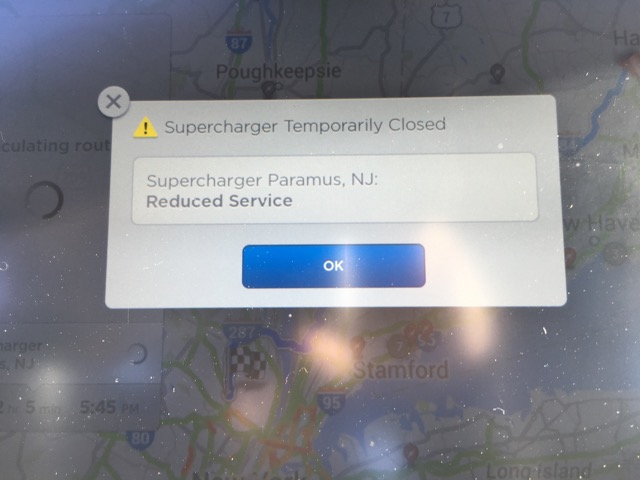
This had us quite concerned as we were already pretty committed to going in that direction. A quick call to the Tesla store at that charger site revealed that theres nothing wrong with the charger. Evidently the charging speeds are slow after 10pm due to some ongoing battle between Tesla and the local power company. As a result power at the Supercharger station is limited at night. But as long as we were visiting before 10pm we were clear to use the charger. This type of information needs to be conveyed to drivers.
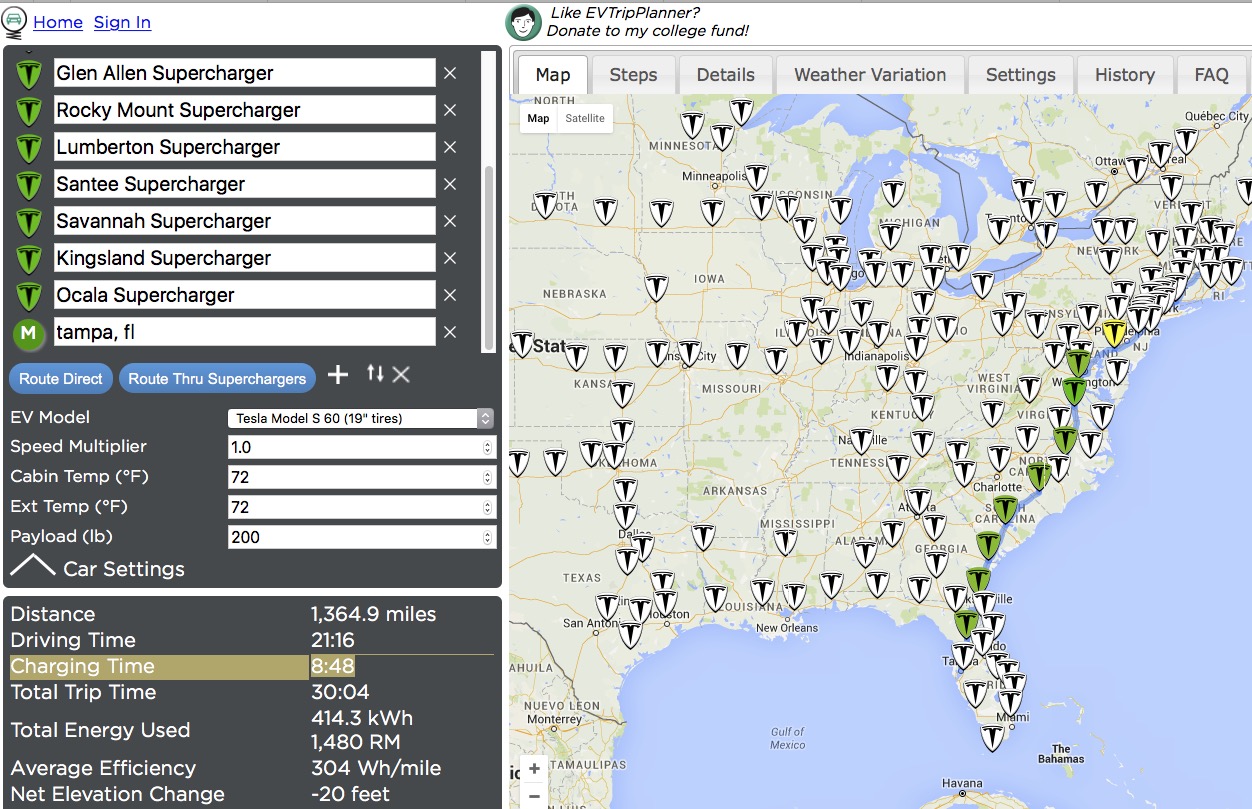
Fortunately there’s a site that helps with some of the planning called EVTripPlanner. This site will help perform similar calculations on what charging stops are needed along the way and also allows you to add waypoints if you want to stop at specific locations outside of Tesla Superchargers. I used EVTripPlanner to plan my trip to Florida.
Calculating Driving Time
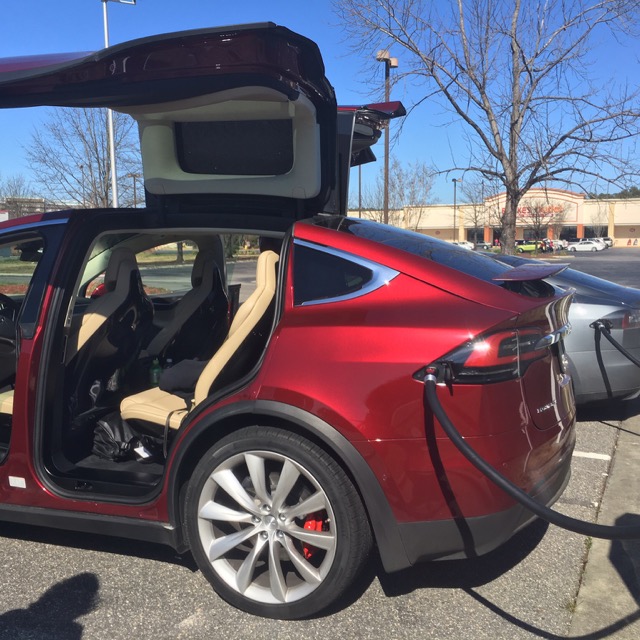
First Model X seen in the wild at Lumberton, NC Supercharger
At the time I planned the trip, EVTripPlanner did not have the ability to track charging times. Though I knew that had to factor in the amount of time spent at each charger before computing my total drive time, I severely underestimated the amount of time needed for charging. EVTripPlanner has since added the feature to take into account charging times.
If you take a look at the app now for the same route, EVTripPlanner will tell you that charging will add and additional 8 hours and 48 minutes of charging through a combined 11 Supercharger stops along the way. Your 21 hour drive turns into a 30 hour drive. This backs into an increase of time spent by 43%.
When I did the math myself I used an average of 30 minutes per stop. The problem with that approach is somewhere along the way I did the math wrong and things didn’t add up right. Perhaps I missed a leg somewhere along the way. More on that later.
EVTripPlanner doesn’t currently provide an “elapsed time” or “time of day” readout and the data is difficult to retrieve especially if you plan on importing it into Excel or Google sheets.
Planning Mistake 1 – Cold Battery Pack
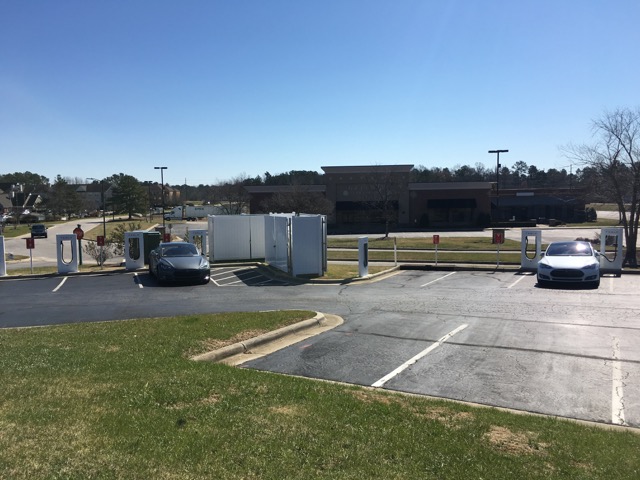
Rocky Mount, NC Supercharger
On the way down I couldn’t leave until 2pm, so we left and ultimately hit East Coast traffic for rush hour. This added time to the drive but fortunately doesn’t use extra range as EVs are even more efficient when moving slowly. Between the traffic and the expected charging stops we got to the hotel in Woodbridge, VA quite late. Rather than charging up for the next day that evening, we decided to hit the sack and charge up in the morning. This was a mistake.
It got down to about 40 degrees overnight and I had intentionally picked a hotel near a Supercharger. The next morning when we went to charge the charge was more than 30% slower than average. Reason being cold battery packs don’t charge as fast as warm battery packs, something I already knew but hadn’t considered late at night. We would have been better off charging the night before when our battery was warm. That or driving for a while before charging would have been good had we had enough charge to be able to do so.
Planning Mistake 2 – Charging Speeds
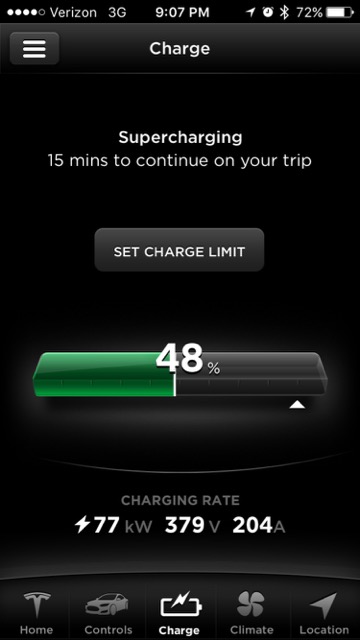 While we know that most Tesla Superchargers can achieve 170 miles of range in 30 minutes, we found out the hard way that not all chargers can deliver this. Despite a warm pack and ideal charging conditions we found that some of the chargers are significantly slower than others. It’s still not as bad as trying to charge on a cold pack, but the end result is a 25% slower charging speed than the usual.
Our average charge rate turned out to be 120 rated miles added to the batter pack in 30 minutes of charging time (240 rated miles added per hour) which is significantly lower than Tesla’s number.
Planning Mistake 3 – Round Trips
Our average Supercharger stop time was 34 minutes. While Tesla and EVTripPlanner recommended eleven Supercharger stops, we ended up making twelve stops. The reason for that was we didn’t have enough charge to arrive at our stay, cruise the town and get back to the Supercharger network on the leg to go back home.
As a result of that we pit stopped at one additional charger and charged enough to allow for comfortable driving around town and enough juice to get back to that Supercharger on the way home. This added time.
Planning Mistake 4 – Battery Buffer
 Tesla has been adjusting the onboard trip planner over time. In the early days it wasn’t possible to route via Superchargers and then they added it but it was very conservative and often buggy. They’ve continued to make updates to it (although slowly) and now it is a lot more aggressive. For most of my legs it was calculating routes that had me arriving at the next charger with a buffer of 11-12% remaining battery capacity — that’s about 32 miles of safety.
Teslas charge faster from a lower starting state of charge. Charging from 0 to 50 is a lot faster than charging from 20 to 70. So generally you want to arrive at the next charger with as low a state of charge and charge just enough to get to the next stop safely.
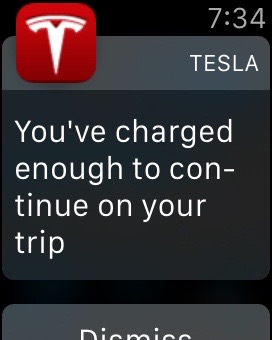
To keep things moving along and not lose time you need to watch your charge and hop back in the car as soon as the car says you’re safe to get to the next stop. Any more time and it’s un-optimal as a higher state of charge results in slower charging for your next charge.
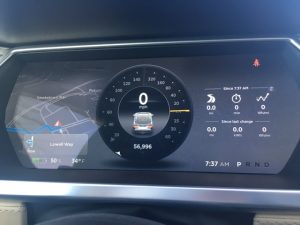
Single digit margins
Under ideal circumstances Tesla’s buffer would be fine since their computations take into account temperature and elevation changes. The problem is they don’t factor in wind or driving speeds.
I typically drive about 5mph over the speed limit. These days this classifies me as a “slower” driver but it’s what I’m comfortable with. In MA that means driving about 70mph on the highways but down towards Florida you’re doing 75 and still considered slow. After taking one of the recommended charging stops the Model S was predicting that we would arrive at our next stop with 12% charge remaining, but then it started to drop. 12% went to 11%, then 10%, then all the way down to 8%. There were no other chargers along the way and the estimated remaining charge continued to drop rapidly. I dropped my speed from 75 to 65 mph and arrived at the next charger with 9% remaining (24 rated miles). When all else fails, slow down.
From that point on, each time we charged and saw the vehicle telling us we would arrive at the next stop with 12% battery remaining, we waited to charge a few extra minutes just as added safety. It added time to our overall trip but at that point we were happy gaining that additional peace of mind.
Planning Mistake 5 – Calculate Twice, Drive Once
On the second day of driving we were making good progress, but as the day went on we realized that rather than getting to Tampa around midnight it would be more like 3am and we’re not the kind of drivers that like driving late at night. Fortunately a quick call back to my wife who was in front of a computer got us a hotel reservation and off the road before it got too late.
Somehow along the way the initial calculations were off by 3 hours. I suspect that I forgot to factor in one of the legs. Since there really isn’t a single system to help plan the entire trip, I was at the mercy of being human and making a mistake. I should have spent a bit more time double checking my planning before taking off.
Other Learnings
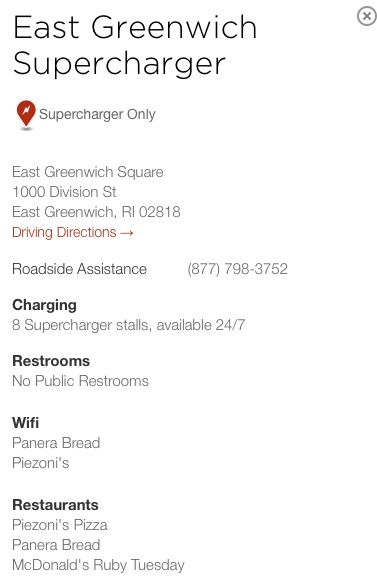 There’s a few other things I wanted to mention. First, as you drive from charger to charger on a long road trip a common question is “Whats at the next stop?” That question is still pretty painful to answer. You’d think you could just click on the charger icon and see the amenities, but it doesn’t. Apps like Teslarati’s own app (iOS | Android) aim to provide this type of info through crowd sourced data from other Tesla drivers, but even that requires several clicks and scrolling before you get to the information, plus you’re supposed to be driving. A simple page allowing easy access to nearby Supercharger details or next charger would be very helpful on a trip like this. Was there a Chick-fil-A at the next stop or just another terrible Texas Roadhouse? We had to know!
We also experienced a wide range of charger types. From the usual 8 in a row, back in variety, to those where you pull head in in an airport parking garage and have to get your parking ticket stamped.
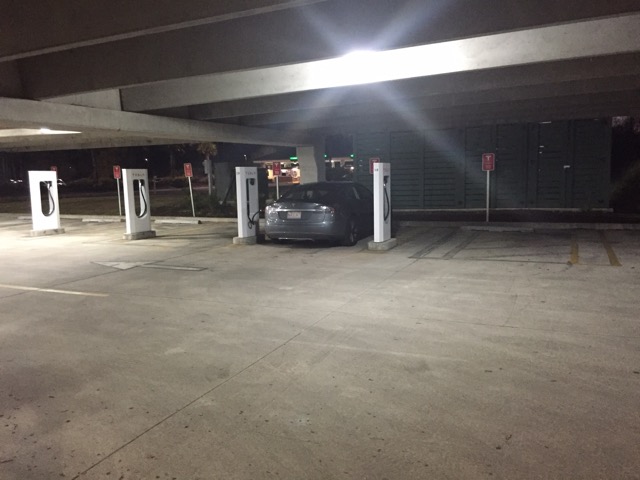
Savannah, GA Supercharger
There were also those those with poorly painted lines providing no clue on how you’re supposed to drive into the stall.
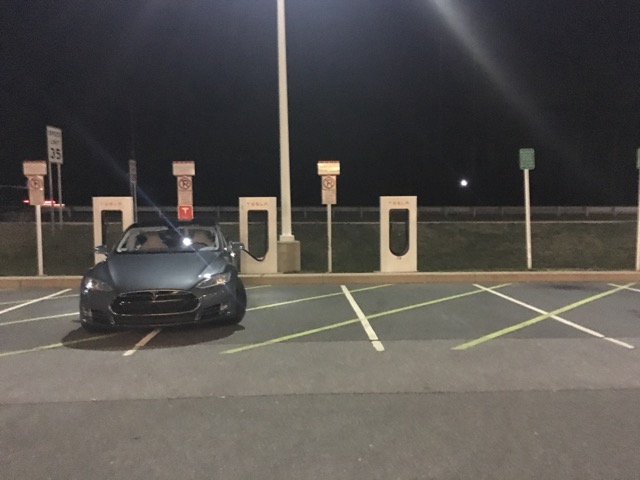
Newark, DE Supercharger
All this so I could introduce my Tesla to a palm tree for the first time.
And get in a few bike rides while New England tried to thaw out.

Summary
Before this trip I had dozens of Tesla road trips under my belt and have visited chargers in many states at all different times of the year. I was very familiar with the mechanics of an EV road trip, charging times and what to expect. My friend wanted to go to Florida around the same time and had never taken a road trip in an EV before. I warned him up front about the charging times and he assured me it was not a problem.
By the end of the trip he said he didn’t regret taking the trip, but next time he’d take an ICE car or fly — adding 40% to your travel time is unacceptable if you’re trying to get somewhere and not just touring the country. It was hard to argue with him.
While records have been set driving cross country in a Tesla, those are usually done with multiple drivers and with very little down time. That style of driving isn’t for everyone.
For myself, I still dream of driving across the country to California someday in my Tesla. I need to rest up first as the FL trip took away some of my desire to do that. Also I’m worried that once I get there I wouldn’t want to drive all the way back home :p
If you do plan to do a longer road trip, spend extra time in the planning phase. New tools and sites continue to be developed to simplify the process, but make sure you’ve had some experience with shorter trips first. With good planning and a relaxed approach you can still be jumping for joy at the end of a successful long road trip in your Tesla.


Lifestyle
Tesla hit by Iranian missile debris in Israel
A Tesla in Israel absorbed a direct hit from missile debris, and the glassroof held.

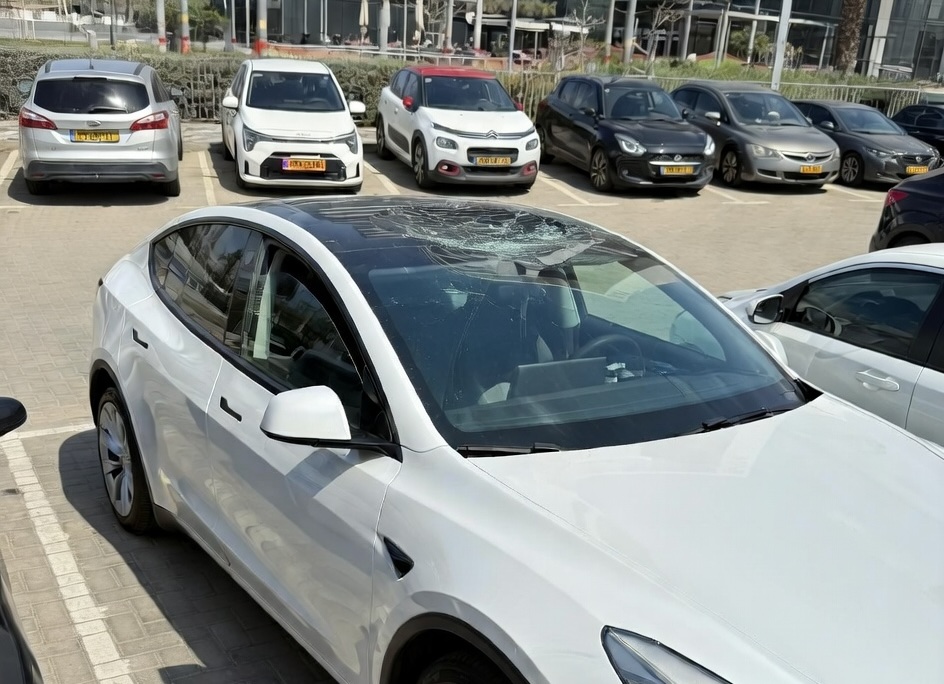
On March 30, 2026, Lara Shusterman was in Netanya, Israel when Iranian ballistic missiles triggered air raid sirens across the city. While she remained in safety, her 2024 Tesla Model Y did not escape untouched. A heavy piece of missile debris struck the car’s massive glass roof, leaving a deep crater but without shattering. In a Facebook post to the Tesla Israel community the following morning, Shusterman described what happened: “The glass did not shatter into dangerous shards. She stopped the damage and pushed the metal part to the ground.” She closed by thanking Elon Musk and the Tesla team for building what she called “security and a sense of trust even in extreme situations.”
Netanya is a coastal city in central Israel, roughly 18 miles north of Tel Aviv and has been among the areas most frequently struck during Iran’s ongoing missile campaign, following coordinated U.S. and Israeli strikes on Iranian military infrastructure. Falling shrapnel from intercepted missiles is a common occurrence.
-
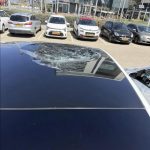
- Tesla Model Y glass roof shattered from a piece of falling Iranian missile debris
-
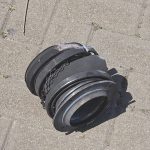
- A piece of Iranian missile debris that struck Lara Shusterman’s Tesla Model Y in Netanya, Israel on March 30, 2026, after being intercepted by Israeli air defenses.
-
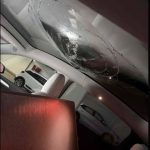
- Tesla Model Y glass roof shattered from a piece of falling Iranian missile debris
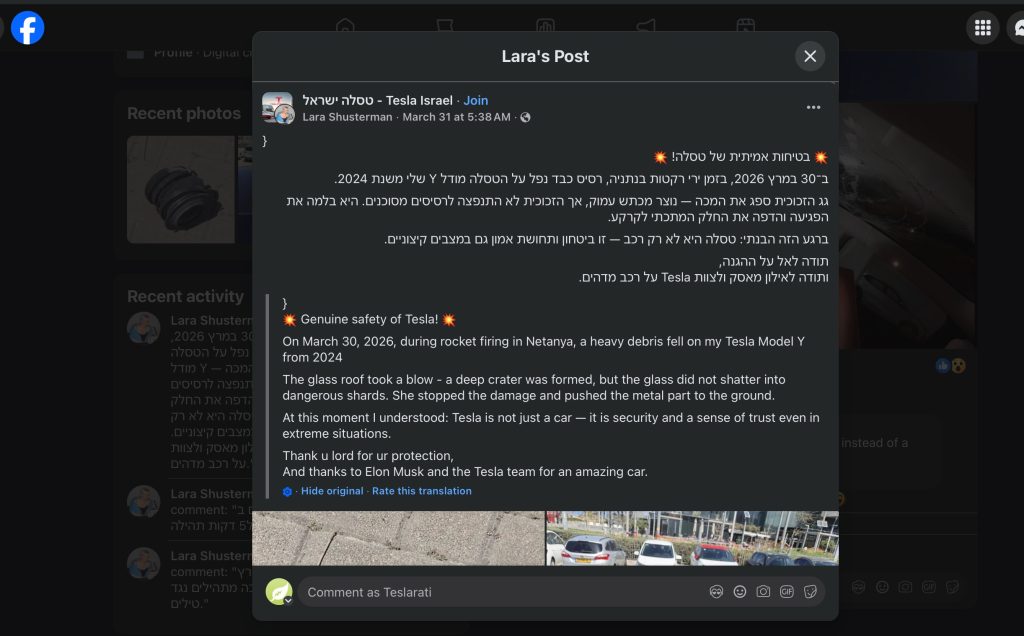
Source: Tesla Israel Facebook Group
The incident is a testament to Tesla’s structural engineering. Tesla’s glass roof is designed to support over four times the vehicle’s own weight. That strength has shown up in real-world accidents too. In 2021, a Model Y in California was struck by a falling tree during a storm, with the glass roof holding firm and the cabin remaining intact. In another widely reported incident, a Tesla Model Y plunged 250 feet off the cliff at Devil’s Slide in California in January 2023, with all four occupants, including two young children, surviving.
Disturbing details about Tesla’s 250-foot cliff drop emerge amid initial investigation
Tesla officially launched sales in Israel in early 2021 and captured over 60 percent of Israel’s EV market in the first year. The brand’s foothold in Israel remains significant. Tens of thousands of Teslas are now on Israeli roads, making incidents like Shusterman’s easy to corroborate. On the same week her Model Y took the hit, the U.S. Space Force awarded SpaceX a $178.5 million contract to launch missile tracking satellites, a separate but fitting reminder of how intertwined the Musk ecosystem has become with the realities of modern conflict.
Elon Musk
NASA sends humans to the Moon for the first time since 1972 – Here’s what’s next
NASA’s Artemis II launched four astronauts toward the Moon on the first crewed lunar mission since 1972.
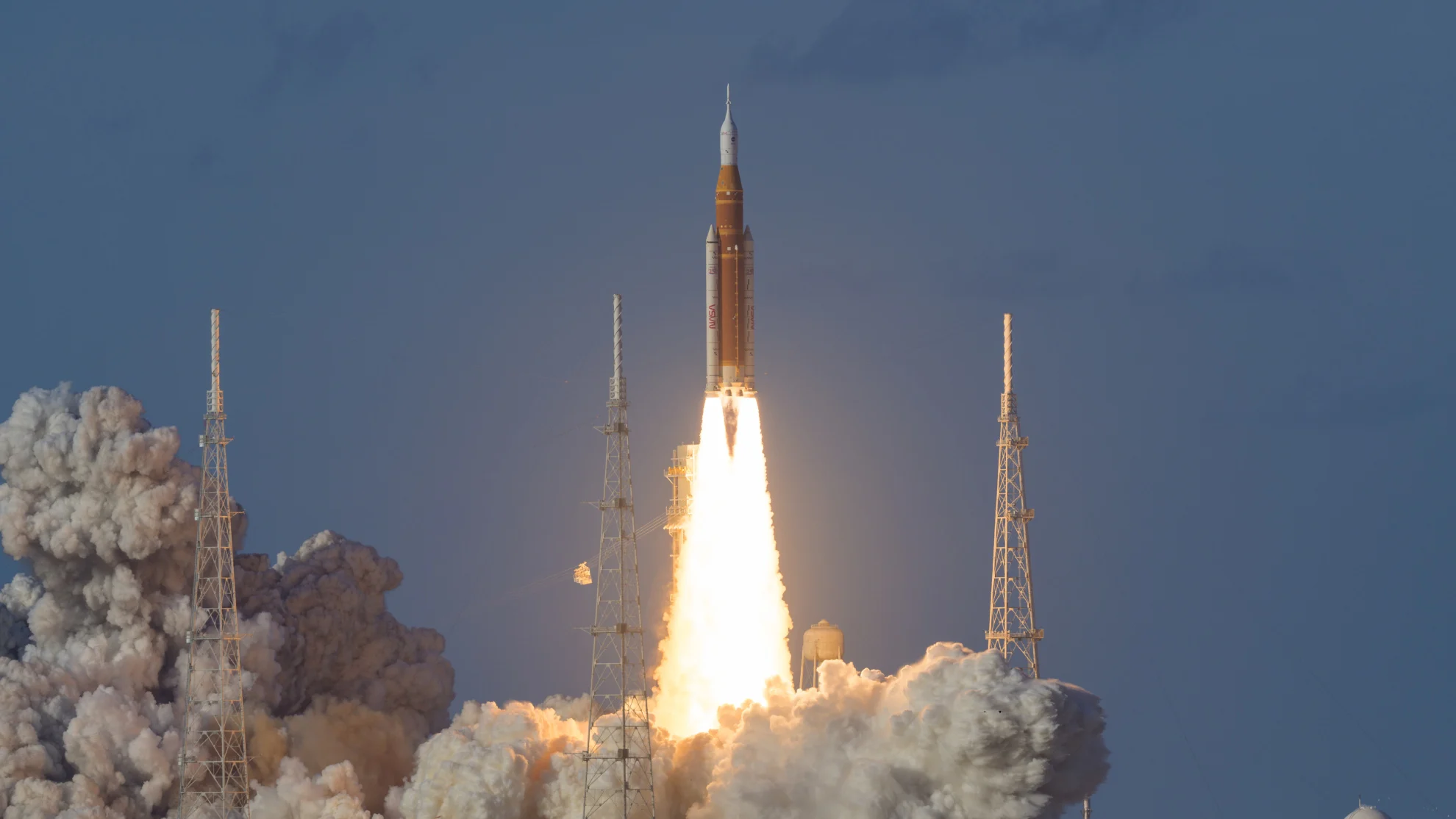
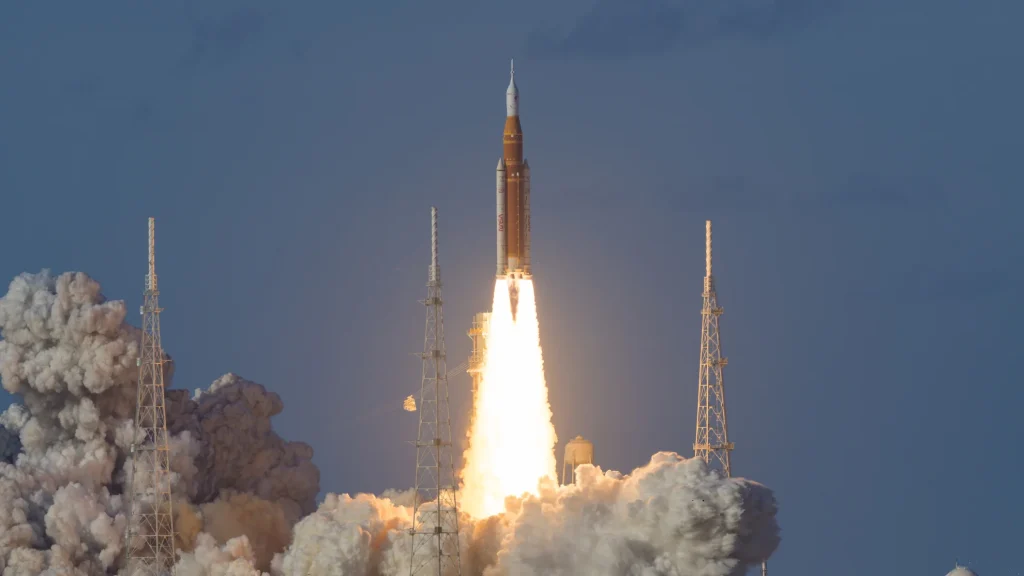
NASA’s Space Launch System rocket launches carrying the Orion spacecraft with NASA astronauts Reid Wiseman, commander; Victor Glover, pilot; Christina Koch, mission specialist; and CSA (Canadian Space Agency) astronaut Jeremy Hansen, mission specialist on NASA’s Artemis II mission, Wednesday, April 1, 2026, from Operations and Support Building II at NASA’s Kennedy Space Center in Florida. NASA’s Artemis II mission will take Wiseman, Glover, Koch, and Hansen on a 10-day journey around the Moon and back aboard SLS rocket and Orion spacecraft launched at 6:35pm EDT from Launch Complex 39B. (NASA/Bill Ingalls)
NASA launched four astronauts toward the Moon on April 1, 2026, marking the first crewed lunar mission since Apollo 17 in December 1972. The Artemis II mission lifted off from Kennedy Space Center aboard the Space Launch System rocket at 6:35 p.m. EDT, sending commander Reid Wiseman, pilot Victor Glover, mission specialist Christina Koch, and Canadian astronaut Jeremy Hansen on a 10-day journey around the far side of the Moon and back.
The mission does not include a lunar landing. It is a test flight designed to validate the Orion spacecraft’s life support systems, navigation, and communications in deep space with a crew aboard for the first time. If the crew reaches the planned distance of 252,000 miles from Earth, they will set a new record for the farthest any human has ever traveled, surpassing even the Apollo 13 distance record.
As Teslarati reported, SpaceX holds a central role in what comes next. The Starship Human Landing System is under contract to carry astronauts to the lunar surface for Artemis IV, now targeting 2028, after NASA restructured its mission sequence due to delays in Starship’s orbital refueling demonstration. Before any Moon landing happens, SpaceX must prove it can transfer propellant between two Starships in orbit, something no rocket program has done at this scale.
The last time humans left Earth’s orbit was 53 years ago. Gene Cernan and Harrison Schmitt of Apollo 17 were the final people to walk on the Moon, a record that stands to this day. Elon Musk has long argued that returning is not optional. “It’s been now almost half a century since humans were last on the Moon,” Musk said. “That’s too long, we need to get back there and have a permanent base on the Moon.”
The Artemis program involves 60 countries signed onto the Artemis Accords, and this mission sets several firsts beyond distance. Glover becomes the first person of color to travel beyond low Earth orbit, Koch the first woman, and Hansen the first non-American astronaut to reach the Moon’s vicinity. According to NASA’s live mission updates, the spacecraft’s solar arrays deployed successfully after liftoff and the crew completed a proximity operations demonstration within the first hours of flight.
Artemis II is step one. The Moon landing and the permanent lunar base come later. But after more than five decades, humans are heading back.
Elon Musk
Tesla Optimus Gen 3 is coming to the Tesla Diner with new ambitions
Tesla’s Optimus robot left the Hollywood Diner within months of opening. Now Musk is planning its return with a bigger role and a major Gen 3 upgrade underway.
![Tesla Optimus Gen 3 [Credit: Tesla]](https://www.teslarati.com/wp-content/uploads/2026/03/tesla-optimus-gen3-diner.jpg)
Tesla’s Optimus robot was one of the most talked-about features when the Tesla Diner opened on Santa Monica Boulevard in Hollywood on July 21, 2025. Dubbed “Poptimus” by Tesla fans, the Gen 2 robot stood upstairs at the retro-futuristic, drive-in theater and Tesla Supercharging station, scooping popcorn into bags and handing them to guests with a wave.
The diner itself had been years in the making. Elon Musk first floated the idea in 2018 with a tweet about building an “old-school drive-in, roller skates & rock restaurant” at a Hollywood Supercharger. What eventually opened was a unique two-story neon-lit space, with 80 EV charging stalls, and Optimus serving as a live demonstration of where Tesla’s ambitions were headed.
If our retro-futuristic diner turns out well, which I think it will, @Tesla will establish these in major cities around the world, as well as at Supercharger sites on long distance routes.
An island of good food, good vibes & entertainment, all while Supercharging! https://t.co/zmbv6GfqKf
— Elon Musk (@elonmusk) July 21, 2025
But Optimus did not stay long, and was gone by December 2025.
Now, the robot is set to return with a more demanding job. Musk has ambitions for Optimus to take on a food runner role in 2026, delivering meals directly to cars at the Supercharger stalls. While the latest Gen 3 Optimus is likely to initially take on its previous popcorn-serving role, it wouldn’t be out of the question for Optimus to see a quick promotion. With improved hand dexterity that features 50 total actuators and 22 degrees of freedom per hand, and significantly more powerful processing through Tesla’s latest AI5 chip that includes Grok-powered voice interaction, Musk described Optimus at the Abundance Summit on March 12, 2026, as “by far the most advanced robot in the world, Nothing’s even close.”
Back to work
See you at Tesla Diner tomorrow pic.twitter.com/H3tTajrUbu
— Tesla Optimus (@Tesla_Optimus) March 30, 2026
That confidence is backed by a major manufacturing shift. At the Q4 2025 earnings call in January, Musk announced Tesla would discontinue the Model S and Model X and convert those Fremont production lines to build Optimus. “It’s time to basically bring the Model S and X programs to an end,” he said, calling for a pivot that reflects where the Tesla’s future lies.

Tesla stock gets hit with shock move from Wall Street analysts

Tesla Full Self-Driving feature probe closed by NHTSA


