Lifestyle
Integrating Portable Solar Panel Technology into the Tesla Model S

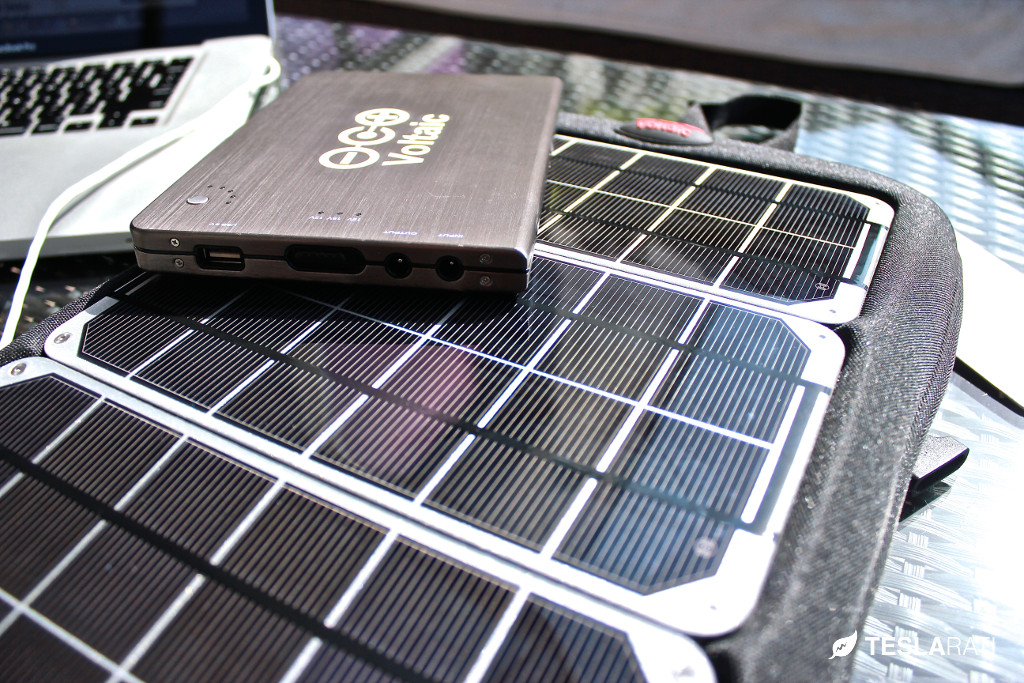
******************
UPDATE: 8/19/14 – After three months of continuous everyday use, both in-car and outdoors (predominantly left on the patio), the Voltaic 10W portable solar system has managed to power a household of two iPhones and one iPad purely on solar energy, and become a welcomed new member of the family.
It took some getting used to at first considering the entire assembly is as tall as a high schoolers backpack and more cumbersome to lug around than some of the smaller portable solar devices that I had a chance to test (Solar Joos, Anker). But despite the larger size, the Voltaic solar panel was hands down the best performing, most reliable and had superior quality over the others. In fact, it’s changed my entire perspective on how useful solar energy can actually be to the point I felt dirty just plugging anything into a wall (as ironic as that may sound from an EV family).
The Voltaic System portable solar panel device is certainly not the cheapest and some will argue that the cost for portability far exceeds what you would be paying if using a standard wall outlet, and they are right.
But for some it goes beyond just a cost benefit analysis. If you’re that type, then this device is for you. All in all, it’s a superb device in every sense and has made me become quite reliant on it. It’s hard to imagine adjusting back to using outlets for my mobile and tablet devices when each day brings free energy from the sun.
Read the original review below.
******************
Elon Musk has long touted that solar energy will be the future of electric vehicles so why wasn’t it incorporated into the Tesla Model S?
A part of me still wonders why this never happened. Perhaps it was a way to offset the large costs associated with having an automotive-grade lithium ion battery pack capable of 260+ miles of range. Or was it due to the fact that roof-integrated solar cells à la now defunct Fisker is nothing more than a cool factor with no real cost benefit?
Either way, it got me thinking – how can I store some of the sun’s energy while embarking on a long distance Tesla road trip? Or better yet, store solar energy while the Model S is at rest during the work week? The energy recouped through the sun need not be channeled back into the car itself, but could still provide usable power for a mobile device or laptop.
This exact thought led us to find three leading makers of portable solar charging technology with the goal of being able to store solar energy implicitly through our Tesla Model S. We’ll be conducting a review of each product in a three part series. The first being Voltaic System‘s Fuse 10W Solar Laptop Charger.
Initial Impressions
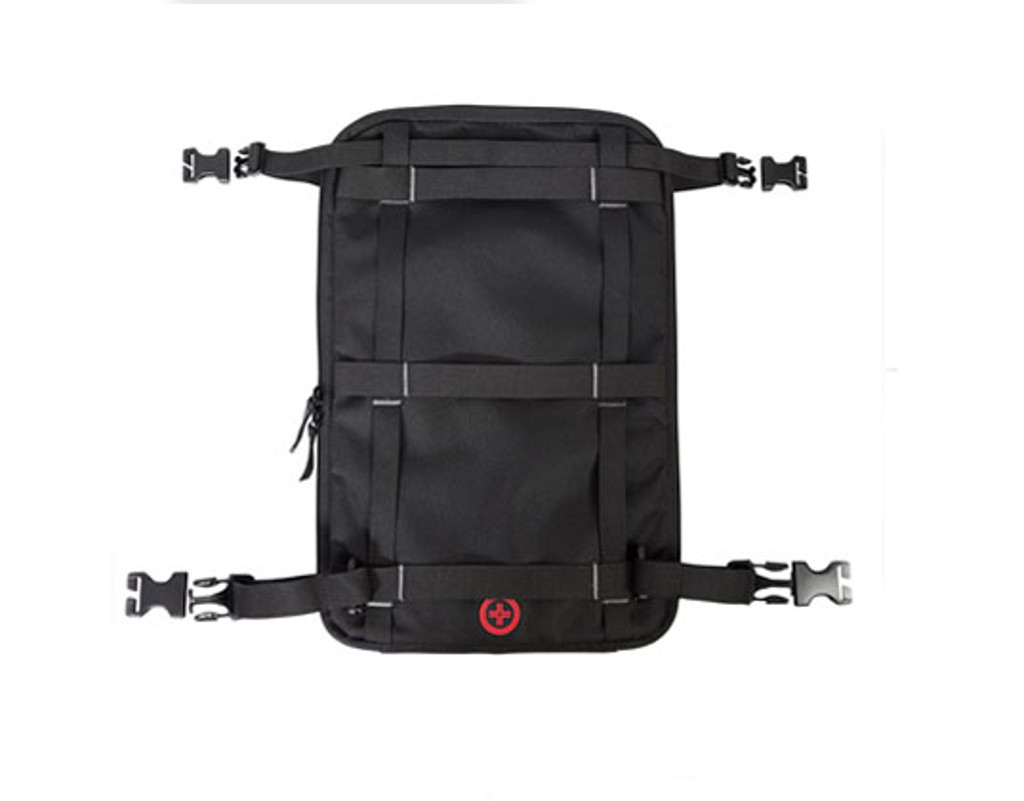 Voltaic’s 10W Fuse Solar Charger dominates in its presence. The three large solar panels encased within a beautiful gloss coated metal frame is a tell-tale indicator that this device can pack some serious charging capabilities. At first I was surprised to feel how heavy the entire unit was (3.6 lbs), only to later find out that the bulk of the weight was from the detachable high capacity lithium polymer battery that was stowed inside the zippered clam-shell casing.
Attached to the back of the Fuse Solar Charger unit was a set of straps and clips which, frankly, I had no idea how to use but was eager to learn.
Technical Specifications
The Fuse is capable of generating 10 Watts of power through its three 3.4 Watt solar panels. Configurable voltage settings provide the flexibility to power your most basic low voltage mobile device and tablets, to laptops and digital cameras that can demand up to 18V.
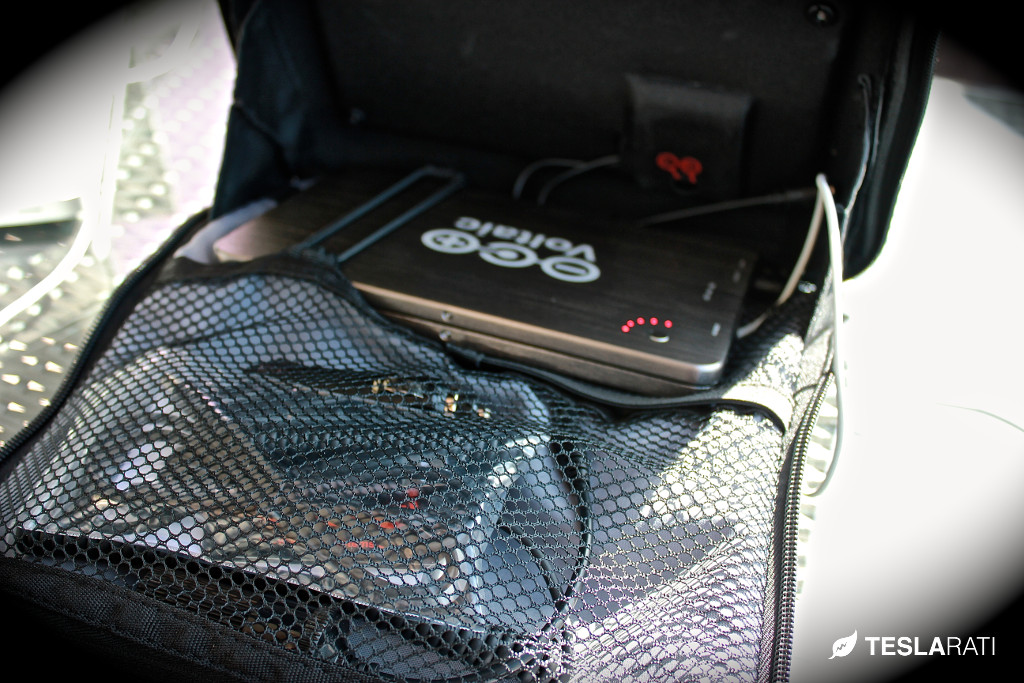
Aside from the obvious good of using renewable solar energy, Voltaic Systems took it to a whole new level of being eco-conscious by mounting the solar panels to a durable and lightweight shell made from recycled plastic soda bottles, otherwise known as PET. The clam shell design allows it to be used as a storage container for the detachable 20,000 mAh, 72 Wh lithium polymer battery and a plethora of device adapters.
NOTE: Amazon’s description shows a 16,000 mAh although the one we received directly from Voltaic Systems contained a 20,000 mAh battery
Tablets and small notebooks can easily fit within the casing.
LEDs on the battery indicate the level of charge. Five lit LEDs represents a full 100% state of charge. The battery has a USB out as well as an attachment set that allows you to connect to virtually any type of device.
Solar Panels
- Solar panels are waterproof and abrasion resistant
- Power: 10 Watts total peak output at 6 or 18 Volts
V72 Universal Laptop Battery
- 20,000 mAh, 72 Wh battery capacity is one of the larger portable batteries I’ve seen. Capable of replenishing an iPhone ten times and an iPad twice on a single charge.
- When not in the sun, the battery can also be charged through the included DC car or AC chargers, making it just as useful on the grid as off.
- Charge Time: In direct sun, V72 battery fully charges in 14.5 hours from 10 Watts and in 9 hours from 16.8 Watts of solar panels.
- Protection: Short Circuit, Over Charge, Over Discharge, Over Current, Over Temperature
- Charge Display: LEDs light sequentially when charging.
- Capacity Display: 1 light < 20%, 2 lights < 40%, 3 lights < 60%, 4 lights < 80% full, 5 lights > 95%
Solar Charging Tesla Center Console
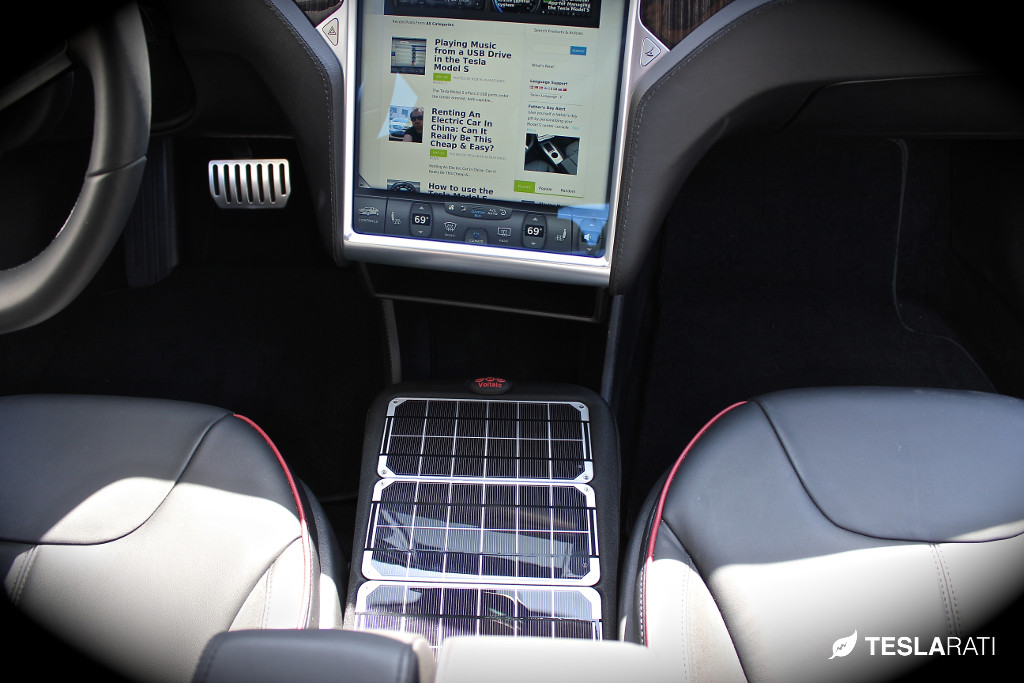
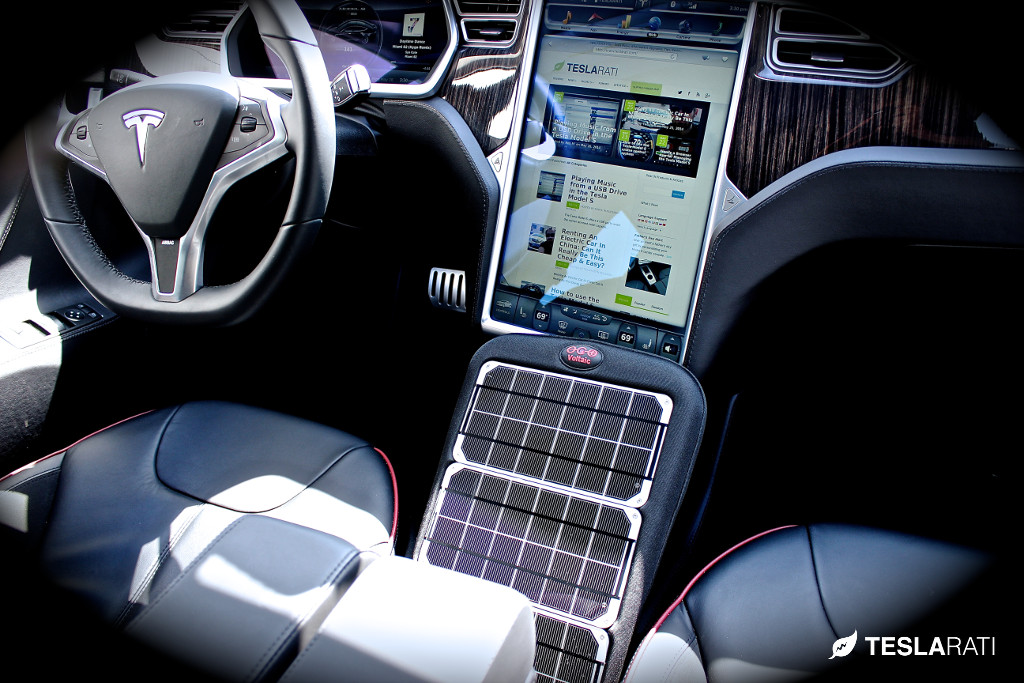
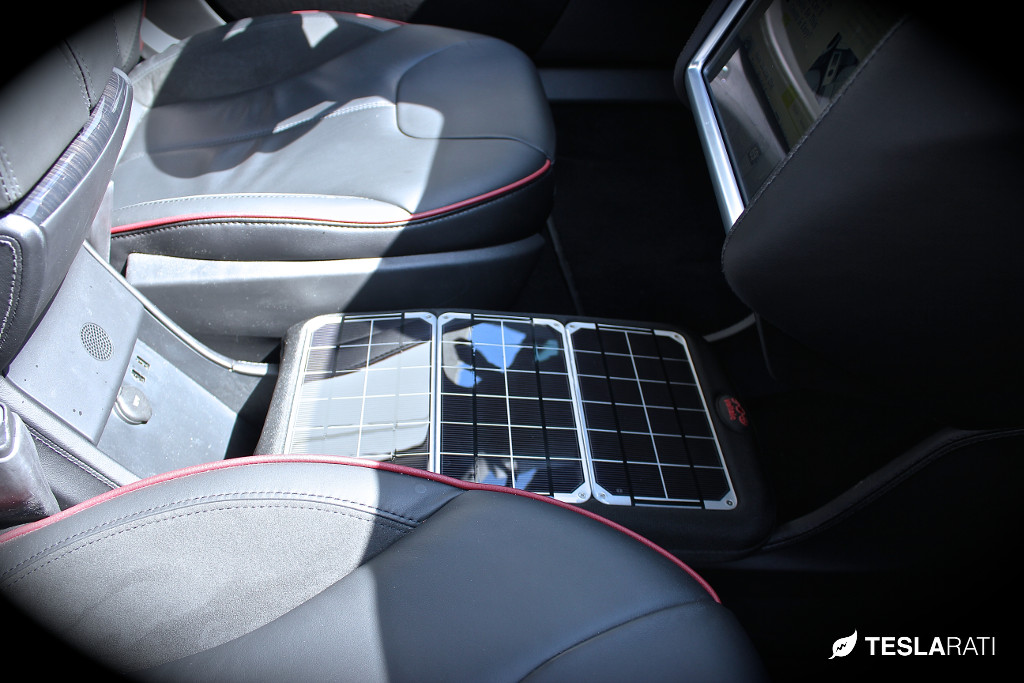
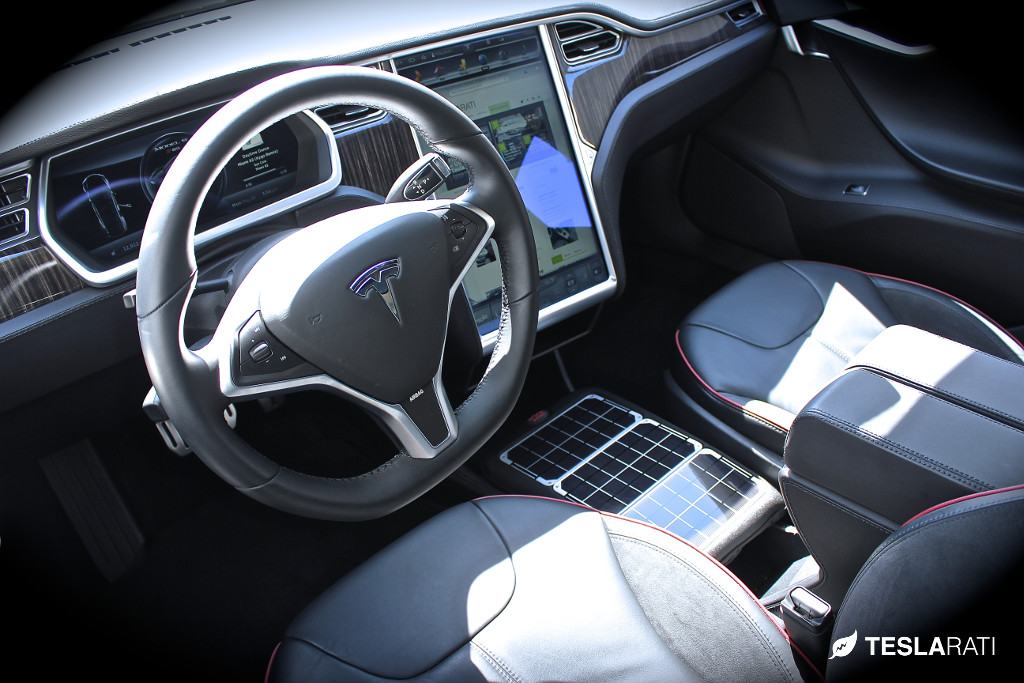
Instead I found a perfect home for the Fuse in the Tesla Model S center channel. Not only does it fit great within that location, it helped conceal any miscellaneous belongings that would normally be left out in the open without a Tesla Center Console unit.
Charging in direct sunlight will clearly achieve the best charging results, but nevertheless I wanted to see how much solar energy I can gather behind the UV protected glass of the Model S.
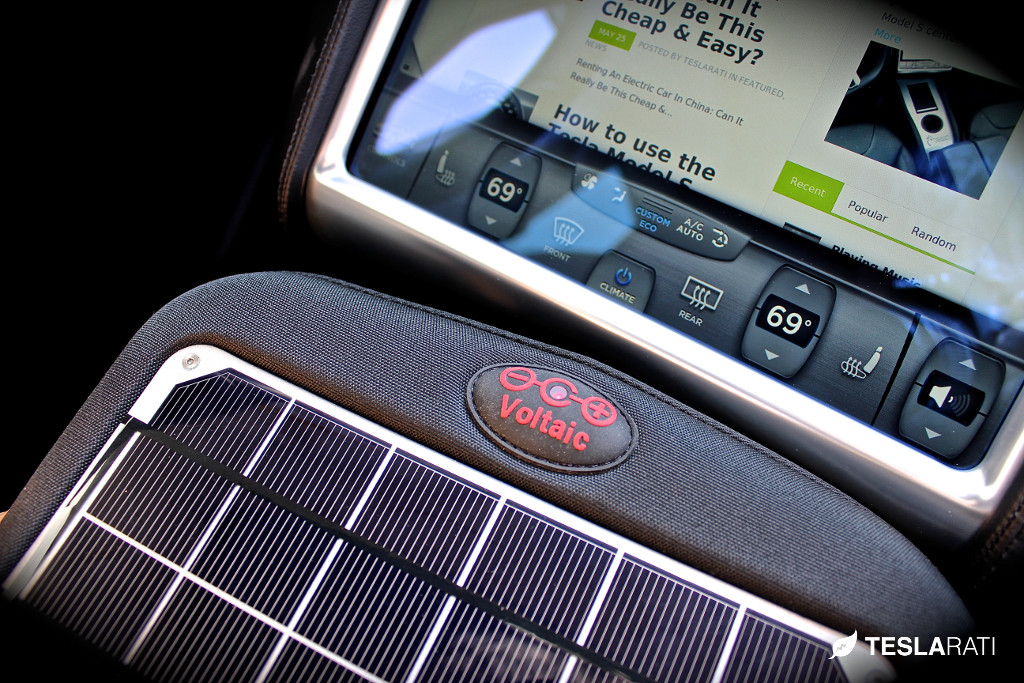
A red LED towards the top of the “Voltaic” insignia lights up as soon I placed the Fuse solar charger between the two front seats to indicate that solar energy is being collected. Bingo.
Placing the Fuse 10W Portable Solar Charger on the Model S center channel allows it to harnesses the power of the sun and store it for later use.
Even behind glass I was able to capture enough solar energy to charge a mobile phone. However, the most common use case for me was to leave the Fuse in the center channel of the Model S each day while I was at work. It’s always an exhilarating feeling to be able to come back to some additional energy at the end of each work day. The energy is stored within the detachable battery making it a useful battery extender for my notebook when I’m on the go or just as a battery backup.
Summary
Voltaic System’s Fuse 10W Portable Laptop Charger is extremely durable and capable of the most rugged of outdoor adventures. Short of going on a camping excursion where access to electricity maybe limited, it’s hard to see the need to carry both laptop and Fuse device simultaneously, although the name of the product may suggest otherwise.
However if you’re looking for a world-class portable solar charging device that can mount to practically anything, blends naturally into the Tesla Model S, has a huge industry-leading 20,000 mAh battery capacity with adjustable voltage outputs, and don’t mind paying a premium $339 USD, then Voltaic System‘s portable solar charger just might be for you.


Lifestyle
Tesla hit by Iranian missile debris in Israel
A Tesla in Israel absorbed a direct hit from missile debris, and the glassroof held.
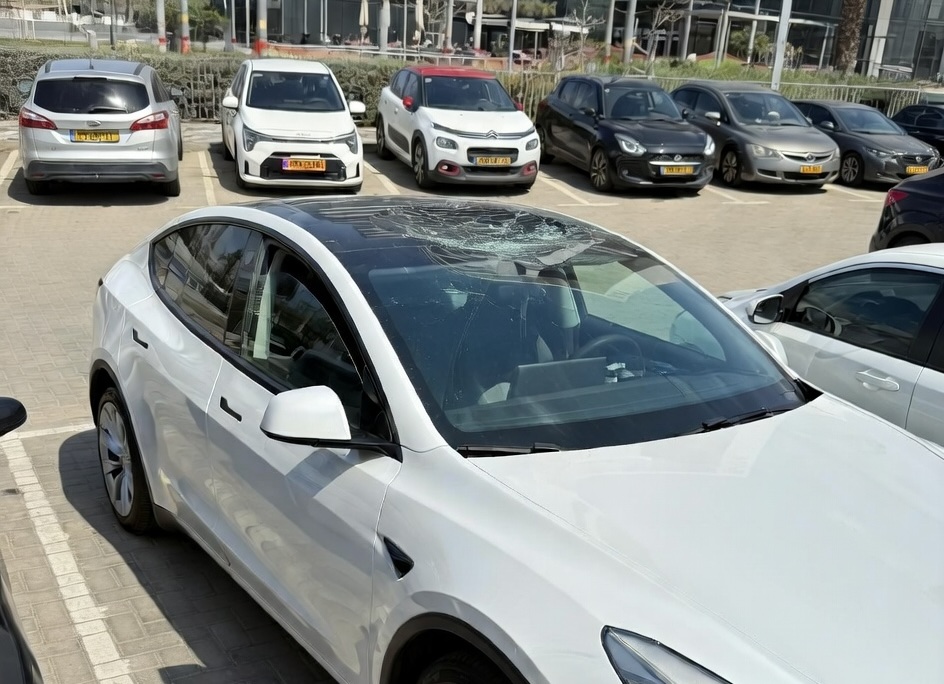
On March 30, 2026, Lara Shusterman was in Netanya, Israel when Iranian ballistic missiles triggered air raid sirens across the city. While she remained in safety, her 2024 Tesla Model Y did not escape untouched. A heavy piece of missile debris struck the car’s massive glass roof, leaving a deep crater but without shattering. In a Facebook post to the Tesla Israel community the following morning, Shusterman described what happened: “The glass did not shatter into dangerous shards. She stopped the damage and pushed the metal part to the ground.” She closed by thanking Elon Musk and the Tesla team for building what she called “security and a sense of trust even in extreme situations.”
Netanya is a coastal city in central Israel, roughly 18 miles north of Tel Aviv and has been among the areas most frequently struck during Iran’s ongoing missile campaign, following coordinated U.S. and Israeli strikes on Iranian military infrastructure. Falling shrapnel from intercepted missiles is a common occurrence.
-
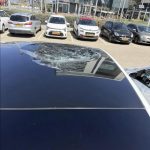
- Tesla Model Y glass roof shattered from a piece of falling Iranian missile debris
-
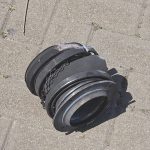
- A piece of Iranian missile debris that struck Lara Shusterman’s Tesla Model Y in Netanya, Israel on March 30, 2026, after being intercepted by Israeli air defenses.
-
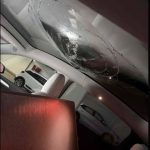
- Tesla Model Y glass roof shattered from a piece of falling Iranian missile debris
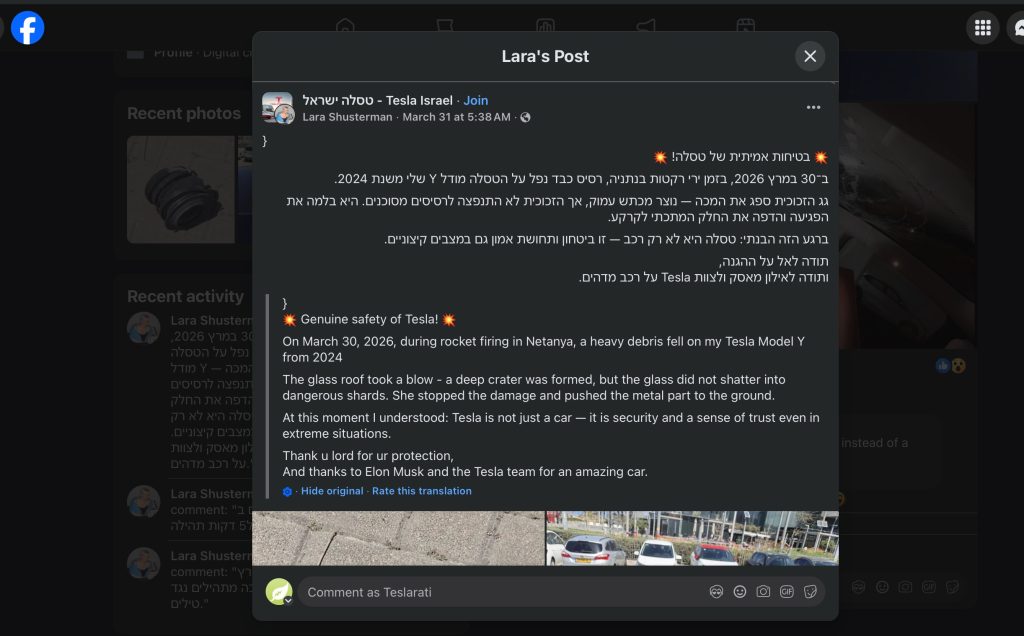
Source: Tesla Israel Facebook Group
The incident is a testament to Tesla’s structural engineering. Tesla’s glass roof is designed to support over four times the vehicle’s own weight. That strength has shown up in real-world accidents too. In 2021, a Model Y in California was struck by a falling tree during a storm, with the glass roof holding firm and the cabin remaining intact. In another widely reported incident, a Tesla Model Y plunged 250 feet off the cliff at Devil’s Slide in California in January 2023, with all four occupants, including two young children, surviving.
Disturbing details about Tesla’s 250-foot cliff drop emerge amid initial investigation
Tesla officially launched sales in Israel in early 2021 and captured over 60 percent of Israel’s EV market in the first year. The brand’s foothold in Israel remains significant. Tens of thousands of Teslas are now on Israeli roads, making incidents like Shusterman’s easy to corroborate. On the same week her Model Y took the hit, the U.S. Space Force awarded SpaceX a $178.5 million contract to launch missile tracking satellites, a separate but fitting reminder of how intertwined the Musk ecosystem has become with the realities of modern conflict.
Elon Musk
NASA sends humans to the Moon for the first time since 1972 – Here’s what’s next
NASA’s Artemis II launched four astronauts toward the Moon on the first crewed lunar mission since 1972.
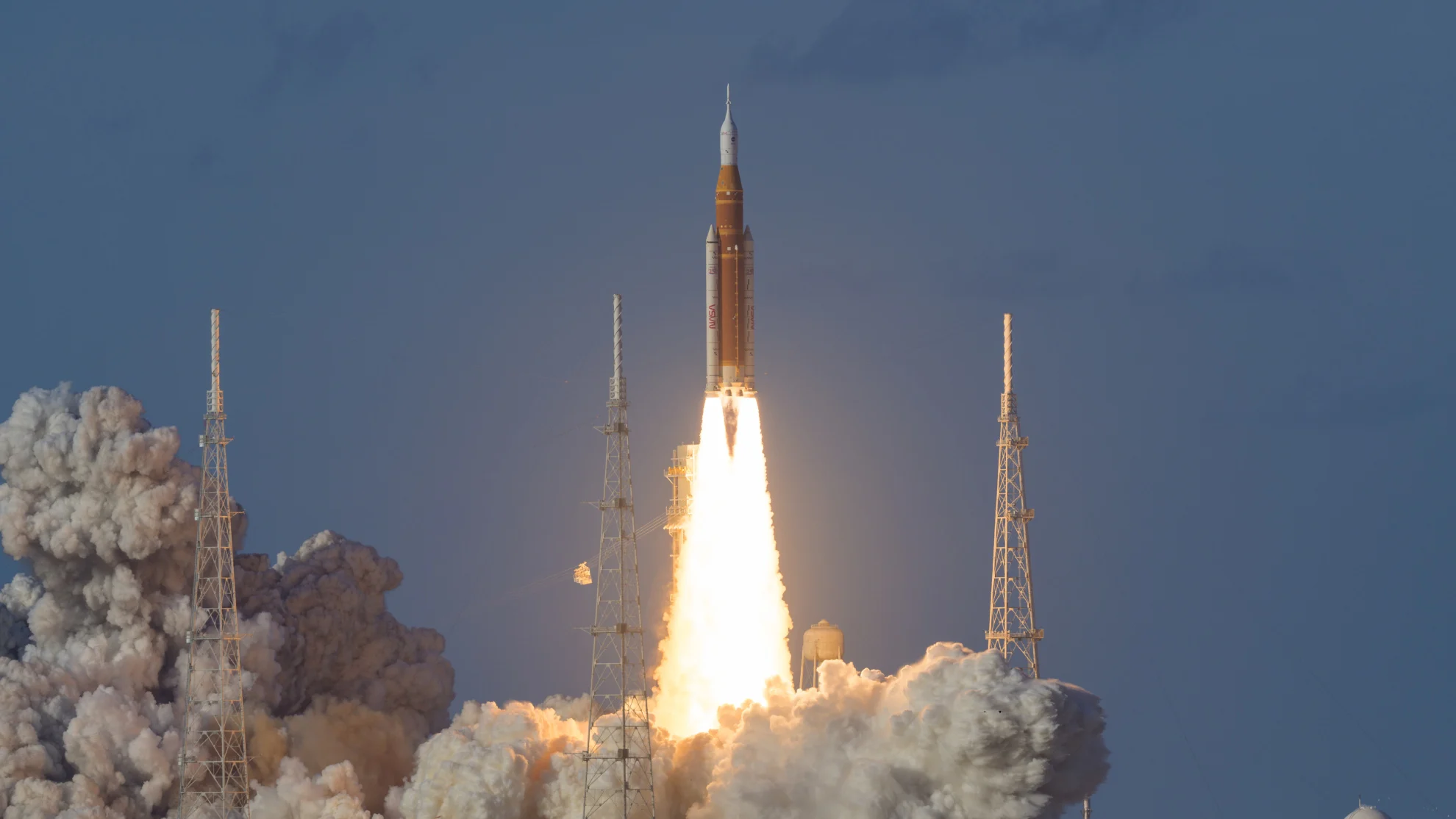
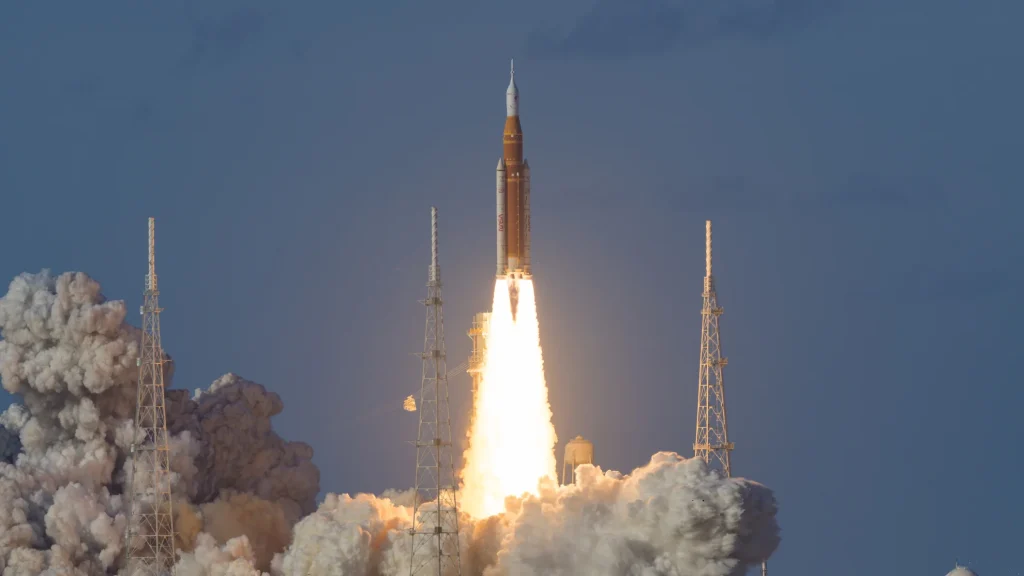
NASA’s Space Launch System rocket launches carrying the Orion spacecraft with NASA astronauts Reid Wiseman, commander; Victor Glover, pilot; Christina Koch, mission specialist; and CSA (Canadian Space Agency) astronaut Jeremy Hansen, mission specialist on NASA’s Artemis II mission, Wednesday, April 1, 2026, from Operations and Support Building II at NASA’s Kennedy Space Center in Florida. NASA’s Artemis II mission will take Wiseman, Glover, Koch, and Hansen on a 10-day journey around the Moon and back aboard SLS rocket and Orion spacecraft launched at 6:35pm EDT from Launch Complex 39B. (NASA/Bill Ingalls)
NASA launched four astronauts toward the Moon on April 1, 2026, marking the first crewed lunar mission since Apollo 17 in December 1972. The Artemis II mission lifted off from Kennedy Space Center aboard the Space Launch System rocket at 6:35 p.m. EDT, sending commander Reid Wiseman, pilot Victor Glover, mission specialist Christina Koch, and Canadian astronaut Jeremy Hansen on a 10-day journey around the far side of the Moon and back.
The mission does not include a lunar landing. It is a test flight designed to validate the Orion spacecraft’s life support systems, navigation, and communications in deep space with a crew aboard for the first time. If the crew reaches the planned distance of 252,000 miles from Earth, they will set a new record for the farthest any human has ever traveled, surpassing even the Apollo 13 distance record.
As Teslarati reported, SpaceX holds a central role in what comes next. The Starship Human Landing System is under contract to carry astronauts to the lunar surface for Artemis IV, now targeting 2028, after NASA restructured its mission sequence due to delays in Starship’s orbital refueling demonstration. Before any Moon landing happens, SpaceX must prove it can transfer propellant between two Starships in orbit, something no rocket program has done at this scale.
The last time humans left Earth’s orbit was 53 years ago. Gene Cernan and Harrison Schmitt of Apollo 17 were the final people to walk on the Moon, a record that stands to this day. Elon Musk has long argued that returning is not optional. “It’s been now almost half a century since humans were last on the Moon,” Musk said. “That’s too long, we need to get back there and have a permanent base on the Moon.”
The Artemis program involves 60 countries signed onto the Artemis Accords, and this mission sets several firsts beyond distance. Glover becomes the first person of color to travel beyond low Earth orbit, Koch the first woman, and Hansen the first non-American astronaut to reach the Moon’s vicinity. According to NASA’s live mission updates, the spacecraft’s solar arrays deployed successfully after liftoff and the crew completed a proximity operations demonstration within the first hours of flight.
Artemis II is step one. The Moon landing and the permanent lunar base come later. But after more than five decades, humans are heading back.
Elon Musk
Tesla Optimus Gen 3 is coming to the Tesla Diner with new ambitions
Tesla’s Optimus robot left the Hollywood Diner within months of opening. Now Musk is planning its return with a bigger role and a major Gen 3 upgrade underway.
![Tesla Optimus Gen 3 [Credit: Tesla]](https://www.teslarati.com/wp-content/uploads/2026/03/tesla-optimus-gen3-diner.jpg)
Tesla’s Optimus robot was one of the most talked-about features when the Tesla Diner opened on Santa Monica Boulevard in Hollywood on July 21, 2025. Dubbed “Poptimus” by Tesla fans, the Gen 2 robot stood upstairs at the retro-futuristic, drive-in theater and Tesla Supercharging station, scooping popcorn into bags and handing them to guests with a wave.
The diner itself had been years in the making. Elon Musk first floated the idea in 2018 with a tweet about building an “old-school drive-in, roller skates & rock restaurant” at a Hollywood Supercharger. What eventually opened was a unique two-story neon-lit space, with 80 EV charging stalls, and Optimus serving as a live demonstration of where Tesla’s ambitions were headed.
If our retro-futuristic diner turns out well, which I think it will, @Tesla will establish these in major cities around the world, as well as at Supercharger sites on long distance routes.
An island of good food, good vibes & entertainment, all while Supercharging! https://t.co/zmbv6GfqKf
— Elon Musk (@elonmusk) July 21, 2025
But Optimus did not stay long, and was gone by December 2025.
Now, the robot is set to return with a more demanding job. Musk has ambitions for Optimus to take on a food runner role in 2026, delivering meals directly to cars at the Supercharger stalls. While the latest Gen 3 Optimus is likely to initially take on its previous popcorn-serving role, it wouldn’t be out of the question for Optimus to see a quick promotion. With improved hand dexterity that features 50 total actuators and 22 degrees of freedom per hand, and significantly more powerful processing through Tesla’s latest AI5 chip that includes Grok-powered voice interaction, Musk described Optimus at the Abundance Summit on March 12, 2026, as “by far the most advanced robot in the world, Nothing’s even close.”
Back to work
See you at Tesla Diner tomorrow pic.twitter.com/H3tTajrUbu
— Tesla Optimus (@Tesla_Optimus) March 30, 2026
That confidence is backed by a major manufacturing shift. At the Q4 2025 earnings call in January, Musk announced Tesla would discontinue the Model S and Model X and convert those Fremont production lines to build Optimus. “It’s time to basically bring the Model S and X programs to an end,” he said, calling for a pivot that reflects where the Tesla’s future lies.

Tesla hits FSD hackers with surprise move

Tesla developing small, affordable SUV, report claims


