Investor's Corner
Wall Street’s reaction to Tesla’s proposed buyout of SolarCity

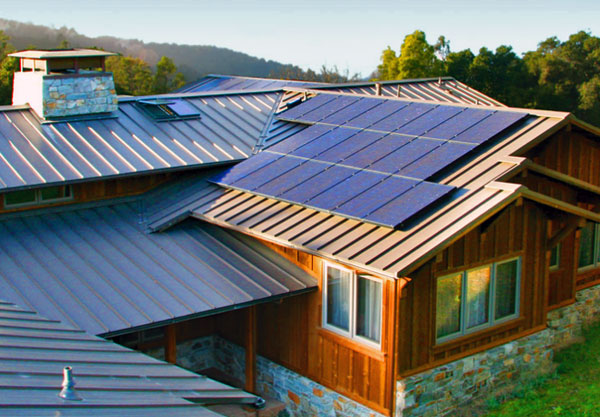
Since the proposed deal of Tesla to acquire SolarCity in a stock exchange with no cash involved was announced, a flurry of reports flooded the Internet, pretty much with many Wall Street reporters and pundits decrying the proposed deal as “crazy”, “not a no-brainer”, an “eclipse”, “plot of video game”, “sounds nuts”, but also with a few noting that Elon was “creating a clean energy empire” or “offering a one-stop shop.”
At the same time, the after-market reaction was swift: TSLA stock plunged 12% and SCTY stock rose 18%. This action was predictable. Since the Tesla – SolarCity deal is an exchange of stock, no cash deal, when adding about 12 million new shares, an 8% dilution of TSLA stock will occur. This dilution covers the majority of TSLA stock drop. Another negative factor is going from $2 billion of TSLA cash flow losses to $4.8 billion of cash flow losses of the combined companies, an increase of over 130%. Thirdly, TSLA debt will double after the deal. So a 12% drop should not leave anyone surprised.
Similarly, the assured “premium of approximately 21% to 30% over the closing price of SolarCity’s shares,” as stated in the letter to Lyndon Rive, pretty much matches the 29 percent rise of SCTY in extended trading, also matching SolarCity’s average 12-month price target of $29.82 among analysts surveyed by Bloomberg. So the stock action of both TSLA and SCTY was completely predictable.
Looking at the reporters / pundits comments, Bloomberg was the outlet with the most reports, 4 in all.
Tom Randell of Bloomberg reported in “Musk Buys Musk: Tesla’s SolarCity Deal by the Numbers”, that “ either Musk is bailing out a beleaguered company that’s run by his cousin, Lyndon Rive, or he’s consolidating a clean-energy empire at rock-bottom prices. Or both.”
Tom is one of the most bullish on the deal, saying that “It allows Musk to integrate the three-legged stool of clean energy in a way the world has never seen: electric cars, solar power, and grid battery storage all in one place. If so inclined, you could provide for all of your energy needs without ever leaving the Tesla family.”
Chris Martin of Bloomberg reported in “In SolarCity Bid, Tesla’s Musk Targets Customer Who Wants It All” that “Tesla Motors Inc.’s offer to buy SolarCity Corp. would combine two already deeply linked companies to offer clean energy enthusiasts a one-stop shop” and that “the challenge I see around this for both companies is that they’re kind of strapped for cash,” quoting Hugh Bromley, an analyst for Bloomberg New Energy Finance in New York. “They both need cash injections to fuel their growth.”
Dana Hull of Bloomberg reported in “Tesla Takeover of SolarCity Not a ‘No-Brainer’ for Investors” that “Oppenheimer & Co. analysts including Colin Rusch downgraded Tesla to perform from outperform in a research note published late Tuesday, saying they expect “a robust shareholder fight over this acquisition centered on corporate governance” and that “Credit Suisse Group AG analysts including Patrick Jobin said in a separate note that they expect “resistance from Tesla shareholders” and warned of “many corporate governance challenges.”
Lastly Liam Denning of Bloomberg reported in “Tesla’s SolarCity Eclipse” that “the timing is odd, to say the least. Tesla’s all-stock offer is pitched as providing SolarCity’s investors with a premium of 21 to 30 percent, based on a proposed valuation band that’s subject to completing due diligence (itself an unusual proposal)” and “Tesla is jumping in as SolarCity’s entire business model is being openly questioned amid rapid cash burn and stubbornly high overheads.”
Ominously he also reported that “Tuesday evening, not long after news of the offer broke, Tesla’s valuation had dropped by $3.8 billion in after-hours trading — 1.8 times the entire market capitalization of SolarCity before the announcement. Awkward, much?”
Ary Levi of CNBC reported in “Elon buying Elon: Sounds a lot like the plot of a video game” that this was “potential deal in which one of the country’s best-known tech billionaires will effectively transfer cash from one of his pockets to another – sounds nuts.” and joked about that “even if we all exist in a simulation, as Musk suggested at the Code Conference this month, he still has to obey securities laws.”
Christine Wang of CNBC reported in “Bid for SolarCity may mean Elon Musk doesn’t see Tesla as an auto company” quoting trader Karen Finerman saying that “Tesla’s offer, valued up to $28.50 per share, doesn’t seem like a gigantic price for a company that was trading significantly higher not that long ago.”
Charley Grant and Spencer Jakab of The Wall Street Journal reported in “Tesla Buying SolarCity: This Deal Defies Common Sense” that “just a day after Tesla boss Elon Musk made the odd boast that one of its cars “floats well enough to turn into a boat,” he did something even odder. Tesla’s bid for solar panel installation firm SolarCity on Tuesday afternoon is the sort of move that, even for the most Panglossian Silicon Valley investor, stretches the bounds of industrial logic” and that “as Mr. Musk warned about his amphibious wonder car, such harebrained schemes can only float “for short periods of time.”
Mike Ramsey, Lynn Cook and Mike Spector of The Wall Street Journal reported in “Tesla Offers to Acquire SolarCity”, quoting Elon saying that “the acquisition aims to create a company employing nearly 30,000 people with all products renamed “Tesla” that will package electric cars, batteries and solar panels for customers.” They also warned that “it would also add to the growing complexity and vertical integration of Tesla and add an unprofitable operation to its already-strained finances.”
Nichola Groom and Paul Lienert of Reuters reported in “Tesla offers $2.8 billion for SolarCity in ‘no brainer’ deal for Musk”, quoting Elon saying that that “instead of making three trips to a house to put in a car charger and solar panels and battery pack, you can integrate that into a single visit. It’s an obvious thing to do.” But they noticed that “Tesla investors punished the company’s shares, however.”


Investor's Corner
NASA taps SpaceX to launch the telescope that could unlock new worlds
NASA’s Roman Space Telescope heads to orbit this August aboard SpaceX’s Falcon Heavy with massive scientific ambitions.

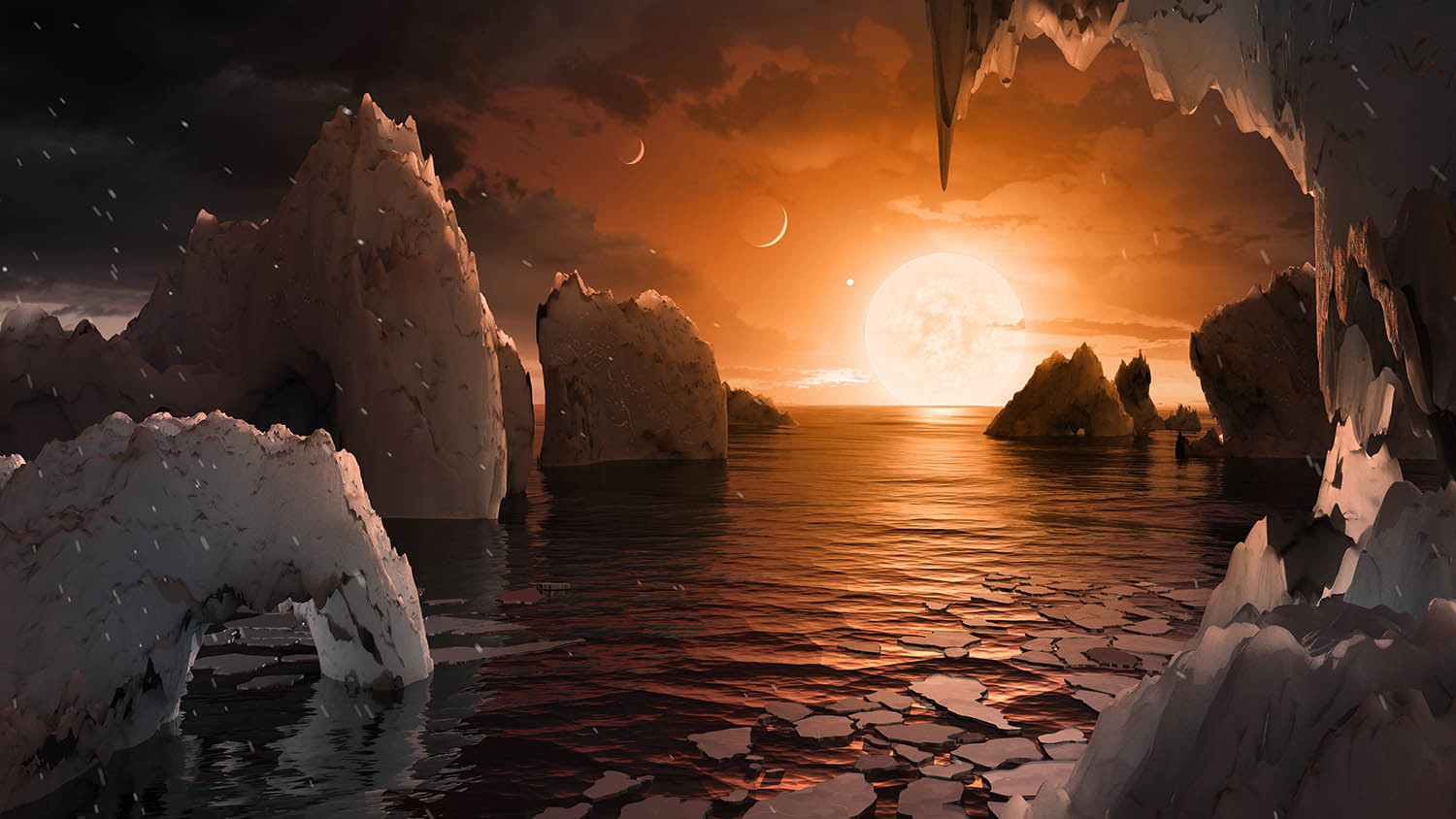
SpaceX is set to play a central role in one of NASA’s most anticipated science missions in years. The company’s Falcon Heavy rocket, currently the most powerful operational launch vehicle in the world, will carry the Nancy Grace Roman Space Telescope into orbit on August 30 from Kennedy Space Center in Florida. Roman is now in final preparations inside the Payload Hazardous Servicing Facility, where on June 26 technicians used a crane to lift the observatory into a specialized stand for fueling and pre-launch testing.
Roman is named after Nancy Grace Roman, NASA’s first chief of astronomy, whose career helped shape how the agency approaches space science.
NASA chose SpaceX Falcon Heavy because of Roman’s needs to reach a specific orbit far from Earth, well beyond where a standard Falcon 9 can deliver it. The Falcon Heavy, which first flew in 2018, has since become NASA’s go-to option for missions that need serious muscle without the cost and complexity of older launch systems.
Celebrating SpaceX’s Falcon Heavy Tesla Roadster launch, seven years later (Op-Ed)
Roman will carry a field of view at least 100 times wider than the Hubble Space Telescope, meaning it can photograph enormous swaths of the universe in a single shot rather than the narrow slices Hubble captures. That difference in scale is significant. While Hubble reshaped our understanding of the cosmos over 30 years, Roman is built to work faster and wider, surveying hundreds of millions of galaxies at once.
One of Roman’s most compelling capabilities is its potential to discover and photograph planets orbiting stars outside our solar system, and with enough precision to directly image planets that would otherwise be lost. That means scientists could study the atmosphere and surface characteristics of distant worlds rather than simply confirming they exist. Combined with Roman’s sweeping field of view, the telescope could detect thousands of exoplanets, and some of those planets may be in habitable zones where liquid water could exist. No telescope currently in operation has this level of power and capability. That capability alone could change what we know about other worlds, and perhaps finally answer the question: are we the only intelligent lifeforms in existence?
What Roman actually finds once it reaches orbit is an open question, and that is exactly what makes this launch worth watching.
Elon Musk
California snubs Tesla in its newly passed EV incentive that favors Rivian and Lucid
California passed a $135 million EV incentive that rewards Rivian and Lucid while sidelining Tesla
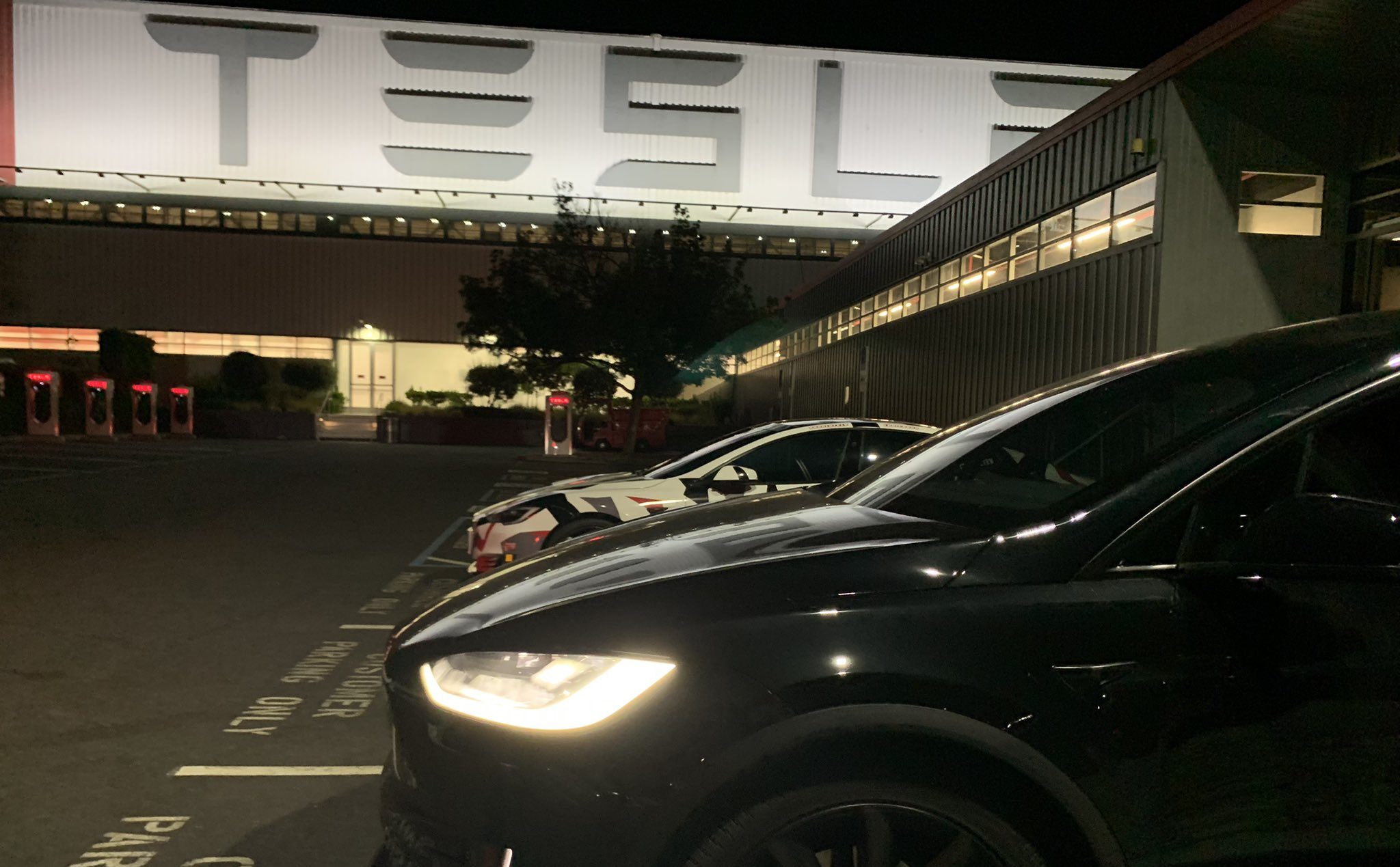
California just drew a line in the EV incentive sand to put Tesla on the wrong side of it. The state recently passed a $135 million program offering first-time electric vehicle buyers a direct incentive with no application required, but the rules were written in a way that leaves Tesla at a structural disadvantage compared to Rivian and Lucid.
The program caps eligible vehicles at $50,000 for new EVs and $25,000 for used ones. That pricing threshold rules out a significant portion of Tesla’s lineup, though some lower-priced Model 3 and Model Y configurations would still qualify. California-based automakers are exempt from the price cap entirely, regardless of what their vehicles cost. Rivian, headquartered in Irvine, and Lucid, based in the San Francisco Bay Area, both benefit from that exemption. Rivian’s R2 starts at roughly $45,000 but has versions above the cap. Lucid’s Air and Gravity start at $70,990 and $79,990 respectively, well above any threshold a non-California company would face.
California hits Tesla Cybercab and Robotaxi driverless cars with new law
Tesla built its reputation and a significant portion of its early market share in California, where EV adoption has consistently led the nation. The company operates its original factory in Fremont, California, and the state was home to Tesla’s headquarters for most of its existence. That changed in 2021 when Tesla moved its corporate headquarters to Austin, Texas. Since then, the relationship between the company and California Governor Gavin Newsom has been openly adversarial, with Musk and Newsom trading public criticism on multiple occasions.
California’s EV incentive landscape has shifted repeatedly in recent years, and Tesla has previously lost eligibility for state-level programs as its vehicles exceeded income-adjusted price thresholds. The federal $7,500 EV tax credit, which Tesla models have qualified for and lost depending on policy cycles, is no longer available after it expired without renewal, making state-level programs more meaningful to buyers than they have been in years.
The practical impact for buyers is more nuanced than the headline suggests. California residents purchasing a Tesla under $50,000 for the first time can still access the incentive. But the exemption written for California-based manufacturers is a structural advantage that rewards where a company plants its headquarters flag rather than where it builds its products, and Tesla moved that flag to Texas.
Elon Musk
SpaceX’s newest logo confirms everything about what it’s become
SpaceX officially absorbed xAI under the SpaceXAI brand, completing the largest private merger in history.
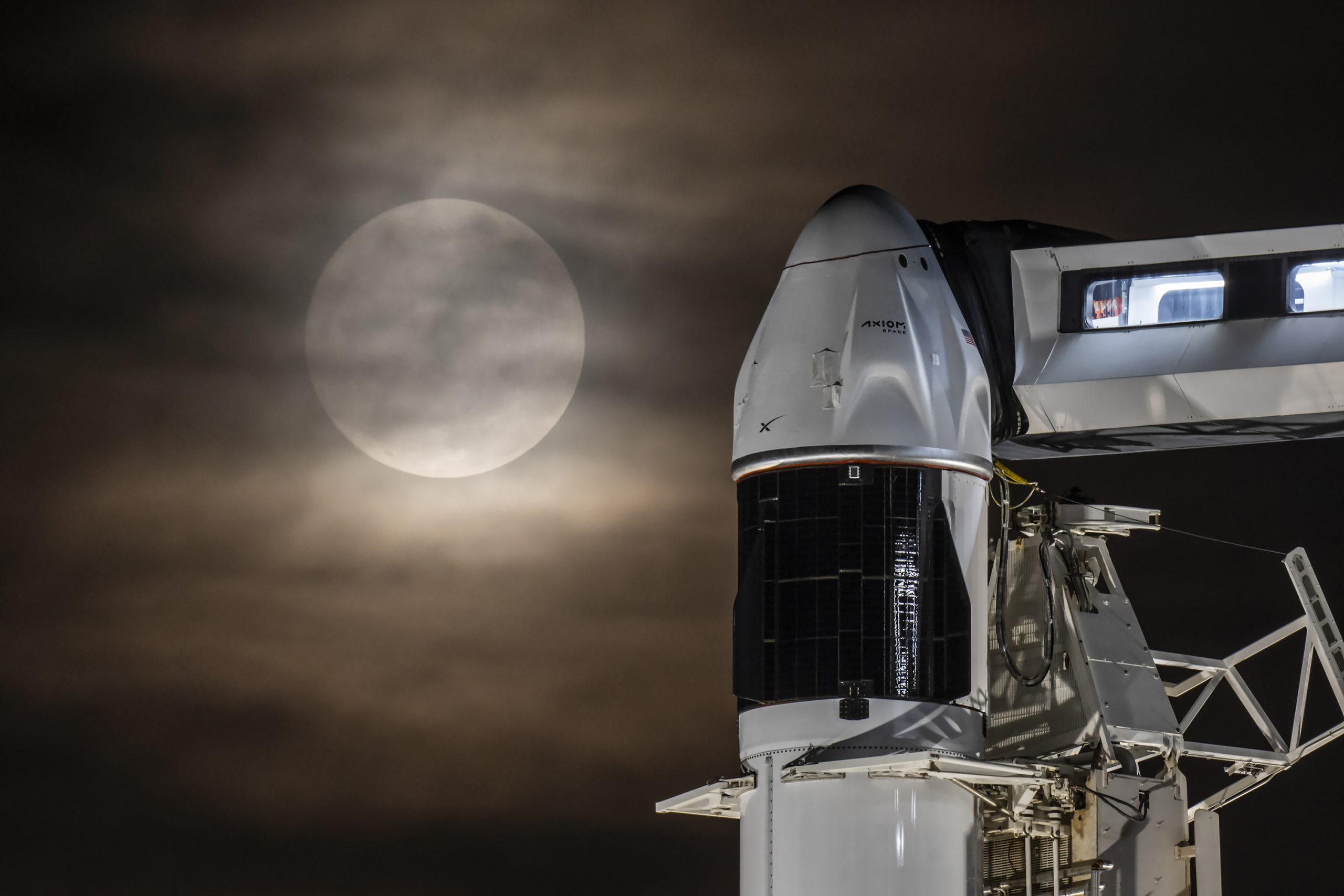
SpaceX made its corporate transformation official in May 2026 when Elon Musk posted on X that xAI would cease to exist as a standalone company. “xAI will be dissolved as a separate company, so it will just be SpaceXAI, the AI products from SpaceX,” he wrote.
A new SpaceXAI logo was announced today, visually embedding the xAI letters inside the SpaceX identity, which can be seen as a deliberate design choice that signals the merger is not a partnership but a full absorption and XAi a core function of the same company. The same way Starlink is not a separate brand but a SpaceX product. The announcement closed the loop on a process that began February 2, 2026, when SpaceX acquired xAI in the largest private merger in history, valued at $1.25 trillion. SpaceX at $1 trillion and xAI at $250 billion.
We are now @SpaceXAI. pic.twitter.com/ema66xDWC9
— SpaceXAI (@SpaceXAI) July 6, 2026
The reason SpaceX bought xAI was stated plainly by Musk at the time of the deal: to build orbital data centers. SpaceX had simultaneously filed with the FCC to launch up to one million satellites designed to function as AI compute nodes in low Earth orbit, escaping what Musk described as the energy constraints limiting AI development on Earth.
xAI provided the AI software stack, with Grok, the X platform, and the Colossus supercomputer infrastructure in Memphis with over 220,000 NVIDIA GPUs, while SpaceX provided the rockets, Starlink, and the capital base to fund it. The two companies needed each other. xAI was burning $2.5 billion in losses on $250 million in revenue. SpaceX was generating an estimated $8 billion in profit on $15 billion in revenue and needed an AI narrative to command the valuation it was targeting for its IPO.
What SpaceX has done, regardless of how the orbital AI vision ultimately plays out, is walk into a public market as something no company has been before: a rocket manufacturer, satellite internet provider, AI software company, social media platform, and supercomputer operator under one ticker. Whether that combination is worth $2 trillion depends entirely on which of those businesses you believe in most.

Tesla shows rapid teardown of Model S and X lines, paving the way for Optimus at Fremont

Elon Musk admits he was ‘clearly wrong’ about Anthropic


