News
Tesla Full Self-Driving v14 ‘Lite’ Release Notes: new capabilities and features

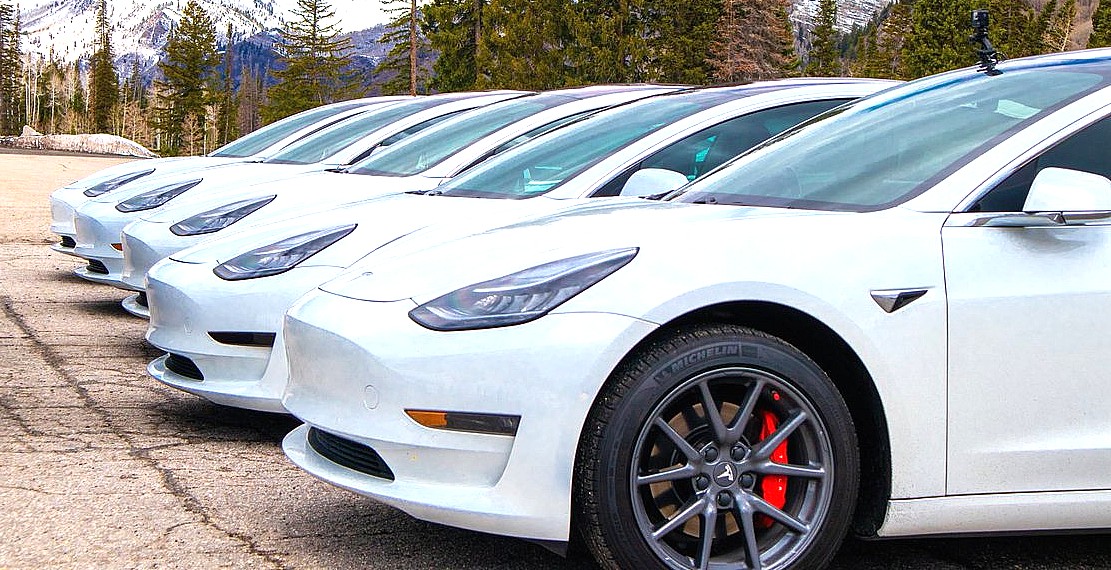
Tesla released the Full Self-Driving v14 ‘Lite’ suite to owners of Hardware 3 or AI3 vehicles today, adding several new features to the vehicles that were once believed to be capable of unsupervised self-driving.
Now, Tesla has released this modified suite to older Tesla vehicles, adding plenty of new features and capabilities.
Here are the full release notes for the suite:
- Distilled the intelligence from HW4 V14 into HW3. This allows HW3 to directly learn how to handle scenarios using HW4 V14 as a guide. This process unlocks the improvements that have been made to HW4 including Reinforcement Learning (RL) and offline models for HW3.
- Improved both proactive and reactive responsiveness across a wide variety of categories including navigation handling, merges and forks, pedestrian interactions, traffic lights, and vehicle cut-in scenarios.
- Improved general comfort in nominal scenarios through fewer false slowdowns, smoother steering and more consistent lane centering.
- Introduced parking, unparking, and reversing capabilities.
- Added Arrival Options for you to select where FSD should park: in a Parking Lot, on the Street, in a Driveway, or at the Curbside.
- Speed Profiles are now available at all times, to further customize driving style preference.
These improvements, according to Tesla’s Head of AI, Ashok Elluswamy, help distill the driving behavior from AI4’s v14 series into both the camera and compute configurations of AI3.
Tesla Full Self-Driving v14 ‘Lite’ for older cars finally gets released
He added:
“It includes destination options and speed profiles on city roads, but more importantly significantly improved safety. We hope you’ll enjoy it, once the build ships wide.”
FSD v14 Lite is now rolling out to AI3 early-access customers. Based on the feedback, will rollout to more customers over the next few weeks.
This build distills the driving behavior from AI4’s v14 series into both the camera and compute config of AI3. It includes destination…
— Ashok Elluswamy (@aelluswamy) June 29, 2026
Tesla will continue to roll out the v14 Lite suite more widely in the coming weeks, the company said.


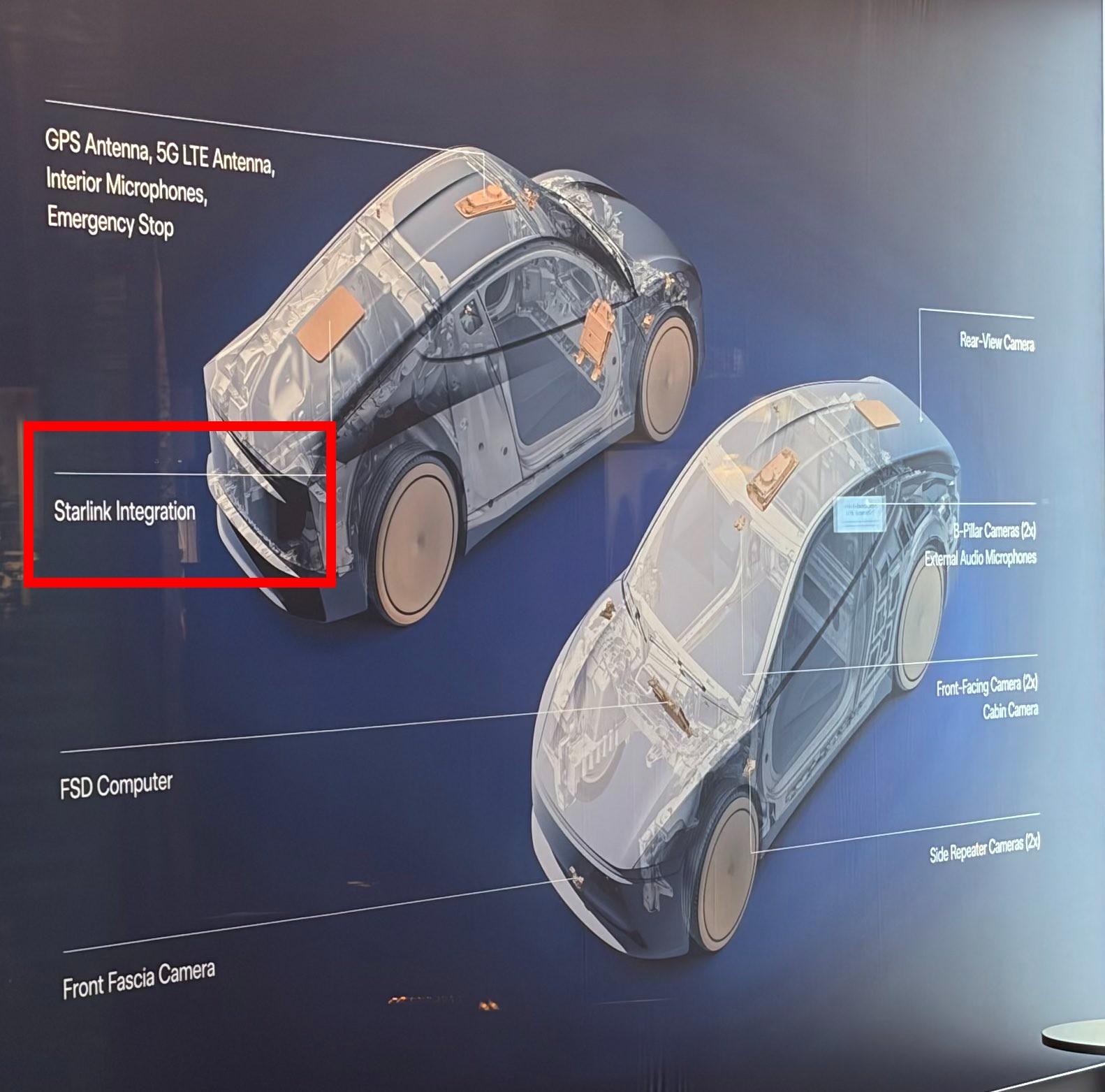
Tesla has evidently revealed which of its vehicle models will be the first to receive Starlink integration: the Cybercab.
Tesla’s Santana Row showroom now has a full-fledged display of the Cybercab, with an extensive bit of information hung around an exhibit that seems to reveal the vehicle’s newest feature: an integrated Starlink antenna that will enable secure and reliable internet access during trips.
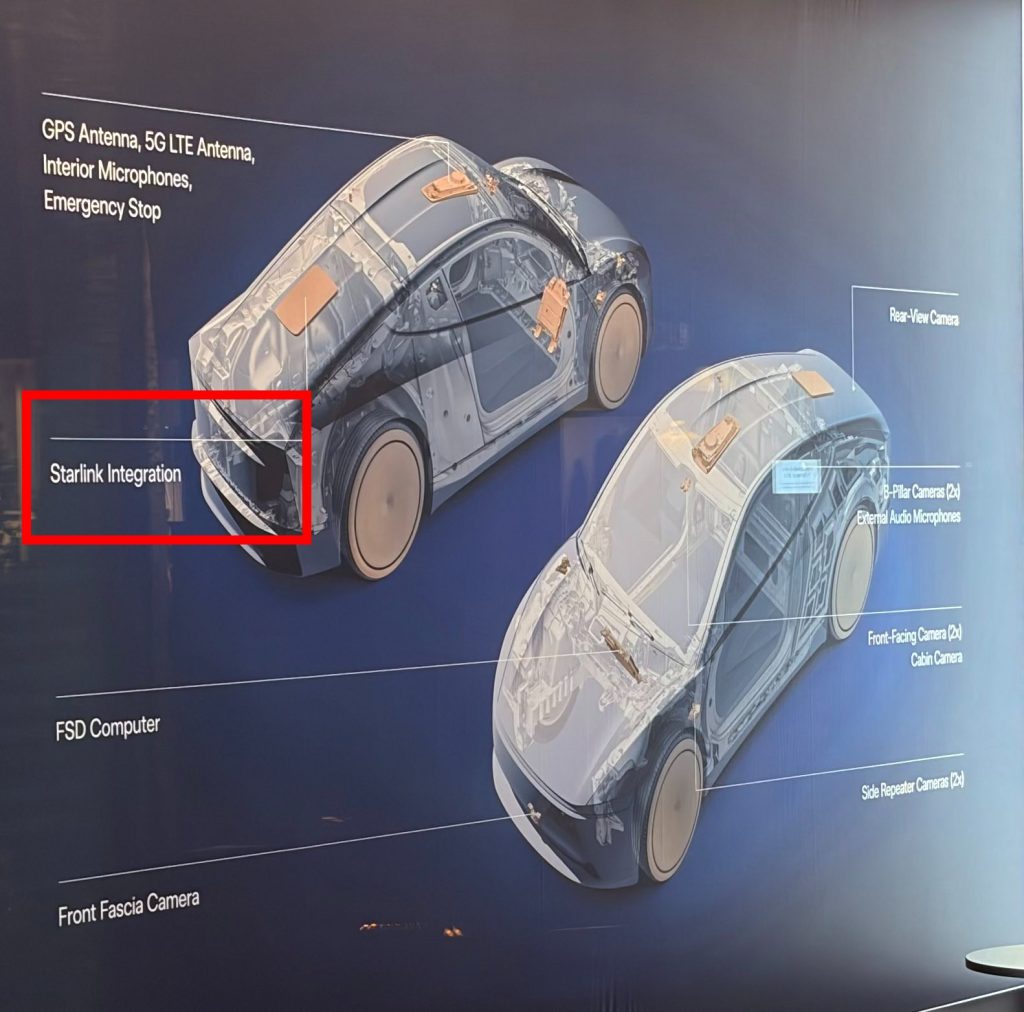
Credit: @Starscream_SJC | X
Cybercab is geared toward autonomous ride-hailing for one or two passengers. The production units rolling off the lines at Gigafactory Texas are built without steering wheels or pedals, meaning when public rides begin, passengers will not need to interact with a human being or control the vehicle in any way outside of what appears on the center screen for their entertainment during the ride.
Tesla Santana Row will be reopening tomorrow with a full focus on self-driving. Everything in the showroom is about Robotaxi and Cybercab with stats and information about the technology. The Cybercab on display is the production model. pic.twitter.com/yIUYdOGFOp
— Shaun Cassidy (@Starscream_SJC) July 20, 2026
Along the display, Tesla wrote this message about Cybercab:
“Cybercab is built for autonomy. It has no steering wheel, no side mirrors, and no pedals. It goes where you tell it to go and how you want it to, so you can relax along the way. It is hyper aware and responsive to your surroundings, monitoring other drivers, responding to emergency vehicles, utilizing its expertise in the rarest scenarios to help keep you safe.”
Tesla has been teasing a potential Starlink integration for quite some time now. In December, the company hinted at potential Starlink internet terminal integration within its vehicles in a patent that described a vehicle roof assembly with integrated radio frequency (RF) transparency.
The company wrote in its patent application that a new roof design built with materials that differ from the standard metallic or glass elements used in today’s cars would allow it to integrate modern vehicular technologies, in particular, ones that require radio frequency transmission and reception.
Tesla suggested high-strength polymer blends, like Polycarbonate, Acrylonitrile Butadiene Styrene, or Acrylonitrile Styrene Acrylate.
This is the first time we’ve seen Tesla officially confirm the Starlink integration into the Cybercab. It’s not much of a surprise considering the company’s intention behind the Cybercab, which is to make travel autonomous.
Productivity will now be at a maximum during a work-related commute, while the center screen could be utilized for Netflix or potentially even live TV for those who are heading to dinner or to a fun activity.
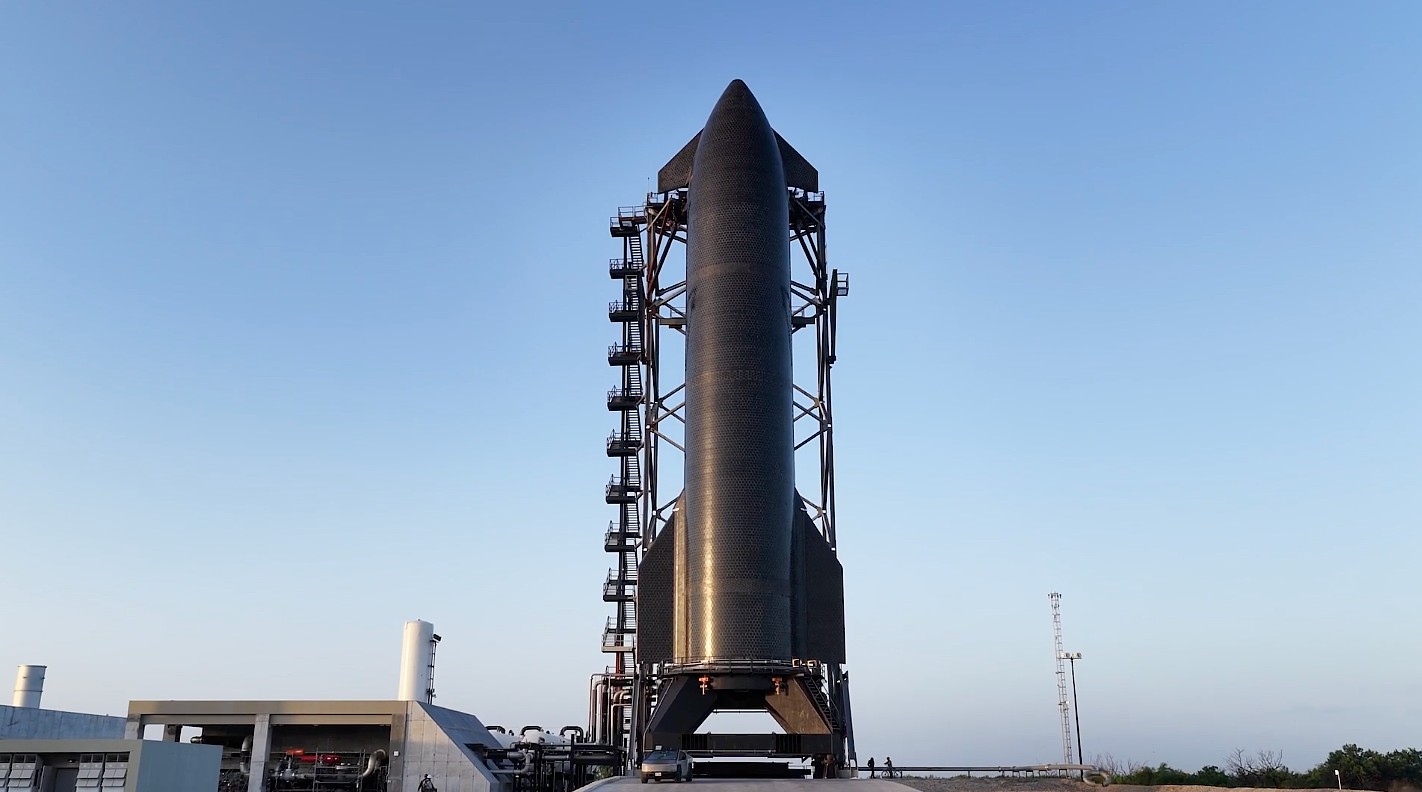
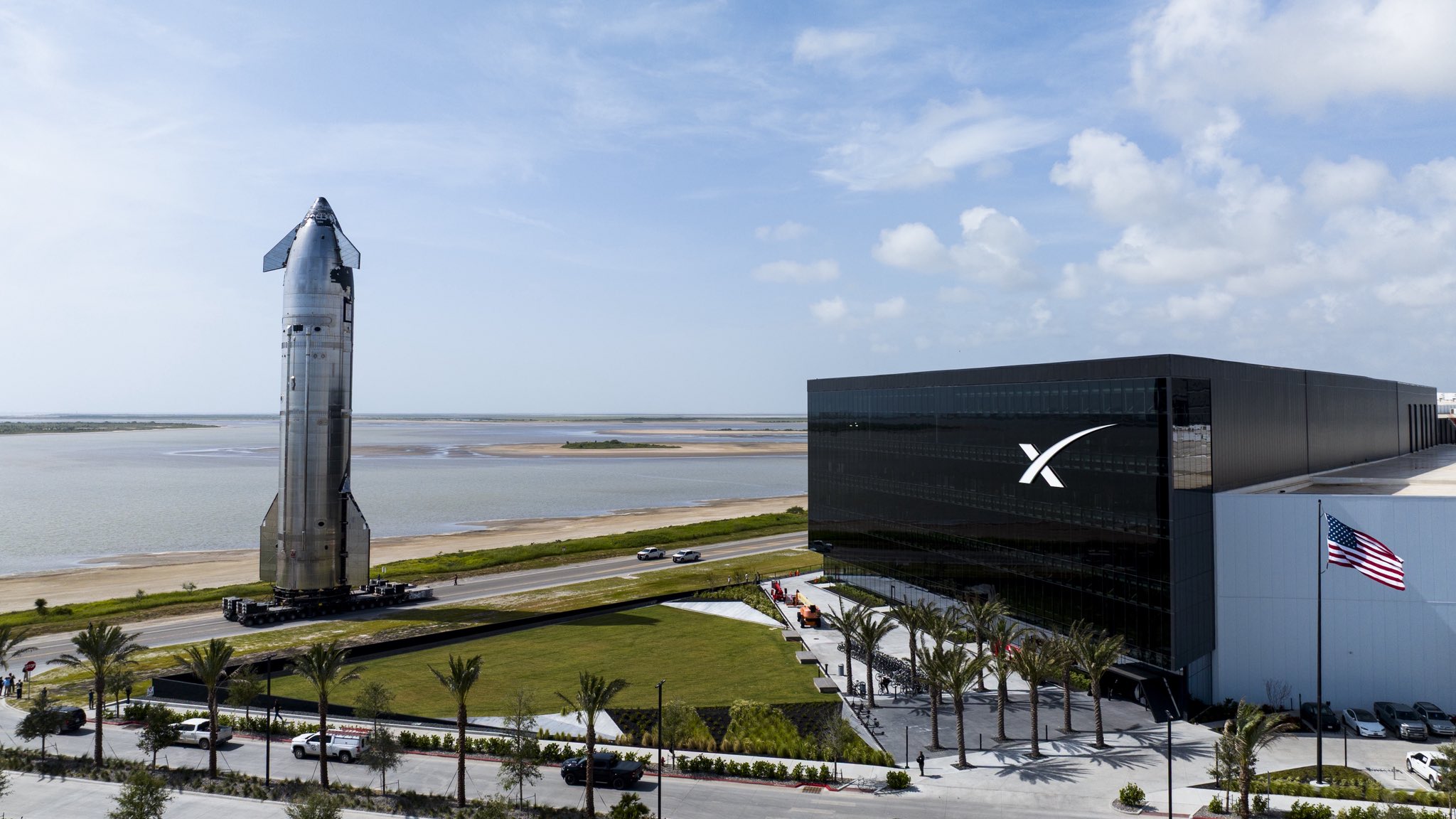
SpaceX has updated its target for the thirteenth integrated flight test of Starship, aiming for as early as Thursday, July 23. The 90-minute launch window opens at 5:45 p.m. CT from the company’s Starbase facility in South Texas.
The target flight was initially rescheduled for today, but SpaceX pushed it back again.
This latest adjustment follows an aborted attempt earlier in the week and reflects the iterative, rapid-development approach that has defined the Starship program. With the vehicle already stacked and ground teams making final preparations, the mission represents another step toward proving the full reusability of the world’s most powerful rocket system.
Now targeting to launch Starship’s thirteenth flight test as early as Thursday, July 23 → https://t.co/Rp7VwBzpWx pic.twitter.com/Y0YNzfc5zk
— SpaceX (@SpaceX) July 19, 2026
The original launch attempt on July 16 was scrubbed at T-0 when several Raptor engines on the Super Heavy booster failed to ignite properly. The automatic abort system triggered just as the engines began their startup sequence, preventing liftoff.
SpaceX CEO Elon Musk confirmed that some engines did not start as expected, prompting the decision to replace two Raptors on Booster 20 to ensure reliability. The issue occurred despite a successful full-duration static fire earlier, highlighting the complexities of coordinating 33 engines under flight conditions.
This cautious approach underscores SpaceX’s commitment to safety amid an aggressive test cadence.
Flight 13 builds directly on the lessons from Flight 12 in May 2026. The Super Heavy booster’s primary goals include a successful liftoff, ascent, stage separation, boostback burn, and controlled splashdown in the Gulf of America.
Hardware and software modifications address the off-nominal flip and boostback burn problems from the prior flight, where propellant slosh and engine relight issues led to an uncontrolled impact.
For the Starship upper stage, objectives include deploying 20 operational Starlink V3 satellites, the first real payload of this type, performing a single Raptor engine relight in space, and executing a controlled entry, descent, and splashdown in the Indian Ocean. Propulsion upgrades aim to improve engine-out capability after one vacuum Raptor was lost on Flight 12.
Additional test elements focus on heat shield performance. Six satellites carry cameras to image the tiles during flight, while white-painted tiles and upgraded attachments on flaps and the aft skirt will gather data for future reusability.
The FAA completed its mishap investigation into Flight 12 earlier this month, clearing the regulatory path.
This suborbital mission, the second with V3 vehicles, advances Starship toward operational missions, including potential crewed flights and support for NASA’s Artemis program. Success would mark significant progress in rapid reusability and satellite deployment from the massive system.
Elon Musk dismissed reports claiming SpaceX had placed a massive order for NVIDIA GPUs worth $52 billion. The denial came hours after Taiwanese media, citing unnamed industry sources, reported that SpaceX planned to acquire approximately 13,000 AI server racks, equating to roughly 1 million GB300 GPUs, from Foxconn.
Each rack was estimated at around $4 million, with deliveries potentially starting in late 2025.
The story suggested this would mark SpaceX’s first major foray into Foxconn-manufactured NVIDIA hardware, breaking from suppliers like Supermicro and Dell. Musk responded bluntly on X:
This is fake news
— Elon Musk (@elonmusk) July 20, 2026
Despite the denial, the rumored scale aligns with SpaceX’s explosive growth in AI infrastructure. NVIDIA’s GB300 (successor to the GB200 NVL) racks deliver unprecedented performance for large-scale training and inference. A $52 billion commitment would dwarf most corporate AI budgets and provide the compute muscle needed for frontier models.
SpaceX already operates gigawatt-scale terrestrial clusters like Colossus in Memphis, Tennessee, and has monetized them aggressively through leasing deals.
SpaceX’s newest Starmind will make earth data centers obsolete
Major customers include Anthropic (paying ~$1.25 billion monthly for 220,000+ GPUs), Google (~$920 million monthly for 110,000 GPUs), and Reflection AI. These arrangements are projected to generate tens of billions in annual revenue, far outpacing traditional SpaceX businesses.
Such an investment would fuel internal AI efforts, particularly Grok models under the integrated SpaceXAI division, while supporting ambitious orbital data center plans. SpaceX envisions launching thousands of AI-optimized satellites powered by solar energy and cooled in space, bypassing terrestrial power and land constraints.
This “Starmind” constellation could position the company as a leader in space-based computing.
SpaceX as an Emerging AI Powerhouse
Once primarily known for reusable rockets and Starlink satellite internet, SpaceX has transformed into a multifaceted AI player.
The 2026 acquisition of xAI integrated Grok development directly into the company. Starlink’s low-latency global network complements massive compute clusters, enabling efficient data flow for training and serving AI models.
Musk has long argued that AI scaling demands solutions beyond Earth, citing things like real estate and electricity limits on the ground.
While the Foxconn deal may not be in the cards, SpaceX’s trajectory is continuing on the path of blending aerospace engineering with hyperscale AI to dominate both launches and intelligence infrastructure.

Tesla reveals first vehicle model to receive Starlink integration

SpaceX adjusts Starship Flight 13 test launch target date once again


