Investor's Corner
Tesla (TSLA) short responds to Elon Musk’s invite with odd demands and side remarks

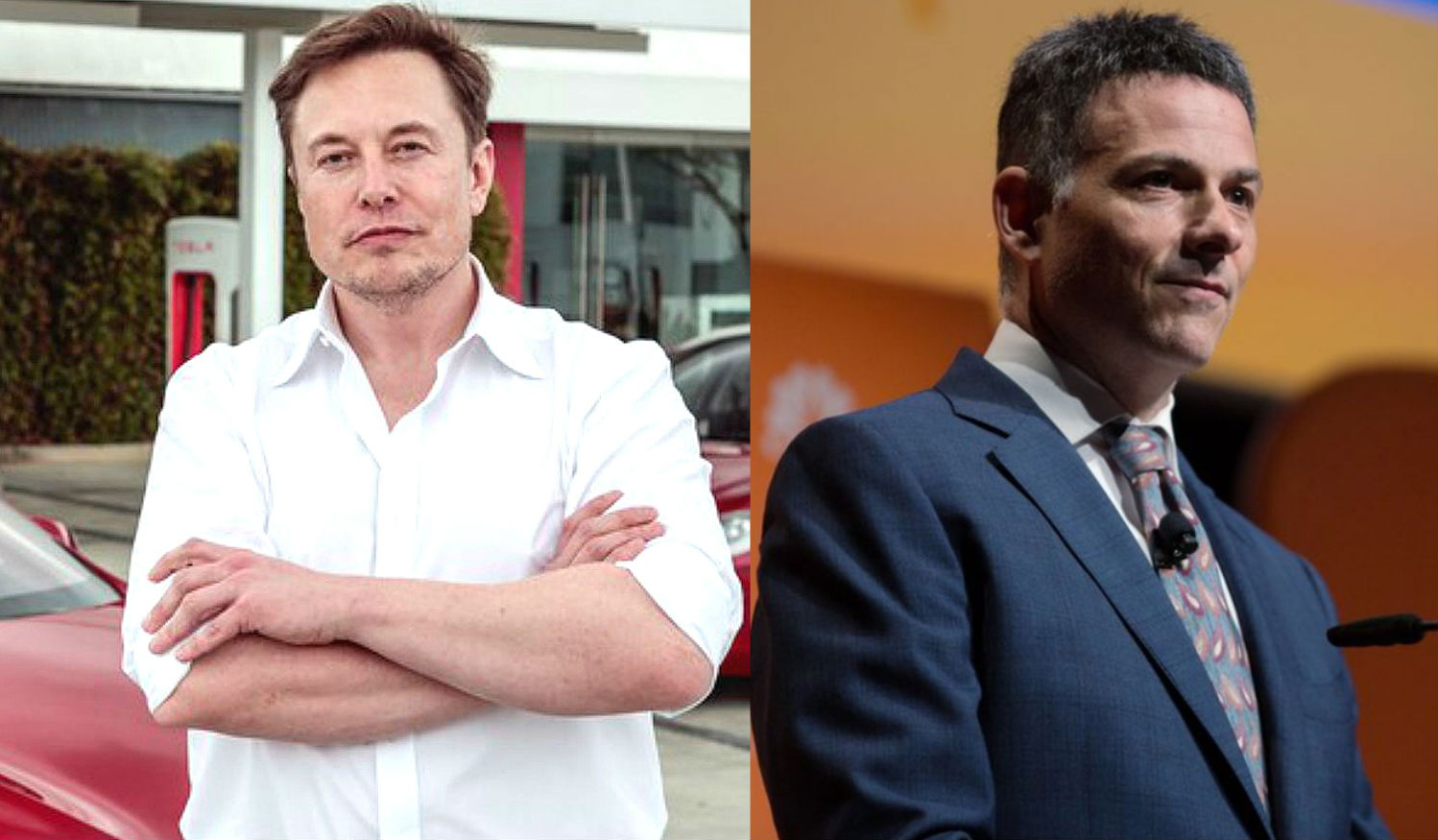
Tesla (NASDAQ:TSLA) short and hedge fund manager David Einhorn has issued a response to Elon Musk’s invitation to meet and visit the electric car maker’s facilities. Einhorn agreed to meet with Musk in his response, though he had a number of odd demands and remarks that went along with his acceptance.
Similar to Musk’s letter, Einhorn’s response was long and posted on Twitter via a screenshot. In it, the Greenlight Capital President challenged the Tesla CEO, claiming that while both his hedge fund and Tesla “struggled” last year, his business has generated “real profits for investors” since it was established in 1996. He also denied that his TSLA short has performed badly as well, arguing that it has merely “fluctuated.”
Following is Einhorn’s letter to Musk in full.
@elonmusk #Tesla #TSLA @zerohedge pic.twitter.com/DrMk9SWjlf
— David Einhorn (@davidein) November 8, 2019
Dear Elon,
I am glad that you read our October letter and would like to discuss it. You say we “made numerous false allegations against Tesla.”
Could you be more specific? Can you point to at least one sentence that is false and refute it with facts? We certainly are capable of making mistakes and if we said anything false, we will correct it for the record. Facts do matter to us. I can’t imagine how it would feel to have entire websites like https://elonmusk.today chronicling your untruths.
Our business have some similarities and differences. We both struggled last year. However, a key difference is that Greenlight’s business has generated real profits for our investors since we began in 1996. Tesla’s business financials reflect a decade of annual losses and an accumulated deficit of $6 billion, despite billions of dollars of taxpayer subsidies.
As for our short of Tesla, it’s fluctuated. In a multi-year bull market, it hasn’t performed badly. By continually changing the narrative and narrowly averting crisis after crisis, you have certainly kept it interesting. We shall see what happens from here.
We welcome your offer to let us learn more about Tesla and will take you up on it. This is a stark contrast from Tesla’s prior position, as your IR team has refused several requests from us to converse directly and answer our questions.
I think facility visits would be fun (can we start in Buffalo?). I might learn the difference between your alien dreadnought factory and cars made by hand in a tent.
The truth is we are much more interested in, and have many questions about, your financial statements. Perhaps, we could spend some time together with your CFO, Zach Kirkhorn.
As an example, my understanding of auto sales is that car buyers don’t typically drive off the lot without paying for the car. Publicly-traded auto dealers have only a couple days of account receivable balances. Yet, Tesla is owed over $1 billion by its customers. With customers paying up front, why are the balances so high? In September 2018, you said the receivables doubled up because the quarter ended on a Sunday. That answer wasn’t very satisfying at the time. This year, the quarter ended on a weekday. Sales are lower than they were a year ago and yet, the receivables were high. We are curious.
We have dozens of questions like that.
I truly appreciate your offer to build a direct communication so we can learn more about Tesla. Please advise on how we should go about scheduling. And have a nice weekend.
David Einhorn
Looking at Einhorn’s response, it appears that the TSLA short is not really taking an open-minded approach in responding to Musk’s letter. Instead, Einhorn seems to be doubling down on his allegations of fraud against Musk with his suggestion that the electric car maker’s finances don’t line up. With such a response, including snide, outdated references to GA4, it would not be very surprising if Tesla does not choose to go forward with Elon Musk’s initial invitation.
This is quite ironic considering that Einhorn himself and his fund, Greenlight Capital, were fined by the UK Financial Service Authority (FSA) for £7.2 million (US$9.27 million) for insider trading. According to the FSA, Einhorn engaged in “market abuse” in relation to a fundraising by pub group Punch Taverns in June 2009. Greenlight has also struggled over the past year, being unable to beat the market and declining 34% last year, its worst year since the fund was founded.
Disclosure: I have no ownership in shares of TSLA and have no plans to initiate any positions within 72 hours.


Elon Musk
SpaceX turned a heralding moment for Starship into its greatest
Starship reached orbit despite losing an engine, deployed 26 Starlink V3 satellites on Flight 14.

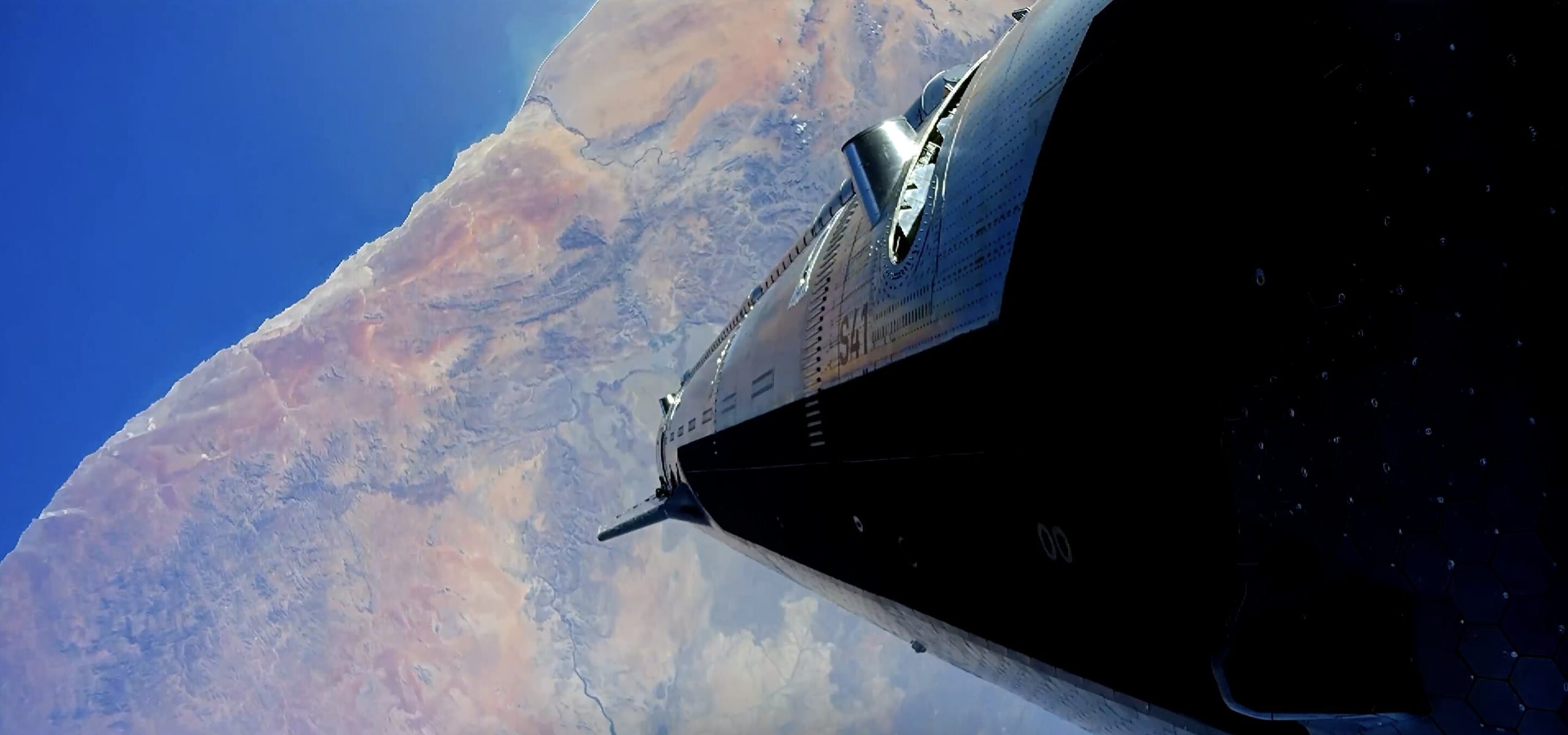
SpaceX’s Starship reached orbit for the first time on Monday, and for a few nail-biting minutes it looked like it wouldn’t. During ascent on Flight 14, one of Ship 41’s six Raptor engines shut down early, and SpaceX’s livestream host Dan Huot told viewers the team had decided not to commit to orbit. Minutes later, after what Huot described as a lot of conversation in the control room, the final poll came back in favor, and a roughly 19 second burn of a single Raptor pushed the ship into orbit about 170 miles up.
The reversal matters because SpaceX had written the exit ramp into the mission plan. The company said it would only fire the orbital insertion burn if flight controllers confirmed enough backup hardware remained for the deorbit burn, a condition Teslarati laid out ahead of the flight. Losing an engine was exactly the scenario that rule was built for.
Pressing forward fits Elon Musk’s history. Falcon 1 failed three straight times before its fourth launch reached orbit in 2008, with SpaceX nearly out of money, and Starship was developed by flying prototypes until they broke. What changed this year SpaceX going public, and with $SPCX sliding below its IPO price in July when Flight 13 slipped, the short interest climbed significantly, as Teslarati reported at the time. A Starship potentially lost today with revenue generating next-gen Starlink satellites aboard would have landed directly on shareholders.
Splashdown confirmed. Congratulations to the entire SpaceX team on the first orbital flight of Starship! pic.twitter.com/urjmiwnvNl
— SpaceX (@SpaceX) September 28, 2026
That pressure showed up after orbit. SpaceX cut a flight planned to last nearly 10 hours to about three, moving splashdown from west of Chile to the North Pacific near Hawaii. SpaceX gave no reason, though Musk said this month the company was being extremely cautious about debris risk. The single Raptor for deorbit worked, and Ship 41 completed its flip and landing burn before breaking apart in the water, an outcome SpaceX expected. Musk has structured SpaceX’s governance to shield long term bets from market pressure.
The payload is the bigger business story. Musk posted that all 26 Starlink V3 satellites deployed and are “operating nominally.” Each V3 is rated for about 1 Tbps of downlink and 160 Gbps of uplink, so this single launch adds roughly 26 Tbps, about 10 times what a Falcon 9 load of V2 Mini satellites adds. The V3 is too large for Falcon 9, making Starship the only vehicle that can build out the planned 100,000 satellite constellation, at up to 60 per flight once it reaches routine service. Unlike the 20 V3 units on Flight 13, which reentered on a suborbital path, these will raise their orbits and could begin serving customers within weeks and bring in hundreds of millions of additional dollars in projected Starlink revenue.
SpaceX has already begun winding down Falcon 9 Starlink launches from Florida in favor of Starship. Reported targets put Flight 15 as early as October 19, leaving about three weeks to diagnose Monday’s engine shutdown before the next orbital attempt.
Starship’s 14th flight is set to launch on Monday, Sept 28. The 75-minute launch window opens at 7:15 a.m. CT. Live coverage of the mission starts ~35 minutes before launch → https://t.co/uQKQvgaTmJ
— SpaceX (@SpaceX) September 27, 2026
Elon Musk
SpaceX just got the green light Starship has waited years for
The FAA has cleared Starship Flight 14, setting up SpaceX’s first orbital attempt on Monday.
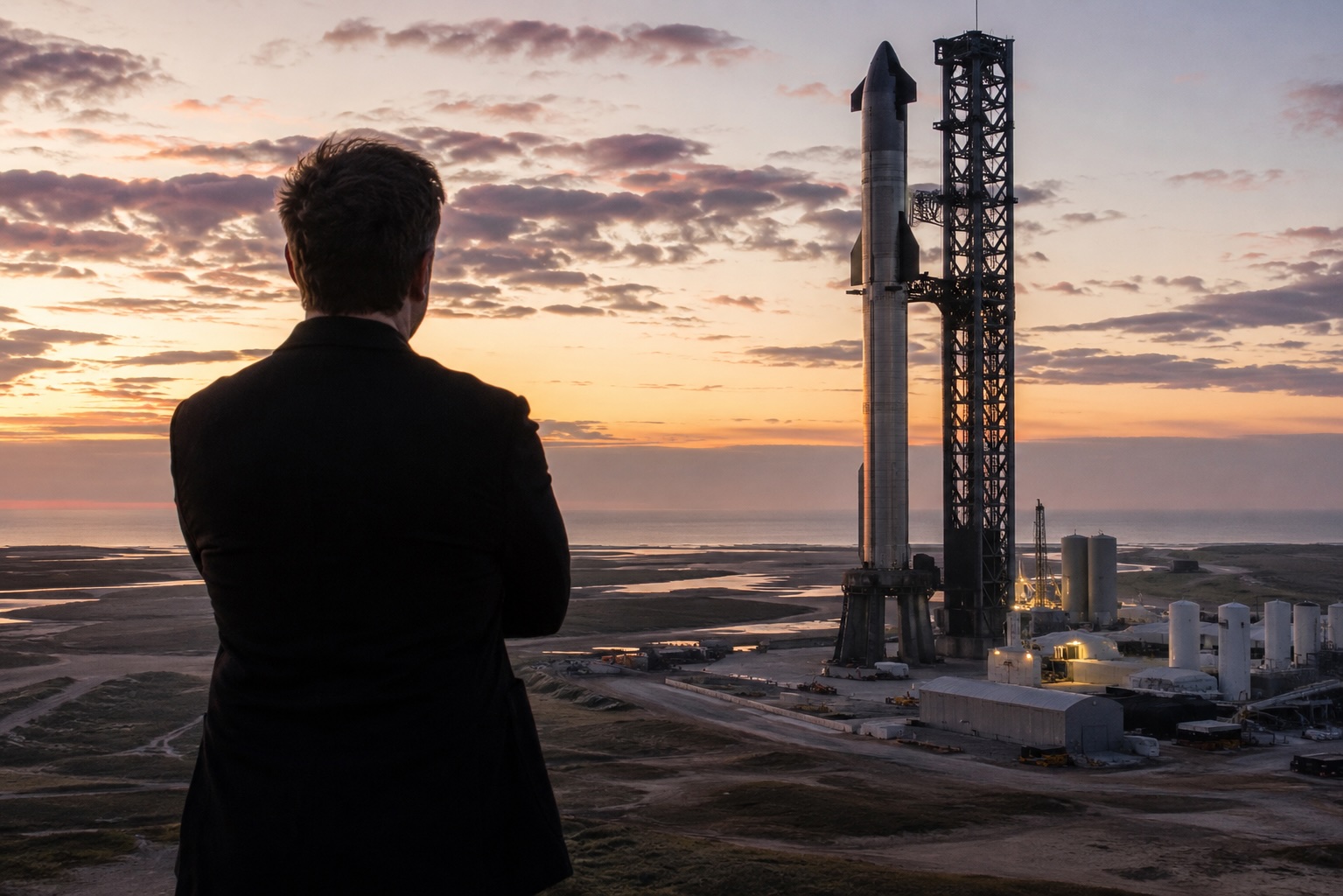
SpaceX has cleared the last regulatory hurdle standing between Starship and its first trip to orbit. The Federal Aviation Administration issued the launch license for Starship Flight 14 late Saturday, keeping the mission on track for liftoff Monday, September 28, from Pad 2 at Starbase, Texas.
The 75 minute launch window opens at 7:15 a.m. Central, and Boca Chica Beach closures are also scheduled for September 29 and 30 as backup dates. This will be Starship’s first revenue generating mission.
The license was the missing piece after SpaceX completed a full wet dress rehearsal with Booster 21 and Ship 41 on September 24. At the time, the company said the flight remained on track pending regulatory approval. Because Flight 14 flies an orbital profile, the FAA had to sign off on a modified license that met its safety, payload and financial responsibility requirements.
Observers combing through the new FAA paperwork also noticed that lightning no longer appears among Starship’s listed launch hazards. If that holds, it matters more for where Starship is headed than for Monday’s attempt. Florida and Louisiana, home to LC-39A and the planned Starbase Louisiana site, see some of the most frequent lightning in the United States.
SpaceX tells the FCC that Starship Flight 14 is going to orbit
Flight 14 is the mission SpaceX has been building toward for months. Ship 41 will carry 26 Starlink V3 satellites, the first operational V3 units to be deployed, and attempt roughly six orbits at about 275 kilometers over a flight lasting just under 10 hours. SpaceX says the ship will only perform its orbital insertion burn after flight controllers confirm enough hardware redundancy remains for the deorbit burn at the end of the mission. Ship 41 is targeting a splashdown in the Pacific west of Chile, while Super Heavy will return to the Gulf of Mexico.
The date carries some symbolism as well. A Monday launch would come 10 years and one day after Elon Musk first presented the Interplanetary Transport System, the design that became Starship, at the International Astronautical Congress in Guadalajara, Mexico.
SpaceX has not announced what comes next, but air traffic planning slides reported this week, list Flight 15 no earlier than October 19 and a first Starship launch from LC-39A in Florida no earlier than October 30. Both dates depend on how Monday goes.
Investor's Corner
Tesla Optimus Gen 3 shows off a cleaner, factory-ready design in new app discovery
Renders hidden inside Tesla’s Android app show Optimus Gen 3’s design before any official reveal.
![Tesla Optimus Gen 3 [Credit: Tesla]](https://www.teslarati.com/wp-content/uploads/2026/03/tesla-optimus-gen3-diner.jpg)
Tesla may have accidentally given a first look at its newest Optimus Gen 3 humanoid robot when photos were found in the Tesla smartphone app.
Design files tucked inside a recent Android version of the Tesla app appear to show the third generation humanoid robot next to the older Gen 2.5 prototype. The assets were extracted from the app package by Tesla community member @wholemars, who posted the renders on X late Tuesday night before deleting them. The Tesla Newswire reshared the side by side comparison on Wednesday, and the images have circulated widely since.
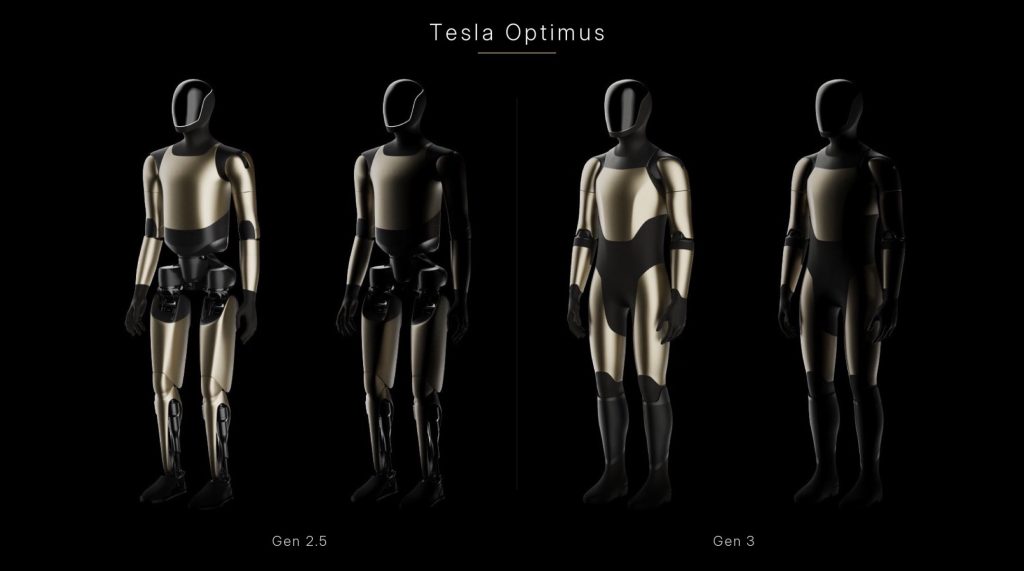
Tesla Optimus Gen 2.5 vs Gen 3 comparison via @WholeMars on X
The files are labeled “gen3” and were built as models for Tesla app’s own interface, as validated directly by Grok to be official.
The comparison shows a robot that looks built for a factory line rather than a lab bench. Gen 2.5’s exposed mechanical linkages and gold plating on the knees and shins are gone. In their place, Gen 3 uses matte black fairings on the lower legs, paired with a more contoured champagne gold body. Flexible covers now seal the joint where the torso meets the upper thighs, keeping bearings and moving parts sealed from debris and unnecessary contact.
The body panels fit more tightly, and the hands, which Tesla has said carry 22 degrees of freedom, look far more refined than those on earlier units.
This most recent leak fills a gap Tesla has left open for most of the year. Elon Musk said on March 31 that Optimus 3 was walking around but needed “some finishing touches” before it could be shown, a delay Teslarati covered when Tesla missed its first quarter reveal target. Musk later said Tesla would hold the design back until closer to production, partly to keep competitors from copying it. No reveal date has been announced.
The app itself has been preparing for Optimus for months. In July, code in the Tesla app pointed to a dedicated robot phone key, a consent screen for collecting video and spatial data while Optimus works inside a home, and an alert system for low battery and mechanical faults. Finished 3D models of Gen 3 suggest the interface owners will eventually use is moving past placeholder code toward something Tesla intends to ship.
Manufacturing is moving in parallel. Tesla tore out the original Model S and Model X lines at Fremont this summer to make room for Optimus production, with a planned capacity of one million robots a year. At Giga Texas, the steel frame of a dedicated Optimus factory is nearing completion ahead of a targeted 2027 start, with Musk pointing to an eventual output of 10 million units annually.

Watch Tesla’s “guardian angel” FSD feature take over for collision evasion

Tesla Roadster event gets delayed due to unfavorable weather


