Elon Musk
Will Tesla join the fold? Predicting a triple merger with SpaceX and xAI

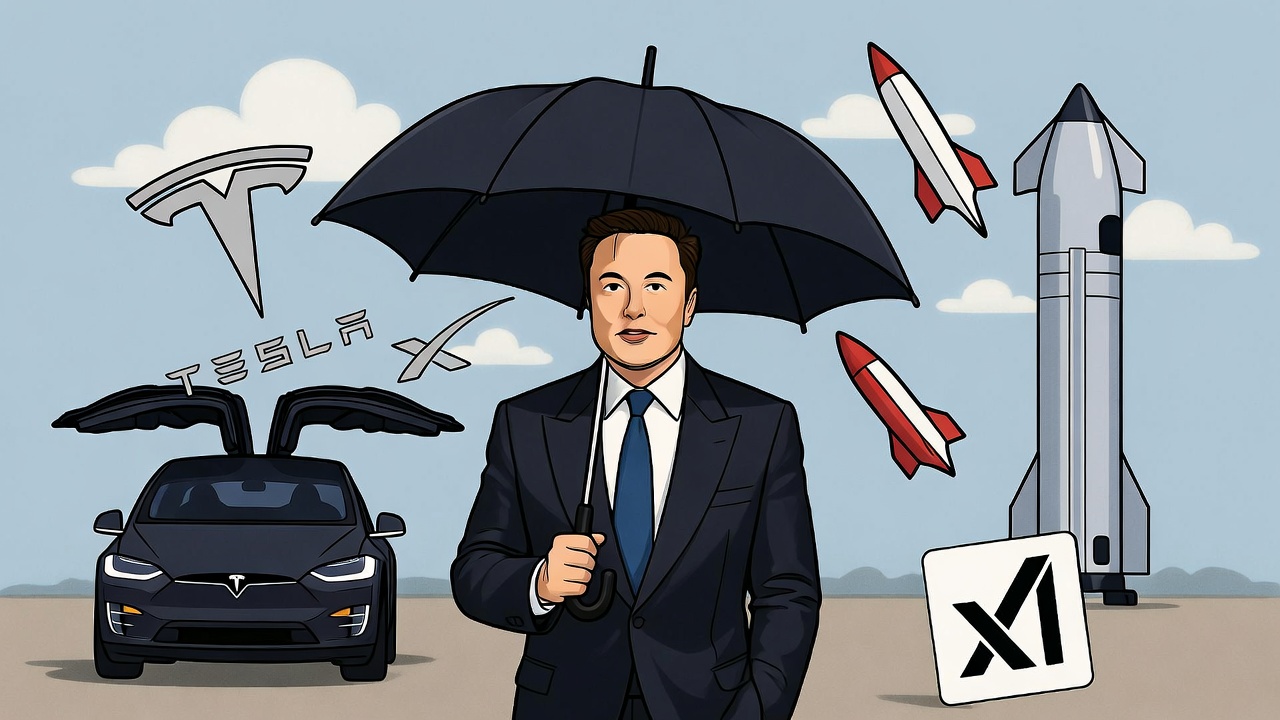
With the news of a merger between SpaceX and xAI being confirmed earlier this week by CEO Elon Musk directly, the first moves of an umbrella company that combines all of the serial tech entrepreneur’s companies have been established.
The move aims to combine SpaceX’s prowess in launches with xAI’s expanding vision in artificial intelligence, as Musk has detailed the need for space-based data centers that will require massive amounts of energy to operate.
It has always been in the plans to bring Musk’s companies together under one umbrella.
“My companies are, surprisingly in some ways, trending toward convergence,” Musk said in November. With SpaceX and xAI moving together, many are questioning when Tesla will be next. Analysts believe it is a no-brainer.
SpaceX officially acquires xAI, merging rockets with AI expertise
Dan Ives of Wedbush wrote in a note earlier this week that there is a “growing chance” Tesla could be merged in some form with the new conglomeration over the next 12 to 18 months.
“In our view, there is a growing chance that Tesla will eventually be merged in some form into SpaceX/xAI over time. The viewis this growing AI ecosystem will focus on Space and Earth together… and Musk will look to combine forces,” Ives said.
Let’s take a look at the potential.
The Case for Synergies – Building the Ultimate AI Ecosystem
A triple merger would create a unified “Musk Trinity,” blending Tesla’s physical AI with Robotaxi, Optimus, and Full Self-Driving, SpaceX’s orbital infrastructure through Starlink and potential space-based computer, and xAI’s advanced models, including Grok.
This could accelerate real-world AI applications, more specifically, ones like using satellite networks for global autonomy, or even powering massive training through solar-optimized orbital data centers.
The FCC welcomes and now seeks comment on the SpaceX application for Orbital Data Centers.
The proposed system would serve as a first step towards becoming a Kardashev II-level civilization and serve other purposes, according to the applicant. pic.twitter.com/TDnUPuz9w7
— Brendan Carr (@BrendanCarrFCC) February 4, 2026
This would position the entity, which could ultimately be labeled “X,” as a leader in multiplanetary AI-native tech.
It would impact every level of Musk’s AI-based vision for the future, from passenger use to complex AI training models.
Financial and Structural Incentives — and Risks
xAI’s high cash burn rate is now backed by SpaceX’s massive valuation boost, and Tesla joining the merger would help the company gain access to private funding channels, avoiding dilution in a public-heavy structure.
The deal makes sense from a capital standpoint, as it is an advantage for each company in its own specific way, addressing specific needs.
Because xAI is spending money at an accelerating rate due to its massive compute needs, SpaceX provides a bit of a “lifeline” by redirecting its growing cash flows toward AI ambitions without the need for constant external fundraising.
Additionally, Tesla’s recent $2 billion investment in xAI also ties in, as its own heavy CapEx for Dojo supercomputers, Robotaxis, and Optimus could potentially be streamlined.
Musk’s stake in Tesla and SpaceX, after the xAI merger, is also uneven. His ownership in Tesla equates to about 13 percent, only increasing as he achieves each tranche of his most recent compensation package. Meanwhile, he owns about 43 percent of the private SpaceX.
A triple merger between the three companies could boost his ownership in the combined entity to around 26 percent. This would give Musk what he wants: stronger voting power and alignment across his ventures.
It could also be a potential facilitator in private-to-public transitions, as a reverse merger structure to take SpaceX public indirectly via Tesla could be used. This avoids any IPO scrutiny while accessing the public markets’ liquidity.
Timeline and Triggers for a Public Announcement
As previously mentioned, Ives believes a 12-18 month timeline is realistic, fueled by Musk’s repeated hints at convergence between his three companies. Additionally, the recent xAI investment by Tesla only points toward the increased potential for a conglomeration.
Of course, there is speculation that the merger could happen in the shorter term, before June 30 of this year, which is a legitimate possibility. While this possibility exists but remains at low probability, especially when driven by rapid AI/space momentum, longer horizons, like 2027 or later, allow for key milestones like Tesla’s Robotaxi rollout and Cybercab ramp-up, Optimus scaling, or regulatory clarity under a favorable administration.
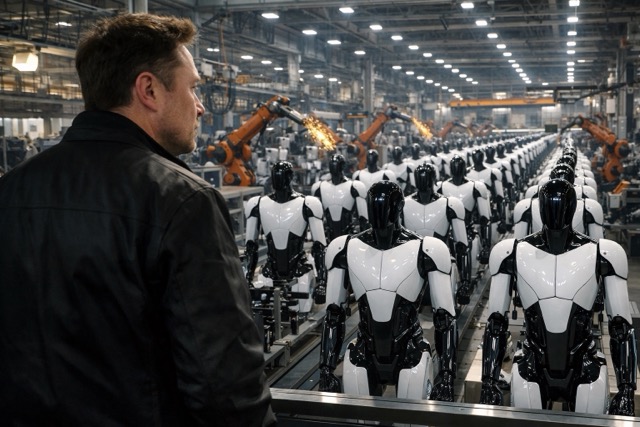
Credit: Grok Imagine
The sequencing matters: SpaceX-xAI merger as “step one” toward a unified stack, with a potential SpaceX IPO setting a valuation benchmark before any Tesla tie-up.
Full triple convergence could follow if synergies prove out.
Prediction markets are also a reasonable thing to look at, just to get an idea of where people are putting their money. Polymarket, for example, sits at between a 12 and 24 percent chance that a Tesla-SpaceX merger is officially announced before June 30, 2026.
Looking Ahead
The SpaceX-xAI merger is not your typical corporate shuffle. Instead, it’s the clearest signal yet that Musk is architecting a unified “Muskonomy” where AI, space infrastructure, and real-world robotics converge to solve humanity’s biggest challenges.
Yet the path is fraught with execution risks that could turn this visionary upside into a major value trap. Valuation mismatches remain at the forefront of this skepticism: Tesla’s public multiples are unlike any company ever, with many believing they are “stretched.” On the other hand, SpaceX-xAI’s private “marked-to-muth” pricing hinges on unproven synergies and lofty projects, especially orbital data centers and all of the things Musk and Co. will have to figure out along the way.
Ultimately, the entire thing relies on a high-conviction bet on Musk’s ability to execute at scale. The bullish case is transformative: a vertically integrated AI-space-robotics giant accelerates humanity toward abundance and multi-planetary civilization faster than any siloed company could.


Elon Musk
Ukraine says Starlink is cutting out its military drones as Poland calls out Elon Musk
Ukrainian officials allege SpaceX limited military Starlink speeds, disrupting drone missions; SpaceX has not commented.

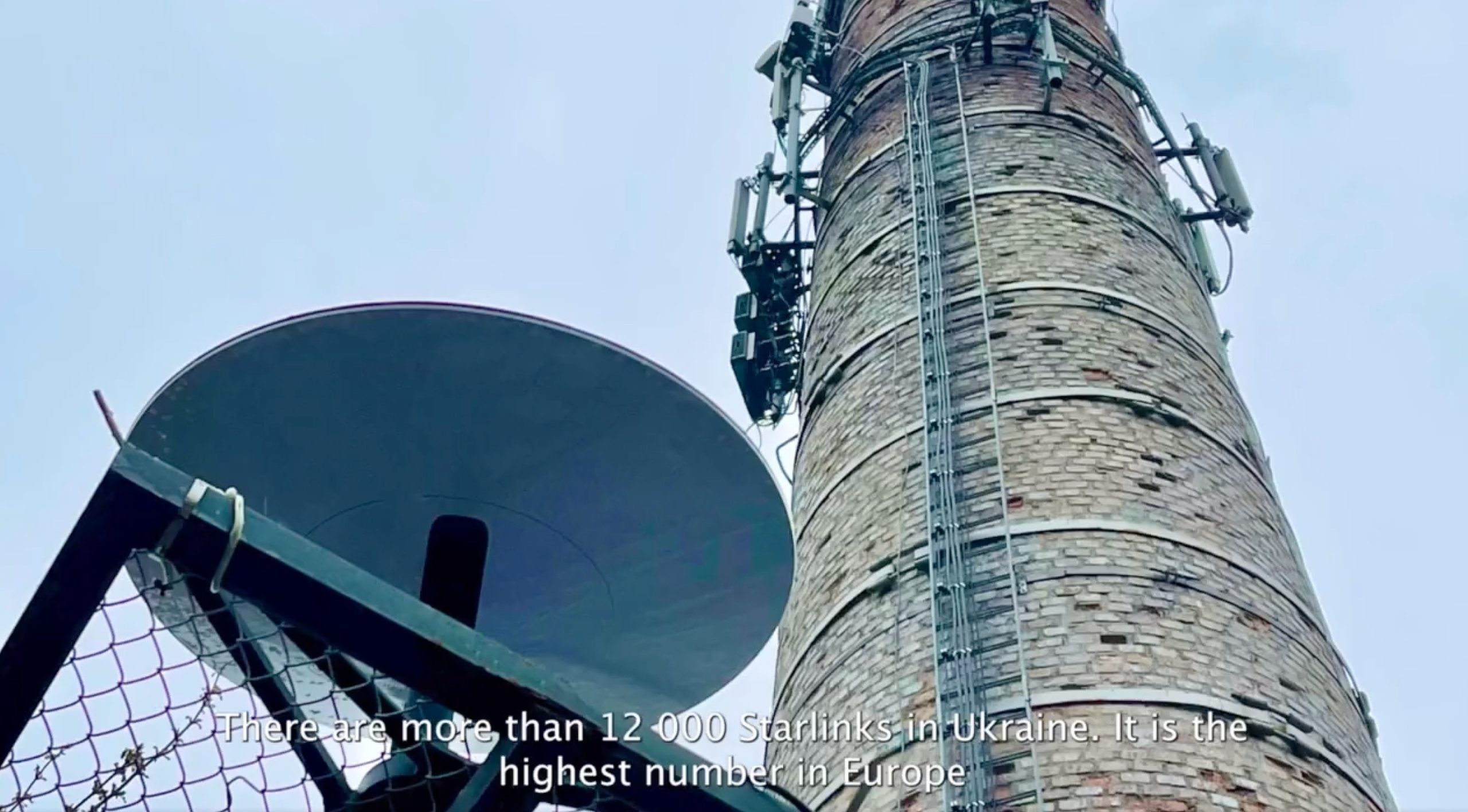
Ukrainian officials are accusing SpaceX of placing a speed limit on the military version of Starlink that their forces use to fly drones, but SpaceX has not confirmed that any change was made. Presidential adviser Serhiy Beskrestnov said in a Telegram post on Wednesday that Starshield terminals have begun losing service when they move faster than about 100 miles per hour, according to a Reuters report. “Our defense forces did not receive a warning about this limitation, and this led to the disruption of several missions,” he wrote.
Ukraine’s 7th Rapid Reaction Corps told Reuters that connections dropped for 10 to 20 seconds at just 68 to 75 mph, which made the drones harder to control. Volunteer Serhiy Sternenko, citing military reports, said the dropouts are now starting at 37 to 43 mph. These accounts come from Ukrainian officials and military sources and have not been independently verified. Regular civilian terminals were reportedly not affected, according to EUalive.
.@POTUS: We told Zelensky, ‘You can do whatever you want to Russia, but don’t hit the refineries because that’s a world problem.’ And what does he do? He goes and hits the diesel fuel. He better damn well stop. https://t.co/CdRlMcPlKr
— Rapid Response 47 (@RapidResponse47) October 10, 2026
SpaceX has not publicly commented or explained what, if anything, changed. Beskrestnov and other Ukrainian officials believe the issue is intentional and point to the timing. Washington has been pressing Kyiv to stop long range strikes on Russian oil refineries after President Trump called for an “energy ceasefire,” and Musk posted on Saturday that “Zelensky has gone too far.” EUalive noted that neither Ukrainian nor Polish officials have presented evidence that the limit was ordered by Washington or by SpaceX, so the link to politics remains an allegation. Other explanations, such as a technical or policy change affecting fast moving terminals, have not been ruled out.
Poland’s foreign minister, Radosław Sikorski, responded on X by quote tweeting a Kyiv Independent report and writing: “Hey, @elonmusk, big man, are you playing politics with your products again? As your European customers, we are watching you.” Poland is the largest funder of Ukraine’s Starlink service, having supplied more than 29,000 terminals and covering operating costs Sikorski has put at roughly $50 million a year. The wording echoes their 2025 clash, when Musk told Sikorski to “be quiet, small man.” At the time of writing, neither Musk nor SpaceX had responded to the claims.
Hey, @elonmusk, big man, are you playing politics with your products again?
As your European customers, we are watching you.— Radosław Sikorski 🇵🇱🇪🇺 (@sikorskiradek) October 14, 2026
The dispute sits on top of a long history. Musk confirmed in February 2022 that Starlink was active in Ukraine after a request from a Ukrainian minister. That October, SpaceX asked the Pentagon to share the bill and Musk said the cost was approaching $20 million a month, before he reversed course and said SpaceX would keep paying. In December 2024 the Pentagon moved some of those terminals onto the Starshield service, the government version now at the center of the complaints.
SpaceX has also changed how its network treats certain terminals in Ukraine before, and that time it was with Kyiv’s cooperation. In February, Ukrainian officials confirmed that terminals believed to be used by Russian troops were disabled after coordination with SpaceX, a step that Ukrainian commanders later said hurt Russian assaults. Whether anything similar is behind the latest reports is unclear, which is why Kyiv is asking for answers.
Ukraine is already looking at backups. Defense tech company Stetman is developing its own satellite system, UASAT-NANO, and officials in Europe have discussed alternatives to Starlink since early 2025, though none match its scale yet.
Elon Musk
FAA kicks off review of SpaceX’s bid to fly Starship nearly every day
FAA is reviewing SpaceX’s plan for 456 Starship launches a year, up from 25 today.
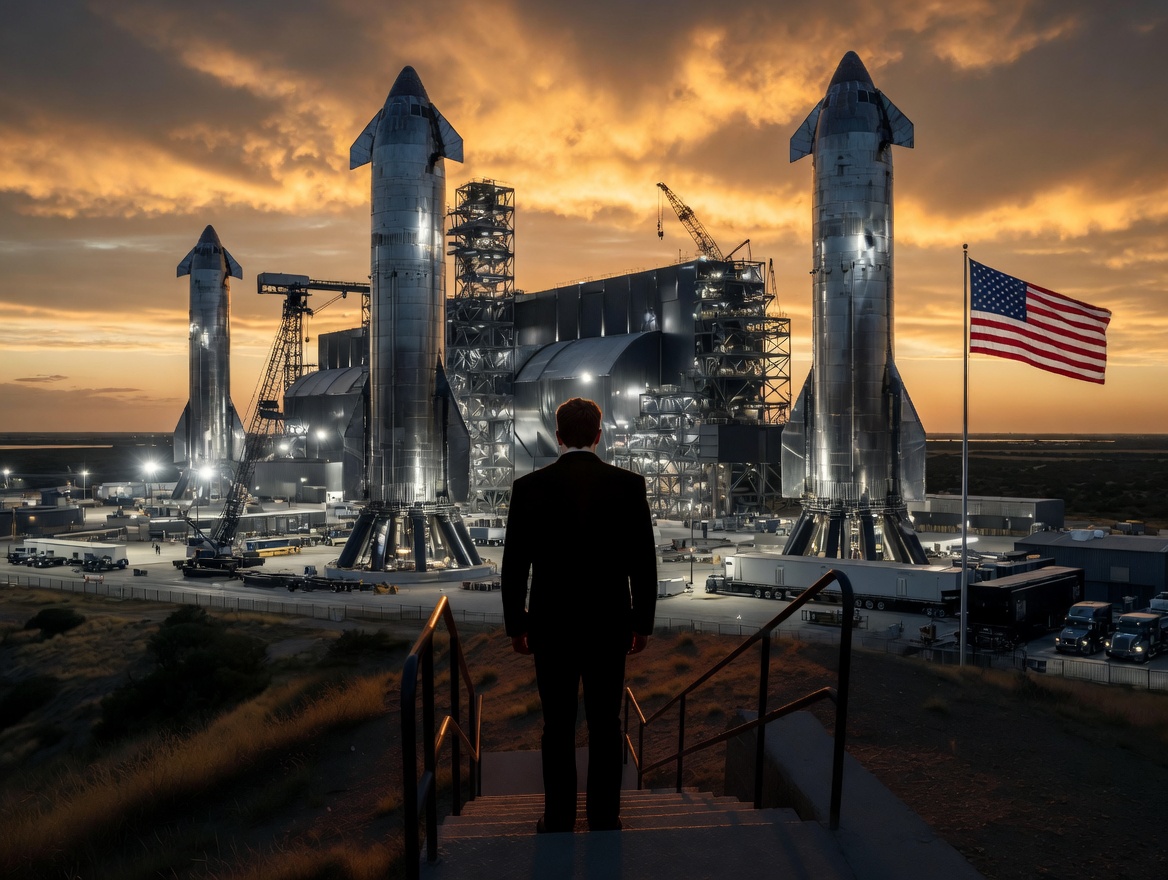
The FAA said Tuesday that it will prepare an environmental impact statement on SpaceX’s proposal to run as many as 456 Starship launches and 912 landings a year from Starbase, Texas. SpaceX is currently authorized for 25 launches and 50 landings annually, which makes the request roughly 18 times the existing ceiling. The notice of intent is set to publish in the Federal Register on Wednesday.
The plan comes in two phases. Phase 1 would allow up to 100 launches and 200 landings a year, on any day and at any hour. Phase 2, which the FAA says could arrive within several years, would raise the limit to the full 456 launches, still at any hour but only on weekdays. The agency noted that 912 landings is the upper limit for the Texas facility no matter where a given mission begins, and that Starship and Super Heavy could come down at the launch site or in the Gulf and open ocean.
A draft statement will be released for public comment at a later date, and the FAA has not said when. According to the Federal Registar, written comments are due November 30 on regulations.gov under docket FAA-2026-12808, with in person scoping meetings on November 17 in Brownsville and November 19 in Port Isabel, plus a virtual session on November 18. The review will weigh air quality, wildlife, coastal resources, water, noise, and aviation, and the FAA said any increase beyond this proposal would need its own separate review.
The numbers look large next to what Starbase has actually done. Starship has flown three times from Texas this year, including Flight 14 on September 28, the first orbital flight, which deployed 26 Starlink V3 satellites. Bloomberg reported that Starbase has never launched more than five times in a calendar year. The current cap of 25 comes from an FAA approval in May 2025. In February, the agency also approved up to 44 Starship launches a year from Launch Complex 39A in Florida, so Phase 1 in Texas alone would more than double that allowance.
Musk has said Starship could eventually fly more than once per hour within less than a decade, per Bloomberg. The nearer term target is Flight 15. Musk said on October 10 that it is hopefully four to six weeks away and will try to catch the ship with the tower, as Teslarati covered. That flight still runs under the existing 25 launch limit, and so would every Starbase launch for as long as the new review takes.
As of mid morning Pacific time on Tuesday, SpaceX had not posted about the filing on its own account.
Elon Musk
SpaceX just combined Grok, Cursor, and X into one mega plan
SpaceXSI merges Grok, Cursor, and X Premium into one plan, raising questions for Tesla owners.
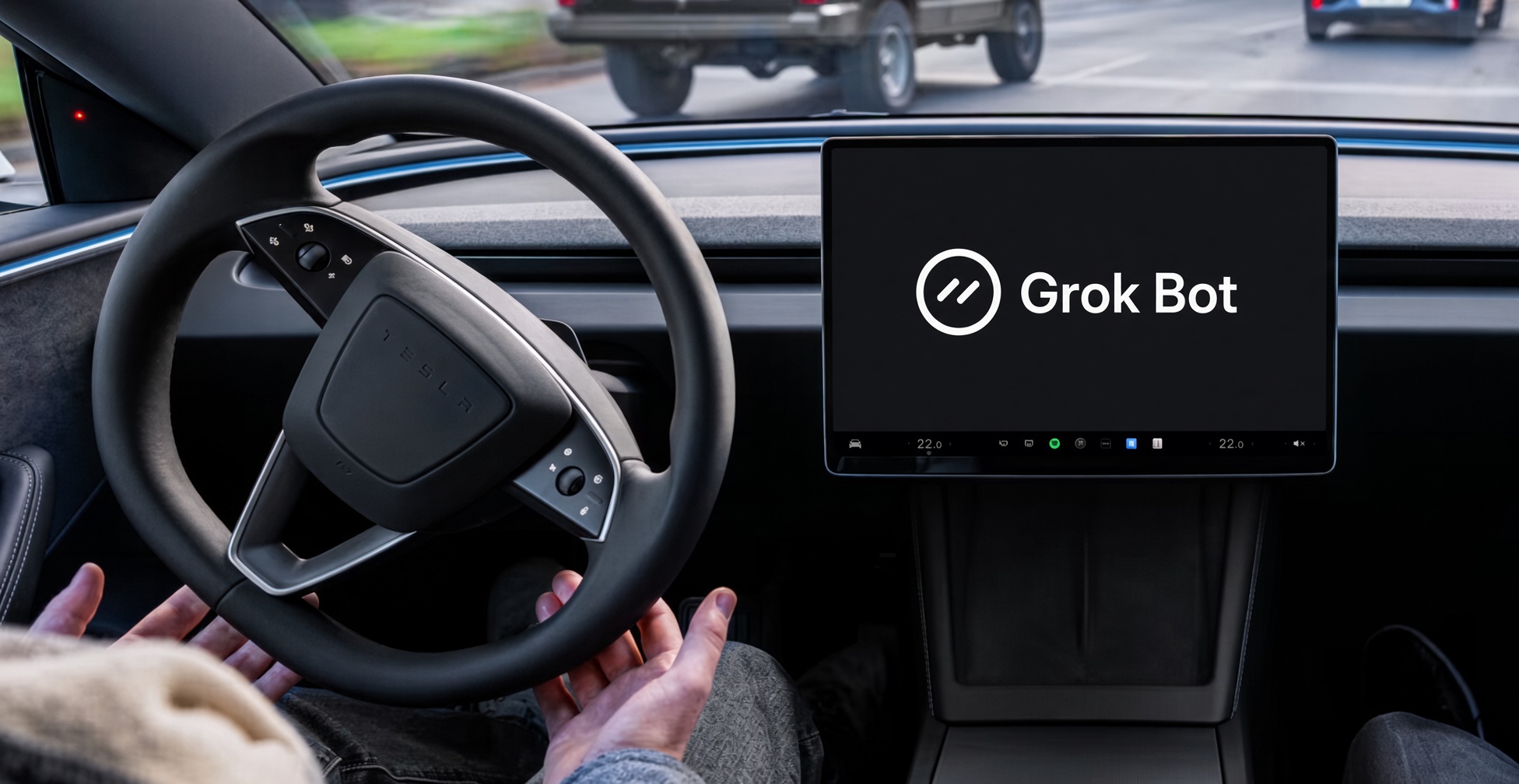
SpaceX Super Intelligence has rolled out The X Subscription, a single plan that combines Grok, Grok Bot, Cursor, and X Premium.
There are five levels, including a free plan that includes daily Grok access and a starter allowance for Cursor’s coding agents. Plus is $8 per month, Premium is $30, Super is $100, and Ultra is $200. Usage scales as you move up, with Premium offering four times the Plus allowance, Super 15 times, and Ultra 50 times. Annual billing brings the prices down a bit further, with Premium at $300 per year.
We’ve unified plans across Grok, Cursor, and X Premium.
Introducing The X Subscription. https://t.co/SvkrVvBa0p
— SpaceX Super Intelligence (@SpaceXSI) October 12, 2026
The $30 Premium tier is where SpaceXSI says it packs the benefits of SuperGrok, Cursor Pro, and X Premium+, which previously added up to $90 per month. Grok Bot, the agent that handles tasks like ordering food or managing a calendar, is included from Premium upward but not on Plus. Paid plans share one weekly usage pool across Grok and Cursor, and each plan includes at least twice the coding usage of the comparable Cursor plan. Third party models in Cursor remain available on Premium and above, but they are billed separately at API list prices.
That last detail matters because of what has happened around Cursor this year. SpaceX exercised its option to buy the company for $60 billion in June, and the deal closed in August. Weeks later, OpenAI said it will cut Cursor’s access to its models on November 12. Bundling Cursor with Grok usage gives SpaceXSI a reason to steer developers toward its own models.
Tesla integrates Grok Bot into its vehicles for the ultimate personal assistant
For Tesla owners, the connection is Grok Bot. Tesla brought it into its vehicles last month, and at that point access inside the car was limited to SuperGrok Heavy subscribers. Grok Bot is now enabled across every Cybercab and the rest of the Model Y Robotaxi fleet. Neither SpaceXSI nor Tesla has said how the new plans change inside the car access for owners, or whether a $30 Premium subscription now covers Grok Bot in a personal Tesla. That is the question owners will want answered first.
The company is also changing its name along the way. The rollout follows the rebrand Musk announced on October 4, when he said SpaceXAI would become SpaceXSI, and the plan page now carries that branding.
The X Subscription is available to new customers starting now, and SpaceXSI says it will reach everyone globally over the next few days. Existing SuperGrok, Cursor, and X Premium subscribers do not have to switch. The option to move will appear gradually in billing settings, with a prorated refund for the unused time on the old plan. Switching is permanent once the accounts are unified, and old plans are closed to new sign ups.

Tesla opens the Q&A for its biggest earnings call yet

Ukraine says Starlink is cutting out its military drones as Poland calls out Elon Musk

FAA kicks off review of SpaceX’s bid to fly Starship nearly every day

The Pentagon taps Elon Musk to design the battlefield of the future

SpaceX reveals how its 1 Million AI satellite network will work and prevent space collisions


