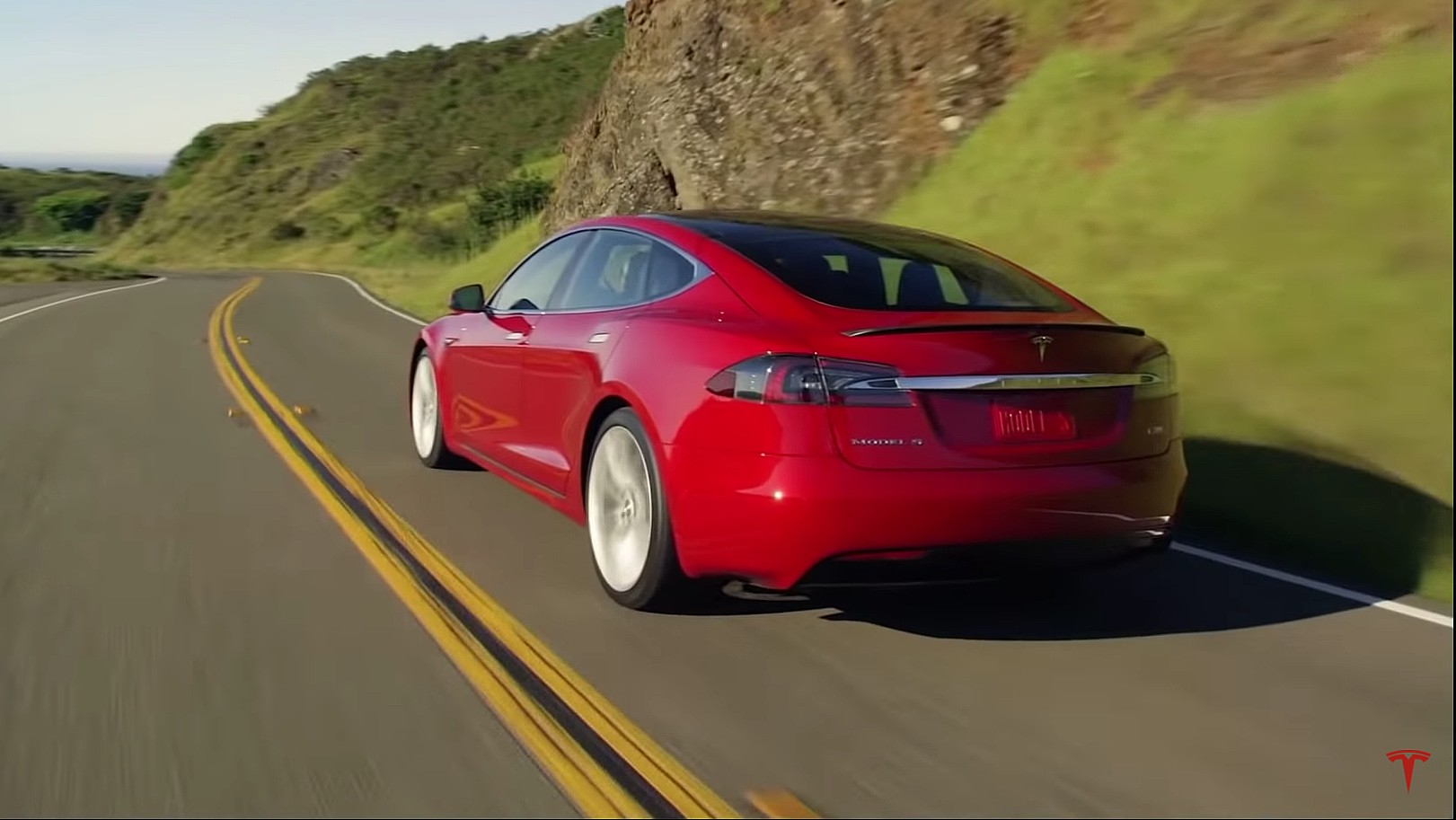

Elon Musk confirmed a future update will allow Tesla vehicles to create micro maps of roads that will help owners avoid potholes or other changes in the environment that are not available in conventional maps. The micro maps created from data collected by its fleet will be shared with fellow Tesla owners when they drive along the same road.
Reto Siegrist from Switzerland asked the Tesla CEO on Twitter about the possibility of adding the micro map feature to which Musk replied with a simple, “Yes.” Potholes can be big headaches for Tesla owners because they can cause serious accidents, damage tires and rims, which need repairs that can instantly burn through a few thousand dollars.
Yes
— Elon Musk (@elonmusk) February 3, 2020
According to TRIP, a national transportation research non-profit group, about a third of major urban roads in the United States have pavements that are in substandard condition. Driving on such deteriorated roads cost motorists around $130 billion.
“Drivers are paying a hefty price for our nation’s crumbling roads and bridges. Those traveling daily through urban cities bear the weight of the problem – with many wasting thousands of dollars each year on rising transportation costs due to pot holes and wasted fuel,” said Kathleen Bower, AAA senior vice president of public affairs and international relations
Elon Musk has previously mentioned an anti-pothole feature that will allow Autopilot to safely avoid potholes without the need for driver input. This micro map shared among Tesla vehicles on the road will be a welcome addition to the anti-pothole feature.
Definitely
— Elon Musk (@elonmusk) April 7, 2019
Detecting potholes can actually be challenging because unlike other obstacles, they are depressions on the road and may present differently depending on the current weather and lighting condition. In an ideal situation, the camera of Tesla’s electric car can determine a pothole by comparing the surface irregularity with the rest of the road and the texture inside the pothole compared to nearby pavement.
Tesla shared how its team is making progress in terms of developing its Full Self-Driving capabilities.
“…in terms of labeling, labeling with video in all eight cameras simultaneously. This is a really, I mean in terms of labeling efficiency, arguably like a three order of magnitude improvement in labeling efficiency,” Musk said.
The detection of potholes and the ability to seamlessly negotiate such obstacles on the road will be one big step for Tesla’s dream of having a fleet of truly autonomous cars. The ability of each car to share this information with other Teslas is also making most of the technology to make roads safer for everyone.
“Our networks learn from the most complicated and diverse scenarios in the world, iteratively sourced from our fleet of nearly 1M vehicles in real-time. A full build of Autopilot neural networks involves 48 networks that take 70,000 GPU hours to train. Together, they output 1,000 distinct tensors (predictions) at each timestep,” Tesla wrote to describe how its Autopilot neural networks work.
Elon Musk is also making sure that Tesla can accelerate further development of its FSD and Autopilot and will host an AI party at his house in a few weeks’ time. During the said event, Musk is hoping to find new talents to join Tesla and make functional applications out of the data available to the company.


Elon Musk
OpenAI cites distrust of SpaceX in decision to drop Cursor partnership
OpenAI will cut SpaceX-owned Cursor’s model access in November, citing Musk’s history of broken contracts.

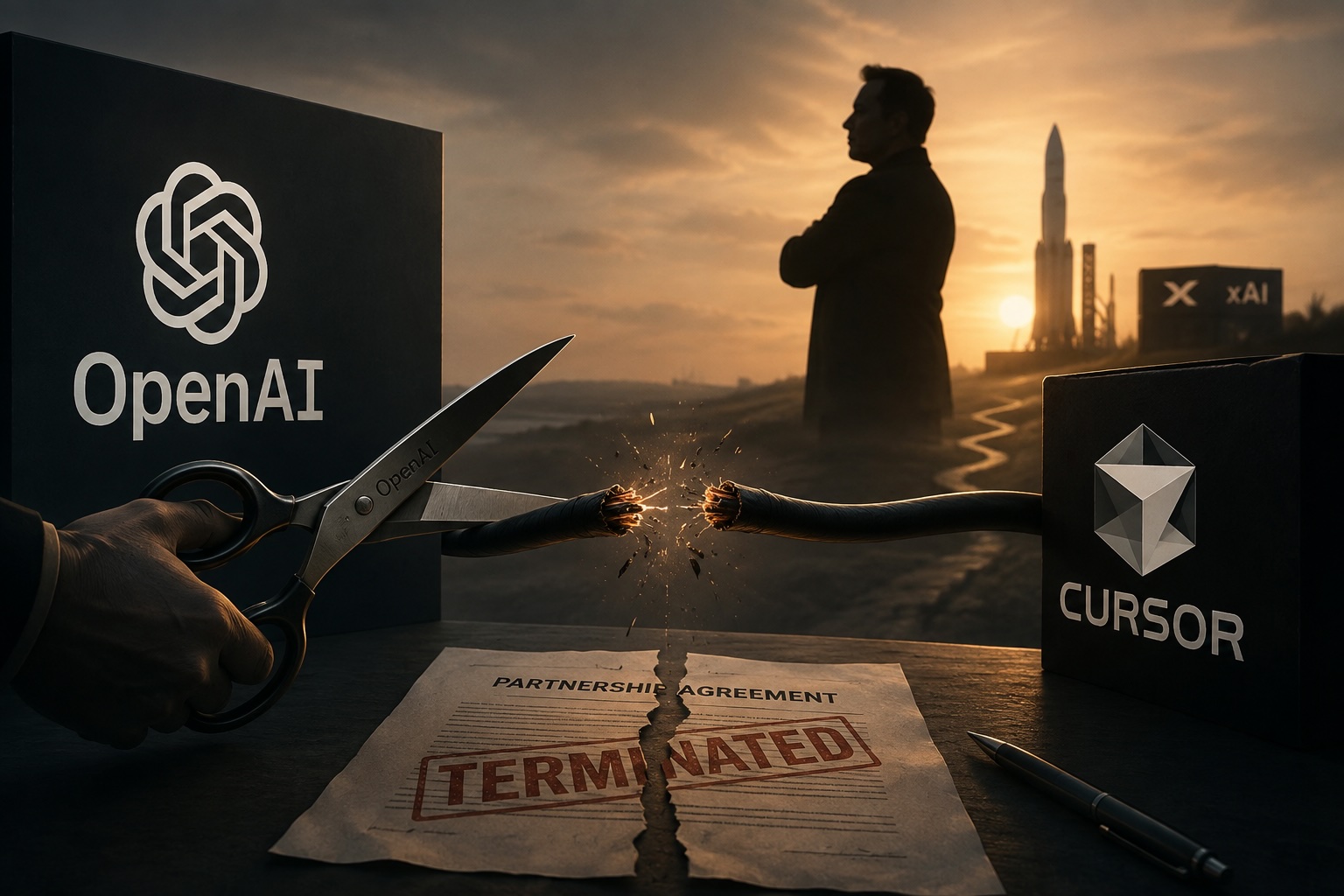
OpenAI, the company behind ChatGPT, announced late Friday that it is ending its partnership with Cursor, cutting off the coding tool’s access to its models on November 12. The move comes two weeks after SpaceX completed its $60 billion acquisition of Cursor’s parent company, Anysphere, folding the popular AI coding assistant into Elon Musk’s growing SpaceXAI division.
In a post on its website, OpenAI said the decision came down to trust, not technology. “We cannot be confident that SpaceX will use our technology within our terms of service, based on our experience with Elon Musk’s companies violating contracts,” the company wrote. OpenAI pointed to two specific incidents: X, now part of SpaceX, allegedly breaking the terms of an existing OpenAI contract after Musk bought Twitter.
That lawsuit is the backdrop for all of this. Musk cofounded OpenAI in 2015, left the board in 2018, and sued Sam Altman and Greg Brockman in 2024, arguing they abandoned the company’s nonprofit mission for profit. A federal jury sided with OpenAI in May, finding Musk waited too long to sue rather than ruling on the merits of his claims. Musk said at the time he would appeal to the Ninth Circuit, calling the outcome a “calendar technicality” rather than a real judgment.
SpaceX’s interest in Cursor predates that verdict by weeks. The company first struck a deal with Cursor in April, securing an option to acquire it for $60 billion or pay $10 billion for joint development work instead. As Teslarati reported at the time, the logic was straightforward: Cursor was paying retail prices to Anthropic and OpenAI, two of its most direct competitors, every time a developer used its product, while SpaceX had idle capacity on its Colossus supercomputer, roughly the equivalent of a million Nvidia H100 GPUs, that Cursor could use to train its own models instead. SpaceX exercised the option in June, days after its own IPO, and the deal closed in mid-August.
Once it closed, Musk moved fast. On an all-hands call with more than 1,000 Cursor employees, he reportedly told staff that SpaceXAI’s Grok was playing catchup in the AI race, unlike Tesla and SpaceX in their own markets, and singled out Anthropic as the company to catch. Cursor CEO Michael Truell now reports directly to Musk inside SpaceXAI.
Losing OpenAI’s models leaves Cursor leaning harder on Anthropic’s Claude, which has its own compute agreement with SpaceX, and on Cursor’s in-house Composer model, the one SpaceX’s compute was supposed to accelerate in the first place. OpenAI framed the November deadline as maximum notice under its contract, and said it wants to “go above and beyond” to help developers through the transition. Whether Anthropic makes the same call is now the open question in AI coding.

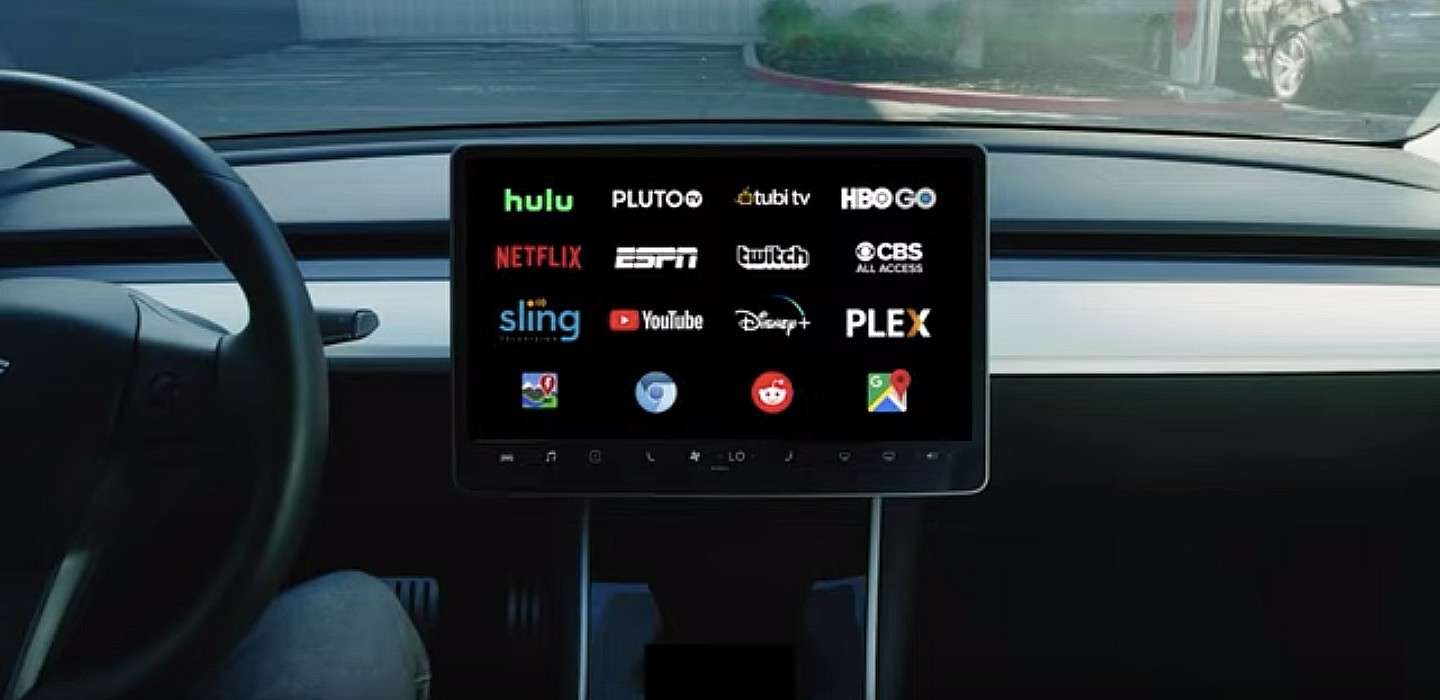
The in-car Tesla Theater is among the most unique features available within the cars. When charging, parked, camping, or just hanging out, vehicle occupants can access a variety of streaming platforms on the large center screen, helping keep them entertained during downtime.
However, the Theater might be getting plenty more streaming platforms, something that owners have requested for some time.
Tesla owners recently discovered that visiting Apple TV in the vehicle browser can launch a fullscreen interface that looks and behaves like a dedicated application rather than an ordinary webpage:
Today I learned that if you go to Apple TV in the Tesla browser, it will open up an actual Apple TV app, fully functional. Not just the site.
Apparently there are more apps than just the few that show on the apps page. pic.twitter.com/os1Ypfm4JR
— Jason W (@jmwilt21) August 20, 2026
The experience drops the usual address bar and browser chrome, presenting catalogs, continue watching rows, and playback controls in the same window Tesla Theater already uses for its listed services. Independent testers soon found similar treatment for HBO Max, Paramount+, Peacock, Disney+, and Prime Video when those sites are opened from the car browser.
This shift is a plausible early signal that Tesla is widening Theater support without a formal software note. Theater has long been a set of web views rather than native applications, so recognizing extra domains and stripping the browser frame is a small server-side change that can expand the catalog quickly.
Owners still lack permanent Theater icons for the newly recognized services, and video remains limited to Park, yet the smoother launch is a meaningful step toward a broader lounge while charging.
Tesla Theater arrived with software version 10 in September 2019. The first video services were Netflix, YouTube, and Hulu, available only while parked and originally tied to WiFi. Spotify arrived in the same era as music rather than Theater video. Disney+ joined officially in July 2021 with the 2021.24 update, giving owners another major catalog on the center screen. Twitch and TikTok later appeared among the default Theater tiles, and Tesla Tutorials remained a persistent educational tile.
Not every addition stayed put. In December 2023, a Holiday software build removed the Disney+ tile for many United States owners after a public dispute involving advertising on X. Hulu stayed visible even though Disney owned it. Visiting disneyplus.com in the browser often restored the tile, which suggested the removal was a recognition list change rather than a complete block. Owners have also reported occasional blank Theater grids after updates, usually fixed by language toggles, resets, or later firmware.
Tesla axes Disney+ from vehicles with Musk-Iger rivalry, but there’s a workaround
Code archives from 2024 listed many unused source names, including Apple TV and Prime Video, that never became official icons, which now looks like groundwork for the current fullscreen browser behavior.
Now that this hint toward an expanded Theater experience has been recognized, Tesla could follow through with these additional shortcuts as a sign that more streaming platforms are available in Teslas than ever before.
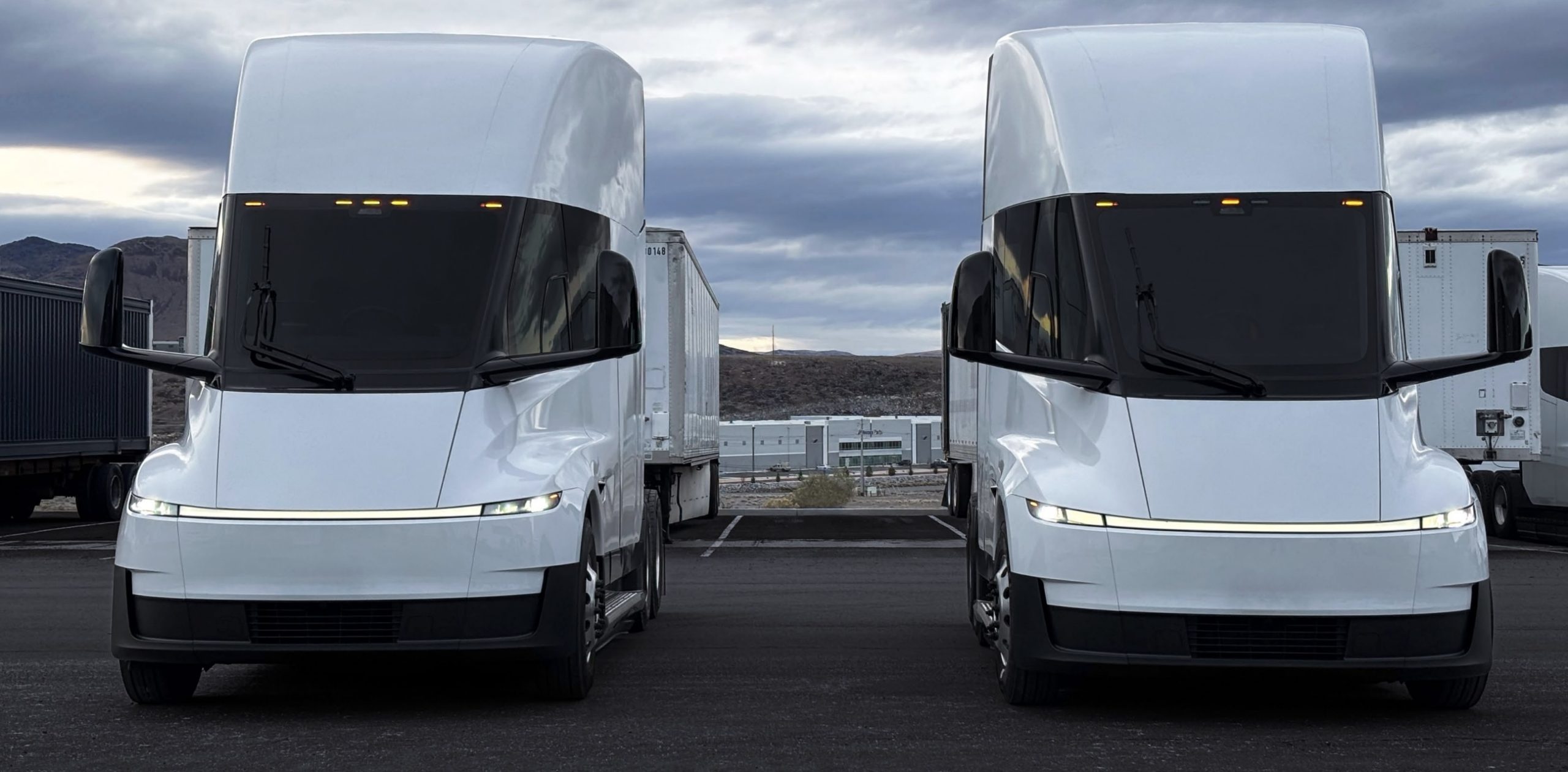
Tesla recently received its largest order for the all-electric Semi from Einride, a Swedish transport service, for 500 units, a groundbreaking invoice to receive before the first deliveries begin.
Even more remarkable, Einride CEO Roozbeh Charli said in a recent interview that he expects his company to take delivery of all 500 — the entire order — before the end of 2027. He even expects to have 75 Tesla Semi units in the Einride fleet before the end of this year.
🚨 Einride CEO Roozbeh Charli on the Tesla Semi partnership:
“If we start with the Amazon announcement that we did earlier this year, that was on the back of having gone through a proving period together with them and proving out our technology. Then we took that next step in… pic.twitter.com/oazkXjwoig
— TESLARATI (@Teslarati) August 28, 2026
Charli said the Tesla partnership was part of a broader push, along with its earlier partnership with Amazon. Einride is assisting Amazon with the use of its Saga AI platform, which helps eliminate questions about budgeting and forecasting for logistics companies.
The Semi, as well as Tesla’s production and subsequent delivery of the units to Einride, will help the company “to have a good supply of vehicles that we can deploy on the [Saga AI] platform,” Charli said. “Tesla is also a relationship we’ve had for a while, and as the Tesla Semi deliveries are firming up, we decided to do a larger commitment to that and deploy that on our platform.”
In its initial announcement, Einride said it anticipated taking delivery of the trucks over the next two years, but now it appears the company is expecting all 500 units within the next 16 months.
Built at a dedicated factory in Sparks, Nevada, the Tesla Semi has been perhaps the biggest and most intensive testing process the company has ever had for a single vehicle model. For the past several years, Tesla has been working with many companies, most notably Frito-Lay and PepsiCo, to gain knowledge on the performance on regional routes.
Tesla plans to launch the Semi officially on September 24, five months after production started ramping.
Additionally, drivers have said they are happy about the Semi’s performance and that its numerous safety and productivity features have made their jobs and routes much easier.

OpenAI cites distrust of SpaceX in decision to drop Cursor partnership

Tesla Theater might be getting plenty more streaming platforms


