Investor's Corner
Major TSLA investor says Tesla is ‘better run’ after new chair appointment

Tesla’s (NASDAQ: TSLA) appointment of former Toyota Motors and Juniper Networks executive Robyn Denholm has reportedly eased the worries of some major investors. This was according to Baillie Gifford, one of Tesla’s largest shareholders and staunchest supporters.
James Anderson, the head of Global Equities for asset management and investment firm Baillie Gifford, says the appointment of Denholm as Chairperson of Tesla has stabilized the company’s value and outlook. This move has made Anderson and his peers particularly more comfortable about the electric car maker. Since Denholm’s appointment, the veteran investor remarked that Tesla as a whole has become “better run.”
After Elon Musk’s public lawsuit with the Securities and Exchange Commission (SEC) in 2018, Tesla appointed Denholm as its Chairperson, a move that has been recognized as “decisive” by Anderson, who has been with Gifford since 1983.
Gifford’s firm is a major investor in TSLA stock who first bought shares of the company in 2013. The company holds a 7.67% ownership in Tesla that is currently worth over $9.7 billion.
While Gifford’s long-term outlook of Tesla has been positive, Anderson points out that stress on Musk was extremely high prior to his departure of his Chairman post, especially considering the outspoken nature of the company’s most prominent skeptics.
“I think that the shorts acquire too much publicity,” Anderson said to Financial Times. Tesla’s most notable short-sellers are frequently in the news insisting that the company’s stock will inevitably fall due to a number of speculated scenarios. This has resulted in Twitter clashes with Tesla enthusiasts, and at times, even the outspoken and bold CEO.
Unfortunately for TSLAQ, the company’s stock has seen on a steady climb following the Q3 2019 earnings call. After starting the new decade at a price of around $430 per share, the stock doubled in just one month, closing at $887.06 on February 4, but this was not the highest price the shares reached, as the price per share got as high as $968.99. Tesla shares seem poised for volatility today, however, seemingly due, at least in part, to negative sentiments surrounding the COVID-19 outbreak.
Despite its slide in recent weeks, Tesla’s bulls are not lowering their price targets because of the company’s upcoming products and innovations. Minneapolis, Minnesota-based firm Piper Sandler recently boosted its target price for Tesla to $900, after admitting its energy business consisting of solar panels and energy storage systems has an increased chance of success.
The company is also currently preparing for initial deliveries of the Model Y, an all-electric crossover that had its delivery date moved up thanks to Tesla’s increased production efficiency. Deliveries are to begin four days earlier than initially expected on March 11 after a buyer received a notification from Tesla.
Disclosure: I have no ownership in shares of TSLA and have no plans to initiate any positions within 72 hours.


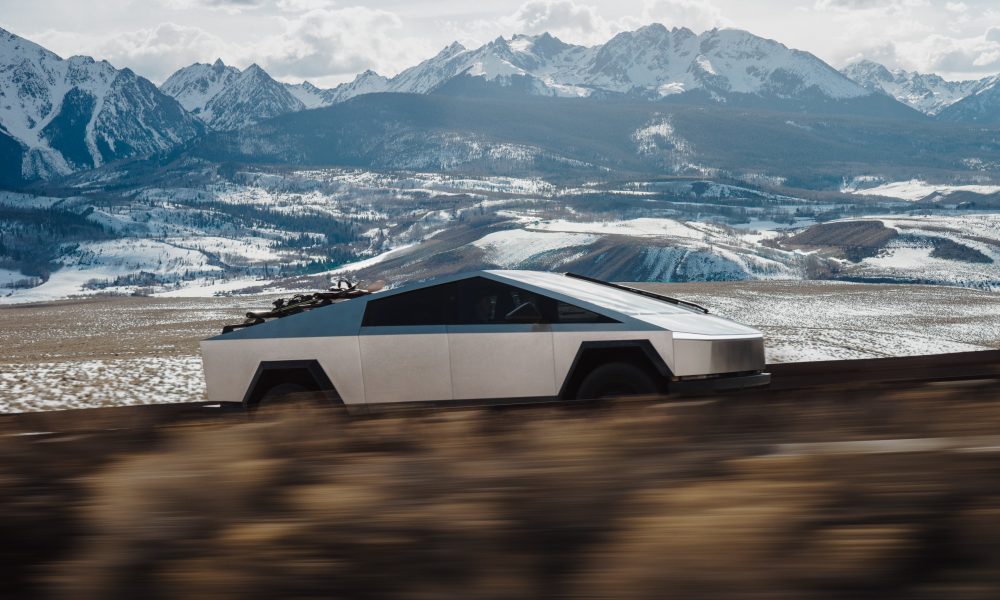
Tesla stock (NASDAQ: TSLA) endured one of its sharpest single-day declines in years on July 23, tumbling approximately 14.5 percent and closing near $320 after opening the session around $374. The drop erased more than $140 billion in market value amid heavy trading volume and left the shares at multi-week lows.
The sell-off followed the company’s second-quarter 2026 results, released the previous evening. Tesla reported record revenue of $28.2 billion, up 26 percent year over year, driven by a Q2-record 480,126 vehicle deliveries. Energy storage deployments also rose strongly.
Tesla (TSLA) Q2 2026 earnings results: miss on EPS, beat on revenue
Yet profitability disappointed sharply. Operating income fell 57 percent to $398 million, compressing the operating margin to just 1.4 percent. Non-GAAP earnings per share came in at $0.33, well below the roughly $0.53 analysts had expected. Free cash flow turned negative by $1.1 billion as capital expenditures surged 142 percent to $5.8 billion, largely tied to accelerated spending on artificial intelligence, robotics, and autonomous systems.
The losses on capex were expected, as Tesla said it would be spending heavily in 2026.
Investors also reacted to lingering uncertainty surrounding key product timelines. During the Earnings Call, management reiterated ambitions for Robotaxi deployment and the Optimus humanoid robot, but offered limited new concrete milestones, renewing questions about execution pace that have long accompanied Tesla’s ambitious roadmap.
The magnitude of the decline places it among Tesla’s more severe one-day percentage losses since its 2010 initial public offering. Historically, the two largest single-day drops (split-adjusted) remain September 8, 2020, when shares fell 21.1 percent amid broader market volatility and valuation concerns, and January 13, 2012, with a 19.3 percent plunge during the company’s early growth struggles.
Other notable declines include an 18.6 percent drop on March 16, 2020, at the onset of pandemic-related market turmoil. Thursday’s move ranks roughly ninth on the all-time list but stands out as the steepest in more than a year.
Despite the short-term pain, Tesla’s long-term trajectory has repeatedly recovered from such volatility. The latest results underscore both the strength of its core automotive and energy businesses and the near-term costs of heavy investment in next-generation technologies.
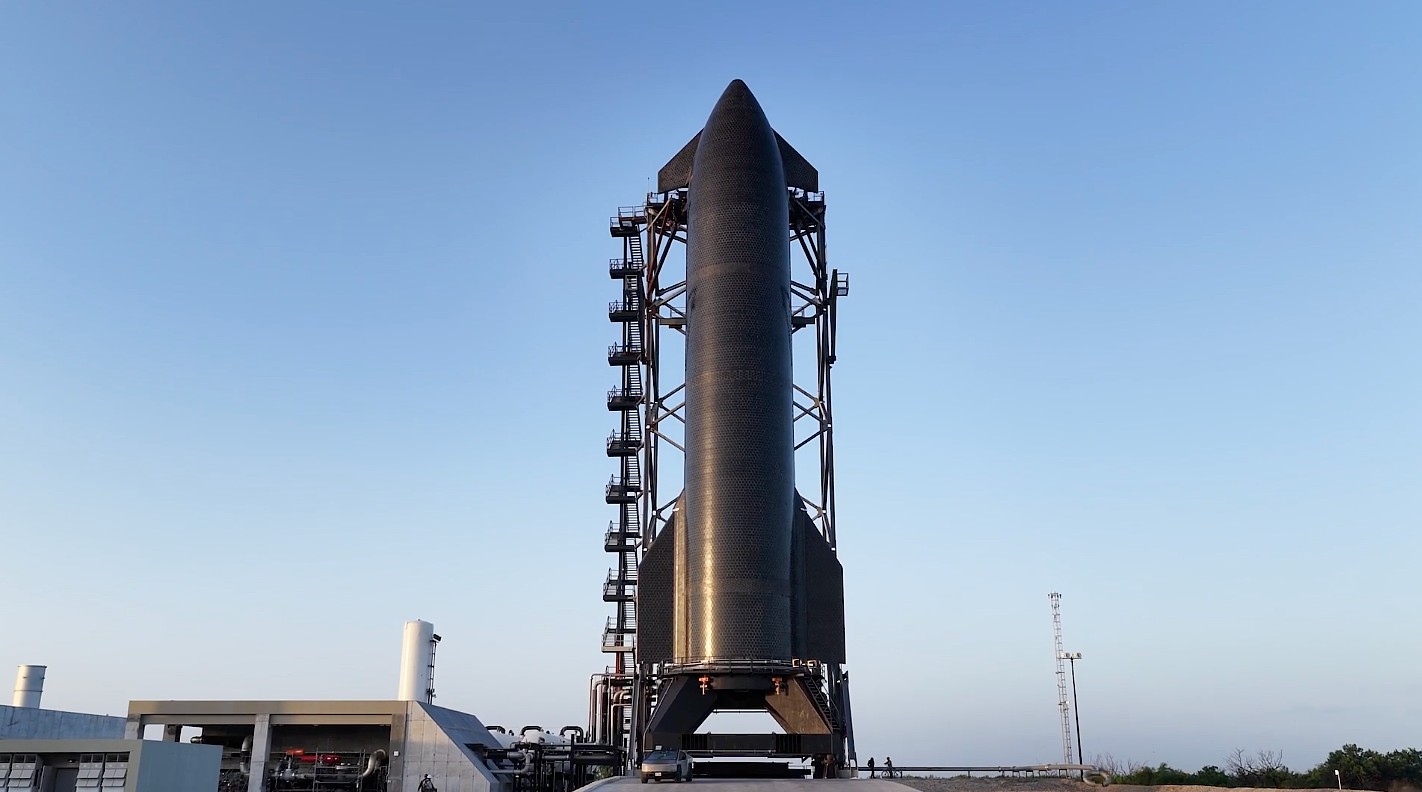
In a striking revelation that underscores the lucrative crossover between Big Tech and space exploration, Alphabet Inc., Google’s parent company, disclosed a massive $94.1 billion equity stake in SpaceX following the rocket company’s blockbuster initial public offering earlier this year.
The disclosure came in Alphabet’s quarterly filing, marking the first time the long-held private investment has been publicly valued at market prices. Google was an early backer, investing alongside Fidelity in 2015 with roughly $500-900 million at a time when SpaceX was valued around $12 billion.
That bet has delivered extraordinary returns, roughly a hundredfold, transforming a strategic play on satellite internet and launch capabilities into one of Alphabet’s largest assets.
Google, $GOOGL, has said they hold $94 billion in SpaceX, $SPCX, shares after IPO.
— unusual_whales (@unusual_whales) July 23, 2026
Of the total holding, approximately $80 billion remains subject to short-term post-IPO lockup restrictions, preventing near-term sales. An additional $14.1 billion faces longer-term restrictions, extending into the third quarter of 2027. This structure limits immediate liquidity but protects against market volatility as SpaceX transitions into public trading.
The SpaceX position contributed significantly to gains in Alphabet’s broader investment portfolio, which also includes a major stake in AI leader Anthropic. Combined, these holdings helped drive nearly $100 billion in investment gains during the second quarter, providing a substantial boost to net income amid ongoing AI spending pressures.
Analysts view the disclosure as validation of Alphabet’s venture strategy beyond its core search and cloud businesses. The investment aligns with deeper ties, including reported multi-billion-dollar deals for AI computing capacity on SpaceX infrastructure. As SpaceX advances Starship flights, Starlink expansion, and ambitious Mars goals under Elon Musk, Google’s stake positions it to benefit from the commercialization of space.
For Alphabet, the windfall highlights how patient, forward-looking bets in transformative sectors can yield outsized rewards. While lockups temper short-term impact, the holding cements SpaceX as a cornerstone of Alphabet’s diversified portfolio in an era where aerospace, AI, and connectivity increasingly intersect. Investors will watch closely as restrictions lift and SpaceX’s public performance unfolds.
Elon Musk
Tesla Semi finally has an FSD timeline and it’s waiting on the Cybercab
Elon Musk told investors Semi self-driving should start working by early 2027, per today’s earnings.

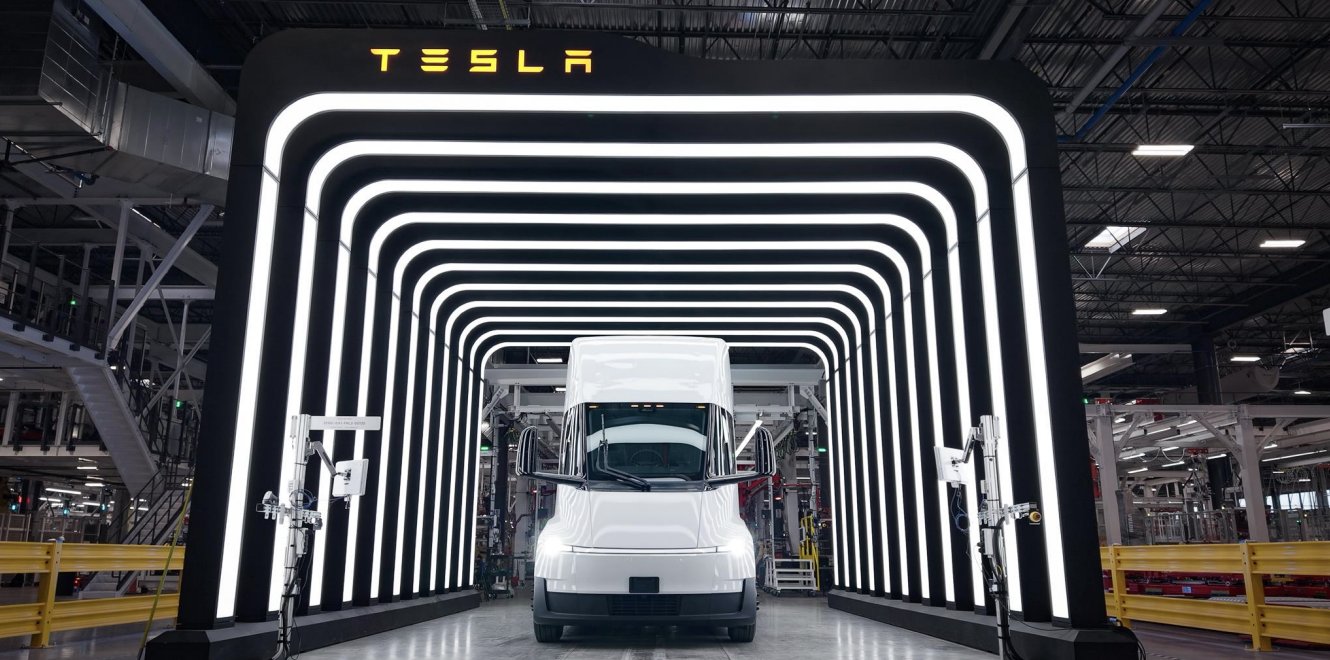
During Wednesday’s’ Tesla Q2 earnings call, an analyst asked Elon Musk when Tesla would look at autonomy for the Semi. His answer set a real timeline for the first time, noting that self-driving on the Tesla Semi is expected to start working “around the end of this year or early next year”.
Musk framed the delay as a matter of priority, not capability. Tesla’s self-driving team is currently focused on Model 3, Model Y, and Cybercab, the vehicles that make up the overwhelming majority of Tesla’s fleet. Since Semi trucks on the road remain a small fraction of that total even after the recent Nevada factory ramp, Musk said it made more sense to keep the software team’s attention on what he called “the march of nines of safety” for the higher volume vehicles first. Autonomous Semi development is “taking a bit of a backseat for the next six months or so,” he said, before adding that it “will definitely be working next year and in time for the scale-up to high production of the Tesla Semi.”
Tesla Semi’s official battery capacity leaked by California regulators
The timeline lines up with what’s already been showing up on public roads. In June, a Tesla Semi was spotted in Sunnyvale wearing a full validation rig, the same rooftop sensor array Tesla mounts on vehicles ahead of an FSD milestone.
A second unit was seen near Fremont days later with a matching camera suite and lens washers. Separately, Tesla analyst Nic Cruz Patane posted video this month of the production Semi’s exterior camera array, ten AI4 based units built directly into the truck rather than added later.
Tesla Semi AI4 cameras. The production version has 10 cameras on its exterior.
These trucks are designed to be autonomous. pic.twitter.com/GH3BamxIBQ
— Nic Cruz Patane (@niccruzpatane) April 14, 2026
Musk also gave the reason autonomy on the Semi matters in the first place, a persistent shortage of qualified truck drivers. “There is a really serious shortage of truckers,” he said on the call, framing a self-driving Semi as important both for addressing that shortage and for improving safety and comfort for the drivers running the truck today.
The timing also tracks with the Semi’s production reality. Tesla’s Q2 shareholder letter, dropped language promising the Semi would reach volume production this year. Musk pointed to 4680 battery cell output as the near-term constraint on Semi and Cybercab production. A software timeline landing in early 2027 gives Tesla’s autonomy team room to work while the hardware ramp catches up behind it.
It’s worth nothing that this isn’t necessarily a promise the Semi ships driverless next year. Musk’s own language, self-driving “working” by early 2027, describes internal validation catching up to hardware already riding on every production truck, not a public unsupervised rollout.

SpaceX Starship Flight 13 faces wrath of the Texas skies

Tesla stock tumbles after earnings, one of its sharpest single-day declines


