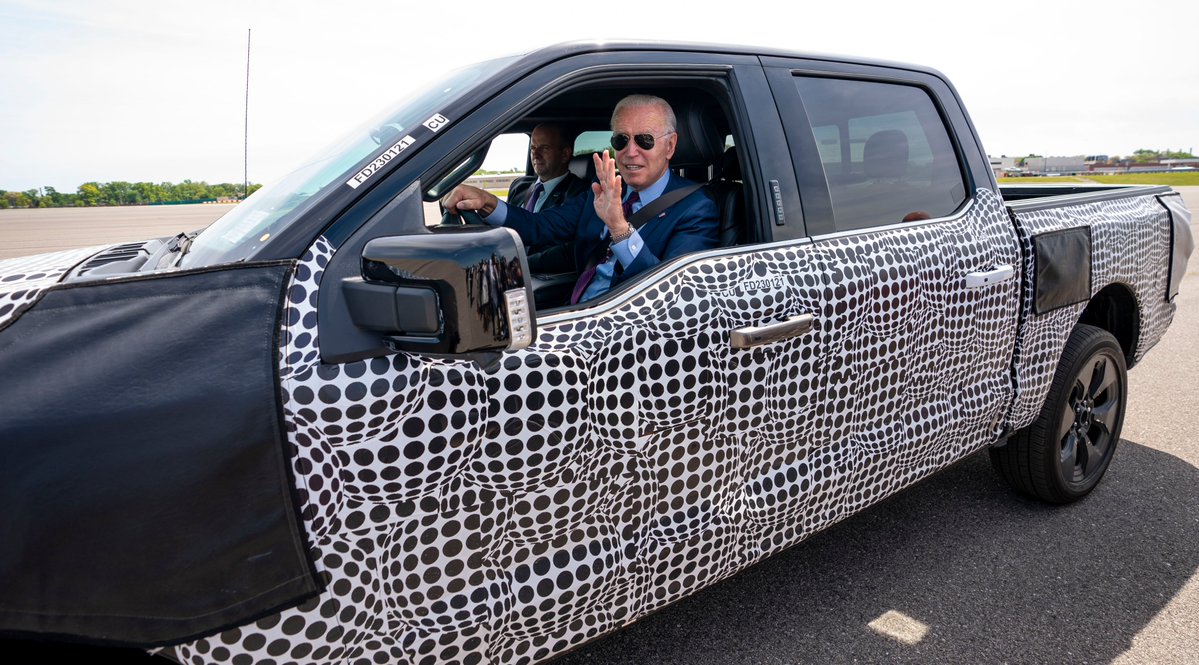

President Joe Biden is campaigning for United States automakers to commit to a sales goal that would see 40% of its delivered units be electric by 2030. The request from Biden is still in the negotiation phase, according to a UAW representative, who stated no agreement had been reached yet.
The White House has emphasized American car companies begin a serious effort to manufacture and sell electric cars. Aligning with lofty climate goals set for the rest of the decade, Biden is looking at the transportation sector for assistance, calling on domestic car companies to agree to 40% of its total sales be electric. Earlier this week, the White House announced that it would set aside $7.5 billion of its massive $550 billion Bipartisan Infrastructure Deal toward electric vehicle charging stations. The push toward increasing the availability of charging points for EVs would focus on “rural, disadvantaged, and hard-to-reach communities” in particular.
EV charging to receive $7.5 billion in Bipartisan Infrastructure Deal: White House
However, the increase in charging stations would need to be supported by an increased number of electric cars on the road. EVs account for a small percentage of the U.S. automotive market, with around 2 to 3% of the total cars on the road. This number is increasing year over year, but Biden would like to see more effort put forth on increasing the available options from domestic automakers.
Companies like Ford and GM have already released electrified models on the market, and they are performing well in sales terms. A recent report from Car and Driver revealed that the GM-owned Chevy Bolt EV was the third most popular electric car so far this year. The Ford Mustang Mach-E was the fourth best-selling EV. These two vehicles followed the Tesla Model Y and Tesla Model 3, which took first and second place, respectively.
Ford’s commitment to 40% of its sales being electric has already been established, according to company spokesperson Melissa Miller. “Ford has already said that we are leading the electrification revolution and planning on at least 40% of our global vehicle volume being all-electric by 2030,” Miller said in an emailed statement to Reuters. GM said that it did not have a comment to make as an agreement had not been reached.
With government incentives still said to be a circling concern of EV buyers, the White House has reportedly been talking about reintroducing the tax incentive program that establishes more financial advantages for potential buyers. The $7,500 EV tax credit currently expires after an automaker reaches 200,000 sales. Tesla and GM are the only two car companies that have reached this threshold. The credit may be bumped to $12,500: $7,500 for the electric vehicle, an additional $2,500 for vehicles assembled within the United States, and another potential $2,500 for cars built at production facilities whose workers are members of or are represented by a labor union. The incentive could be reintroduced by Biden’s $174 billion EV aid package, $100 billion of which has been slotted out for customer rebates.
 -
-
What do you think? Let us know in the comments below, or be sure to email me at joey@teslarati.com or on Twitter @KlenderJoey.



Elon Musk
SpaceX Starship just nailed something it’s never done before
SpaceX’s Starship flew successfully Friday, landing both stages and deploying its first Starlink V3 satellites.

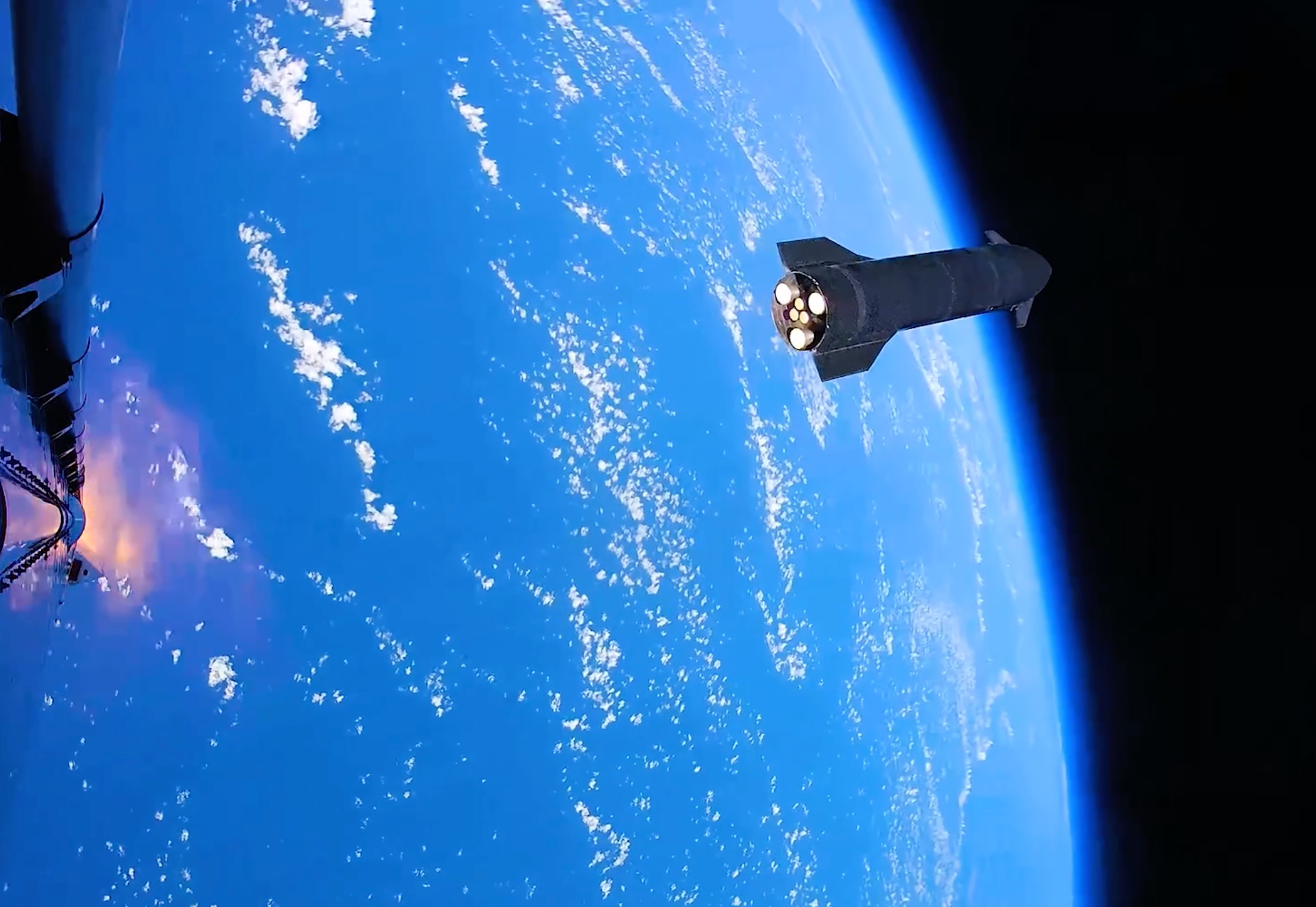
Starship’s thirteenth test flight delivered exactly what SpaceX needed with a clean liftoff, two successful stage recoveries, and the first real payload the vehicle has ever carried to space. Booster 20 and Ship 40 lifted off at 5:51 p.m. CT from Starbase, and by the time the mission wrapped roughly an hour later, both halves of the rocket had done exactly what they were supposed to do.
Booster 20 separated from Ship 40 a few minutes into the flight and stuck a controlled splashdown in the Gulf of Mexico about six minutes after liftoff. That is a meaningful turnaround from Flight 12 in May, when the booster lost several engines during its boostback burn before a hard water landing attempt.
Starship as seen from Starlink satellites pic.twitter.com/e2hvfmnewh
— Elon Musk (@elonmusk) July 25, 2026
Starship 40’s performance was arguably the bigger win. The vehicle deployed the first 20 operational Starlink V3 satellites Starship has ever carried, then flew a suborbital arc to a landing in the Indian Ocean that SpaceX commentator Dan Huot called the company’s softest splashdown yet. “This is a dream scenario for this team that’s trying to get this heat shield data,” Huot said on the live broadcast, according to Space.com’s live coverage. “I’m a little over the moon right now. Wow. Lucky number 13.”
Unlike the mass simulators SpaceX flew on Flight 12, these were production Starlink V3 satellites, meant to extend solar arrays and antennas and attempt to link with the broader constellation before reentering minutes later. Getting real hardware through a full deploy sequence on only the second flight of the V3 generation keeps Starship on schedule for the payload work NASA is counting on for future Artemis lunar landings.
What an awesome launch, really seems like everything went super well and it was all incredibly smooth.
SpaceX is awesome. Very interested to see how the market will respond on Monday pic.twitter.com/KSHmyBfV55
— TESLARATI (@Teslarati) July 25, 2026
-
— TESLARATI (@Teslarati) July 25, 2026
The flight also arrives at a moment when SpaceX needed a win. SPCX has traded below its $135 IPO price since mid-July, as Teslarati reported when the mission slipped to Friday, and short interest has climbed to roughly a third of the tradable float. A clean flight will not fix a balance sheet, but it does answer the one question SpaceX absolutely needed answered this week: whether the fixes made after the July 16 abort would hold up under real flight conditions. They did, on both stages, on the first try after the redesign.
SpaceX has not set a target date for Flight 14, though the company has said it wants to push toward an orbital attempt on the next mission. After Friday, that goal looks a lot more within reach.
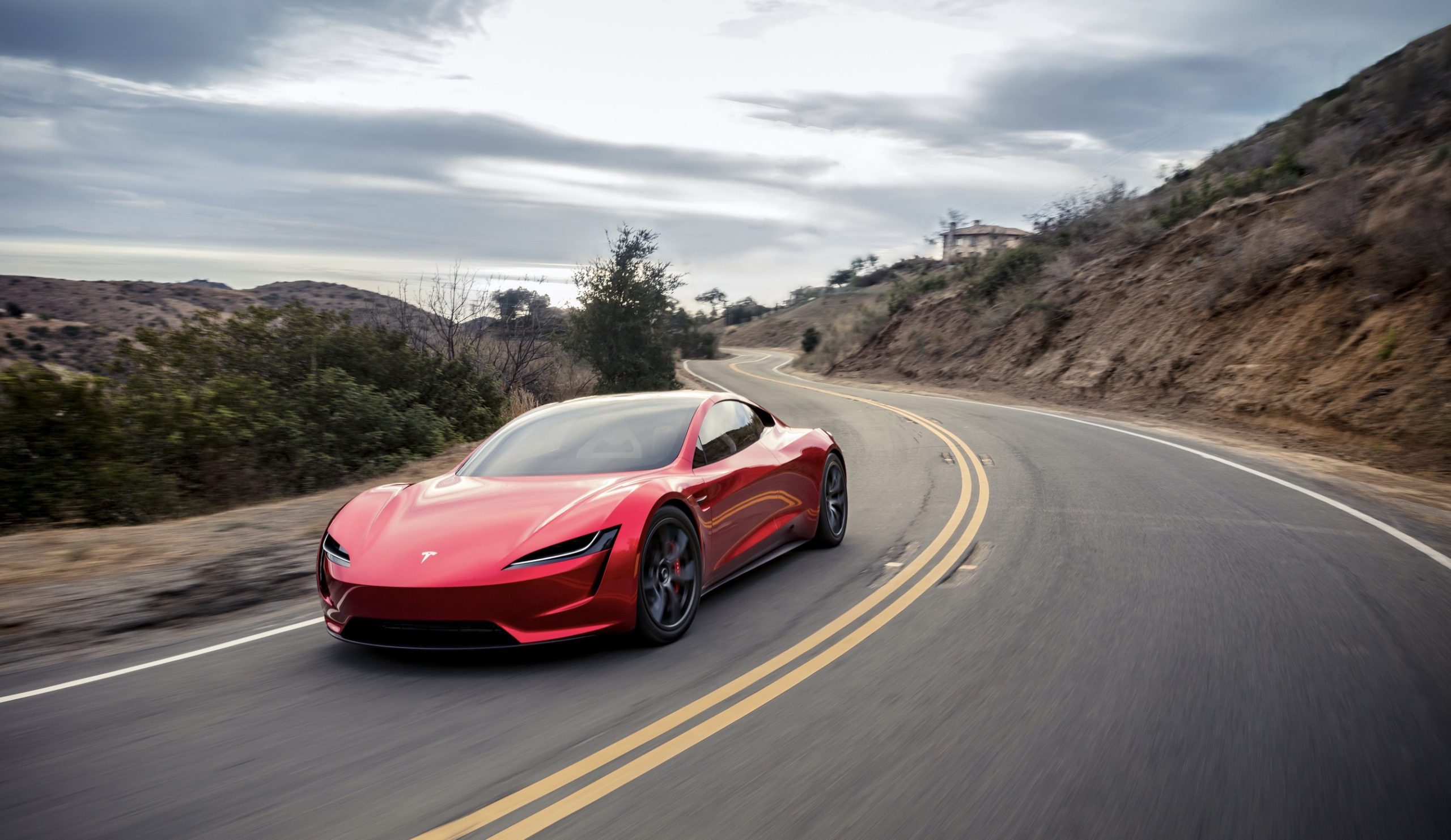
Tesla short sellers won big following the company’s massive fall on Wall Street after it reported subpar Earnings on Wednesday.
Tesla short sellers collected about $4.12 billion in single-day profits on Thursday, according to Bloomberg. Shares fell as much as 15 percent during Thursday’s session. It closed as one of the worst days for Tesla on Wall Street in the past three years.
Investors sold off the stock after Tesla said it would aggressively direct its spending toward AI and its Optimus robot project. The company had record revenues, which were driven by one of the strongest quarters in terms of vehicle deliveries in company history.
However, it missed EPS estimates by reporting just $0.33, a far cry from the $0.53 analysts expected.
S3 Partners reported that about 3 percent of Tesla’s outstanding stock is sold short. Managing Director at S3, Ihor Dusaniwsky, provided the short seller’s potential profit, as well as another figure: shorts have likely had paper gains of $8.92 billion this year, as Tesla shares are down 30 percent in 2026.
-
Tesla (TSLA) Q2 2026 earnings results: miss on EPS, beat on revenue
Tesla has burned short sellers many times in the past, but the company’s latest Earnings Call was a chance for those skeptics to taste some payback. Although the company gave some very transparent information regarding future projects, the rollout of Robotaxi, Optimus, and Semi, many investors took their profits on Thursday.
Notable short sellers like Michael Burry have been transparent about their skepticism around Tesla shares. Burry just revealed three weeks ago that he had opened up a new short on the stock, stating he shorted Tesla shares at $416.22. “Happy it jumped back to this level,” he said in a blog post.
At the time of publication, Tesla shares were down about 3 percent and the stock was trading at $309.92.
Tesla stock (NASDAQ: TSLA) endured one of its sharpest single-day declines in years on July 23, tumbling approximately 14.5 percent and closing near $320 after opening the session around $374. The drop erased more than $140 billion in market value amid heavy trading volume and left the shares at multi-week lows.
The sell-off followed the company’s second-quarter 2026 results, released the previous evening. Tesla reported record revenue of $28.2 billion, up 26 percent year over year, driven by a Q2-record 480,126 vehicle deliveries. Energy storage deployments also rose strongly.
Tesla (TSLA) Q2 2026 earnings results: miss on EPS, beat on revenue
Yet profitability disappointed sharply. Operating income fell 57 percent to $398 million, compressing the operating margin to just 1.4 percent. Non-GAAP earnings per share came in at $0.33, well below the roughly $0.53 analysts had expected. Free cash flow turned negative by $1.1 billion as capital expenditures surged 142 percent to $5.8 billion, largely tied to accelerated spending on artificial intelligence, robotics, and autonomous systems.
The losses on capex were expected, as Tesla said it would be spending heavily in 2026.
Investors also reacted to lingering uncertainty surrounding key product timelines. During the Earnings Call, management reiterated ambitions for Robotaxi deployment and the Optimus humanoid robot, but offered limited new concrete milestones, renewing questions about execution pace that have long accompanied Tesla’s ambitious roadmap.
The magnitude of the decline places it among Tesla’s more severe one-day percentage losses since its 2010 initial public offering. Historically, the two largest single-day drops (split-adjusted) remain September 8, 2020, when shares fell 21.1 percent amid broader market volatility and valuation concerns, and January 13, 2012, with a 19.3 percent plunge during the company’s early growth struggles.
-
Other notable declines include an 18.6 percent drop on March 16, 2020, at the onset of pandemic-related market turmoil. Thursday’s move ranks roughly ninth on the all-time list but stands out as the steepest in more than a year.
Despite the short-term pain, Tesla’s long-term trajectory has repeatedly recovered from such volatility. The latest results underscore both the strength of its core automotive and energy businesses and the near-term costs of heavy investment in next-generation technologies.

Tesla briefly offered this Robotaxi part for your personal car

Tesla Robotaxi gets sweeping but polarizing change


