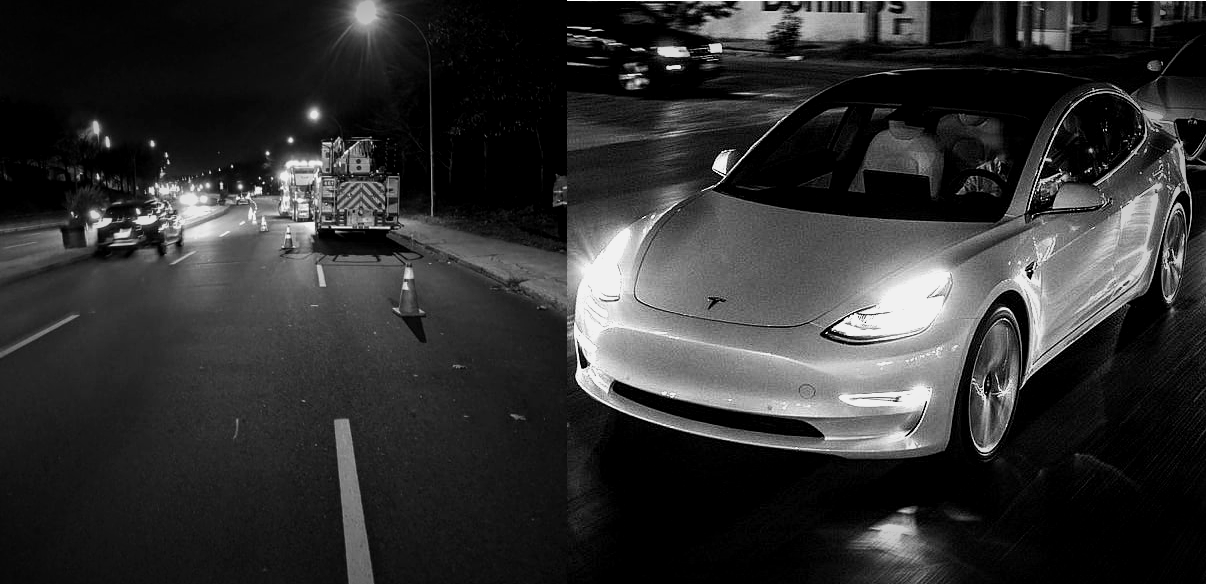

Tesla is currently being investigated by the National Highway Traffic Safety Administration (NHTSA) after several of its electric cars crashed into stationary emergency vehicles while Autopilot was engaged. The premise of the investigation itself is enough to whet the appetite of every Tesla skeptic since the idea of Autopilot crashing consistently into parked emergency vehicles makes for a compelling narrative. Tesla later released an update, enabling Autopilot to detect and slow down for stationary emergency vehicles. The NHTSA responded by calling out the company for not issuing a recall when it released its proactive over-the-air software update.
What was lost amidst the spread of the Tesla NHTSA investigation story was the fact that the relatively minor Autopilot update, which simply allowed vehicles to slow down when they detect things such as a police car or a firetruck parked on the side of the road, is already saving numerous lives. This is because there is a deadly problem on America’s roads, and it is something that very few seem to be acknowledging. Emergency personnel are dying on the job at a frighteningly frequent basis. They are dying because cars crash into them while they’re parked on the side of the road. And disturbingly enough, very little is being done about it.
The Flaws of HumanPilot
*Author’s Note and Trigger Warning: The succeeding sections of this article contains links to footage and other online references that may cause distress to readers. Discretion is advised.
One thing that truly stuck out while writing this piece was the sheer frequency of the accidents that happen to emergency personnel while they are responding to someone in need. This was despite the fact that all 50 states in the USA have a “Slow Down Move Over (SDMO)” Law in place. The premise of the SDMO law is simple: Upon noticing an emergency vehicle’s sirens or flashing lights on the side of the road, drivers are required to move away from the emergency vehicle by going into the next lane. If that is not possible, drivers must slow down to reduce the chances of an accident happening. The SDMO law is based on a very simple premise, but it is one that gets violated on a consistent basis.
This is partly due to states interpreting the law differently, with some adopting a “Slow Down and Move Over” model while others are following a “Slow Down or Move Over” system. But ultimately, there have been zero fatalities involving a vehicle that actually slowed down and moved over when they spotted a stationary emergency vehicle. This suggests that the law works, provided that it does get followed.
But when the Move Over Law gets violated, the human toll becomes disturbingly real. A report from the Government Accountability Office (GAO) indicates that about 8,000 injuries involving a stationary emergency vehicle have been reported in one year. As of this year alone, a total of 57 emergency responders have been killed while addressing a roadside issue. Posts from the National Struck-By Heroes Facebook group, which highlight the aftermath of Struck-by injuries (SBIs) are heartbreaking, and videos and posts shared by companies whose staff are killed while on the job are harrowing. This is something that was highlighted by James D. Garcia, the creator of the Move Over Law and an SBI survivor, who shared some of his insights with Teslarati.
“This year is the 25th anniversary of the first Slow Down Move Over Law, passed in South Carolina in 1996. Every state in the US has had an SDMO Law since 2012, and yet this year, we have already reached a record 56 responder deaths (This number has since risen to 57 as of this writing). Since 2018, there have been over 45,000 collisions with stationary roadside objects. Every seven seconds, an object is struck. Every other day, a responder is struck and injured. Every five days, a responder is killed.”
“If you ask the general public the most dangerous risk to a police officer, most would say the chance of being shot in pursuit. If you ask the biggest danger to a firefighter, most envision being trapped in a burning or collapsing building. But statistics prove the real story. Across all agencies, responders are twice more likely to die in an SBI than any other category of work-related injury. It is by far the most dangerous aspect of our job,” Garcia noted.
A DIY Solution
Perhaps the most heart-wrenching thing about the whole situation is the fact that SBIs are not even collected, considered, and analyzed formally by an official government agency, despite it being the leading cause of death and permanent injury for public safety and roadway responders. This situation has been so prevalent that James W. Law, a 32-year-veteran in the emergency roadside response industry and a specialist researcher in the Move Over Law, opted to develop a light sequence he fondly dubs as “E-Modes” to help drivers inform other vehicles that a parked emergency vehicle is nearby. Simply put, the problem of drivers not following SDMO laws is so real and deadly that emergency responders are DIY-ing a solution themselves — because they cannot count on anyone else.
Responding to roadside problems on America’s roads for the past 32 years is no joke, and over this time, Law has encountered the worst drivers possible. Law shared with Teslarati that over the course of his career, he has been personally involved in an accident four times, the first of which happened when he was just 18 years old. In what could very well prove the point that humans are bad drivers, one of Law’s experiences actually involved a driver intentionally crashing into him because he felt upset that traffic was disrupted due to an incident. Law’s legs broke the irate driver’s headlights because of the crash, and the driver wanted to accuse the roadside responder of damaging his car. The police were fortunately reasonable, and Law was not charged. The irate driver, on the other hand, received a $500 ticket for using his vehicle as a weapon.
Speaking with Teslarati, Law admitted that he is a pretty notable Tesla supporter, and he tried his best to emulate CEO Elon Musk’s first principles thinking when he developed E-modes’ custom light sequence. He aims to donate the light sequence protocols he developed to Tesla, partly due to the fact that the company is really the only carmaker out there that seems to be actively doing something to address the deadly issue plaguing emergency roadside personnel today. This became quite evident when the company updated its vehicles to detect and respond to traffic cones on the road. This small update, Law noted, may seem minor — even marginal — to the layman, but for roadside personnel, it was a godsend.
“Tesla’s traffic cone recognition is a crucial safety feature that I take full advantage of on any and all incidents. Properly setting up cones to define the ‘Kill Zone’ offers a quick way to communicate directly to any Tesla vehicle. Unlike humans, Tesla Vision is always aware. It’s one of the ways I communicate with oncoming Teslas. If Elon adopts E-Modes, a Tesla could communicate back to me that it is situation-aware. As a safety advocate, I strongly insist that every emergency responders use cones on every scene every time because it’s the right thing to do to protect everyone,” Law said.
The Lone Problem Solver
Inasmuch as the mainstream media coverage of the NHTSA’s probe on Autopilot’s incidents with emergency vehicles is substantial, the fact is that Tesla only accounted for nine crash injuries with first responder vehicles in the past 12 months. That’s a tiny fraction of the ~8,000 injuries the GAO indicated in its report. The company has also steadily rolled out features to make its vehicles safer. With every update of Autopilot and FSD, features like traffic cone recognition get more refined, and the more refined they get, the more emergency responders they protect. Tesla’s recent Autopilot update, which allows vehicles to slow down when they detect a parked emergency vehicle, is further proof of this.
Law noted that he had been involved in thousands of close calls in his 32-year career, but the one that truly stuck out to him involved a Tesla driver from late 2019, just after the company rolled out Autopilot’s capability to recognize and avoid traffic cones. While he was defining a “Kill Zone” on the road after responding to an incident, he saw an approaching Tesla whose driver appeared to be looking down and not paying attention to the road. Law was unsure if the Tesla was on Autopilot, but the vehicle moved over to the other lane seemingly as soon as it detected the traffic cones that he set up. The veteran emergency responder noted that the Tesla driver seemed surprised as the electric vehicle avoided the cones on its own.
Such an incident, ultimately, is what makes Tesla stand apart, at least for now. It may be an inconvenient truth, especially to those who salivate at the thought of FSD or Autopilot going berserk and hunting down emergency responders, but the fact remains that Tesla is doing far more to protect both its drivers and other people on the road than any other carmaker out there. Emergency responder deaths are preventable, and as the creator of the Move Over Law noted, the lion’s share of these incidents is due to human error. It is this human error that technologies such as Autopilot and FSD are trying to solve, NHTSA probe notwithstanding.
“Ninety percent of all struck-by deaths are a direct result of poor driver behavior. That means that nine out of ten responder deaths could have been prevented if the driver had maintained control of their vehicle at a reasonable speed and reacted in a considerate and attentive manner. Twenty-three percent of lethal struck-by violators were impaired. Five percent were distracted, and another three percent were drowsy. It is important we continue to support efforts to reduce drunk driving and speak out about the rapid rise of distracted driving resulting in responder deaths. Multiple agencies have ongoing PR campaigns to address these aspects, but none are taking on the most dominant category — angry, aggressive, entitled, and selfish drivers.
“The remaining 69% of drivers that crashed into and killed a responder were completely sober. They saw the lights, they recognized the situation, yet they still felt the need to speed up and pass just a few more cars before they moved over. They were in too big of a hurry to slow down to a controllable speed and killed a responder. These drivers consciously made an intentional personal decision to carelessly disregard the life of a responder. Self-absorbed drivers have become the norm. Stronger laws, higher fines, bigger signs, and brighter lights have no effect once they get behind the wheel. We need to face this reality and develop a strategy that confronts this disregard. We must reinforce the value of a responder’s life over whatever current personal priorities are influencing these drivers’ behavior,” Garcia noted.
A (Potentially) Safer Future
One can only hope that agencies such as the NHTSA could see the bigger picture with regards to vehicles and the advantages of technologies such as Autopilot and Full Self-Driving. It takes an immense amount of short-sightedness, after all, to remain fixated on whether a recall was filed for a proactive Autopilot update, or on 11 incidents that involved a Tesla crashing into a stationary emergency vehicle, all while one emergency personnel is killed every five days. Focusing on Tesla and ignoring the larger problem at hand seems counter-productive at best.
In an ideal scenario, technologies such as Autopilot’s capability to identify, slow down, and potentially even move over to another lane when an emergency vehicle is detected would become mandatory for all cars on the road. As noted by esteemed auto teardown expert Sandy Munro, advanced driver-assist systems such as Autopilot and FSD have the potential to save lives on the same level as seatbelts, perhaps even more. And in this light, John Gardella, a shareholder at CMBG3 Law in Boston, MA, told Teslarati that if the NHTSA really wishes to help roll out new safety features, it would actually be a lot easier than one might imagine.
“Implementing the safety feature in Tesla’s vehicles will be easier than one might imagine. The National Highway Traffic Safety Administration (NHTSA) showed earlier in 2021 through its final rule for safety features for automated driving systems that it does not wish to set onerous standards prior to many features for automated driving system (ADS) vehicles coming to market. In fact, the desire of the NHTSA was to reduce barriers to having ADS safety features come to market more rapidly, and thereby accelerate autonomous vehicles coming to mass markets. The NHTSA received some criticism for its approach. However, the NHTSA does still have the authority to interpret the Federal Motor Vehicle Safety Standards (FMVSS), investigate perceived defects or unreasonably safe vehicle features, and carry out its enforcement authority, including recall power,” Gardella said.
Don’t hesitate to contact us with news tips. Just send a message to tips@teslarati.com to give us a heads up.


Investor's Corner
Elon Musk drops a Thanksgiving hint about Starship’s biggest test yet
Elon Musk says Starship Flight 15 will try to catch the ship itself, a first.

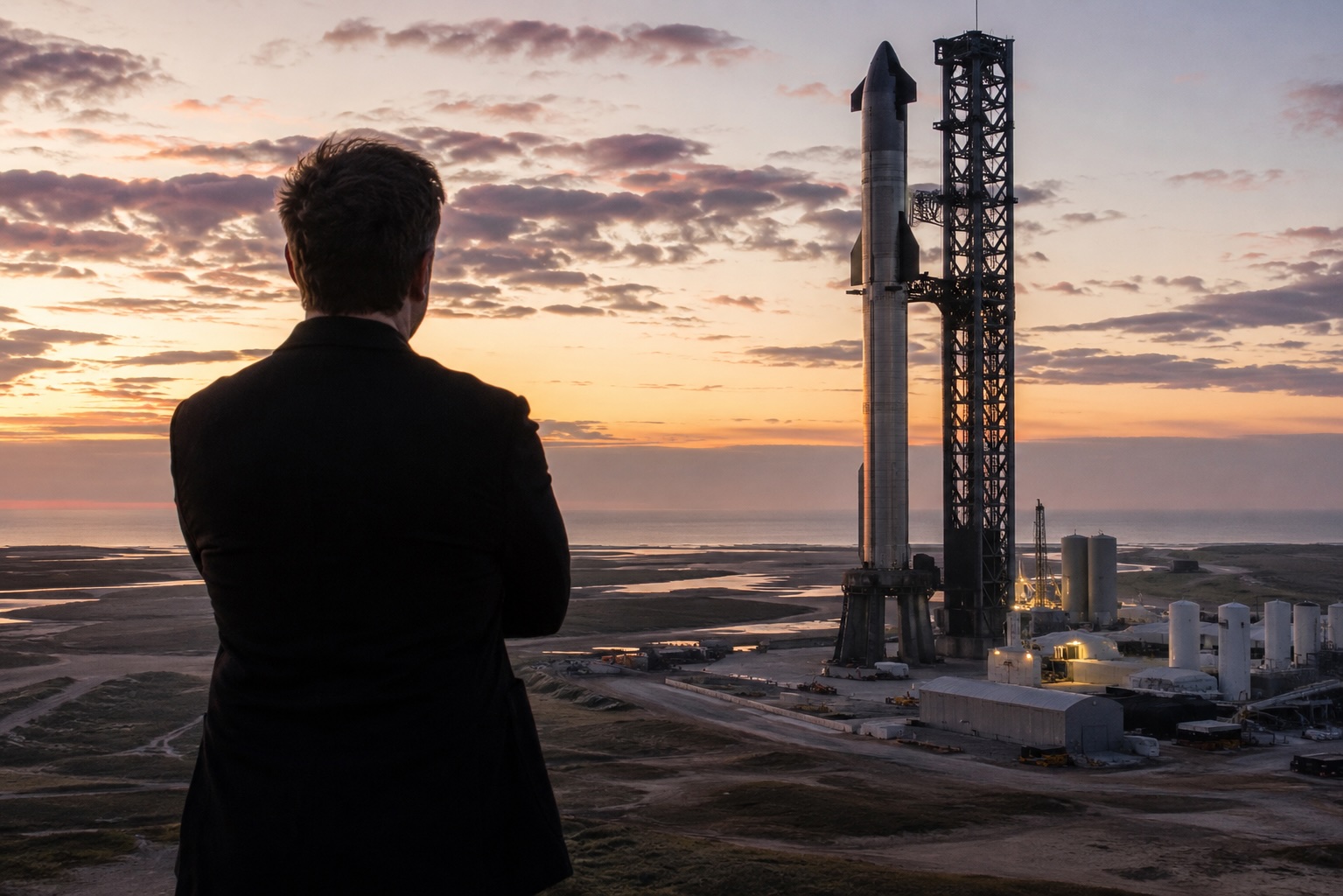
Elon Musk says SpaceX’s next Starship flight will try something nobody has done before, by catching the ship itself. Speaking to roughly 2,000 people at the X Takeover event at Giga Texas on Saturday, Musk said Flight 15 is about four to six weeks away and “probably launches a little bit before Thanksgiving, is my guess.”
That is a slip from earlier reporting, which had pointed to a launch as early as October 19. Musk explained why the date keeps moving. “We’re making a bunch of improvements to the rocket between every flight,” he said, adding that there are often hundreds, sometimes thousands, of small changes. This time the list is short, “but some of them take a fair bit of work and we’ve got to go inside the tank to make some of these changes.”
“We’re going to try to catch the ship, which is a super big deal,” Musk said. “If we do so, that’ll be the first time that there’s been full recovery of an orbital class rocket.” SpaceX has already caught the Super Heavy booster with the tower’s mechanical arms, and has talked about catching the ship since late 2025, but the upper stage has never been caught.
Musk also laid out what comes after. “The next big milestone would be to refly both the booster and the ship,” he said, describing a Flight 16 where “all parts of an orbital rocket are reflown.”
The reason SpaceX wants this comes down to cost and cadence. Every Starship ship so far has ended its flight in the ocean, and SpaceX expects most of those water landings to end in fireballs. A ship that returns to Starbase intact can be inspected and flown again. SpaceX’s IPO filing, says Starship V3 is designed to deliver 100 metric tons to orbit in a fully reusable configuration, that SpaceX aims to cut the cost to reach orbit by 99% or more versus the historical average, and that tower catches should allow “multiple launches per day.”
The payoff goes beyond cheaper launches. The next generation Starlink V3 satellites are too large for Falcon 9 and can only fly on Starship, which can carry up to 60 per flight. Flight 14 on September 28 deployed the first 26 of them after Starship reached orbit despite an early engine shutdown, as Teslarati reported. Musk blamed engine computer software, and said the heat shield “was extremely robust,” which he claimed in August had solved Starship’s biggest challenge.
NASA’s Moon plans depend on the same capability. NASA’s inspector general has described a lander mission that needs a propellant depot in low Earth orbit and more than 10 tanker flights, with SpaceX targeting one tanker launch every six days. That schedule only works if ships and boosters come back fast and fly again. Also, ship to ship propellant transfer has not been attempted yet.
One interesting hurdle yet to be explored is bringing the ship back to the launch site, with reentry over land, which will undoubtedly come with a lot of aviation safety reviews.
Lifestyle
Tesla’s mirrorless Cybercab will give riders a visibility upgrade
Tesla engineer confirms Cybercab update letting riders pull up rear and repeater cameras on demand.
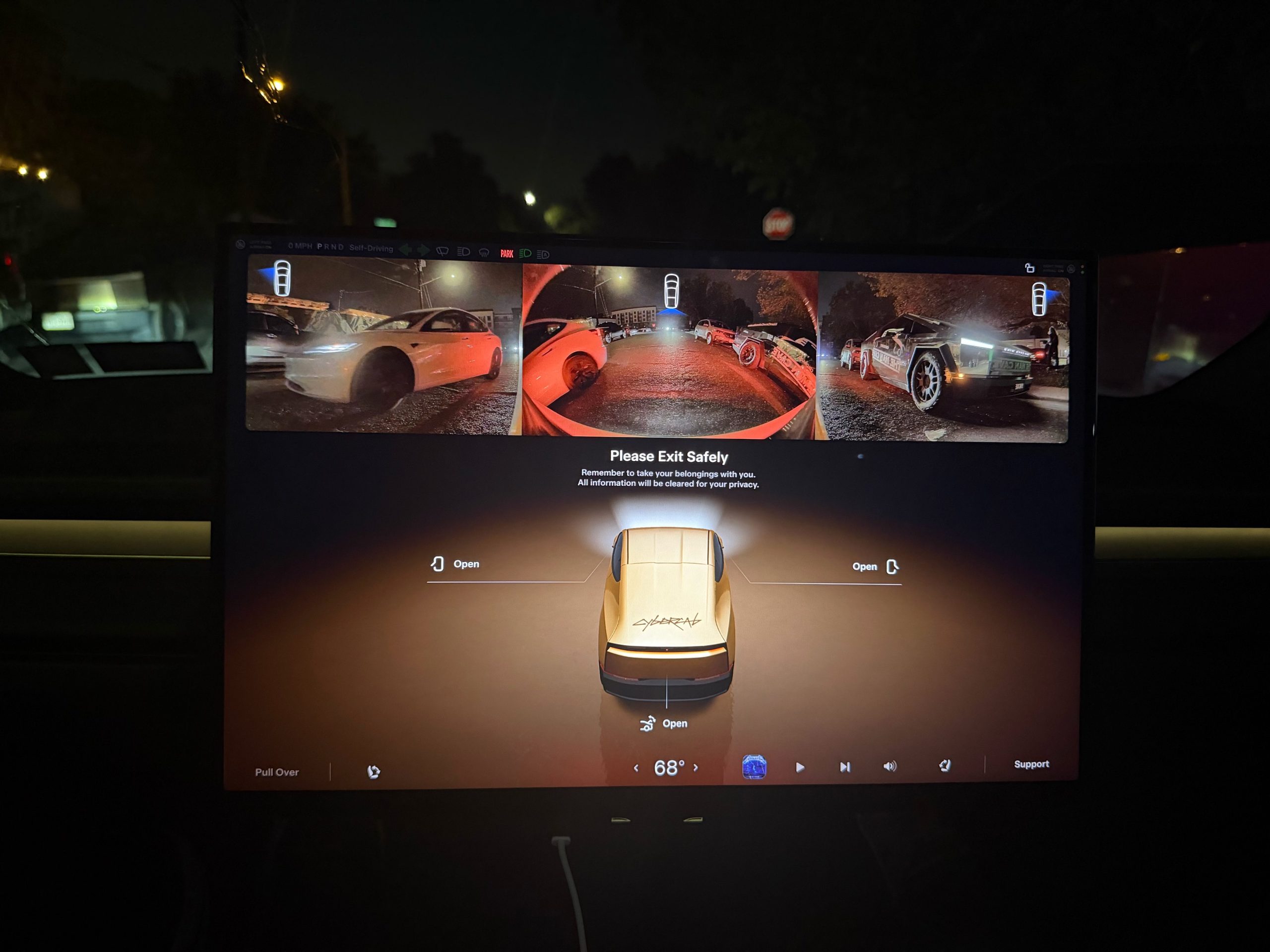
Tesla is working on a Cybercab update that would let passengers pull up the vehicle’s rear and side cameras on demand, and the request came straight from a rider.
The exchange played out on X late Friday. Cybercab rider Dan Burkland shared photos of the two-seater’s cabin screen after an evening ride, praised the UI team’s work, and left one request: let riders open the rear and repeater cameras whenever they want, “especially for peace of mind.” Tesla UI software engineer Evan (@CarCoder) answered with two words: “In development.”
The Tesla UI team absolutely crushed it with the infotainment software. Nicely done @CarCoder!
One feature request: Allow folks to pull up the rear & repeater cameras on demand. This would be great especially for peace of mind. https://t.co/mNAOSLx6pE
— Dan Burkland (@DBurkland) October 10, 2026
The idea fits a pattern Teslarati has tracked since public rides began. Days after paid Cybercab service opened in Austin, Tesla sent riders a survey that asked them to rate the touchscreen, the app and the cabin, and to pick the features they wanted most. We reported on that survey in September, and a camera view is the kind of small software change Tesla can push quickly if riders keep asking.
It also speaks to something unique about the vehicle. With no steering wheel, no pedals and no driver, passengers have no mirror to check and no way to see behind them. The hardware is clearly built for camera awareness, from the repeater cameras to the rear camera. Letting a passenger look through those same cameras would give a nervous first time rider a way to confirm what is around the car.
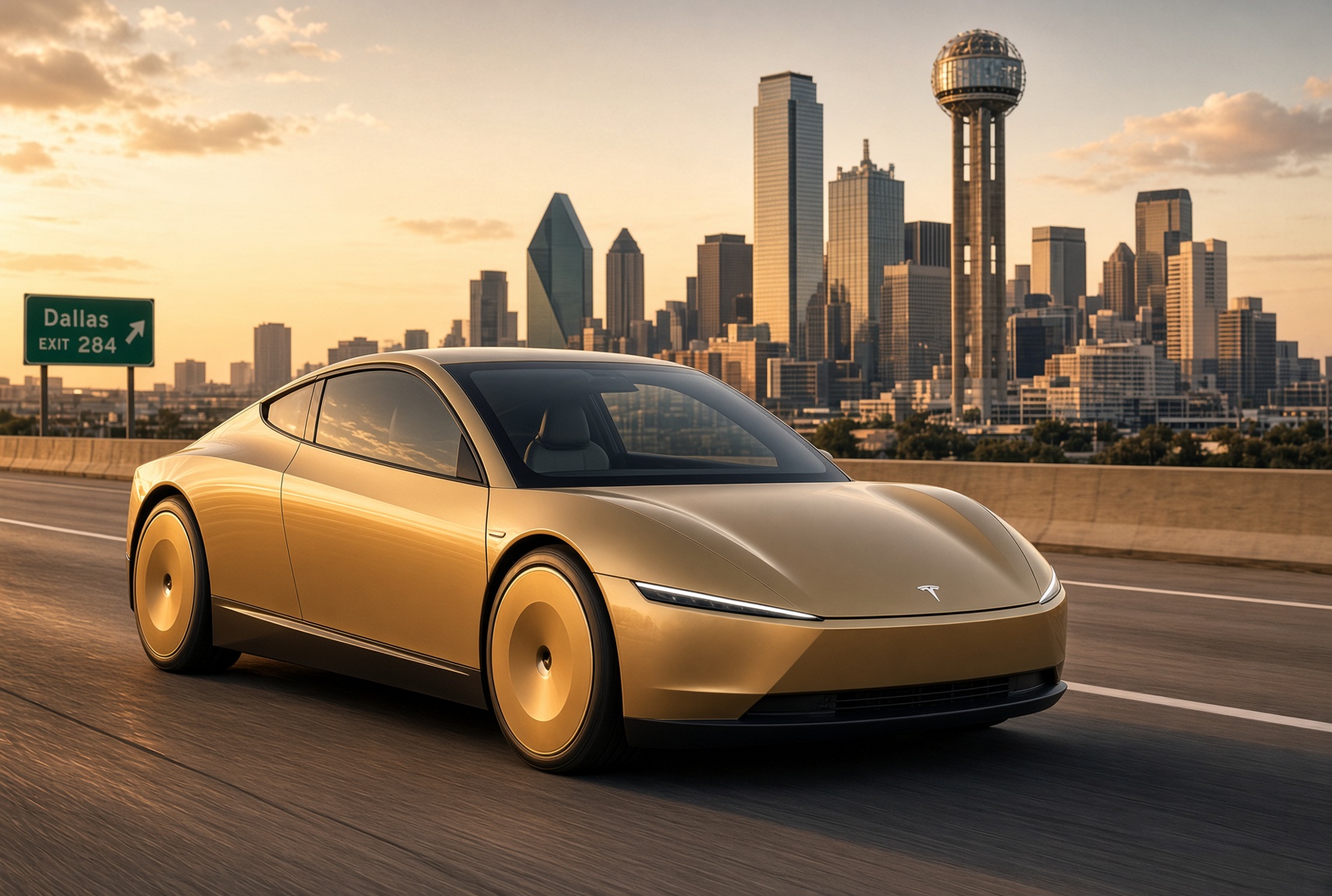
The timing matters because the fleet is growing fast. Tesla’s Robotaxi account said on Saturday that more than 300 Cybercabs are now serving Austin, an eightfold increase in 30 days, and Tesla AI chief Ashok Elluswamy named Dallas as the next city. More cars and more cities mean more people riding in a driverless vehicle for the first time, which is exactly when small trust features carry weight.
For now, the feature is confirmed only as in development. If Tesla follows its usual pattern with Cybercab software, riders could see it appear in a point release without any announcement, and Teslarati will watch for it.
News
Tesla’s Cybercab fleet jumped 8x in a month, with Dallas up next
Tesla confirms its first official Cybercab fleet number as Austin scales fast and Dallas looms.
Tesla says more than 300 Cybercabs are now serving Austin, the first time the company has put an official number on its active Cybercab fleet. The figure came from the Robotaxi account on X on Saturday, which wrote that one month after launch the service had “scaled to 300+ Cybercabs serving Austin – an 8x increase in 30 days.”
Ashok Elluswamy, Tesla’s head of AI software, quoted the post with a line that carried the bigger news. “Two years since the 10/10 Cybercab WeRobot event, the cabs are everywhere in Austin now. Dallas soon,” he wrote. It is the first time Tesla has named the next city for public Cybercab rides.
One month after launch, we’ve scaled to 300+ Cybercabs serving Austin – an 8x increase in 30 days https://t.co/EagJy2JAsm
— Robotaxi (@robotaxi) October 10, 2026
Tesla opened Cybercab rides to the public in Austin on September 4, as Teslarati reported, a day after an invite only launch event. The ramp since then has been steep. Our September 28 report had the fleet at well over 100 units after availability jumped from 58 to 125 in a single week. On Thursday, Tesla added 150 Cybercabs to the Texas automated vehicle registry, lifting its registered count to 319 from 169. The first seven appeared on the registry on August 31.
RobotaxiTracker, a community site that counts vehicles from sightings and state records, listed 275 vehicles in unsupervised service in Austin on Saturday, 105 of them Cybercabs, which is well below Tesla’s figure. Tracker counts can lag official numbers, though Sawyer Merritt noted that Cybercab wait times in Austin stayed short on Saturday evening even with more than 2,000 fans in town for X Takeover.
Regulators are watching the rollout. NHTSA opened an audit query into Tesla’s certification that the Cybercab meets federal safety standards, and sworn answers are due October 30. Tesla reports third quarter earnings on October 21, which gives the company a natural venue to define its fleet numbers and put a date on Dallas.

Elon Musk drops a Thanksgiving hint about Starship’s biggest test yet

Tesla’s mirrorless Cybercab will give riders a visibility upgrade

Tesla’s Cybercab fleet jumped 8x in a month, with Dallas up next

The Pentagon taps Elon Musk to design the battlefield of the future

Tesla Roadster’s new patent preps white-knuckle speeds, keeping it grounded


