News
GM initiates $10B share buyback & updates 2023 guidance to boost Wall Street’s confidence

General Motors (GM) is taking bold moves to regain Wall Street’s confidence after weeks of strikes and negotiating with the United Auto Workers (UAW) union. The legacy automaker is ensuring it kicks off the new year with a few investor-focused initiatives.
Coming straight from the negotiating table to the accounting table, GM CEO Mary Barra shared that the company is finalizing a budget for 2024, considering the contents of GM’s agreement with the UAW. Barra stated that the finalized budgies would “fully offset the incremental costs of our new labor agreements, and the long-term plan we are executing includes reducing the capital intensity of the business, developing products even more efficiently, and further reducing our fixed and variable costs.”
GM Share Buyback Plan
General Motors intended to initiate an accelerated $10 billion share buyback plan executed by Bank of America, Goldman Sachs, Barclays, and Citibank. The total number of shares repurchased will be determined at the end of the program. The $10 billion share buyback will start in the fourth quarter.
The auto company will receive and retire $6.8 billion worth of common stock. GM predicts it will have $1.4 billion of capacity remaining under its share repurchase authorization that it will use for “additional, opportunistic share repurchases.”
Besides rolling out a massive share repurchase program, General Motors is also increasing its quarterly dividend in 2024. GM aims to increase quarterly dividend by 33% to 12% per share.
GM 2023 Guidance
General Motors is rolling with the punches as it closes the year by reinstating its 2023 guidance. The automaker initially pulled its guidance after publishing its Q3 2023 report, mentioning the UAW strike.
“Because of this uncertainty, we’ve chosen to withdraw our 2023 full-year guidance metrics, even though our strong underlying business fundamentals were pushing us towards the upper half of the range prior to any strike impact,” GM CFO Paul Jacobson
The Detroit automaker believes its 2023 capital spending will be between $11.0 and $11.5 billion, down from the $11 and $12 billion estimate before the strike. The company’s 2023 capital spending estimates are primarily driven by some new product delays and a pullback on some investments related to electric vehicles.
GM’s updated 2023 guidance also includes the following:
- Net income attributable to stockholders is $9.1 billion to $9.7 billion, compared to a previous outlook of $9.3 billion to $10.7 billion.
- Adjusted EBIT of $11.7 billion to $12.7 billion, compared to the previous outlook of $12.0 billion to $14.0 billion.
- Adjusted earnings per share are roughly $7.20 to $7.70, including the stock buyback, compared to the previous outlook of $7.15 to $8.15.
- EPS in the $6.52 to $7.02 range, including the stock buyback, compared to the previous outlook of $6.54 to $7.54
- Adjusted automotive free cash flow of $10.5 billion to $11.5 billion, compared to the previous outlook of $7.0 billion to $9.0 billion
- Net automotive cash provided by operating activities of $19.5 billion to $21.0 billion, compared to the previous outlook of $17.4 billion to $20.4 billion
The Teslarati team would appreciate hearing from you. If you have any tips, contact me at maria@teslarati.com or via X @Writer_01001101.



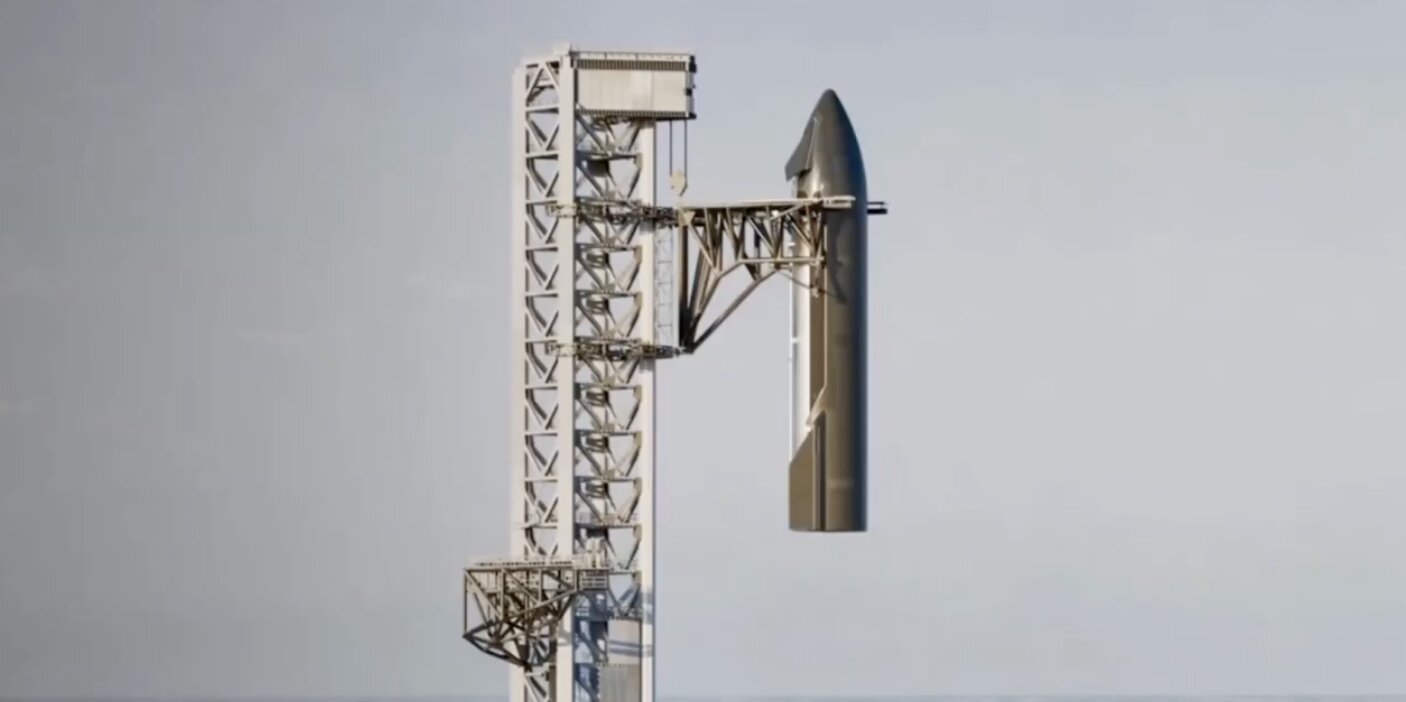
UPDATE: The FAA has granted the license for Starship Flight 15.
Starship Flight 15 License has been granted by the FAA!
Let’s go! https://t.co/DugsgjvYAe
— TESLARATI (@Teslarati) November 13, 2026
SpaceX is set to attempt its 15th test flight of Starship this evening from Starbase, Texas.
SpaceX is targeting Starship Flight 15 for a launch as soon as today, Friday, November 13, pending an FAA Flight License, during a 75-minute window that opens at 4:45 p.m. CT (5:45 p.m. ET) from Orbital Launch Pad 2 at Starbase, Texas. The flight remains pending final regulatory approval.
WATCH Starship Flight 15 here:
https://t.co/C6GnCHyF8p
— TESLARATI (@Teslarati) November 13, 2026
The mission, using Booster 22 and Ship 42, aims to achieve the first full recovery of an orbital launch system. Primary objectives include a tower catch of the Super Heavy booster roughly six and a half minutes after liftoff and the first-ever tower catch of a Starship upper stage after more than 22 hours in space.
SpaceX will perform Starship double catch attempt with Flight 15
Between those catches, Ship 42 is planned to enter a low Earth orbit of about 275 km, complete roughly 14 orbits, and deploy 26 next-generation Starlink V3 satellites (Starlink Group 31-2). Three of those satellites carry cameras to inspect the ship’s heat shield in orbit and help controllers decide whether the vehicle is healthy enough for a return to the tower.
Contingency ocean splashdown options exist if either stage is not cleared for catch.
To watch the attempt, check the link to the broadcast in both X posts in this article. The live webcast is scheduled to begin about 30 minutes before liftoff and is planned to continue through the ship catch the next day, with the possibility of extended onboard views during the orbital coast via Starlink.
Because the schedule is dynamic, check back here or on our social media channels for the latest updates on window timing and regulatory status. A successful dual catch would mark a major milestone toward making Starship a rapidly reusable rocket capable of frequent flights.
WATCH Starship Flight 15 here:
https://t.co/C6GnCHyF8p
— TESLARATI (@Teslarati) November 13, 2026
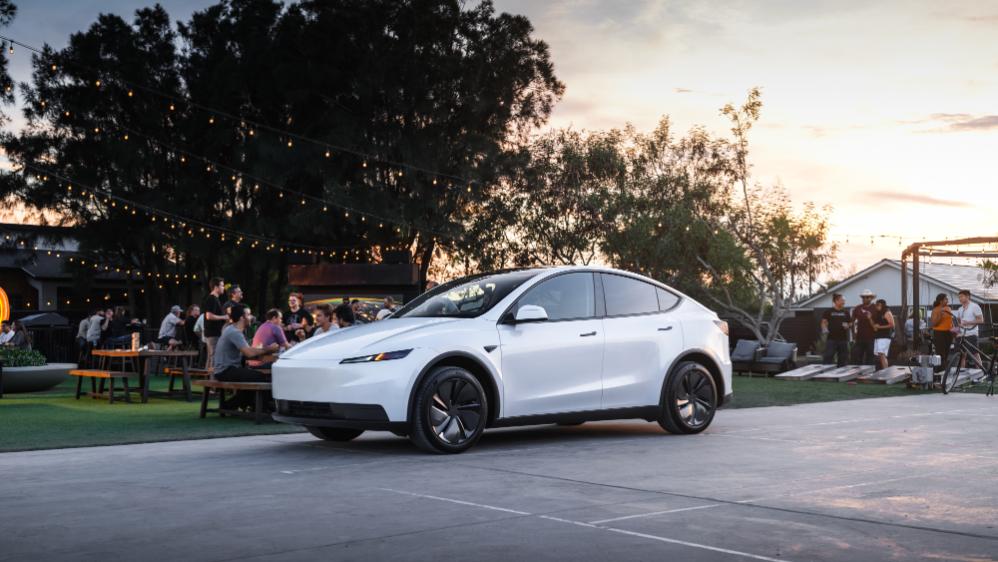
Tesla has trimmed its Model Y offerings as its Standard All-Wheel-Drive configuration has been removed from the online configurator after roughly nine months on sale. The move follows the removal of the Cybertruck, as its trims have also been minimized as that vehicle heads for total discontinuation at the end of Summer 2027.
Launched in February 2026 as a mid-tier dual-motor option between the Rear-Wheel-Drive model and the Premium trims, the Standard All-Wheel-Drive Model Y offered 294 miles of range and a 4.6-second 0-60 mph time in a stripped-down package.
🚨 Tesla has pulled the $41,990 Model Y AWD from its U.S. configurator after nine months on sale.
The cheapest AWD Model Y you can order is now the $49,990 Premium AWD, with Premium deliveries quoted for Jan–Mar 2027.
The $39,990 RWD stays, and AWD units remain in inventory. https://t.co/uROJp2lVpx
— TESLARATI (@Teslarati) November 13, 2026
With it gone, the cheapest new AWD Model Y buyers can configure is now the Premium AWD at $49,990, with estimated deliveries pushed into January–March 2027. The $39,990 rear-wheel-drive Model Y remains available for custom orders, and some AWD units are still listed in inventory.
The move arrives days after Tesla sharply narrowed its Cybertruck lineup. New orders for the Dual Motor AWD and Premium AWD versions have been disabled, leaving only the high-performance Cyberbeast—priced around $109,990 before fees—as the sole configurable option.
Elon Musk has stated that Cybertruck production at Gigafactory Texas will wind down around the middle to late summer of 2027 to free manufacturing space for greater Cybercab output. Tesla has raised prices on remaining trims and is prioritizing higher-margin builds while working through an existing order backlog that exceeds what the line can complete before conversion.
These parallel decisions reflect a broader effort to simplify Tesla’s retail customer lineup. Lower-volume or lower-margin variants are being phased out or deprioritized in favor of core, higher-spec models that generate stronger profitability and clearer production planning.
For the Model Y, this concentrates volume on the remaining RWD and Premium configurations while Premium deliveries already stretch into 2027. For the Cybertruck, it accelerates the transition away from a stainless-steel pickup that underperformed relative to initial volume expectations.
Tesla Model Y Standard Full Review: Is it worth the lower price?
The freed capacity and reduced complexity directly support Cybercab scaling. Tesla began pilot Cybercab production at Giga Texas in early 2026, launched paid autonomous rides in Austin in September, and is preparing for substantial volume growth.
By streamlining the existing vehicle portfolio, the company is reallocating factory space, engineering attention, and supply-chain resources toward its purpose-built Robotaxi, which lacks a steering wheel or pedals and is designed exclusively for unsupervised autonomy.
The result is a leaner retail lineup today and a clearer path to high-volume Cybercab deployment tomorrow.
Elon Musk
SpaceX Starship is going for a catch that could change spaceflight forever
SpaceX will try to catch both Starship stages today, a first for any orbital rocket.

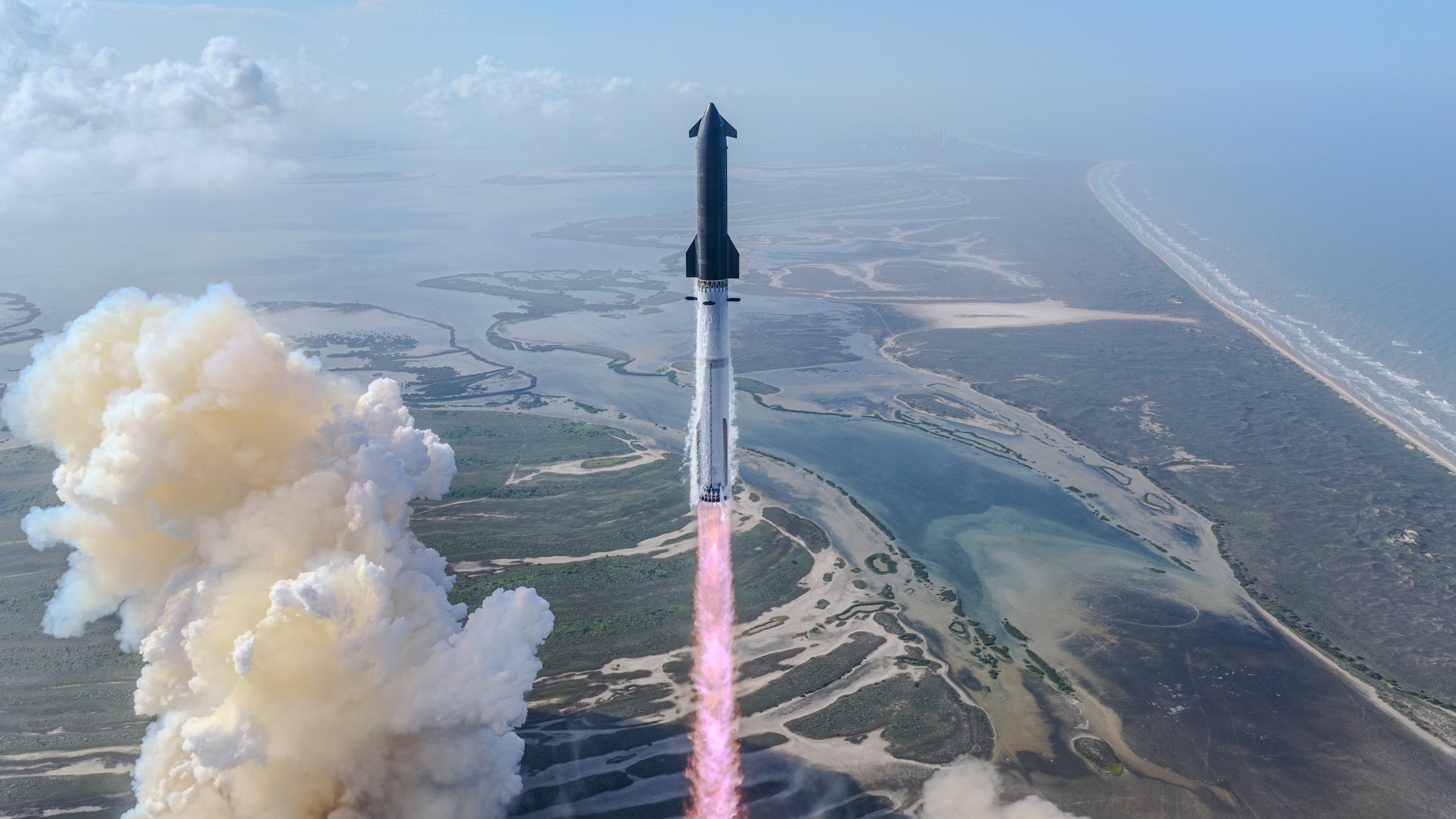
SpaceX is set to launch Starship Flight 15 from Starbase on Friday afternoon, and if both stages make it back to the tower, the mission will go down as the first time an orbital rocket has ever been fully recovered. The 75 minute launch window opens at 4:45 p.m. CT from Pad 2, a day after SpaceX rolled Ship 42 out to the pad and shared photos of the move on X.
The first catch comes quickly. About six and a half minutes after liftoff, Booster 22 is scheduled to fly back to Starbase and settle into the launch tower’s chopstick arms, the first catch attempt for SpaceX’s V3 Super Heavy. SpaceX has caught the booster three times before most recently in March 2025.
Ship 42 moves to the Starbase pad ahead of launch https://t.co/pMUFTHneJQ — SpaceX (@SpaceX) November 13, 2026
The second catch is the one that has never been done. Ship 42 will climb to an orbit about 275 kilometers up, deploy 26 Starlink V3 satellites and complete about 14 orbits. Three of those satellites carry cameras to inspect the ship’s heat shield before it commits to coming home. If its reentry, landing burn and tower approach systems pass their checks, the ship will fire its engines to leave orbit, fall through the atmosphere in its belly flop position, flip vertical and drop into the tower about 22 and a half hours after launch, on Saturday afternoon. SpaceX gave a preview of that maneuver in an animation during its third quarter earnings webcast.
Elon Musk described a successful double catch on that call as “the first time that an orbital launch vehicle has been fully recovered” and a “profound technology milestone,” putting the odds of catching the ship at “more likely than not.” SpaceX has called it a potential “breakthrough moment in making Starship a reliable, rapidly reusable rocket,”
Reuse is where the economics change. Falcon 9 lands its boosters routinely, but its upper stage is thrown away on every flight. Starship is designed so both stages can be refueled and flown again, which is key to cutting launch costs. That matters for Starlink, where each V3 satellite is expected to carry roughly 10 times the download capacity of the V2 Mini satellites flying today, and for Starmind, SpaceX’s planned constellation of AI compute satellites.
It matters for NASA too. Starship is the lunar lander for the Artemis program, and reaching the Moon requires refilling a ship in orbit using several tanker flights. That plan only works if Starships can fly again and again. Musk has said he expects Starship to reach a weekly launch cadence in the first half of 2027.
Investors are paying attention. Morgan Stanley’s Adam Jonas wrote this week that a catch of both stages would likely be “a material positive” for SpaceX stock.
The last Starship flight in September reached orbit for the first time but ended after about three hours with a splashdown in the Pacific, short of its planned 10 hours, after some engines shut down. Since then, Booster 22 has completed a full 33 engine static fire and Ship 42 a six engine firing, as Teslarati previously reported. As of Friday morning, SpaceX was still waiting on the FAA to approve a license change covering the ship’s return over land.

SpaceX Starship Flight 15: How to watch the double catch attempt

Tesla trims Model Y offerings as All-Wheel-Drive gets the axe


