News
Tesla posts full 2023 Holiday Update features, with some welcome extras

When the release notes of Tesla’s 2023 Holiday Update were posted online, many quickly observed that the features being rolled out in update 2023.44.25 were mostly quality-of-life improvements. This, as well as the lack of new “useful” features, resulted in several Tesla owners complaining on social media about the “lackluster” 2023 Holiday Update.
Amidst the complaints, Tesla software tracker Teslascope clarified that the 2023 Holiday Update release notes do not include specific changes for vehicles that are running Full Self-Driving Beta. The firm also noted that there might be more features coming.
Tesla CEO Elon Musk, while responding to a post on X expressing owners’ discontent about the 2023 Holiday Update release notes, also admitted that the EV maker could have done better. “We need to step up our game,” Musk wrote.
We need to step up our game— Elon Musk (@elonmusk) December 7, 2023
Musk’s post appears to have given Tesla’s software team a push, as the electric vehicle maker has posted the contents of the 2023 Holiday Update on its official X account. As could be seen in the electric vehicle maker’s post, the 2023 Holiday Update appears to have been buffed with several new features.
Apart from the features that have already been leaked, Tesla also noted in its post that the 2023 Holiday Update will include Custom Lock Sounds, which is a fun feature that could replace the horn lock sound of a vehicle with another sound. An image shown by Tesla teases sounds like a screaming goat, a jingle, and a duck’s quack, among others.
Tesla also announced that passengers in the rear seats would now be able to play games on the rear touchscreen. This should go very well with Tesla Arcade’s added compatibility with PS4, PS5, and Xbox Controllers, as well as Rear Screen Bluetooth Headsets, which would likely be appreciated by parents who tend to go on long trips with their children.
The 2023 Holiday Update rolls out next week
Here’s what’s coming…
Custom Lock Sounds
Replace the horn lock sound of your vehicle with another sound—like a screaming goat ?
LAN Party on Wheels
Play your favorite games on the rear touchscreen ?
Rear Screen Bluetooth… pic.twitter.com/Xl2Q6YgS2b— Tesla (@Tesla) December 8, 2023
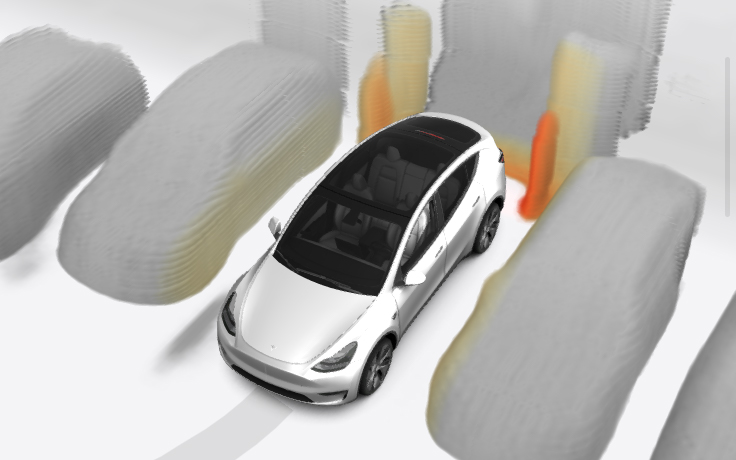
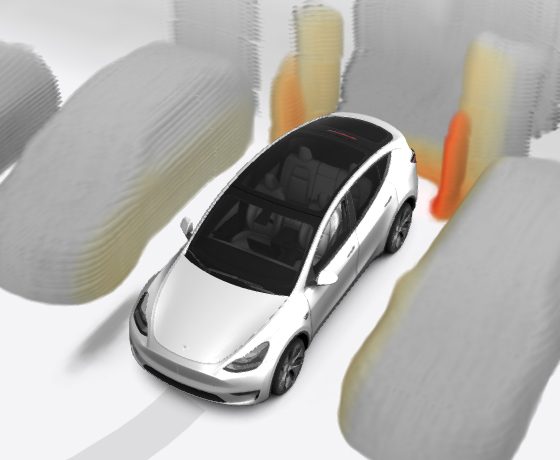
Perhaps most notable in Tesla’s 2023 Holiday Update announcement, however, is the addition of High Fidelity Park Assist, which allows compatible vehicles to display a 3D reconstruction of their surroundings while parking. This is quite similar to the 360-degree camera parking system found in other vehicles, which also provides a real-time view of a car’s surroundings when parking.
A look at social media posts from EV enthusiasts indicates that the 2023 Holiday Update — with its new features — is now being viewed more favorably by Tesla owners. Some Tesla owners proved particularly excited about High Fidelity Park Assist, while others have shared their appreciation of the whimsical nature of features like Custom Horn Sounds, among others.
Don’t hesitate to contact us with news tips. Just send a message to simon@teslarati.com to give us a heads-up.



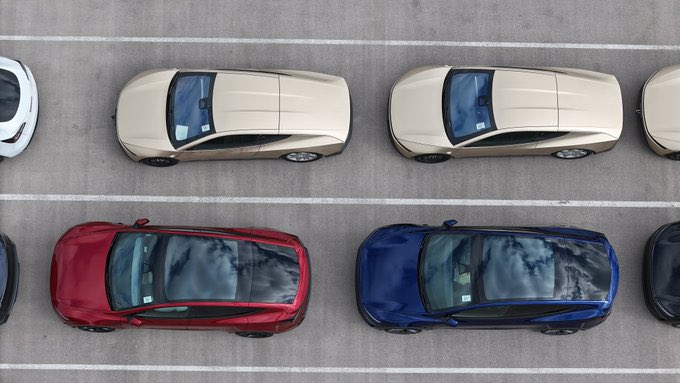
Tesla has updated its Robotaxi app so riders can pick which vehicle they want before they book. The latest in-app screens now show two options side by side: the two-seat Cybercab and the four-seat Model Y.
A screenshot circulating Thursday shows the change in practice. In Austin, a rider could choose a gold Cybercab for two people or a Model Y for four. Tesla’s updated description calls Cybercab “our first purpose-built autonomous vehicle,” designed for safety, accessibility, and comfort, and says the lineup is available only through the Robotaxi app.
Tesla has updated their Robotaxi page in the App Store. You’ll be able to select if you want a Cybercab or Model Y Robotaxi.
“Our Robotaxi vehicle lineup now includes Cybercab, our first purpose-built autonomous vehicle. Designed for safety, accessibility and comfort, Cybercab… pic.twitter.com/Jff4klilDr
— Sawyer Merritt (@SawyerMerritt) September 3, 2026
The distinction is more than cosmetic, and it’s important to note that Robotaxi refers to the platform, while Cybercab refers to a vehicle.
Model Y Robotaxis have carried the service since it opened in Austin in mid-2025 and later expanded to Dallas, Houston, and parts of Florida. Those vehicles are converted production SUVs that still have steering wheels and pedals.
Cybercab is different. It has no driver controls, butterfly doors, a low seat height meant to work with wheelchairs, extra trunk space for assistive devices, and braille on the handles. Tesla has registered dozens of the two-seaters with Texas regulators in the days leading up to its September 3 Austin event.
Giving riders a choice lets Tesla match the vehicle to the trip. Most rides involve one or two people, which is where Cybercab is meant to be cheaper and more efficient to operate. Groups of three or four, or anyone who needs more space, can still request a Model Y.
The same app handles booking, payment, cabin settings, and, on Cybercab, features such as phone-based door opening and in-cabin voice controls.
The update does not mean every city suddenly has both cars available. Cybercab support is listed for Austin first, and the purpose-built fleet is still small compared with the existing Model Y roster. Even so, the app change marks a shift from a single-vehicle pilot to a mixed fleet.
Riders can now choose between the compact, purpose-built robotaxi and the familiar SUV that launched the service.
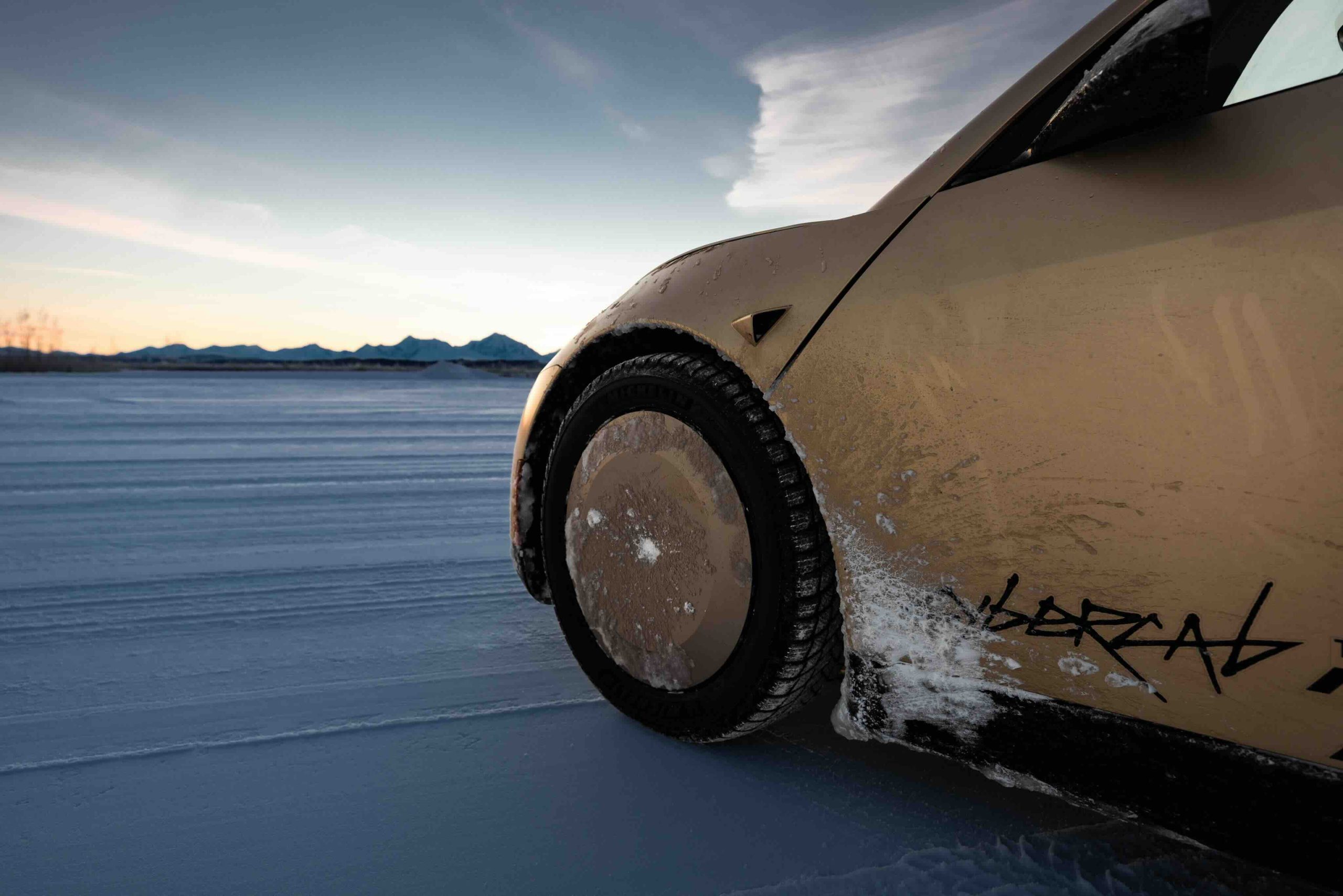
Tesla Cybercab sightings are broadening far and wide, well outside of downtown Austin, Texas, with autonomy in focus as the company plans to launch the all-electric, two-seater this evening in the Lone Star State.
Tesla is set to launch Cybercab to a small group of people this evening in a dedicated event in Austin, Texas. Public details on the event are relatively slim.
However, Tesla’s focus on Cybercab falls well outside of the downtown Austin area and is expanding well across the United States as things continue to move quickly with the company’s autonomous efforts in 2026. Today, various images of Cybercab fleets in interesting locations have started to circulate.
The most notable is a fleet of at least 20 Cybercabs at Miami International Airport in Florida. Spotted last night, the fleet is expansive and is indicative of a looming release of Cybercabs once regulatory boxes are checked off.
Tesla has already been operating the Robotaxi platform in Miami for several months, but this Cybercab fleet at the airport could be joining the ride-hailing platform as approvals arrive:
20+ Cybercabs spotted near Miami international airport. pic.twitter.com/ORLsw8yFhf
— Sawyer Merritt (@SawyerMerritt) September 3, 2026
Another fleet of Cybercabs was spotted at the Devon, PA showroom just outside of Philadelphia. We have seen several Cybercab units testing around the Philadelphia Metro Area, which is interesting considering Tesla does not have any active Robotaxi geofence in Pennsylvania.
Cybercab at the Devon location in PA has multiplied over the weekend. Seeing a few more test vehicles in the lot 👀 pic.twitter.com/DhJT4P1EkU
— Billy (@billykyle) August 22, 2026
Philadelphia would be an ideal location to test ride-hailing due to its dense tourist population, large, sprawling city layout, and to compete with other ride-hailing companies that operate in the city.
Expansive fleets of Cybercabs will be popping up in and around major cities throughout the rest of the year, if we were betting on it. Tesla has made it obvious that the Cybercab rollout will be aggressive and fast-paced, but within reason. Tesla is still prioritizing safety, so these testing phases will likely go on for some period of time before more members of the public are able to snag a Cybercab for a personal chariot.
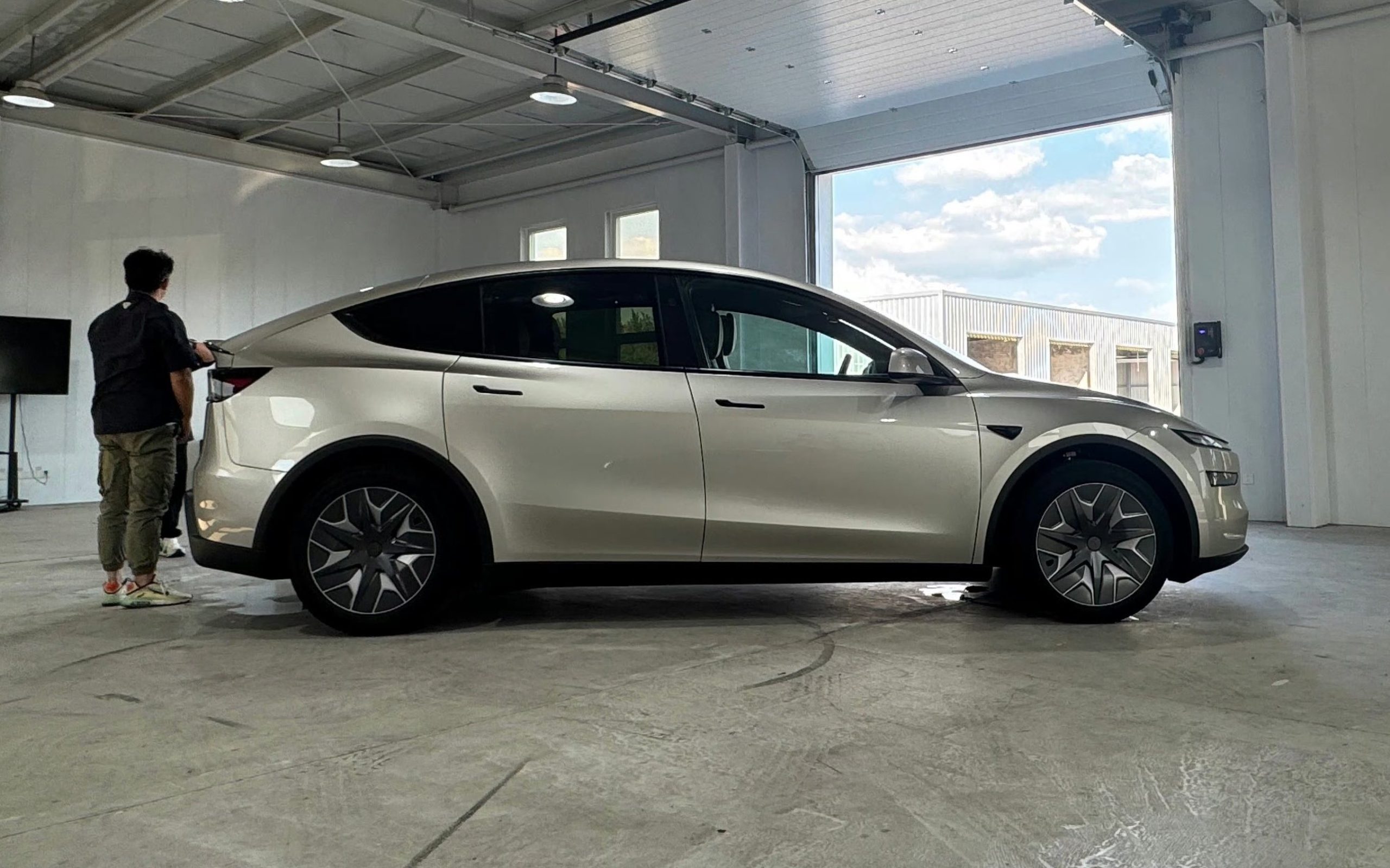
The Tesla Model Y L is arguably the most hyped trim of the all-electric crossover, other than the Performance configuration that comes with white-knuckle speed and sports car-level handling.
However, it is not all perfect. Tesla owners in China who took delivery of the Model Y L, denoted with an L to highlight its longer wheelbase, are experiencing what they are referring to as “collapsing” of the rear wheels, as suspension issues appear to be an issue with some of the builds.
🚨 Model Y L owners in China report rear suspension sag
• Six-seat long-wheelbase Y. Shanghai. On sale since August 2025
• Owners say the rear tire-to-arch gap shrinks after mileage or a full load. Some cases after about 9,000 km loaded. Others near 30,000 km
• Tesla service… pic.twitter.com/Lr6i5Tbi07— Joe Hansen (@joehansen) September 1, 2026
The gap between the wheel arch and tire has narrowed to the point that “not even a single finger” could fit, according to a report from Car News China. The failures are not tied to a specific mileage, as one owner said that after just 9,000 kilometers (5,600 miles), they noticed the suspension issue when their car was fully loaded.
Another one had the issue at 30,000 kilometers (18,640 miles) and noticed that the wheel gap shrank to two fingers, so not as drastic as the person who reported a similar issue at 9,000 km.
Tesla Model Y L is gaining momentum in China’s premium segment
Along with the visual recognition of the issue, others are saying the sagging is causing abnormal wear on the inside of the tires. Extra weight and instant torque already provide additional stress on the tires in electric vehicles during normal operation, so it is no surprise that this is another complaint.
There has been no recall issued by Tesla, and the company has not yet publicly acknowledged the issue.
Some are suggesting that owners use a “finger test” to self-diagnose whether there is an issue with the suspension. There should be four fingers between the tire and the wheel well; anything less than that starts to get dicey.

Tesla Robotaxi riders will face the best dilemma when booking a ride

Tesla Cybercab sightings broaden well outside of Austin with autonomy in focus


