Elon Musk
Grok Bot users hit with weekly limits early, Elon Musk explains what happened

Elon Musk said weeks ago during SpaceX’s third-quarter earnings call that the company’s Grok Bot, its autonomous AI Agent platform, was showing “the fastest growth of a product” that he’d ever seen in his life.
Now, SpaceXSI is scaling back Grok Bot users’ weekly limits, much to the surprise of those who have relied on it to take away monotonous tasks in their lives.
Elon Musk’s terse November 1 reply on X captured a sharp tension in the early days of agentic AI. Responding to a user who asked for a Grok Bot usage reset after hitting 100 percent with four days still left on the weekly cycle, Musk wrote: “The cost of serving Grok Bot was unsustainably high relative to revenue.”
@DogecoinNorway The cost of serving Grok Bot was unsustainably high relative to revenue
— Elon Musk (@elonmusk) November 1, 2026
The post arrived amid a wave of similar complaints from paying subscribers whose meters had jumped unexpectedly toward or to the limit, sometimes overnight and with little corresponding activity. It also stood in clear contrast to statements Musk had made only days and weeks earlier.
On the SpaceX third-quarter earnings call in mid-to-late October, Musk had described Grok Bot in almost the opposite terms. He called it “the fastest growth of a product that I’ve ever seen in my life” and said he had “never seen anything grow this fast.”
Company figures put paid weekly users at roughly 800,000 earlier in the month, more than doubling over the prior period. Daily active users had climbed from under 100,000 in early September to over 600,000 by late October.
Musk emphasized that the product has no free tier and that users appear to be getting real value beyond what they pay. In other remarks, he noted that usage per user was rising rather than declining, the opposite of the usual decay pattern for new software.
Grok Bot, launched around August, functions as an always-available agent with its own persistent cloud computer; it can schedule, research, shop, browse, and execute multi-step workflows even after the user steps away. Access is bundled into X subscription tiers (roughly $30, $100, and $200 per month) and certain Cursor plans, drawing from shared weekly usage pools whose exact sizes have not been publicly detailed.
The economics of that model are what Musk’s November 1 post put in the spotlight. Agentic systems burn far more compute than ordinary chatbot exchanges. Each task can trigger repeated model calls, tool use, web actions, and sustained background work.
When growth is as rapid as Musk celebrated, the absolute compute bill scales quickly even if average revenue per user stays fixed under flat monthly subscriptions. Industry observers noted the opportunity cost as well: the same GPUs can be rented to other AI labs at higher rates.
A simple back-of-the-envelope comparison circulating after the post illustrated the gap: if every reported daily user paid the top tier, annualized subscription revenue would still be modest relative to the scale of compute infrastructure SpaceX is building and leasing to companies like Anthropic.
Some users also reported possible dashboard anomalies around the same period, though Musk’s framing treated the underlying cost-revenue imbalance as the core issue rather than a pure metering glitch.
The juxtaposition is the core of this exchange. Within roughly two weeks of publicly framing Grok Bot as an unprecedented success with strong unit economics and no free tier, Musk acknowledged that serving the same product had become unsustainable relative to the revenue it generates.
For the broader industry, the episode underscores a structural challenge of the agent era: demand is real and growing faster than many expected, yet the cost of fulfilling that demand through always-on, multi-step agents can outrun subscription pricing before companies can adjust limits, introduce metered billing, or raise prices.
Musk’s reply did not promise an immediate reset or higher allowances; it simply stated the constraint. In doing so, it supplied a rare, explicit public data point on the unit economics of a high-profile AI agent just as adoption numbers were still being celebrated as the fastest in Musk’s experience.
The tension between rapid, paid growth and the compute required to deliver it is now on the record.


Elon Musk
SpaceX just cleared a key FCC hurdle in its fight with Verizon and AT&T
The FCC accepted SpaceX’s bid for Grain’s 800 MHz spectrum, opening review for Starlink Mobile.

The Federal Communications Commission has formally opened its review of SpaceX’s plan to buy a nationwide block of 800 MHz spectrum from Grain Management, moving Starlink Mobile one step closer to operating as a full U.S. wireless carrier.
In a public notice issued Tuesday, the FCC’s Wireless Telecommunications Bureau said it accepted for filing the applications to transfer control of two Grain license companies, Prism License Co. 1 and Prism License Co. 2, to Starlink Spectrum Holdings, a wholly owned SpaceX subsidiary. The deal covers 546 paired licenses across 3,224 counties, reaching roughly 100% of the U.S. population in all 50 states, Washington, D.C., Puerto Rico and the U.S. Virgin Islands. The proceeding sits under WT Docket No. 26-313.
Acceptance is not approval. It means the applications cleared an initial review and the public comment window is now open. Comments and petitions to deny are due December 1, and oppositions are due December 8. The bureau also said the conditions attached to Grain’s July purchase of the licenses from T-Mobile, which require rapid buildout for terrestrial and direct to device service, would carry over to SpaceX if the transfer is approved.
SpaceX announced the agreement on October 8, saying the new airwaves would let Starlink Mobile’s signal reach phones inside buildings, something its 2 GHz spectrum from EchoStar cannot do as well. The portfolio includes up to 14 MHz of paired spectrum in the 817 to 824 MHz and 862 to 869 MHz bands, which most existing phones already support. Elon Musk called it “the last critical piece of the spectrum puzzle needed for SpaceX to provide complete phone coverage in America.”
According to the filing, SpaceX would hold up to 89 MHz of total spectrum in any given market after the deal closes, including up to 14 MHz below 1 GHz. That is far under the 385 MHz threshold the FCC uses to flag a transaction for closer competitive scrutiny, and well short of the roughly 300 MHz each of AT&T, Verizon and T-Mobile holds.
Tuesday’s notice does not decide how SpaceX can use the spectrum from orbit. A separate application SpaceX filed on October 27 seeking authority to provide supplemental coverage from space on the same frequencies, along with related waiver requests, is still pending before the commission.
The ground network is already taking shape. Last week, SpaceX picked Qualcomm to supply radios, baseband units and software for a nationwide 5G build, with deployment across tens of thousands of U.S. cell sites starting in 2027. The FCC also voted on October 29 to advance a proposal opening another 482 MHz to direct to device service, though AT&T, Verizon and T-Mobile hacritive pushed to strip nearly 300 MHz from it. SpaceX President Gwynne Shotwell has said service on SpaceX’s own airwaves is targeted for early 2028.
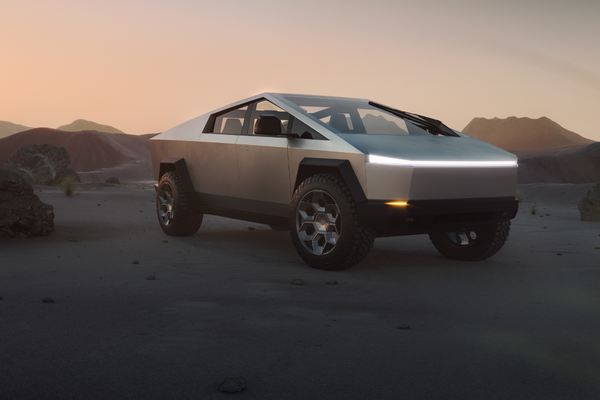
A Tesla upfitter has offered to take over Cybertruck lines from the company in a last-ditch effort to save the all-electric pickup from being completely canceled in the middle of 2027.
Unplugged Performance, the Hawthorne, California-based Tesla aftermarket specialist, has publicly offered to take over Cybertruck production from Tesla, funding the effort “through a consortium of investors.”
An open offer to Tesla: We fully support putting Cybercab first, and we’d be glad to take the Cybertruck line off your hands.
We’d fund it with a consortium of investors and run it at no cost to Tesla’s floor space, headcount, or focus. All of that goes to Cybercab. Cybercab gets first call on battery cells too. We’ll wait our turn.
Tesla gains incremental profit: a license fee, plus FSD and Robotaxi network revenues on every vehicle built.
We’d build the Cybertruck, a three-row CyberSUV, and an unmanned CyberCargo hauler. More autonomous miles, across every surface of this planet and beyond.
Worth a conversation?— UP (@UnpluggedTesla) November 10, 2026
The proposal comes as Tesla prioritizes its Cybercab Robotaxi program and prepares to wind down Cybertruck assembly at Gigafactory Texas around mid-2027.
Founded in 2013 by Ben Schaffer and located adjacent to Tesla’s Design Studio and SpaceX, Unplugged Performance has become a leading provider of premium upgrades for Tesla vehicles, including extensive Cybertruck packages under its UP INVINCIBLE line.
Through its UP.FIT division, the company has also developed purpose-built police and fleet versions of the Cybertruck, including deliveries to agencies such as the Las Vegas Metropolitan Police Department.
In an X post on Tuesday, Unplugged said:
“An open offer to Tesla: We fully support putting Cybercab first, and we’d be glad to take the Cybertruck line off your hands. We’d fund it with a consortium of investors and run it at no cost to Tesla’s floor space, headcount, or focus. All of that goes to Cybercab. Cybercab gets first call on battery cells too. We’ll wait our turn. Tesla gains incremental profit: a license fee, plus FSD and Robotaxi network revenues on every vehicle built. We’d build the Cybertruck, a three-row CyberSUV, and an unmanned CyberCargo hauler. More autonomous miles, across every surface of this planet and beyond. Worth a conversation?”
The arrangement would free Tesla resources and manufacturing capacity for Cybercab while allowing continued production of the stainless-steel pickup and expanded variants. Unplugged Performance indicated it would wait for battery cells after Cybercab needs are met and would generate ongoing revenue for Tesla through licensing and software/network services on the vehicles it produces.
Following strong initial interest, Unplugged Performance posted a follow-up inviting potential investors and strategic partners to email cyber@unpluggedperformance.com. The company clarified that the outreach is solely to gauge interest and does not constitute an offer to sell securities or acceptance of funds at this stage.
The proposal arrives shortly after Elon Musk indicated that Cybertruck production in Texas would be phased out by roughly the middle of 2027 to expand Cybercab output.
Whether Tesla engages with the offer remains to be seen, but the public overture highlights both the aftermarket specialist’s deep experience with the Cybertruck platform and the growing focus on autonomy within Tesla’s manufacturing plans.
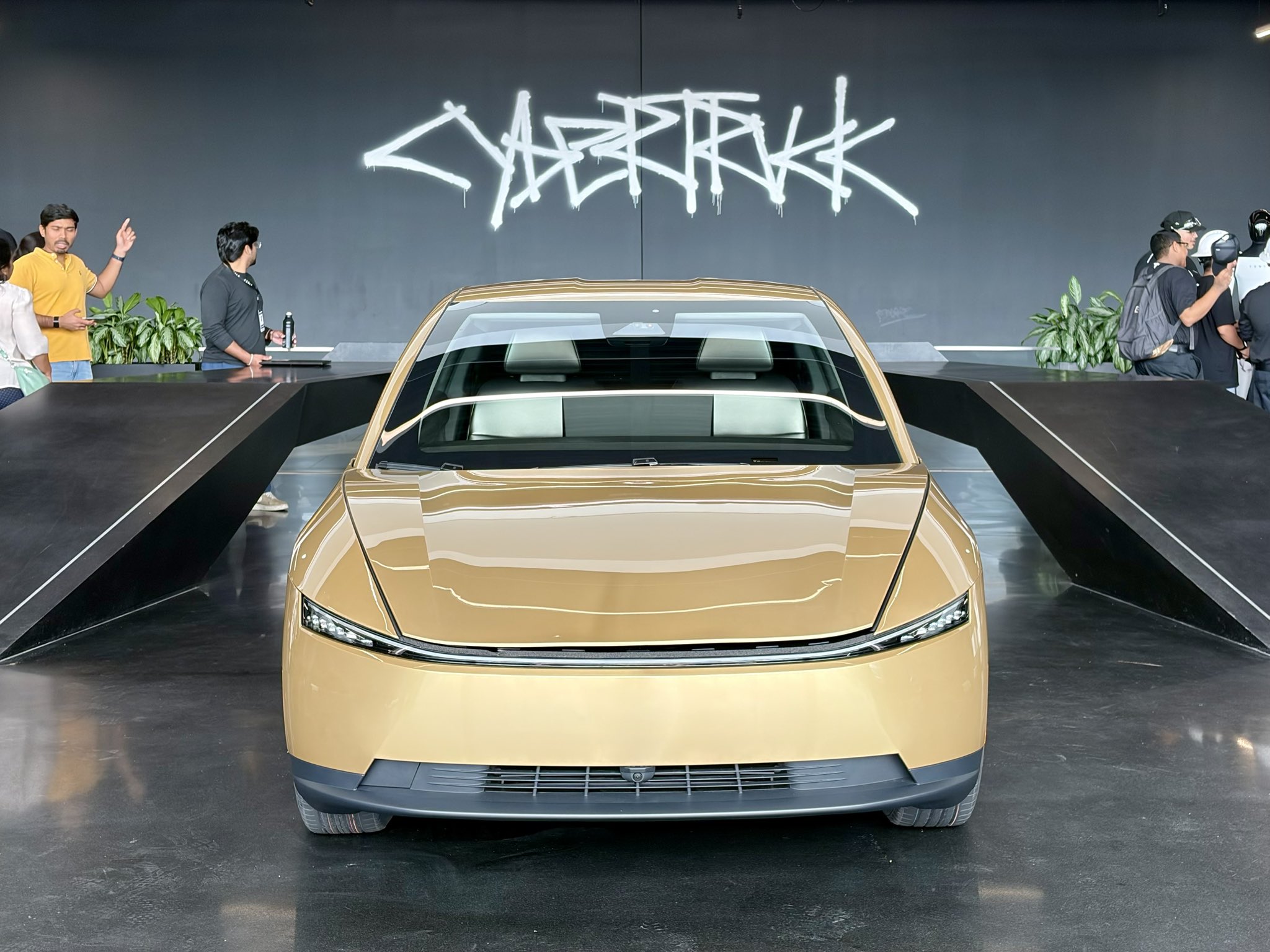
Elon Musk said the Tesla Cybercab will perform “a majority of all passenger miles” where it is allowed to operate and that point is “obvious to anyone with eyes and a brain.”
Musk used the point to double down on the company’s decision to ax the cult-favorite Cybertruck, as its production space will be removed and transitioned into additional Cybercab lines. The move has catalyzed a polarizing conversation on whether its right or wrong.
Whatever side you are on — it’s happening.
Dodge ended the Viper.
Audi retired the R8.
Mitsubishi said goodbye to the Lancer Evo.
Ford bid farewell to the Bronco (at one point).
Chevrolet sunset the Camaro.Tesla is ending the Cybertruck. I’m pissed. I’m upset.
Fans of those five automakers mentioned did the same thing. It happens. It sucks. I don’t like it.
But I still love Tesla. I love my Model Y. I hoped to be in a Cybertruck in a little under two years.
I won’t be. But I still won’t put my family in anything else. Too safe. Too advanced. Too much better than everything else.
— TESLARATI (@Teslarati) November 10, 2026
Regardless, Musk seems to be getting to the point that he is done talking about the choice. At some point, you have to think that this was truly a difficult decision for him and the company as well, and this is not something he took lightly. In fact, he’s probably a little bit disappointed with it, too.
But the point remains that the Cybertruck is gone. Musk’s focus is purely on developing an autonomous platform that the world will utilize for transportation, and he’s telling you that anyone “with eyes and a brain” can see it:
@PalmerLuckey @carlhancock Cybercab will do a majority of all passenger miles in any jurisdiction where it is not prohibited by law.
Obvious to anyone with eyes and a brain.
— Elon Musk (@elonmusk) November 10, 2026
Tesla is betting that all of its passengers in the future will be okay with not owning their own personal cars and will be fine with ride-hailing for the rest of their lives. Every dinner, every errand, every trip to the airport and transportation thereafter, will all be operated by ride-sharing, and in Tesla’s perfect world, it will happen in a Cybercab.
As of now, Cybercab is only active in Austin, but it has been spotted all over the country with a driver behind the wheel in those prototypes. In Austin, the car has no steering wheel or pedals for people to control the vehicle.
The Cybertruck dilemma is one that has truly come across the entire Tesla community and while it seems to be a great idea to keep it because people love it, the business side of things is steering Musk and Tesla in another direction.

SpaceX just cleared a key FCC hurdle in its fight with Verizon and AT&T

Tesla upfitter offers to keep Cybertruck alive


