Investor's Corner
SpaceX delivers blockbuster Q3 results as Super Intelligence segment booms

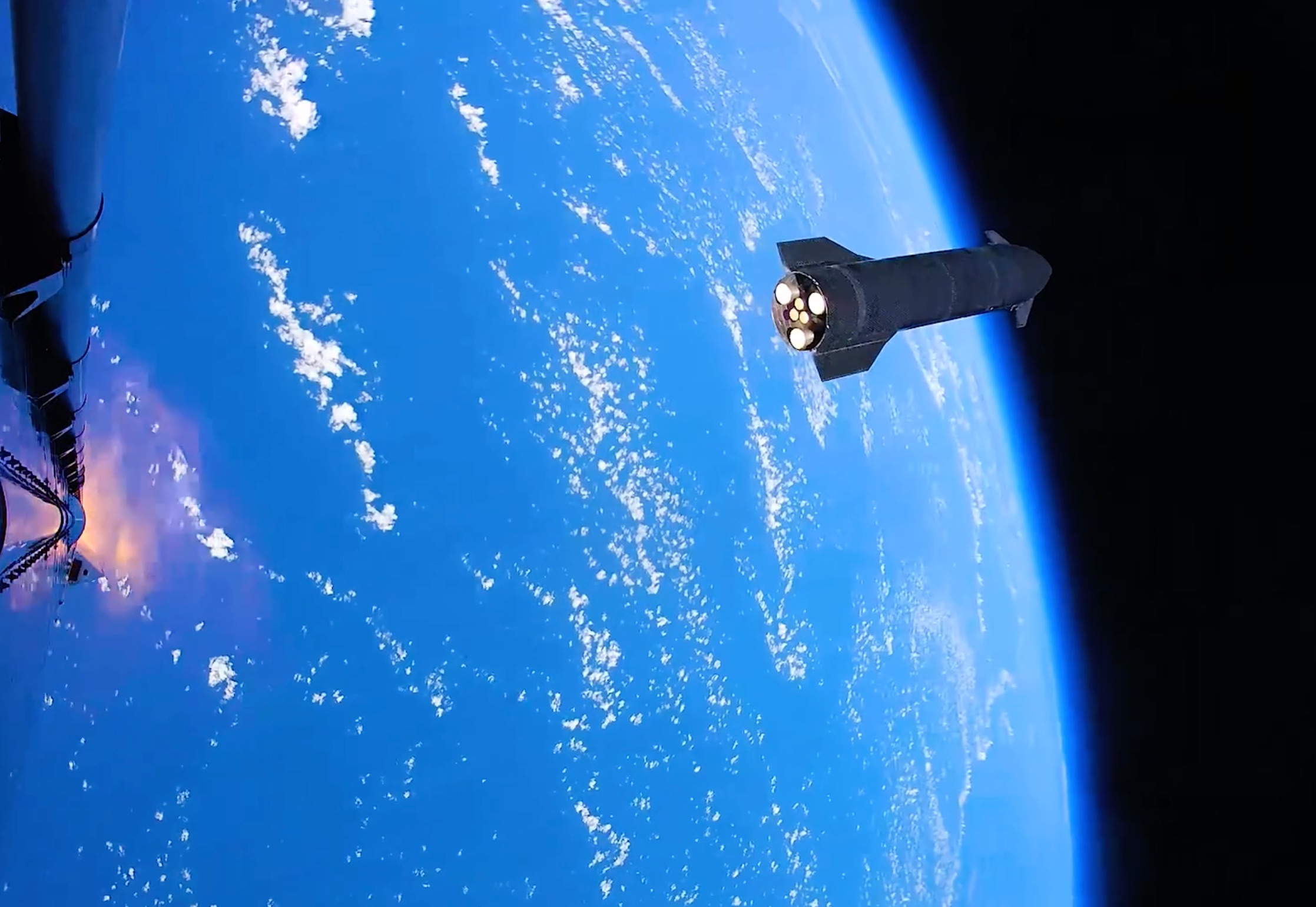
SpaceX reported its third-quarter 2026 financial results on October 20, posting the company’s first solidly profitable quarter since going public earlier in the year under the ticker $SPCX.
Revenue reached $14.58 billion, up 161 percent year-over-year from $5.6 billion, and well ahead of consensus estimates in the $12.7 to $12.9 billion range. The results highlight a rapid shift in SpaceX’s center of gravity toward artificial intelligence/super intelligence, while Starlink and traditional space operations continue to show robust progress.
Here are the key financial results for the quarter:
- Revenue of $14.58 billion (+161% YoY)
- Adjusted EBITDA of $8.8 billion (+306% YoY)
- GAAP net income of $4.4 billion (versus a $1.1 billion net loss in the prior-year quarter)
- Adjusted EPS of approximately $0.35 (versus roughly $0.13–0.16 expected)
- Income from operations of $2.8 billion
The AI/SI segment generated $7.56 billion in revenue, an 830 percent year-over-year increase, making it the company’s largest segment for the first time. Growth was primarily driven by the activation of major cloud services agreements, the integration of Cursor (acquired earlier in 2026), and rising usage of Grok models and the newly introduced Grok Bot personal agent.
🚨 SpaceX just reported earnings! Here are some highlights:
Financial:
Revenue $14.58B (+161% YoY) vs. consensus ~$12.7–12.9B
Adjusted EBITDA $8.8B (+306% YoY)
GAAP net income $4.4B (vs. prior-year loss; first solidly profitable quarter post-IPO)
Adjusted EPS ~$0.35 vs. ~$0.13–0.16 expectedSegments:
Super Intelligence (SI, formerly AI): $7.56B (+830% YoY) — now the largest segment, driven by cloud contracts, Cursor, and Grok.
Connectivity (Starlink): $5.25B (+69% YoY).
Space: $1.77B.Other highlights:
Starlink subscribers: 13.6M (+89% YoY).
Nameplate compute: 1.7 GW.
Capex: $19.6B (majority AI infrastructure).
Cash & marketable securities: ~$90B.
First revenue-generating Starship mission (26 V3 Starlink satellites, ~10× Falcon 9 downlink capacity per launch).— TESLARATI (@Teslarati) October 20, 2026
SI adjusted EBITDA reached $5 billion, and nameplate compute capacity stood at 1.7 GW at quarter-end, up from 1.4 GW in June and 0.6 GW a year earlier. Capital expenditures totaled $19.6 billion, with the majority allocated to AI infrastructure, including continued expansion of the Colossus facilities.
The Connectivity segment, which primarily surrounds Starlink, produced $5.25 billion in revenue, a 69 percent year-over-year and 22 percent sequentially. These are pleasant results to see and expected, considering how many airlines have adopted Starlink over the past year.
Starlink consumer subscribers reached 13.6 million, an 89 percent increase from the prior year, and a sequential gain of 1.6 million. Consumer average revenue per user improved to $69. Meanwhile, Enterprise and Government revenue also grew strongly, and Starlink is now installed on more than 3,800 aircraft, making internet more accessible and better performing than previous options.
The Space segment also performed well and contributed $1.77 billion in revenue, up 6 percent year-over-year and 84 percent sequentially. A major milestone was the successful first revenue-generating Starship mission (Flight 14), which deployed 26 V3 Starlink satellites. Those satellites added roughly 10 times the downlink capacity of a typical Falcon 9 Starlink launch.
SpaceX completed 12 customer launches during the quarter, including NASA’s Nancy Grace Roman Space Telescope mission, and continued to grow its backlog of crewed, national security, and commercial flights.
CFO commentary noted that the combination of launch leadership, recurring Starlink revenue, and rapid SI expansion is producing meaningful operating leverage.
The company ended the quarter with roughly $90 billion in cash and marketable securities, providing substantial resources for ongoing investment while targeting an investment-grade balance sheet. Sequential revenue nearly doubled from the $7.81 billion reported in the second quarter, illustrating the pace of the AI-driven acceleration. Things are looking strong for SpaceX.
What’s incredibly striking is the fact that SI has grown to be larger than the rest of the company in such a short amount of time. CEO Elon Musk said on the earnings call that Grok Bot is the “fastest-growing product I’ve ever seen,” so it seems that it could be a true keystone of SpaceXSI over the next few years.


Elon Musk
Nvidia’s board meets on Jensen Huang, and Elon Musk already has an answer
Elon Musk says it would be an honor to hire Jensen Huang amid Nvidia turmoil.

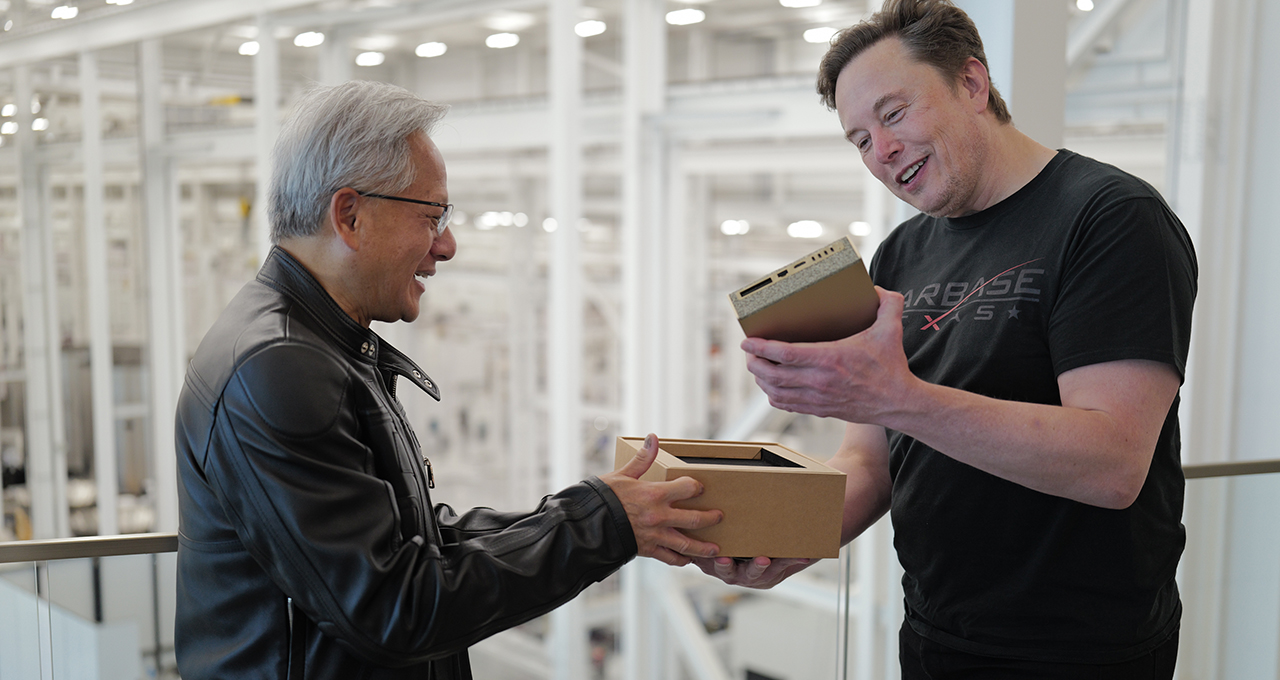
Elon Musk says he would welcome Jensen Huang at one of his companies if Nvidia’s board decides to push out its longtime chief executive.
On Wednesday evening, the financial account ZeroHedge posted “Elon please hire Jensen” on X. Musk replied roughly two hours later: “That would be an honor.” Neither Huang nor Nvidia had responded publicly as of Wednesday night.
Musk’s reply came as Nvidia’s board met to decide Huang’s future. The Wall Street Journal reported that directors were preparing to oust him following reports of two extramarital relationships. One involves Alice Huang, a Singapore-based businesswoman whom U.S. intelligence officials reportedly believe was working for China’s Ministry of State Security. The New York Times separately reported a relationship with Kimberly Powell, Nvidia’s vice president of health care. Huang acknowledged being unfaithful in a memo to employees on Sunday but gave no details.
@zerohedge That would be an honor
— Elon Musk (@elonmusk) November 12, 2026
Under Nvidia’s bylaws, a majority of its 11 directors can remove the CEO with or without cause. Bloomberg reported that the board has been working with an outside firm on possible replacements and may name an interim chief, with CFO Colette Kress seen as the likely pick. Nvidia shares fell more than 8 percent in extended trading, according to CNBC, and the company is scheduled to report quarterly earnings on November 17.
Musk has more riding on Nvidia’s leadership than most tech executives. In August, he told investors on SpaceX’s first earnings call as a public company that it would build its AI infrastructure exclusively on Nvidia hardware, calling Vera Rubin “the best architecture.” SpaceX is also working with Nvidia on the compute payload for Starmind, its planned orbital AI constellation. In October, SpaceX said it had a binding commitment for a roughly $40 billion lease of Vera Rubin GPUs and related equipment, with the leases expected to begin in the first half of 2027.
The scale of that dependence is already enormous. On its Q3 call, SpaceX said it was bringing roughly 200,000 to 220,000 Nvidia GB300 GPUs online each month and expects 2.5 to 3 GW of nameplate compute by the end of the year. That buildout is now reaching new sites like the proposed $24 billion power plant and supercomputer campus at Starbase.
The relationship between the two executives also goes back nearly a decade. Huang has often told the story of personally delivering Nvidia’s first DGX-1 AI supercomputer to Musk in 2016, when no other customer wanted one. “Nobody wanted to be part of it, except for Elon,” Huang said on the Joe Rogan Experience last December.
Musk did not say what role Huang might fill, and his reply stops short of a formal offer. Huang co-founded Nvidia in 1993 and still owns about 3.6 percent of its stock, so any move to a Musk company would depend on whether, and how, he leaves the chipmaker he has run for more than three decades.
Elon Musk
SpaceX’s Anthropic deal has a catch, and Elon Musk just addressed it
Elon Musk says SpaceX’s Anthropic compute deal cuts both ways after Chamath floats higher prices.
Elon Musk pushed back on Sunday against the idea that SpaceX’s compute contract with Anthropic is a one way bet, after venture capitalist Chamath Palihapitiya argued the company could use a termination clause to charge the AI lab far more.
“It works both ways, of course. If compute becomes plentiful and cheap, SpaceX revenue will drop. No crying in the casino for either party,” Musk wrote on X Sunday evening, replying to a clip of Palihapitiya’s comments shared by AI commentator Rohan Paul.
On the All-In podcast released Sunday, Palihapitiya said either side can walk away from the agreement on 90 days’ notice. If data center supply tightens, he argued, SpaceX could exercise that option and bring the contract back at two to three times the current price, and Anthropic would have little choice but to accept. He called it “the kingmaking move,” according to BigGo Finance.
The clause itself is not new. SpaceX disclosed in its IPO filings in May that Anthropic would pay $1.25 billion per month for dedicated capacity at its Colossus clusters through May 2029, nearly $45 billion in total, with both companies able to terminate on 90 days’ notice, as Teslarati reported at the time. SpaceX’s later compute deals with Google and Reflection AI carry similar exit terms.
What has changed is the political backdrop. Palihapitiya’s thesis rests on incoming Democratic governors pulling tax incentives for data centers and slowing new construction. In Texas, Gov.-elect Gina Hinojosa campaigned on a moratorium on new data center approvals, and Deutsche Bank analysts warned last week that SpaceX’s Texas compute capacity could face delays. SpaceX and Tesla shares both fell after the midterm results.
A slowdown would favor companies that already own capacity. SpaceX acquired xAI in February and has been renting data centers to outside AI labs before the space is needed for Grok. At the Baron Investment Conference on Friday, Musk said SpaceX was “getting 50 billion a year for 35 billion dollar investments” and that it can bring a data center online in eight or nine months, compared to two and a half years for competitors. He also said SpaceX is tracking toward an annualized revenue rate above $100 billion in December, with a “best guess” of $500 billion by December 2027.
Musk’s reply points to the other side of the clause. Anthropic has signed large compute agreements with Amazon, Google and Microsoft, and if that capacity comes online faster than new construction slows, the AI lab would have its own leverage to renegotiate or leave. Musk has called Anthropic “obviously currently the leader in AI,” and it remains one of SpaceX’s largest compute customers.
SpaceX shares rose more than 2 percent in overnight trading late Sunday after closing Friday at $134.27, according to Stocktwits.
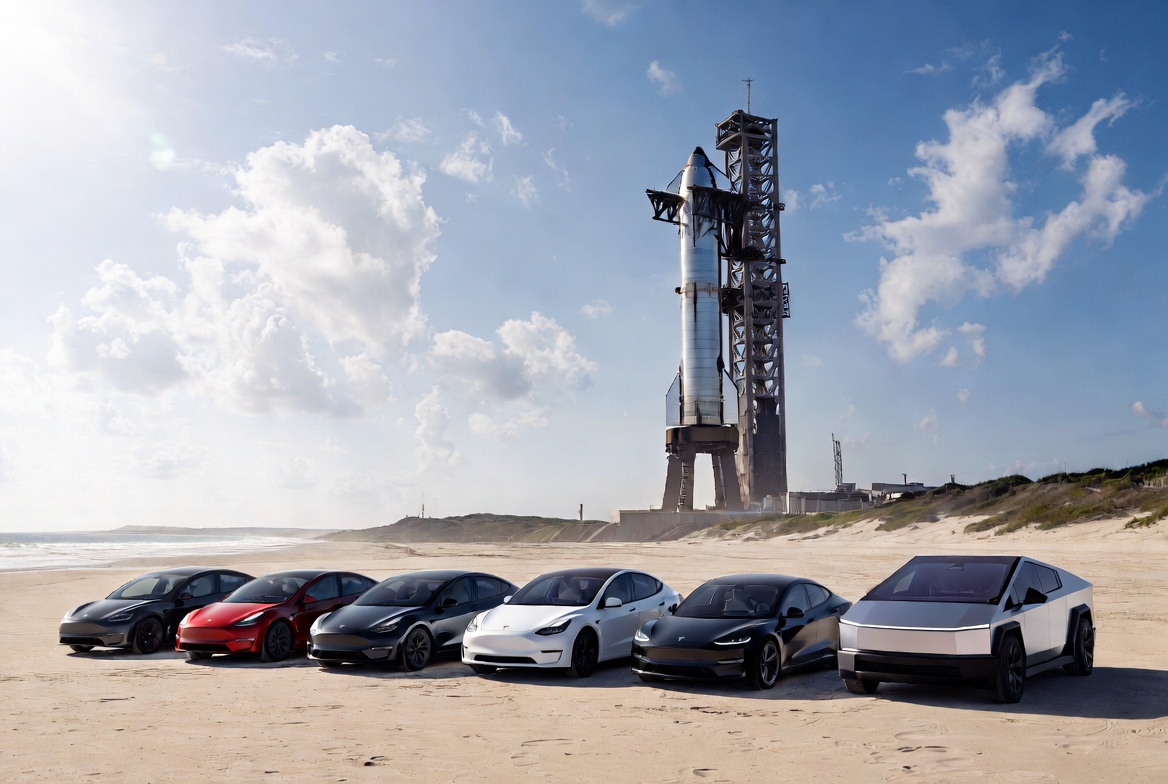
Tesla and SpaceX shares fell on Wednesday after Democrats swept both chambers of Congress. The decline stood out as broader market securities recovered and turned positive, while both of Musk’s publicly traded companies lagged.
CEO Elon Musk already joked about the unsuccessful campaigning for the Republicans, but now the new party will make pretty drastic changes to how it handles Tesla and SpaceX, and those companies will adjust their outlook.
Let’s take a deeper look.
Tesla ($TSLA)
Tesla shares traded lower during the regular session after Democrats secured both the House and Senate. The stock was down 2.32 percent at around 1:45 p.m. on the East Coast, trading at around $389.30.
The pressure is tied to more than the raw scale of Musk’s political spending, estimated at $450–474 million this cycle with roughly $224 million directed at Texas. In that state, Tesla now faces a Democratic governor and a Democratic senator after Gina Hinojosa unseated Greg Abbott and James Talarico defeated Ken Paxton.
The Austin Gigafactory, Robotaxi pilot programs in multiple Texas cities, and any related AI compute expansion sit under a new state executive who campaigned against certain corporate subsidies and floated a moratorium on new data-center construction.
Federally, Democratic control of key committees opens the door to deeper examination of Tesla’s autonomous-driving safety record, federal energy-storage and manufacturing incentives, and the national-security implications of any combination with SpaceX.
Investors are also weighing whether the company’s historically close alignment with the prior Republican leadership will invite slower permitting, additional hearings, or tighter rules on Full Self-Driving deployment.
For Tesla, the political shift adds near-term friction around state permitting and federal regulatory approvals for autonomy and energy storage. A potential merger with SpaceX may face slower review even if it proceeds.
Core growth drivers such as vehicle deliveries, energy deployments, and robotaxi rollout remain intact, yet the stock now carries a higher political-risk premium that could weigh on valuation until the company demonstrates workable relationships with the new Texas leadership and congressional majorities.
SpaceX ($SPCX)
SpaceX shares also declined in live trading on November 4 following the Democratic midterm sweep. The stock traded at $134.97, down 4.49 percent. The drop occurred even as broader indexes stabilized, highlighting a company-specific reaction to the election outcome.
Musk’s large contributions, concentrated in Texas races that both companies lost, place SpaceX’s Starbase launch facility and headquarters under a new Democratic governor.
At the federal level, Democratic control of Congress enables greater scrutiny of NASA, the Department of Defense, and other contracts that support a meaningful share of revenue, along with reviews of Starlink national-security uses and any Tesla merger. Analysts have noted that empowered committees can hold hearings and request documents on these relationships.
For SpaceX, the results raise the risk of delayed contract awards, higher compliance costs, and tighter constraints on AI and satellite infrastructure expansion, particularly in Texas where a data-center moratorium has been discussed.
A merger with Tesla could encounter political friction that slows integration of launch, connectivity, and autonomy capabilities.
While Starlink growth and launch cadence continue as primary drivers, the company faces a more contested path for federal funding and state-level operations, requiring management to rebuild ties with the new congressional majorities and Texas leadership to limit the overhang.

Nvidia’s board meets on Jensen Huang, and Elon Musk already has an answer

Starlink Mini 2 arrives with one feature for true off-grid connectivity


