News
Tesla FSD (Supervised) v14.2.2 starts rolling out
The update focuses on smoother real-world performance, better obstacle awareness, and precise end-of-trip routing, among other improvements.

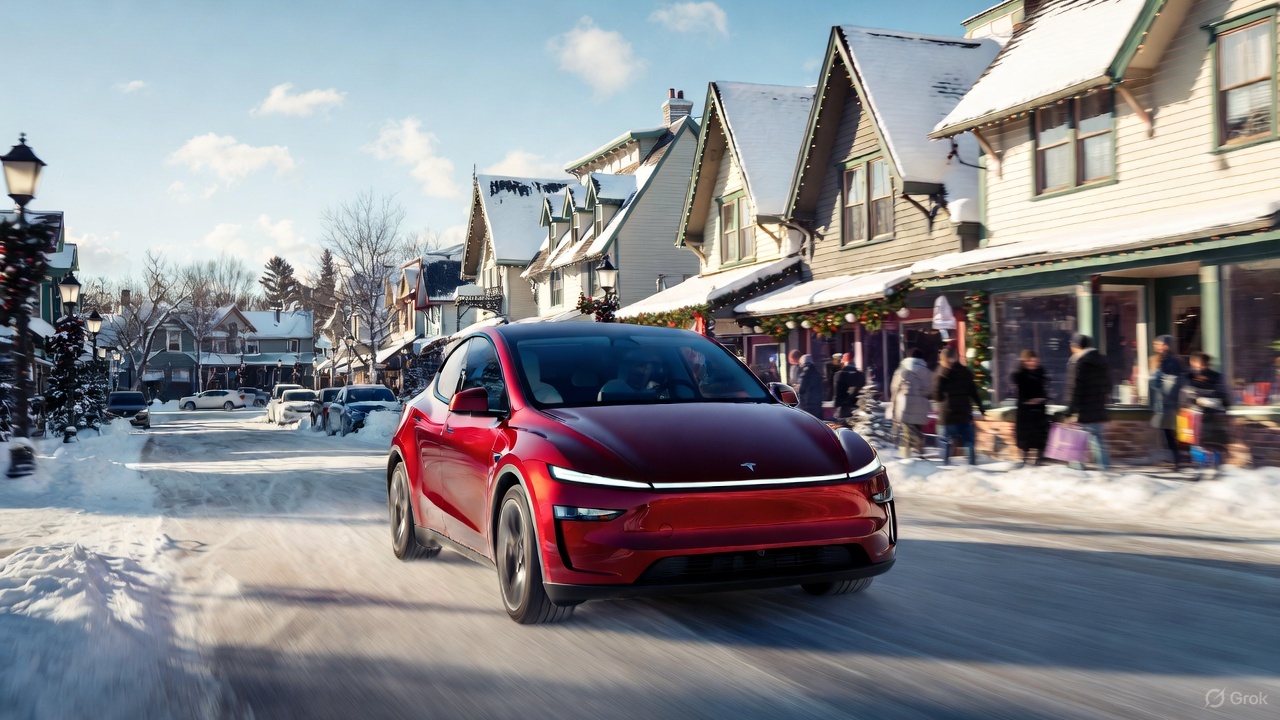
Tesla has started rolling out Full Self-Driving (Supervised) v14.2.2, bringing further refinements to its most advanced driver-assist system. The new FSD update focuses on smoother real-world performance, better obstacle awareness, and precise end-of-trip routing, among other improvements.
Key FSD v14.2.2 improvements
As noted by Not a Tesla App, FSD v14.2.2 upgrades the vision encoder neural network with higher resolution features, enhancing detection of emergency vehicles, road obstacles, and human gestures. New Arrival Options let users select preferred drop-off styles, such as Parking Lot, Street, Driveway, Parking Garage, or Curbside, with the navigation pin automatically adjusting to the user’s ideal spot for precision.
Other additions include pulling over for emergency vehicles, real-time vision-based detours for blocked roads, improved gate and debris handling, and extreme Speed Profiles for customized driving styles. Reliability gains cover fault recovery, residue alerts on the windshield, and automatic narrow-field camera washing for new 2026 Model Y units.

FSD v14.2.2 also boosts unprotected turns, lane changes, cut-ins, and school bus scenarios, among other things. Tesla also noted that users’ FSD statistics will be saved under Controls > Autopilot, which should help drivers easily view how much they are using FSD in their daily drives.
Key FSD v14.2.2 release notes
Full Self-Driving (Supervised) v14.2.2 includes:
- Upgraded the neural network vision encoder, leveraging higher resolution features to further improve scenarios like handling emergency vehicles, obstacles on the road, and human gestures.
- Added Arrival Options for you to select where FSD should park: in a Parking Lot, on the Street, in a Driveway, in a Parking Garage, or at the Curbside.
- Added handling to pull over or yield for emergency vehicles (e.g. police cars, fire trucks, ambulances).
- Added navigation and routing into the vision-based neural network for real-time handling of blocked roads and detours.
- Added additional Speed Profile to further customize driving style preference.
- Improved handling for static and dynamic gates.
- Improved offsetting for road debris (e.g. tires, tree branches, boxes).
- Improve handling of several scenarios, including unprotected turns, lane changes, vehicle cut-ins, and school buses.
- Improved FSD’s ability to manage system faults and recover smoothly from degraded operation for enhanced reliability.
- Added alerting for residue build-up on interior windshield that may impact front camera visibility. If affected, visit Service for cleaning!
- Added automatic narrow field washing to provide rapid and efficient front camera self-cleaning, and optimize aerodynamics wash at higher vehicle speed.
- Camera visibility can lead to increased attention monitoring sensitivity.
Upcoming Improvements:
- Overall smoothness and sentience.
- Parking spot selection and parking quality.



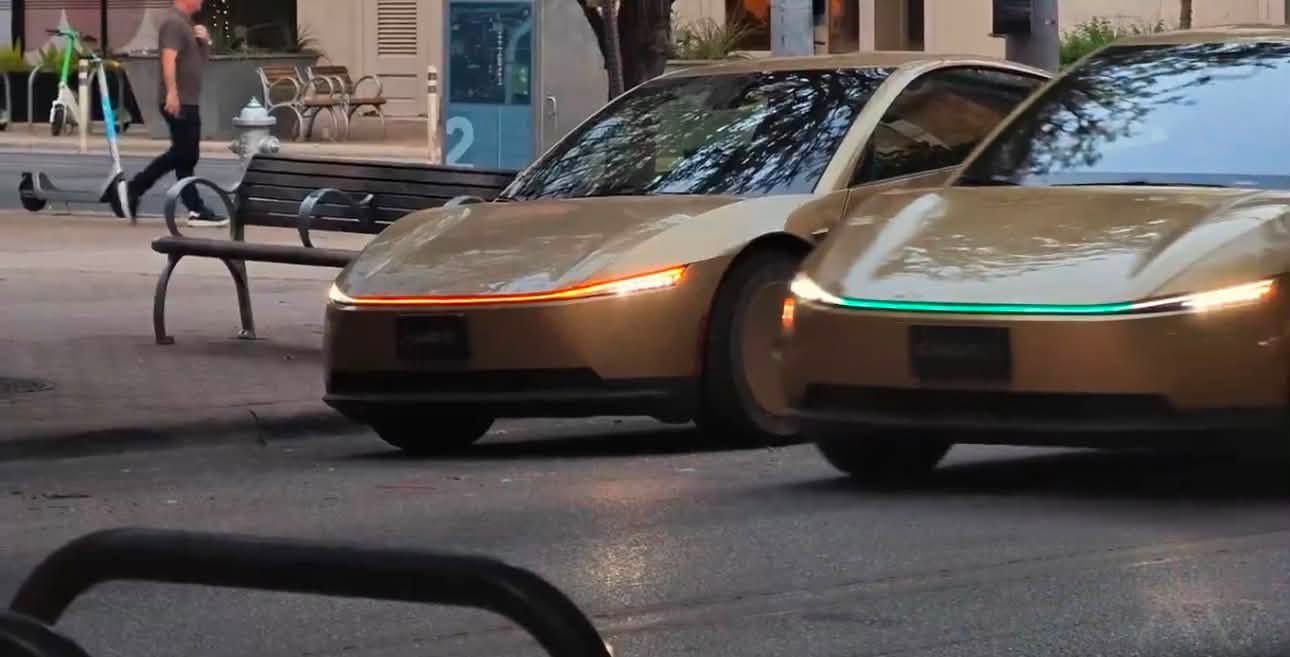
Tesla Cybercab is using a unique strategy for picking up the correct rider, which is a crucial part of ride-hailing to ensure people end up in the right place and are charged the correct price.
Cybercab will utilize an RGB strip in its front light bar that will illuminate in a variety of different colors to mark itself.
This identifying mark will also appear in the Robotaxi app, giving riders in the same location a notable distinction in an effort to avoid any confusion regarding who should get in each vehicle.

🚨 Tesla is using different light bar colors to help riders understand which vehicle is theirs
Pretty cool strategy pic.twitter.com/eGMpEMeRpc
— TESLARATI (@Teslarati) August 27, 2026
Other ride-hailing services use similar strategies: Lyft and Uber rides are recognizable through driver identity, vehicle type and color, as well as license plate. Waymo will display the rider’s initials on top of the vehicle, letting them know that the specific vehicle for them has arrived.
Tesla’s strategy is unique and interesting, but there are some flaws. Cybercab’s main purpose is aimed toward being an autonomous ride for all, including those who have disabilities like being blind or even color blind.
Tesla will likely have something in the pipeline for those who cannot see colors or have limited vision. There will definitely be multiple ways to identify which vehicle is the one that “you” specifically ordered.
Cybercab is set to start giving public rides next Thursday, September 3, in Austin, as it announced a dedicated event last week and invited many members of the Tesla community.
Additionally, members of the public will be invited as well. Tesla has been offering employee rides in Cybercab for nearly two months.
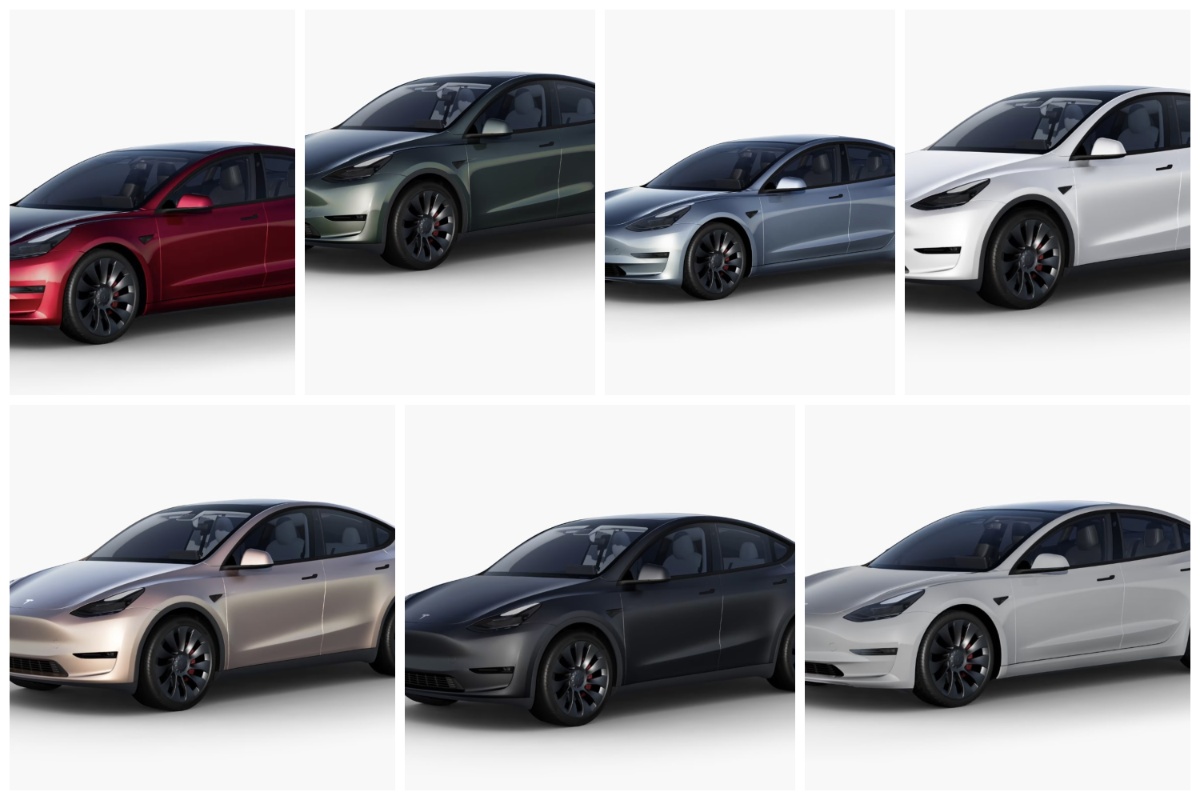
Tesla has said goodbye to one customization option for its vehicles: the wrap service it launched several years ago.
After launching an in-house wrap service in August 2020 for the first time in China. In the U.S., it launched in October 2023. Tesla continued to expand the program and adjust it with better pricing and fewer options for the Cybertruck.
By December 2023, it was giving owners of the Model 3, Model Y, and the Cybertruck the opportunity to give their vehicle a fresh look with a vinyl wrap.

Tesla revamps in-house vinyl wrap service with better pricing
It was only available in five locations: Costa Mesa, Oceanside, Santa Clara, West Covina, all in California, and Seattle, Washington.
However, Tesla made some big adjustments to its shop, and the wrap service is officially gone:
Tesla has made a LOT of changes to its online shop recently — price increases, price cuts, new options, and several products being removed entirely.
Some of the biggest increases are wheel covers. 👀
📈 PRICE INCREASES
• 2017-2023 | Model 3 Aero Wheel Cover — Style: Refresh…— Phoenix Self-Driving 🐦🔥 (@PhoenixFSD) August 25, 2026
Wraps are very popular across the Tesla lineup, especially since the company offers relatively few colors. Many choose to wrap their Teslas with interesting colors, patterns, or even finishes, turning their cars from glossy to satin or matte.
However, Tesla’s wrap service was so limited geographically that it never really had a chance to get off the ground or compete with local shops. Every area in the United States is now overflowing with detailing shops, mobile detailers, and other automotive specialists, many of whom perform wrap services.
Tesla’s service was confined to the Pacific time zone and only spanned across two states. It was never going to be something Tesla was a major competitor in, nor was it going to disrupt the wrapping industry. Now that the program has ended, it seems pretty ideal to believe it was always going to be a short-term thing.
Along with the wrap service, Tesla removed several other products, but nothing too crazy. The Model 3 Door Pocket and Cupholder Liners, the Model S 19″ Magnetite Wheel and Winter Tire Package, Model X/Y Ski/Snowboard Carrier for Hitch Rack, Tesla’s Electric Summer Party Tee, and the Electric Summer Tee were the other items the company totally eliminated from its online shop.
News
Tesla Robotaxi fleet gets a brain upgrade ahead of Cybercab launch event
Tesla’s Robotaxi service now runs longer hours nationwide as its unsupervised fleet quietly grows larger.

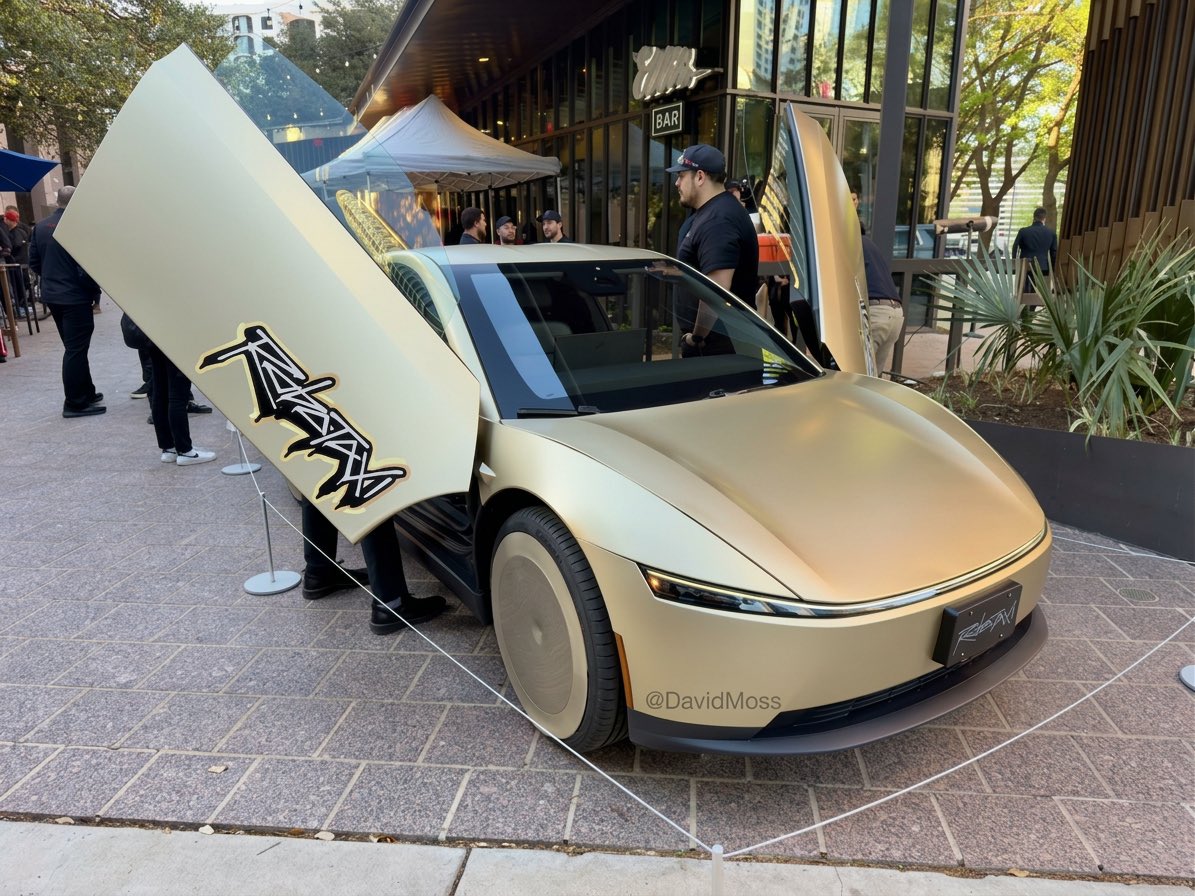
Tesla’s Robotaxi service just got easier to catch, with the company’s official Robotaxi account noting that rides are now available from 6 a.m. to 10 p.m., seven days a week, across its operating footprint. The account also said its unsupervised fleet is “a lot bigger” than before, though without specifics. The bigger change is what Tesla says upgraded intelligence in vehicle distribution and routing is what’s actually cutting wait times, not a new Full Self-Driving version.
While Tesla did not name the team behind the upgrade, the language points to its AI and fleet software group rather than the driving stack itself. Vehicle distribution and routing in Robotaxi has functioned mostly as a dispatch problem with the software deciding which idle car goes to which rider, and how far it has to travel to get there. “Upgraded intelligence” suggests a smarter version of that dispatch logic, likely using demand forecasting to position idle cars near where riders are about to request them rather than reacting once a request comes in. Tesla’s AI division has built similar prediction systems for other parts of the business, including the neural networks that power FSD itself, so applying that same approach to fleet logistics would be a natural extension rather than a new discipline for the team.
Robotaxi now runs 6am to 10pm, 7 days/week
Unsupervised fleet is a lot bigger
Also, upgraded intelligence in vehicle distribution & routing means you wait less pic.twitter.com/UFZ4bqg2dZ
— Tesla Robotaxi (@robotaxi) August 26, 2026

Tesla is also about a week away from a separate robotaxi milestone. The company plans to launch Cybercab, its purpose built two seat robotaxi with no steering wheel or pedals, in Austin on September 3. Cybercab has been giving employees rides on public and private roads for weeks, and the September event is expected to fold those vehicles into the existing Robotaxi fleet within days of the launch.
Thank you so much @Tesla for inviting us to the Cybercab launch in Austin! 🤠 pic.twitter.com/F1rAR8zd5O
— TESLARATI (@Teslarati) August 22, 2026
Austin previously ran Robotaxi from 6 a.m. to 2 a.m. as of last September, a schedule set before the service expanded into Dallas, Houston, Miami, Tampa, Orlando and the Bay Area. Wednesday’s post did not specify whether that extended overnight window still applies in Austin specifically or whether 6 a.m. to 10 p.m. is now the standard across every market. Tesla’s post, visible on its official Robotaxi account, framed the change simply as fewer riders waiting around for a car.
Whether the wider hours hold once Cybercab enters the fleet next week is the next thing worth watching. Tesla has tended to expand Robotaxi in increments, first geofence, then hours, then fleet size, and each step so far has arrived without much advance notice.

Tesla Cybercab uses a unique strategy for picking up the right rider

Tesla ends in-house wrap service that always seemed like a short-term program


