Elon Musk
Elon Musk confirms xAI’s purchase of five 380 MW natural gas turbines
The deal, which was confirmed by Musk on X, highlights xAI’s effort to aggressively scale its operations.

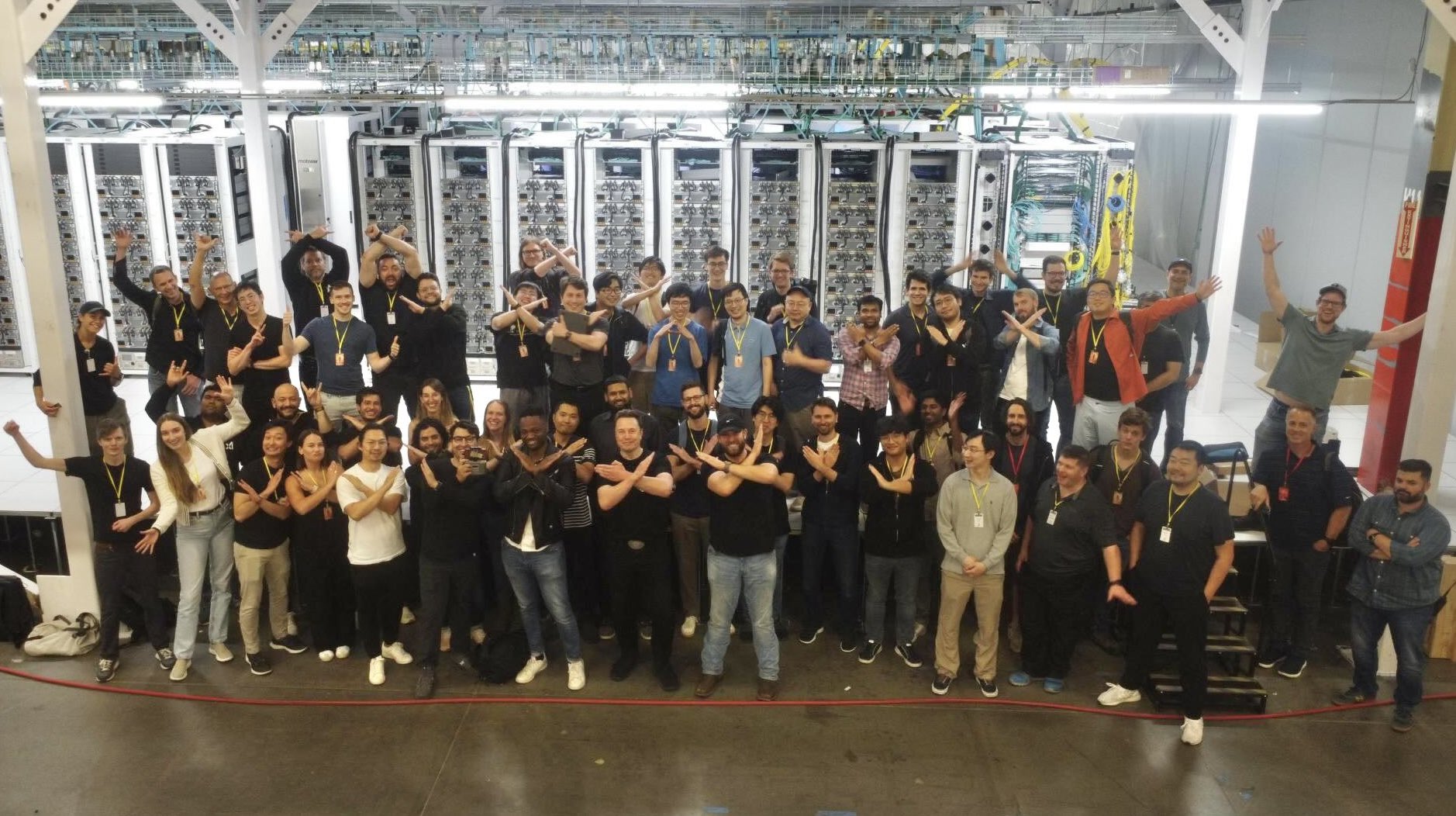
xAI, Elon Musk’s artificial intelligence startup, has purchased five additional 380 MW natural gas turbines from South Korea’s Doosan Enerbility to power its growing supercomputer clusters.
The deal, which was confirmed by Musk on X, highlights xAI’s effort to aggressively scale its operations.
xAI’s turbine deal details
News of xAI’s new turbines was shared on social media platform X, with user @SemiAnalysis_ stating that the turbines were produced by South Korea’s Doosan Enerbility. As noted in an Asian Business Daily report, Doosan Enerbility announced last October that it signed a contract to supply two 380 MW gas turbines for a major U.S. tech company. Doosan later noted in December that it secured an order for three more 380 MW gas turbines.
As per the X user, the gas turbines would power an additional 600,000+ GB200 NVL72 equivalent size cluster. This should make xAI’s facilities among the largest in the world. In a reply, Elon Musk confirmed that xAI did purchase the turbines. “True,” Musk wrote in a post on X.
xAI’s ambitions
Recent reports have indicated that xAI closed an upsized $20 billion Series E funding round, exceeding the initial $15 billion target to fuel rapid infrastructure scaling and AI product development. The funding, as per the AI startup, “will accelerate our world-leading infrastructure buildout, enable the rapid development and deployment of transformative AI products.”
The company also teased the rollout of its upcoming frontier AI model. “Looking ahead, Grok 5 is currently in training, and we are focused on launching innovative new consumer and enterprise products that harness the power of Grok, Colossus, and 𝕏 to transform how we live, work, and play,” xAI wrote in a post on its website.


Elon Musk
Elon Musk’s companies made up with Apple but OpenAI still on the hook
Elon Musk’s X Corp and SpaceXAI dropped their Apple antitrust suit, leaving OpenAI as defendant.

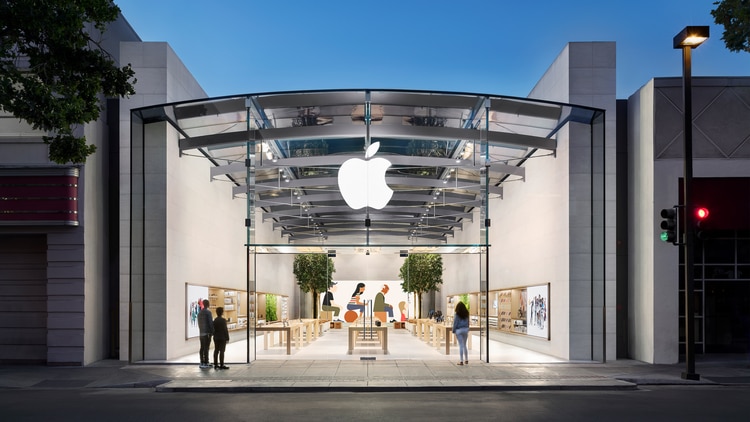
X Corp and SpaceXAI, Elon Musk’s social platform and AI venture, have dropped Apple from the antitrust lawsuit that they filed against the iPhone maker and OpenAI last year. In a filing in the U.S. District Court for the Northern District of Texas, attorneys for X and SpaceXAI moved to dismiss the Apple portion of the case, first reported by Reuters. The filing does not explain why the companies are dropping Apple or say whether a settlement was reached.
X and SpaceXAI say they intend to keep pursuing the case against OpenAI, which remains a defendant. That resolves the dispute with one company while leaving the core allegation intact against the other, with no public accounting of what changed in between.
The lawsuit dates to August 2025, when xAI and X sued Apple and OpenAI, arguing that Apple’s decision to make ChatGPT the only generative AI chatbot built into iOS gave OpenAI an unfair structural advantage. The complaint claimed ChatGPT controlled roughly 80 percent of the chatbot market at the time, while Grok held only a few percent. It sought billions of dollars in damages and asked the court to unwind the arrangement.
Elon Musk’s xAI and X file antitrust suit against Apple and OpenAI over AI exclusivity
The filing followed weeks of Musk publicly complaining that Grok and X weren’t appearing in Apple’s “Must Have” App Store section, though Grok ranked second in the Productivity category and X ranked first in News at the time. He accused Apple of “playing politics” and warned of immediate legal action before following through days later.
Apple and OpenAI tried to get the case thrown out, but a federal judge denied both motions in November, ruling the dispute was better suited to summary judgment than an early dismissal. That decision sent the case into discovery, which is presumably what led to Monday’s filing.
Hey @Apple App Store, why do you refuse to put either 𝕏 or Grok in your “Must Have” section when 𝕏 is the #1 news app in the world and Grok is #5 among all apps?
Are you playing politics? What gives? Inquiring minds want to know. https://t.co/3wenLZGtwG
— Elon Musk (@elonmusk) August 11, 2025
The timing is notable given how Musk’s sentiment toward Apple has shifted, with Musk noting that he was open to letting Grok power a revamped Siri after a user suggested Apple replace its aging assistant with xAI’s model.
xAI, the AI venture Musk folded into X Corp last year, has since combined with SpaceX under the SpaceXAI brand. That structure now puts X, Grok and SpaceX’s rocket and satellite businesses under one roof as Musk pushes his AI ambitions beyond chatbots.
OpenAI remains the sole defendant going forward, and Musk’s companies have not said if there’s any changes to those original claims. Apple and OpenAI did not immediately respond to requests for comment on the filing.
Elon Musk
Tesla gives the Roadster an official “Go for launch” demonstration date
Tesla teased an October 1 Roadster reveal, reviving years of delayed SpaceX thruster hover promises.
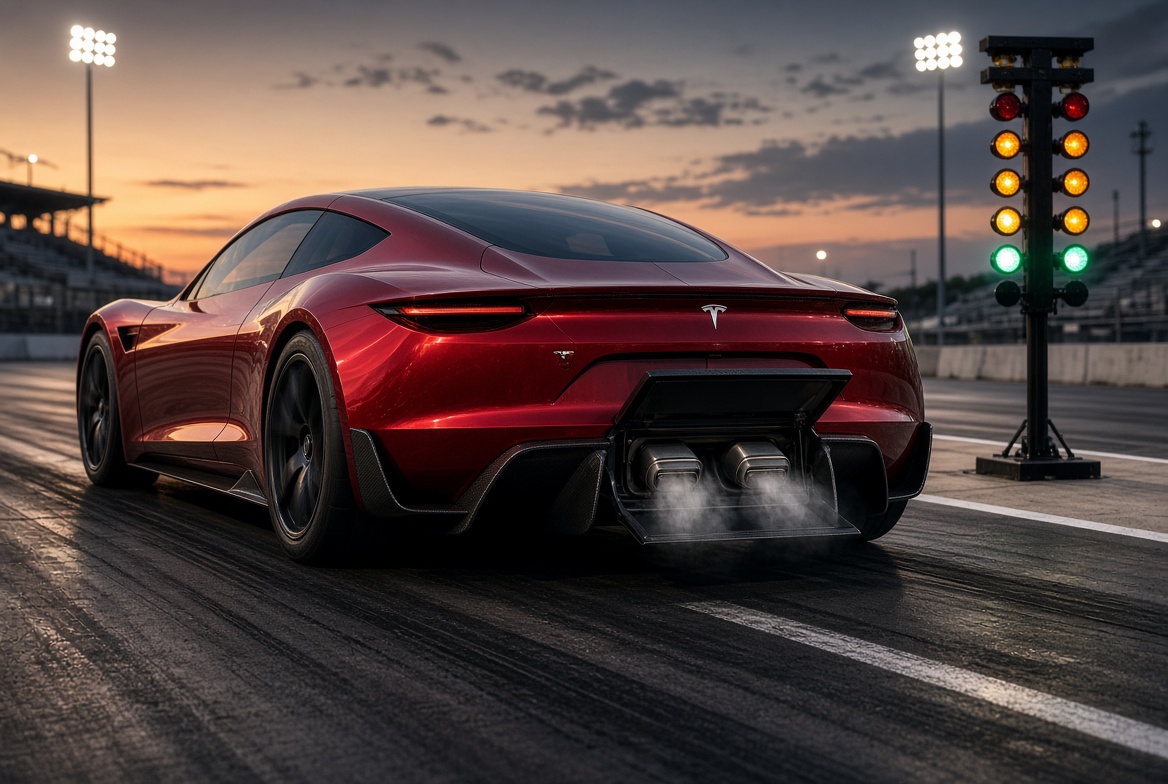
Tesla teased an October 1 event date for its next generation Roadster, posting an image on X Saturday that shows the car lit up like it is sitting on a launch pad, with the date “10.01” stamped across the bottom and the caption “Go for launch.” A countdown clock on Tesla’s Roadster order page now points to the same date, which falls on a Thursday. The company has not said where the event will happen or whether it will be streamed at the moment. Stay with us @Teslarati for live updates.
Go for launch pic.twitter.com/Khu03eiZ04
— Tesla (@Tesla) September 12, 2026
Tesla has since sent formal invitations to reservation holders confirming the event will take place in Waco, Texas, about 90 minutes north of its Austin headquarters, based on a digital ticket shared on X by Sawyer Merritt. Tesla did not name the exact venue, though Waco sits close to SpaceX’s McGregor, Texas, rocket test site, previously reported as the planned location for a Roadster thruster demonstration. The invite sets the reveal for 8:30 p.m. Eastern on October 1, requires RSVPs by midnight on September 16, and limits entry to guests 21 and older. Invitations are non-transferable.
The tease follows nine years of a project defined by unimaginable specs along with slipped dates. Musk first showed the second generation Roadster in November 2017 as a surprise reveal at the end of the Tesla Semi event, promising a 0 to 60 mph time under two seconds, a top speed above 250 mph, 620 miles of range from a 200 kWh battery, and production starting in 2020. At last November’s shareholder meeting, Musk set an April 1 demo date and joked the choice gave him “deniability” if it slipped again, which it did, moving first to late April, then to “a month or so,” then to August.
Tesla Roadster SpaceX Package’s 1.1-second 0-60 mph launch visualized in concept video
Whatever Tesla shows on October 1 is expected to center on the SpaceX developed thruster package Musk has described since 2018. Internally code named A71, a nod to the Lockheed SR-71 Blackbird, the system reportedly uses cold gas thrusters fed by a composite overwrapped pressure vessel, the same tank design SpaceX uses on Falcon 9. Musk has said a thruster equipped Roadster could hit 60 mph in about 1.1 seconds under roughly 2.75 g of launch force, well past the 1.9 second figure quoted for the standard car. That version reportedly will not be street legal and has reportedly been discussed as a limited run sold through a track only program.
The standard Roadster is still expected to carry the original $200,000 base price and $250,000 Founders Series tier, both set when Tesla opened $50,000 and $250,000 reservations in 2017. Tesla VP of Vehicle Engineering Lars Moravy has confirmed production will happen at Gigafactory Texas, with Musk targeting 2027 or 2028, 12 to 18 months after whatever the company demonstrates next month.
Elon Musk
Elon Musk rips ABC News over fatal NYC Tesla crash report
Musk pushed back on NYC Tesla crash coverage, pointing to a pattern of premature blame.
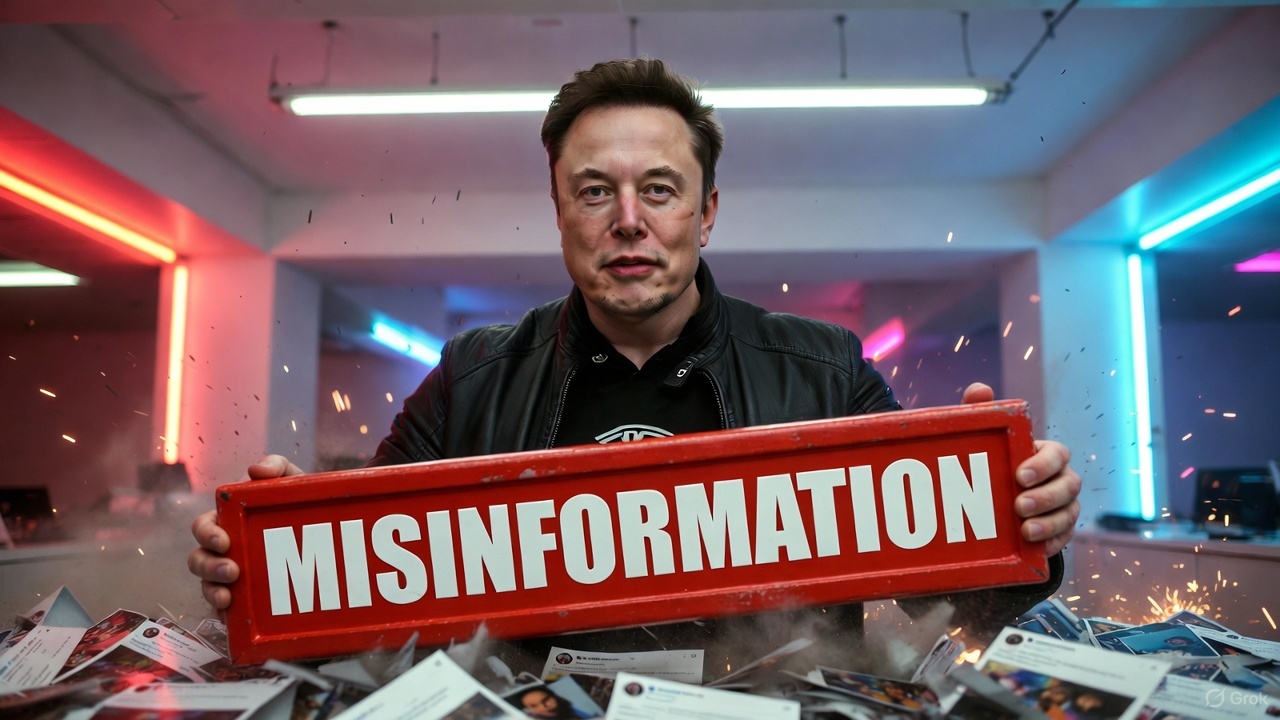
Elon Musk pushed back overnight against media framing of a fatal Tesla crash in Midtown Manhattan, telling a user on X that “it wasn’t the car” and that the vehicle’s Autopilot system had nothing to do with the wreck.
The crash happened just before 3 a.m. Wednesday, when a 2024 Tesla Model Y struck a sidewalk shed outside 315 Madison Ave., a bus stop pole and a mailbox on East 42nd Street, according to the NYPD. The car kept moving several more blocks before stopping near Second Avenue. Both women inside, each 27, were taken to Bellevue Hospital, where the passenger was pronounced dead. The driver was charged with vehicular manslaughter, driving while ability impaired and leaving the scene of an accident.
Police have not attributed the crash to Autopilot or Full Self-Driving in any public statement. The charges point to impairment, not software. Musk’s response followed a since-deleted ABC News post that he said mischaracterized the incident. Replying to a user on X, Musk wrote that if Autopilot had been engaged, “they would not have crashed,” and added that “the legacy media will never forgive Tesla for failing to advertise with them,”
The legacy media will never forgive Tesla for failing to advertise with them
— Elon Musk (@elonmusk) September 9, 2026
It’s a familiar cycle for Tesla. In June, headlines from several national outlets described a fatal crash in Katy, Texas, as happening while the car was “on autopilot,” based on the driver’s own account to police after his Model 3 struck a home and killed a 76-year-old woman. Tesla’s data told a different story when Ashok Elluswamy, Tesla’s head of AI, said the driver had pressed the accelerator to 100% and reached 73 mph in a residential zone. Harris County prosecutors later confirmed the human override and the driver was charged with manslaughter.
Florida Gov. Ron DeSantis pointed to that same Katy crash last month to argue that outlets routinely name Tesla in crash headlines while leaving other automakers unnamed, even after a driver’s own actions are shown to be the cause. A similar pattern played out in 2024, when Musk had to clarify that FSD was never even downloaded onto the Model 3 involved in a fatal Colorado DUI crash, despite a passenger’s claim that an “auto drive feature” was in use.
Tesla has not issued a separate statement on the Manhattan crash beyond Musk’s posts on X. The NYPD’s investigation is ongoing, and no cause for the driver losing control has been released.

Elon Musk’s companies made up with Apple but OpenAI still on the hook

Why SpaceX is finishing another space-internet system that isn’t Starlink


