Elon Musk
SpaceX showcases exactly how it plans to catch Starship next month
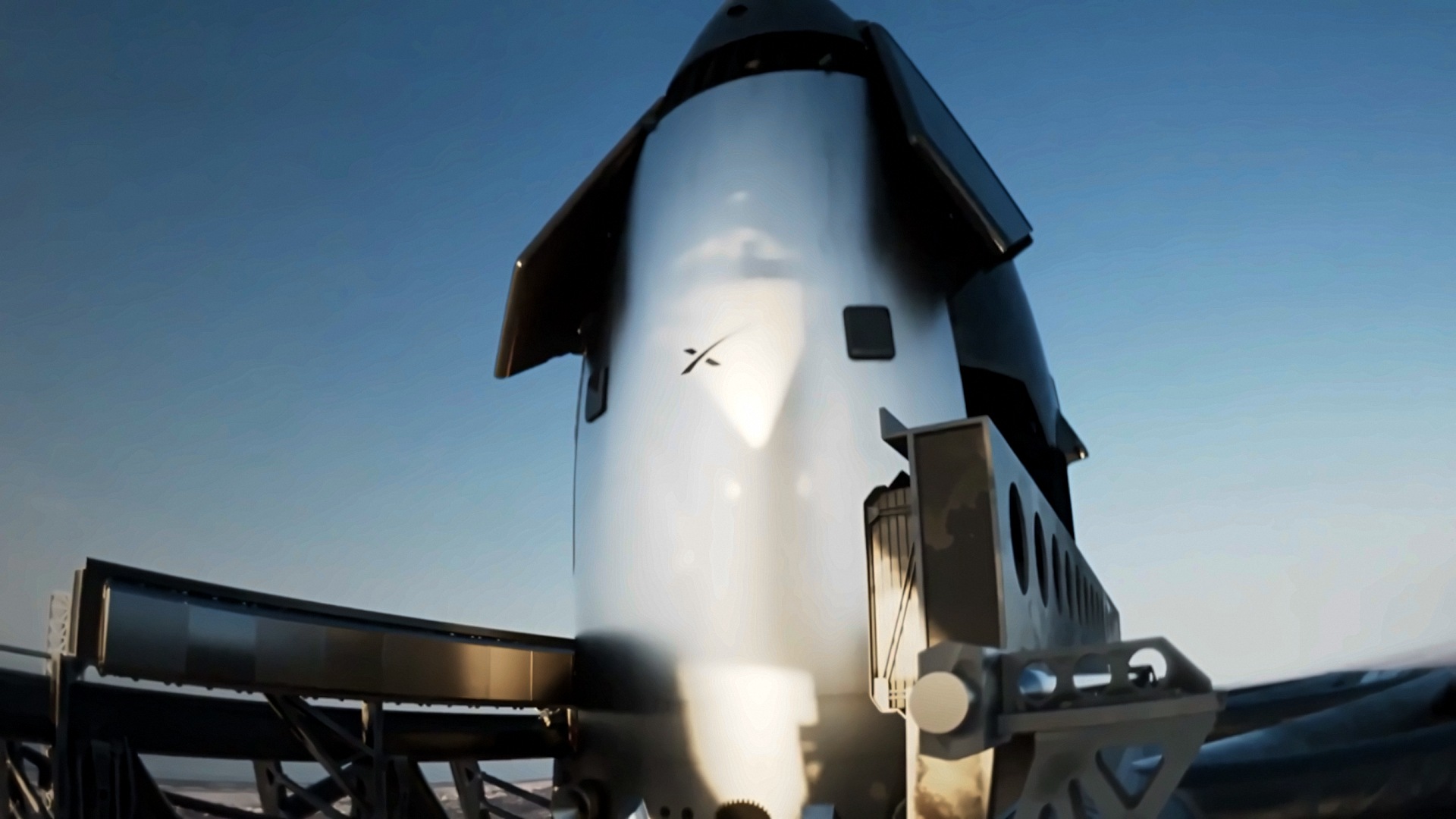
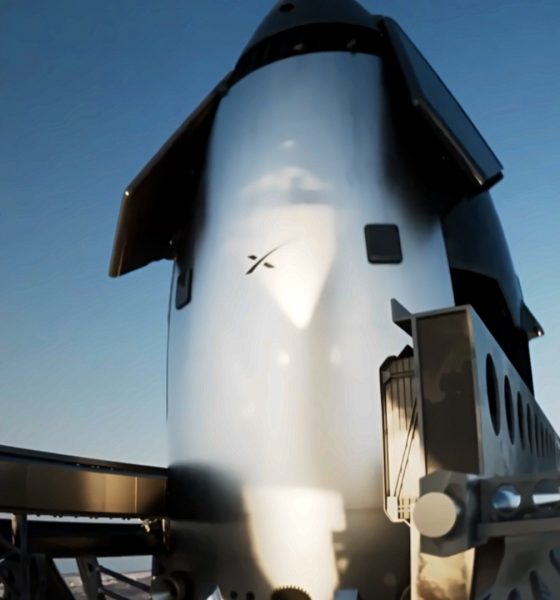
SpaceX played a new Starship Flight 15 simulation showing the ship caught by tower chopsticks.

SpaceX gave its clearest look yet at how it plans to catch a Starship upper stage, playing a roughly 80 second animation of the maneuver during its third quarter earnings webcast on Tuesday. The clip ran under an “Up Next: Ship Catch” banner moments after Elon Musk confirmed that Flight 15, expected next month, will try to catch both the Super Heavy booster and the ship with the launch tower.
The animation opens at ground level, looking up through the launch mount at a tower with its chopstick arms spread wide. It then cuts to the ship gliding back through the atmosphere in its horizontal belly flop position, with its forward and aft flaps steering the descent. A wide shot from the Starbase shoreline follows, where the ship is a small dot in the sky before it swings vertical and drops toward the launch towers. The final shots show the ship sliding down past the top of the tower, a close view of the hardware along its side meeting the arms, and the vehicle hanging in the chopsticks.
SpaceX has released a new Starship tower catch animation for the upcoming Flight 15! https://t.co/kStn01Da8u — Truthful🛰️ (@Truthful_ast) October 20, 2026
Musk called the catch the step that closes Starship’s reuse loop. “If we succeed, it will be the first time that an orbital launch vehicle has been fully recovered,” he said. He put the odds of success on the first attempt at “more likely than not,” and said SpaceX has “a steady stream of Starship flight attempts through the end of this year” if Flight 15 falls short.
The sequence mirrors work SpaceX has already done with real hardware. In September, Ship 42, the vehicle assigned to Flight 15, was lifted by the Pad 2 chopsticks into a simulated catch position, where crews cycled the arms and connected the ship quick disconnect arm while it hung from the tower. NASASpaceflight has since reported that SpaceX removed Ship 42’s engines before its static fire and sent it back for another cryogenic test.
Gwynne Shotwell covered the regulatory side on the same call. After what she called “significant constructive engagement with the FAA,” SpaceX expects the Flight 15 license “to include return to launch site and tower catch for both stages.” Bringing the ship home means reentering toward land instead of the open ocean, which Musk said in February would only happen once the chance of the ship breaking up over land was very low, after two perfect soft landings at sea.
SpaceX has caught Super Heavy with the tower three times, on Flights 5, 7 and 8, but the ship returns from orbit at far higher speed and has never been caught. Flight 14 on September 28 was the first Starship to reach orbit, and it deployed 26 Starlink V3 satellites before splashing down, a mission SpaceX counted as its first revenue flight in the Q3 results it reported Tuesday.
The timing lines up with what Musk told the crowd at Giga Texas earlier this month, when he said Flight 15 would probably launch a little before Thanksgiving and that Flight 16 could refly both stages. On Tuesday’s call he went further, saying Starship should fly weekly at some point in the first half of 2027 and twice weekly or more by the end of next year as SpaceX works toward landing a rocket and launching it again with no refurbishment.



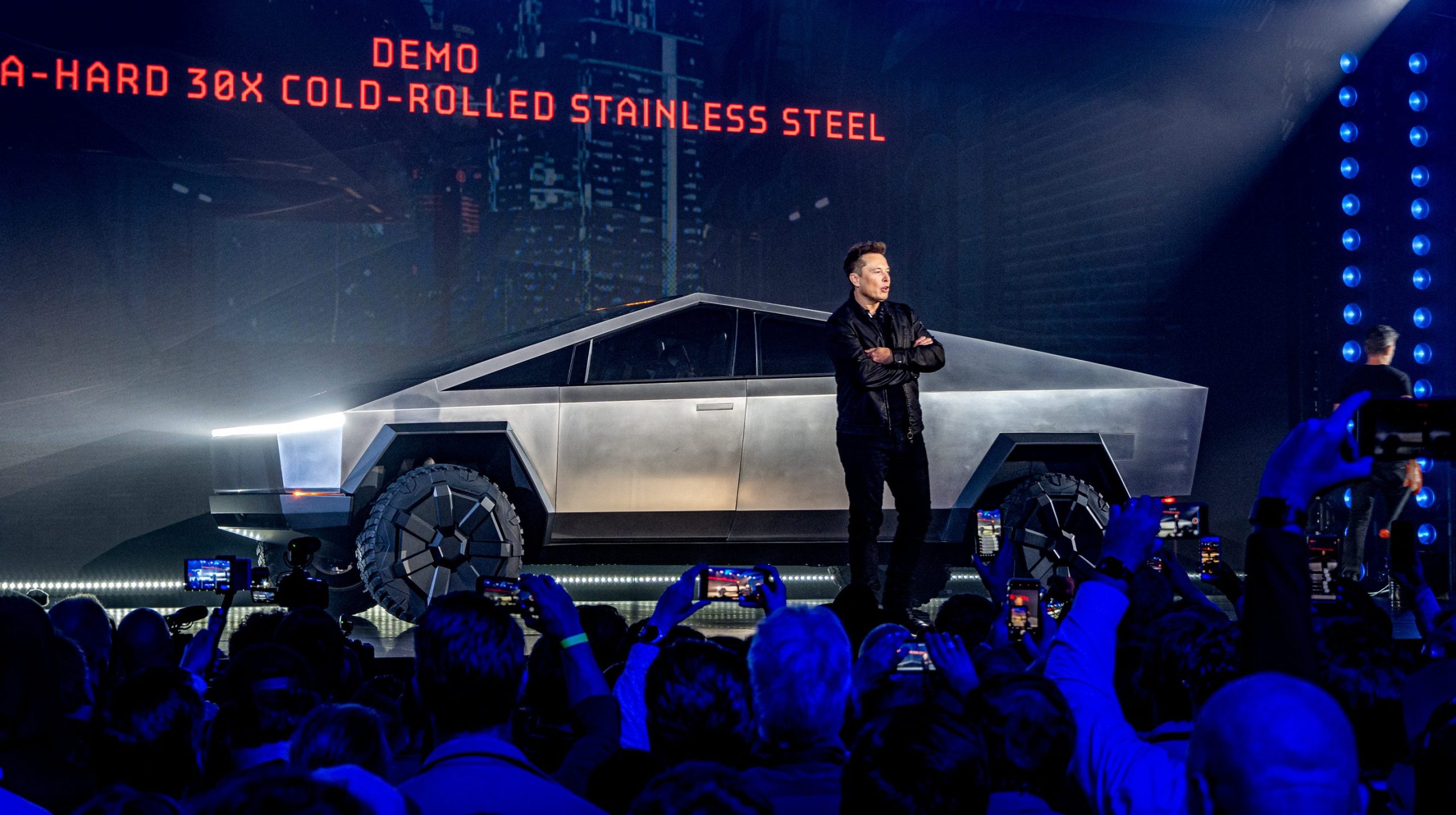
Elon Musk continues to shed more reasons that justify the cancelation of the Tesla Cybertruck, but some of the reasons for the sunset, as well as the process the company is choosing, do not make a lot of sense.
Musk announced last week on X that Tesla would wind down Cybertruck production in mid-2027, a decision that aims to prioritize Cybercab and its importance to the company’s future and passenger transportation as a whole.
But some of what Tesla and Musk are saying does not seem to make much sense. From the process the company is taking with orders to some of the reasoning for the cancelation, the whole situation seems strange.
With that being said: I totally see the merit in prioritizing Cybercab, but I also believe there is room for Cybertruck, a vehicle that has traditionally had low volumes, especially now at its current price point. If it were not for the cancelation, Cybertruck would sell very few units with the recent price adjustments.
Musk Talks Order Rate vs. Production Rate
The first thing that does not make a lot of sense here is the fact that this morning, Musk said that “The Cybertruck order rate far exceeds our production rate. We will try to make as any as possible before shutting down the line in about 8 months, but will have to return deposits for a lot of people.”
The Cybertruck order rate far exceeds our production rate. We will try to make as many as possible before shutting down the line in about 8 months, but will have to return deposits for a lot of people.
This is not a case of Cybertruck being unprofitable, as has been misreported by legacy media, but rather that the opportunity cost of the complexity of Cybertruck is vastly outweighed by the value of incremental Cybercab production.
— Elon Musk (@elonmusk) November 9, 2026
Then why is Tesla STILL accepting orders for the Cybertruck if it already cannot fulfill its order log by mid-2027?
There are so many people ordering Cybertruck that will not receive it. If Tesla already is having trouble seeing how it will build its current orders, why would it allow additional ones?
There are going to be a lot of people who are very upset next June or July, all because they placed an order for a truck that Tesla knew it would not have the time to build. At this point, it seems like a better idea from a customer service standpoint to simply stop accepting orders on a certain date, build those trucks, fulfill those orders, and then close production.
Continuing to accept orders at this point seems wildly strange. If anything, it feels like the $59k Cybertruck orderers will be the ones who get the short end of the stick here, but that’s speculation and just a hunch on my end.
If not Cybertruck, then what?
With only the Model 3 and Model Y available for consumers, meaning the general public, to buy, there is now no utility vehicle in the Tesla lineup, and that is definitely a disappointment.
Ford already washed its hands of the Lightning, which means the Rivian R1T will likely be the best-selling EV pickup on the market, dueling with the GMC Hummer Pickup, Chevy Silverado EV, and the GMC Sierra EV. There are several pickups that are set to hit the market soon, like the Slate EV Truck, and Ford’s new EV pickup, the Fathom.
Tesla could provide some some transparency on what it is planning to do with a future pickup or utility design. Musk said in the past that something much cooler than a minivan will be built. Cries for a full-size SUV have been heard by Tesla, but the company seems to adamant on prioritizing ridesharing vehicles instead of vehicles people want for work, climate, or hobbies.
Some clarity here, past the point of “Tesla is still going to build cars” would be nice. Even a simple, “Yes” response from all the people asking if Tesla will build something larger would be more than enough. We don’t need all the details now, but something would be nice.
Closing Thoughts
More than anything, it is important to note that I do believe Tesla is making a tough decision and one that, from a business standpoint, does make sense. However, I also believe that there is room for the Cybertruck in Tesla’s lineup.
One thing I think it’s worth mentioning is Tesla is not that much different from many companies. They do things that are better for the business that will surely upset consumers. The difference is very few companies have a following like Tesla, so when these things happen, they feel very personal.
Add in the fact that Cybertruck has truly become a symbol of Tesla, and people are even more upset about it.
It will all get figured out, but it’s still very confusing when we step back and take a look at the bigger picture.
Elon Musk
SpaceX’s Anthropic deal has a catch, and Elon Musk just addressed it
Elon Musk says SpaceX’s Anthropic compute deal cuts both ways after Chamath floats higher prices.
Elon Musk pushed back on Sunday against the idea that SpaceX’s compute contract with Anthropic is a one way bet, after venture capitalist Chamath Palihapitiya argued the company could use a termination clause to charge the AI lab far more.
“It works both ways, of course. If compute becomes plentiful and cheap, SpaceX revenue will drop. No crying in the casino for either party,” Musk wrote on X Sunday evening, replying to a clip of Palihapitiya’s comments shared by AI commentator Rohan Paul.
On the All-In podcast released Sunday, Palihapitiya said either side can walk away from the agreement on 90 days’ notice. If data center supply tightens, he argued, SpaceX could exercise that option and bring the contract back at two to three times the current price, and Anthropic would have little choice but to accept. He called it “the kingmaking move,” according to BigGo Finance.
The clause itself is not new. SpaceX disclosed in its IPO filings in May that Anthropic would pay $1.25 billion per month for dedicated capacity at its Colossus clusters through May 2029, nearly $45 billion in total, with both companies able to terminate on 90 days’ notice, as Teslarati reported at the time. SpaceX’s later compute deals with Google and Reflection AI carry similar exit terms.
What has changed is the political backdrop. Palihapitiya’s thesis rests on incoming Democratic governors pulling tax incentives for data centers and slowing new construction. In Texas, Gov.-elect Gina Hinojosa campaigned on a moratorium on new data center approvals, and Deutsche Bank analysts warned last week that SpaceX’s Texas compute capacity could face delays. SpaceX and Tesla shares both fell after the midterm results.
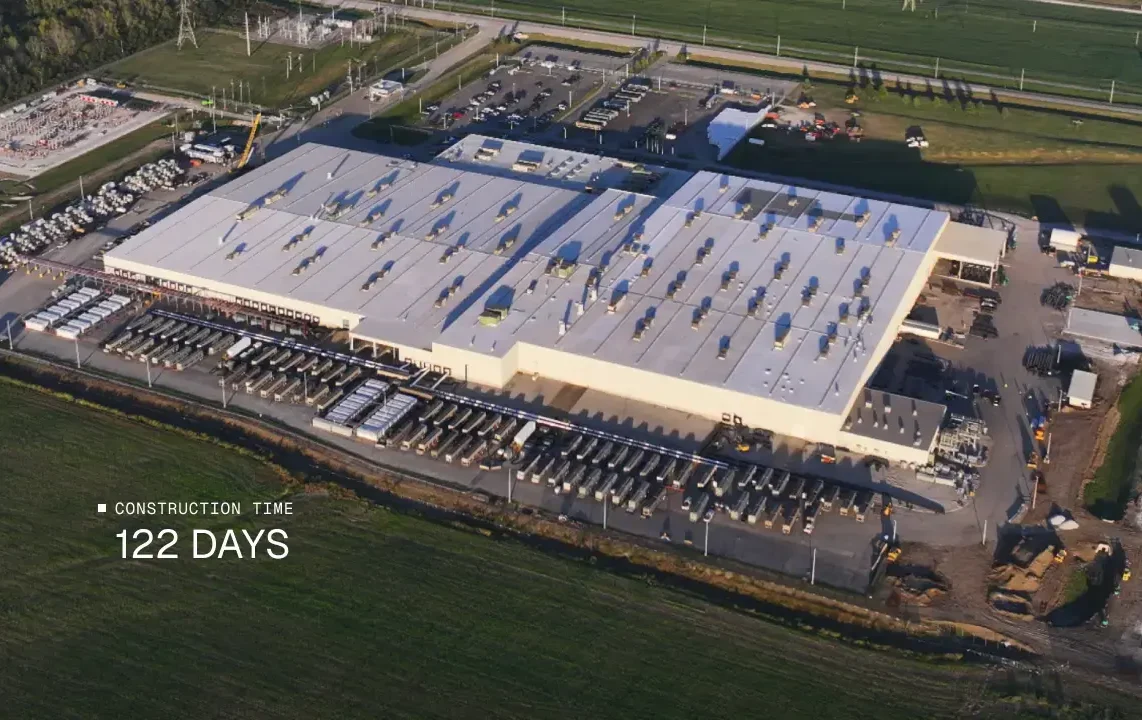
A slowdown would favor companies that already own capacity. SpaceX acquired xAI in February and has been renting data centers to outside AI labs before the space is needed for Grok. At the Baron Investment Conference on Friday, Musk said SpaceX was “getting 50 billion a year for 35 billion dollar investments” and that it can bring a data center online in eight or nine months, compared to two and a half years for competitors. He also said SpaceX is tracking toward an annualized revenue rate above $100 billion in December, with a “best guess” of $500 billion by December 2027.
Musk’s reply points to the other side of the clause. Anthropic has signed large compute agreements with Amazon, Google and Microsoft, and if that capacity comes online faster than new construction slows, the AI lab would have its own leverage to renegotiate or leave. Musk has called Anthropic “obviously currently the leader in AI,” and it remains one of SpaceX’s largest compute customers.
SpaceX shares rose more than 2 percent in overnight trading late Sunday after closing Friday at $134.27, according to Stocktwits.
Elon Musk
Elon Musk spotlights the Starlink rescue that got through where no cell tower could
Elon Musk spotlighted how Starlink helped rescuers reach five people stranded in Kazakhstan’s snowy mountains.
Elon Musk put a spotlight on a mountain rescue in eastern Kazakhstan on Sunday, writing “Starlink saves lives” in response to a post describing how SpaceX’s satellite internet helped five stranded people reach emergency crews.
The post from DogeDesigner, which had been viewed more than 500,000 times by Sunday afternoon, said the group’s SUV broke down about 15 kilometers from the village of Kystau Kurchum in an area with no usable mobile network. Starlink carried their call for help and kept them in contact with rescuers, who used the connection to locate them.
The rescue itself took place in October. Local outlet YK.kz reported on October 22 that Kazakhstan’s Ministry of Emergency Situations responded to the breakdown in the Kurchum district of East Kazakhstan region and noted that the group stayed in touch through Starlink. Rescuers covered roughly 100 kilometers in a Trekol, a low pressure tire vehicle built for snow and marshland, then escorted the disabled SUV back to Kystau Kurchum. Nobody needed medical attention.
Starlink saves lives
— Elon Musk (@elonmusk) November 8, 2026
Conditions in the region were rough at the time. Kazakh broadcaster Channel 7 identified the five as hunters caught in a snow trap and said satellite communication allowed rescuers to pinpoint where they were. A spokesperson for the East Kazakhstan emergency department said a storm warning was in effect and urged residents not to leave populated areas unless necessary. The same weather stranded seven utility workers repairing power lines in the nearby Kuygan rural district, according to Tengrinews.
Kazakhstan has been one of Starlink’s more notable markets in Central Asia. Teslarati reported in 2024 that Starlink was serving 1,731 of the country’s 1,879 schools, with the country’s Education Minister saying it had set a new standard for internet service in schools.
Rescue stories like this one have followed Starlink for years, usually in places where ground networks fail or never existed in the first place. Then Florida CFO Jimmy Patronis called Starlink a “game changer” for search and rescue crews during Hurricane Milton, and SpaceX and T-Mobile switched on Starlink Direct to Cell in North Carolina to push emergency alerts to phones after Hurricane Helene.
The next target is dead zones for people who do not carry a dish at all. SpaceX is building out Starlink Mobile and earlier this week selected Qualcomm to supply core infrastructure for a planned terrestrial 5G network in the United States, which it intends to pair with its next generation satellite constellation.
Sunday’s post is at least the third time Musk has written “Starlink saves lives” on X this week, following identical posts on November 5 and November 7.

Tesla exec hints at a wild fix for Robotaxi’s biggest weather problem

Tesla Robotaxi enters its newest city, reaching San Antonio


