Elon Musk
Tesla hits major milestone with Full Self-Driving subscriptions

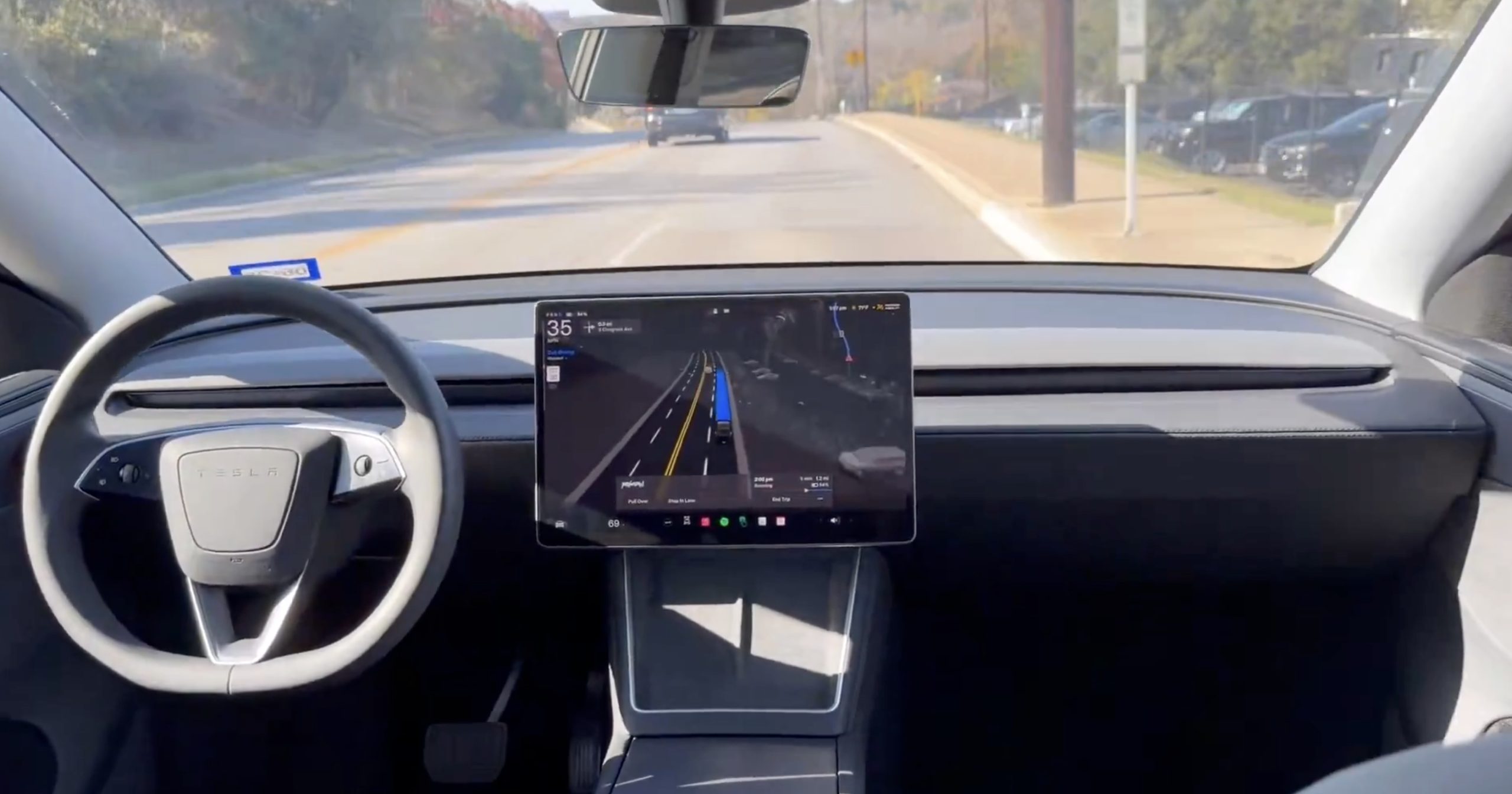
Tesla has announced it has hit a major milestone with Full Self-Driving subscriptions, shortly after it said it would exclusively offer the suite without the option to purchase it outright.
Tesla announced on Wednesday during its Q4 Earnings Call for 2025 that it had officially eclipsed the one million subscription mark for its Full Self-Driving suite. This represented a 38 percent increase year-over-year.
This is up from the roughly 800,000 active subscriptions it reported last year. The company has seen significant increases in FSD adoption over the past few years, as in 2021, it reported just 400,000. In 2022, it was up to 500,000 and, one year later, it had eclipsed 600,000.
NEWS: For the first time, Tesla has revealed how many people are subscribed or have purchased FSD (Supervised).
Active FSD Subscriptions:
• 2025: 1.1 million
• 2024: 800K
• 2023: 600K
• 2022: 500K
• 2021: 400K pic.twitter.com/KVtnyANWcs— Sawyer Merritt (@SawyerMerritt) January 28, 2026
In mid-January, CEO Elon Musk announced that the company would transition away from giving the option to purchase the Full Self-Driving suite outright, opting for the subscription program exclusively.
Musk said on X:
“Tesla will stop selling FSD after Feb 14. FSD will only be available as a monthly subscription thereafter.”
The move intends to streamline the Full Self-Driving purchase option, and gives Tesla more control over its revenue, and closes off the ability to buy it outright for a bargain when Musk has said its value could be close to $100,000 when it reaches full autonomy.
It also caters to Musk’s newest compensation package. One tranche requires Tesla to achieve 10 million active FSD subscriptions, and now that it has reached one million, it is already seeing some growth.
The strategy that Tesla will use to achieve this lofty goal is still under wraps. The most ideal solution would be to offer a less expensive version of the suite, which is not likely considering the company is increasing its capabilities, and it is becoming more robust.
Tesla is shifting FSD to a subscription-only model, confirms Elon Musk
Currently, Tesla’s FSD subscription price is $99 per month, but Musk said this price will increase, which seems counterintuitive to its goal of increasing the take rate. With that being said, it will be interesting to see what Tesla does to navigate growth while offering a robust FSD suite.


Elon Musk
X changed how everyone gets paid, and this lawsuit shows why
X sued a Bitcoin account network over fake payouts as its creator pay model shifts

Elon Musk’s X has taken a Bitcoin-focused engagement ring to court, and the case doubles as a receipt for how differently the platform pays creators today. The company filed suit in the High Court of England and Wales against Vivek Kumar Sen and Zamyang Sherpa, alleging the pair ran six accounts, including @Vivek4real_, @Bitcoin_Teddy and @TrendingBitcoin, as one coordinated operation to fake the kind of engagement that used to translate directly into money.
According to the filing, first reported by Gizmodo, the accounts posted near identical “BREAKING” crypto headlines seconds apart, in one case 11 seconds, then had three more handles like, reply to and repost the material to manufacture what X called “a false appearance of genuine, human communication and interaction.” X says the scheme pulled in at least £207,384, about $278,000, and pegs its own investigation and remediation costs at another £75,000. The accounts were suspended August 18. X general counsel James Burnham announced the case on X last weekend, writing that the company “will act forcefully to protect our platform and the earnings of genuine creators.” Musk’s own reaction, posted shortly after, was three words: “Don’t mess with 𝕏.”
Don’t mess with 𝕏 https://t.co/HSmd5hL6aQ
— Elon Musk (@elonmusk) September 21, 2026
The timing lines up with a a recent update to how X pays its creators. The program these accounts allegedly gamed, Creator Revenue Sharing, launched in mid 2023 and paid out based on how much a post got engaged with. Originality was never part of the formula, which is exactly how the platform ended up flooded with recycled clips, copy pasted “BREAKING” posts and replies engineered purely to farm reactions from paying subscribers.
X tried patching the model more than once, including an April cut to aggregator payouts and a March regional weighting change that Musk personally paused hours after it was announced. X retired Creator Revenue Sharing for good on September 7 and opened its replacement, Original Content Rewards, the next day.
Today, we’re launching Original Content Rewards.
The reality is that Revenue Sharing had reached a point where its incentives were misaligned. Creators should be focused on bringing net new content to the platform instead of maximizing payouts. We could have kept adding more… pic.twitter.com/VJIxqlPrjm
— Allegra Jacchia (@allegrajacchia) August 7, 2026
The new math is stricter. Payouts now come only from qualified impressions, meaning unique Home Timeline views from Premium subscribers where at least half the post is visible, and replies no longer count toward eligibility at all. Copied posts, reuploaded media and reposts without meaningful changes are explicitly excluded. Allegra Jacchia, senior product manager for Creators at SpaceXAI, which now runs X’s product and AI work following xAI’s acquisition of the platform, put it bluntly, saying the goal is to reward creators who bring original ideas and perspective, “not those who have become best at gaming the system.”
Read that way, the lawsuit isn’t really about six crypto accounts. It’s X putting a dollar figure on what the old incentive structure cost, then suing to collect it right as the new one goes live. For live updates on how the case and the new rewards program shake out, follow @Teslarati on X.
Elon Musk
Why automakers keep turning down Elon Musk’s Tesla Full Self-Driving offer
Elon Musk confirms no automaker has ever accepted Tesla’s offer to license Full Self-Driving software.
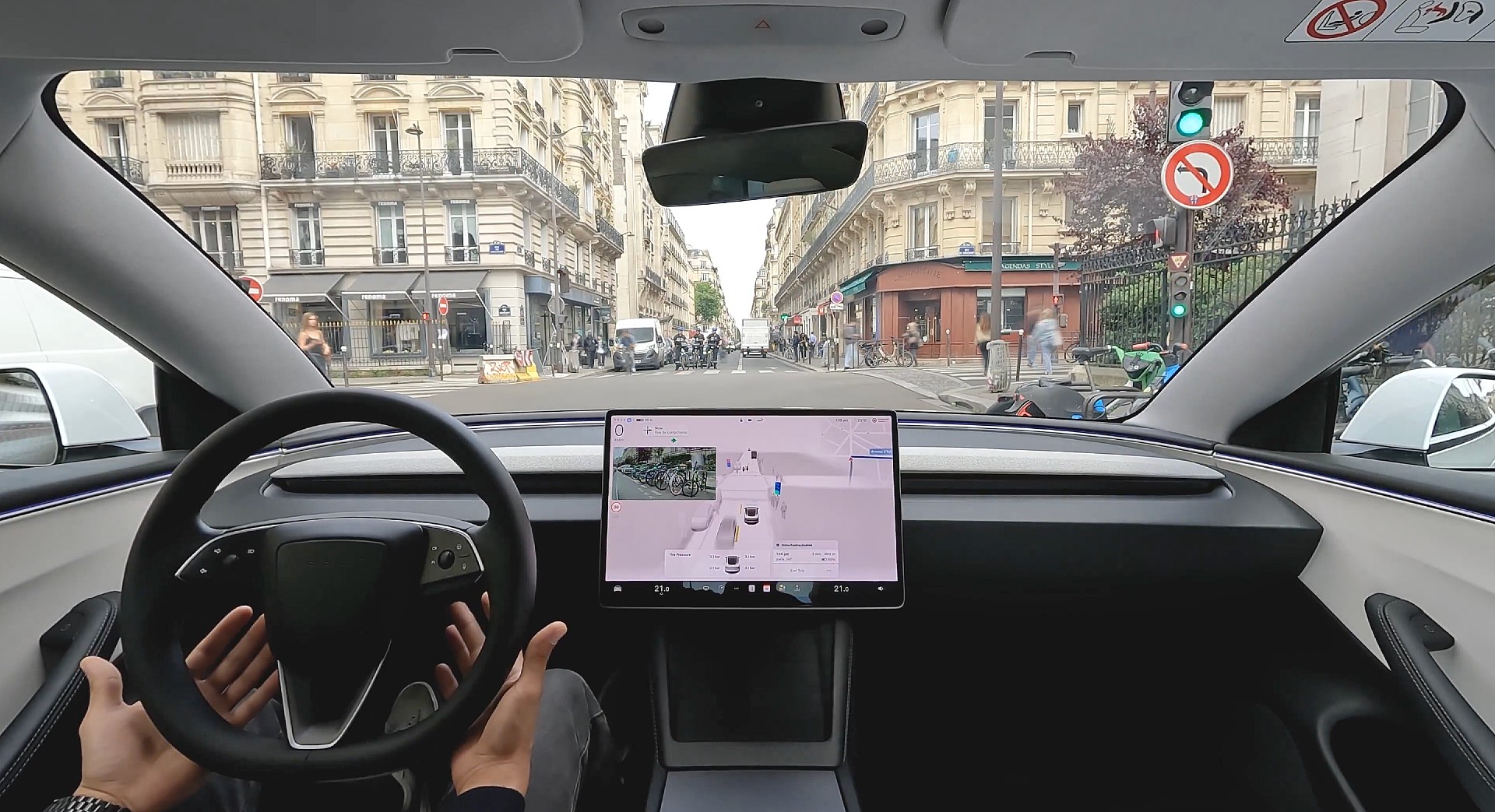
Elon Musk gave a brief answer on X Monday that confirmed that Tesla’s standing offer to license Full Self-Driving to other automakers still has zero takers. Sawyer Merritt wrote that “Tesla has for years openly invited other automakers to license FSD. None of them have accepted,” responding to a prediction from Boom Supersonic founder Blake Scholl that Tesla would eventually open FSD the way it opened its Supercharger network to rival brands. Musk’s reply to Merritt was one word: “Exactly.”
It is not the first time Musk has made this point. He said something similar in November, when he called legacy automakers reluctance to adopt FSD “crazy,” and Tesla has floated the offer publicly since at least 2021. Scholl’s prediction touches on something real. Once NACS became the de facto charging standard, adoption from Ford, GM, Rivian and others followed within about a year. FSD licensing was supposed to work the same way once Tesla built enough of a lead that switching made sense for everyone.
Tesla has for years openly invited other automakers to license FSD. None of them have accepted. https://t.co/kgz4idpoUM
— Sawyer Merritt (@SawyerMerritt) September 22, 2026
The case for licensing now is stronger than it was two years ago. Waymo and Zoox are logging hundreds of thousands of unsupervised autonomous miles, along with Tesla’s own Robotaxi fleet. Every automaker still selling driver assist systems that lag FSD has given the robotaxi conversation to Tesla, Waymo and Zoox by default. Licensing FSD would let a GM or a Ford compete on the same field without spending a decade and billions of dollars building a stack from scratch, the same argument Tesla made when it opened the Supercharger network to bring more EVs onto its chargers.
But FSD is not a connector standard. As one reply to Musk’s post pointed out, licensing FSD is not a software license the way NACS was a plug spec. It requires adopting Tesla’s eight camera layout and its onboard compute architecture, meaning a licensee’s cars would effectively become Tesla hardware wearing someone else’s badge. That is the visible obstacle. The less visible one is data. A licensed FSD stack would report back the same telemetry Tesla collects from its own fleet, giving Tesla a continuous read on how a competitor’s cars are actually driven, where they struggle, and how often drivers intervene. For an automaker trying to build its own autonomy program, or simply trying to keep its build quality and safety record private, handing Tesla that visibility could be a bigger cost than the hardware bill. It is the reason the Supercharger comparison only goes so far. Opening a charging plug cost Tesla very little. Opening FSD would cost a rival something it cannot get back.
Elon Musk
Elon Musk drops a surprise update on Boring Company’s next big dig
Musk says Boring Company could shrink the Austin to San Antonio drive to just minutes.
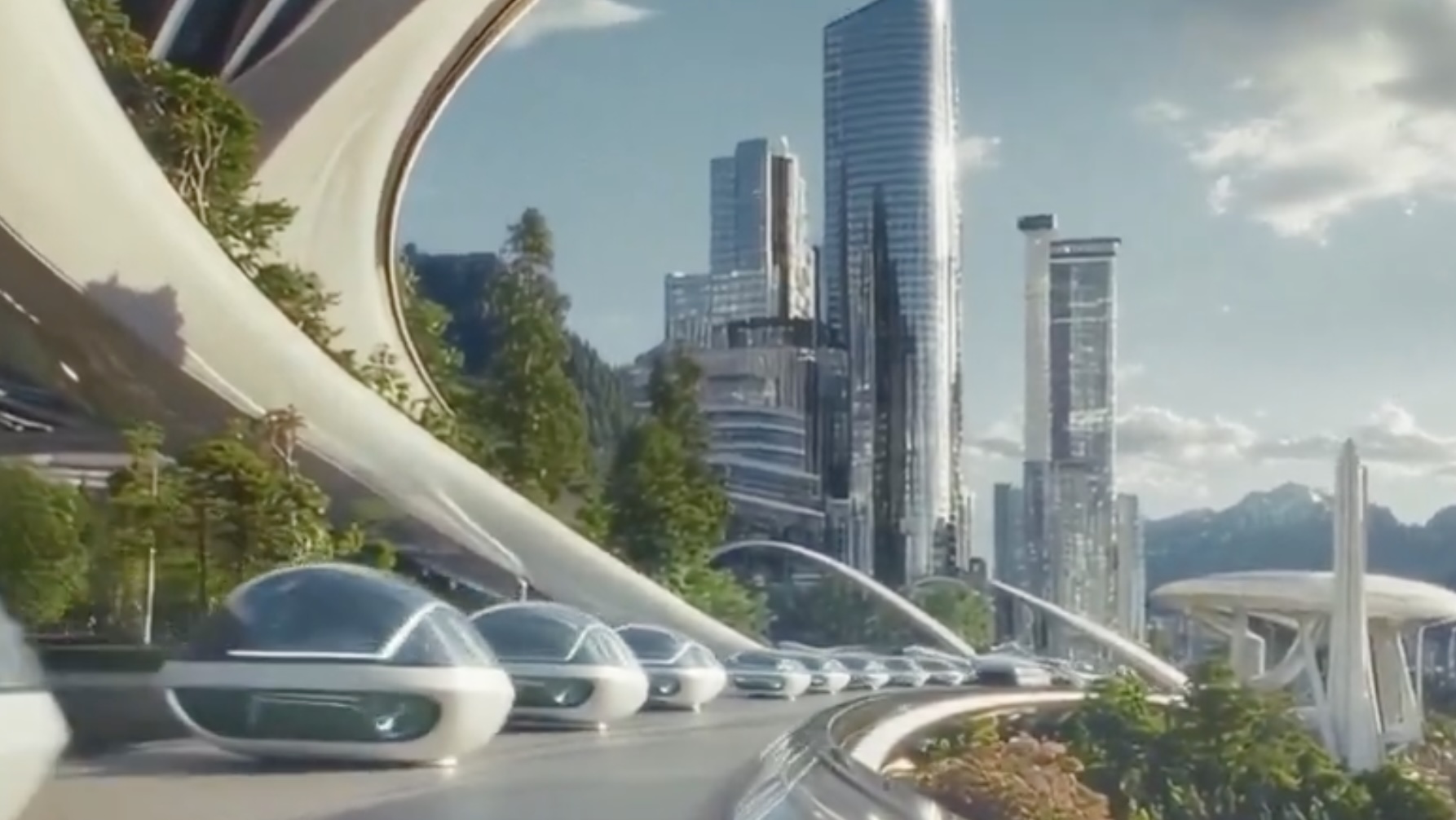
Elon Musk says The Boring Company is working on what he called “a simple, precursor Hyperloop” tunnel connecting Austin and San Antonio, targeting speeds above 200 mph and cutting a drive that can take up to two and a half hours down to a consistent under 30 minutes. Musk posted the idea on X Sunday, in a reply to a repost of an AI generated video imagining a science fiction future with human colonies on other worlds, which he shared with the line “This is the future we shall bring into being.”
This is the future we shall bring into being pic.twitter.com/8aD0w8MDVc
— Elon Musk (@elonmusk) September 20, 2026
The Boring Company’s own account picked up the idea in the same thread, adding a detail about how the trip would actually work: “Because Loop/Hyperloop is express (i.e. no intermediate stops), one could travel from an Austin parking lot to a favorite San Antonio restaurant in about 30 minutes. As long as they both have Loop stations.” That framing ties the proposed intercity link to the same station model the company already runs in Las Vegas, where riders enter the tunnel network through small, garage style stops rather than one central terminal.
This is not the company’s first run at the Austin to San Antonio corridor. Boring Company floated tunnels between the two cities as far back as 2021, and later competed for a separate San Antonio Loop project tied to the airport before that specific bid stalled. Pitches for tunnels in Chicago, Los Angeles, and a New York to Washington corridor have followed a similar pattern of big announcement without a shovel in the ground.
What is different this time is the balance sheet, especially since The Boring Company closed a 3 billion dollar funding round led by investors in the United Arab Emirates earlier this month at a valuation near 23 billion dollars, giving the tunneling company more capital to chase speculative projects than it had during its earlier Texas pitches. The company is also mid-build on two other intercity systems it has actually broken ground on, inc;luding a Nashville tunnel linking downtown to the airport, where a second boring machine finished commissioning in June, and its Las Vegas network, where the station count keeps climbing on paper faster than tunnels get dug.
That gap between announcement and execution is the reason to treat Sunday’s post as an opening bid rather than a project. A tunnel spanning roughly 80 miles between two metro areas, running at speeds Boring Company has not demonstrated over any real distance, would dwarf anything the company has built. For now, the Austin to San Antonio Hyperloop exists as a caption under an AI generated space video.

Tesla integrates Grok Bot into its vehicles for the ultimate personal assistant

X changed how everyone gets paid, and this lawsuit shows why


