Elon Musk
What is Digital Optimus? The new Tesla and xAI project explained
At its core, Digital Optimus operates through a dual-process architecture inspired by human cognition.

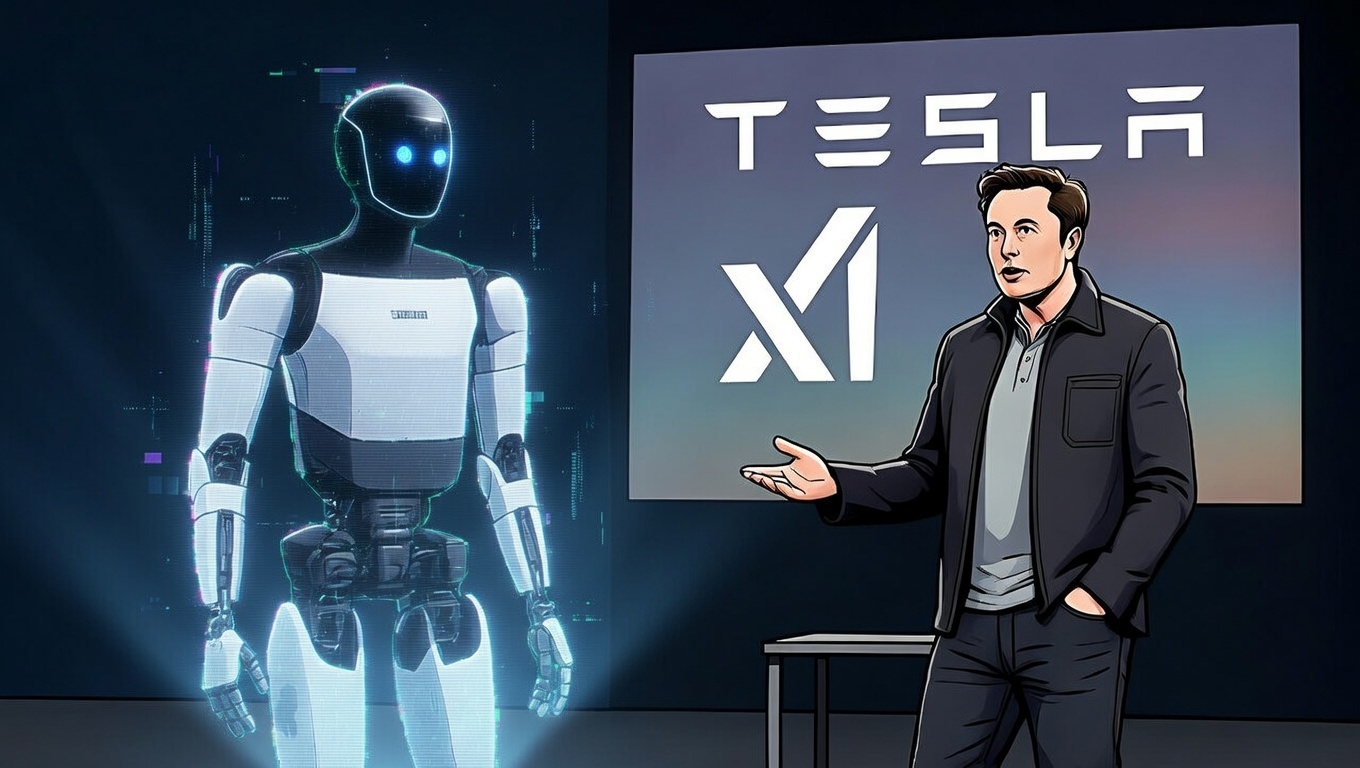
Tesla and xAI announced their groundbreaking joint project, Digital Optimus, also nicknamed “Macrohard” in a humorous jab at Microsoft, earlier this week.
This software-based AI agent is designed to automate complex office workflows by observing and replicating human interactions with computers. As the first major outcome of Tesla’s $2 billion investment in xAI, it represents a powerful fusion of hardware efficiency and advanced reasoning.
At its core, Digital Optimus operates through a dual-process architecture inspired by human cognition.
Macrohard or Digital Optimus is a joint xAI-Tesla project, coming as part of Tesla’s investment agreement with xAI.
Grok is the master conductor/navigator with deep understanding of the world to direct digital Optimus, which is processing and actioning the past 5 secs of…
— Elon Musk (@elonmusk) March 11, 2026
Tesla’s specialized AI acts as “System 1”—the fast, instinctive executor—processing the past five seconds of real-time computer screen video along with keyboard and mouse actions to perform immediate tasks.
xAI’s Grok model serves as “System 2,” the strategic “master conductor” or navigator, providing high-level reasoning, world understanding, and directional oversight, much like an advanced turn-by-turn navigation system.
When combined, the two can create a powerful AI-based assistant that can complete everything from accounting work to HR tasks.
Will Tesla join the fold? Predicting a triple merger with SpaceX and xAI
The system runs primarily on Tesla’s low-cost AI4 inference chip, minimizing expensive Nvidia resources from xAI for competitive, real-time performance.
Elon Musk described it as “the only real-time smart AI system” capable, in principle, of emulating the functions of entire companies, handling everything from accounting and HR to repetitive digital operations.
Timelines point to swift deployment. Announced just days ago, Musk expects Digital Optimus to be ready for user experience within about six months, targeting rollout around September 2026.
It will integrate into all AI4-equipped Tesla vehicles, enabling parked cars to handle office work during downtime. Millions of dedicated units are also planned for deployment at Supercharger stations, tapping into roughly 7 gigawatts of available power.
Oh and it works in all AI4-equipped cars, so your car can do office work for you when not driving.
We’re also deploying millions of dedicated Digital Optimus units in the field at Superchargers where we have ~7 gigawatts of available power.
— Elon Musk (@elonmusk) March 12, 2026
Digital Optimus directly supports Tesla’s broader autonomy strategy. It leverages the same end-to-end neural networks, computer vision, and real-time decision-making tech that power Full Self-Driving (FSD) software and the physical Optimus humanoid robot.
By repurposing idle vehicle compute and extending AI4 hardware beyond driving, the project scales Tesla’s autonomy ecosystem from roads to digital workspaces.
As a virtual counterpart to physical Optimus, it divides labor: software agents manage screen-based tasks while humanoid robots tackle physical ones, accelerating Tesla’s vision of general-purpose AI for productivity, Robotaxi fleets, and beyond.
In essence, Digital Optimus bridges Tesla’s vehicle and robotics autonomy with enterprise-scale AI, promising massive efficiency gains. No other company currently matches its real-time capabilities on such accessible hardware.
It really could be one of the most crucial developments Tesla and xAI begin to integrate, as it could revolutionize how people work and travel.


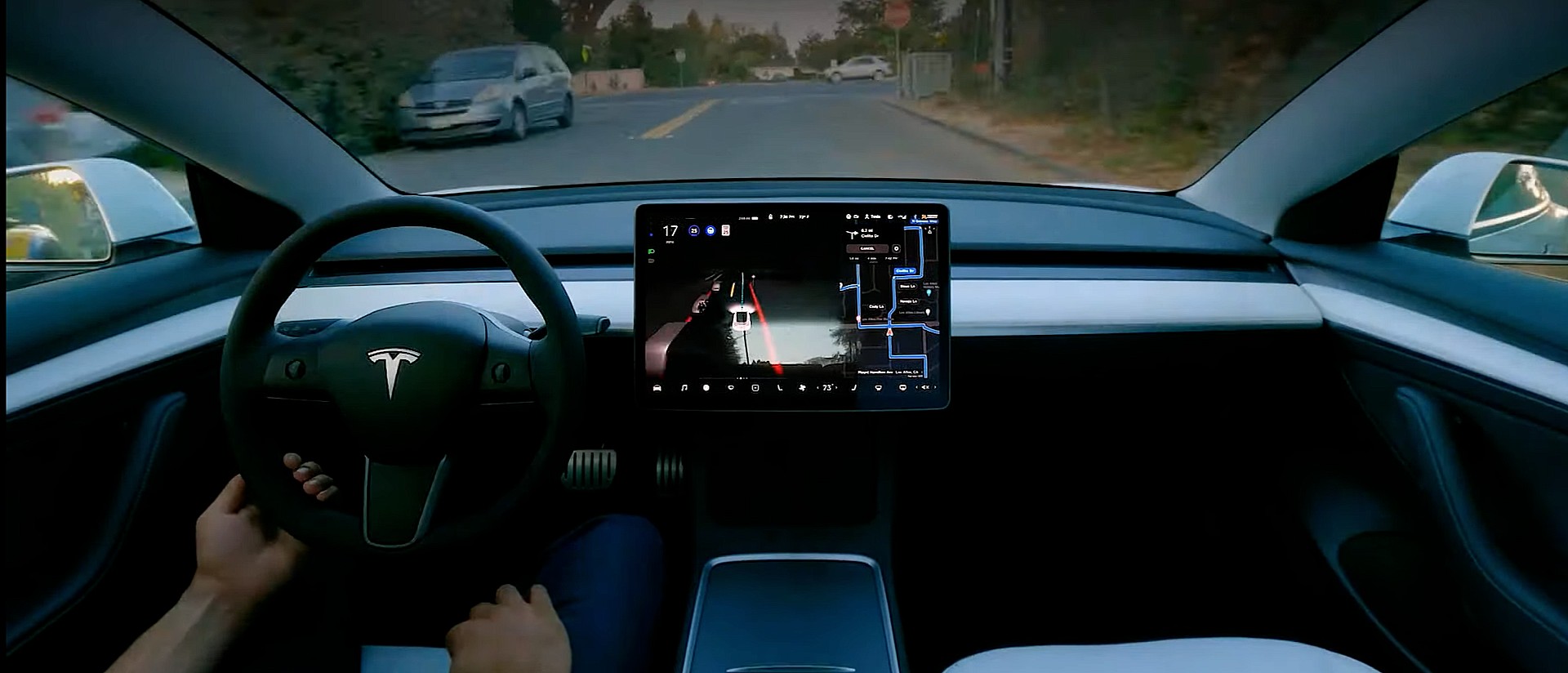
Tesla Full Self-Driving (Supervised) showed a record attach rate at delivery for new vehicles in the third quarter of 2026.
75 percent of new vehicle deliveries in North America included a subscription to FSD software, up from 55 percent in the prior quarter, a 20-percentage-point sequential gain in the company’s most mature market.
Tesla Q3 2026 Earnings results: in-line revenues, slight beat on EPS
Tesla shed light on the Q3 Shareholder Deck that 75 percent of new deliveries came with an FSD subscription:
“FSD (Supervised)⁴ attach rate continued to grow, reaching over 75% of new vehicle deliveries in North America – our most mature market – a nearly twenty percentage point sequential increase. We believe that FSD is driving demand in markets where it is available, and we continue to work with regulators to get it approved in other markets. “
The higher attach rate accompanied strong growth in the overall FSD consumer base, as active subscriptions rose to 1.75 million, a 67 percent year-over-year increase. For the first time, more than half of paid customers are on the monthly subscription, which is priced at $99 per month in the U.S.
People are buying FSD with a car attached, not the other way around
— Elon Musk (@elonmusk) October 21, 2026
The transition to subscriptions has accelerated since Tesla discontinued the one-time purchase option in most markets earlier this year. The recurring model improves revenue visibility and margins compared with large upfront payments. With three-quarters of North American deliveries now including FSD, the software is now an evidently large contributor to Tesla’s economics and ancillary revenue.
Geographic expansion remains important for further gains. FSD is now available in nine countries in the EU, and more than 100,000 customers have driven over 160 million kilometers. Tesla is pursuing broader EU-wide approval, with a related vote expected in December. Similar progress in additional markets could support higher attach rates beyond North America.
These results came as Tesla had a strong quarterly delivery performance of 486,532 vehicles in the quarter, which came with its largest passenger-vehicle backlog in four years. Battery supply continued to limit volume, but the company has pointed to FSD as a clear difference-maker that is helping sustain demand. As supervised capabilities improve, the attach rate will likely continue to improve.
At face value, it is a key measure of how Tesla is converting sales into autonomy progress.
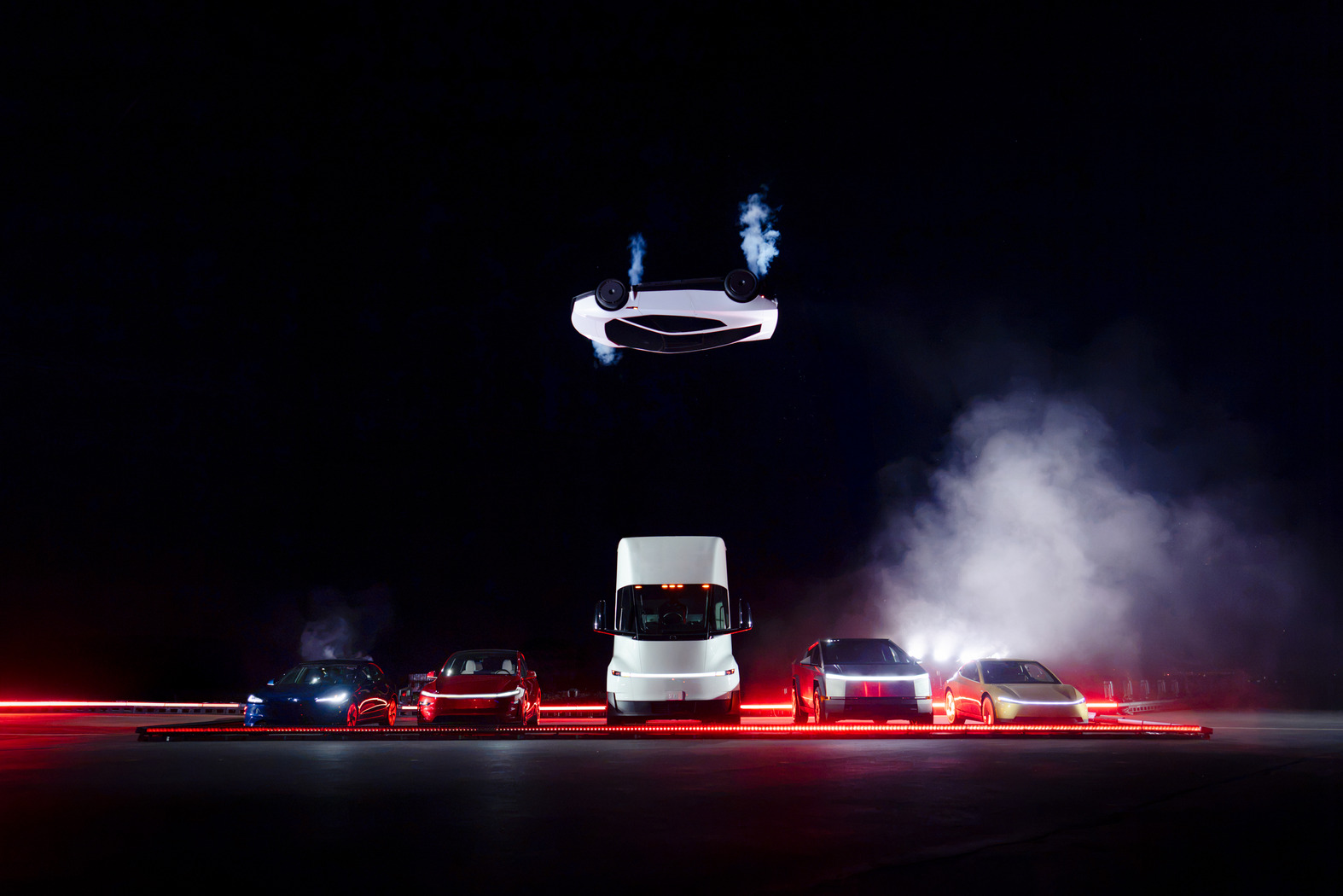
Tesla (NASDAQ: TSLA) reported its earnings for the third quarter of 2026, marking a reasonable performance on the various financial metrics. Tesla still plans to hold a call that will field investor questions at 5:30 p.m. ET, 4:30 p.m. CT.
Here’s where Earnings came in:
- Total Revenues: $28.046 reported vs. $28.34B expected
- Non-GAAP EPS: $0.48 reported vs. $0.45 expected
- Operating Margin: 2.6 % reported vs. 2.5% expected
- Operating Income: $718M reported vs. $721M expected
- Free Cash Flow: $1.531B reported vs. ~-$4.51B expected
Tesla $TSLA Earnings Results:
Revenues: $28.046B
Non-GAAP EPS: $0.48
Operating Margin: 2.6%
Operating Income: $718M
FCF: $1.531B— TESLARATI (@Teslarati) October 21, 2026
Major Takeaways
Full Self-Driving (Supervised)
“FSD (Supervised)⁴ attach rate continued to grow, reaching over 75% of new vehicle deliveries in North America – our most mature market – a nearly twenty percentage point sequential increase. We believe that FSD is driving demand in markets where it is available, and we continue to work with regulators to get it approved in other markets.”
Tesla Semi
“We began volume production of Tesla Semi, our Class 8 heavy-duty truck. The top variant can go 500 miles at full 82,000 lbs gross combination weight while achieving an efficiency of 1.7 kWh/mile. That efficiency allows the Tesla Semi to use a third of the energy used by a comparable diesel truck to haul the same payload. In a transportation market where energy is one of the largest components of total cost per mile, this will provide a meaningful advantage to Tesla Semi operators.”
SI Compute
“We plan to reach 400 MW of SI training compute by the end of the year, supporting the development of both vehicle and humanoid robot autonomy software. Additionally, we continued construction for the Austin Fab, where we plan to start commissioning equipment in 2027.”
Robotaxi
“We began deployment of Cybercab into our Robotaxi fleet in Austin. We reached nearly two million cumulative unsupervised miles for our Robotaxi service as of the end of the quarter. Operating hours in Austin are now 6am to midnight, and we expect to reduce wait times via increased fleet supply and improvement of Robotaxi orchestration algorithms. Grok is available in Cybercab with access to Grok Bot and Connectors, which allows users to manage their inbox, calendars, files, chats and tasks – all hands free via voice command – making Cybercab a mode of transport, a productivity space and, with our entertainment options, a second living room.”
Interested in ordering a Tesla? Use my referral code for three free months of Full Self-Driving (Supervised) here.
Elon Musk
SpaceX showcases exactly how it plans to catch Starship next month
SpaceX played a new Starship Flight 15 simulation showing the ship caught by tower chopsticks.

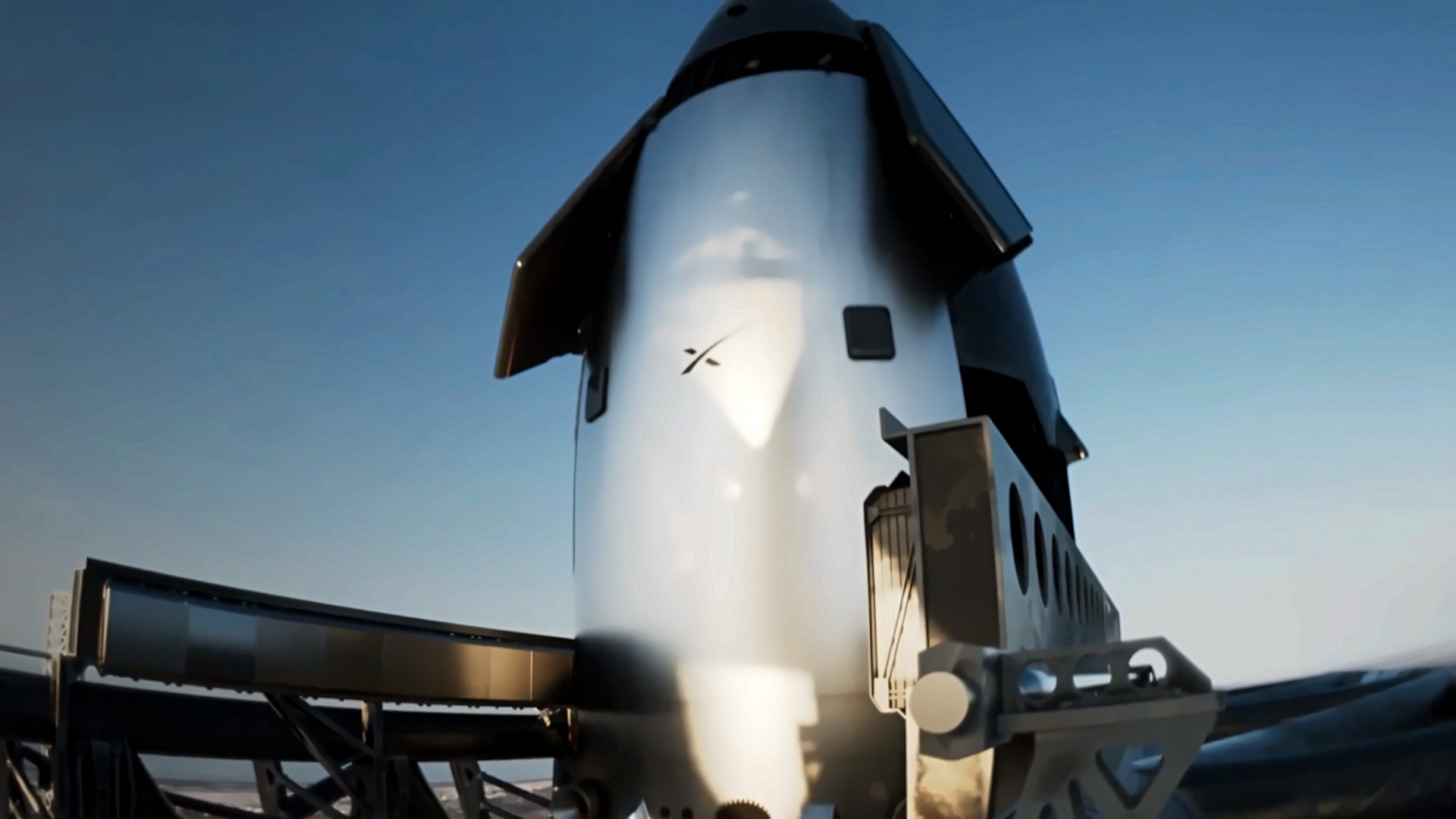
SpaceX gave its clearest look yet at how it plans to catch a Starship upper stage, playing a roughly 80 second animation of the maneuver during its third quarter earnings webcast on Tuesday. The clip ran under an “Up Next: Ship Catch” banner moments after Elon Musk confirmed that Flight 15, expected next month, will try to catch both the Super Heavy booster and the ship with the launch tower.
The animation opens at ground level, looking up through the launch mount at a tower with its chopstick arms spread wide. It then cuts to the ship gliding back through the atmosphere in its horizontal belly flop position, with its forward and aft flaps steering the descent. A wide shot from the Starbase shoreline follows, where the ship is a small dot in the sky before it swings vertical and drops toward the launch towers. The final shots show the ship sliding down past the top of the tower, a close view of the hardware along its side meeting the arms, and the vehicle hanging in the chopsticks.
SpaceX has released a new Starship tower catch animation for the upcoming Flight 15! https://t.co/kStn01Da8u — Truthful🛰️ (@Truthful_ast) October 20, 2026
Musk called the catch the step that closes Starship’s reuse loop. “If we succeed, it will be the first time that an orbital launch vehicle has been fully recovered,” he said. He put the odds of success on the first attempt at “more likely than not,” and said SpaceX has “a steady stream of Starship flight attempts through the end of this year” if Flight 15 falls short.
The sequence mirrors work SpaceX has already done with real hardware. In September, Ship 42, the vehicle assigned to Flight 15, was lifted by the Pad 2 chopsticks into a simulated catch position, where crews cycled the arms and connected the ship quick disconnect arm while it hung from the tower. NASASpaceflight has since reported that SpaceX removed Ship 42’s engines before its static fire and sent it back for another cryogenic test.
Gwynne Shotwell covered the regulatory side on the same call. After what she called “significant constructive engagement with the FAA,” SpaceX expects the Flight 15 license “to include return to launch site and tower catch for both stages.” Bringing the ship home means reentering toward land instead of the open ocean, which Musk said in February would only happen once the chance of the ship breaking up over land was very low, after two perfect soft landings at sea.
SpaceX has caught Super Heavy with the tower three times, on Flights 5, 7 and 8, but the ship returns from orbit at far higher speed and has never been caught. Flight 14 on September 28 was the first Starship to reach orbit, and it deployed 26 Starlink V3 satellites before splashing down, a mission SpaceX counted as its first revenue flight in the Q3 results it reported Tuesday.
The timing lines up with what Musk told the crowd at Giga Texas earlier this month, when he said Flight 15 would probably launch a little before Thanksgiving and that Flight 16 could refly both stages. On Tuesday’s call he went further, saying Starship should fly weekly at some point in the first half of 2027 and twice weekly or more by the end of next year as SpaceX works toward landing a rocket and launching it again with no refurbishment.

Tesla buyers are buying for Full Self-Driving and not for the car, data shows

Tesla Cybercab gets a for sale date at last


