Lifestyle
What Tax Incentives Are Available When Buying My Tesla?

There are a number of tax incentives available when purchasing your Tesla depending on which model you choose and where you live. Here’s my overview of incentives available to US residents. Please note that I’m not a tax advisor, so be sure to do your own research and consult a tax professional.
Federal Tax Incentives
When I purchased my Tesla Model S back in 2014, I received a $7,500 Federal tax credit, an incentive that’s still available to new car buyers as of today (not available to CPO models). But what are the rules behind it and what does the credit mean to me?
According to the Internal Revenue Code Section 30D entitled “Plug-In Electric Drive Vehicle Credit”,
For vehicles acquired after December 31, 2009, the credit is equal to $2,500 plus, for a vehicle which draws propulsion energy from a battery with at least 5 kilowatt hours of capacity, $417, plus an additional $417 for each kilowatt hour of battery capacity in excess of 5 kilowatt hours. The total amount of the credit allowed for a vehicle is limited to $7,500.”
The smallest size battery for the Model S, at the time of this writing, is 70 kWh and will max out the federal credit at $7,500, not to be mistaken for a rebate or refund.
Too bad there’s a $7,500 cap! Just for fun, and assuming there weren’t a cap, a 70 kWh Model S would receive $417 for every kWh exceeding 5 kWh resulting in over $27,000 in tax credits! A 90 kWh Tesla would receive an additional $8,340 in credits making for a grand total of over $35,000 in tax credits.
These credits are issued by the Fed to incentivize adoption of clean energy vehicles and will go into a phase out period once 200,000 vehicles are manufactured by that automaker.
Qualified Plug-In Electric Drive Motor Vehicle Credit (IRC 30D) Phase Out
The qualified plug-in electric drive motor vehicle credit phases out for a manufacturer’s vehicles over the one-year period beginning with the second calendar quarter after the calendar quarter in which at least 200,000 qualifying vehicles manufactured by that manufacturer have been sold for use in the United States (determined on a cumulative basis for sales after December 31, 2009) (“phase-out period”). Qualifying vehicles manufactured by that manufacturer are eligible for 50 percent of the credit if acquired in the first two quarters of the phase-out period and 25 percent of the credit if acquired in the third or fourth quarter of the phase-out period.
With Tesla’s leading production and sales figures, it will be interesting to see what happens to Federal incentives once Tesla crosses the 200,000 vehicles manufactured threshold.
There are implications on which year the tax credit applies to based on when you took delivery of your vehicle. If you were one of the lucky people that took delivery of a Model X in 2015, be sure to have read the fine print on IRC 30D when you file your taxes.
State Incentives
In addition to the Federal tax credit, some states offer state rebates for qualifying battery electric vehicle (BEV) and plug-in hybrid electric vehicle (PHEV) purchases. The following states provide BEV incentives in the form of a refund for your qualifying purchase of a Tesla:
- California – $2,500
- Delaware – $2,200
- Colorado – $6,000
- Louisiana – $8,000
- Massachusetts – $2,500
- Maryland – $3,000
- Pennsylvania – $2,000
- Tennessee – $2,500
- Utah – $1,500
Note that each one of these programs can have its own nuances. There are minimum ownership periods (3 years in Massachusetts), income caps ($500K for joint filers in CA) and other qualifying circumstances to consider. Before you count your money, check the rules for your specific state and make sure you qualify.
For example, when I purchased my Model S in 2014 the current MA state tax credit was no longer available. Since then it’s been put back in place. That was certainly bad timing on my part!
Business Deductions
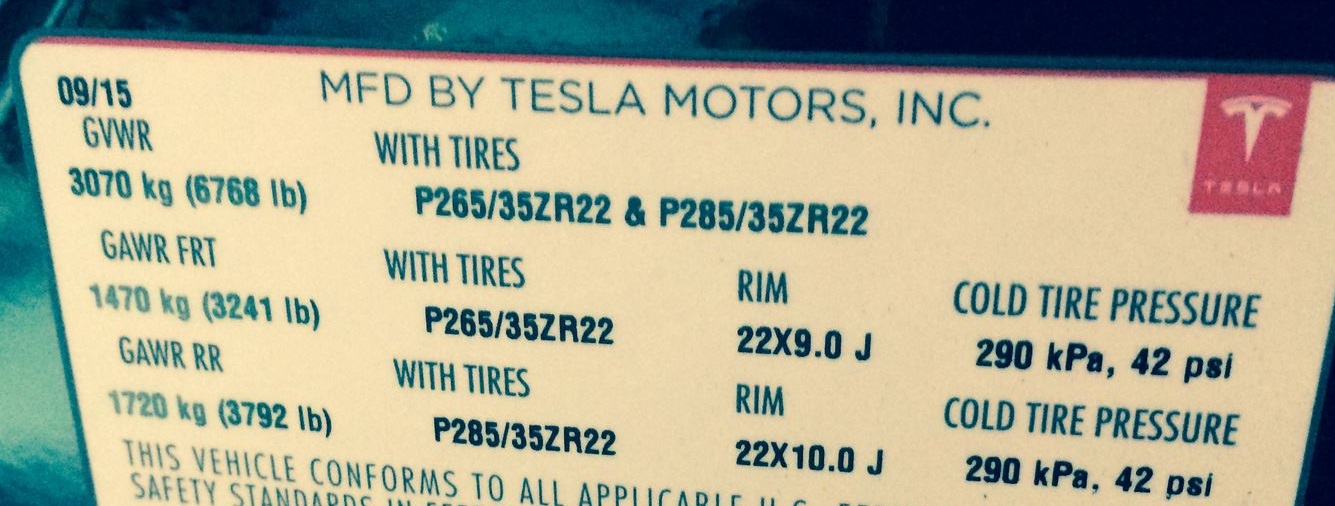
The door sticker of Model X VIN #001, owned by Tesla CEO Elon Musk. Photo via Twitter, posted by @kalud.
You may have heard about a “$25,000 Hummer Tax Loophole” especially as it relates to the Model X, but what is that and does it apply to you?
Tax Section 179 allows businesses to take deductions for equipment and investments that are put into service. For vehicles, there’s a specific section that states cars used for 50% or more in your business can deduct up to $11,060, and slightly more for trucks.
SUVs or Crossover Vehicles with GVWR above 6,000 lbs. get an even larger deduction of $25,000. This is the “Hummer Tax Loophole” as the Hummer weighed in at somewhere around 6,500 pounds. GVWR is the weight of the vehicle with passengers and/or equipment. The Model X has a curb weight of 5,334 lbs. but it turns out that its GVWR is 6,768 pounds hence it qualifies for the Section 179 deduction.
That said, if you buy or lease a Model X and use it 50% or more for business you could deduct up to $25,000 in depreciation in the first year you acquire the vehicle versus depreciating it over time. The rationale is that businesses are incentivized to take the tax deductions up front there by allowing them to invest more into the business, earlier.
Note that the Section 179 deduction applies to both new and used vehicles, although I think we’ll see few used Model Xs in 2016.


Elon Musk escalated his monthslong feud with Christopher Nolan’s The Odyssey this week, pledging that his own AI video tool will produce a competing version before the year is out. Responding to a fan-made, AI-generated clip of the ancient epic, Musk wrote on X, “Before this year ends, Grok Imagine will make a full-length movie of The Odyssey that is historically accurate and true to the art of Homer.”
In June, Musk quoted an xAI-shared trailer built entirely with Grok Imagine Video 1.5, a two-minute-plus reimagining of The Odyssey styled after a 1970s classical Hollywood epic, and predicted “full movies by the end of the year,” as Teslarati reported at the time. That trailer, built from 36 consistent shots by a single creator, was Musk’s proof of concept. This week’s pledge turns that prediction into a specific commitment, tied directly to Homer’s text rather than a generic demo.
Before this year ends, Grok Imagine will make a full-length movie of The Odyssey that is historically accurate and true to the art of Homer https://t.co/bVHzUmY9WN
— Elon Musk (@elonmusk) July 22, 2026
When a fan separately proposed that Musk fund a live-action alternative, to “give Mel Gibson $100 million to film an Odyssey adaptation with painstakingly historically accurate ships, armour, weapons, and casting, with all dialogue taken straight from the original poem and delivered in Homeric Greek,” Musk replied with two words: “I’m down.”
The Grok Imagine pledge lands as the tool’s underlying infrastructure has changed hands. Grok is no longer a standalone product, it folded into SpaceXAI after SpaceX’s acquisition of xAI closed in February, meaning the compute behind any Odyssey production traces back to the same Colossus supercomputers now bundled into SpaceX’s pitch to investors. Musk has separately said SpaceX’s own engineering data is being fed into the next major Grok training run, a two trillion parameter model he’s called the “2T run.”
Whether Grok Imagine can sustain a feature length narrative, rather than a series of impressive individual shots, remains the open question.
Cybertruck
Tesla Mobile App gets a new feature that wrap fans are going to love
Tesla’s Summer Update removes the USB drive step from customizing your car’s digital wrap design.

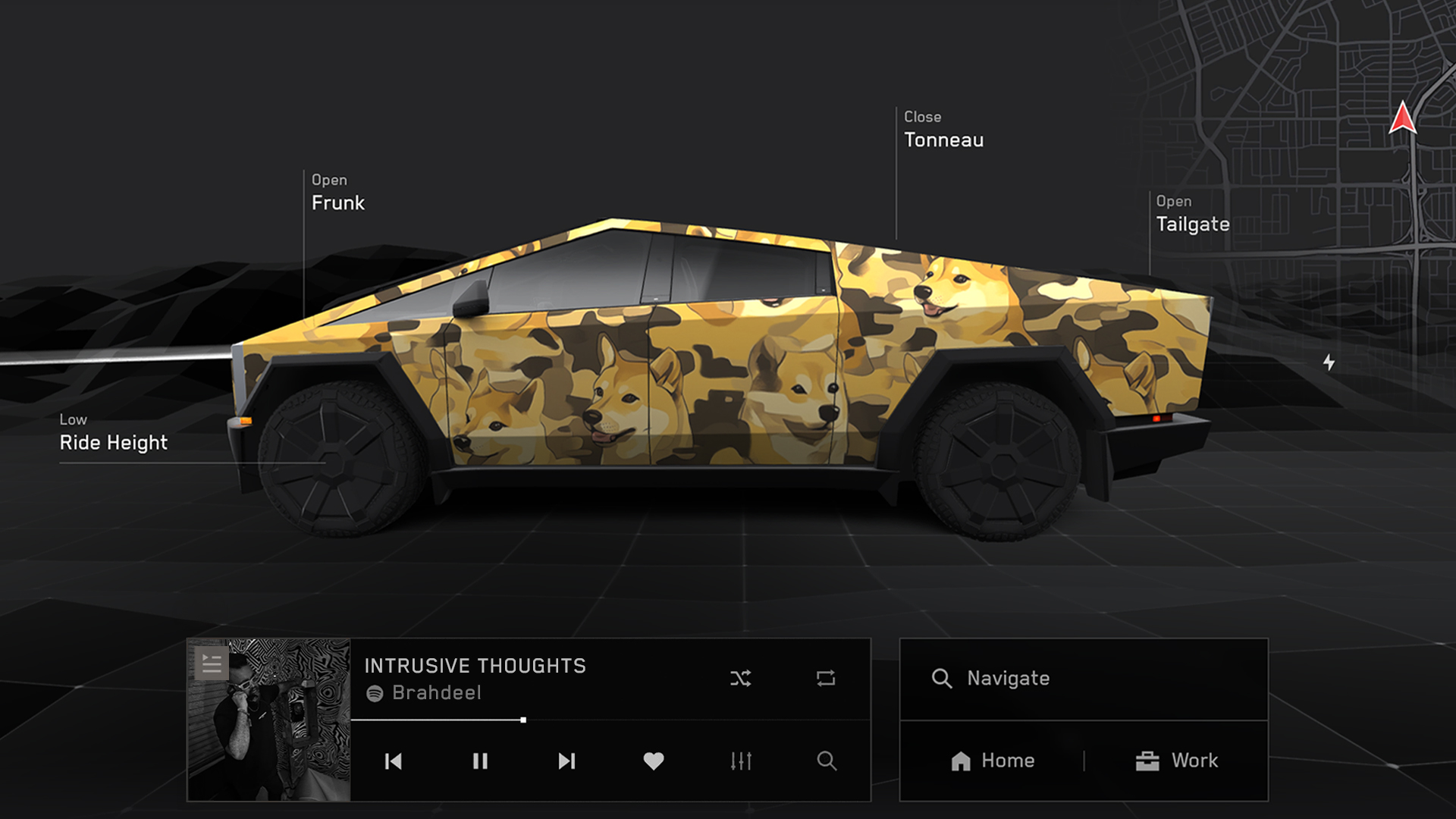
Tesla’s latest 2026 Summer Update quietly closes out one of the more tedious steps in personalizing a Tesla’s digital appearance. Uploading a custom wrap design used to require a USB drive. Now it doesn’t.
The feature is listed in Tesla’s release notes as “Send Custom Wraps from Mobile App.” The company described it plainly: “Skip the USB drive and upload a custom wrap of your car from the mobile app. Instructions for creating a custom wrap here: github.com/teslamotors/custom-wraps.”
The digital wrap tool has been around since Tesla’s 2024 Holiday Update, when it launched for Cybertruck owners first, as Teslarati reported at the time. Getting a design onto the car meant formatting a USB drive, creating a folder named exactly “Wraps,” dropping in PNG files sized between 512×512 and 1024×1024 pixels and under 1 MB each, then plugging the drive in and applying the wrap through Toybox. Tesla expanded the tool to other models and renamed it from “Colorizer” to “Paint Shop” with the 2025 Holiday Update, while also adding license plate and window tint customization alongside the wraps.
Custom wraps via mobile app https://t.co/5OydZ26g9p pic.twitter.com/uexU0ZePxu
— Tesla (@Tesla) July 22, 2026
The latest Summer Update removes the USB step from that process. Owners will be able to pull a design from wherever they saved it, whether that’s a download from social media or something built from Tesla’s own GitHub templates, and push it to the car directly through the app.
Tesla reveals 2026 Summer Update with crazy fixes to Nav and more
It’s a small fix relative to the rest of this latest release, which also included expanded Grok voice commands, automatic navigation that learns regular routes, and self-driving stats inside the mobile app, all detailed in our rundown of the full Summer Update. The USB requirement was one of the more common complaints about Paint Shop since it launched. Tesla did not say when the wrap upload change would reach individual vehicles, only that the broader update is rolling out now in waves.
Elon Musk
Tesla Diner is throwing a birthday party with a Franz-signed special treat
Tesla Diner turns one on July 21 with Optimus, roller skates, and a Franz-signed hat.
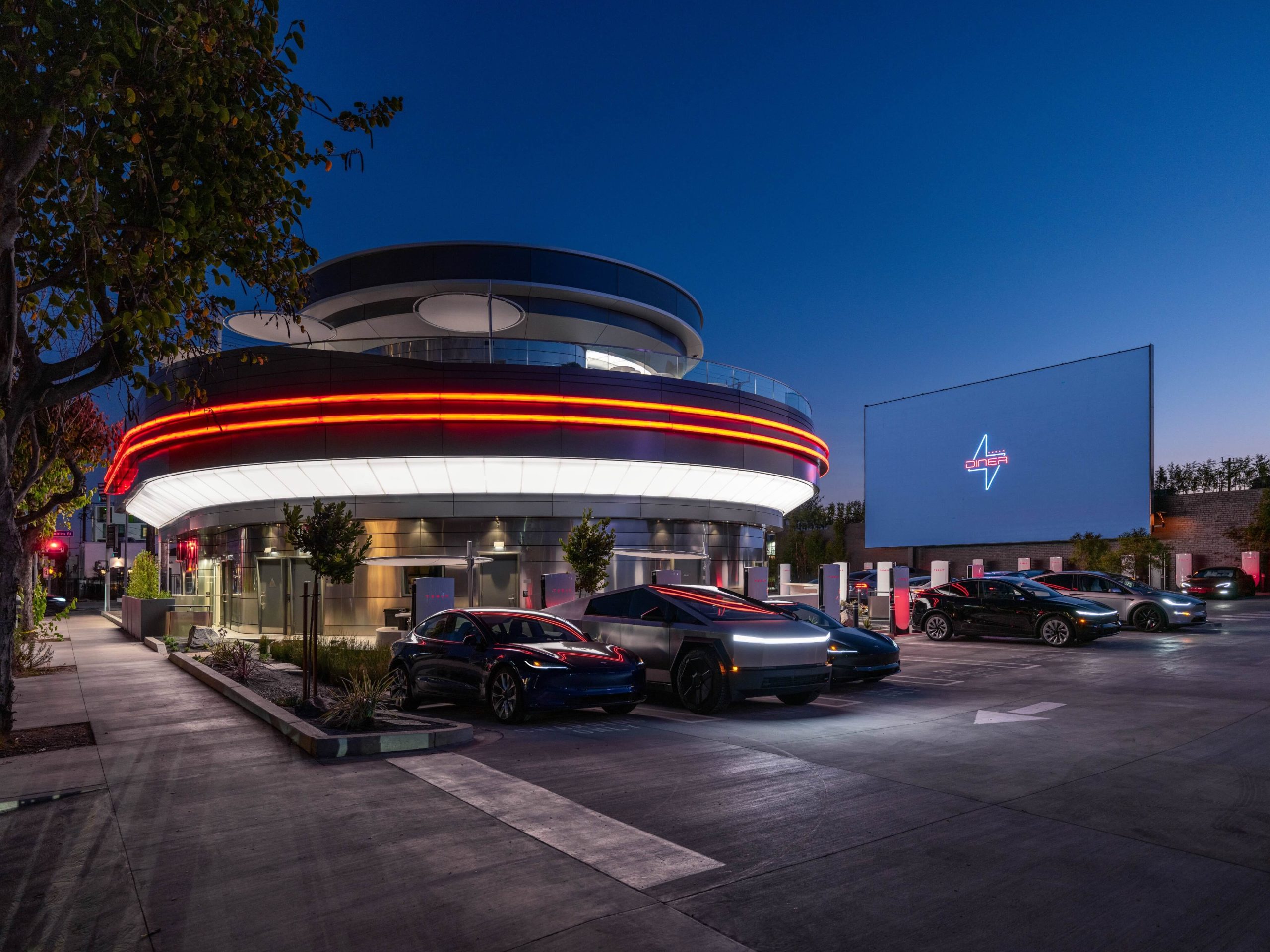
Tesla is throwing its Hollywood Diner a first birthday party on July 21 and the celebration comes with a guest list of unique items, including a limited run of Tesla Diner birthday hats personally signed by Tesla Chief Designer Franz von Holzhausen for the first 50 customers who place an in-car order at midnight.
One year after lines wrapped around the block on Santa Monica Boulevard for a diner that most of the restaurant industry did not take seriously, Tesla is making the case that the concept was worth the years it took to build. The concept had been in Musk’s head since at least 2018, when he floated the idea of “an old school drive-in, roller skates and rock restaurant” on X, describing it years later as “‘Grease’ meets ‘The Jetsons’ with Supercharging.”
Tesla Optimus Gen 3 is coming to the Tesla Diner with new ambitions
What made the diner genuinely different from any restaurant that came before it was not the menu or the nostalgia. It was the ordering model. Tesla owners could place food orders directly from their vehicle’s touchscreen before arriving, a small feature that hints at something much larger on the horizon. As the Cybercab and unsupervised FSD expand across major cities, the diner model becomes a template for an entirely new kind of commerce. A robotaxi pulling in to charge does not need a human to walk up to a counter. The vehicle places the order, the food is ready on arrival, and the passenger never interrupts the experience of being driven somewhere else. It is the first glimpse of what drive-through commerce looks like when the car is doing the driving.
As Teslarati has reported, Musk signaled immediately after opening that the Hollywood location was only the beginning, posting that Tesla would expand the concept to major cities worldwide and along Supercharger corridors on long-distance routes if the first location proved successful. One year in, the birthday celebration on July 21 makes a strong case that it has. Tesla announced a full day of events including a Cybercab on display, a birthday menu, Optimus in attendance, face painting, a photo booth, roller skating servers, a light show, a Skypad DJ, and complimentary collectibles.
If Musk’s ambition holds, the Hollywood diner is year one of something much bigger. The birthday party is the proof of concept. The robotaxi fleet is the business model waiting behind it.
Tesla Diner is turning 1 on July 21st, so we’re throwing a party
Come swing by for a day full of fun:
– Cybercab on display
– Birthday menu
– @Tesla_Optimus
– Face painting for kids & adults
– Photo booth
– Servers on roller skates delivering your order
– Light show
– Skypad DJ… pic.twitter.com/TD8pOjihYs— Tesla North America (@tesla_na) July 18, 2026

SpaceX Starship Flight 13 faces wrath of the Texas skies

Tesla stock tumbles after earnings, one of its sharpest single-day declines


