Lifestyle
Around the world in 80 Days in a Tesla Model S

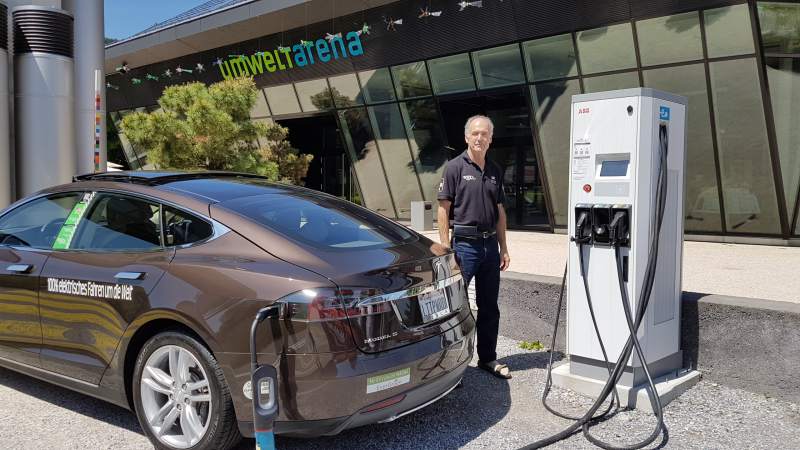
On June 15, Alan Soule of Sebastopol, California left Barcelona, Spain in his 2012 Tesla Model S. Over the next 80 days, he will travel more than 15,534 miles through 20 countries and across North America, Asia, and Europe before arriving back in Barcelona on September 4.
Soule is part of an event called 80dDays designed to demonstrate that electric cars can be used to travel long distances sustainably. In all, drivers from 7 countries — Switzerland, Germany, China, Hungary, the Czech Republic, Austria, and the US — are entered in the event.
The route will cross the Alps and the Rockies, traverse the Gobi desert, and visit many of the world’s major cities before ending back where it started. If all goes as planned, all 11 teams will drive together through the Arco de Triunfo in Barcelona 80 days after their journey began.
Soule, a 66 year old retired commercial building contractor, has been planning his journey for more than a year. “I have always been interested in alternative energy for vehicles,” he said. “I had a car that ran on propane back in the ’70s, and then when General Motors came out with the EV1, I leased one of those, and that was in 1999.”
He purchased a Tesla Roadster when they were first introduced in 2008 and took it on a trip down Route 66 in 2012. “From all the research that I’ve done, I’m almost positive it’s the first electric vehicle to drive Route 66,” he said. That same year, he bought his Model S.
One day at the Tesla Service Center in Menlo Park, California, he met Rafael de Mestre. The Spaniard was attempting to drive his Tesla Roadster around the world in 80 days. He failed in his quest but the two men kept in contact. When de Mestre mentioned the 80eDays event, Soule decided he and his Model S would join the fun.
Preparing for the trip has been a full-time job, Soule says. Obtaining visas from China, Kazakhstan, and Russia took quite a lot of time, as did planning the route they would take. “I originally wanted to go through Turkey because I like Turkey, but there are problems there,” Soule says.
“And I’ve been told that Belarus has a lot of gangs. And the southeastern portion of Ukraine is where the Russians are trying to make a stronghold. But if you go up through Latvia, that’s an extra 600 miles, and we don’t want to do that, so we’re going to take a chance and go through northern Ukraine and see what happens.”
The route from Barcelona leads southwest to Lisbon, Portugal, where the teams have chartered a plane to take their cars to Halifax, Nova Scotia. From there, they head west to New York, Chicago, and Denver. After making their way to Los Angeles, they will again go by plane to the southeastern edge of China in Guangzhou. From there, they will continue their journey west across Asia and Europe before arriving back in Barcelona.
Soule has lined up a rotating crew of five co-drivers who are friends and friends of friends. They will meet him and his Model S at various places along the route. To help people follow his journey, set up a Twitter account, Periscope, and a team website. His car is equipped with a 360 degree camera which he will use to upload video as he travels.
Photo courtesy of Alan Soule


Elon Musk
Elon Musk says he knows how to save Earth for a billion years
Elon Musk says sentient AI satellites launched from the Moon could keep Earth livable forever.

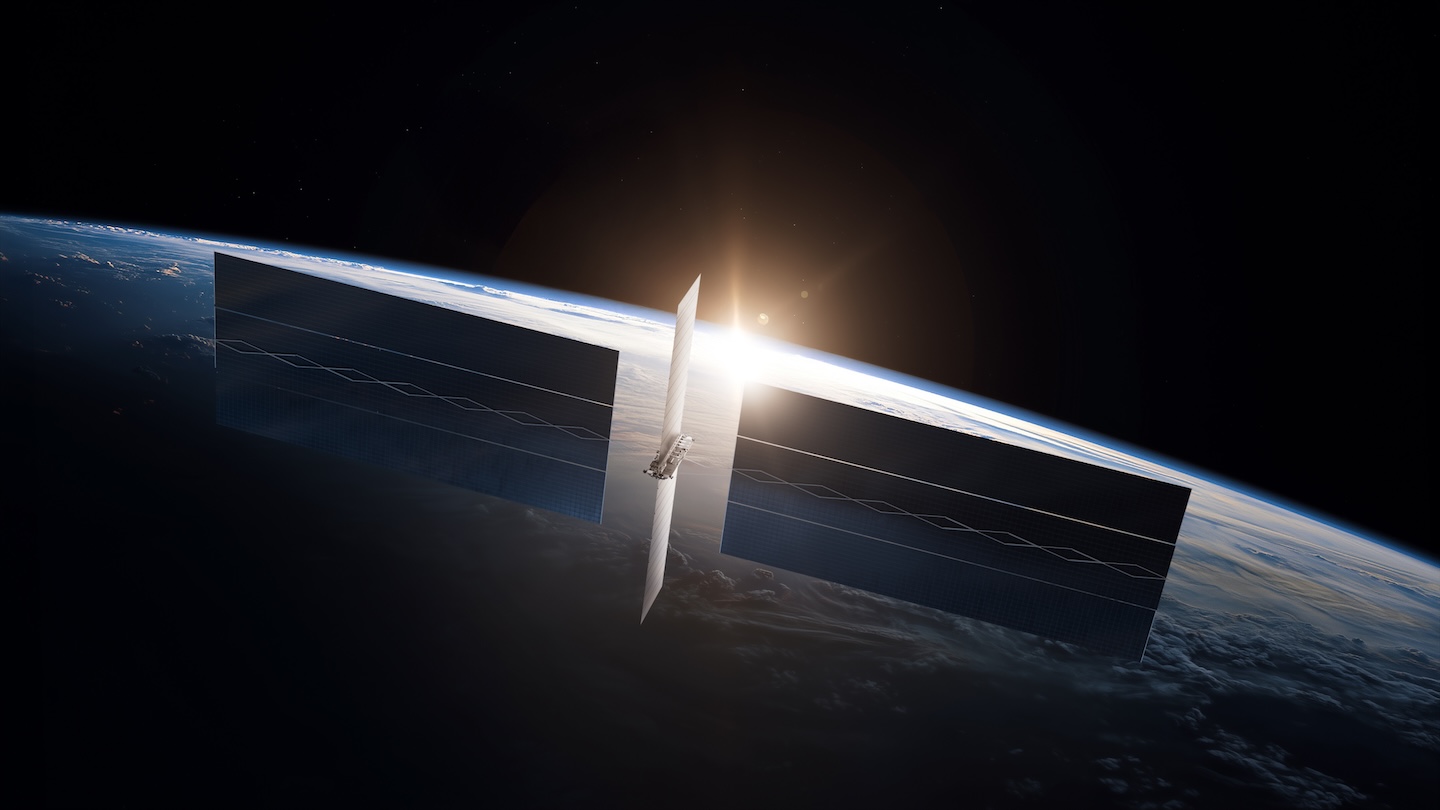
Elon Musk spent part of his weekend describing a plan to keep the planet livable for roughly a billion years, and it starts with satellites that can think for themselves.
In a post on X, Musk argued that swapping fossil fuels for solar and wind power will not be enough to protect humanity from what he called extremely severe extinction events, the kind that occur roughly every 100 million years. His fix is what he called sentient satellites, or solar-powered satellites, controlled by AI, that would sit in a fixed spot between Earth and the Sun after being launched off the Moon using a giant electromagnetic catapult instead of rockets.
The satellites’ onboard AI would make continuous, small adjustments rather than waiting on human instructions. The mass driver is Musk’s proposed way of getting the raw material there cheaply by using an electromagnetic launch track built on the Moon, where lower gravity and no atmosphere make it far easier to fling cargo into space than it is from Earth.
But we do need to act much faster than that if people still want to live where the beach is today. We have about 50 years or so to take action, which should be more than enough time for the space satellites to solve any heating problems. https://t.co/xhrVQALwQw
— Elon Musk (@elonmusk) August 30, 2026
Musk shared a Grok generated estimate suggesting roughly 5 percent of Florida’s land, or about 1.68 million acres, could face regular flooding by 2070 under a high sea level rise scenario, and said humanity has about 50 years to act before coastal living looks very different than it does today.
This is not the first time Musk has floated the idea. He raised a similar concept in November, describing a solar powered AI satellite constellation that could make tiny adjustments to incoming sunlight to fine tune Earth’s temperature. Musk has also tied planetary risk to his broader vision at SpaceX, where his compensation package is explicitly linked to establishing a self-sustaining Mars colony, one he has described as an insurance policy against the kind of extinction event he referenced this weekend, and where he has said humans could set foot within five to seven years.
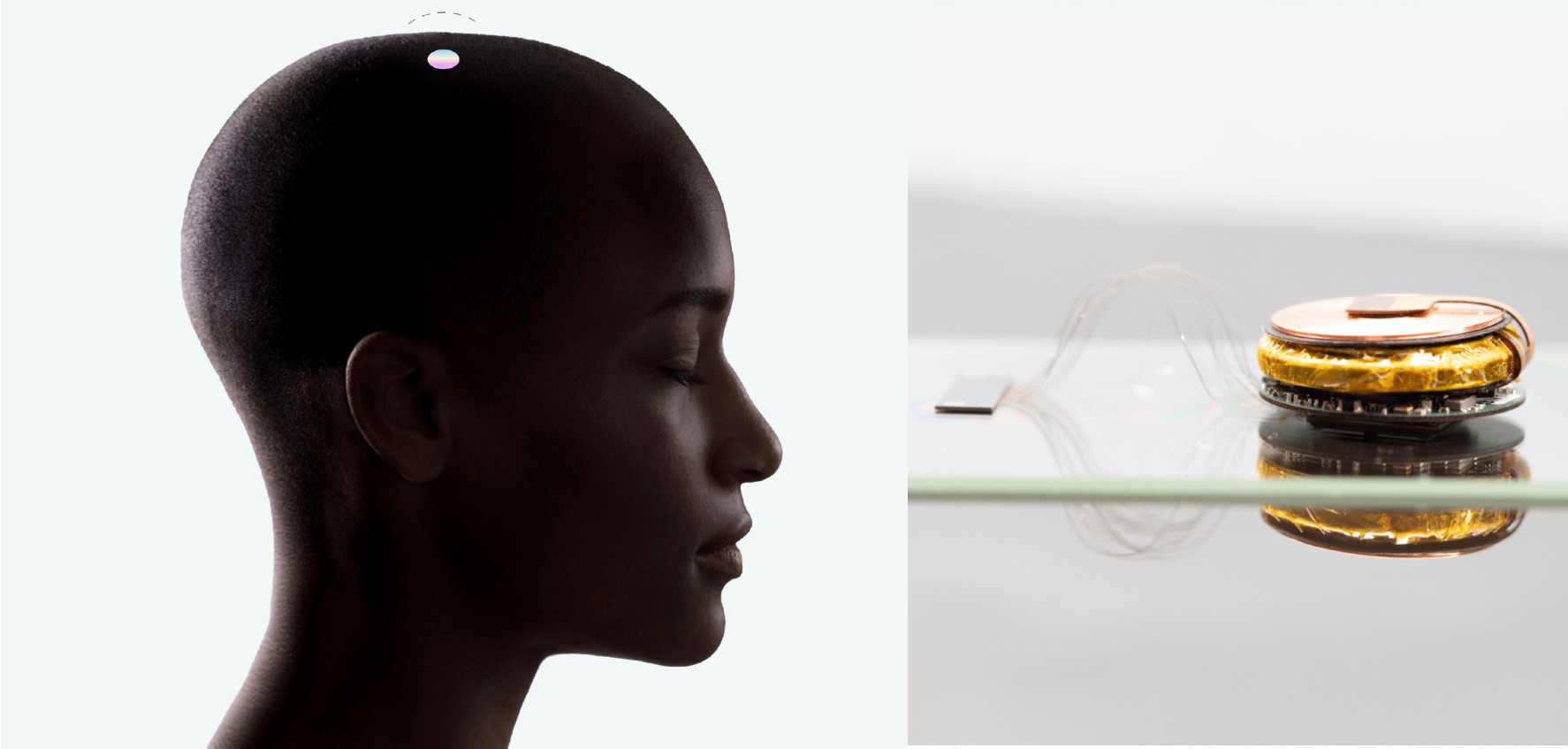
A former Vancouver police sergeant with ALS accounts his journey to become a patient for Elon Musk’s Neuralink wireless brain-computer interface technology.
“I’m texting you from my brain right now.” That was the first message Lee Marten sent after waking up from Neuralink surgery, five hours and one migraine after dozens of threads were stitched into his motor cortex.
Marten, a former Vancouver police sergeant, is one of the first Canadian ALS patients to receive Neuralink’s N1 brain implant, and the 26th recipient overall. He tells his story in a first-person account published by Maclean’s.
Marten recounts how he was a healthy, athletic Vancouver police sergeant until April 2022 when symptoms of muscle twitching and balance loss, were followed by a bad fall that broke his leg. He would eventually be diagnosed with ALS in early 2025 at the age of 47. ALS, also known as Lou Gehrig’s disease, is a fatal neurodegenerative disease that progressively destroys the motor neurons controlling voluntary muscle movement, eventually taking away a patient’s ability to walk, speak, swallow and breathe. There’s no cure, and most patients live two to five years after diagnosis.
He describes the devastation of the diagnosis and how he began preparing for it while connecting with other young ALS patients through a WhatsApp group called Young Guns. Through that group he learned about a Neuralink clinical trial at Toronto Western Hospital and, after a roughly seven-month vetting process (physical assessments, psychiatric evaluation, a final interview with the Neuralink team), was accepted this past April as the trial’s 26th recipient and the first Canadian ALS patient to get the N1 implant. He recounts the May surgery in detail, including the robotic system that stitched 64 threads into his brain, and describes the app, Link, translating his neural signals into cursor control, which he was using within hours of waking up.
Marten walks through what daily use looks like, including weekly “brain training” exercises, a real-time neural-activity display, charging the implant via a beanie-mounted MagSafe charger, and using the implant for emailing, texting, social media, and gaming via a “Magic Box” that connects it to other devices. He also gives brief context on brain-computer interface history and quite candid about Musk, calling him “divisive” but saying he found him “easy to admire.
The piece closes on a heavier note, with Marten seeking to pursue medical assistance in dying as his symptoms progressed, noting that he’ll be able to communicate his final words to his family through Neuralink rather than facing a silent decline. He expresses hope the data from his case will help future ALS patients, even without a cure in his own lifetime.
Investor's Corner
Tesla Robotaxi gets a massive upgrade in Nevada
Nevada regulators just approved a massive expansion of Tesla’s robotaxi fleet across the entire county.
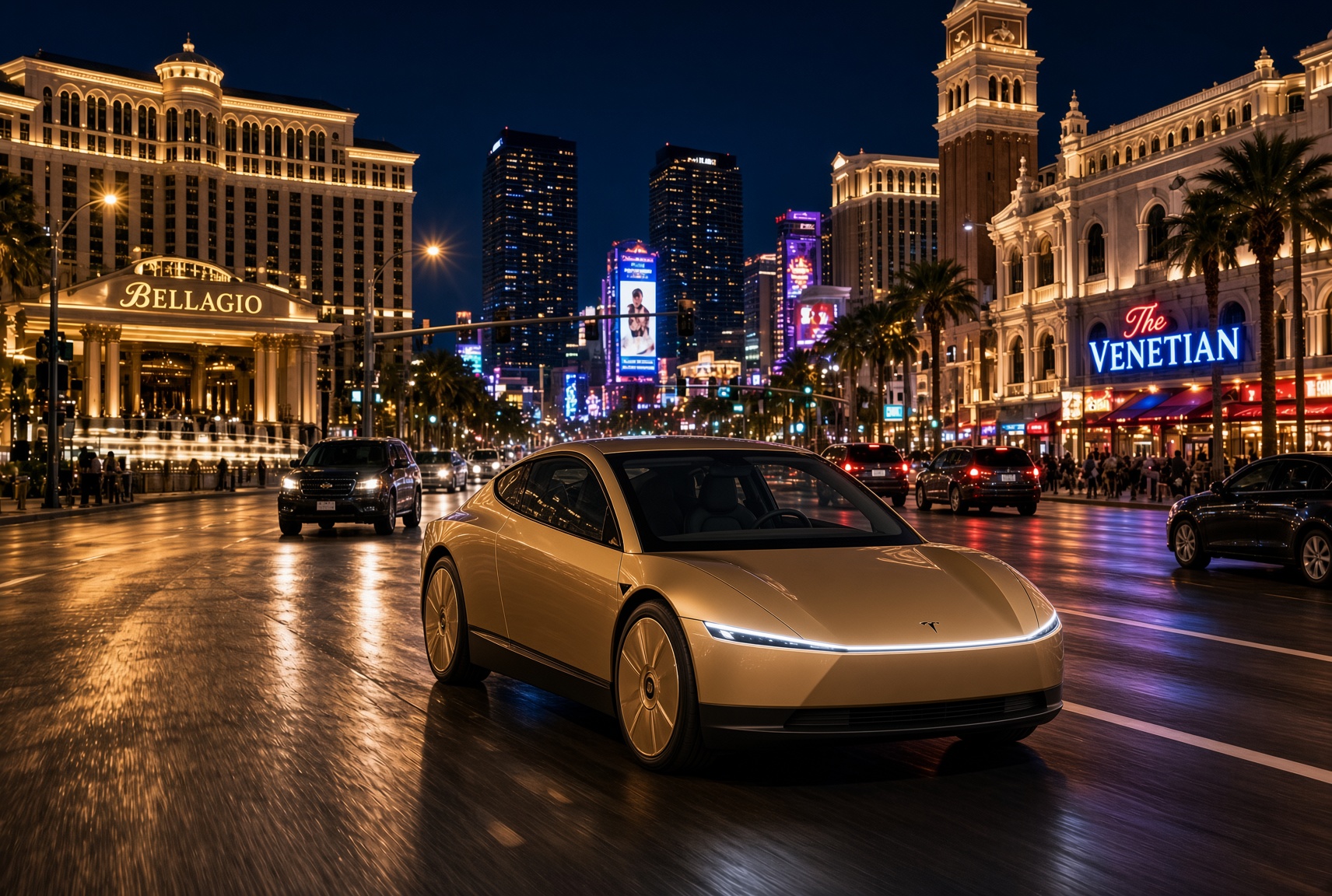
Tesla’s robotaxi footprint in Nevada just grew by roughly 500 times in a single regulatory vote.
The Nevada Transportation Authority approved Tesla’s full Autonomous Vehicle Network Company permit on Thursday, clearing the way for the company to deploy up to 5,000 driverless vehicles across Clark County over the next 12 months. The decision came during a four hour general session meeting that Tesla investor Sawyer Merritt watched live and reported on X, noting the vote replaces the interim order that had limited Tesla to just 10 robotaxis on a narrow stretch of the Las Vegas Strip.
EXCLUSIVE: Tesla has just officially received approval for its full Autonomous Vehicle Network Company permit in Nevada, clearing the way for Tesla to launch a paid public Robotaxi service in Las Vegas.
This officially allows @Tesla to deploy up to 5,000 robotaxis over the next… pic.twitter.com/DPs5UtUlrE
— Sawyer Merritt (@SawyerMerritt) August 20, 2026
That earlier cap, covered here after it surfaced on August 13, came with restrictions that looked stricter than what Tesla runs in Austin: a 45 mph speed ceiling, no airport pickups, and a geofence confined to the Strip corridor. The new approval extends Tesla’s operating authority to all of Clark County, with room to request an even wider geofence across the state.
Tesla representatives at the meeting said they have no intention of putting 5,000 cars on the road right away. Commercial rides are expected to start within 30 days, pending vehicle inspections, insurance filings, and fare approval, the standard steps every robotaxi operator in Nevada has had to clear.
Tesla’s own Robotaxi account replied to the news with a short line, The golden future is upon us.
The timing lines up with Tesla’s broader robotaxi push this month. The company is preparing to open Cybercab rides to the public in Austin as soon as this month, and it opened a sweepstakes for riders to win a seat at the launch event. Tesla filed its original application for a 5,000 vehicle Nevada fleet back in June, a request regulators trimmed to 10 vehicles when they issued the interim order in July. Thursday’s vote effectively grants the number Tesla asked for from the start.
Zoox, the Amazon owned robotaxi operator, has run in Nevada since 2025 and was capped at 100 vehicles before Thursday’s decision. Tesla’s new ceiling puts it well ahead of that comparison on paper, though the company has said its actual fleet size will depend on how quickly FSD v15 rolls out, the software update executives have called the gateway to scaling unsupervised robotaxi operations nationwide.

SpaceX tells the FCC that Starship Flight 14 is going to orbit

Tesla Cybercab Event: what to expect from Austin


