News
SpaceX’s Starfall just went from secret to storefront
SpaceX now pitches Starfall missions with 1,000 kg payloads, weeks of microgravity, and Starlink connectivity.

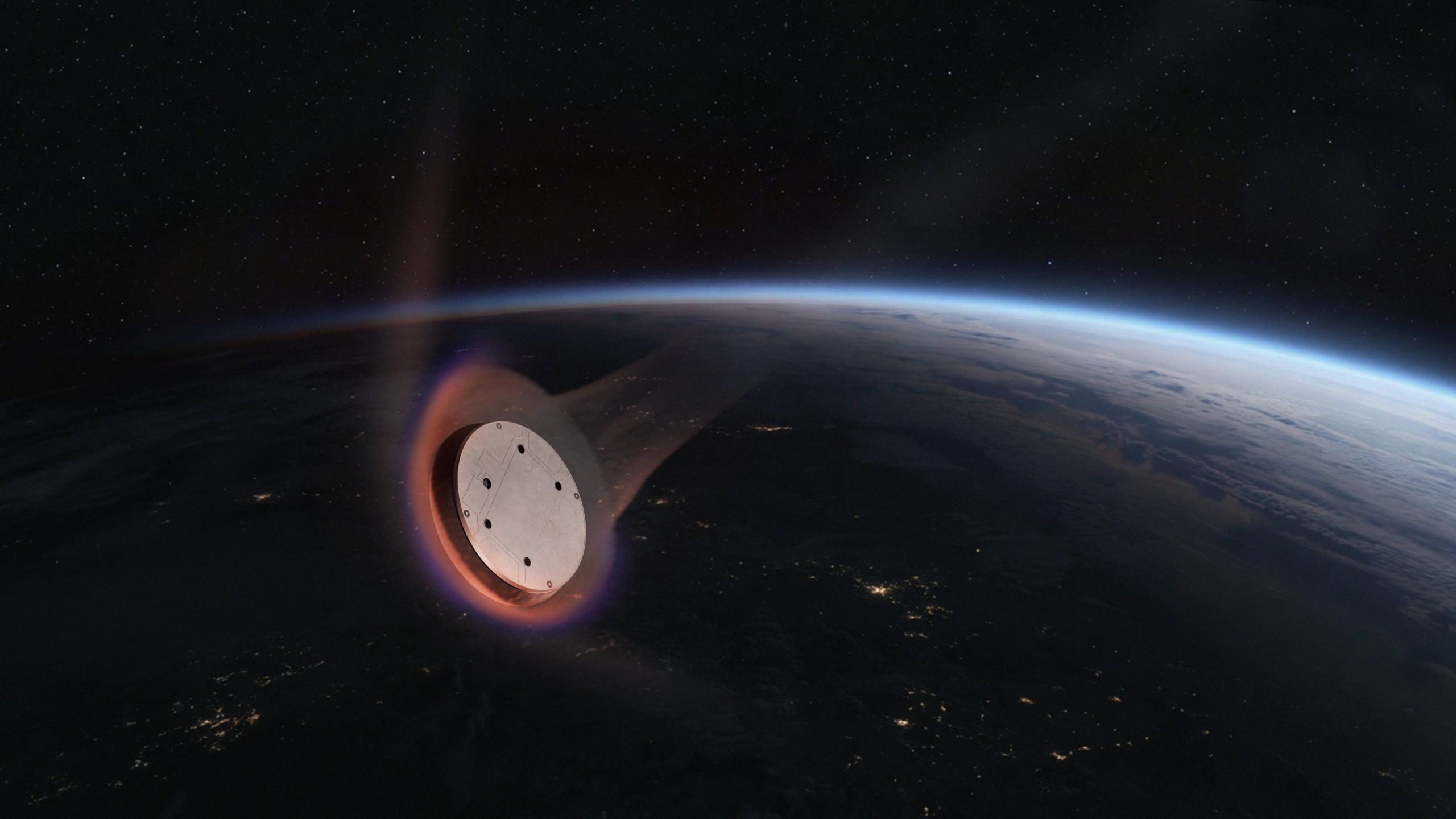
SpaceX has put up a dedicated commercial page for Starfall, its disk shaped reentry capsule, laying out for the first time what customers actually get when they book a flight. The page, live at spacex.com/starfall, pitches “affordable, routine access to microgravity” and invites companies to get in touch about flying manufacturing, research or testing payloads.
The specs are short and specific. Each Starfall mission carries up to 1,000 kg of payload, supplies 1 kW of power and connects through an Ethernet interface. Mission length is tailored to the customer, and the payload stays online the entire time through Starlink, which means researchers can pull data from an experiment while it is still in orbit instead of waiting for splashdown.
SpaceX is launching a secret spacecraft that could change how things are made in space
SpaceX is aiming the service at three markets. Biomedical customers are told they can grow stem cell organoids, replacement tissue and layered biomaterials. Pharmaceutical companies are pitched on protein and small molecule drug crystals, which form smaller and more uniform shapes without gravity driven convection. Materials science rounds out the list, with semiconductors and other next generation materials grown in vacuum and microgravity.
The page also makes clear which rocket SpaceX is counting on. “By launching on Starship, Starfall brings a reliable and scalable cadence previously unavailable to the market,” the company wrote, contrasting weeks of continuous microgravity with the seconds offered by drop towers and parabolic flights. No price or first operational flight date is listed.
The commercial push is a sharp turn from how Starfall started. SpaceX said almost nothing about the capsule ahead of its first flight in June, and nearly everything known came from FAA and FCC filings describing a disk about 10.2 feet wide and 2.5 feet tall that can return 2,200 pounds of cargo. By its second flight on the Bandwagon-5 rideshare in October, Starfall was listed by name on the mission page, though SpaceX still did not say what it carried.
Customers appear to be lining up. SpaceX said in its third quarter results that it signed three commercial Starfall missions during the quarter. On the earnings call, President Gwynne Shotwell described the capsule as providing “routine relatively low cost access to microgravity environments for scientific research, including improving our understanding of diseases like cancer and diabetes,” and said the three new missions would fly on Starship.
The branding effort extends past the website. SpaceX added a Starfall T-shirt to its online store on Monday as part of a batch of new merchandise, giving the program a place next to Starship, Starlink and Starshield in the company’s lineup.
The move also puts SpaceX in more direct competition with companies it launches. Varda Space Industries, which has built much of the in-space manufacturing market so far, flew its W-Series 7 capsule on the same Bandwagon-5 mission as Starfall in October. Varda’s capsules are roughly three times smaller than Starfall, and SpaceX controls the ride to orbit for both.
Starfall’s near term cadence depends on Starship. SpaceX is preparing for Flight 15 after completing static fires of Ship 42 and its Super Heavy booster in late October, and is aiming to catch both stages with the launch tower on that flight.


Elon Musk
SpaceX just cleared a key FCC hurdle in its fight with Verizon and AT&T
The FCC accepted SpaceX’s bid for Grain’s 800 MHz spectrum, opening review for Starlink Mobile.
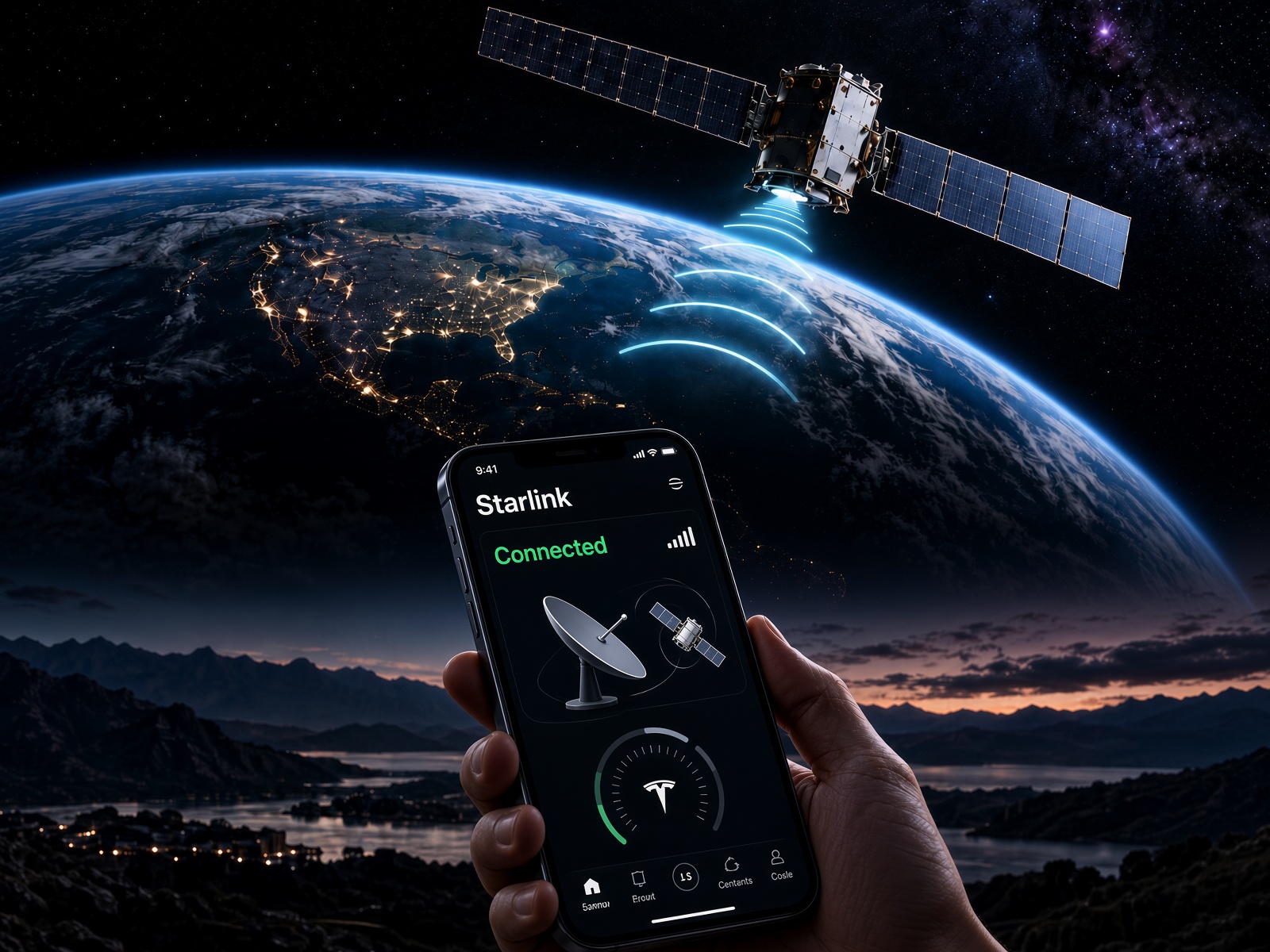
The Federal Communications Commission has formally opened its review of SpaceX’s plan to buy a nationwide block of 800 MHz spectrum from Grain Management, moving Starlink Mobile one step closer to operating as a full U.S. wireless carrier.
In a public notice issued Tuesday, the FCC’s Wireless Telecommunications Bureau said it accepted for filing the applications to transfer control of two Grain license companies, Prism License Co. 1 and Prism License Co. 2, to Starlink Spectrum Holdings, a wholly owned SpaceX subsidiary. The deal covers 546 paired licenses across 3,224 counties, reaching roughly 100% of the U.S. population in all 50 states, Washington, D.C., Puerto Rico and the U.S. Virgin Islands. The proceeding sits under WT Docket No. 26-313.
Acceptance is not approval. It means the applications cleared an initial review and the public comment window is now open. Comments and petitions to deny are due December 1, and oppositions are due December 8. The bureau also said the conditions attached to Grain’s July purchase of the licenses from T-Mobile, which require rapid buildout for terrestrial and direct to device service, would carry over to SpaceX if the transfer is approved.
SpaceX announced the agreement on October 8, saying the new airwaves would let Starlink Mobile’s signal reach phones inside buildings, something its 2 GHz spectrum from EchoStar cannot do as well. The portfolio includes up to 14 MHz of paired spectrum in the 817 to 824 MHz and 862 to 869 MHz bands, which most existing phones already support. Elon Musk called it “the last critical piece of the spectrum puzzle needed for SpaceX to provide complete phone coverage in America.”
According to the filing, SpaceX would hold up to 89 MHz of total spectrum in any given market after the deal closes, including up to 14 MHz below 1 GHz. That is far under the 385 MHz threshold the FCC uses to flag a transaction for closer competitive scrutiny, and well short of the roughly 300 MHz each of AT&T, Verizon and T-Mobile holds.
Tuesday’s notice does not decide how SpaceX can use the spectrum from orbit. A separate application SpaceX filed on October 27 seeking authority to provide supplemental coverage from space on the same frequencies, along with related waiver requests, is still pending before the commission.
The ground network is already taking shape. Last week, SpaceX picked Qualcomm to supply radios, baseband units and software for a nationwide 5G build, with deployment across tens of thousands of U.S. cell sites starting in 2027. The FCC also voted on October 29 to advance a proposal opening another 482 MHz to direct to device service, though AT&T, Verizon and T-Mobile hacritive pushed to strip nearly 300 MHz from it. SpaceX President Gwynne Shotwell has said service on SpaceX’s own airwaves is targeted for early 2028.

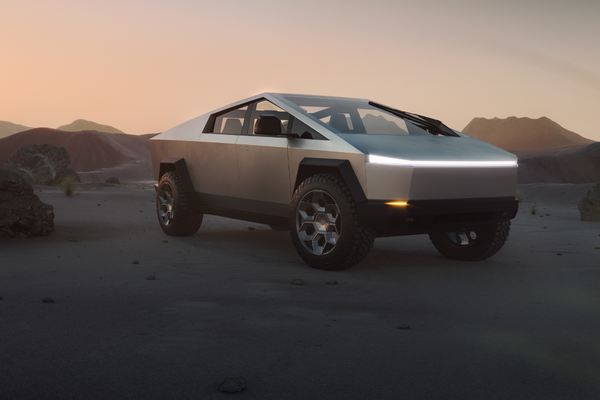
A Tesla upfitter has offered to take over Cybertruck lines from the company in a last-ditch effort to save the all-electric pickup from being completely canceled in the middle of 2027.
Unplugged Performance, the Hawthorne, California-based Tesla aftermarket specialist, has publicly offered to take over Cybertruck production from Tesla, funding the effort “through a consortium of investors.”
An open offer to Tesla: We fully support putting Cybercab first, and we’d be glad to take the Cybertruck line off your hands.
We’d fund it with a consortium of investors and run it at no cost to Tesla’s floor space, headcount, or focus. All of that goes to Cybercab. Cybercab gets first call on battery cells too. We’ll wait our turn.
Tesla gains incremental profit: a license fee, plus FSD and Robotaxi network revenues on every vehicle built.
We’d build the Cybertruck, a three-row CyberSUV, and an unmanned CyberCargo hauler. More autonomous miles, across every surface of this planet and beyond.
Worth a conversation?— UP (@UnpluggedTesla) November 10, 2026
The proposal comes as Tesla prioritizes its Cybercab Robotaxi program and prepares to wind down Cybertruck assembly at Gigafactory Texas around mid-2027.
Founded in 2013 by Ben Schaffer and located adjacent to Tesla’s Design Studio and SpaceX, Unplugged Performance has become a leading provider of premium upgrades for Tesla vehicles, including extensive Cybertruck packages under its UP INVINCIBLE line.
Through its UP.FIT division, the company has also developed purpose-built police and fleet versions of the Cybertruck, including deliveries to agencies such as the Las Vegas Metropolitan Police Department.
In an X post on Tuesday, Unplugged said:
“An open offer to Tesla: We fully support putting Cybercab first, and we’d be glad to take the Cybertruck line off your hands. We’d fund it with a consortium of investors and run it at no cost to Tesla’s floor space, headcount, or focus. All of that goes to Cybercab. Cybercab gets first call on battery cells too. We’ll wait our turn. Tesla gains incremental profit: a license fee, plus FSD and Robotaxi network revenues on every vehicle built. We’d build the Cybertruck, a three-row CyberSUV, and an unmanned CyberCargo hauler. More autonomous miles, across every surface of this planet and beyond. Worth a conversation?”
The arrangement would free Tesla resources and manufacturing capacity for Cybercab while allowing continued production of the stainless-steel pickup and expanded variants. Unplugged Performance indicated it would wait for battery cells after Cybercab needs are met and would generate ongoing revenue for Tesla through licensing and software/network services on the vehicles it produces.
Following strong initial interest, Unplugged Performance posted a follow-up inviting potential investors and strategic partners to email cyber@unpluggedperformance.com. The company clarified that the outreach is solely to gauge interest and does not constitute an offer to sell securities or acceptance of funds at this stage.
The proposal arrives shortly after Elon Musk indicated that Cybertruck production in Texas would be phased out by roughly the middle of 2027 to expand Cybercab output.
Whether Tesla engages with the offer remains to be seen, but the public overture highlights both the aftermarket specialist’s deep experience with the Cybertruck platform and the growing focus on autonomy within Tesla’s manufacturing plans.
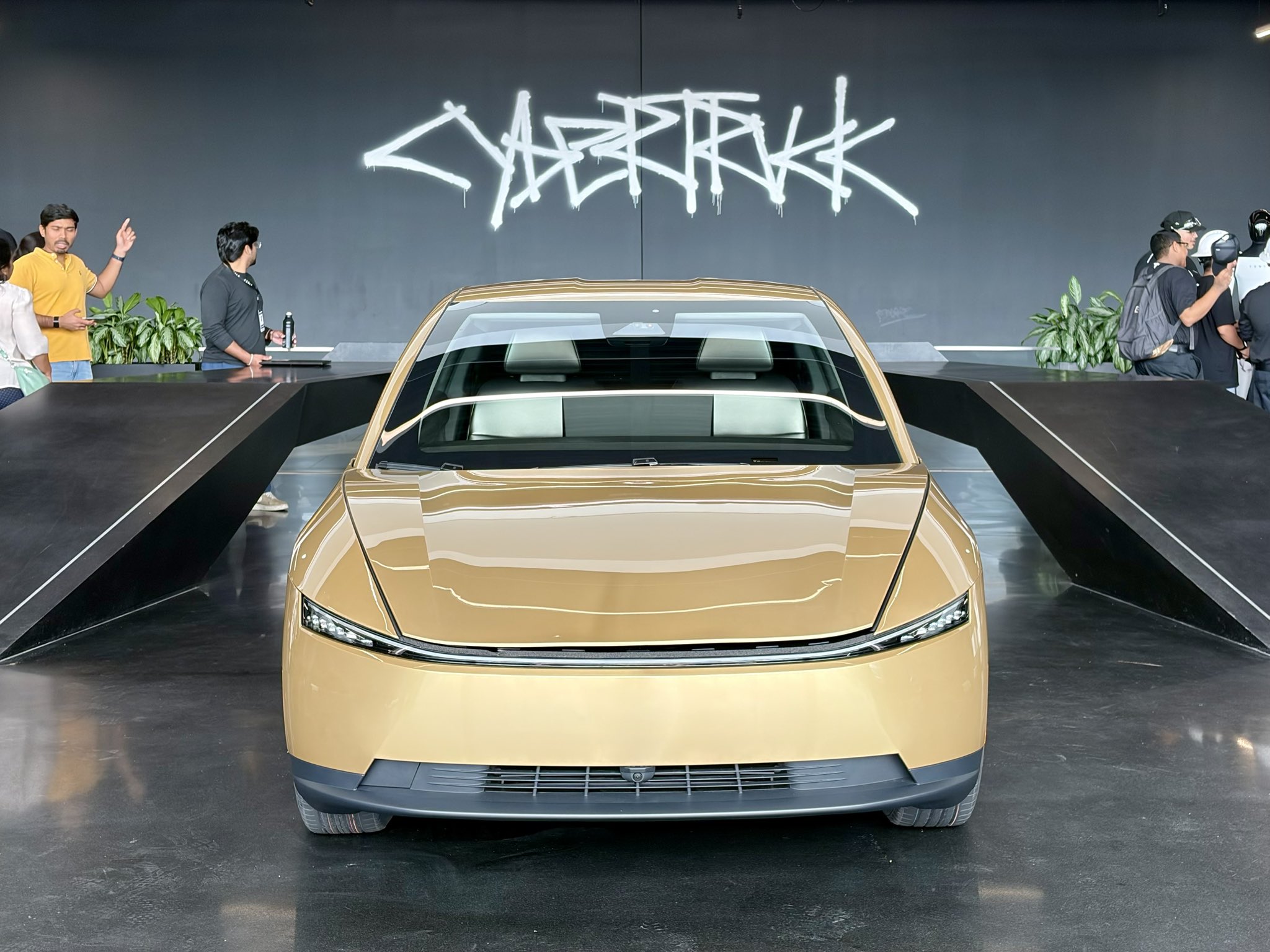
Elon Musk said the Tesla Cybercab will perform “a majority of all passenger miles” where it is allowed to operate and that point is “obvious to anyone with eyes and a brain.”
Musk used the point to double down on the company’s decision to ax the cult-favorite Cybertruck, as its production space will be removed and transitioned into additional Cybercab lines. The move has catalyzed a polarizing conversation on whether its right or wrong.
Whatever side you are on — it’s happening.
Dodge ended the Viper.
Audi retired the R8.
Mitsubishi said goodbye to the Lancer Evo.
Ford bid farewell to the Bronco (at one point).
Chevrolet sunset the Camaro.Tesla is ending the Cybertruck. I’m pissed. I’m upset.
Fans of those five automakers mentioned did the same thing. It happens. It sucks. I don’t like it.
But I still love Tesla. I love my Model Y. I hoped to be in a Cybertruck in a little under two years.
I won’t be. But I still won’t put my family in anything else. Too safe. Too advanced. Too much better than everything else.
— TESLARATI (@Teslarati) November 10, 2026
Regardless, Musk seems to be getting to the point that he is done talking about the choice. At some point, you have to think that this was truly a difficult decision for him and the company as well, and this is not something he took lightly. In fact, he’s probably a little bit disappointed with it, too.
But the point remains that the Cybertruck is gone. Musk’s focus is purely on developing an autonomous platform that the world will utilize for transportation, and he’s telling you that anyone “with eyes and a brain” can see it:
@PalmerLuckey @carlhancock Cybercab will do a majority of all passenger miles in any jurisdiction where it is not prohibited by law.
Obvious to anyone with eyes and a brain.
— Elon Musk (@elonmusk) November 10, 2026
Tesla is betting that all of its passengers in the future will be okay with not owning their own personal cars and will be fine with ride-hailing for the rest of their lives. Every dinner, every errand, every trip to the airport and transportation thereafter, will all be operated by ride-sharing, and in Tesla’s perfect world, it will happen in a Cybercab.
As of now, Cybercab is only active in Austin, but it has been spotted all over the country with a driver behind the wheel in those prototypes. In Austin, the car has no steering wheel or pedals for people to control the vehicle.
The Cybertruck dilemma is one that has truly come across the entire Tesla community and while it seems to be a great idea to keep it because people love it, the business side of things is steering Musk and Tesla in another direction.

SpaceX just cleared a key FCC hurdle in its fight with Verizon and AT&T

Tesla upfitter offers to keep Cybertruck alive


