News
SpaceX had a big year: 2016 year in review

On December 21, 2016, SpaceX celebrated the one-year anniversary of Falcon 9’s first ever successful stage one landing, leaving their mark on history with the first rocket to ever do so after delivering a payload into orbit. The mission delivered 11 ORBCOMM satellites into low-Earth orbit to complete a 17-satellite constellation network.
Several videos were published with footage of the event last year, but National Geographic gave us a behind-the-scenes look at Elon Musk’s emotional ride while it was happening as an anniversary treat.
The first landing anniversary wasn’t the only thing to come out of 2016, however, and what a year it was!
MORE HISTORIC SPACEX LANDINGS
On April 8, 2016, SpaceX made history again, that time by landing Falcon 9’s first stage booster onto the “Of Course I Still Love You” autonomous droneship in the Atlantic Ocean off the Florida coast. The mission’s payload was a Dragon capsule cargo shipment to the International Space Station (“ISS”) named CRS-8, itself containing an important space technology demonstration for expandable habitats. The Bigelow Expandable Activity Module (“BEAM”) carried in the Dragon capsule was later successfully docked to the ISS and inflated as planned.
On May 5, 2016, SpaceX landed yet another first stage booster on drone ship “Of Course I Still Love You”, but the destination of its payload was geostationary transfer orbit (“GTO”), about 36,000 kilometers above the Earth vs. the 160 to 2000 kilometer height of low-Earth orbit previously achieved before a landing. The higher GTO orbit brought the first stage of Falcon 9 to a much faster speed and higher reentry heating than the previous missions, making the successful landing yet another one for the history books. Its payload was the JCSAT-14 commercial communications satellite.
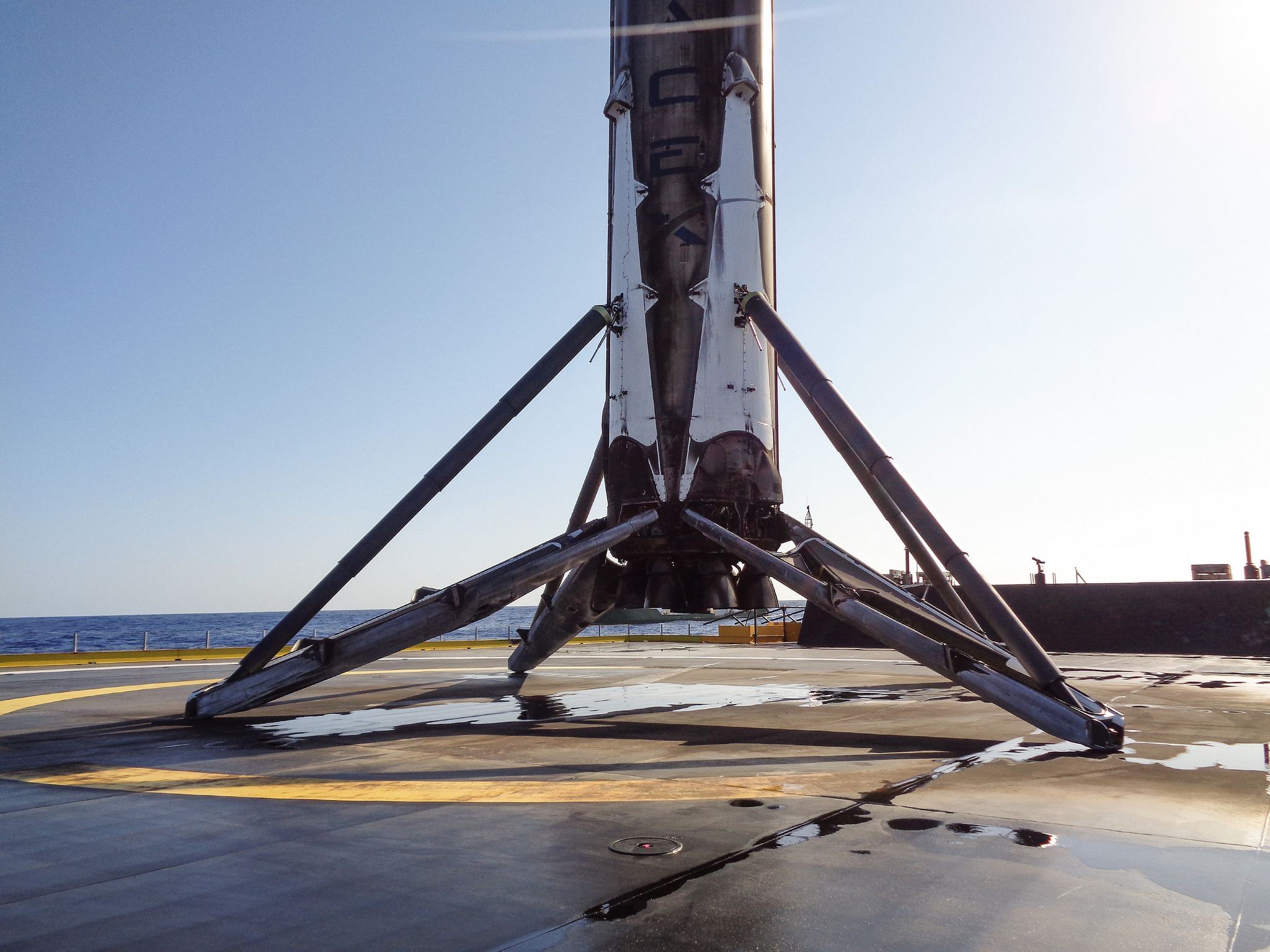
Falcon 9 on the droneship after launching JCSAT-14 | Credit: SpaceX
Another successful GTO mission with a droneship landing was completed on May 27, 2016, and its THAICOM-8 payload was then delivered to a supersynchronous transfer orbit of 91,000 kilometers high. The third time broke the charm, however, and on June 15, 2016, after a successful insertion of Eutelsat 117 West B and ABS-2A satellites into GTO, the Falcon 9 first stage was lost due to early engine shutdown from lack of fuel.
Looks like early liquid oxygen depletion caused engine shutdown just above the deck pic.twitter.com/Sa6uCkpknY
— Elon Musk (@elonmusk) June 17, 2016
Undeterred, SpaceX successfully landed one more booster on August 16, 2016 during its JCSAT-16 mission to GTO. “Of Course I Still Love You” was the droneship used once again.
First stage landing confirmed on the droneship. Second stage & JCSAT-16 continuing to orbit https://t.co/tdni5406Hi pic.twitter.com/h6llIXSVu7
— SpaceX (@SpaceX) August 14, 2016
A FEW SETBACKS FOR SPACEX
September 1, 2016 is a day that will potentially live in both conspiratorial and procedural dispute infamy due to SpaceX’s launch pad anomaly during its fueling process. Whether the description of choice of the event is “fast fire”, “explosion”, or “fireball”, the result was the same: a complete loss of the Falcon 9 rocket, its payload, and the ability to use Space Launch Complex 40 in the near future.
Still working on the Falcon fireball investigation. Turning out to be the most difficult and complex failure we have ever had in 14 years.
— Elon Musk (@elonmusk) September 9, 2016
The AMOS-6 satellite aboard the rocket was owned by Israel-based Spacecom Ltd. and had been part of a $95 million dollar leasing deal between Facebook and Eutelsat to provide internet access to the non-connected parts of the world.
Per SpaceX’s last update, the investigation and FAA report on the anomaly are still pending and have focused on a breach in the loading of the cryogenic helium system of the 2nd stage liquid oxygen (“LOX”) tank.
Loss of Falcon vehicle today during propellant fill operation. Originated around upper stage oxygen tank. Cause still unknown. More soon.
— Elon Musk (@elonmusk) September 1, 2016
Falcon 9 isn’t expected to return to flight until January 2017 now that the launch with the Iridium-1 satellite payload was delayed from the tentative December 16th date. The FAA report must be completed prior to further launch approvals. The chain reaction of delayed launches has only cost the loss of one SpaceX customer to another launch provider thus far.
Due to extensive damage to Space Launch Complex 40 from the anomaly, future launches from the east coast will take place from historic Apollo-era Launch Complex 39A. SpaceX has been renovating the pad for Falcon Heavy launches. Also resulting from the anomaly was a delay in the first Falcon Heavy launch to early 2017.
SPACEX PUSHES ONWARD
Throughout 2016, SpaceX continued to work on its Crew Dragon capsule as part of its competition with Boeing to provide human flight capabilities from American soil via NASA’s Commercial Crew Program. The tentative test launch date for the capsule was set for late 2017, but unfortunately, it was pushed back into May of 2018. Earlier in the year, Boeing also delayed its launch date to August 2018.
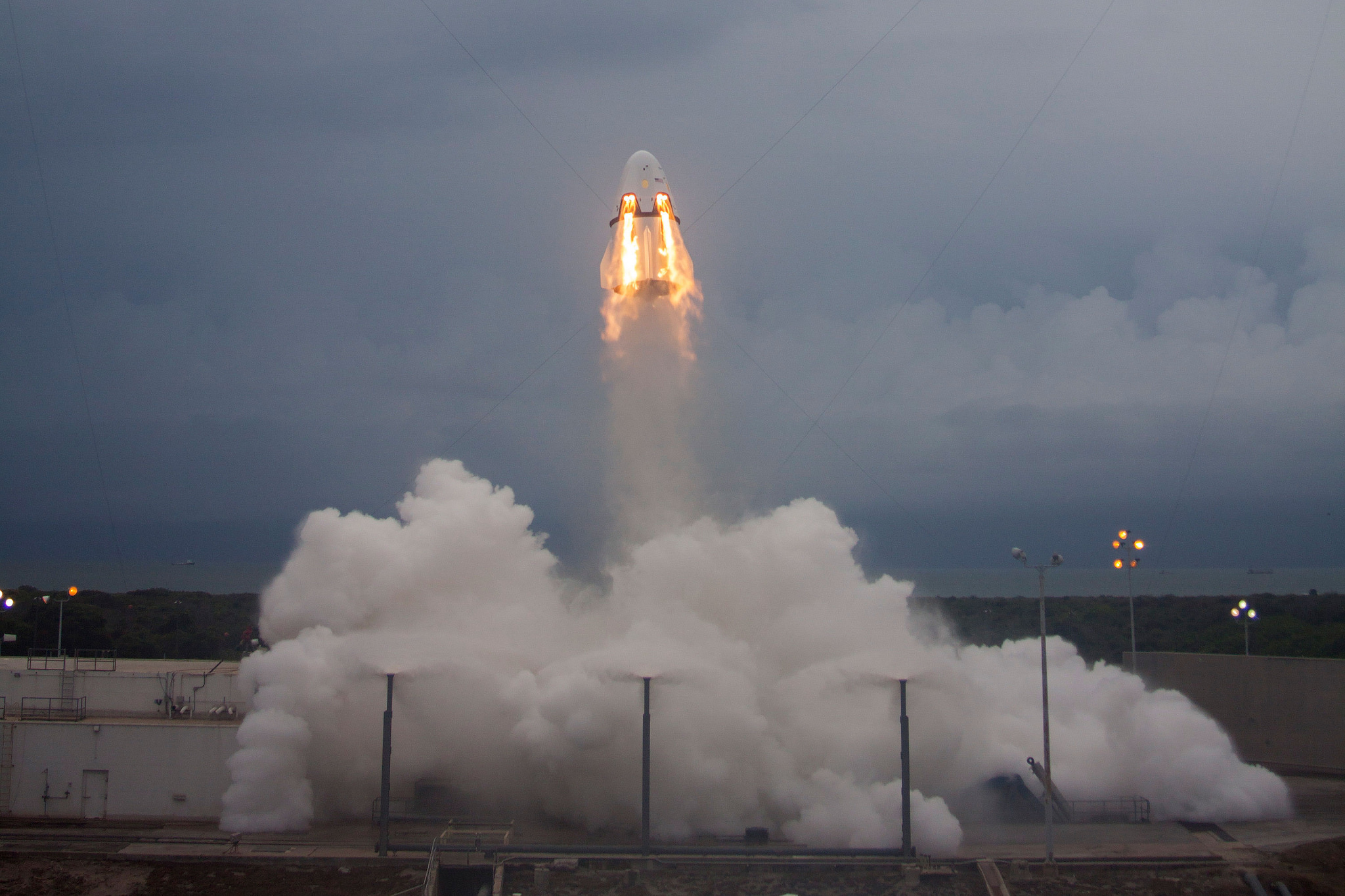
Crew Dragon during launch abort test | Credit: SpaceX
ELON MUSK REVEALS SPACEX’S MARS PLAN
Finally, at the end of September, Elon announced SpaceX’s plan to put a million people on Mars by the 2060s via its Interplanetary Transport System, also affectionately named BFR (“Big F*ing Rocket”).
Full Interplanetary Tranport System presentation in ~30 mins. Simulation preview: https://t.co/lKAxabzfKX
— Elon Musk (@elonmusk) September 27, 2016
A video was released prior to the September 27th, 2016 International Astronautical Conference announcement in Guadalajara, Mexico illustrating the full system concept. The animation was based on the actual CAD renderings in development, per Elon’s talk.
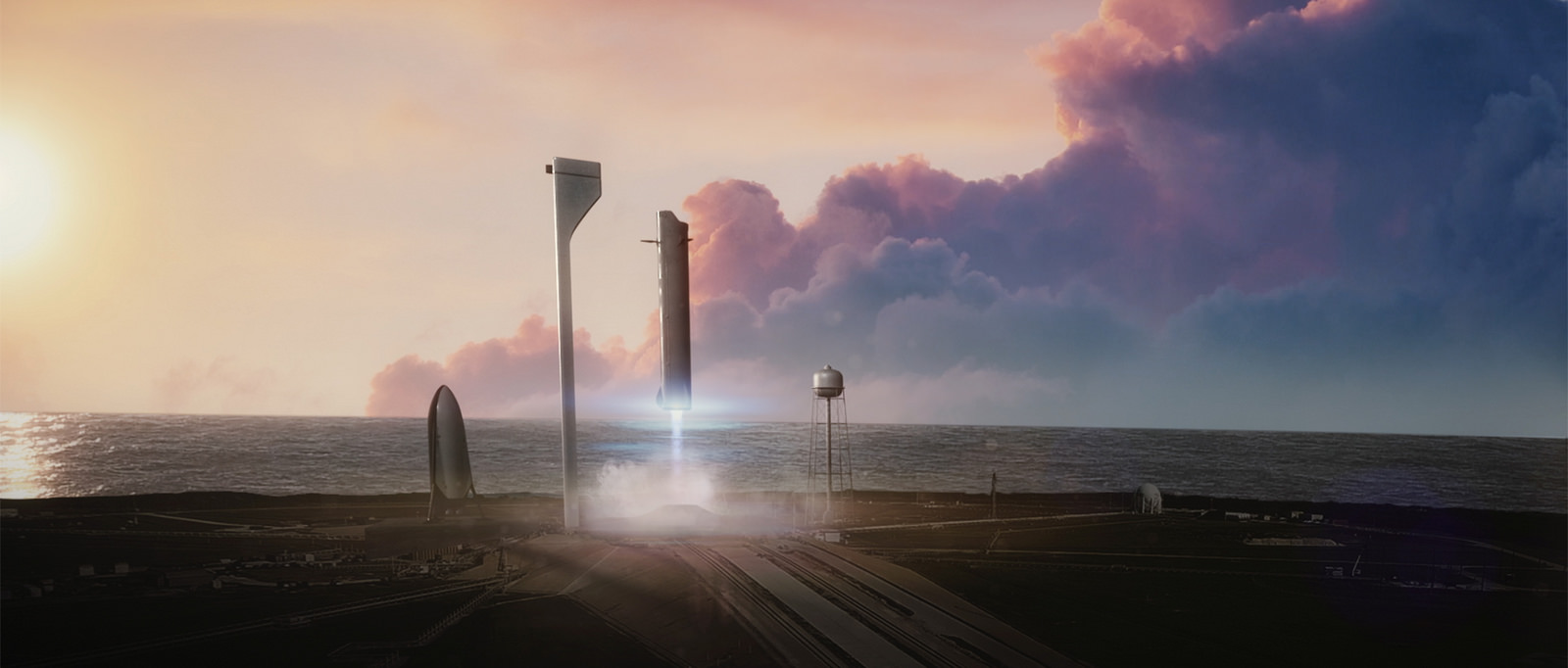
SpaceX ITS Stage 1 landing graphic | Credit: SpaceX
Plenty of goodies were revealed about SpaceX’s plans including the passenger habitat, entertainment intentions for travelers, and technical specifications surrounding the system’s size, engines, and fuel systems. While the presentation itself was exciting, many questions were still left unanswered such as more specifics on radiation dangers and the long-term effects of microgravity.
SUMMARY
Overall, 2016 brought a rollercoaster of successes and setbacks for SpaceX, but the business of rocket launching wasn’t expected to be an easy one. The phrase, “Rockets are hard” isn’t a simple excuse to explain away failures, but rather an accepted cost of being in the field.
Throughout the year, SpaceX has managed to maintain public and government faith in its mission to advance human space exploration despite any setbacks. In July, NASA ordered a second commercial crew mission from the company, and then they followed up in November with a contract to launch an Earth surface-water-analyzing satellite in 2021.
SpaceX also received a number of recognitions for its work environment and achievements, including making Glassdoor’s Top 50 Places to Work and being awarded the 2016 World Technology Award for space.
Oh, and if it seems all that isn’t enough for SpaceX to have on its plate, in November the company filed a request with the FCC to launch over 4,000 communication satellites as part of their goal of building a hi-speed satellite internet constellation.
There’s a lot to look forward to in 2017 and beyond. Onwards!



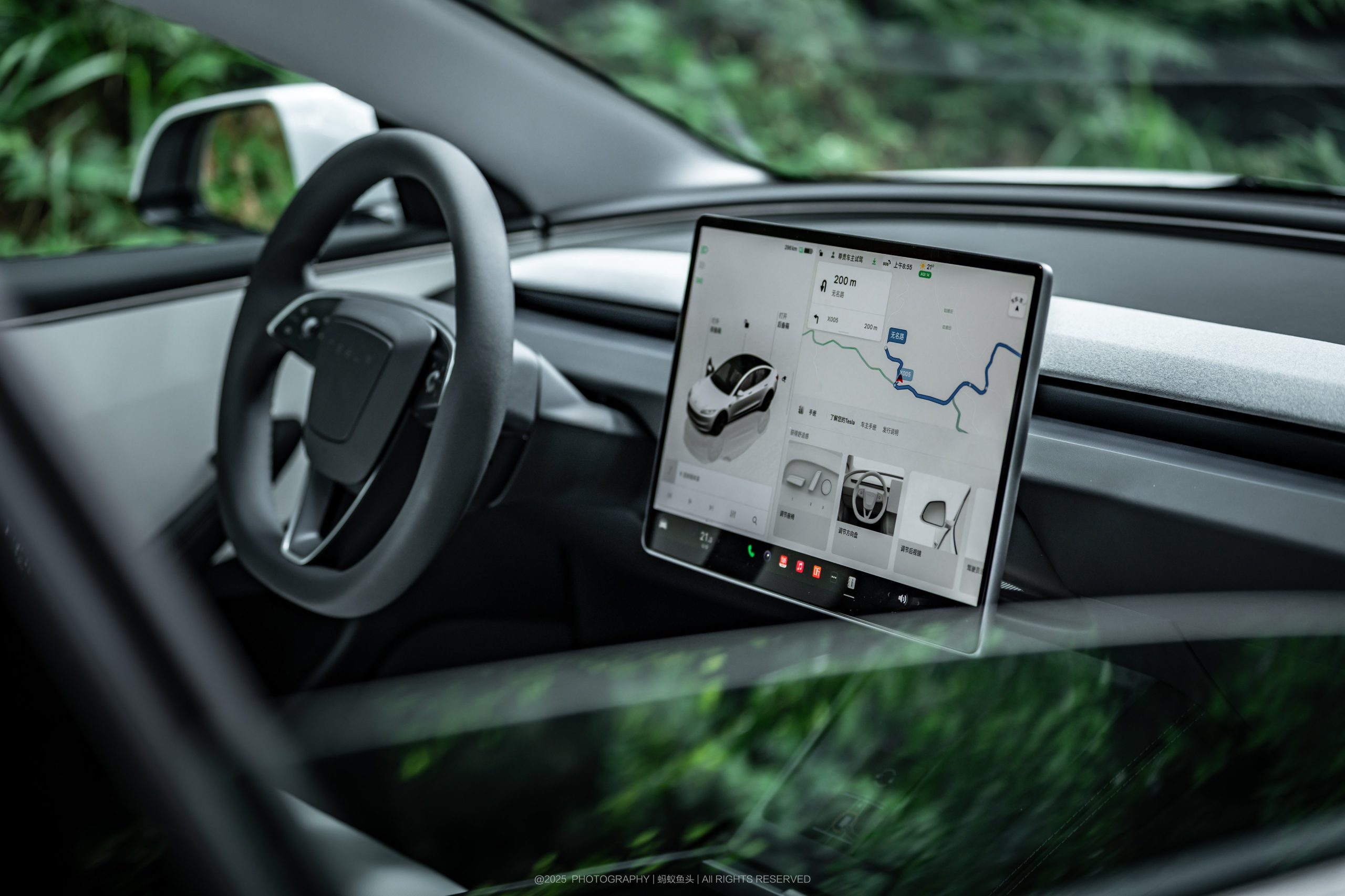
Tesla revealed plans to develop its own maps internally to fix Navigation issues and give owners more control over their routing.
On the company’s Q3 2026 Earnings Call, a question was asked about FSD Navigation issues, particularly speed limit recognition, parking, and routing. These are issues that surface from version to version and seem to be seriously challenging for Tesla’s AI team to resolve.
Tesla’s Head of AI, Ashok Elluswamy, said in response to the question:
“You’re totally right that we shouldn’t be depending on external people’s maps. So we are building our own maps, but not like the same way as OneMoreMap. We are building an entirely new architecture with essentially AI-based mapping and navigation.”
He continued:
“It’s going to be super awesome. It’s going to be integrated with voice. You can talk to it, ask for different routes. It’s going to learn your personalized preferences, plus the fleet preferences. The collective intelligence of all the cars is going to flow into making the maps and navigation super cool.”
Elluswamy said this issue should be confronted, and the mapping should be available for people by the time the v15 release starts deploying to customers.
“And over the next several months,” he added, “it’s just going to take over all of the navigation functions, parking, destination handling. And it will know you better than you know yourself in some regard for the driving task, and then handle it fully.”
Tesla Summon got insanely good in FSD v14.3.2 — Navigation? Not so much
Navigation is perhaps the most notable complaint with FSD, and although it has gotten better, it is still flawed. Much of the time, FSD will take people on routes that are not preferred by the driver, but Tesla tried to combat this with a routing feature in the Summer 2026 Update.
Tesla currently relies on Google for map data, but it is sort of counterintuitive to believe the company would rely on a third party for this. These improvements will be welcome, as routing and navigation have been such a pain point for so many owners for so long.
Quotes via Motley Fool
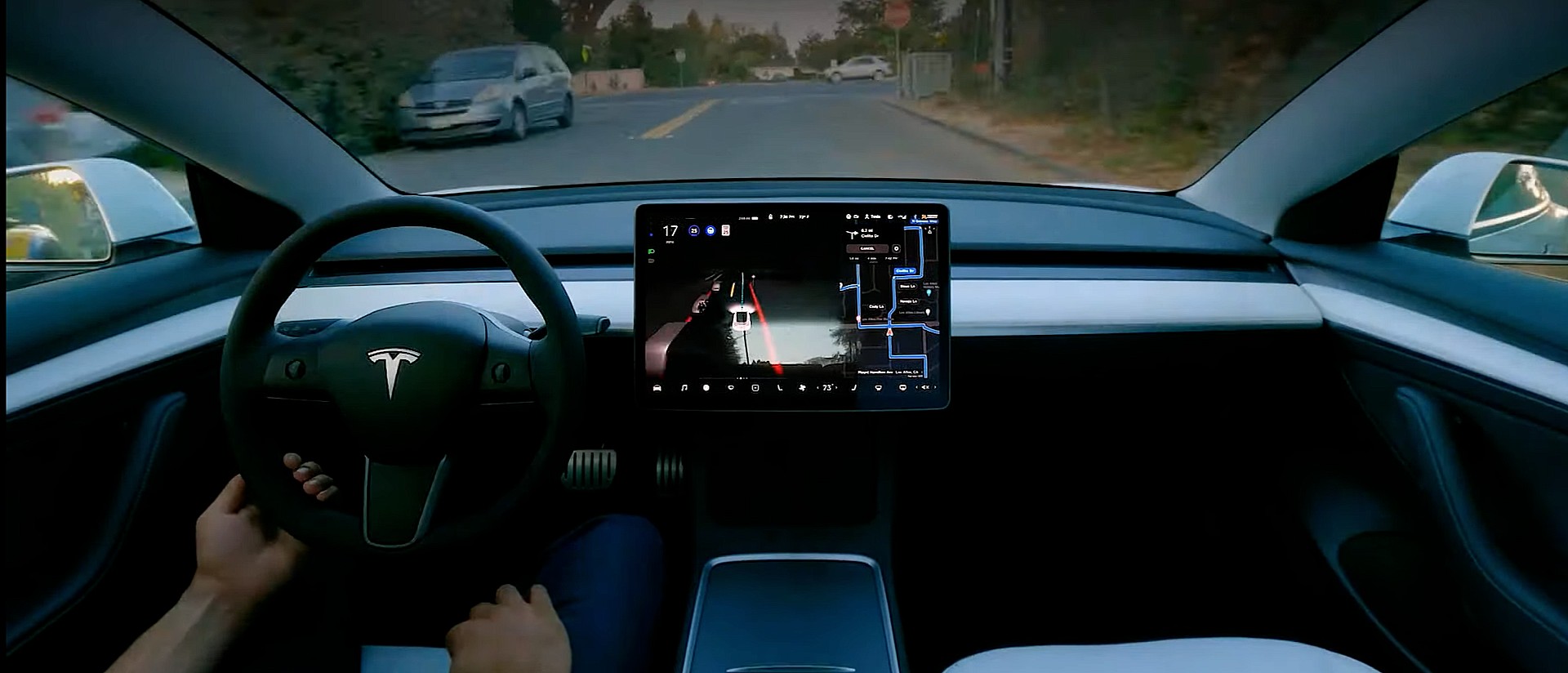
Tesla Full Self-Driving (Supervised) showed a record attach rate at delivery for new vehicles in the third quarter of 2026.
75 percent of new vehicle deliveries in North America included a subscription to FSD software, up from 55 percent in the prior quarter, a 20-percentage-point sequential gain in the company’s most mature market.
Tesla Q3 2026 Earnings results: in-line revenues, slight beat on EPS
Tesla shed light on the Q3 Shareholder Deck that 75 percent of new deliveries came with an FSD subscription:
“FSD (Supervised)⁴ attach rate continued to grow, reaching over 75% of new vehicle deliveries in North America – our most mature market – a nearly twenty percentage point sequential increase. We believe that FSD is driving demand in markets where it is available, and we continue to work with regulators to get it approved in other markets. “
The higher attach rate accompanied strong growth in the overall FSD consumer base, as active subscriptions rose to 1.75 million, a 67 percent year-over-year increase. For the first time, more than half of paid customers are on the monthly subscription, which is priced at $99 per month in the U.S.
People are buying FSD with a car attached, not the other way around
— Elon Musk (@elonmusk) October 21, 2026
The transition to subscriptions has accelerated since Tesla discontinued the one-time purchase option in most markets earlier this year. The recurring model improves revenue visibility and margins compared with large upfront payments. With three-quarters of North American deliveries now including FSD, the software is now an evidently large contributor to Tesla’s economics and ancillary revenue.
Geographic expansion remains important for further gains. FSD is now available in nine countries in the EU, and more than 100,000 customers have driven over 160 million kilometers. Tesla is pursuing broader EU-wide approval, with a related vote expected in December. Similar progress in additional markets could support higher attach rates beyond North America.
These results came as Tesla had a strong quarterly delivery performance of 486,532 vehicles in the quarter, which came with its largest passenger-vehicle backlog in four years. Battery supply continued to limit volume, but the company has pointed to FSD as a clear difference-maker that is helping sustain demand. As supervised capabilities improve, the attach rate will likely continue to improve.
At face value, it is a key measure of how Tesla is converting sales into autonomy progress.
Update: 10/22 10:51a – Para 1 consumers changed to “customers” for accuracy.
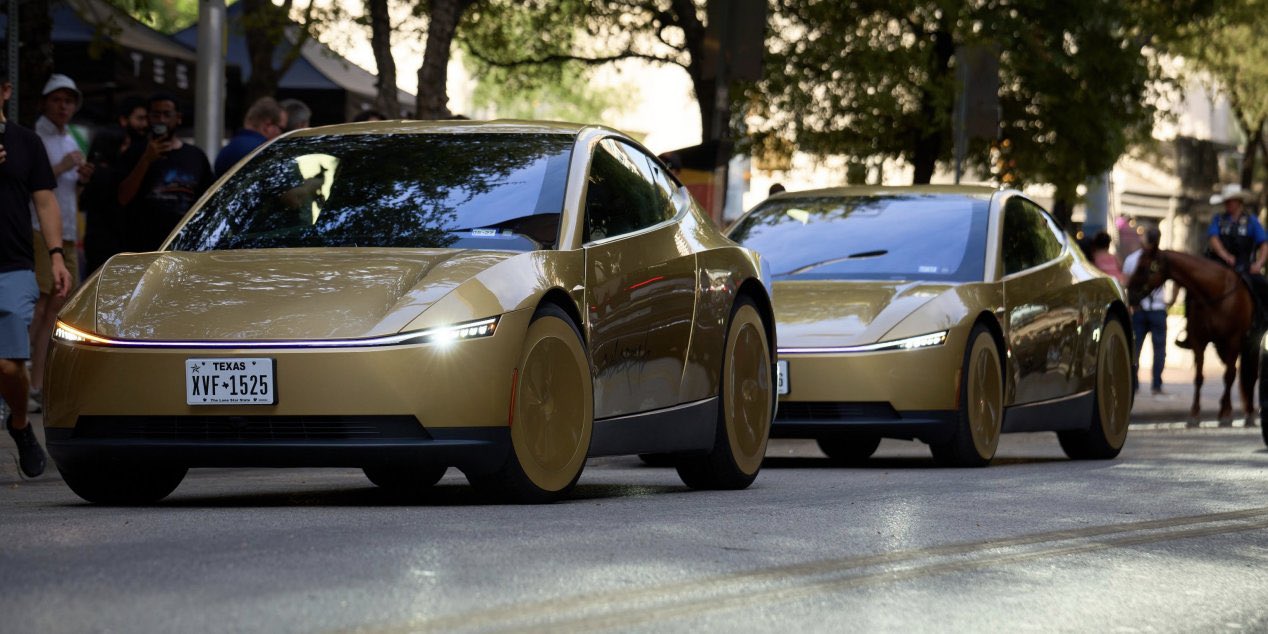
Tesla Cybercab units finally got a definitive date for when they will be able to be purchased by customers, ending speculation regarding whether the fully autonomous vehicle would be available in the near term.
During Tesla’s third-quarter 2026 earnings call on October 21, Vice President of Engineering Lars Moravy said the company is aiming to begin delivering its purpose-built Cybercab robotaxi to customers before year-end.
🚨 In short, Cybercabs are slated to go to customers by end of the year. All units are going into Robotaxi fleet currently, per @larsmoravy
Cybercab will be “transport-as-a-service,” but vast majority of Cybercab will be “Tesla-owned,” @elonmusk says https://t.co/R8Qu8QWdmp
— TESLARATI (@Teslarati) October 21, 2026
“We’re trying to get Cybercabs to customers by the end of this year, 2026,” Moravy said. He added that production is underway on the line at Gigafactory Texas, but “all of those are currently going to our own internal Robotaxi fleet.”
Moravy explained that as operations scale, Tesla will “mainly deliver fully designed autonomous vehicles to our customers,” with the Cybercab as the first such vehicle. Initial customer deliveries will start small while the company gains experience with delivery logistics, ownership models, fleet management, and operating autonomous vehicles outside its direct control.
CEO Elon Musk reinforced the limited nature of private sales, describing the Cybercab primarily as a “transport-as-a-service” offering rather than a personal ownership vehicle like the Model 3, Model Y, or upcoming Roadster. “The vast majority of the Cybercab stuff will be Tesla-owned and transport-as-a-service,” Musk said.
The Cybercab is a two-seater vehicle developed by Tesla without a steering wheel or pedals. It relies completely on Tesla’s Full Self-Driving suite and has been in production since February. Early units have been put in Tesla’s Robotaxi service as of early September, when the company launched rides to the public. Tesla previously indicated it would aim to sell Cybercabs for about $30,000.
Unsupervised Full Self-Driving is expected to ship to consumer cars during Q2 2027, Ashok Elluswamy, Tesla’s Head of AI, indicated during the call. Early buyers or fleet operators may receive vehicles whose autonomous operation remains geographically restricted due to lagging regulatory agencies. There are some hurdles that remain ahead of Cybercab deliveries.

Tesla is building its own maps to fix Navigation issues

Tesla buyers are buying for Full Self-Driving and not for the car, data shows


