Elon Musk
Tesla’s golden era is no longer a tagline
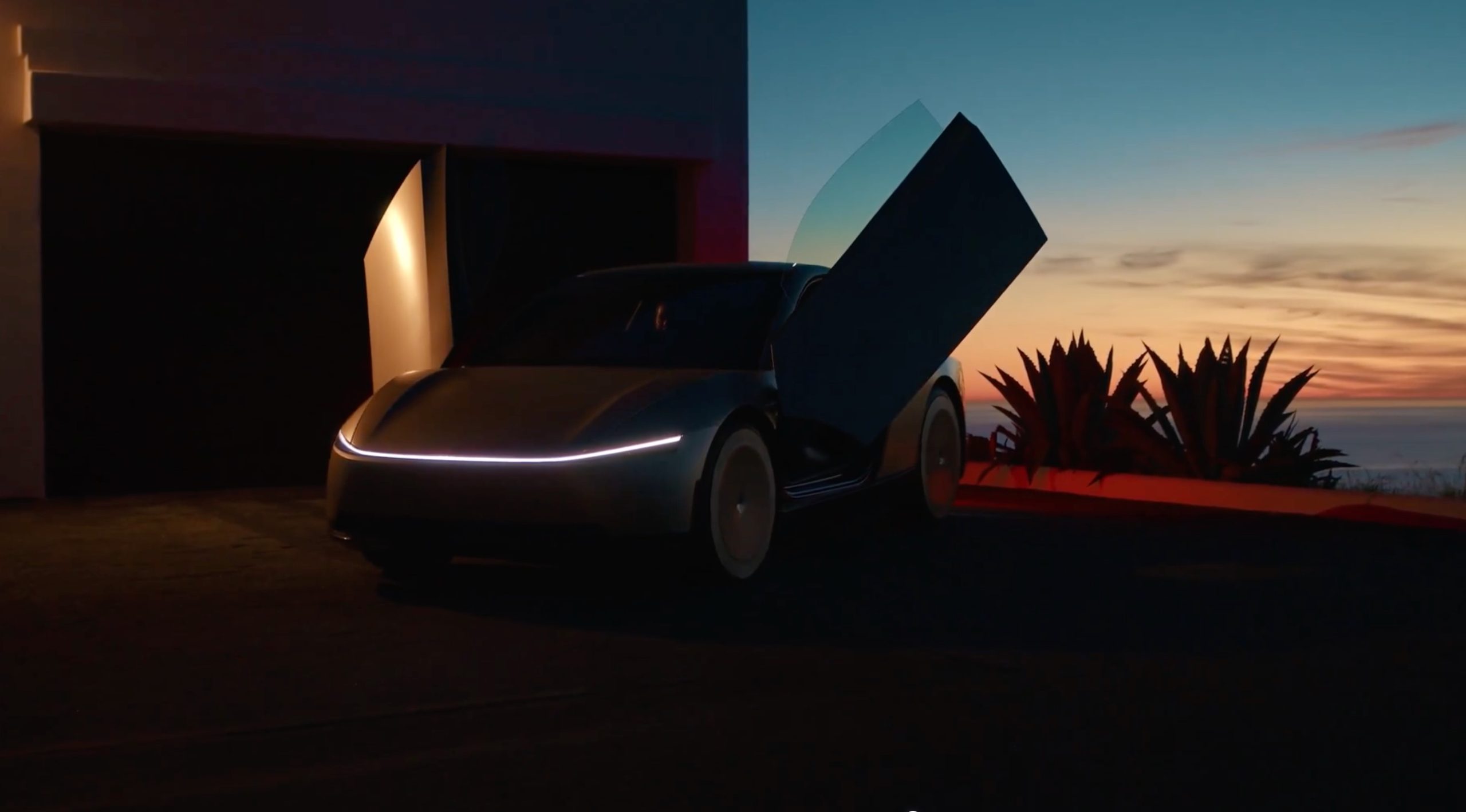
Tesla “golden era” teaser video highlights the future of transportation and why car ownership itself may be the next thing to change.

The golden age of autonomous ridesharing is arriving, and Tesla is making sure we can all picture a future that looks like the future. A recent teaser posted to X shows a Cybercab parked outside a home, and with a clear message that your everyday life may soon look like this when the driverless vehicles shows up at your door.
Tesla has begun the rollout of its Robotaxi service across US cities, and the production of its dedicated, fully-autonomous Cybercab vehicle. The first Cybercab rolled off the Giga Texas assembly line on February 17, 2026, with volume production now targeted for this month. Additionally, the Robotaxi service built around it is already running, without human drivers, in US cities.
Tesla Cybercab production ignites with 60 units spotted at Giga Texas
The Cybercab is built without a steering wheel, pedals, or side mirrors, designed from the ground up for unsupervised autonomous operation. Musk described the manufacturing approach as closer to consumer electronics than traditional car production, targeting a cycle time of one unit every ten seconds at full scale.
Drone footage from April 13, 2026 captured over 50 Cybercab units on the Giga Texas campus, with several clustered near the crash testing facility. Musk has noted that Tesla plans to sell the Cybercab to consumers for under $30,000, and owners will be able to add their vehicles to the Tesla robotaxi network when not in personal use, potentially generating income to offset the vehicle’s purchase cost. That model changes the math on vehicle ownership in a meaningful way, making a car something closer to a depreciating asset that can also earn by paying itself off and generate a profit.
During Tesla’s Q4 earnings call, the company confirmed plans to expand the Robotaxi program to seven new cities in the first half of 2026, including Dallas, Houston, Phoenix, Miami, Orlando, Tampa, and Las Vegas. The service already runs without safety drivers in Austin, and public road testing of the Cybercab has expanded to five states, including California, Texas, New York, Illinois, and Massachusetts.
Golden era pic.twitter.com/AS6pX2dK8N
— Tesla Robotaxi (@robotaxi) April 16, 2026


Elon Musk
SpaceX just got the green light Starship has waited years for
The FAA has cleared Starship Flight 14, setting up SpaceX’s first orbital attempt on Monday.
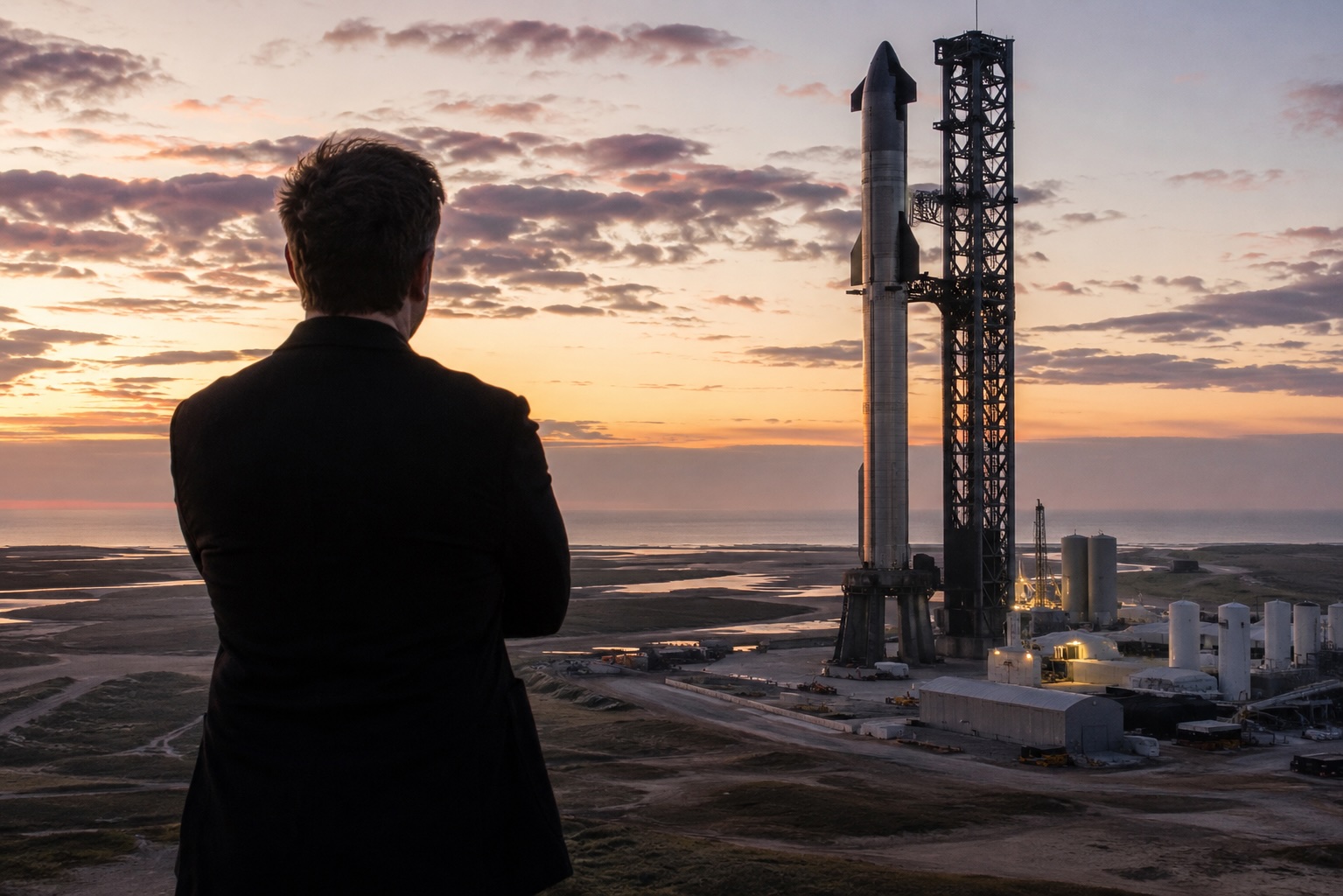
SpaceX has cleared the last regulatory hurdle standing between Starship and its first trip to orbit. The Federal Aviation Administration issued the launch license for Starship Flight 14 late Saturday, keeping the mission on track for liftoff Monday, September 28, from Pad 2 at Starbase, Texas.
The 75 minute launch window opens at 7:15 a.m. Central, and Boca Chica Beach closures are also scheduled for September 29 and 30 as backup dates. This will be Starship’s first revenue generating mission.
The license was the missing piece after SpaceX completed a full wet dress rehearsal with Booster 21 and Ship 41 on September 24. At the time, the company said the flight remained on track pending regulatory approval. Because Flight 14 flies an orbital profile, the FAA had to sign off on a modified license that met its safety, payload and financial responsibility requirements.
Observers combing through the new FAA paperwork also noticed that lightning no longer appears among Starship’s listed launch hazards. If that holds, it matters more for where Starship is headed than for Monday’s attempt. Florida and Louisiana, home to LC-39A and the planned Starbase Louisiana site, see some of the most frequent lightning in the United States.
SpaceX tells the FCC that Starship Flight 14 is going to orbit
Flight 14 is the mission SpaceX has been building toward for months. Ship 41 will carry 26 Starlink V3 satellites, the first operational V3 units to be deployed, and attempt roughly six orbits at about 275 kilometers over a flight lasting just under 10 hours. SpaceX says the ship will only perform its orbital insertion burn after flight controllers confirm enough hardware redundancy remains for the deorbit burn at the end of the mission. Ship 41 is targeting a splashdown in the Pacific west of Chile, while Super Heavy will return to the Gulf of Mexico.
The date carries some symbolism as well. A Monday launch would come 10 years and one day after Elon Musk first presented the Interplanetary Transport System, the design that became Starship, at the International Astronautical Congress in Guadalajara, Mexico.
SpaceX has not announced what comes next, but air traffic planning slides reported this week, list Flight 15 no earlier than October 19 and a first Starship launch from LC-39A in Florida no earlier than October 30. Both dates depend on how Monday goes.
Elon Musk
Google just picked SpaceX for its first step into orbital AI
Google will launch its first Project Suncatcher AI satellite on SpaceX’s Transporter-18 rideshare next week.
Google is about to put its own AI chips into orbit for the first time, and it is paying SpaceX to get them there.
The company said Thursday that the first in-orbit test of Project Suncatcher, its research effort to find out whether space can host large-scale AI computing, will fly next week on SpaceX’s Transporter-18 rideshare mission.
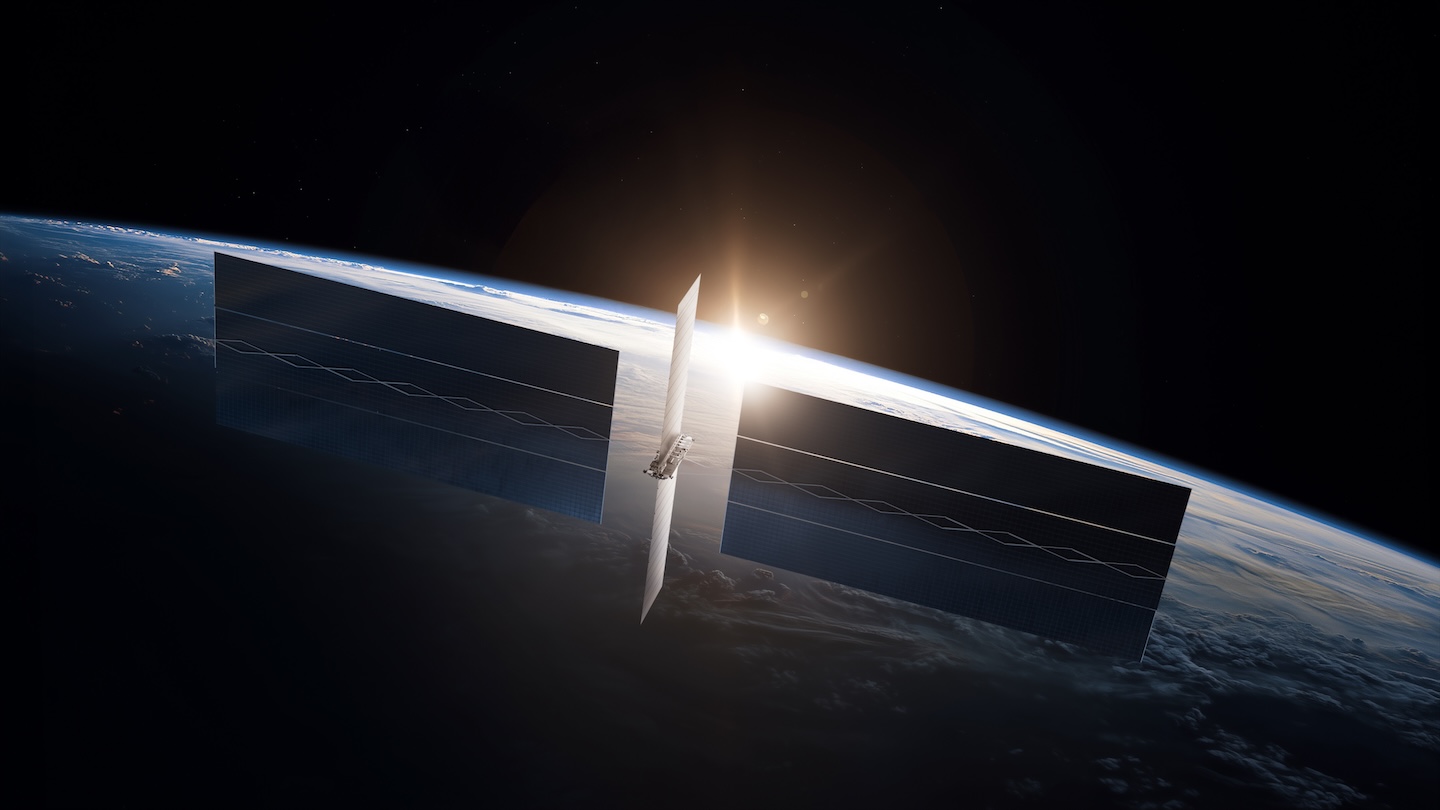
The satellite, called MVP, is about the size of a refrigerator and carries four of Google’s Tensor Processing Units, the same chips Google runs in its ground data centers. Google originally planned to launch two custom satellites in 2027, but chose to move faster by integrating its chips into a satellite.
MVP’s solar panels supply about one kilowatt of power, and Google will run Gemini models on the TPUs only in bursts of roughly 15 minutes before the chips shut down so the radiators can shed heat. In a blog post, Google said its Trillium TPUs survived vibration testing that mimicked sustained launch loads of up to 10g, with individual components seeing 50 to 100g, and handled a radiation dose greater than a five year mission would deliver.
SpaceX and Google mull massive partnership on Musk’s orbital data dream: report
Next week’s flight, slated for October 1, follows a relationship that became public in May, when Teslarati reported that Google was in talks with SpaceX for a launch deal tied to orbital data centers. Google also holds a stake of roughly 6% in SpaceX.
The two companies are chasing the same idea from very different starting points. SpaceX’s own orbital compute program is built around the AI1 satellite, a roughly 70 meter structure derived from Starlink V3 hardware that is designed for 150 kW of peak compute, about 150 times the power MVP will draw. Elon Musk has brushed off concerns about crowding orbit with those satellites, and SpaceX is building its Gigasat factory in Bastrop, Texas, to produce them, targeting an annualized rate of about 1 GW of space compute by the end of 2027.
Musk also posted on X on Thursday that “the amount of compute in space will obviously round up to 100% of all compute.”
Google has been more cautious in public. Its research estimates that launch prices need to fall below about $200 per kilogram before an orbital data center can compete with a ground facility on energy cost, a threshold the company believes could be reached around the mid 2030s. The Suncatcher team has said it expects the effort to remain a project rather than a product for years, which leaves the first real test of its hardware riding on a rocket from the company with the most aggressive timeline in the field.

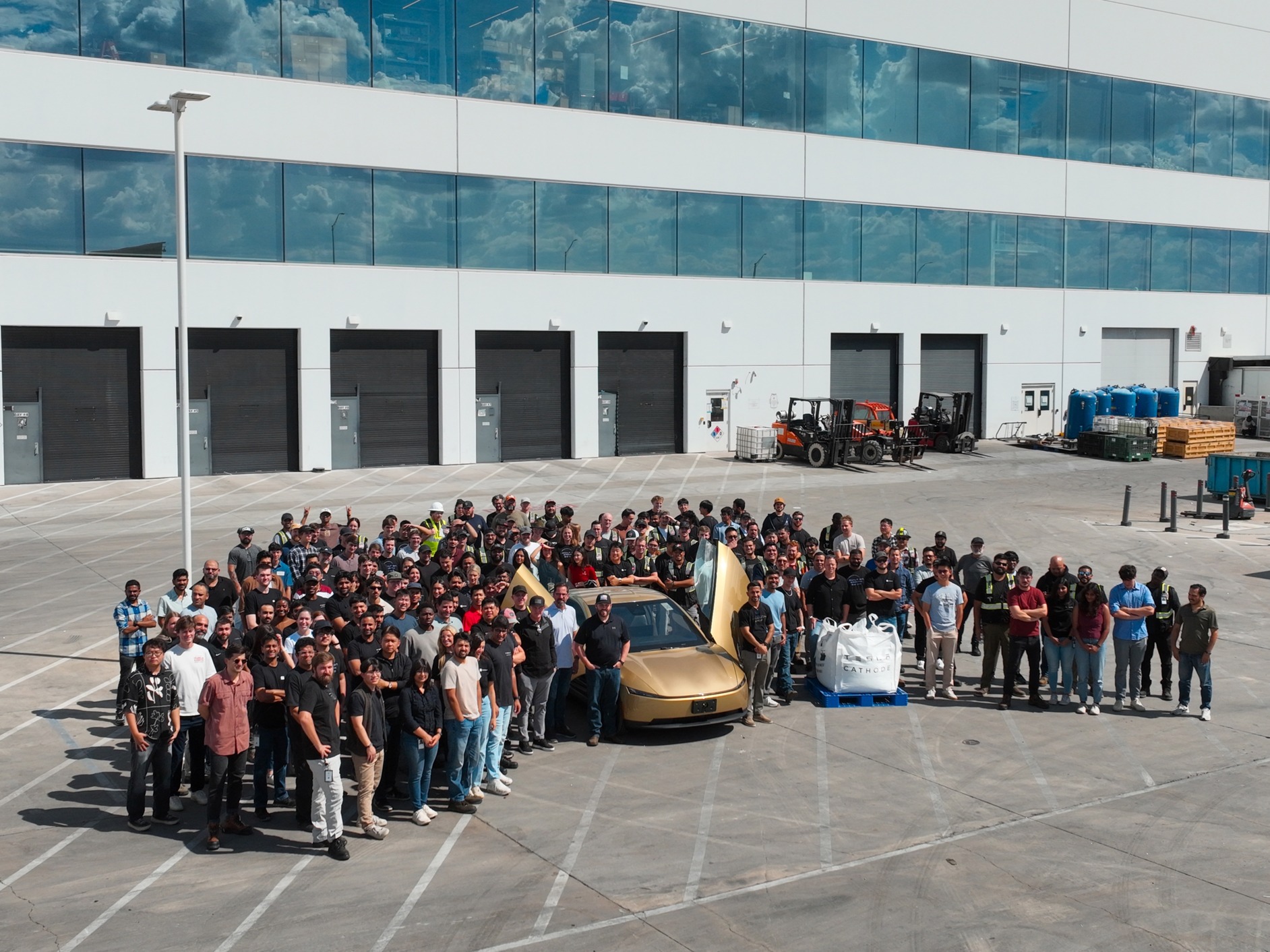
Tesla has taken another concrete step toward owning its battery supply chain, and it’s doing so with what is perhaps the most important vehicle in its short-but-storied history.
On September 23, Tesla announced that it has officially built the first Cybercab with cathode material produced in-house at the company’s first cathode plant in the U.S., and the first in the U.S. overall.
First Cybercab made using our in-house cathode material – from the first cathode plant in the Americas pic.twitter.com/X95aVXsT9H
— Robotaxi (@robotaxi) September 23, 2026
Active cathode material is the most expensive piece of a lithium-ion battery cell, and it often accounts for more than a third of cell cost. For years, the industry sourced a majority of it from Asia, but Tesla’s decision to make it in the United States bodes well for the Cybercab project. This is the latest chapter in Tesla’s vertical integration strategy, which began in public at Battery Day in 2020.
At the Battery Day Event, Elon Musk said the company would build a North American cathode plant and overhaul the process to cut costs and waste, while also making some of the most powerful and long-lasting cells in the industry.
The Austin facility took years to appear. Tesla filed permits for “Project Cathode” in 2022 on land near Giga Texas. By mid-2022, the building frame was up and Tesla later invested hundreds of millions of dollars as part of a larger expansion of the Giga Texas plant. The company stated it was operating the first large-scale cathode production facility in North America to supplement 4680 cell production.
One month later, that material reached a finished Cybercab.
Made with nickel cathode manufactured locally at Gigafactory Texas! https://t.co/DqMm5fZV3n
— Elon Musk (@elonmusk) September 24, 2026
The timing of this breakthrough is monumental for the Cybercab program. As Tesla officially launched the first Cybercab rides to the public earlier this month, production of the ride-hailing-geared vehicle is moving forward on the planned S-curve that CEO Elon Musk told everyone to expect.
Nevertheless, packs of Cybercab units have been spotted throughout the United States, in an effort to potentially activate the fleet as soon as the company gains regulatory approval in various geographic areas.
On top of that, Tesla owning the cathode step and pairing it with its own in-house lithium from the Gulf Coast refinery shortens the supply chain that once stretched thousands of miles and subjects every pack to fewer external price shocks and geopolitical risks.
Tesla is not yet independent of all of its foreign suppliers, as some precursor metals come from mines and chemical plants. But the first in-house cathode Cybercab shows the company is closing the most expensive and most concentrated gap in its battery production efforts. For a vehicle like Cybercab to operate at a high utilization within the Robotaxi network, that control over cost is so crucial.
It is arguably as important as the software that drives it.

SpaceX just got the green light Starship has waited years for

SpaceX completes another secret Pentagon launch, adding to suspected Starshield buildout


