Lifestyle
Meet Tesla’s #1 fan who was inspired by “Revenge of the Electric Car”

The following story was first published by Matt Pressman at EVANNEX.
We get amazing photos and stories from Tesla fans all over the world. Whether it be rock stars, pro athletes, or avid Tesla owners, we’re fortunate to have connected with so many in the Tesla community. One intriguing email came in just recently. Steve Distante wrote to us, “I have been called Tesla’s #1 fan… I belong to a couple of Tesla groups and have been called a narcissist, an egomaniac and awesome, I prefer the last one” — indeed, we agree with that last adjective — Steve’s pretty awesome and it was fun to learn more about his love for Tesla.
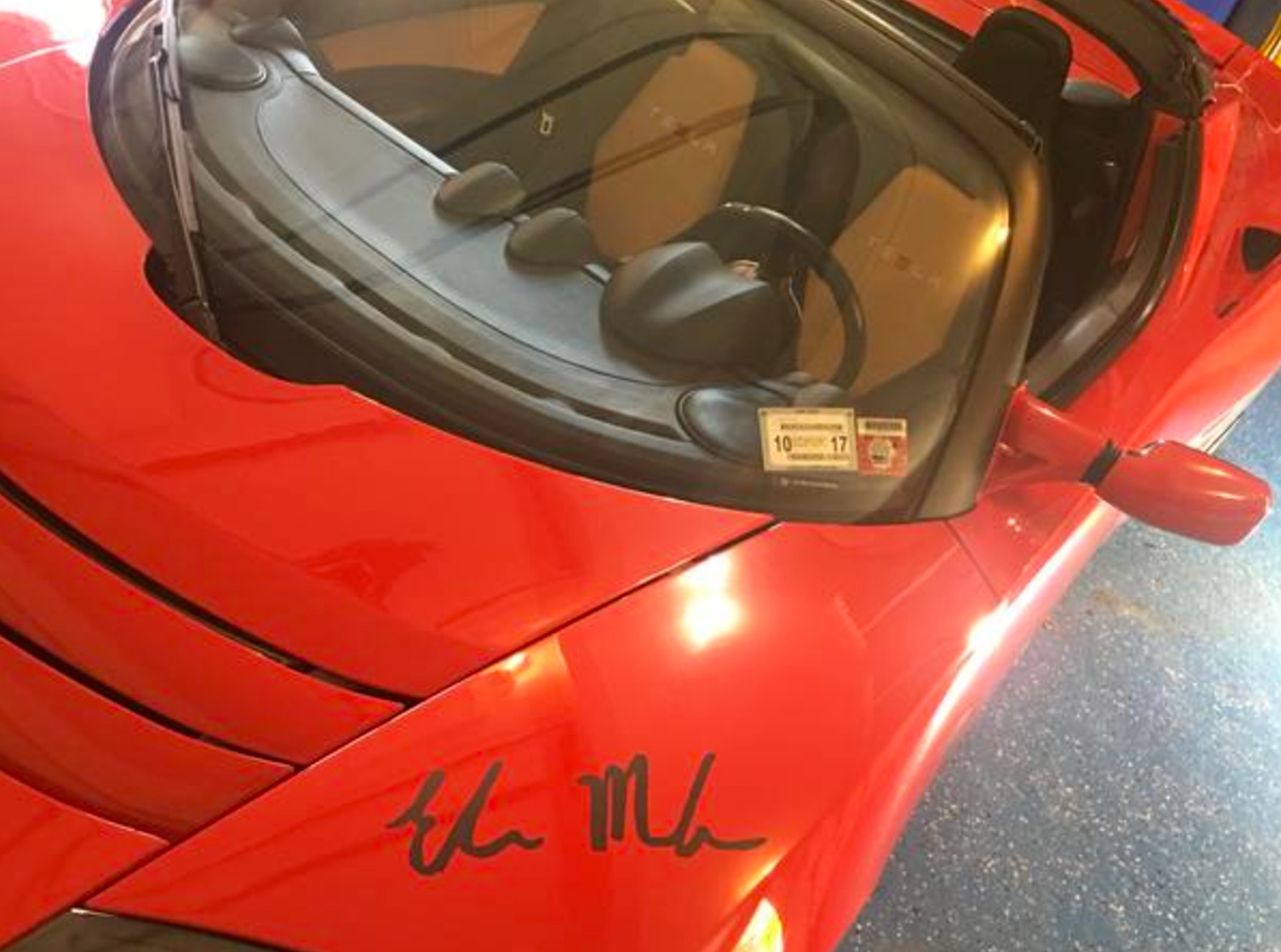
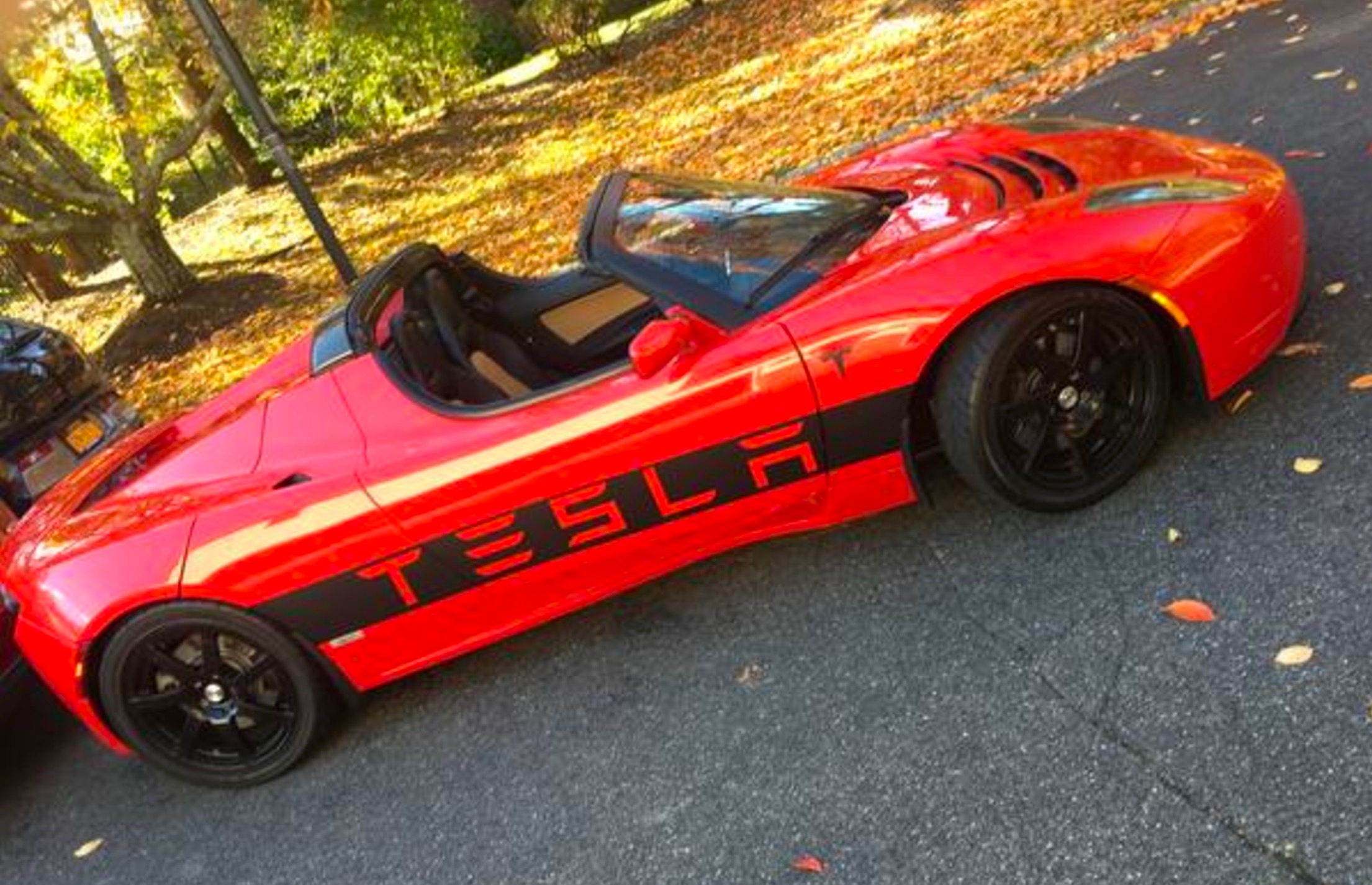
First of all, Steve loves his Tesla Roadster: “My 2010 Roadster was a gift for my 50th birthday from my wife Heidi, she knew I was in love with the car and arranged for my baby… it is definitely a little guy and I either [get] asked ‘How do you fit in that?’ or ‘I love your Ferrari’, both of which make me smile. I had that one wrapped with the same attention-getting red on matte [black] design as well as a couple of logos…. This [Roadster] is a very fun car.”
Source: Steve Distante via EVANNEX
I asked him how he first discovered Tesla and he explained, “My love for Tesla started after watching the documentary, Revenge of the Electric Car, which educated me about the history and the impact that we could have if we embraced electric vehicles. That is also where I began to appreciate how Elon Musk risked everything he owns, to make a difference with the vehicles that we drive.” Steve provides more in-depth insight into his unbridled love for electric cars and Tesla during an interview on The Grey Ave Podcast.
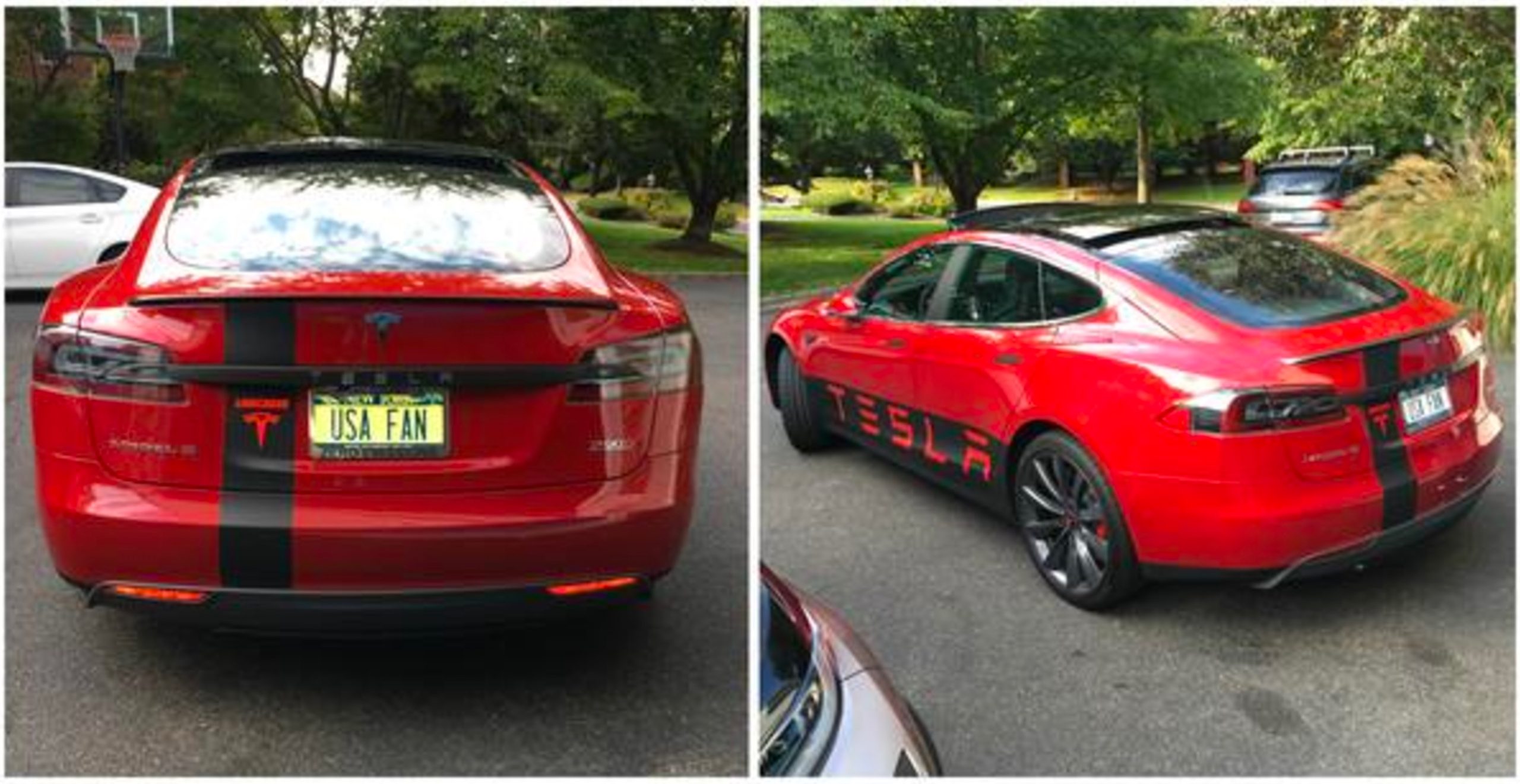
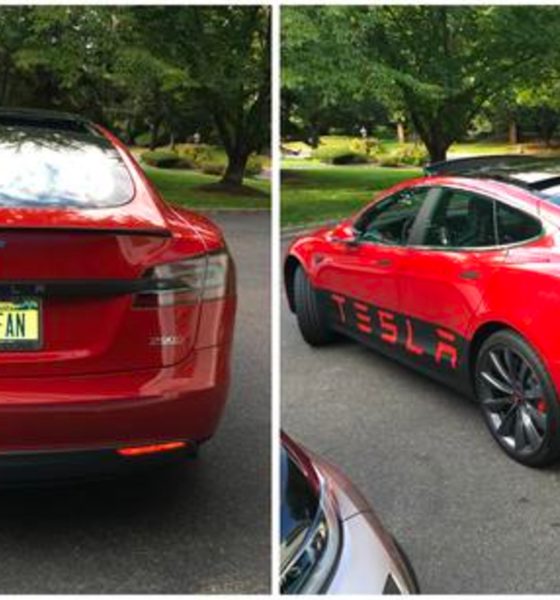
What about his Tesla Model S experience thus far? Steve explained, “My current P90D with Ludicrous Mode is my second Model S. I was about to customize my P85D and I reached out to my local dealer and they had great deals on this demo with 21’s and a sunroof, which I didn’t have. I had planned to do a [vinyl] wrap on the P85D and decided to go a little crazy on the P90D, since I was already thinking about customizing in the first place. I added carbon fiber accents, a stripe and the red lettering the ‘wrapper’ used is reflective [see top image], so it is really obvious at night!”
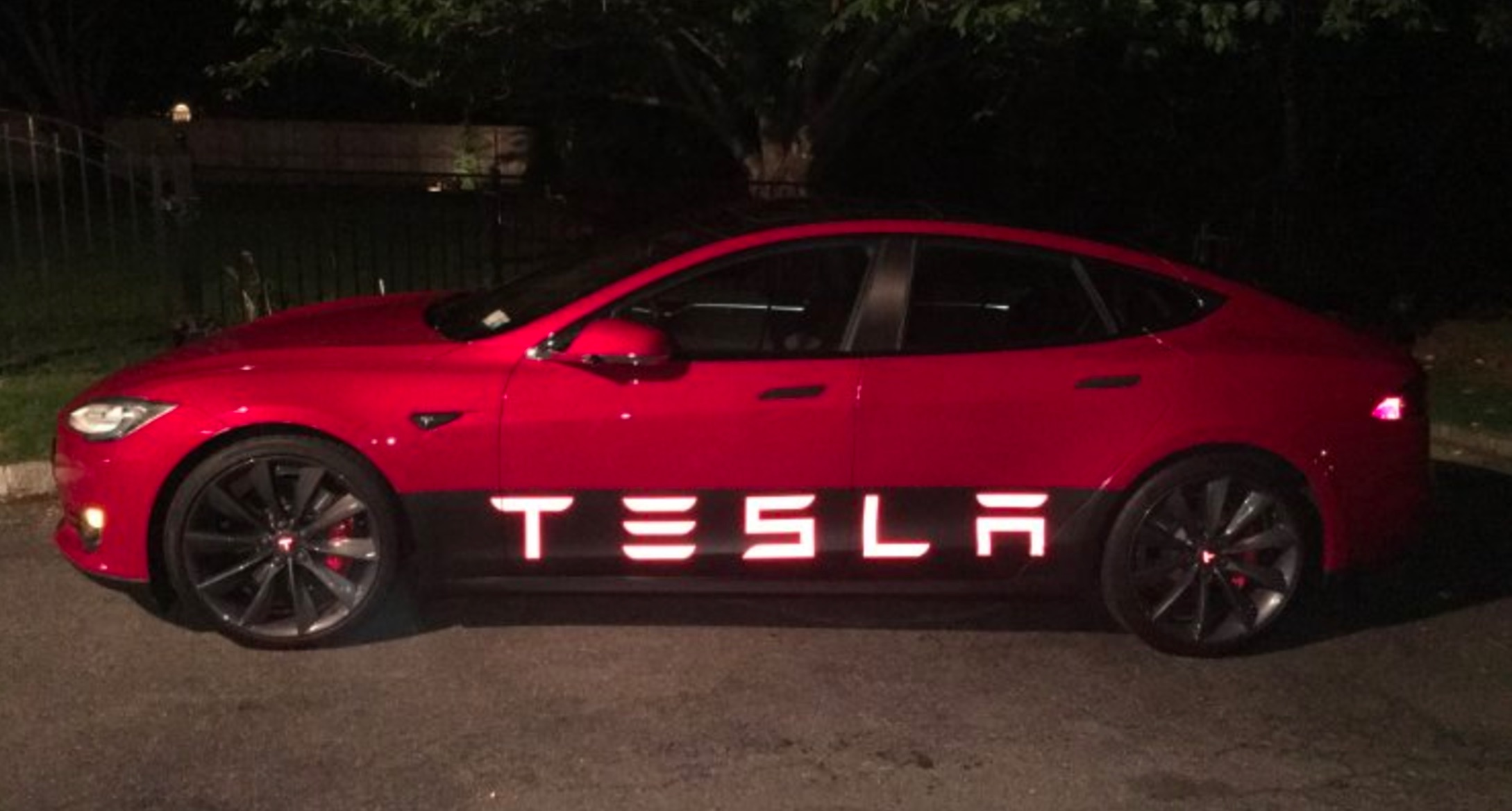
Source: Steve Distante via EVANNEX
Steve’s commitment to clean energy extends from his cars to his work: “I have a LEED Platinum headquarters for my business powered by 295 solar panels and [I also] had two electric car charging stations [installed]. Last year we achieved 95.3% of our power from the sun… I own an investment firm that teaches people about a special way to invest called Impact Investing (also known as ESG and SRI), investing in things that are environmentally and/or socially beneficial. This is my purpose, to educate the public and advisors about this amazing way to ‘vote with your dollars’ by investing impactfully. I love it so much I created an online university called impactu.me to share, educate and certify advisors who want to learn more.”


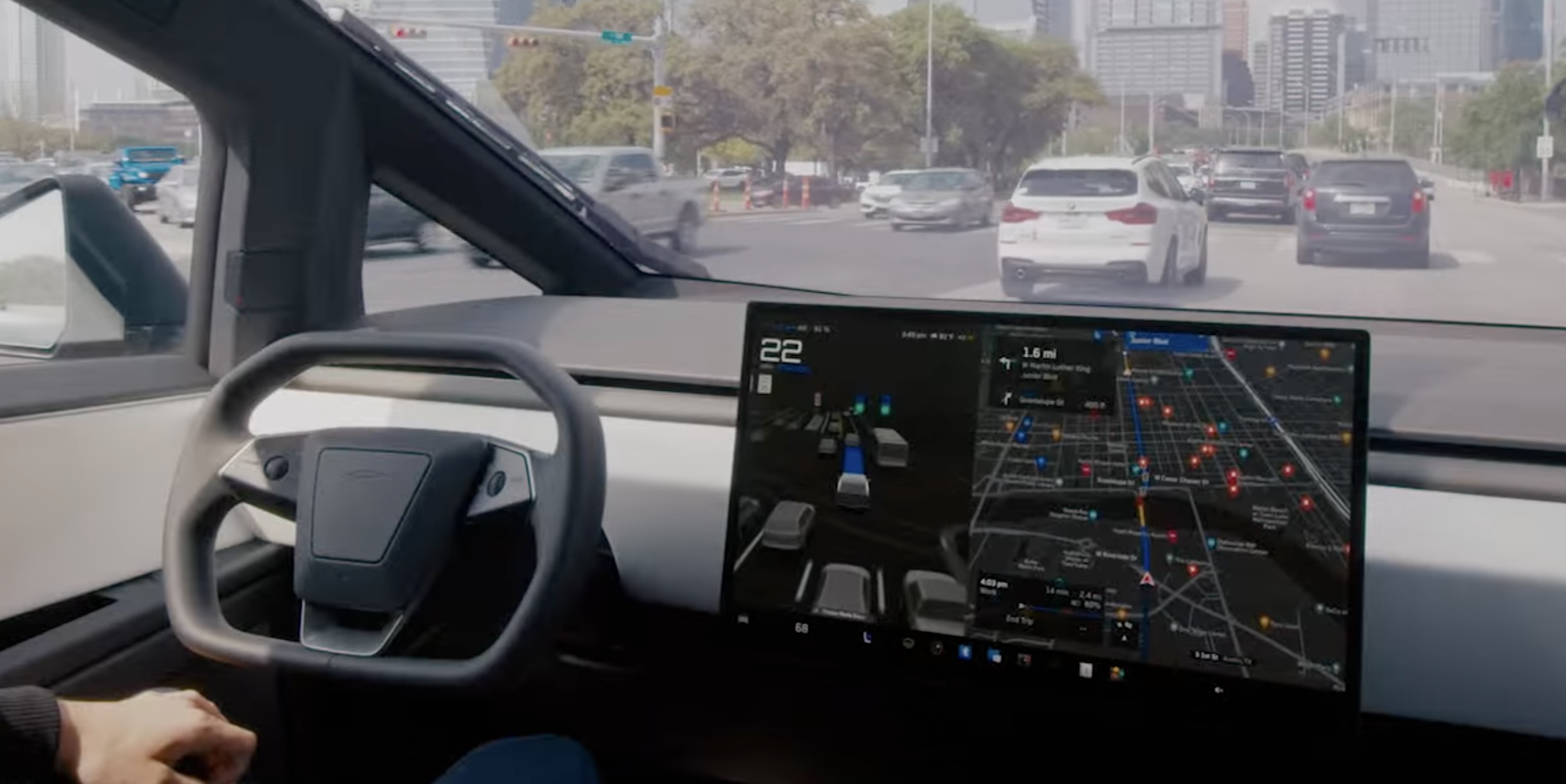
Tesla’s Automatic Collision Evasion feature can be seen in one of the first owner videos of it in action.
Tesla owner Spencer (@scotsrule08) posted on Monday that the feature “worked flawlessly,” saying FSD reengaged itself just as he was about to hit a curb. Ashok Elluswamy, who leads Tesla’s AI team, shared the clip and wrote, “A guardian angel always looking out for you.”
The video arrives in the middle of a staged rollout. Tesla first shipped Automatic Collision Evasion with FSD (Supervised) v14.3.9 in software update 2026.27.6 earlier this month, which Teslarati covered as it reached cars. Update 2026.27.10, which began going out on September 19, carried the feature improvements with FSD v14.3.10, according to release notes tracked by Not a Tesla App. The newer 2026.27.11 build is now reaching another wave of vehicles.
The new Automatic Collision Evasion feature worked flawlessly! FSD reengaged itself just as I was about to hit a curb.
Kudos @Tesla_AI team! 👏 pic.twitter.com/Fbp15HhpL2
— Spencer (@scotsrule08) September 28, 2026
The feature only runs on HW4 vehicles, and it requires an active FSD purchase or subscription with both FSD (Supervised) and Automatic Emergency Braking enabled. HW3 owners receive FSD v14.2 Lite in the same updates, but that build does not include collision evasion.
Tesla’s release notes describe two triggers. The first is an imminent frontal collision that braking alone may not prevent, in which case the car can activate FSD to steer, brake or accelerate around the hazard. That scenario is limited to highways below 85 mph, with no pedestrians or cyclists detected and no slippery road surface. The second covers a driver who appears inattentive, such as reaching into the back seat, or who seems to have switched off FSD by accident. Spencer’s curb clip appears to fall into that second category.
Tesla plans big safety improvements for Full Self-Driving v15
Once the system takes over, the accelerator is muted and light brake input will not cancel the maneuver. Drivers need to apply firm, deliberate steering force to take back control, and the car chimes to hand control back once the danger has passed.
Elluswamy recently noted that earlier hazard prediction, faster reaction time and better collision avoidance would arrive with FSD v15, the next major version.
Elon Musk
Elon Musk drops a surprise update on Boring Company’s next big dig
Musk says Boring Company could shrink the Austin to San Antonio drive to just minutes.

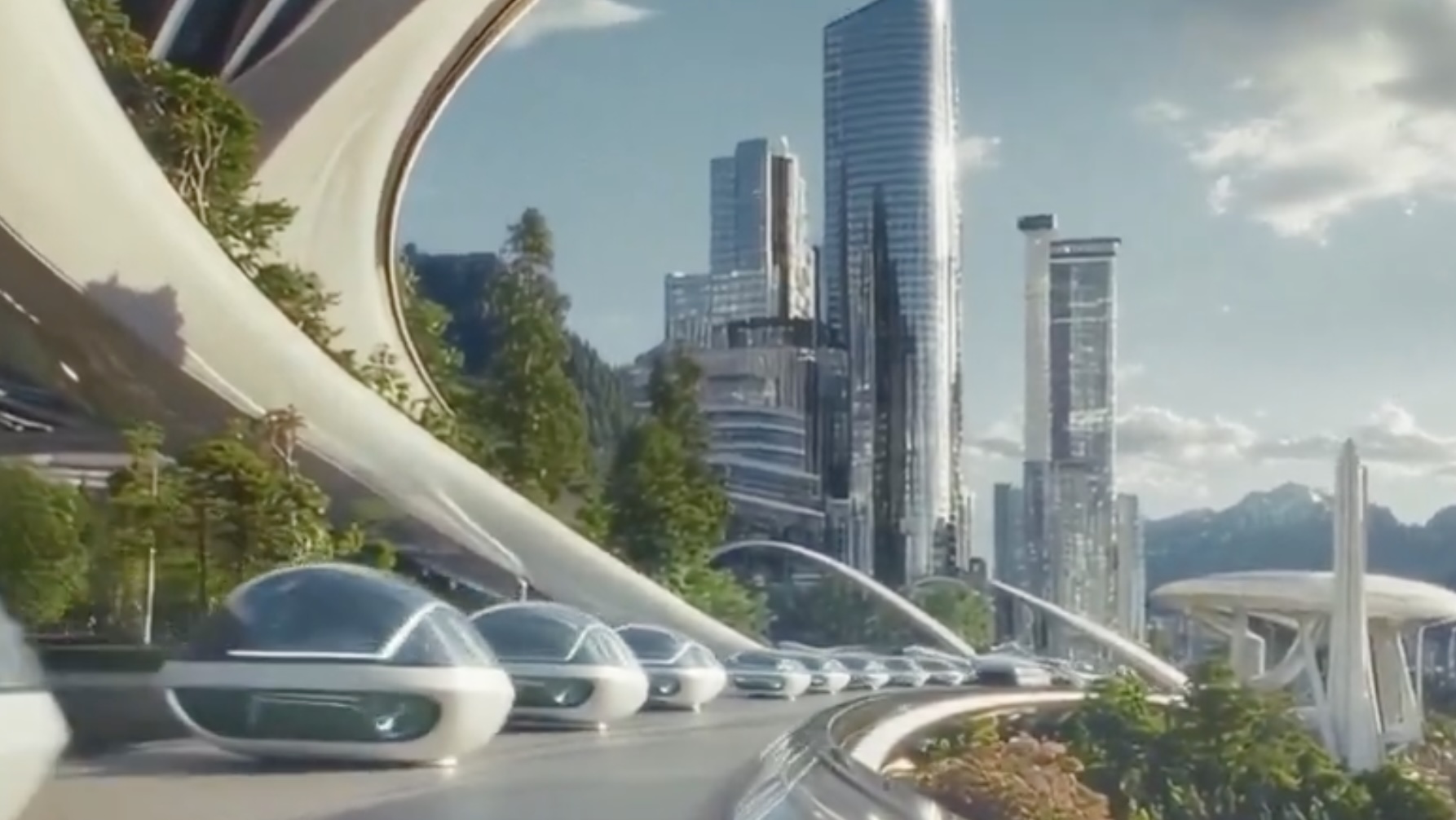
Elon Musk says The Boring Company is working on what he called “a simple, precursor Hyperloop” tunnel connecting Austin and San Antonio, targeting speeds above 200 mph and cutting a drive that can take up to two and a half hours down to a consistent under 30 minutes. Musk posted the idea on X Sunday, in a reply to a repost of an AI generated video imagining a science fiction future with human colonies on other worlds, which he shared with the line “This is the future we shall bring into being.”
This is the future we shall bring into being pic.twitter.com/8aD0w8MDVc
— Elon Musk (@elonmusk) September 20, 2026
The Boring Company’s own account picked up the idea in the same thread, adding a detail about how the trip would actually work: “Because Loop/Hyperloop is express (i.e. no intermediate stops), one could travel from an Austin parking lot to a favorite San Antonio restaurant in about 30 minutes. As long as they both have Loop stations.” That framing ties the proposed intercity link to the same station model the company already runs in Las Vegas, where riders enter the tunnel network through small, garage style stops rather than one central terminal.
This is not the company’s first run at the Austin to San Antonio corridor. Boring Company floated tunnels between the two cities as far back as 2021, and later competed for a separate San Antonio Loop project tied to the airport before that specific bid stalled. Pitches for tunnels in Chicago, Los Angeles, and a New York to Washington corridor have followed a similar pattern of big announcement without a shovel in the ground.
What is different this time is the balance sheet, especially since The Boring Company closed a 3 billion dollar funding round led by investors in the United Arab Emirates earlier this month at a valuation near 23 billion dollars, giving the tunneling company more capital to chase speculative projects than it had during its earlier Texas pitches. The company is also mid-build on two other intercity systems it has actually broken ground on, inc;luding a Nashville tunnel linking downtown to the airport, where a second boring machine finished commissioning in June, and its Las Vegas network, where the station count keeps climbing on paper faster than tunnels get dug.
That gap between announcement and execution is the reason to treat Sunday’s post as an opening bid rather than a project. A tunnel spanning roughly 80 miles between two metro areas, running at speeds Boring Company has not demonstrated over any real distance, would dwarf anything the company has built. For now, the Austin to San Antonio Hyperloop exists as a caption under an AI generated space video.
Elon Musk
Tesla eyes supply partners for Optimus mass production
Tesla certified three Chinese suppliers for Optimus mass production, signaling its robot timeline is accelerating.
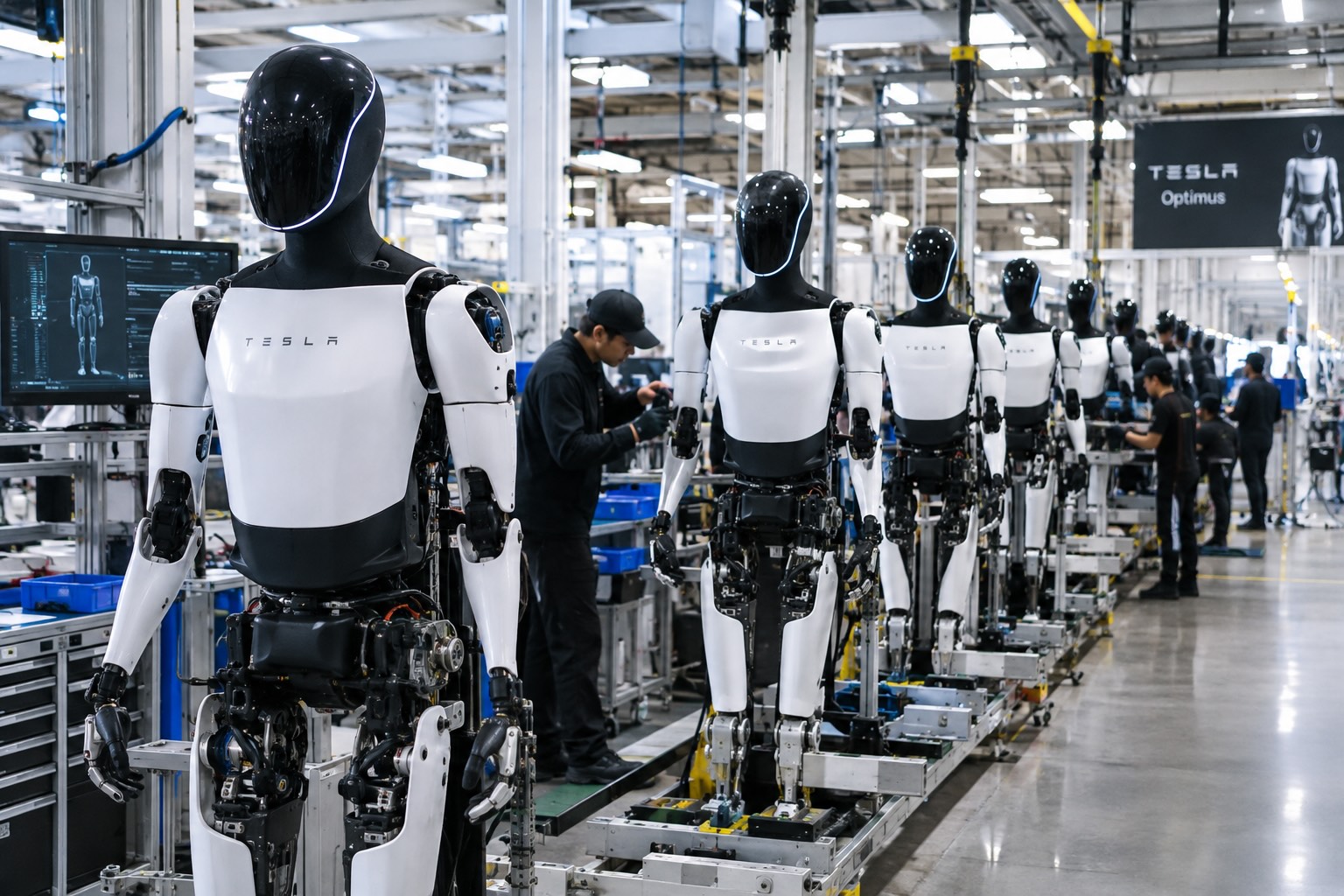
Tesla’s robotics team traveled to Ningbo, in China’s Zhejiang province, on September 16 and spent the following day auditing component suppliers for Optimus, according to a Bloomberg report cited by RobotAIGeek. The visit moved three manufacturers from provisional status to certified mass production partners: Tuopu Group, which handles actuators and chassis components, Ningbo Joyson Electronic, a sensor supplier, and Zhejiang Sanhua Intelligent Controls, which builds thermal management systems. All three already supply parts to Tesla’s electric vehicles, and the audit reportedly came with fresh orders that supply chain reports put at an initial batch of roughly 5,000 units.
Tuopu, Joyson, and Sanhua built their manufacturing base serving the automotive industry, where tolerances and volume requirements are already close to what a mass produced humanoid robot demands. Sanhua in particular has history here. Teslarati reported last October that the company had received a roughly $685 million order for linear actuators tied to Optimus, a volume industry watchers estimated could cover around 180,000 robots once production ramped.
Supply chain reports tied to this week’s audit put Tesla’s near term production goal at about 1,000 Optimus units a week by late September, rising to 2,000 to 2,500 units a week by the end of the year. That pace would put real weight behind the timeline Tesla has been building toward since May, when it wound down Model S and Model X production at Fremont to convert that floor space into a dedicated Optimus line targeting one million units annually. JPMorgan analysts who toured the factory in August confirmed the conversion took roughly four months, a pace Musk has called unprecedented for a facility that size.
New drone video shows Tesla’s Optimus Factory reaching a turning point
Fremont is only the first phase. A second, larger Optimus plant is rising at Gigafactory Texas, where drone footage shared by Joe Tegtmeyer last week showed the structural steel nearing completion on the north end of the building. Tesla has said that facility is meant to eventually support production of up to 10 million units a year, though volume output there is not expected before 2027.
Commercial sales of Optimus are still targeted for the second half of 2027, but production is expected to start well before then. JPMorgan analyst Rajat Gupta has said Tesla’s “Optimus Academy” program, which uses early units to collect real world training data inside Tesla’s own facilities, is expected to be running later this year. Bloomberg Intelligence analyst Ian Ma described the Ningbo audits as “a positive commercialization signal for China’s humanoid supply chain,” noting that sentiment could improve further if the visit leads to confirmed supplier nominations and larger orders. The Solactive China Humanoid Robotics Index rose about 1.4% on the news, though it remains down roughly 30% for the year.

SpaceX nails “Lucky 13” astronaut launch, leaning into Tesla tradition and superstition

Tesla moves forward on Wireless Charging for vehicles


