News
Silicon Valley angel calls Tesla Model 3 greatest tech product ever created

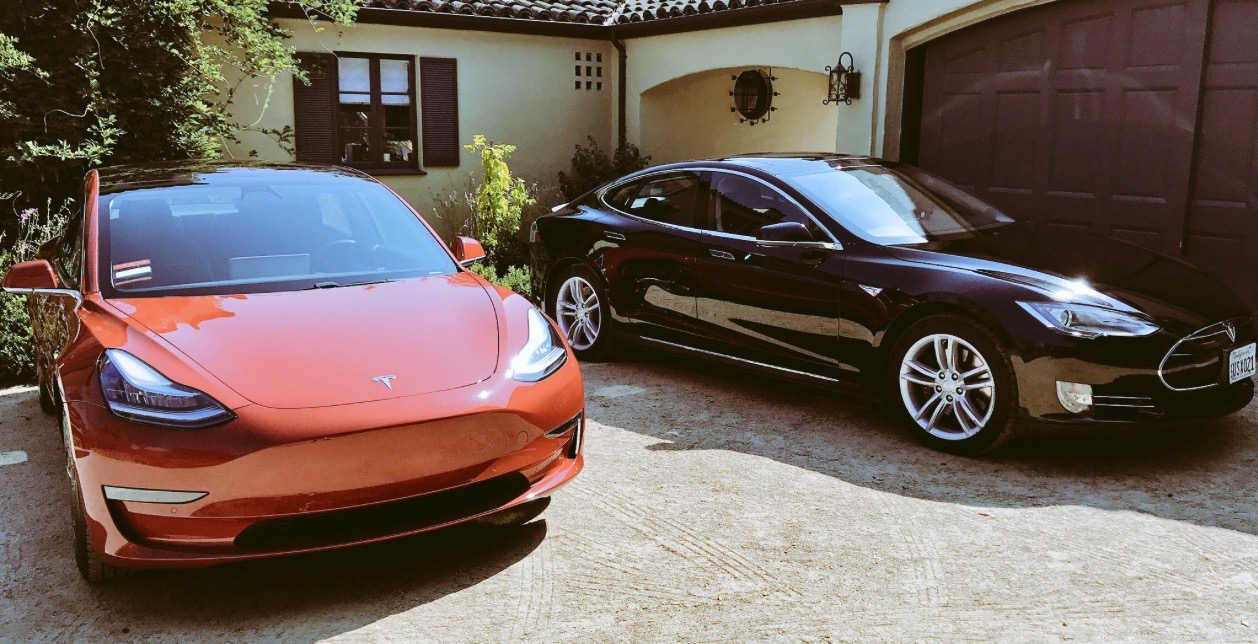
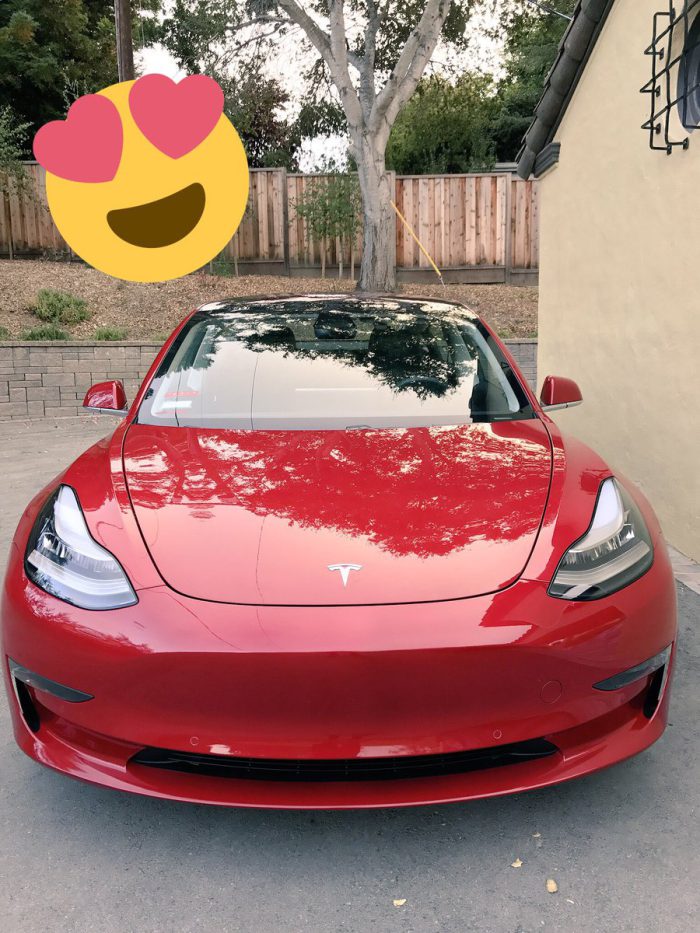
Silicon Valley angel investor Jason Calacanis has some really kind words to say about his new Tesla Model 3. In a series of tweets, Calacanis describes his gorgeous red Founders Series Model 3 as “a masterpiece” that drives like a Porsche but at one-third the cost.
Calacanis was one of the first people to take delivery of a Model 3 and the first Model S owner (Signature Series 001). He also owns the 16th Tesla Roadster produced and another Model S, making it a four-Tesla family. Though Calacanis made it clear in his tweets that they aren’t meant to serve as a review, his sentiments certainly has many Model 3 reservations holders more anxious than ever to take delivery.
Model 3 is “one of the 3 greatest tech products ever created, right alongside the PC/Mac & the smartphone/iPhone”, says the serial entrepreneur.
https://twitter.com/Jason/status/906542220869640192
Calacanis told CNBC, shortly after Tesla delivered the first batch of production Model 3 vehicles to its customers, that his initial set of impressions of the Model 3 was that it drives like a Porsche. “There it is – one of the Founder series. I have been driving it and it drives like Porsche, but it cost the same as a Prius.”
.@jason on @CNBC @SquawkAlley this a.m.-@Disney dumps @Netflix to self-stream, escalating content space dogfight; @teslamotors Model 3 debut pic.twitter.com/xW9oJsjCRB
— This Week in Startups (@twistartups) August 9, 2017
As an early investor in the company and friend to CEO Elon Musk, Calacanis believes the company should be studied by startup founders. “Founders should study Tesla’s history; as a startup, the more progress you make toward an impossible goal the more some will attack you,” he said in his weekend tweet storm.
While Model 3 may have its own share of critics, Calacanis isn’t afraid to defend the vehicle and the company. He called out Wall Street Journal reporter Charley Grant for stating that the Model 3’s pricing was “way higher than what was promised,” pointing out that the Model 3’s base price of $35K is right in line with what Tesla promised.
https://twitter.com/Jason/status/891484190293676032
According to the Tesla Model 3 monthly cost calculator, a base Model 3 could cost close to $1,000/month after factoring in taxes, fees, insurance costs and cost for monthly charging.
Calacanis also had some strong advice for Tesla short sellers in one of his tweets, stating “if you’re short $tsla/a bear you are going to jump off a bridge when reviews come in for Model 3. Early reservation slots will sell for $10k.”
-
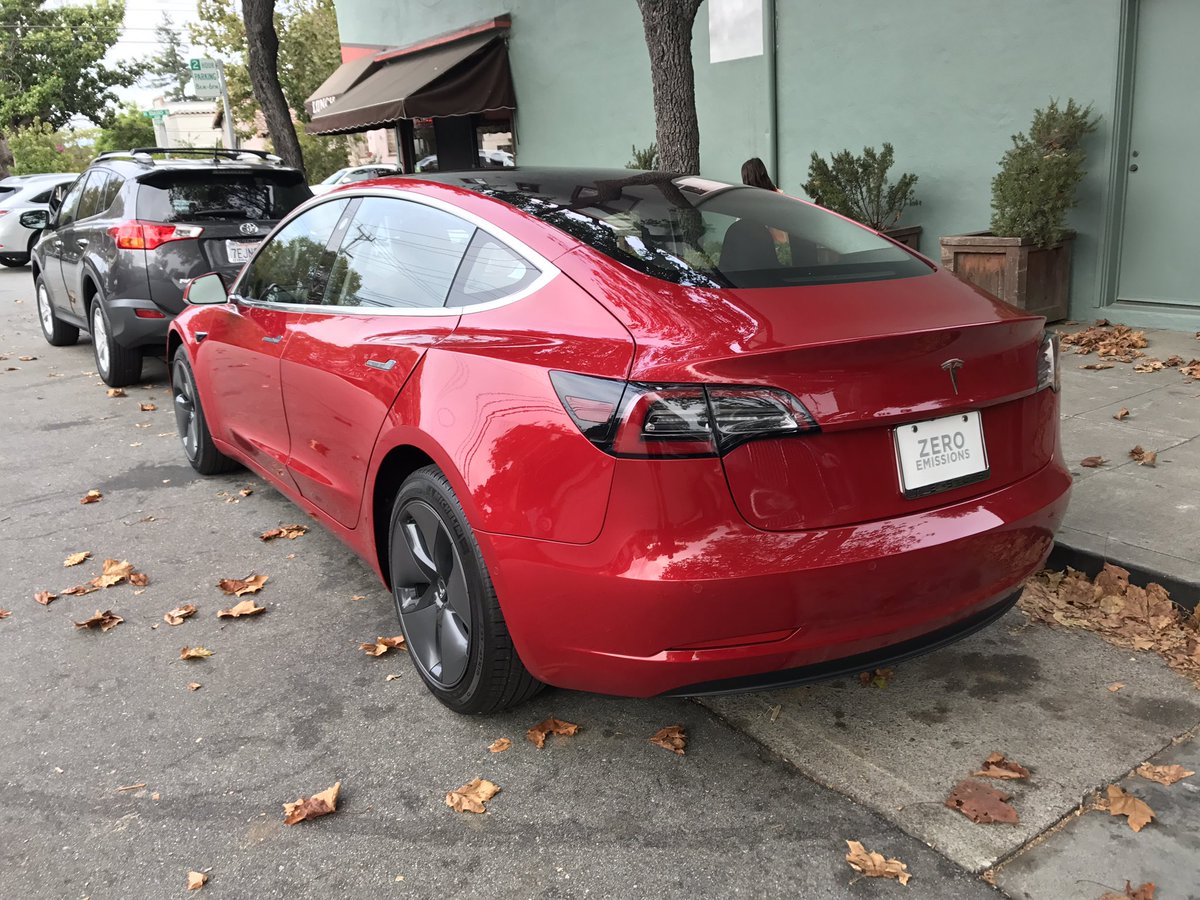
- Jason’s Red Model 3 from the back. Photo: Jason Calacanis’s Twitter
-
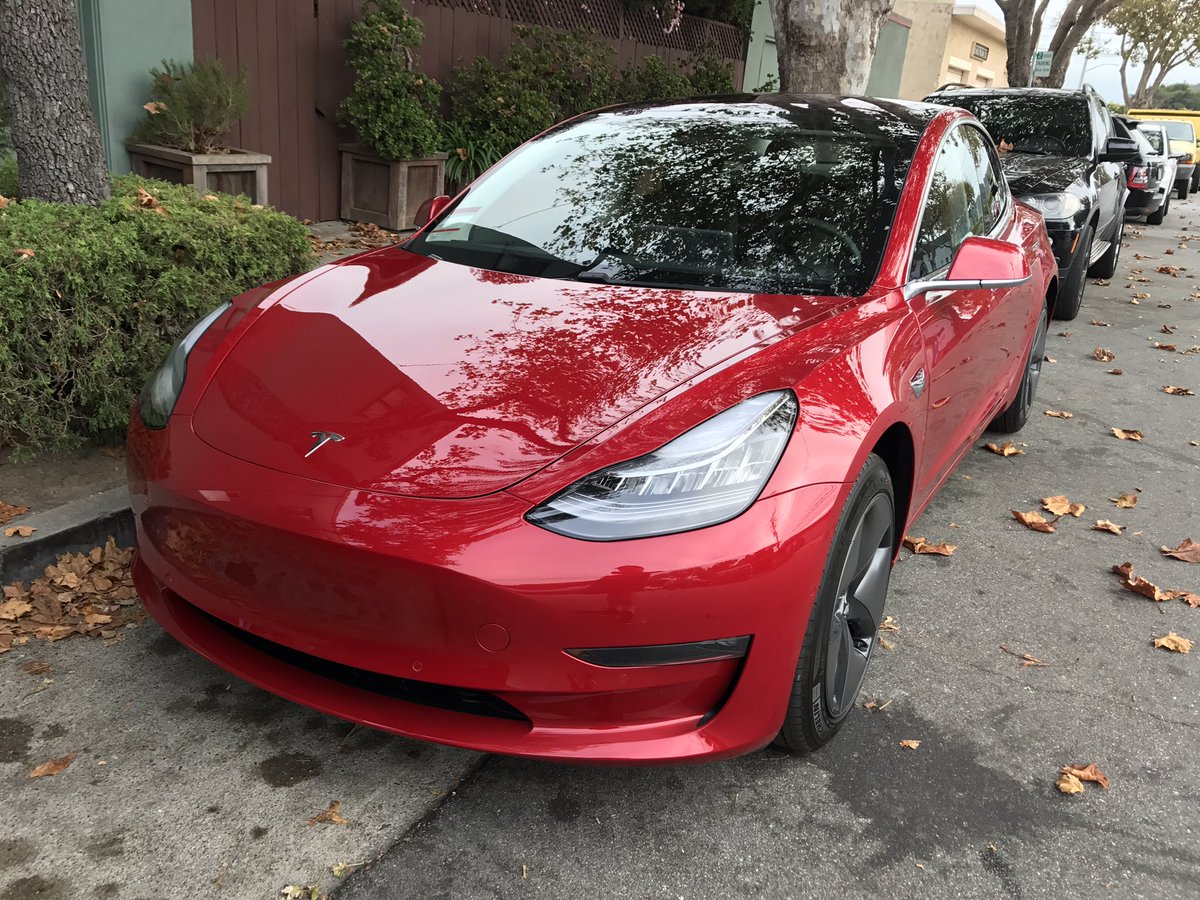
- A front view of Jason’s Red Model 3. Photo: Jason Calacanis’s Twitter
-
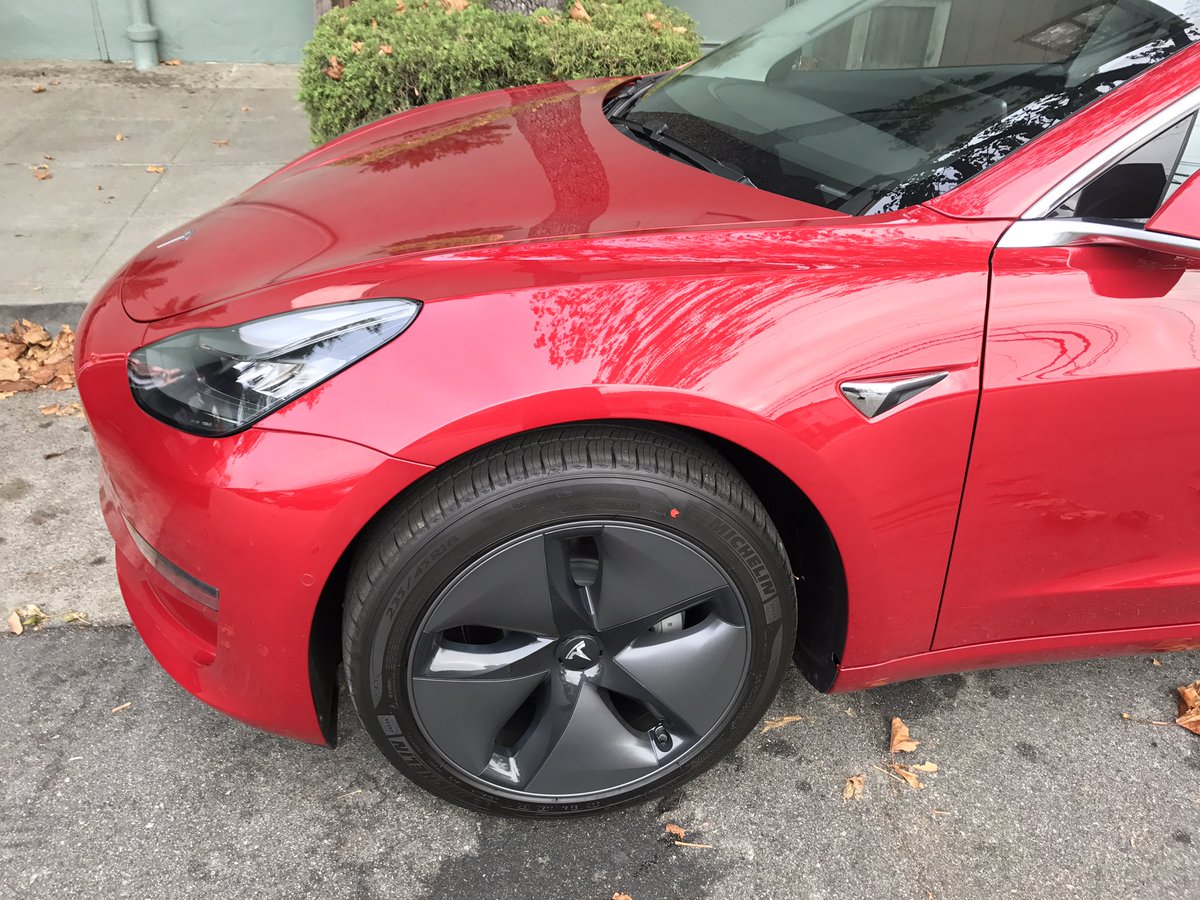
- The aero wheels on the red Model 3. Photo: Jason Calacanis’s Twitter
-
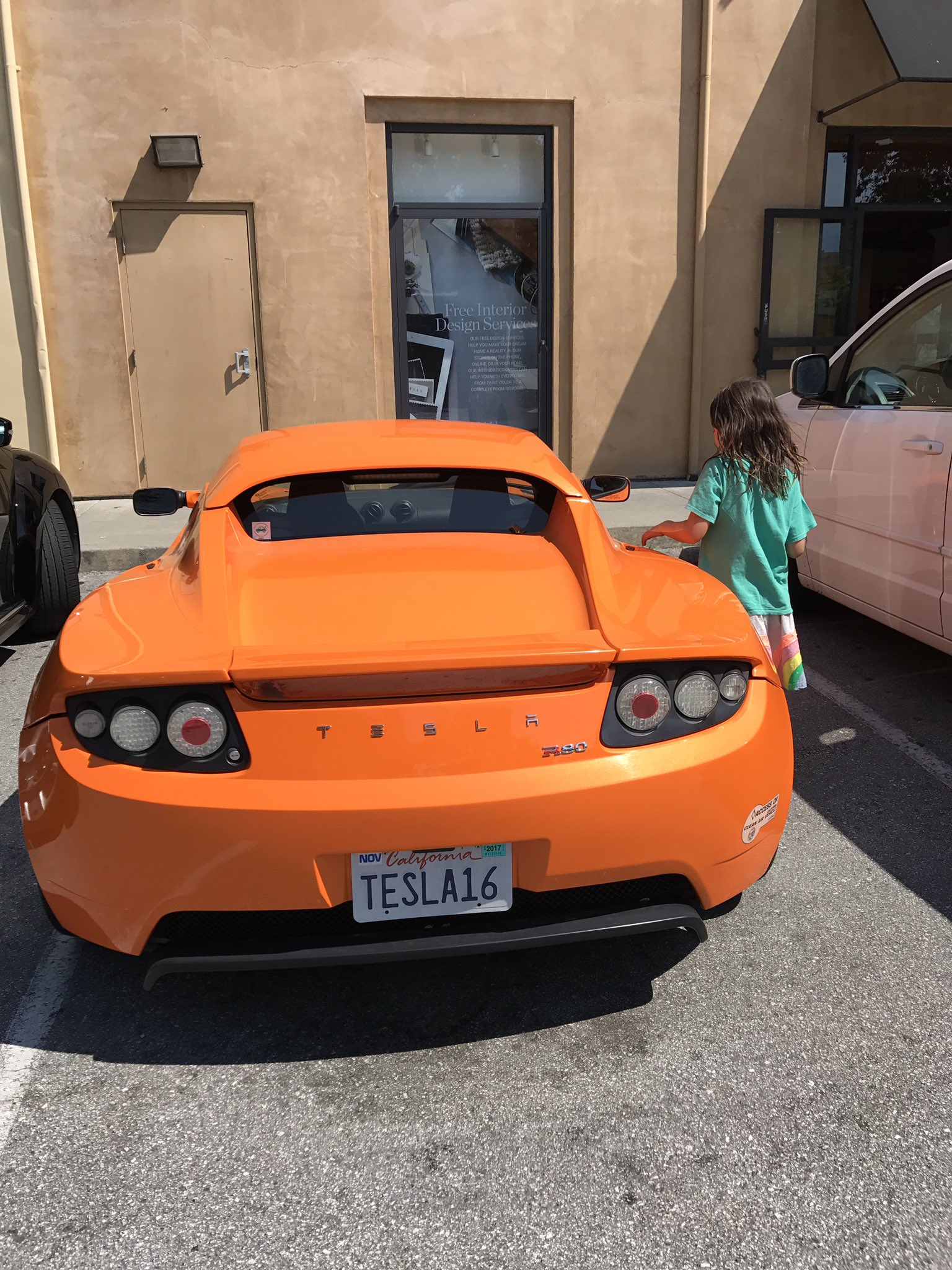
- Jason’s roadster, with the new battery upgrade that allows a range upwards of 300 miles. (Photo: Jason Calacanis // Twitter)
-
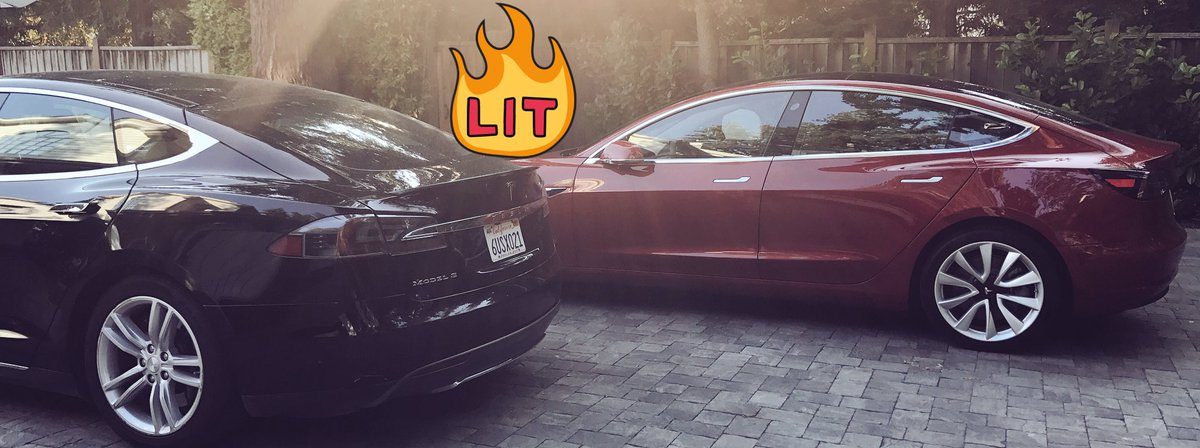
- (Photo: Jason Calacanis // Twitter)
-
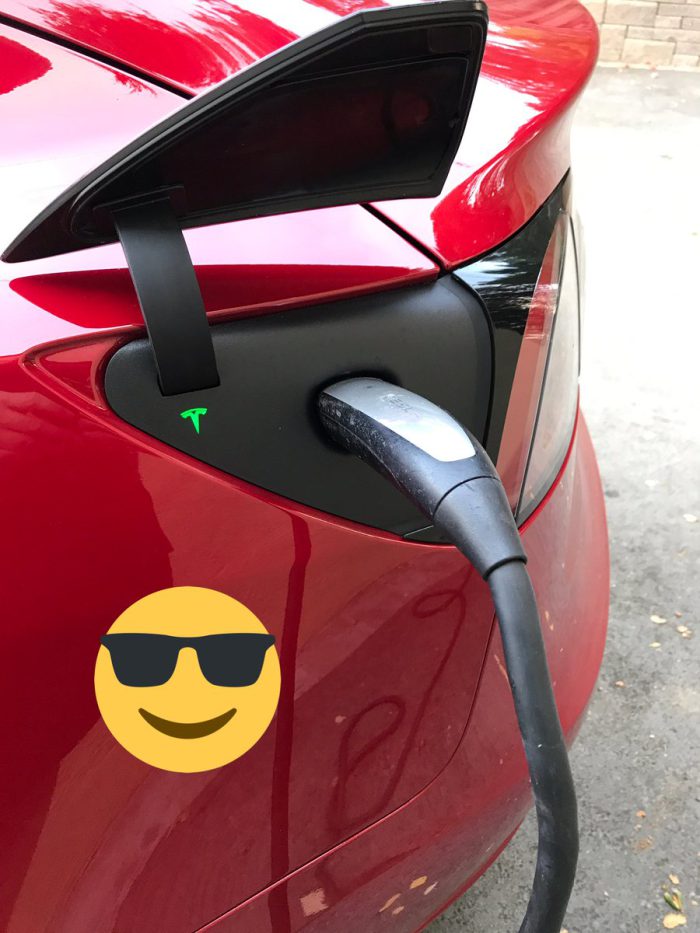
- (Photo: Jason Calacanis // Twitter)
-
- (Photo: Jason Calacanis // Twitter)


Investor's Corner
Tesla and SpaceX take “Terafab” Trademark fight to Federal Court
Tesla and SpaceX sue a small Illinois firm after cease and desist letters over Terafab.


Tesla and SpaceX are asking a federal judge to rule that their planned Terafab chip factory does not infringe a small Illinois company’s trademark, a request that arrives only after months of quiet negotiation broke down this summer.
The dispute traces to May 18, when Tesla filed three U.S. trademark applications for “Terafab” and “Tesla Terafab,” covering semiconductor chips and related chip making services. TERA-print LLC, a nanotechnology company that has held a federal trademark for “Tera-Fab” since 2021, responded five days later with a cease and desist letter. According to the lawsuit, first reported by Reuters, TERA-print argued that Tesla and SpaceX’s use of “Terafab” would confuse consumers familiar with its own trademark, which covers a desktop photolithography printer sold to researchers for sensor and bioengineering work.
What stands out in the filing is the timing of TERA-print’s own paperwork. One day before sending that cease and desist letter, on May 22, TERA-print applied to expand its existing registration to cover semiconductor materials, silicon chips, nanoelectronic devices and AI design services, categories it had not previously claimed. Tesla and SpaceX call that filing opportunistic in their complaint, noting it arrived two months after Tesla’s public Terafab announcement and just days after Tesla’s own trademark applications went in.
Elon Musk launches TERAFAB: The $25B Tesla-SpaceXAI chip factory that will rewire the AI industry
By June 10, TERA-print was threatening to sue for federal trademark infringement, false designation of origin and unfair competition, the complaint states. Rather than wait to be sued, Tesla, SpaceX and SpaceXAI met with TERA-print six separate times between June and August trying to resolve the dispute directly. Those talks collapsed, and the companies filed for declaratory judgment this week in the U.S. District Court for the Western District of Texas, asking a judge to find that “Terafab” does not infringe TERA-print’s mark before TERA-print can file a claim of its own.
TERA-print isn’t backing down. The company told PCMag it discussed a settlement with Tesla as recently as September 2 and feels misled by what it called Tesla’s professed interest in settling. Its CTO, Andrey Ivankin, said TERA-print holds a Defense Department contract to fabricate semiconductors and partially owns Mattiq Inc., an AI company built on TERA-print’s products, and that the company will vigorously defend its rights.
Tesla and SpaceX argue the overlap is superficial. Terafab is planned as a $16.8 billion complex spanning roughly 100 million square feet at the Grimes County site SpaceX confirmed last month, built to produce chips for Optimus robots, Tesla’s AI computing needs and SpaceX’s orbital data center ambitions, a scale and purpose the companies say no reasonable consumer would confuse with a tabletop lab printer. TERA-print’s product line has stayed focused on lithography tools for biological and sensor research since it registered its mark in 2021.
The trademark fight is the second legal dispute tied to the Terafab project in the past week, following a separate SpaceX suit aimed at keeping company records about the facility out of public view, as KBTX reported. Whether construction proceeds under the Terafab name now depends on a federal judge in Austin.
News
NHTSA just escalated its Tesla Cybercab investigation in a big way
NHTSA escalated its Cybercab audit into a sworn Special Order with a September 30 deadline.
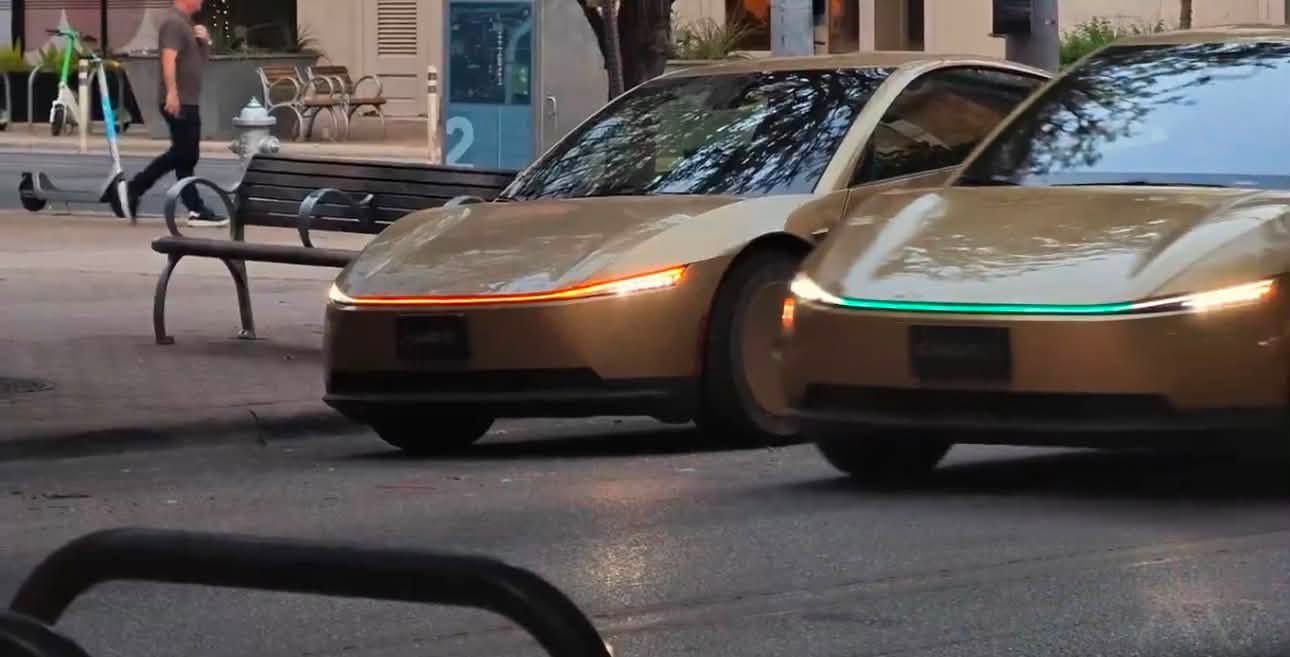
Federal regulators have moved from asking Tesla questions about its Cybercab to demanding sworn answers. The National Highway Traffic Safety Administration issued a Special Order that requires a Tesla officer to sign an affidavit attesting to the completeness of the company’s responses, with a deadline of September 30.
The order builds on Audit Query AQ26002, which NHTSA opened on September 3, the same day Tesla began commercial Cybercab service in Austin. Teslarati covered that initial inquiry when it surfaced, noting the agency wanted to understand how Tesla certified a vehicle with no permanently attached steering wheel, pedals, or mirrors as compliant with Federal Motor Vehicle Safety Standards. A Special Order is a different tool and converts a fact finding review into a legally enforceable demand, the same mechanism NHTSA used against Tesla in 2023 during its Autopilot investigation.
Several of the 21 requests target a specific gap in Cybercab’s design. One asks whether Tesla used temporarily attached human controls at any point to help certify the vehicle, and if so, which standards depended on that equipment being present. Another quotes an existing rule directly: “The service brakes shall be activated by means of a foot control.” Cybercab has no foot pedal. NHTSA wants a detailed explanation of how the vehicle satisfies that requirement, and how it complies without the kind of exemption granted to Zoox in July under Part 555, the regulatory pathway built for steering wheel free vehicles.
The order does not claim Cybercab is unsafe or that Tesla broke a rule. It requires Tesla to explain, under oath, the reasoning behind decisions the company already made when it self-certified the vehicle. That distinction matters, but so does the exposure. Motor1’s reporting, summarized here, put potential civil penalty exposure as high as $139 million if NHTSA later finds the certification was flawed, on top of whatever criminal risk comes with a false sworn statement.
Tesla has not said publicly how it plans to respond. Cybercab is still carrying passengers in Austin through the Robotaxi app while the September 30 deadline approaches, and the company has continued expanding the vehicle’s footprint even as the regulatory question remains open. The Special Order does not pause any of that and just sets a date by which Tesla has to put its certification logic on the record, with a company officer’s name attached to it.

In a new interview on Wednesday, Tesla uber bull Ron Baron said that anyone looking to buy the company’s stock should do so as soon as they can.
Baron, founder and CEO of Baron Capital and one of Tesla’s most persistent institutional bulls, used a CNBC Squawk Box appearance on Wednesday to deliver a familiar message with fresh urgency: In his opinion, Tesla stock is a buy:
“The time to buy the stock is now. FSD is catching on, and it’s going to be bigger and bigger. 55% of new buyers are buying it (Teslas) with FSD. It’s going to be everywhere. It’s safer.”
The Baron Capital frontman’s case is built around Full Self-Driving. Tesla reported 1.48 million active FSD subscriptions in the second quarter, up 56 percent year over year, and company officials have said roughly 55 percent of new North American deliveries left with a subscription enabled.
Baron framed that attach rate as proof the product is moving from enthusiast extra to default expectation, and as a reason software, not just vehicle volume, should drive the next phase of value.
His conviction on Tesla shares is not theoretical, as Baron Capital made its first Tesla investment in 2014, after years of meetings that began around the 2010 IPO roadshow. The firm later built a large SpaceX position starting in 2017.
Ron Baron today in new interview on Tesla:
“The time to buy the stock is now. FSD is catching on, and it’s going to be bigger and bigger. 55% of new buyers are buying it (Teslas) with FSD. It’s going to be everywhere. It’s safer.” pic.twitter.com/Rv5PB0bVZ2
— Sawyer Merritt (@SawyerMerritt) September 16, 2026
Baron said those Musk-led bets have generated about $30 billion of the $71 billion in profits Baron Capital has produced for clients. He put the firm’s current exposure at roughly $25 billion in SpaceX and $5 billion in Tesla. Personally, he described SpaceX as his largest holding, at about $5 billion, with about $1.5 billion in Tesla and additional Tesla exposure through the firm’s funds.
That concentration is also a statement of loyalty. Asked about talk of a SpaceX-Tesla combination, Baron said he had already walked Elon Musk through arguments for and against a deal, then declined to repeat them on air. His public position was simpler: “Whatever you decide is better is what I’m going to support,” he said to Musk.
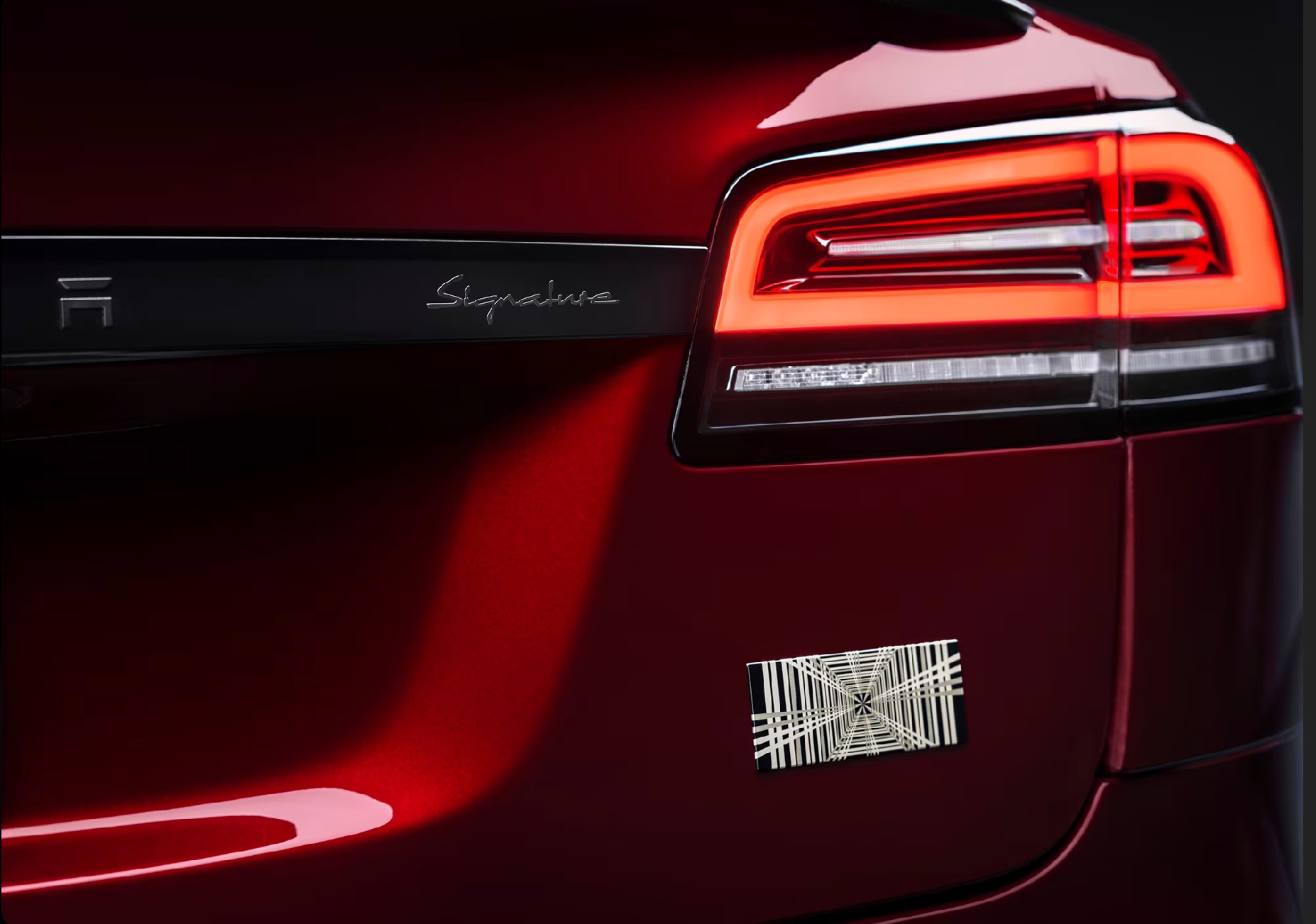
Baron also said that he picked up the farewell edition of the Model S after Tesla decided to sunset the vehicle earlier this year, calling it his favorite car he’s ever driven.

Tesla and SpaceX take “Terafab” Trademark fight to Federal Court

NHTSA just escalated its Tesla Cybercab investigation in a big way


