Investor's Corner
Tesla gets ‘Strong Buy’ rating amid Panasonic’s pledge to ramp Gigafactory 1 battery production

Tesla stock (NASDAQ:TSLA) recently received a vote of confidence from one of Wall Street’s veteran investment research firms. In a note on Tuesday, Zacks Investment Research upgraded Tesla from a “Hold” rating to a “Strong Buy” rating, citing the electric car maker’s strong performance in the third quarter. The research firm also gave TSLA a price target of $381, suggesting an upside of around 13% from the stock’s current price.
In its note to its clients, Zacks Investment Research pointed out that Tesla’s third-quarter figures show that the company is making progress despite meeting several challenges over the past quarters. The research firm further noted that Tesla’s upcoming focus on its energy business bodes well for the company’s potential in the future.
“In third-quarter 2018, Tesla’s earnings per share and revenues surpassed the Zacks Consensus Estimates. Also, both earnings and revenues improved year over year. In third-quarter 2018, Tesla produced 80,142 vehicles. This included 53,239 Model 3s, and 26,903 Model S and Model X vehicles. Deliveries to customers amounted to 55,840 Model 3 along with 27,660 Model S and X.
“These numbers are close to estimates and indicate that the company is making good progress despite hurdles. The company is focusing to grow its energy storage deployment and aims to deploy at least three times of what is deployed in 2017. Over the past six months, shares of Tesla outperformed the industry it belongs to. Moreover, over the past one month, the Zacks Consensus Estimates for both the current quarter and current year earnings are moving upwards.”
An upgrade from Zacks Investment Research bodes well for Tesla stock. The research firm, after all, utilizes a quantitative stock-rating system, which relies entirely on mathematics. This means that the company’s findings and conclusions are unaffected by headwinds in Wall Street or any similar external factor. This approach has made Zacks the research firm of choice for over 200 brokerages, as well as numerous Wall Street analysts.
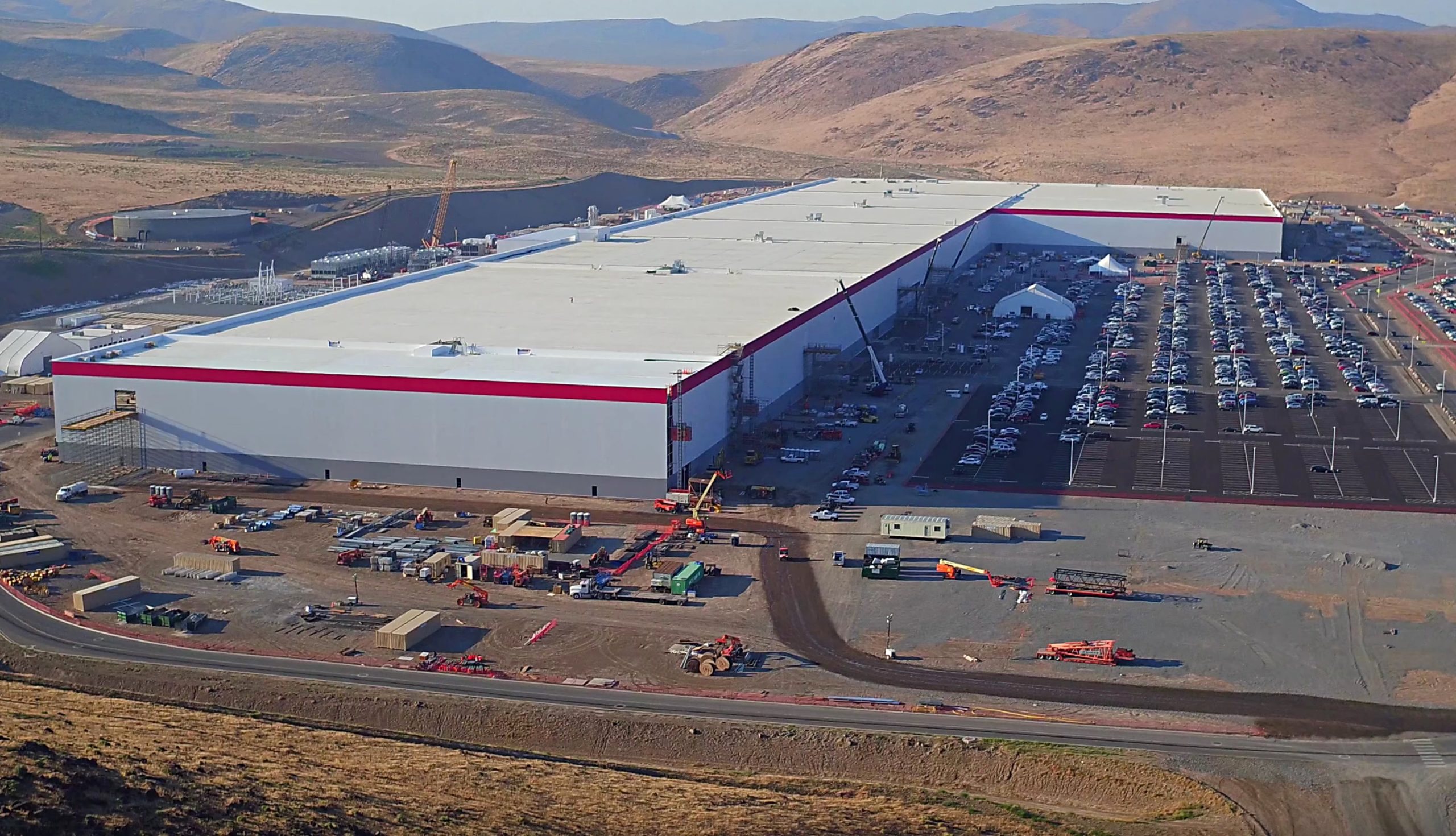
Tesla’s upgraded rating from Zacks comes amidst reports that Panasonic Corp has pledged to ramp the production of its battery cells at Tesla’s Gigafactory 1 in Nevada. In an announcement on Wednesday, Panasonic reported a decline in its quarterly profit due to the rising costs of its operations in the Gigafactory. Despite this, the Japanese company stated that it was in talks to augment its $1.6 billion investment and take capacity at Gigafactory 1 over the 35 GWh it is expected to reach by the end of March 2019.
In a statement to Reuters, Panasonic Chief Executive Kazuhiro Tsuga stated that as Tesla ramps its vehicle production, the battery maker will ramp battery production as well. The Panasonic executive further noted that while Elon Musk attracts a substantial amount of noise due to his behavior online, Tesla’s fundamentals seem to be stable.
“Investment for capacity beyond 35 GWh means that Tesla would also need to make substantial investment in vehicle production, so we will closely align with each other. Though Elon’s comments are unpredictable, we will continue to monitor Tesla’s operations to ensure no chaos there and will work in step with the company. But I don’t see the U.S. electric car maker’s business operations have been put into chaos,” Tsuga said.
Since ending the third quarter on a high note, Tesla appears to have hit overdrive with its Model 3 production ramp. In October alone, for example, Tesla registered more than 61,000 Model 3 VINs — equal to the total VINs the company filed during the first 11 months of the electric car’s production. Tesla has also introduced a new Mid Range Model 3 variant this month, which puts the electric sedan closer to its target $35,000 base price.
As of writing, Tesla stock is trading +2.02% at $336.53 per share.
Disclosure: I have no ownership in shares of TSLA and have no plans to initiate any positions within 72 hours.


Elon Musk
Elon Musk just confirmed the Tesla and SpaceX merger step everyone was waiting for
Tesla and SpaceX formed special committees to weigh a merger, and Elon Musk supports it.

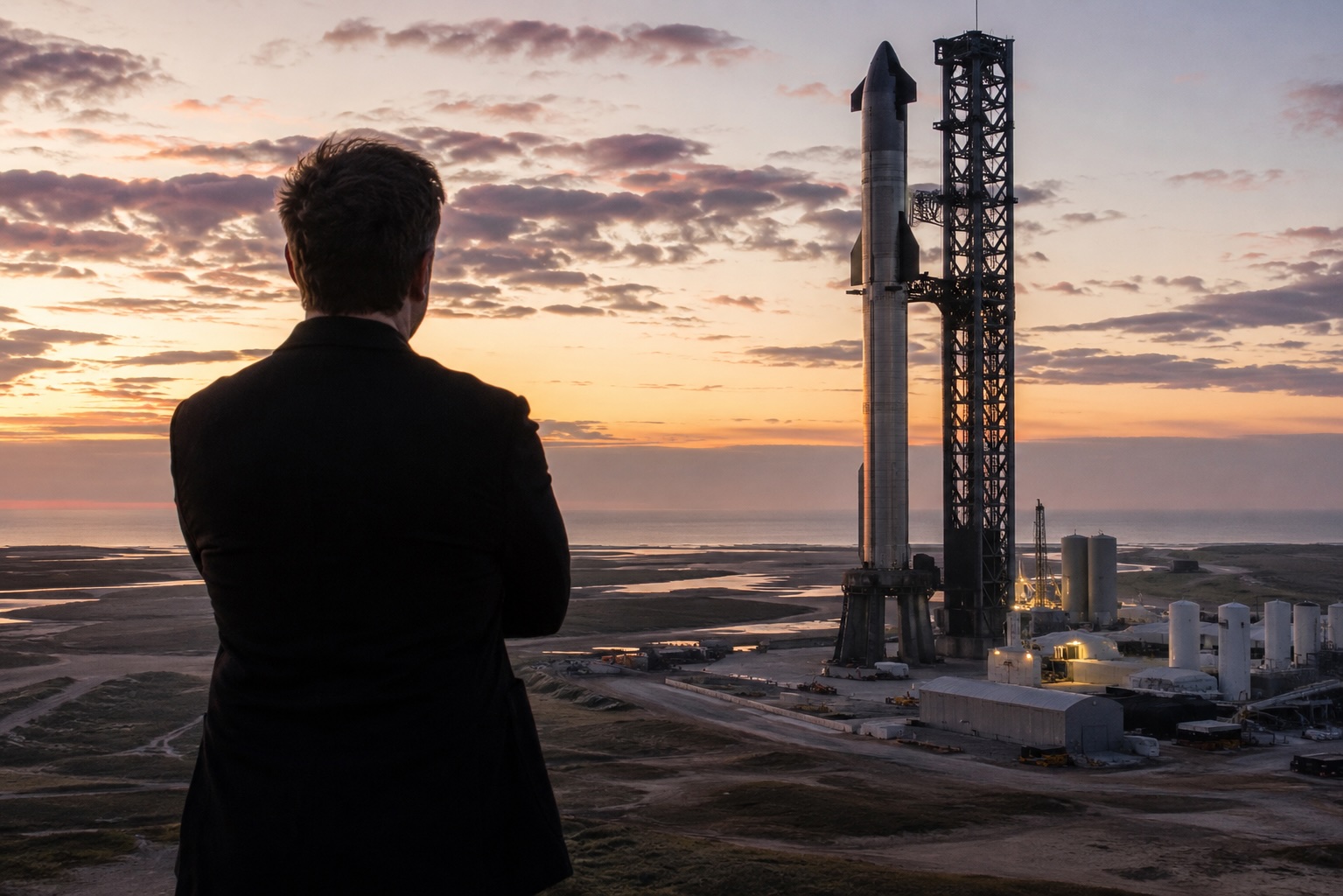
Elon Musk confirmed Tuesday that Tesla and SpaceX have each formed special committees of independent directors to study a possible merger, the first formal step toward combining the two companies after months of speculation.
Musk made the disclosure during SpaceX’s third quarter earnings call. “Both SpaceX and Tesla have formed special committees to discuss this idea at the request of shareholders,” he said. “Because I’m a conflicted party, I can’t actually be in the discussions of the special committees.” He described the setup as “an odd kabuki dance where two groups of people are talking and I can’t be in the conversation.”
Musk did not hide where he stands. “Do I think it would be a good idea? Yes,” he said, pointing to shared work on super intelligence software, chip design, the Terafab facility in Austin, robotics, mass to orbit and connectivity. “I do think there’s a lot of merit to combining the companies as we are pretty much in the super intelligence singularity.”
He also tried to cool expectations. The committees have not agreed on terms for any transaction, and Musk said assuming a merger is a certainty “would be overstating it.” Any deal would go to shareholders, and on the Tesla side it would need approval from 50 percent of all outstanding shares, not just the shares that are voted. Musk called that “quite a high hurdle.”
That bar has tripped Tesla up before. The company’s 2025 attempt to declassify its board won support from only 39.4 percent of outstanding shares and failed. Musk’s own voting stake sits near 20 percent after he exercised his 2018 options in June, so a deal would need broad backing from institutions and a retail base that often leaves votes uncast.
Timing is another open question. Tesla filed its proxy statement Monday for its December 3 annual meeting, and the ballot has only three items: director elections for Musk, Robyn Denholm and JB Straubel, a say on pay vote and auditor ratification. Barclays analyst Dan Levy had argued that an announcement would need to land by late October or early November to make the annual meeting, as Teslarati noted in its SpaceX earnings preview. With no terms agreed, any vote would likely require its own special meeting.
Elon Musk gives his most telling Tesla-SpaceX merger conversation yet
Musk has been edging toward this for weeks. At the All-In Summit in September, he asked “who can imagine what action one might take when there’s so much close collaboration,” Teslarati reported. Last week’s Roadster unveil, built around SpaceX derived cold gas thrusters, pushed the talk further. The two companies already share the Terafab chip project, and Tesla holds a small SpaceX stake that came from its earlier investment in xAI.
SpaceX brought strong numbers to the conversation. It reported Q3 revenue of $14.58 billion, up 161 percent year over year, with its Super Intelligence segment now its largest at $7.56 billion. A higher SpaceX valuation would shape any exchange ratio Tesla holders are offered.
Tesla reports its own third quarter results after the close on Wednesday, October 21. Investors had already ranked merger timing among the top retail questions for SpaceX’s call, and the committees will almost certainly come up again on Tesla’s.

SpaceX reported its third-quarter 2026 financial results on October 20, posting the company’s first solidly profitable quarter since going public earlier in the year under the ticker $SPCX.
Revenue reached $14.58 billion, up 161 percent year-over-year from $5.6 billion, and well ahead of consensus estimates in the $12.7 to $12.9 billion range. The results highlight a rapid shift in SpaceX’s center of gravity toward artificial intelligence/super intelligence, while Starlink and traditional space operations continue to show robust progress.
Here are the key financial results for the quarter:
- Revenue of $14.58 billion (+161% YoY)
- Adjusted EBITDA of $8.8 billion (+306% YoY)
- GAAP net income of $4.4 billion (versus a $1.1 billion net loss in the prior-year quarter)
- Adjusted EPS of approximately $0.35 (versus roughly $0.13–0.16 expected)
- Income from operations of $2.8 billion
The AI/SI segment generated $7.56 billion in revenue, an 830 percent year-over-year increase, making it the company’s largest segment for the first time. Growth was primarily driven by the activation of major cloud services agreements, the integration of Cursor (acquired earlier in 2026), and rising usage of Grok models and the newly introduced Grok Bot personal agent.
🚨 SpaceX just reported earnings! Here are some highlights:
Financial:
Revenue $14.58B (+161% YoY) vs. consensus ~$12.7–12.9B
Adjusted EBITDA $8.8B (+306% YoY)
GAAP net income $4.4B (vs. prior-year loss; first solidly profitable quarter post-IPO)
Adjusted EPS ~$0.35 vs. ~$0.13–0.16 expectedSegments:
Super Intelligence (SI, formerly AI): $7.56B (+830% YoY) — now the largest segment, driven by cloud contracts, Cursor, and Grok.
Connectivity (Starlink): $5.25B (+69% YoY).
Space: $1.77B.Other highlights:
Starlink subscribers: 13.6M (+89% YoY).
Nameplate compute: 1.7 GW.
Capex: $19.6B (majority AI infrastructure).
Cash & marketable securities: ~$90B.
First revenue-generating Starship mission (26 V3 Starlink satellites, ~10× Falcon 9 downlink capacity per launch).— TESLARATI (@Teslarati) October 20, 2026
SI adjusted EBITDA reached $5 billion, and nameplate compute capacity stood at 1.7 GW at quarter-end, up from 1.4 GW in June and 0.6 GW a year earlier. Capital expenditures totaled $19.6 billion, with the majority allocated to AI infrastructure, including continued expansion of the Colossus facilities.
The Connectivity segment, which primarily surrounds Starlink, produced $5.25 billion in revenue, a 69 percent year-over-year and 22 percent sequentially. These are pleasant results to see and expected, considering how many airlines have adopted Starlink over the past year.
Starlink consumer subscribers reached 13.6 million, an 89 percent increase from the prior year, and a sequential gain of 1.6 million. Consumer average revenue per user improved to $69. Meanwhile, Enterprise and Government revenue also grew strongly, and Starlink is now installed on more than 3,800 aircraft, making internet more accessible and better performing than previous options.
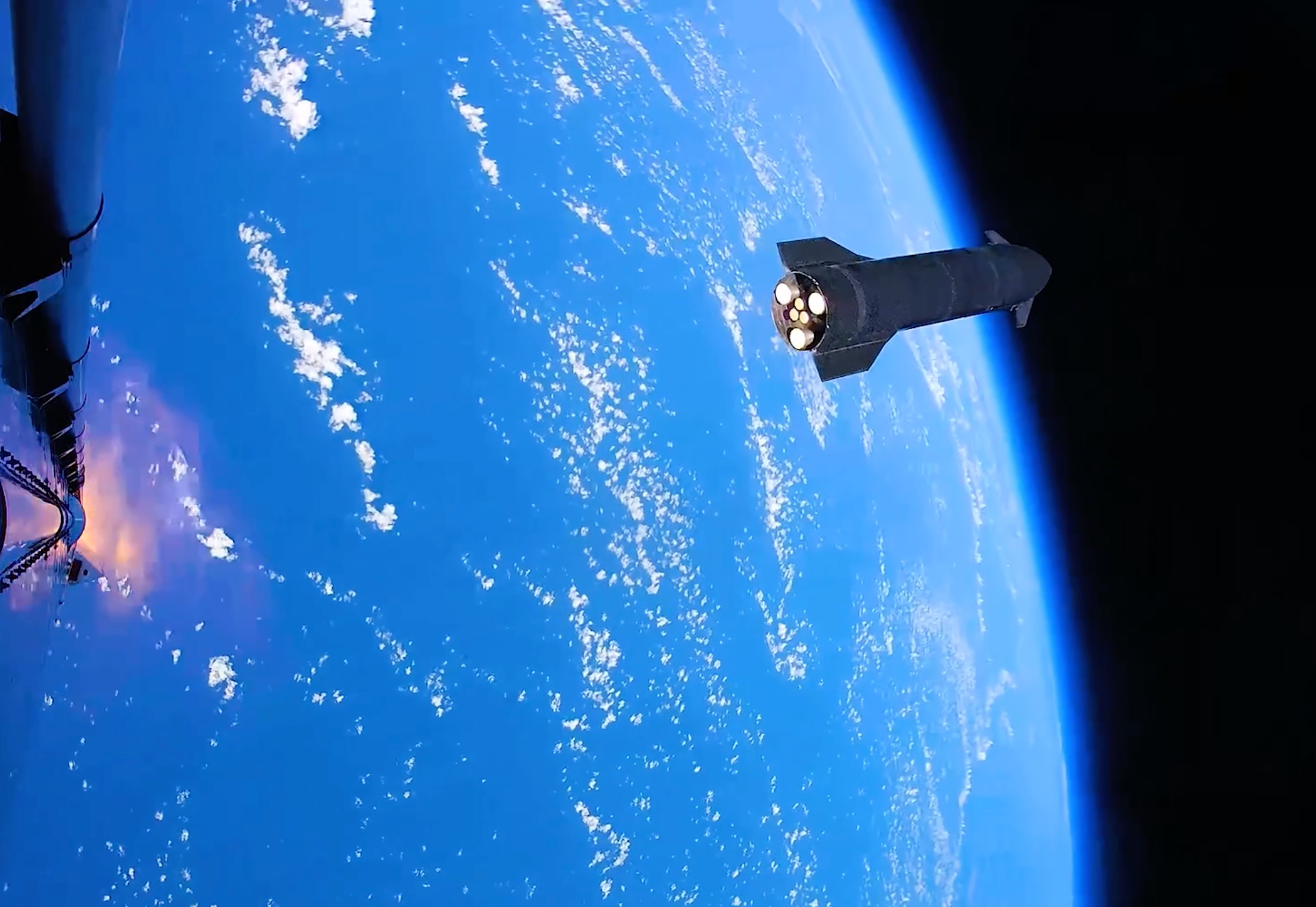
The Space segment also performed well and contributed $1.77 billion in revenue, up 6 percent year-over-year and 84 percent sequentially. A major milestone was the successful first revenue-generating Starship mission (Flight 14), which deployed 26 V3 Starlink satellites. Those satellites added roughly 10 times the downlink capacity of a typical Falcon 9 Starlink launch.
SpaceX completed 12 customer launches during the quarter, including NASA’s Nancy Grace Roman Space Telescope mission, and continued to grow its backlog of crewed, national security, and commercial flights.
CFO commentary noted that the combination of launch leadership, recurring Starlink revenue, and rapid SI expansion is producing meaningful operating leverage.
The company ended the quarter with roughly $90 billion in cash and marketable securities, providing substantial resources for ongoing investment while targeting an investment-grade balance sheet. Sequential revenue nearly doubled from the $7.81 billion reported in the second quarter, illustrating the pace of the AI-driven acceleration. Things are looking strong for SpaceX.
What’s incredibly striking is the fact that SI has grown to be larger than the rest of the company in such a short amount of time. CEO Elon Musk said on the earnings call that Grok Bot is the “fastest-growing product I’ve ever seen,” so it seems that it could be a true keystone of SpaceXSI over the next few years.
SpaceX (NASDAQ: SPCX) will report its second public earnings call today since its IPO earlier this year, and there are a few things we expect to hear about, as well as Wall Street analysts, who have already outlined their expectations for the call.
Wall Street analysts have a consensus of $12.72 billion in revenue and an earnings per share (EPS) of $0.13. These are broken down into three sectors: Space, Connectivity, and AI/SI, which are perceived in this way:
- Space: $1.41 billion
- Connectivity: $4.84 billion
- AI/SI: $6.47 billion
Other outlets cluster near $12.8 or $12.9 billion in revenue and $0.14 – $0.15 EPS. This implies a roughly 65 percent sequential growth from Q2’s $7.81 billion, driven mostly by AI/SI, with the first post-IPO positive EPS expected.
Here are the three things to watch for on the call:
AI Revenue Ramp and the $100B+ ARR target
AI is truly the swing factor for SpaceX, and analysts expect it to roughly double from Q2’s $2.56 billion and become about half of total revenue. Management previously guided to a $100 billion+ annualized run rate by December, including the Cursor acquisition, which was $60 billion, to close the quarter.
Listen for updates on SpaceX’s compute capacity, especially pertaining to its contracts with Google, Anthropic, and others, revenue per watt, any new deals, and Cursor’s early contribution.
Starlink/Connectivity Metrics and Mobile Expansion
Connectivity remains a main profit engine for SpaceX. Subscriber additions will be something to pay attention to, as Q2 ended at 12 million and previews are looking at 14 million for this quarter. Additionally, ARPU trends, enterprise and government growth, and any commentary on Starlink Mobile will be something to pay attention to, especially following the recent low-band spectrum deal and FCC-related constellation approvals.
Capex Trajectory, Cash Burn/FCF, and Starship/Operational Updates
Q2 capex of roughly $18.4 billion weighed on the stock. Investors will look to scrutinize Q3 spending levels, any guidance on the pace into Q4/2027, free cash flow, backlog, and liquidity. Operational color on Starship (Flight 14 milestones and Flight 15 timing/reusability progress), Falcon cadence, and government/NASA contracts are also in focus.
Of course, there will also be some speculation on the potential Tesla-SpaceX merger, but there was nothing mentioned in the company’s proxy it sent earlier this week.
SpaceX will report earnings after market close today and will stream the call on X.
Watch live as SpaceX discusses our Q3 2026 earnings at 3:30pm CT today → https://t.co/Qrb0qeVG15
— SpaceX (@SpaceX) October 20, 2026
Interested in ordering a Tesla? Use my referral code for three free months of Full Self-Driving (Supervised) here

Elon Musk just confirmed the Tesla and SpaceX merger step everyone was waiting for

SpaceX delivers blockbuster Q3 results as Super Intelligence segment booms

SpaceX reports its second earnings today: here’s what to expect

SpaceX reveals how its 1 Million AI satellite network will work and prevent space collisions

Tesla Roadster: Three configs, one can fly, 0-60 in 0.8 seconds


