Lifestyle
Boring Co’s “Loop Lift” elevator and tunnel concept are coming to life at SpaceX site

Elon Musk’s vision for an electric-powered elevator that would transport vehicles to and from a network of cost-effective, high-speed underground tunnels is quickly taking shape near SpaceX’s Hawthorne, CA headquarters.
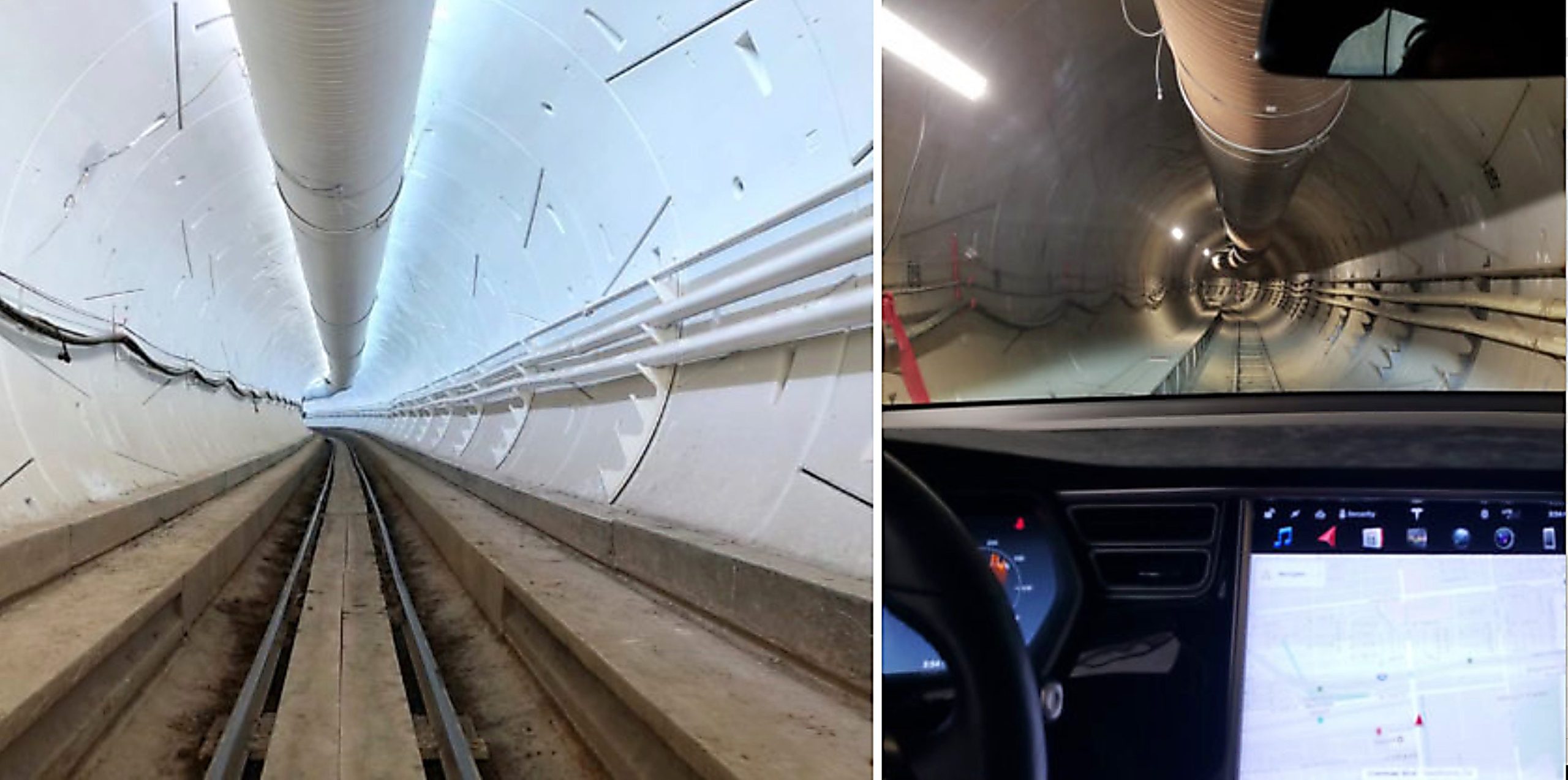
The Boring Company released new images revealing a freshly painted tunnel in white and a shaft that’s being constructed on a private lot at 120th Street and Prairie Avenue, roughly at the halfway point of the tunneling startup’s underground 2-mile test tunnel. Dubbed O’Leary Station after Patrick O’Leary, a 13-year SpaceX veteran who transitioned in 2017 to become Structures Engineering Designer for The Boring Company, the location is part of a proof-of-concept that aims to demonstrate the efficiency of lowering vehicles into transportation systems, perhaps directly from a vehicle owner’s home garage.
It’s all part of Musk’s grander vision to counter “soul-destroying traffic”, where people either drive their vehicles or are lowered into underground tunnels in Urban Loop pods and then transported at high speed on electric skates. Prior to gaining permission from Hawthorne’s city council for the construction of a “Loop Lift” garage-elevator system at the SpaceX-adjacent testing grounds, The Boring Company highlighted the progress of development for its subterranean, electric transport system by sharing a video of a Tesla Model X being whisked away underground.
-
- The Boring Company has not only broken ground on its second phase in Los Angeles, but also is close to completing the first elevator depicted in a concept video last month. The system could cut 45 minute drives into five minutes. Source: The Boring Company
-
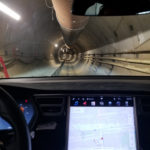
- A Tesla Model S inside a Boring Co. tunnel. [Credit: Elon Musk/Instagram]
The tunneling startup began construction of a tunnel entrance located directly across the street from SpaceX headquarters – Crenshaw Boulevard – in 2017. Not long after, a video showing a Tesla being lowered into the ground and images showing continued development of the tunnel walls pointed towards rapid progress at the test site. More importantly, ongoing research and development in the project would pave the way for future initiatives across the U.S., as the company looked to secure regulatory approval for city-scale projects in major metros like Chicago, New York, Philadelphia, and Baltimore.
Updated October 21, 2018: Shortly after we published this story, Elon Musk took to Twitter to confirm that The Boring Company is near completion of its first tunnel and will be holding a Boring Co. opening event on Monday, December 10, 2018.
The Boring Company’s recently shared photos are a good indicator that the various components in its proof-of-concept project are starting to come together. The photo of the 20-plus-ft-in-diameter hole in the ground, or tunnel shaft, is in the same residential location where Teslarati photographers Pauline Acalin and Tom Cross recently spotted excavation taking place. The location, now understood to be O’Leary Station, will be the site for The Boring Company’s “garage-elevator” concept, as well as a more convenient point access for maintenance and eventually the permanent removal of tunnel boring machine (TBM) segments.
-
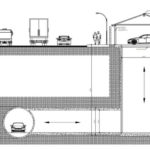
- The Boring Company’s proposed prototype garage. [Credit: The Boring Company]
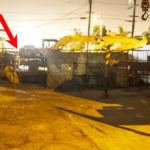
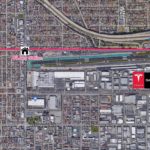
The concept elevator when complete will not be open to the public but instead used as an internal testbed for moving vehicles in and out of the private residence, which the company acquired. Cars would enter the tunnel from the SpaceX campus near Crenshaw Boulevard, move through the tunnel and on to the garage at O’Leary Station and then back to headquarters.
“It’s an important part of the longer-term vision the company is trying to build,” said The Boring Company spokesperson Jane Labanowski.
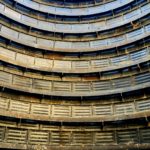
Before and after photos of the underground tunnel, which will be used to zip vehicles on platforms powered by electric motors, show a freshly painted inner wall in white.
-
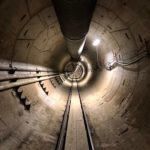
- The Boring Company’s tunnel under Hawthorne, CA. [Credit: The Boring Company/Twitter]
-
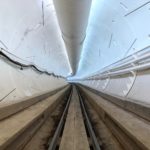
- Musk believes that TBC will finish its first test-tunnel in roughly six weeks, in early December. (TBC)
Photos of The Boring Company tunnel in July 2018 (left) and October 2018 (right)
The Boring Company looks to extend its tunneling project into the west side of Los Angeles and apply learnings from its test tunnel and streamline the process for tunnel building. Unlike traditional underground tunnels for passenger vehicles, Boring Co.’s tunnels will be smaller and able to maintain a vacuum in order to support Hyperloop transportation. Reducing the tunnel diameter by 50% will also reduce the cross-sectional area of the tunnel by a factor of four.
Musk noted in his speech at TED2017 that having a smaller tunnel just large enough for a vehicle will cut 75% of the time associated with digging, thereby introducing significant cost savings. The Boring Company’s tunnel boring machine will also look to install tunnel walls continuously while it digs, thus eliminating the need to pause operations and speeding up the process entirely.
https://www.youtube.com/watch?v=u5V_VzRrSBI


Elon Musk
How to use Grok Bot to block spam calls and texts
Musk told users to ask Grok Bot to scrub their phone numbers from spam lists.
Elon Musk has a new use case for Grok Bot, and it is the spam call. On Thursday he replied to an X user named Arash with a short instruction: “Ask your @Grok @Bot to remove your phone number from spam call & text lists!” Arash had said he got tired of the calls, had an AI bot find his number on listing sites and file removal requests, and packaged the process as a free skill for others.
The skill is called Spam-Call Scrubber, which is described to find a phone number on people search sites and data brokers, submits the opt outs, completes the confirmation emails those sites send back, and rechecks on a schedule the user picks. Using it requires the Grok Bot app. The pitch is time saved, since most broker opt outs sit behind separate forms on separate sites.
Ask your @Grok @Bot to remove your phone number from spam call & text lists!
— Elon Musk (@elonmusk) October 15, 2026
Musk said Grok Bot now gives each bot its own email address, and that it can detect scam emails. On Thursday he also said SpaceX would make users whole if the bot botches a purchase or leaks a card, then told users to shop away from Amazon after the retailer blocked the agent, as Teslarati reported. The terms of service we reviewed at the time put responsibility for what an agent does on the user.
For Tesla owners, Grok Bot is not just a phone app. Tesla brought Grok Bot into its vehicles on September 22, and we argued earlier this week that the Cybercab’s real advantage may be the errands it runs during a ride. Every Cybercab and the rest of the Model Y Robotaxi fleet has it enabled. The more routine tasks like this one become, the more a rider has reason to hand over something personal in the back seat.
The new Spam-Call Scrubber skill can be downloaded for free and works on sites that honor removal requests, while noting that listings can reappear, and illegal robocallers do not check any registry. Whether Spam-Call Scrubber cuts anyone’s call volume is something the first wave of users will find out, and Musk’s endorsement guarantees that wave is coming.
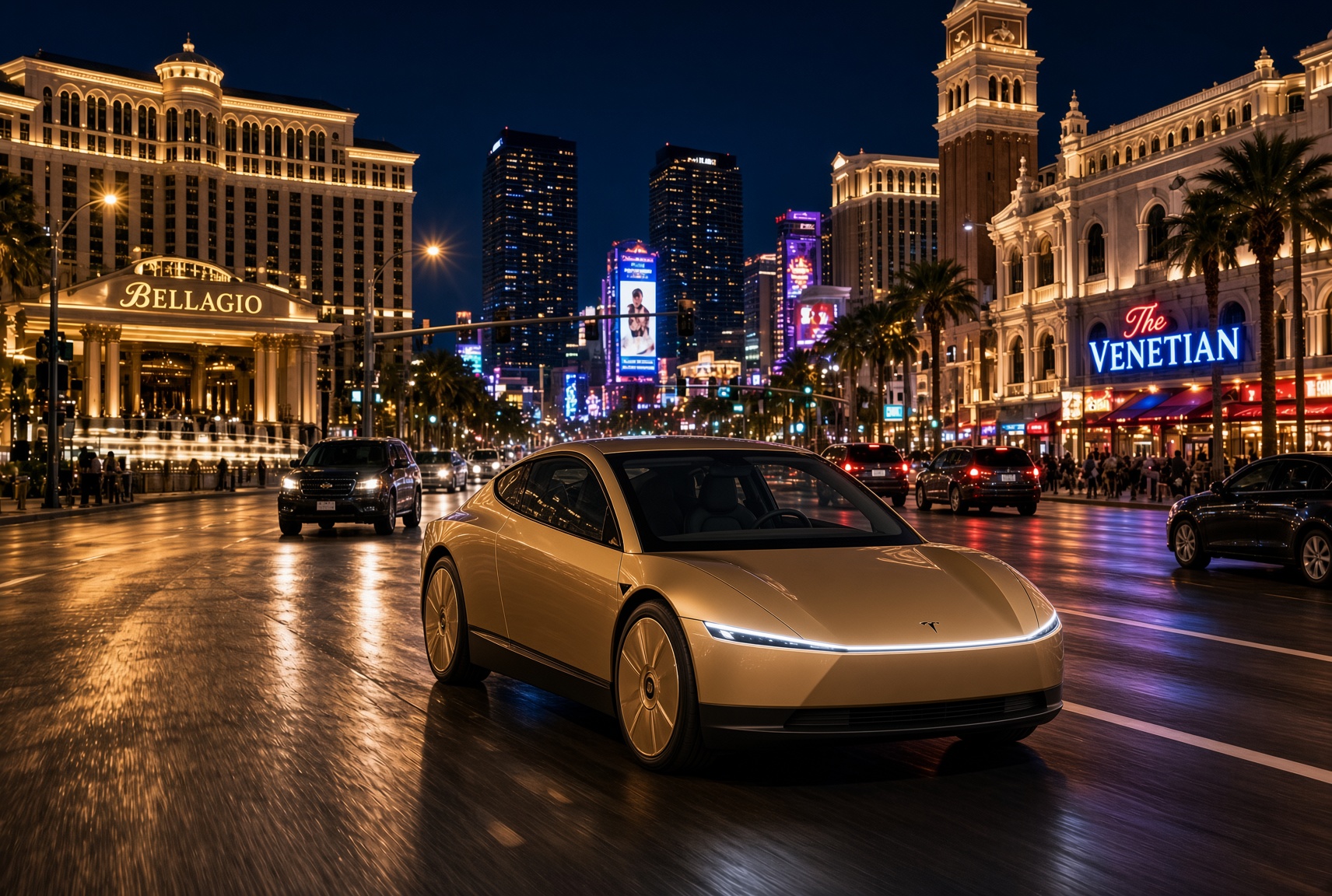
For a century, the car has asked the same thing of its owner, which is basically to pay attention. Even the best ride-hailing app like Uber or Lyft only moved the problem into someone else’s hands. You stopped driving, but you still sat in a stranger’s car, while half listening, and wondering whether to take a phone call in the car without being rude. The Cybercab has no wheel, no pedals and no driver. With Grok @bot now live inside it, it becomes something else entirely, and I think that matters more than the fleet count that everyone is tracking.
Grok @bot is an agent, not a voice assistant. A rider signs in once, and from then on can say what they need and watch it happen. Order dinner from a favorite restaurant. Fill the grocery cart. Move money, answer email, adjust a calendar, push a work project forward. Tesla engineer Yun-Ta Tsai confirmed it is enabled across every Cybercab and the rest of the Model Y fleet, and Tesla’s own pitch is that Full Self-Driving handles the commute while Grok handles the errands.
Think about what that does to a thirty minute ride. Uber sells you a trip, while Waymo sells you the same trip in a more private setting. Tesla is selling the thirty minutes themselves, returned to you with an assistant attached. Errands that used to eat a Saturday get done between pickup and drop off. The ride stops being dead time between two places and becomes a place of its own.
Tesla integrates Grok Bot into its vehicles for the ultimate personal assistant
Best of all, your Bots follow you into any Cybercab, and presumably your own Tesla, then logs you out automatically when you step out. Anyone can bolt a chatbot onto a screen, but much harder to own the vehicle, the autonomy stack and the assistant at once. It also quietly ties SpaceX’s Super Intelligence business to Tesla’s fleet, after Tesla converted its xAI stake into SpaceX equity. The relationship between those two companies is getting harder to describe as separate.
This is also where the hard questions start, because an agent that can spend your money in a vehicle other people also ride in needs some answers. How does it handle a voice it shouldn’t trust? What gets recorded, who can see it, and for how long? What happens when a rider leaves halfway through a task?
If Tesla gets those answers right, the scoreboard changes. We have been counting Cybercabs and wait times. The more telling number may be what riders accomplish per trip. That is data almost no one else will ever have, and it is the real reason to watch Grok @bot.
What do you think? Leave me a comment.
Lifestyle
Tesla’s mirrorless Cybercab will give riders a visibility upgrade
Tesla engineer confirms Cybercab update letting riders pull up rear and repeater cameras on demand.
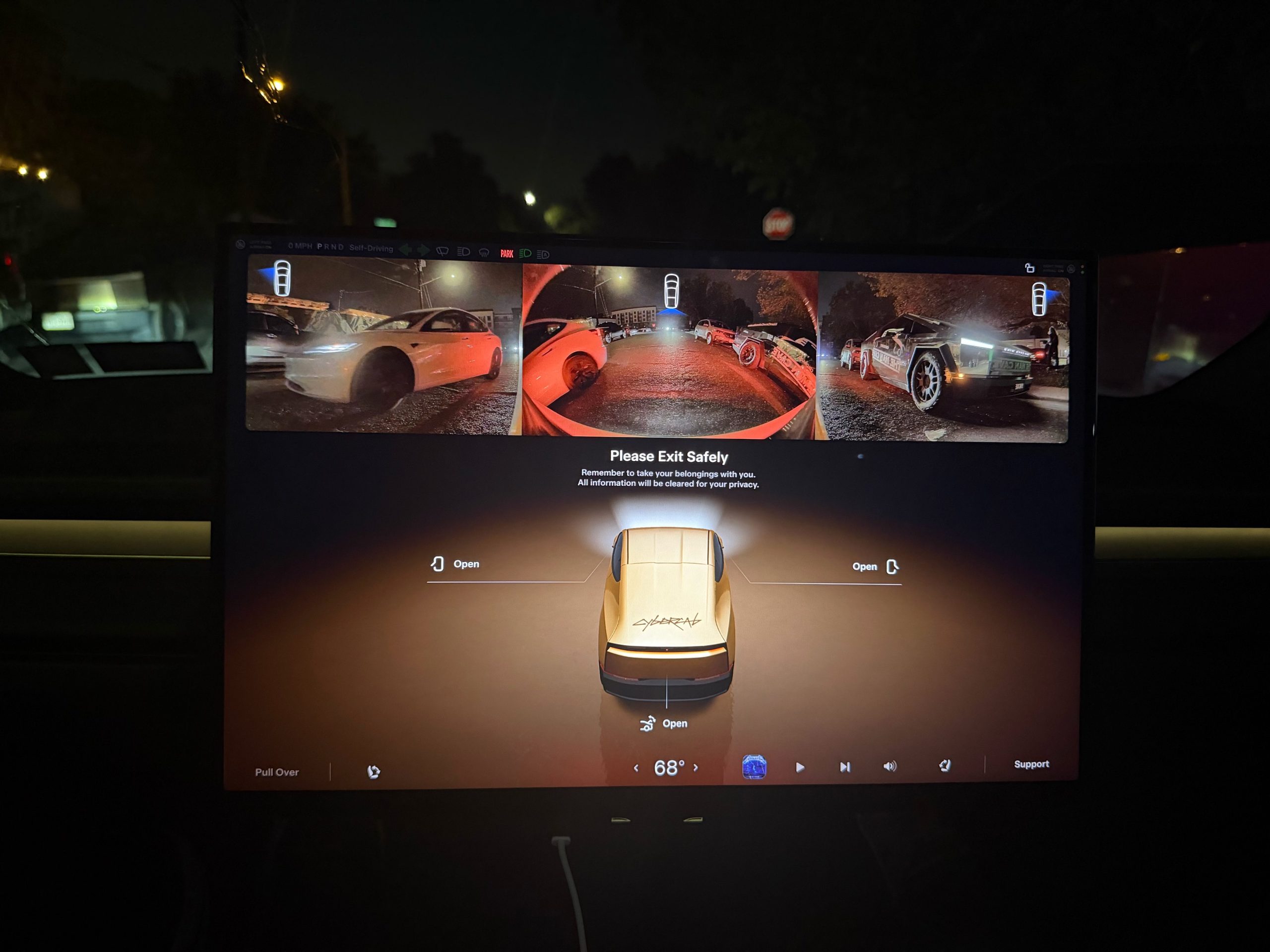
Tesla is working on a Cybercab update that would let passengers pull up the vehicle’s rear and side cameras on demand, and the request came straight from a rider.
The exchange played out on X late Friday. Cybercab rider Dan Burkland shared photos of the two-seater’s cabin screen after an evening ride, praised the UI team’s work, and left one request: let riders open the rear and repeater cameras whenever they want, “especially for peace of mind.” Tesla UI software engineer Evan (@CarCoder) answered with two words: “In development.”
The Tesla UI team absolutely crushed it with the infotainment software. Nicely done @CarCoder!
One feature request: Allow folks to pull up the rear & repeater cameras on demand. This would be great especially for peace of mind. https://t.co/mNAOSLx6pE
— Dan Burkland (@DBurkland) October 10, 2026
The idea fits a pattern Teslarati has tracked since public rides began. Days after paid Cybercab service opened in Austin, Tesla sent riders a survey that asked them to rate the touchscreen, the app and the cabin, and to pick the features they wanted most. We reported on that survey in September, and a camera view is the kind of small software change Tesla can push quickly if riders keep asking.
It also speaks to something unique about the vehicle. With no steering wheel, no pedals and no driver, passengers have no mirror to check and no way to see behind them. The hardware is clearly built for camera awareness, from the repeater cameras to the rear camera. Letting a passenger look through those same cameras would give a nervous first time rider a way to confirm what is around the car.
The timing matters because the fleet is growing fast. Tesla’s Robotaxi account said on Saturday that more than 300 Cybercabs are now serving Austin, an eightfold increase in 30 days, and Tesla AI chief Ashok Elluswamy named Dallas as the next city. More cars and more cities mean more people riding in a driverless vehicle for the first time, which is exactly when small trust features carry weight.
For now, the feature is confirmed only as in development. If Tesla follows its usual pattern with Cybercab software, riders could see it appear in a point release without any announcement, and Teslarati will watch for it.

How to use Grok Bot to block spam calls and texts

Tesla’s flying Roadster just revealed something bigger than the car

How Tesla’s Roadster fan system and thrusters are built to dominate the corners

SpaceX reveals how its 1 Million AI satellite network will work and prevent space collisions

Elon Musk’s Boring Company lands a new Middle East deal, and Nashville is about to get faster


