Elon Musk
Elon Musk confirms Tesla AI6 chip is Project Dojo’s successor
Tesla’s AI5 and AI6 chips are expected to be rolled out to the company’s consumer products.

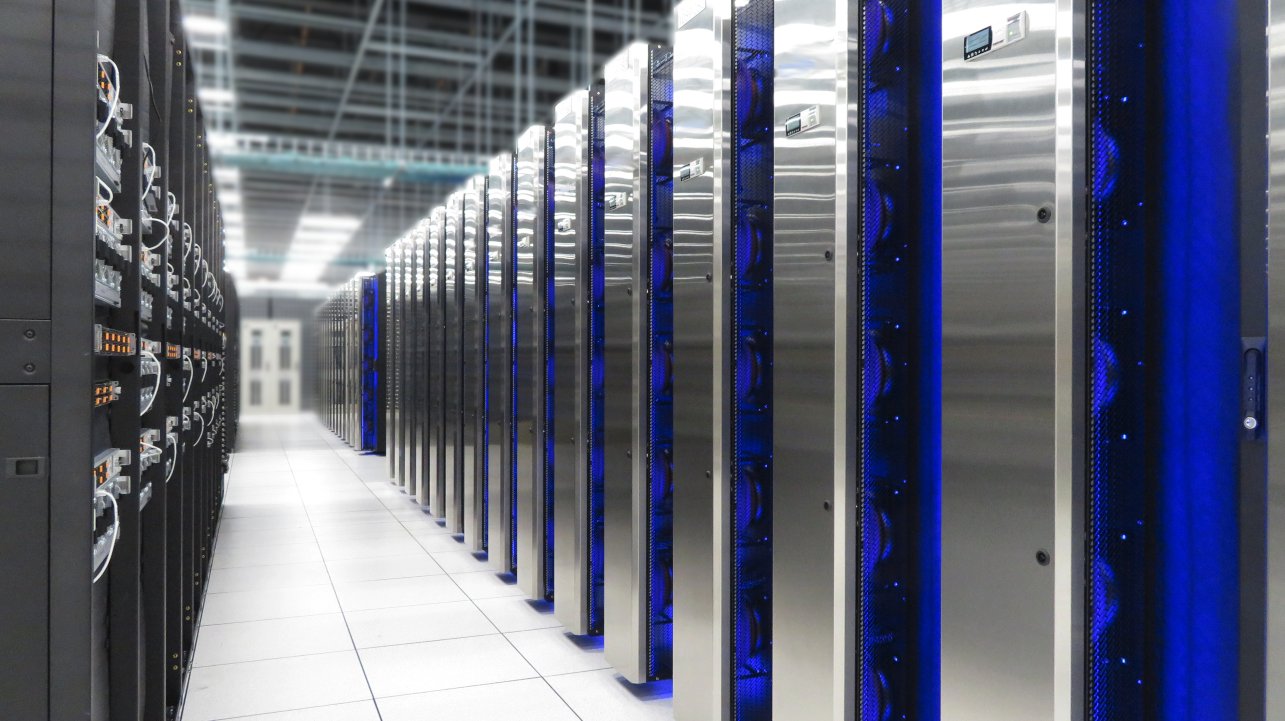
Earlier this week, reports emerged stating that Tesla has stepped back from its Project Dojo initiative. While the reports were initially framed as a negative development for the electric vehicle maker’s autonomous driving efforts, CEO Elon Musk later noted on X that Tesla was indeed halting its Dojo initiative.
Elon Musk’s Confirmation
As per Musk, Tesla was shuttering Project Dojo because it does not make sense for the company to divide its resources and scale two different AI chip designs. Dojo, after all, is designed to train the company’s autonomous driving program, and thus, it would not be rolled out to Tesla’s consumer products.
In a series of posts on X, Musk stated that it would make sense to just use Tesla’s AI5/AI6 to train its FSD and Autopilot systems. “In a supercomputer cluster, it would make sense to put many AI5/AI6 chips on a board, whether for inference or training, simply to reduce network cabling complexity & cost by a few orders of magnitude,” Musk said.
Tesla’s AI5 and AI6 chips are expected to be rolled out to the company’s consumer products, from Optimus to the Cybercab to the next-generation Roadster.
AI6 is Dojo’s Successor
What was particularly interesting about Musk’s comment was his mention of using AI5/AI6 chips for training. As per Musk, this strategy could be seen as “Dojo 3” in a way, since the performance of Tesla’s AI5 and AI6 chips is already notable. Musk’s comment about using AI6 chips for training caught the eye of many, including Apple and Rivian alumnus Phil Beisel, who noted that “AI6 is now Dojo.”
“Dojo is Tesla’s AI training supercomputer, built around a custom chip known as the D1. The D1 and AI5/AI6 share many core design elements, particularly the math operations used in neural networks (e.g., matrix multiplication) and highly parallel processing.
“Dojo had a unique feature: chips arranged in a 5×5 grid using a system-on-wafer design, with etched interconnects enabling high-speed data transfer. In a sense, Dojo will live on as the generalized AI6. Going forward, all efforts will focus on AI6,” the tech veteran wrote in a post on X.
Elon Musk confirmed the Apple alumnus’ musings, with the CEO responding with a “bullseye” emoji. Musk is evidently excited for Tesla’s AI6 chip, which is expected to produced by Samsung’s upcoming Texas fabrication facility. In a post on X, Musk stated that he would personally be walking Samsung’s line to accelerate the output of Tesla’s AI6 computers.


Elon Musk
Tesla launches 200mph Model S “Gold” Signature in invite-only purchase
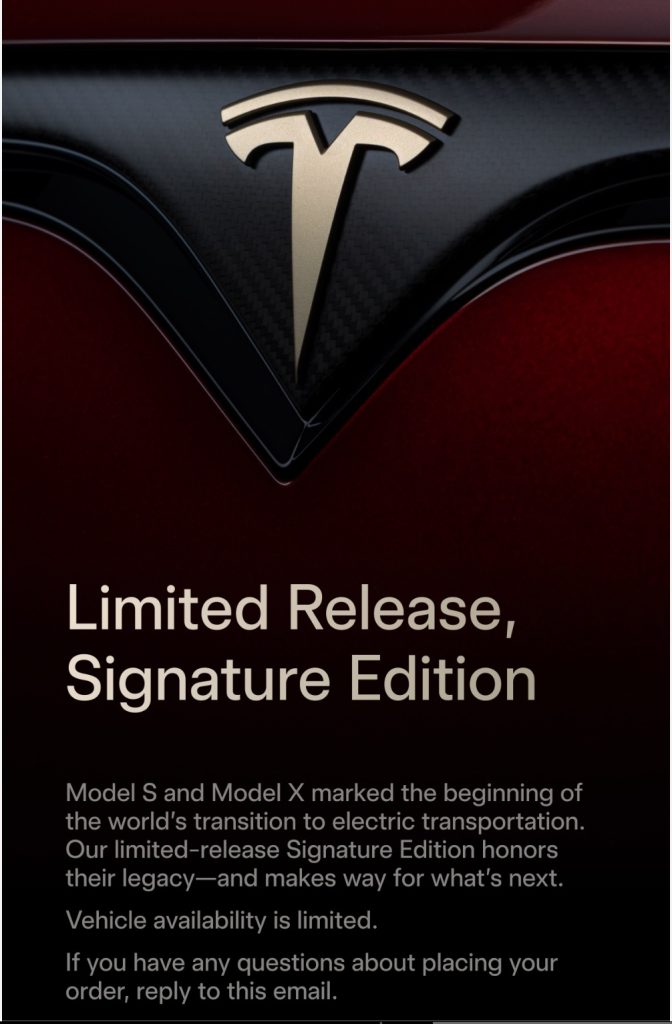
Tesla’s final 350-unit Signature Edition closes the book on two cars that changed everything.

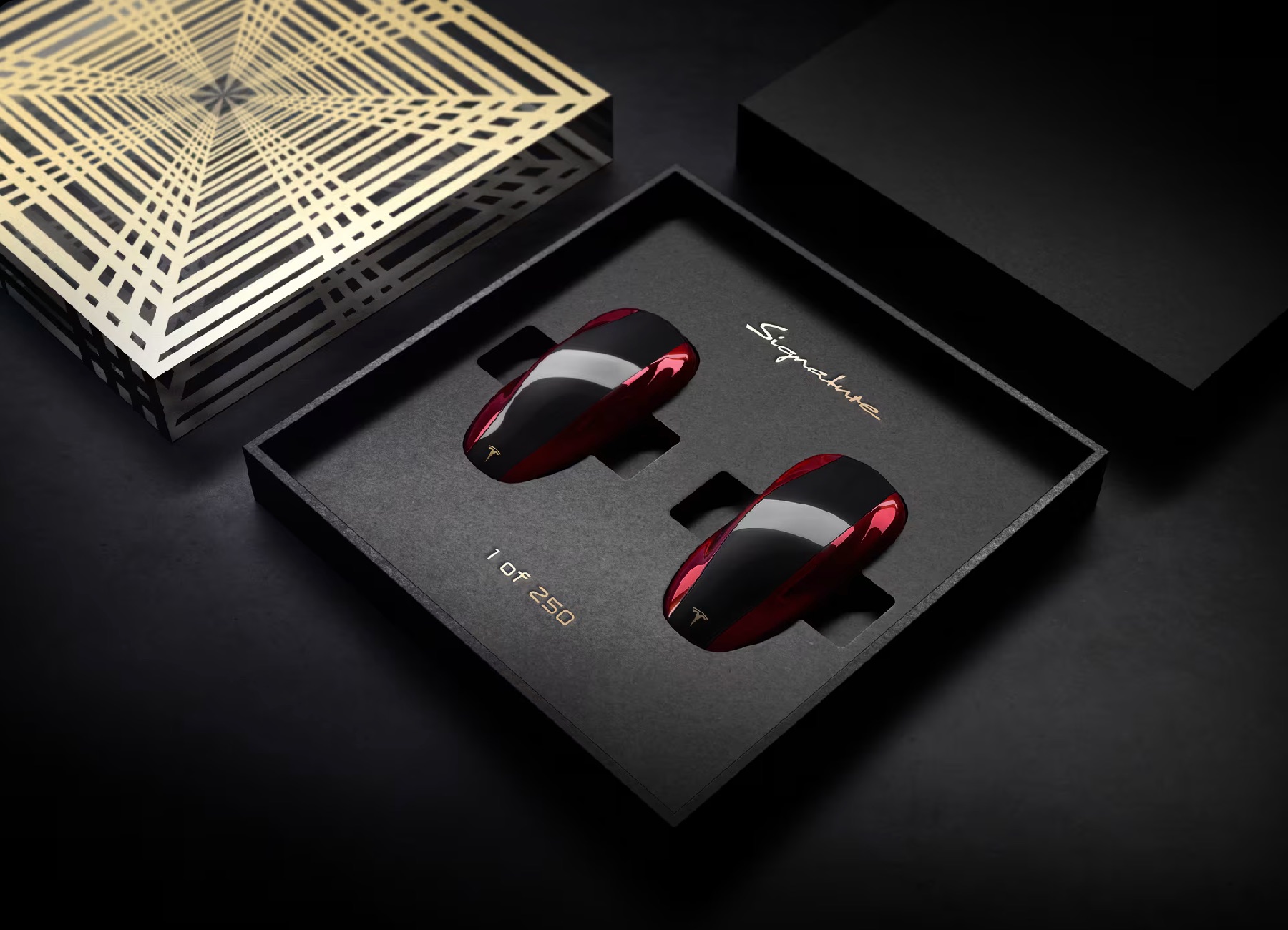
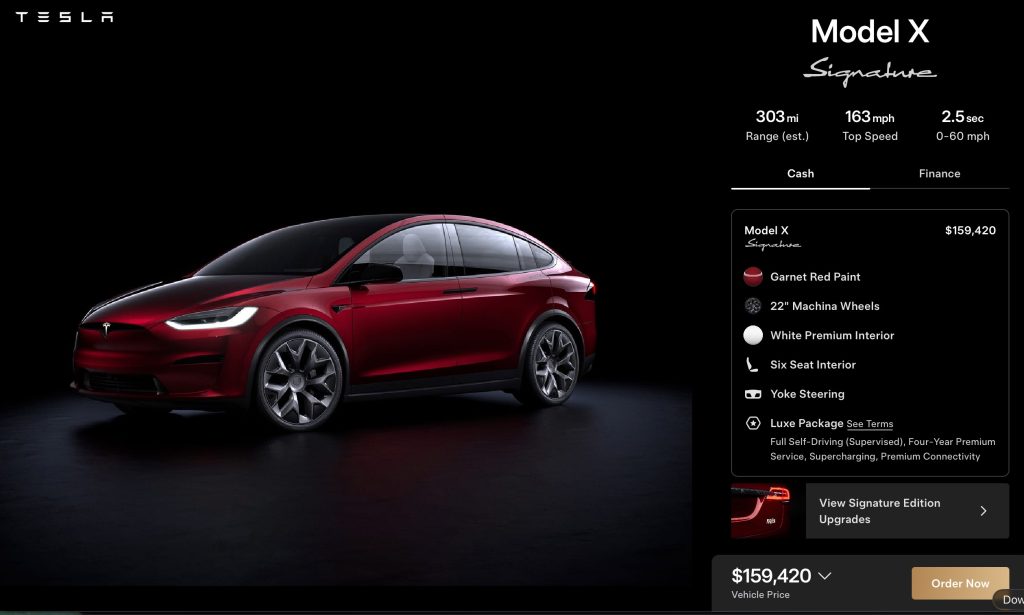
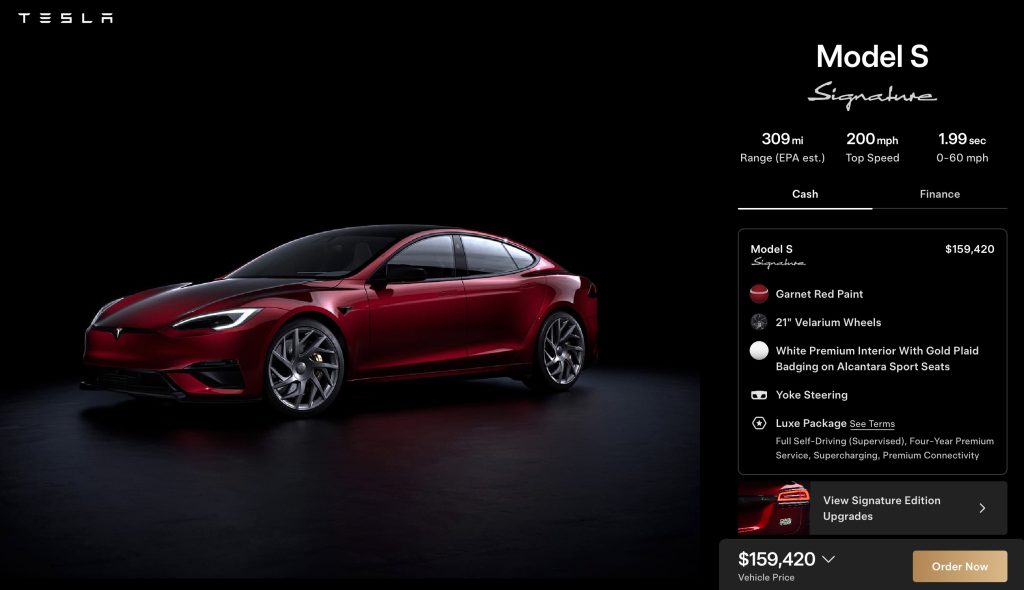
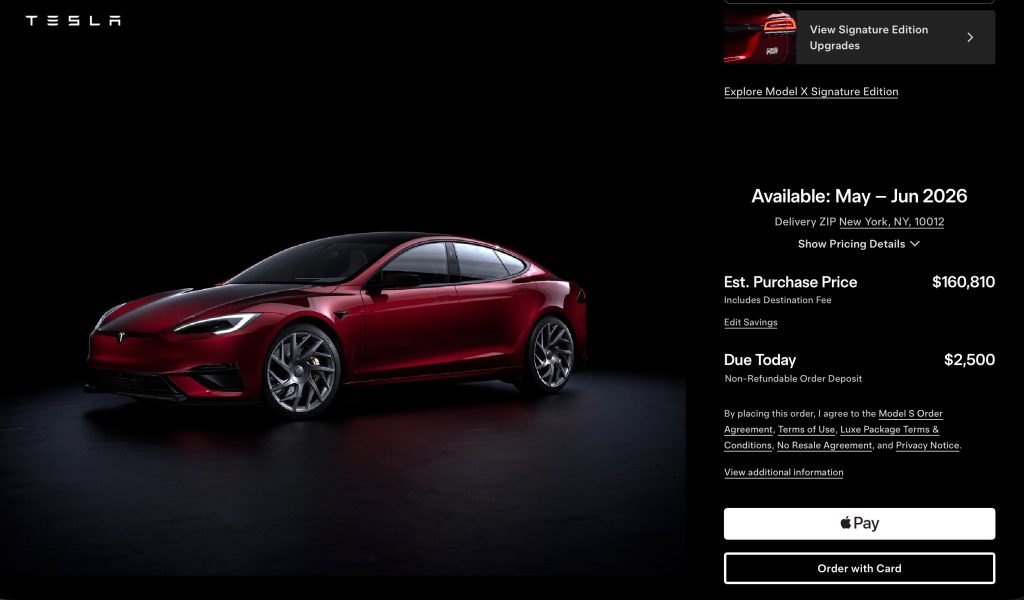
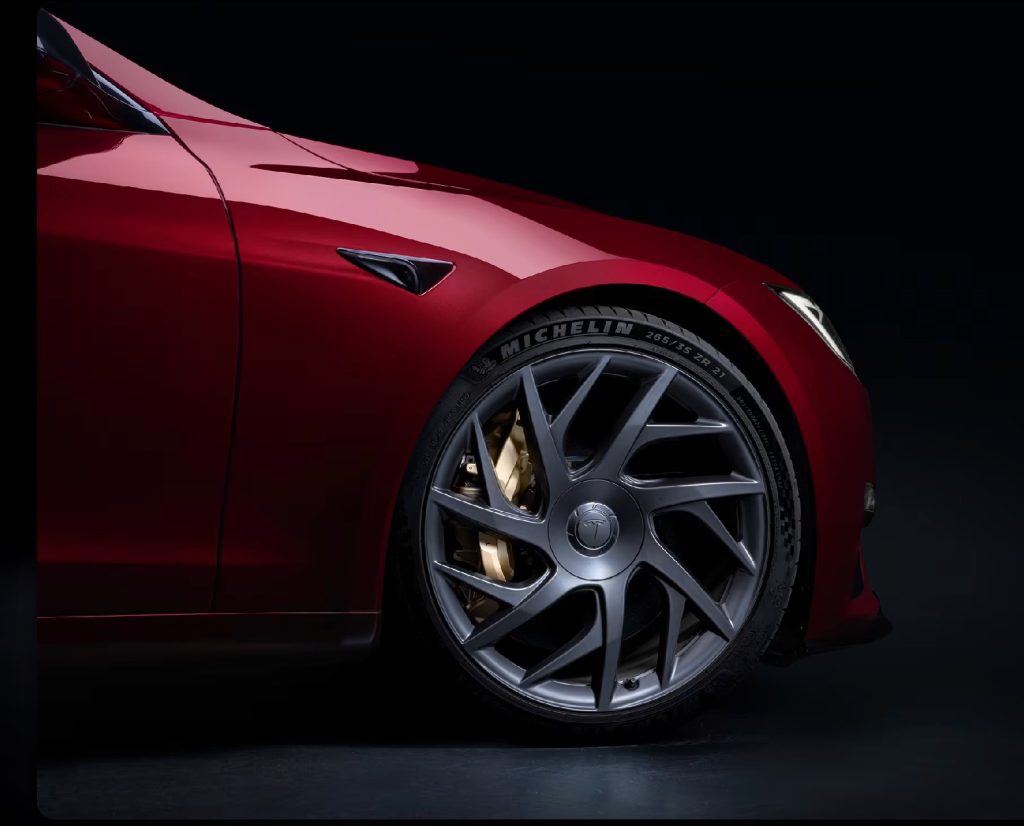
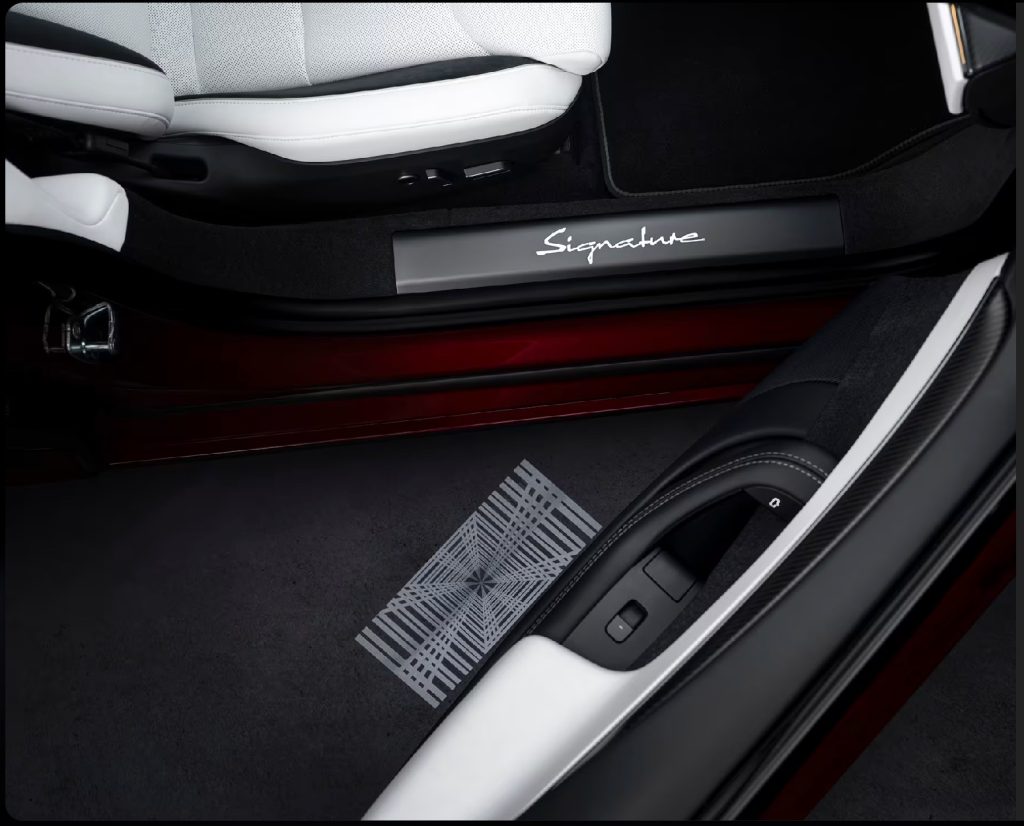
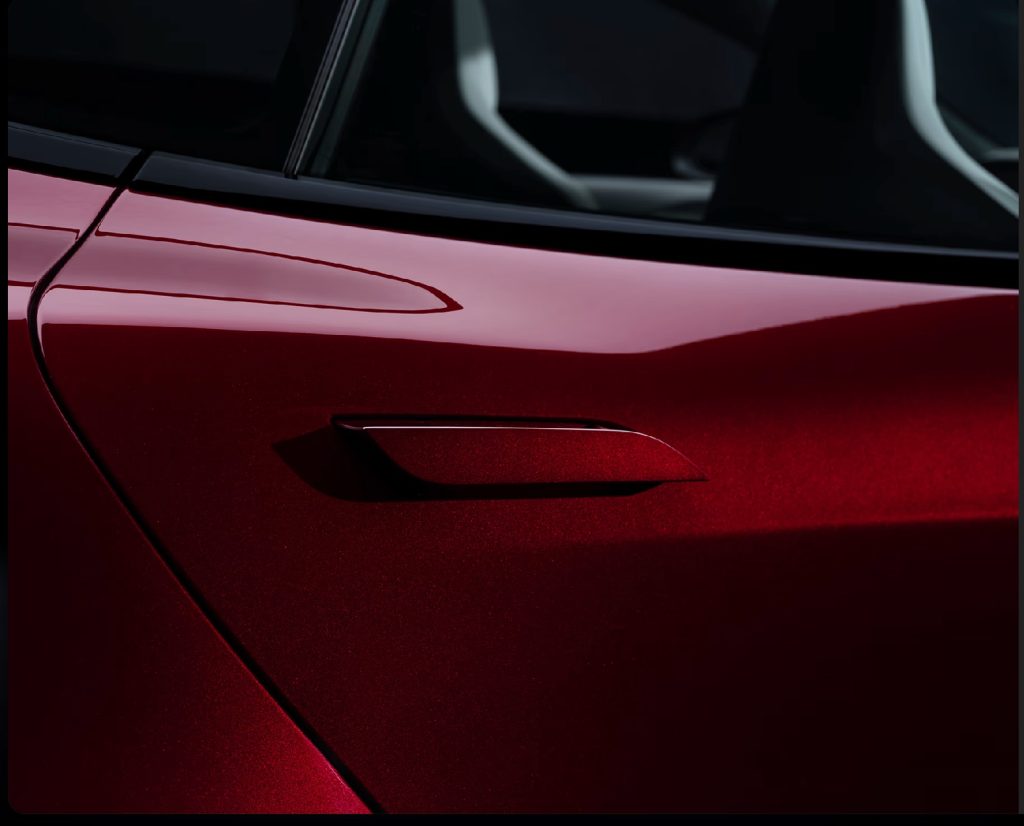
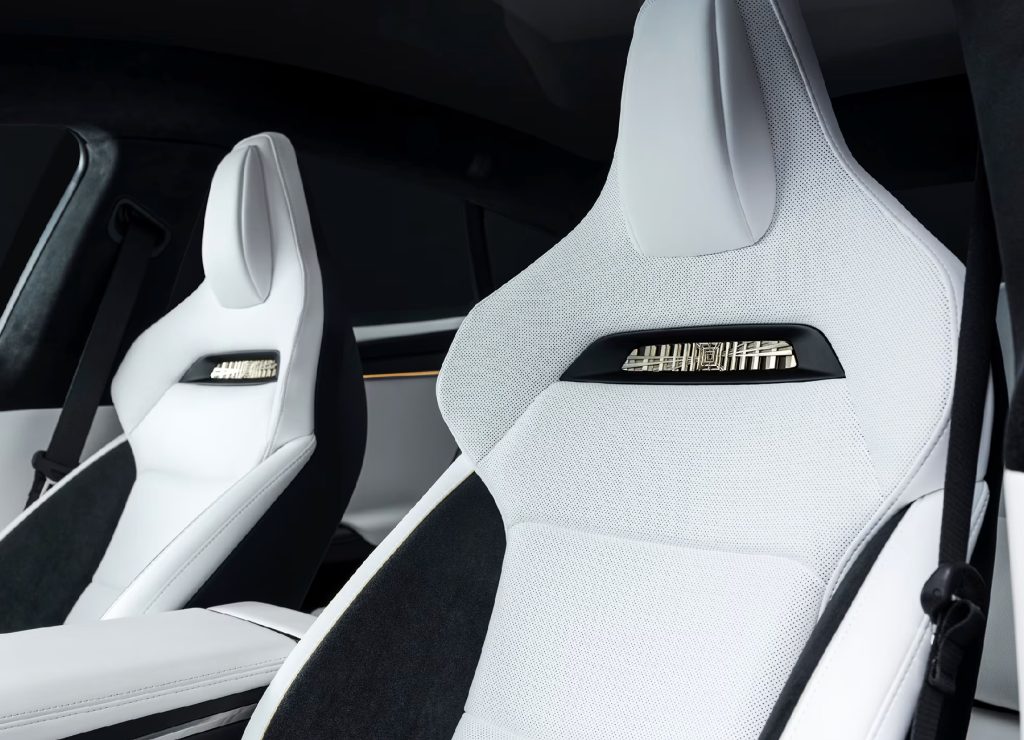
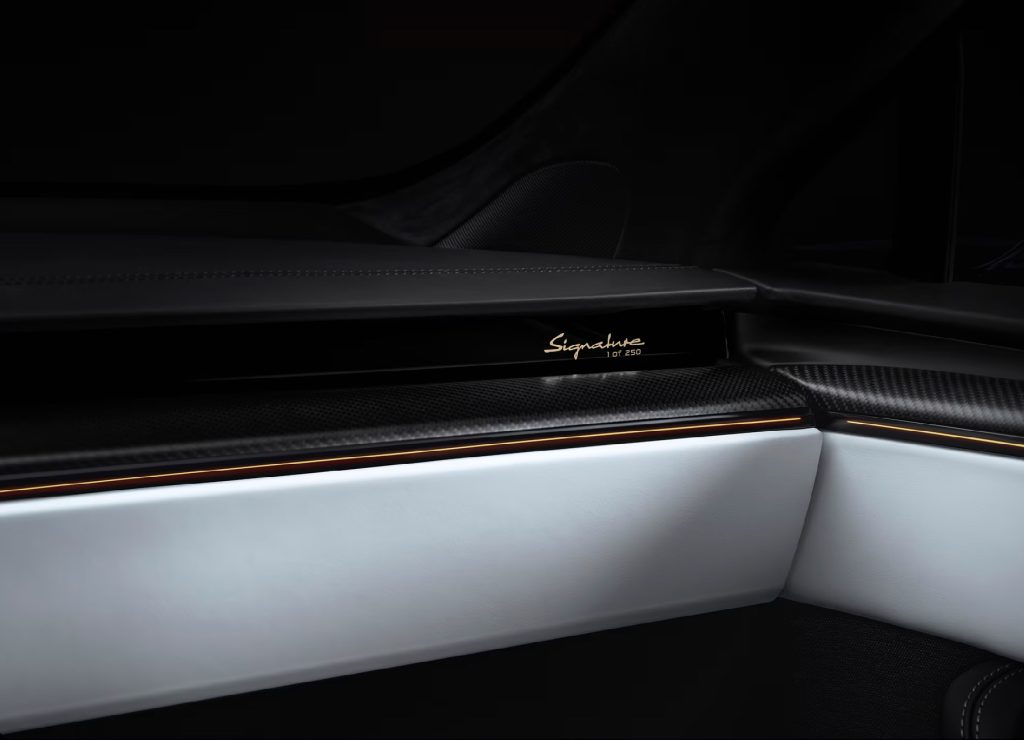
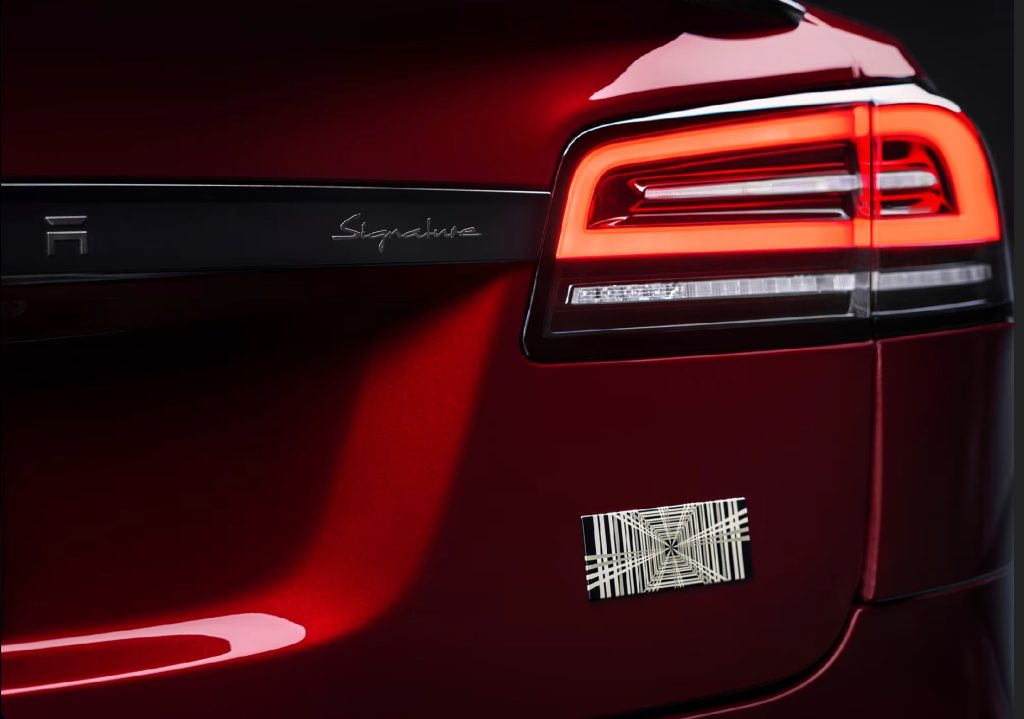
Tesla has announced a super limited Signature Edition run of 250 Model S Plaid and 100 Model X Plaid units as an invite only purchase in a bid to give its original flagship vehicles a proper send-off.
When the Model S first launched in 2012, the first 1,000 units sold were “Signature” editions that required a $40,000 deposit and cost nearly $100,000 each. Those early buyers were Tesla’s first real believers. This new Signature Edition deliberately echoes that moment, bookending a 14-year run with numbered collector hardware.
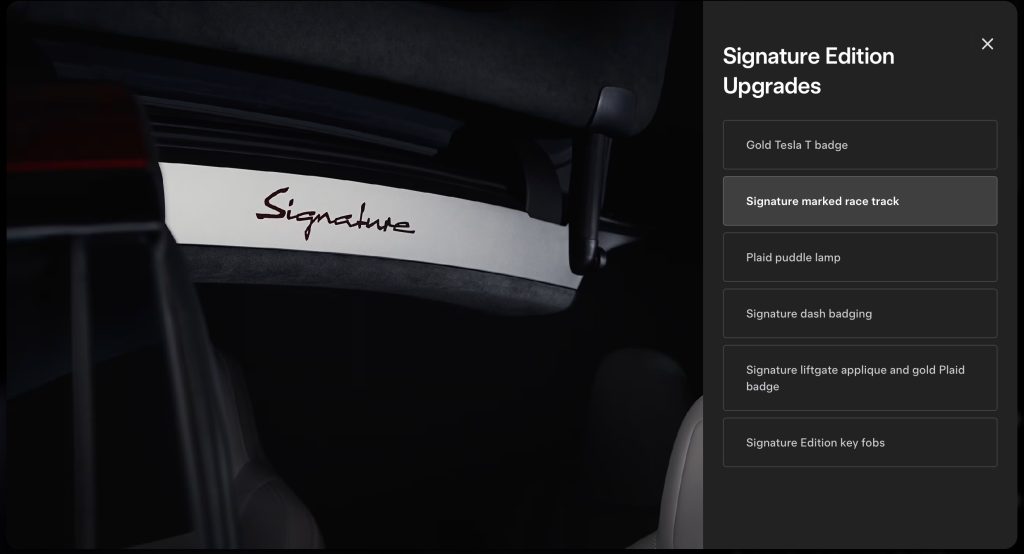
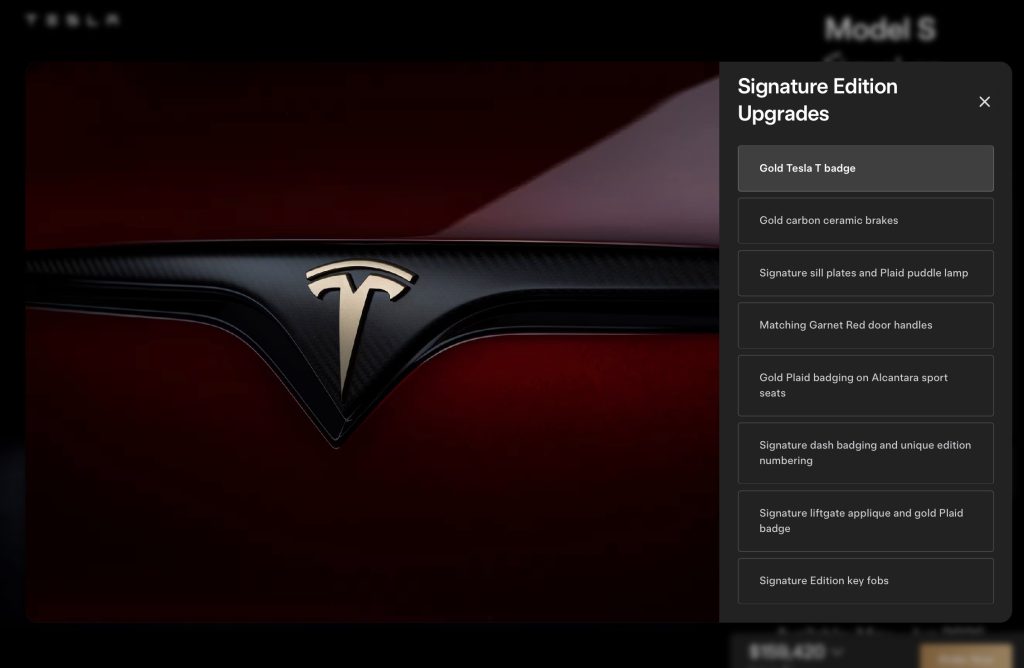
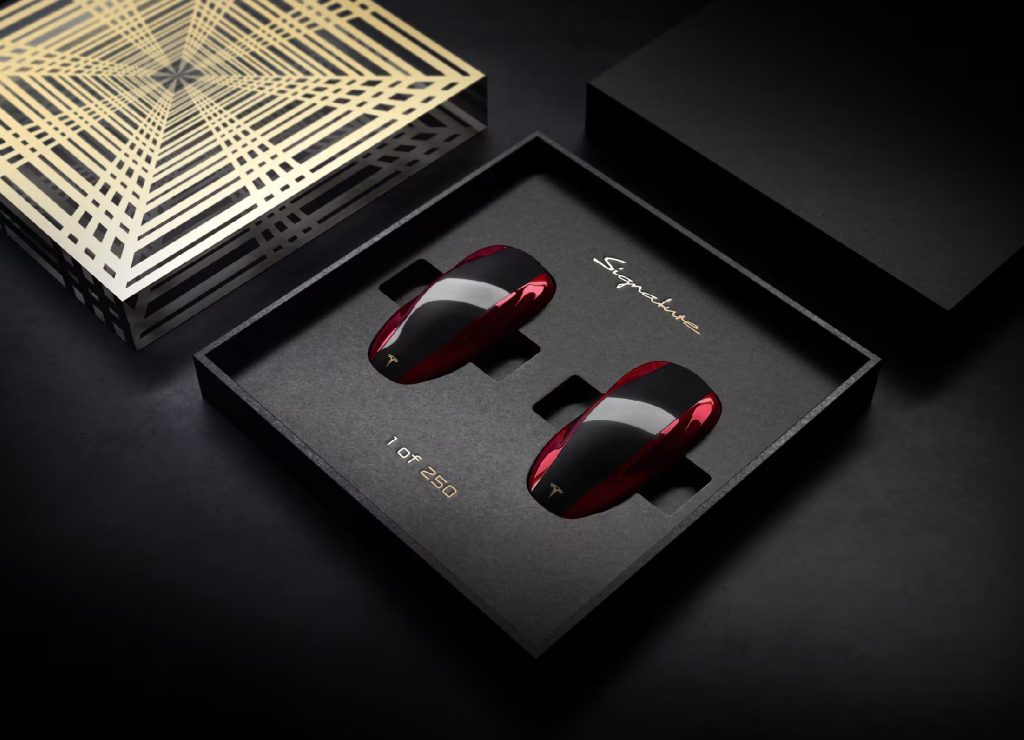
Both models are finished in an exclusive Garnet Red paint not available on any current Tesla production vehicle, with gold Tesla T badges up front, a gold Plaid badge and Signature badge at the rear, and a white Alcantara interior featuring gold Plaid seat badges, gold piping, Signature-marked door sills, and a numbered dash plate. The Model S adds carbon ceramic brakes with gold calipers. Every unit ships with Tesla’s Luxe Package, bundling Full Self-Driving (Supervised), four years of Premium Service, free lifetime Supercharging, and a Signature Edition key fob. Both are priced at $159,420, a roughly $35,000 premium over standard Plaid inventory.
The discontinuation is part of a broader strategic shift. At Tesla’s Q4 2025 earnings call, Musk described the decision as “slightly sad” but necessary, saying: “It’s time to basically bring the Model S and X programs to an end with an honorable discharge, because we’re really moving into a future that is based on autonomy.”
The Fremont factory floor that built these cars is being converted to manufacture Optimus humanoid robots, with a target of one million units annually.
Elon Musk
Tesla FSD in Europe vs. US: It’s not what you think
Tesla FSD is approved in the Netherlands, but the European version differs from what US drivers use.
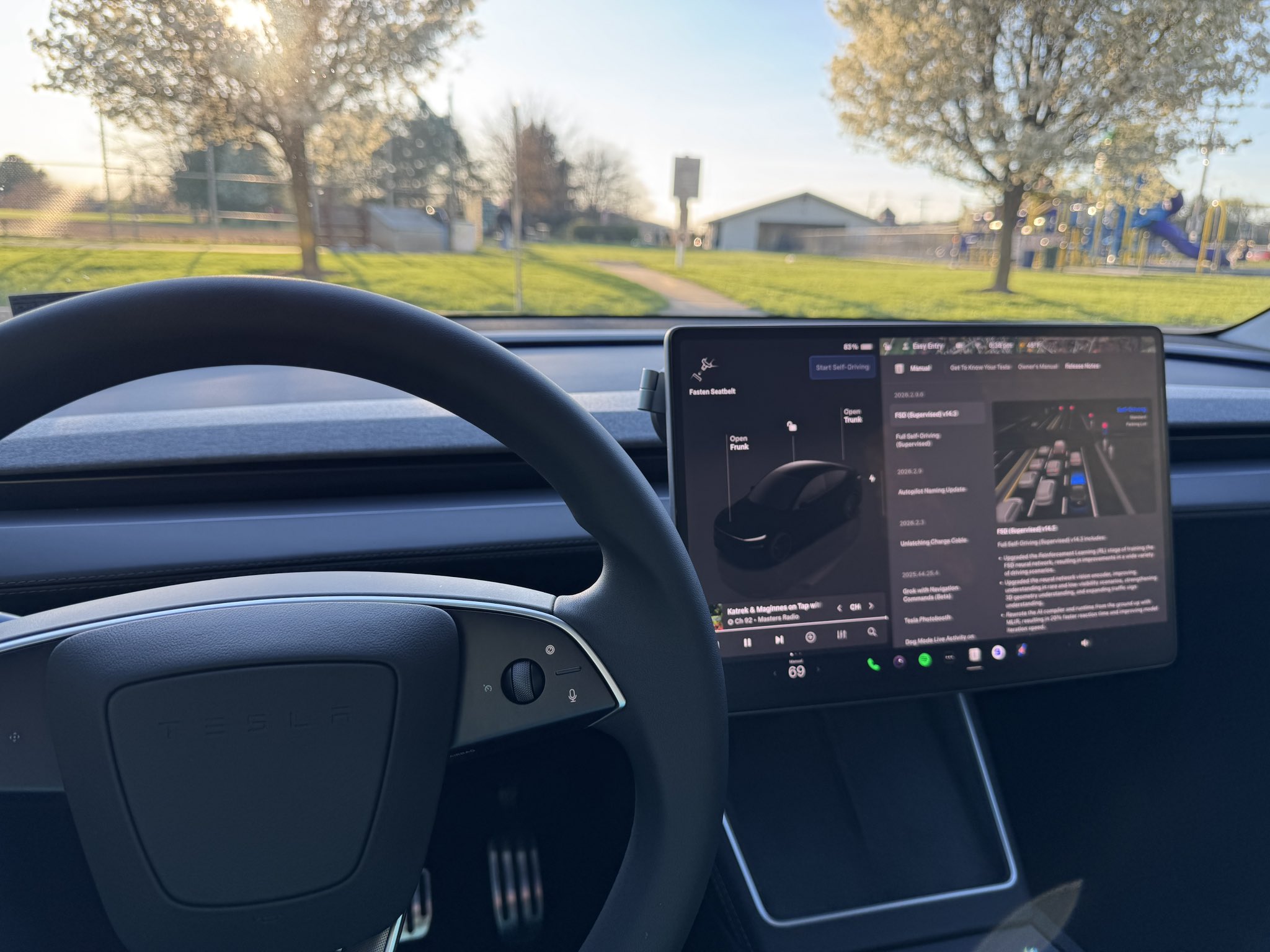
On April 10, 2026, the Dutch vehicle authority RDW granted Tesla the first European type approval for Full Self-Driving Supervised, making the Netherlands the first country on the continent to authorize Tesla’s semi-autonomous system for customer use on public roads.
As Teslarati reported, the RDW approval followed 18 months of testing, more than 1.6 million kilometers driven on EU roads, 13,000 customer ride-alongs, and documentation covering over 400 compliance requirements. Tesla Europe had been running public demo drives through cities like Amsterdam and Eindhoven since early 2026, giving passengers their first experience of the system on European streets.
The European version of FSD is not the same software US drivers use. The RDW’s own statement is direct, noting that the software versions and functionalities in the US and Europe “are therefore not comparable one-to-one.” We’ve compile a table below that captures the most significant differences between US-based Tesla FSD vs. European Tesla FSD that’s based on what regulators and Tesla have publicly confirmed.
| Feature | FSD US | FSD Europe (Netherlands) |
| Regulatory framework | Self-certification, post-market oversight | Pre-market type approval required (UN R-171 + Article 39) |
| Hands requirement | Hands-off permitted on highway | Hands must be available to take over immediately |
| Auto turning from stop lights | Available — navigates intersections, turns, and traffic signals autonomously | Available in EU build — confirmed in Amsterdam demo footage handling unprotected turns and signalized intersections |
| Driving modes | Multiple profiles including a more aggressive “Mad Max” mode | EU build is more conservative by default and errs on the side of restraint when it cannot confirm the limit |
| Summon | Available — Smart Summon navigates parking lots to driver | Status unclear — not confirmed as part of the RDW-approved feature set; urban FSD approval targeted separately for 2027 |
| Driver monitoring | Camera-based eye tracking | Stricter continuous monitoring with more frequent intervention alerts |
| Software version | FSD v14.3 | EU-specific builds that must be separately validated by RDW |
| Geographic restriction | US, Canada, China, Mexico, Australia, NZ, South Korea | Netherlands only; EU-wide vote pending summer 2026 |
| Subscription price | $99/month | €99/month |
| Full urban FSD scope | Available | Partial — separate urban application planned for 2027 |
The approval comes as Tesla is under real pressure to grow FSD subscriptions globally. Musk’s 2025 CEO compensation package, approved by shareholders, includes a milestone requiring 10 million active FSD subscriptions as one condition for his stock awards to vest. Tesla hit one million subscriptions during its Q4 2025 earnings call, which is a meaningful start, but still a long way from the target. Opening Europe as a market for subscriptions, rather than just hardware sales, directly accelerates that number.
Tesla has said it anticipates EU-wide recognition of the Dutch approval during summer 2026, which would extend FSD access to Germany, France, and other major markets through a mutual recognition process without each country repeating the full 18-month review. That timeline is Tesla’s projection, not a confirmed regulatory outcome. As Musk acknowledged at Davos in January 2026, “We hope to get Supervised Full Self-Driving approval in Europe, hopefully next month.”
Elon Musk
Tesla’s Semi truck factory is open with a detail that changes everything
Tesla’s dedicated Nevada Semi factory has opened, targeting 50,000 trucks per year as fleet adoptions accelerate nationwide.
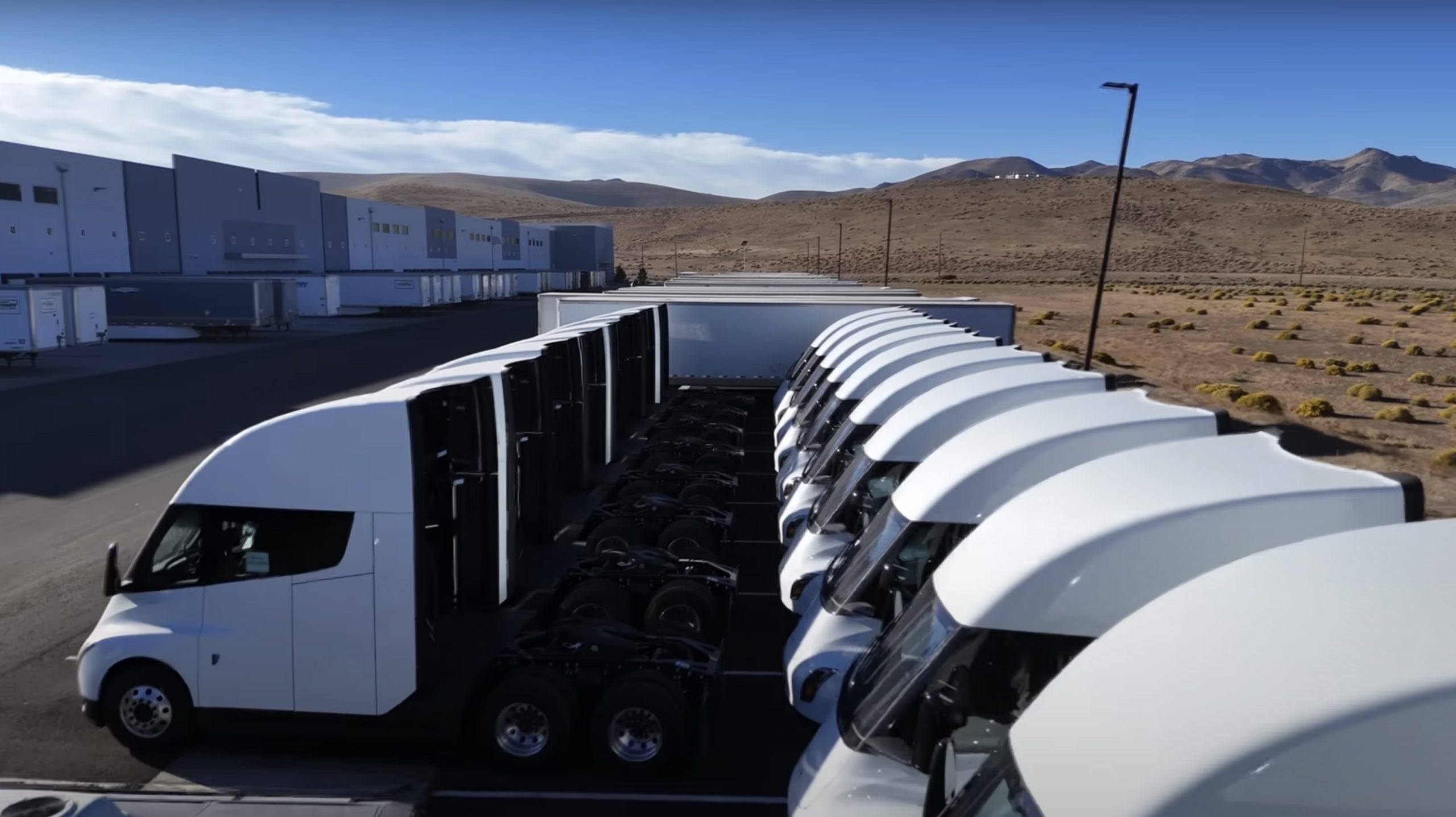
Nearly nine years after Elon Musk unveiled the Tesla Semi in November 2017, the company is now opening a dedicated factory just outside of Reno, Nevada, and ramping toward mass production of 50,000 trucks per year.
Volume production began in March 2026 at the new Tesla Semi factory, with the competitive advantage not being the factory itself. Rather, it’s where Tesla built it. By constructing the 1.7 million square foot facility directly adjacent to Gigafactory Nevada in Sparks, Tesla closed the one supply chain loop that had delayed the Semi program for years. The 4680 battery cells that power the Semi are manufactured in the same complex, which significantly streamlines supply logistics. That single decision eliminates the bottleneck that forced Tesla to prioritize battery supply for passenger cars over the Semi throughout 2020, 2021, and 2022, which is precisely why the first deliveries slipped three years past the original target. Every other electric truck manufacturer sources its battery cells from a separate supplier, ships them to a separate factory, and absorbs the cost and delay that comes with that. Tesla built its Semi factory around its battery factory, and that vertical integration is what makes 50,000 trucks per year a realistic number rather than an aspirational one.
At the 2025 Annual Shareholder Meeting, Musk was direct about where things stood, stating “Starting next year, we will manufacture the Tesla Semi. We already have a lot of prototype Semis in operation – PepsiCo and other companies have been using them for some time. But in 2026, we’ll begin volume production at our Northern Nevada factory.” Full ramp to volume output is targeted before June 30, 2026.
🚨 Awesome new video showing the new Tesla Semi factory in Sparks, Nevada
The future of sustainable logistics is being built here: pic.twitter.com/dbiGV8FYn3
— TESLARATI (@Teslarati) April 10, 2026
The first limited deliveries happened in December 2022 to PepsiCo, which eventually doubled its fleet to 50 trucks out of its California distribution facility. Since then the Semi has been showing up in more corporate fleets. As Teslarati noted in March, a Ralph’s Supermarkets branded Semi was spotted on a Los Angeles highway, confirming Kroger’s partnership with Tesla to deploy up to 500 electric Semis. Walmart, Costco, Sysco, US Foods, DHL, Hight Logistics and WattEV are among the companies actively running or receiving units. DHL logged real-world efficiency of 1.72 kWh per mile under a full 75,000 pound load over 388 miles, matching Tesla’s targets closely.
The 2026 production model arrives with meaningful upgrades over the original, with a 1,000 pound weight reduction, updated aerodynamics, and support for 1.2 MW Megacharger speeds that can restore 60% of range in around 30 minutes during a mandatory driver rest break. Tesla opened its first public Megacharger in Ontario, California in March, positioned near the I-10 and I-15 interchange serving the Ports of Los Angeles and Long Beach. The company plans 37 Megacharger sites by end of 2026 and 66 total across 15 states by early 2027, with construction beginning at the nation’s largest truck stop operator in the first half of this year.
Tesla reveals various improvements to the Semi in new piece with Jay Leno
Musk has described the Semi’s economics as a straightforward case. “The Semi is a TCO no-brainer,” he said, noting the total cost of ownership is “much, much cheaper than any other transportation you could have.” At under $300,000, the truck costs roughly double a comparable diesel, but California’s $200,000 per vehicle subsidy has driven over 1,000 state orders alone. As Teslarati has tracked, the prototype fleet accumulated over 13.5 million miles with 95% fleet uptime before production ever scaled. The factory opening now turns that proof of concept into a production program.

Tesla launches 200mph Model S “Gold” Signature in invite-only purchase

Tesla FSD in Europe vs. US: It’s not what you think


