Elon Musk
Elon Musk proposes Grok 5 vs world’s best League of Legends team match
Musk’s proposal has received positive reception from professional players and Riot Games alike.

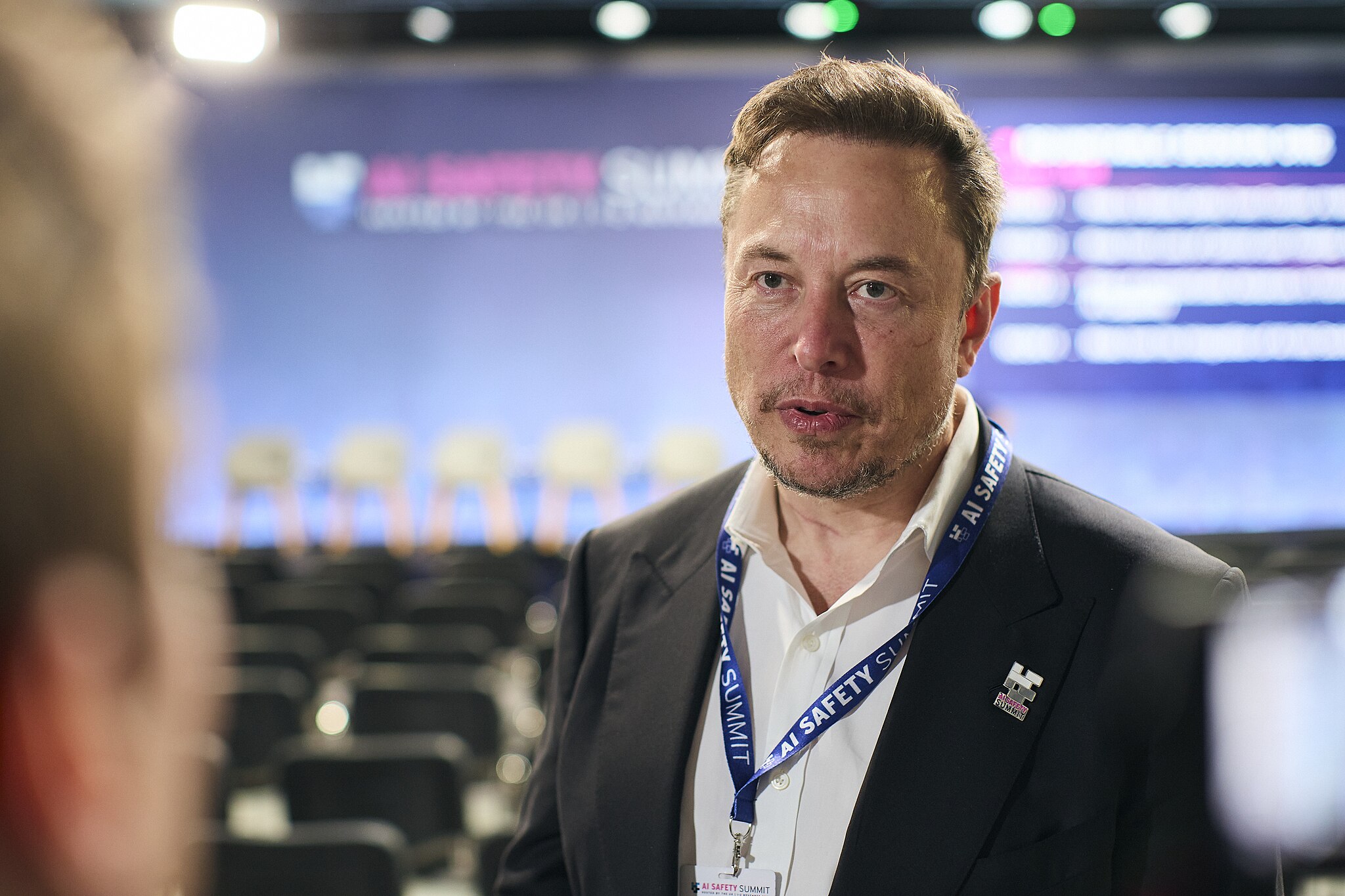
Elon Musk has proposed a high-profile gaming challenge for xAI’s upcoming Grok 5. As per Musk, it would be interesting to see if the large language model could beat the world’ best human League of Legends team with specific constraints.
Musk’s proposal has received positive reception from professional players and Riot Games alike, suggesting that the exciting exhibition match might indeed happen.
Musk outlines restrictions for Grok
In his post on X, Musk detailed constraints to keep the match competitive, including limiting Grok to human-level reaction times, human-speed clicking, and viewing the game only through a camera feed with standard 20/20 vision. The idea quickly circulated across the esports community, drawing commentary from former pros and AI researchers, as noted in a Dexerto report.
Former League pro Eugene “Pobelter” Park expressed enthusiasm, offering to help Musk’s team and noting the unique comparison to past AI-versus-human breakthroughs, such as OpenAI’s Dota 2 bots. AI researcher Oriol Vinyals, who previously reached Grandmaster rank in StarCraft, suggested testing Grok in RTS gameplay as well.
Musk welcomed the idea, even responding positively to Vinyals’ comment that it would be nice to see Optimus operate the mouse and keyboard.
Pros debate Grok’s chances, T1 and Riot show interest
Reactions weren’t universally optimistic. Former professional mid-laner Joedat “Voyboy” Esfahani argued that even with Grok’s rapid learning capabilities, League of Legends requires deep synergy, game-state interpretation, and team coordination that may be difficult for AI to master at top competitive levels. Yiliang “Doublelift” Peng was similarly skeptical, publicly stating he doubted Grok could beat T1, or even himself, and jokingly promised to shave his head if Grok managed to win.
T1, however, embraced the proposal, responding with a GIF of Faker and the message “We are ready,” signaling their willingness to participate. Riot Games itself also reacted, with co-founder Marc Merrill replying to Musk with “let’s discuss.” Needless to say, it appears that Riot Games in onboard with the idea.
Though no match has been confirmed, interest from players, teams, and Riot suggests the concept could materialize into a landmark AI-versus-human matchup, potentially becoming one of the most viewed League of Legends events in history. The fact that Grok 5 will be constrained to human limits would definitely add an interesting dimension to the matchup, as it could truly demonstrate how human-like the large language model could be like in real-time scenarios.
Tesla has passed a key milestone, and it was one that CEO Elon Musk initially mentioned more than nine years ago when he published Master Plan, Part Deux.
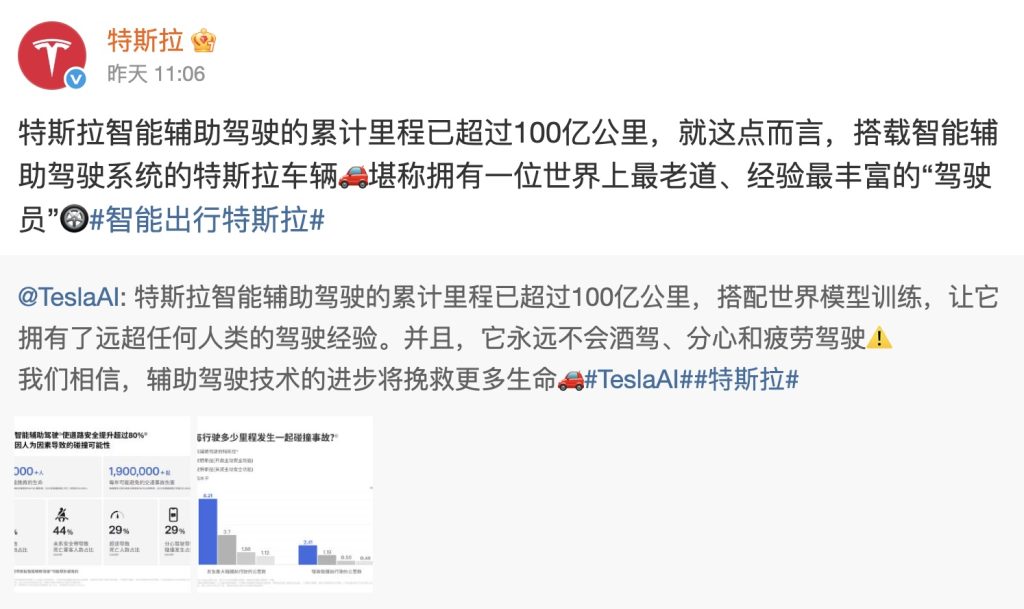
As per Tesla China in a post on its official Weibo account, the company’s Autopilot system has accumulated over 10 billion kilometers of real-world driving experience.
Tesla China’s subtle, but huge announcement
In its Weibo post, Tesla China announced that the company’s Autopilot system has accumulated 10 billion kilometers of driving experience. “In this respect, Tesla vehicles equipped with Autopilot technology can be considered to have the world’s most experienced and seasoned driver.”
Tesla AI’s handle on Weibo also highlighted a key advantage of the company’s self-driving system. “It will never drive under the influence of alcohol, be distracted, or be fatigued,” the team wrote. “We believe that advancements in Autopilot technology will save more lives.”
Tesla China did not clarify exactly what it meant by “Autopilot” in its Weibo post, though the company’s intense focus on FSD over the past years suggests that the term includes miles that were driven by FSD (Beta) and Full Self-Driving (Supervised). Either way, 10 billion cumulative miles of real-world data is something that few, if any, competitors could compete with.
Advertisement
–>
Elon Musk’s 10-billion-km estimate, way back in 2016
When Elon Musk published Master Plan Part Deux, he outlined his vision for the company’s autonomous driving system. At the time, Autopilot was still very new, though Musk was already envisioning how the system could get regulatory approval worldwide. He estimated that worldwide regulatory approval will probably require around 10 billion miles of real-world driving data, which was an impossible-sounding amount at the time.
“Even once the software is highly refined and far better than the average human driver, there will still be a significant time gap, varying widely by jurisdiction, before true self-driving is approved by regulators. We expect that worldwide regulatory approval will require something on the order of 6 billion miles (10 billion km). Current fleet learning is happening at just over 3 million miles (5 million km) per day,” Musk wrote.
It’s quite interesting but Tesla is indeed getting regulatory approval for FSD (Supervised) at a steady pace today, at a time when 10 billion miles of data has been achieved. The system has been active in the United States and has since been rolled out to other countries such as Australia, New Zealand, China, and, more recently, South Korea. Expectations are high that Tesla could secure FSD approval in Europe sometime next year as well.


Elon Musk
Elon Musk shuts down talk of TSMC taking over Terafab
Musk says Tesla and SpaceX will build and run Terafab, with TSMC limited to renting.

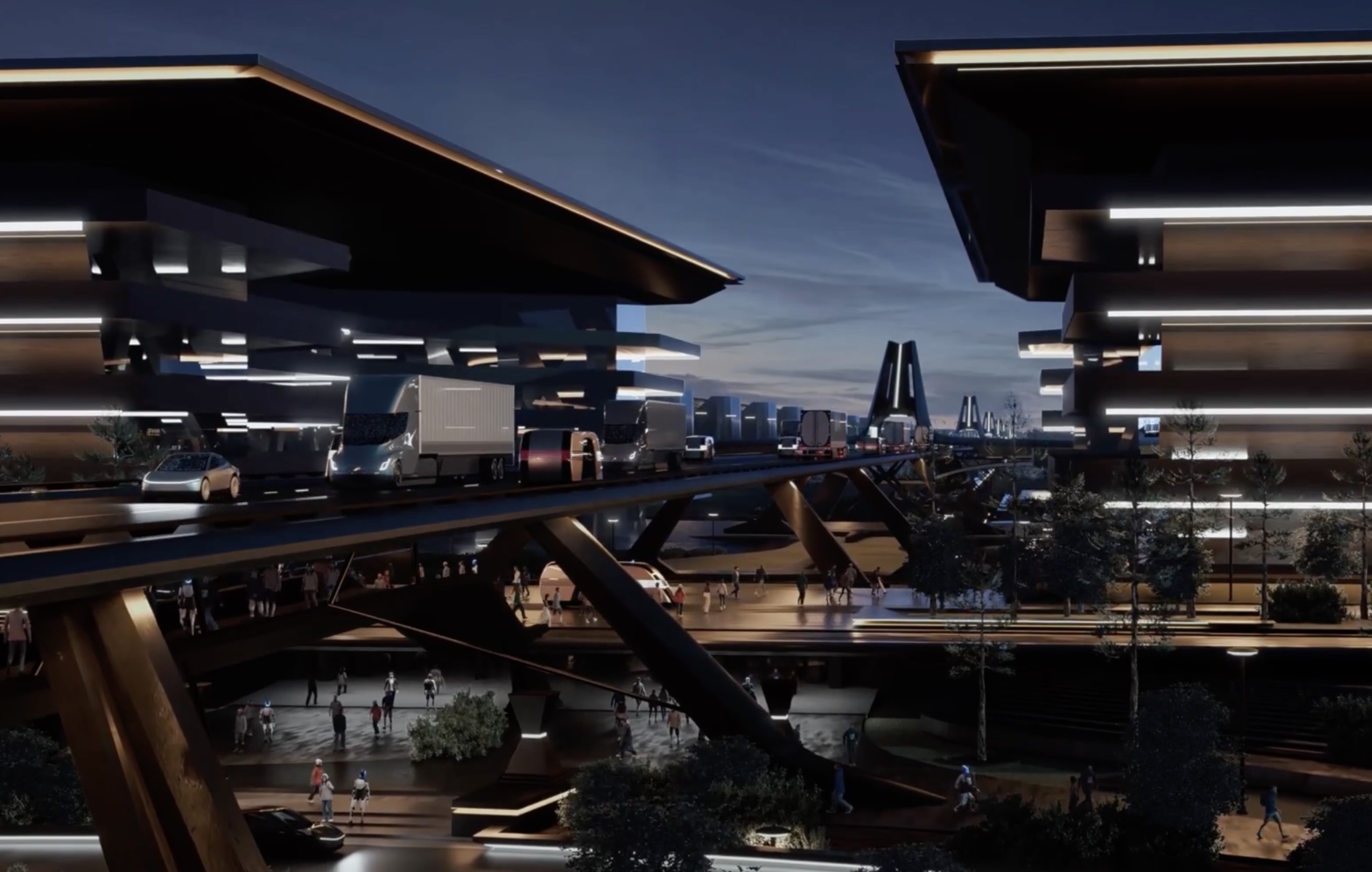
Elon Musk has drawn a firm line around who will be in charge of Terafab, the giant chip factory Tesla and SpaceX are planning in Texas.
Musk replied to a post on X arguing that Taiwan Semiconductor Manufacturing Company (TSMC) would most likely end up owning and operating the plant. “No, we will build and run the fab. Let there be ZERO doubt about that,” Musk wrote. “Maybe TSMC subleases part of the Terafab if they want, but nothing more than that.”
In plain terms, a sublease means TSMC could rent a section of the complex to make chips, similar to a tenant renting one floor of an office tower. The building, the equipment decisions and the daily operation would stay with Tesla and SpaceX.
@herbertong @thejefflutz No, we will build and run the fab. Let there be ZERO doubt about that.
Maybe TSMC subleases part of the Terafab if they want, but nothing more than that.
— Elon Musk (@elonmusk) October 7, 2026
The comment shuts down speculation that started last week. On October 2, tech journalist Tim Culpan reported that TSMC was exploring ways to help run Terafab’s factories. Musk responded the next day that it was “just discussions, but something may come of it,” as Teslarati reported at the time. That left room for a scenario where the world’s largest contract chipmaker took the wheel. Musk’s latest post closes that door.
Some background helps explain why this matters. Tesla designs its own AI chips today but pays outside companies like TSMC and Samsung to manufacture them. Musk unveiled Terafab in March as a joint project between Tesla, SpaceX and xAI, arguing that existing suppliers cannot expand fast enough to meet his companies’ future demand. The goal is to produce enough chips each year to supply one terawatt of computing power, roughly 50 times what the entire global AI chip industry produces now.
Those chips are meant for Tesla’s Optimus humanoid robots, the Cybercab and Full Self-Driving computers, along with chips for SpaceX’s planned data centers in orbit. Owning the factory means Musk’s companies would not have to compete with every other chip customer for time on someone else’s production lines.
Intel is still part of the picture. The company signed on in April to help design, build and package chips for the project, and CEO Lip-Bu Tan told Bloomberg this week that Intel will keep working on Terafab despite the TSMC chatter.
The project moved from concept to construction planning over the summer. In August, SpaceX confirmed the Grimes County site about an hour from Houston, sent the county a $10 million payment under its tax abatement deal and said civil work would begin shortly. The first phase carries a $16.8 billion price tag, and total spending across all phases could reach as much as $119 billion.
TSMC chairman C.C. Wei has said a new fab typically takes two to three years to build and another one to two years to reach full output. Tesla and SpaceX have never run one, which is why TSMC’s expertise drew so much attention. Musk’s answer suggests he would rather learn that process in house than hand control of a project this central to Tesla’s robotics and autonomy plans to an outside company.
Terafab Texas will be the largest and most valuable building on Earth by far.
And it will be stunningly beautiful. https://t.co/4NweOqTL7y
— Elon Musk (@elonmusk) August 6, 2026
Elon Musk
Trump to hand Elon Musk a top honor that traces back to JFK
Trump will award Elon Musk the National Medal of Science at Thursday’s White House summit.
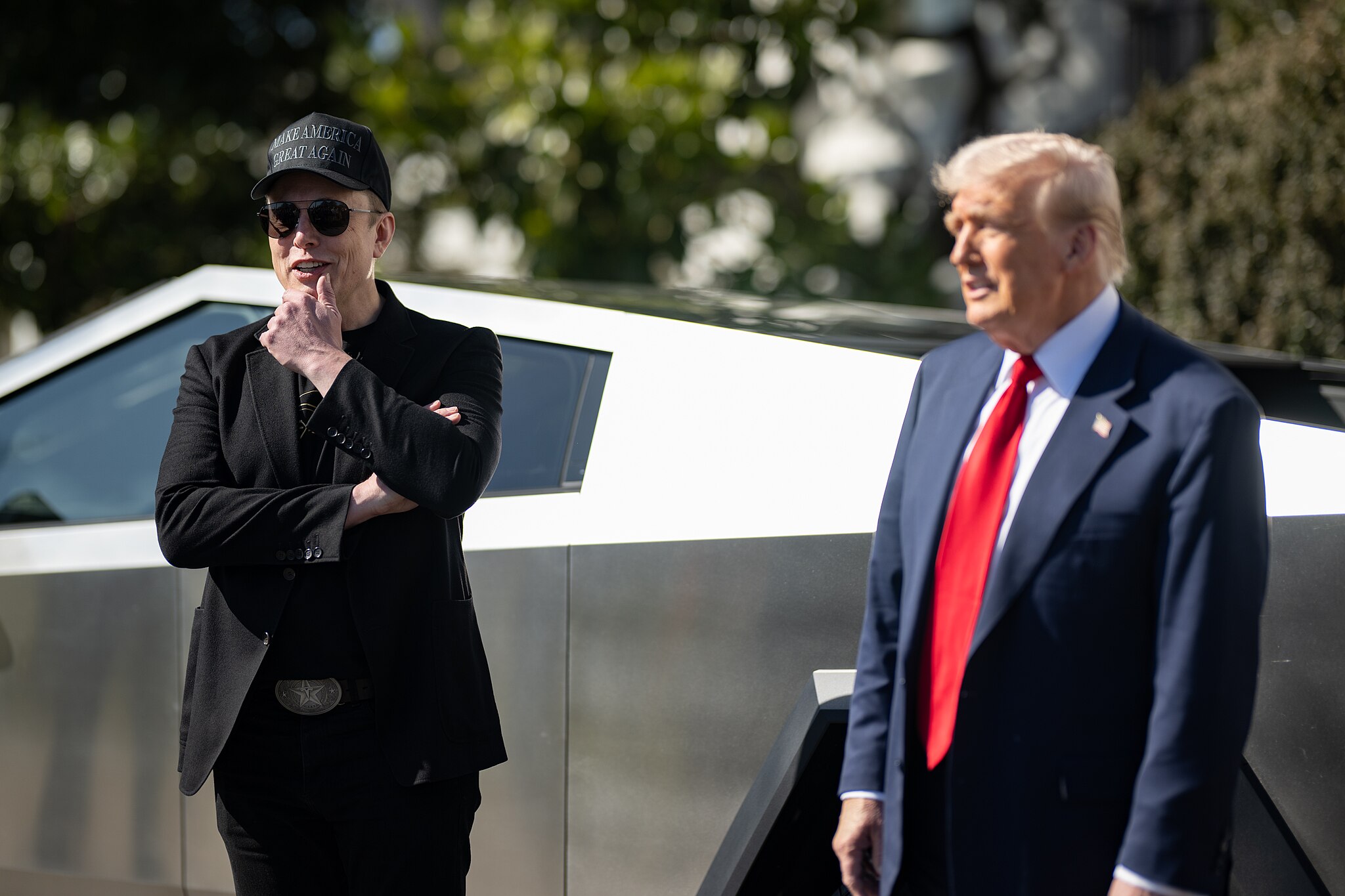
Elon Musk is set to receive the highest honor the U.S. government gives to scientists and engineers.
President Donald Trump will present Musk with the National Medal of Science on Thursday at the White House’s Science: A New Golden Age Summit, Fox News Digital first reported on Wednesday. Google cofounder Sergey Brin, Nvidia CEO Jensen Huang and AMD CEO Lisa Su will receive the same medal, while Dell Technologies CEO Michael Dell and Microsoft CEO Satya Nadella will receive the National Medal of Technology and Innovation. A White House official later confirmed the list to Reuters.
“The Trump administration is grateful for the contributions of these incredible leaders in science and technology. These recipients are helping ensure America keeps leading the world in innovation,” White House spokesperson Liz Huston told Fox News.
FIRST ON FOX: Trump will award Elon Musk the National Medal of Science at the White House Thursday.
Sergey Brin, Jensen Huang and Lisa Su will also receive the science medal, while Michael Dell and Satya Nadella will receive the technology medal.
It marks Trump’s first time presenting the awards across either administration.
Full story here https://t.co/omnrLV0EwS
— Fox News Politics (@foxnewspolitics) October 7, 2026
It will be the first time Trump has presented either medal in his two terms. Congress created the National Medal of Science in 1959, and the National Science Foundation, which administers it, says 529 scientists and engineers have received it since. A presidential committee reviews nominees, but the president makes the final call.
Thursday’s group of medalists run or founded companies, and three of them sit at the center of the Super Intelligence hardware race that Musk competes in. Huang’s Nvidia supplies the GB300 chips filling SpaceX’s Colossus 2 cluster, while Su’s AMD is Nvidia’s biggest rival in data center GPUs.
Worth noting that Trump’s uncle, MIT physicist John G. Trump, received the National Medal of Science from President Ronald Reagan for his work on ionizing radiation and its uses in medicine and industry.
The Pentagon taps Elon Musk to design the battlefield of the future
For Musk, the medal is the latest sign of how far his relationship with Trump has come since their 2025 split over the “Big Beautiful Bill” and his exit from DOGE. Last week, he sat at Trump’s left during a White House lunch where AI executives signed a voluntary safety accord, and Defense Secretary Pete Hegseth named him to help lead the Pentagon’s Project Meridian study on the future of warfare. Musk has also adopted the administration’s new vocabulary, saying on Sunday that SpaceXAI will be renamed SpaceXSI after Trump ordered federal agencies to replace “artificial intelligence” with “super intelligence.”
Musk has collected science honors before, including the Stephen Hawking Medal for Science Communication in 2019.


Elon Musk has acknowledged that early discussions with Taiwan Semiconductor Manufacturing Company (TSMC) could bring the company into his ambitious Terafab semiconductor project, signaling a possible partnership with the world’s leading contract chipmaker.
Musk confirmed that early talks are underway, but as of right now, they are “just discussions.” There is no confirmation of a deal nor dismissal of the possibility of one, leaving open the prospect of one of the largest advanced-chip collaborations under discussion in the U.S.
@wholemars Just discussions, but something may come of it
— Elon Musk (@elonmusk) October 3, 2026
The report that speculated on potential discussions between Terafab and TSMC comes from Tim Culpan, who outlined a few ways the collaboration could operate. One is TSMC using the project as an “anchor customer” for future facilities in Texas, potentially contributing process expertise, operational know-how, or capacity while Terafab provides capital, long-term purchase commitments, or both.
Tesla and SpaceX jointly developed the Terafab project, with Intel already participating on the tech side. Elon Musk announced the project in March, and it intends to produce more than one terawatt of AI compute capacity annually once fully built.
Company statements place the first phase at approximately $16.8 billion in cost, with later filings pointing to a total that could reach well into the tens of billions across multiple stages.
Intel joined the effort in April 2026 and is expected to supply its 14A manufacturing process for the full-scale plant.
Musk has said existing suppliers, including Samsung and TSMC, remain important for near-term needs; Tesla already has production arrangements with Samsung for AI5 and AI6 chips, but that future demand from Optimus robots, Cybercab vehicles, and planned space-based data centers will eventually exceed what the global industry can currently deliver.
Terafab is positioned as the long-term answer to that projected shortfall, and Tesla did something similar during COVID to avoid a chip shortage. This is just a much larger-scale solution.
If the partnership were to materialize, it would add TSMC’s industry-leading strategies to a project that already combines Tesla’s and SpaceX’s capital and offtake with Intel’s process technology. For now, the only public confirmation is Musk’s brief acknowledgement that conversations are occurring.

Elon Musk shuts down talk of TSMC taking over Terafab

Trump to hand Elon Musk a top honor that traces back to JFK

Tesla FSD changed its mind mid-intersection, and it may have saved a life

The Pentagon taps Elon Musk to design the battlefield of the future

Tesla Roadster’s new patent preps white-knuckle speeds, keeping it grounded


