Elon Musk
Elon Musk reveals date of SpaceX Starship v3’s maiden voyage
The announcement arrives after Flight 11 on October 13 of last year, which concluded a busy 2025 testing campaign. Since then, SpaceX has focused on ground testing, including cryoproofing of Ship 39 and preparations for Booster 19, the first V3 Super Heavy.

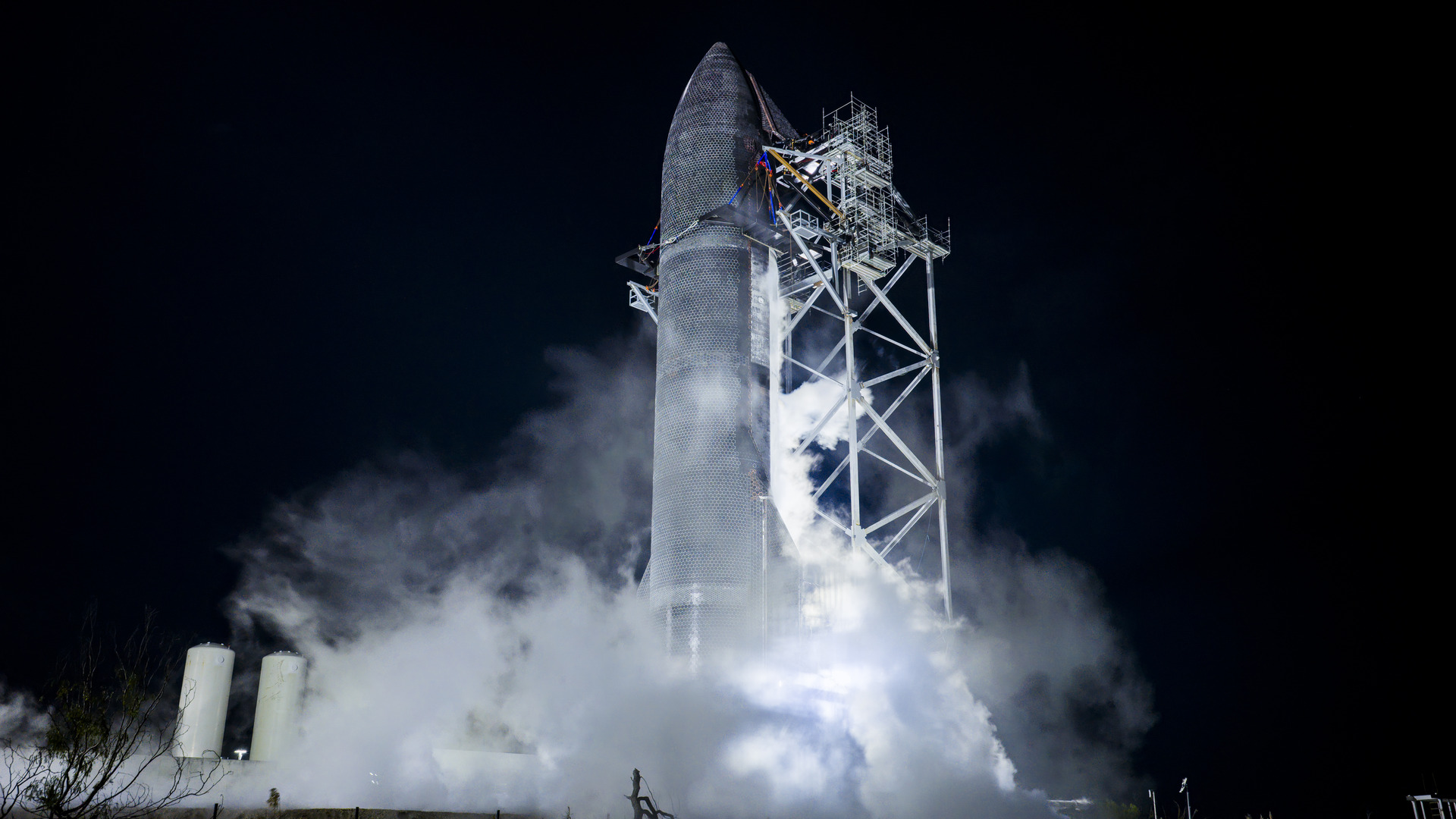
SpaceX CEO Elon Musk has revealed the timeline for the next Starship launch. It will be the first launch using SpaceX’s revamped design for Starship, as its v3 rocket will take its maiden voyage sooner than many might expect.
Musk announced on April 3 on X that the next Starship flight test, and the first flight of the upgraded v3 ship and booster, is 4 to 6 weeks away. The update signals the end of a nearly six-month hiatus since the program’s last launch.
Elon says the first V3 Starship launch will occur in 4-6 weeks
It will be the first Starship launch since Flight 11 on October 13, 2025 https://t.co/QnnYPTdbUu
— TESLARATI (@Teslarati) April 3, 2026
The upcoming mission, designated as Starship’s 12 integrated flight test (IFT-12), marks a significant milestone. It will be the debut of the v3 configuration, featuring a taller Super Heavy Booster and Starship upper stage. The changes SpaceX has made with the v3 rocket and booster are an increased propellant capacity and the more powerful Raptor 3 engines.
Earlier predictions from Musk in March had pointed to an April timeframe, but the latest timeline now targets a launch window in early to mid-May 2026.
The V3 iteration represents a substantial evolution from previous Starship prototypes. Engineers have optimized the design for improved manufacturability, higher thrust, and greater efficiency. Raptor 3 engines deliver significantly more power while reducing weight and production costs compared to earlier variants.
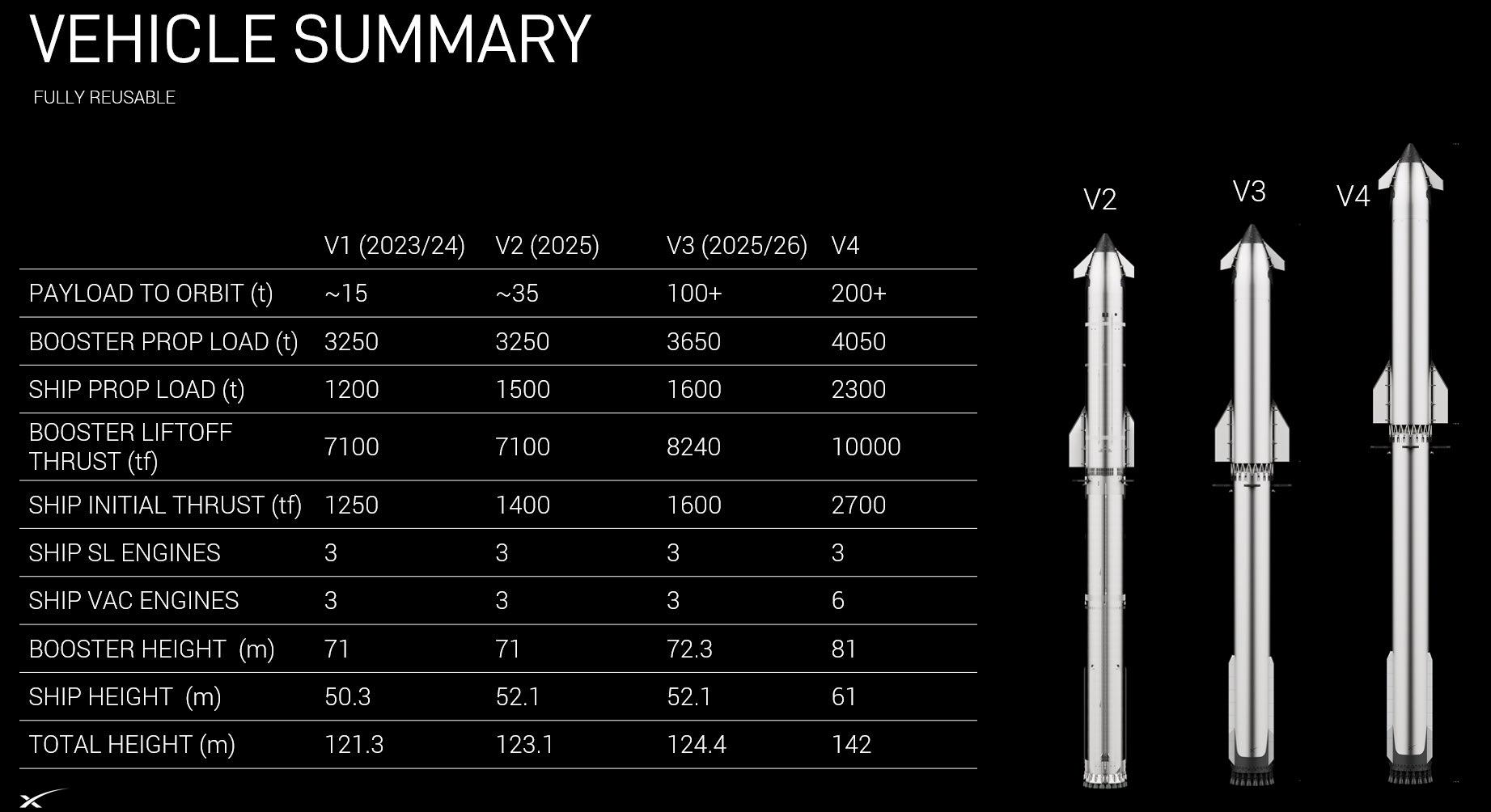
With these enhancements, SpaceX aims to boost payload capacity toward 200 metric tons to low Earth orbit in a fully reusable configuration — a dramatic leap from the roughly 35-ton target of prior versions. Such capabilities are critical for ambitious goals, including NASA’s Artemis lunar missions and eventual crewed flights to Mars.
The announcement arrives after Flight 11 on October 13 of last year, which concluded a busy 2025 testing campaign. Since then, SpaceX has focused on ground testing, including cryoproofing of Ship 39 and preparations for Booster 19, the first V3 Super Heavy.
Recent activities have involved static fires, activation of the new Pad 2 at Starbase in Boca Chica, Texas, and integration of Raptor 3 engines.
A prior incident with an early V3 booster on the test stand in late 2025 contributed to the delay, necessitating additional assembly and qualification work.
Musk’s timeline updates have become a hallmark of the Starship program, often described with characteristic optimism.
SpaceX’s Starship V3 is almost ready and it will change space travel forever
While past targets have occasionally shifted by weeks, the rapid iteration pace remains impressive. However, don’t be surprised if this timeline shifts again, as Musk has been overly optimistic in the past with not only launches, but products under his other companies, too.
SpaceX continues to refine launch infrastructure, including new propellant loading systems and tower mechanisms designed to support higher cadence operations. A successful V3 flight could pave the way for more frequent tests, tower catches of both booster and ship, and progression toward operational reusability.
The v3 debut is viewed as a transition point for Starship, moving beyond experimental flights toward a system capable of supporting large-scale deployment of Starlink satellites, lunar landers, and interplanetary transport.
Success on IFT-12 would demonstrate not only the new hardware’s performance but also SpaceX’s ability to recover from setbacks and maintain momentum.
As the 4-to-6-week countdown begins, anticipation builds at Starbase. Teams are finalizing vehicle stacking, conducting final pre-flight checks, and preparing for regulatory approvals. The world will be watching to see if Starship V3 can deliver on its promise of transforming humanity’s access to space.


Elon Musk
SpaceX’s newest Starmind will make earth data centers obsolete
Elon Musk confirmed Starmind as SpaceX’s AI satellite constellation name, targeting one million orbital compute nodes.

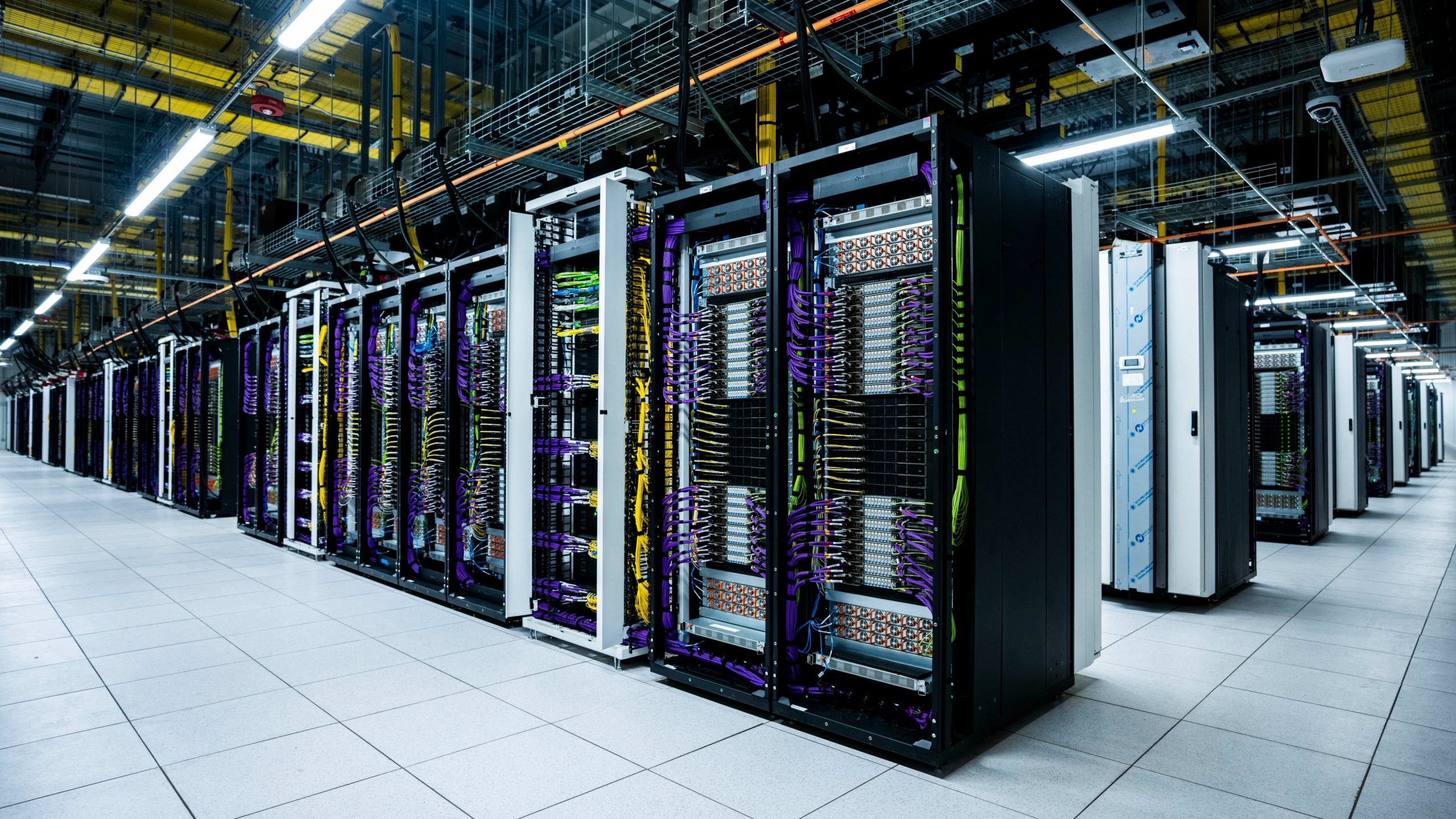
Elon Musk confirmed that Starmind will be the official name of SpaceX’s planned AI satellite constellation, following a trademark filing by xAI that surfaced earlier this week. Starmind is what’s being described to the FCC as a constellation of up to one million AI satellites
It’s worth noting that SpaceX’s Starlink communication satellite and Starmind are built on the same orbital infrastructure concept but serve entirely different purposes. Starlink is a connectivity network, with satellites receiving and relaying data between points on Earth, and functioning as a high-speed internet backbone in space. The satellites themselves do not process or think, and move information from one place to another, the same function a fiber cable performs underground.
SpaceX just forced Verizon, AT&T and T-Mobile to team up for the first time in history
Starmind, on the other hand, is something completely different, and tather than moving data, its satellites would compute data through artificial intelligence and directly in orbit using onboard processors powered by large solar arrays. Where a Starlink satellite is essentially a very fast pipe, a Starmind satellite is a server. The practical implication is that Starmind would allow AI models to run inference, process queries, and generate outputs from space, then beam results down to users anywhere on Earth within milliseconds, and without the data ever needing to travel to a terrestrial data center.
Starship will be able to carry 30 to 50 AI1 satellites per launch, delivering the equivalent of dozens of server racks per flight, with no land acquisition, no power grid approval, and no cooling infrastructure required on the ground.
SpaceX is pursuing this new technology as terrestrial data centers are running into hard limits such as lack of physical space, community opposition, and power and water consumption at a scale that is increasingly difficult to permit. Space has unlimited solar power, natural vacuum cooling, and no zoning boards. Musk said in a June 8 video presentation that he expects space to become the lowest-cost location to deploy AI compute within two to three years. Two AI1 prototypes are scheduled to launch in early 2027, with volume production targeted for the end of that year at a new facility called Gigasat.
The real world applications Starmind enables extend well beyond powering Grok. A constellation of orbiting AI processors could run inference workloads for any paying customer, anywhere on Earth, with latency measured in milliseconds rather than the seconds associated with ground-based cloud routing across continents. Starmind, if it scales as described, would make SpaceX the landlord of AI compute the same way Starlink made it the landlord of satellite internet.
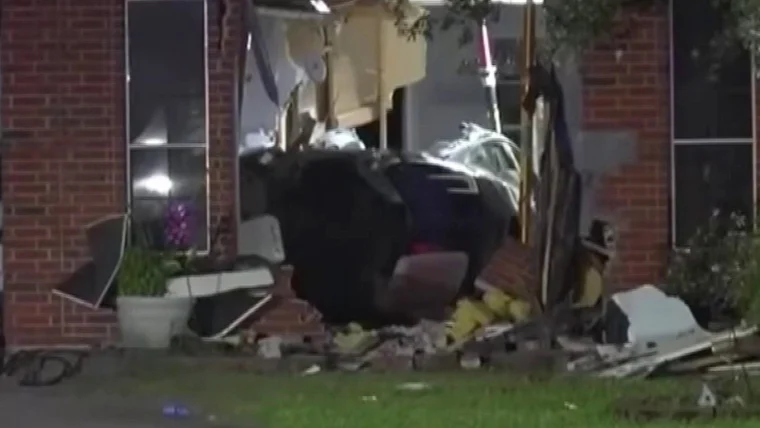
Tesla has finally clarified the situation regarding the viral crash in Texas where a Model 3 slammed into a home.
CEO Elon Musk replied to reports on Monday that stated the crash was due to the company’s Full Self-Driving or Autopilot suite, which seemed unlikely to those who are familiar with it. Video showed the car slamming into a house at an excessive rate of speed, making it highly unlikely the crash was due to the suite’s operation, as it does not travel at those speeds in residential areas.
Musk said:
“This makes no sense. FSD drives slowly through neighborhood streets, and this was a high-speed crash!”
Tesla’s Head of AI, Ashok Elluswamy, added context, revealing that the company’s data shows the driver “manually overrode self-driving by pressing the accelerator all the way to 100%.”
He revealed the speed reached by the car was 73 MPH, and the accelerator was still pressed “even after the crash.”
Yup. In this case, the driver manually overrode self-driving by pressing the accelerator all the way to 100% of the accel pedal in this residential area. They reached a speed of 73 mph during the crash, and had the accelerator pressed even after the crash.
— Ashok Elluswamy (@aelluswamy) June 22, 2026
Authorities are reportedly investigating “whether Tesla’s Autopilot system played a role after a Model 3 left the roadway…slammed through a brick house at high speed and fatally struck Matha Avila as she sat inside,” the New York Post reported.
The National Highway Traffic Safety Administration (NHTSA) is now investigating the crash. Tesla will work with the agency to provide them with whatever information they need in order to clarify the cause of the crash.
Similarly, Tesla had claims of a fatal accident in Harris County, Texas, a few years ago. Early reports indicated that Full Self-Driving was the cause of the crash. After the National Transportation Safety Board (NTSB) worked with Tesla, the agency proved there was “no use of the Autopilot system at any time during this ownership period of the vehicle, including the time frame up to the last transmitted timestamp on April 17, 2021.”
Tesla alleged “driverless” crash in Texas: What is known so far
“Application of the accelerator pedal was found to be as high as 98.8 percent,” the NTSB said in their findings. The highest recorded speed in the five seconds leading up to the impact was 67 miles per hour. The area where the crash occurred is residential, and Texas State laws have default speed limits of 30 MPH in residential streets.
This appears to be a similar situation. However, an investigation will prove what happened for sure.
SpaceX confirmed today that it has officially signed its third massive compute deal, providing compute at its Colossus data center in Southaven, Mississippi.
Reflection AI will gain immediate access to NVIDIA GB300 chips at SpaceX’s Colossus 2 data center. In return, Reflection will pay SpaceX $150 million per month starting on July 1, with total payments reaching approximately $6.3 billion if the contract runs through its duration, which is until 2029. Either party can terminate the agreement with 90 days’ notice after the initial three-month period.
CNBC first reported the deal.
🚨 SpaceXAI has agreed to a new compute deal with Reflection AI.
Reflection gets access to NIVIDIA GB300s, and will pay $150M per month to SpaceXAI for the compute. pic.twitter.com/bNPare8U5u
— TESLARATI (@Teslarati) June 22, 2026
This latest partnership highlights SpaceX’s strategy of commercializing its massive Colossus supercomputing infrastructure, originally developed to power Elon Musk’s Grok AI models. The company has rapidly expanded its customer base in the AI sector following its February 2026 merger with xAI, a transaction that valued the combined entity at $1.25 trillion.
SpaceX has previously signed significant compute deals with other major players.
It granted Anthropic exclusive access to the full capacity of its Colossus 1 data center, which exceeds 300 megawatts and includes over 220,000 NVIDIA GPUs. Details from SpaceX’s IPO filings indicate Anthropic will pay $1.25 billion per month through May 2029, potentially generating around $45 billion over the term of the deal.
Additionally, Google agreed to pay SpaceX $920 million per month for compute capacity from October 2026 through June 2029. This 32-month period will provide Google access to roughly 110,000 NVIDIA GPUs, along with supporting processors and memory. Capacity ramps up through September at a reduced fee, with termination options after the first year.
SpaceXA also established arrangements for computing power with Cursor, an AI coding startup. SpaceX acquired them in a $60 billion all-stock deal.
These arrangements position SpaceX’s collective position as an AI infrastructure powerhouse with high-margin revenue potential. The Google deal alone could generate nearly $29.5 billion over its term, while the Reflection contract adds another $6.3 billion.
Combined with the Anthropic arrangement, SpaceX stands to realize tens of billions in revenue from compute leasing in the coming years, which diversifies beyond SpaceX’s traditional rocket launches and Starlink operation.
The deals underscore growing demand for advanced AI training and inference capacity amid chip shortages and surging model development needs. Reflection, valued at $25 billion and focused on “American open intelligence” with government and national security ties, cited recent restrictions on closed models as validation for open-source approaches.
For SpaceX, the partnerships transform capital-intensive data centers into flexible revenue sources while supporting its broader AI ambitions after the company has gone public.

Tesla looks keen to bring larger Model Y L to the U.S.

One of Tesla’s biggest threats just got banned in the U.S.


