Elon Musk
Elon Musk’s X goes down as users report major outage Friday morning
Error messages and stalled loading screens quickly spread across the service, while outage trackers recorded a sharp spike in user reports.

Elon Musk’s X experienced an outage Friday morning, leaving large numbers of users unable to access the social media platform.
Error messages and stalled loading screens quickly spread across the service, while outage trackers recorded a sharp spike in user reports.
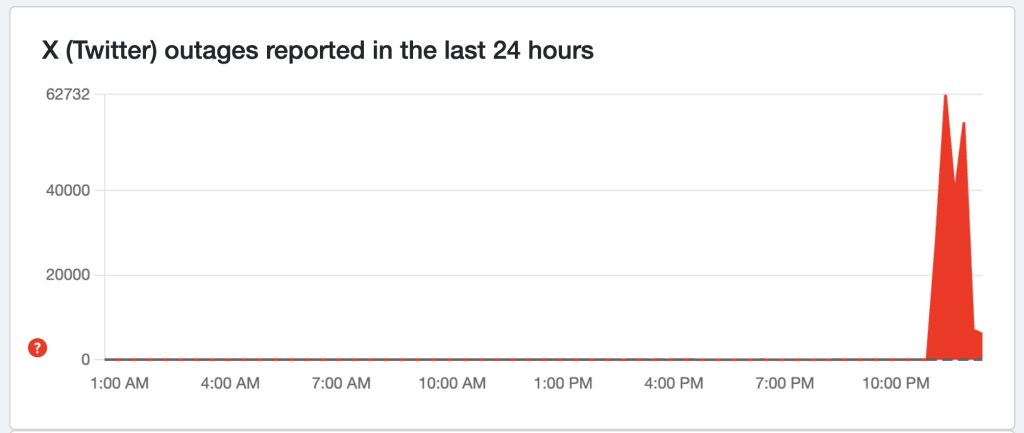
Downdetector reports
Users attempting to open X were met with messages such as “Something went wrong. Try reloading,” often followed by an endless spinning icon that prevented access, according to a report from Variety. Downdetector data showed that reports of problems surged rapidly throughout the morning.
As of 10:52 a.m. ET, more than 100,000 users had reported issues with X. The data indicated that 56% of complaints were tied to the mobile app, while 33% were related to the website and roughly 10% cited server connection problems. The disruption appeared to begin around 10:10 a.m. ET, briefly eased around 10:35 a.m., and then returned minutes later.
Previous disruptions
Friday’s outage was not an isolated incident. X has experienced multiple high-profile service interruptions over the past two years. In November, tens of thousands of users reported widespread errors, including “Internal server error / Error code 500” messages. Cloudflare-related error messages were also reported.
In March 2025, the platform endured several brief outages spanning roughly 45 minutes, with more than 21,000 reports in the U.S. and 10,800 in the U.K., according to Downdetector. Earlier disruptions included an outage in August 2024 and impairments to key platform features in July 2023.


Elon Musk
SpaceX is keeping the Space Station alive again this weekend
SpaceX’s Falcon 9 launches Northrop Grumman’s Cygnus NG-24 to the ISS with 11,000 pounds of cargo Saturday.

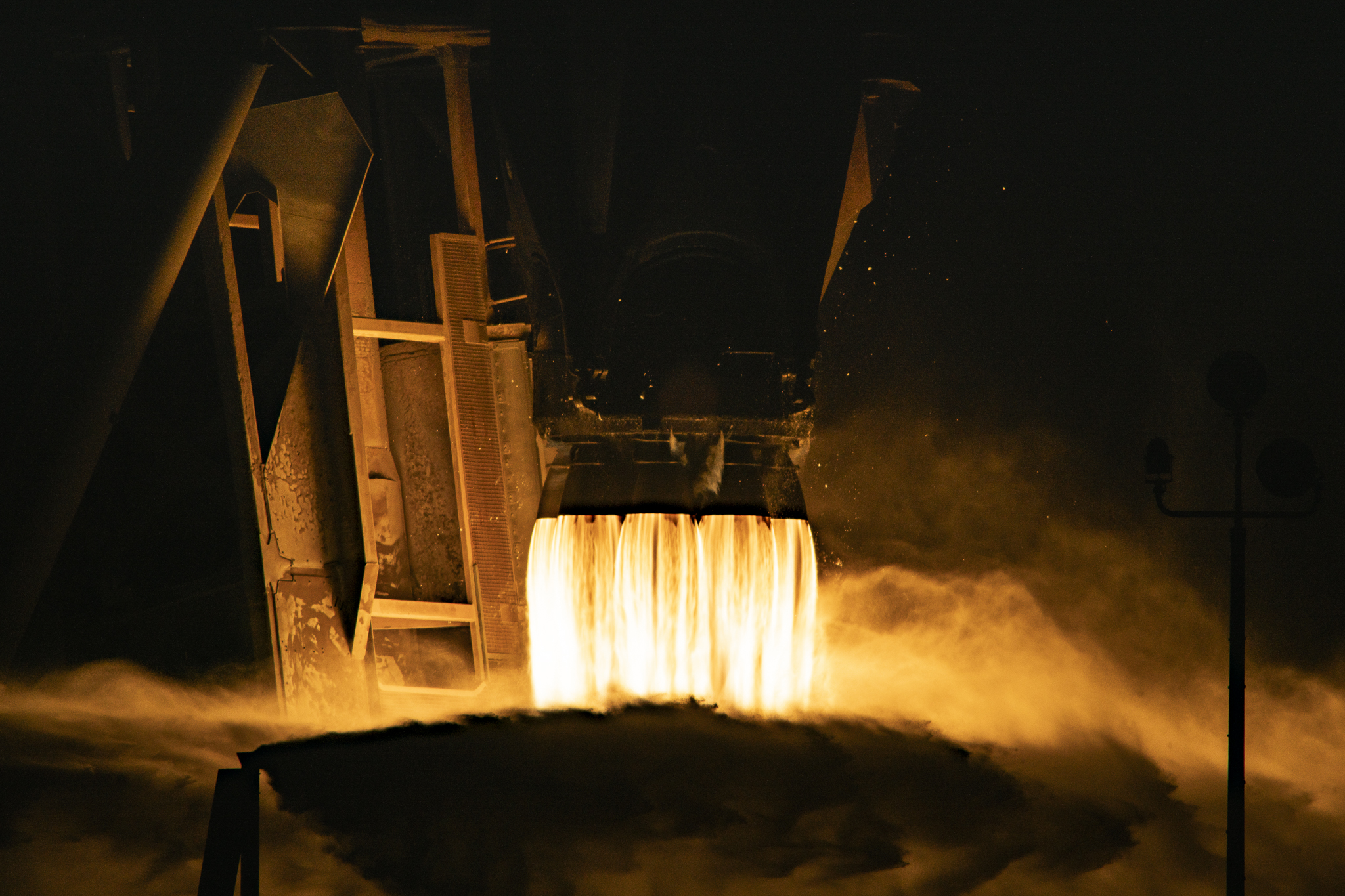
SpaceX is targeting April 11 for the launch of Northrop Grumman’s Cygnus XL cargo spacecraft to the International Space Station, carrying over 11,000 pounds of supplies, science hardware, and equipment for the Expedition 73 crew aboard. Liftoff is set for 7:41 a.m. ET from Space Launch Complex 40 at Cape Canaveral Space Force Station, with a backup window available April 12 at 7:18 a.m. ET.
The mission, officially designated NG-24 under NASA’s Commercial Resupply Services program, names its spacecraft the S.S. Steven R. Nagel in honor of the NASA astronaut who flew four Space Shuttle missions and logged over 723 hours in space before his death in 2014. Unlike SpaceX’s own Dragon capsule, which docks autonomously, Cygnus relies on NASA astronauts to capture it using a robotic arm before it is berthed to the space station’s module for unloading. When the mission wraps up around October, the Cygnus will depart loaded with station trash and burn up on reentry.
Countdown: America is going back to the Moon and SpaceX holds the key to what comes after
This is the second flight of the Cygnus XL configuration, which debuted on NG-23 in September 2025 and offers a roughly 20% increase in cargo capacity over the previous design. Northrop Grumman switched to Falcon 9 launches after its own Antares 230+ rocket was retired in 2023 following supply chain disruptions from the war in Ukraine.
The upcoming cargo includes a new module to advance quantum research, and an investigation studying blood stem cell production in microgravity with potential therapeutic applications on Earth.
The NG-24 mission is one piece of a much larger picture for SpaceX and the U.S. government. As Teslarati reported, SpaceX has become an indispensable launch provider for U.S. national security missions, picking up a $178.5 million Space Force contract in April 2026 to launch missile tracking satellites, while also holding roughly $4 billion in NASA contracts tied to the Artemis lunar program.
At a time when no other American rocket can match the Falcon 9’s combination of reliability, cost, and launch cadence, Saturday’s mission is a straightforward reminder of how much the U.S. government now depends on a single commercial provider to keep its astronauts supplied and its satellites flying.
Elon Musk
Tesla Supercharger for Business exposes jaw-dropping ROI gap between best and worst locations
Tesla’s new Supercharger for Business calculator reveals an eye-opening all-in cost and location-based ROI projections.
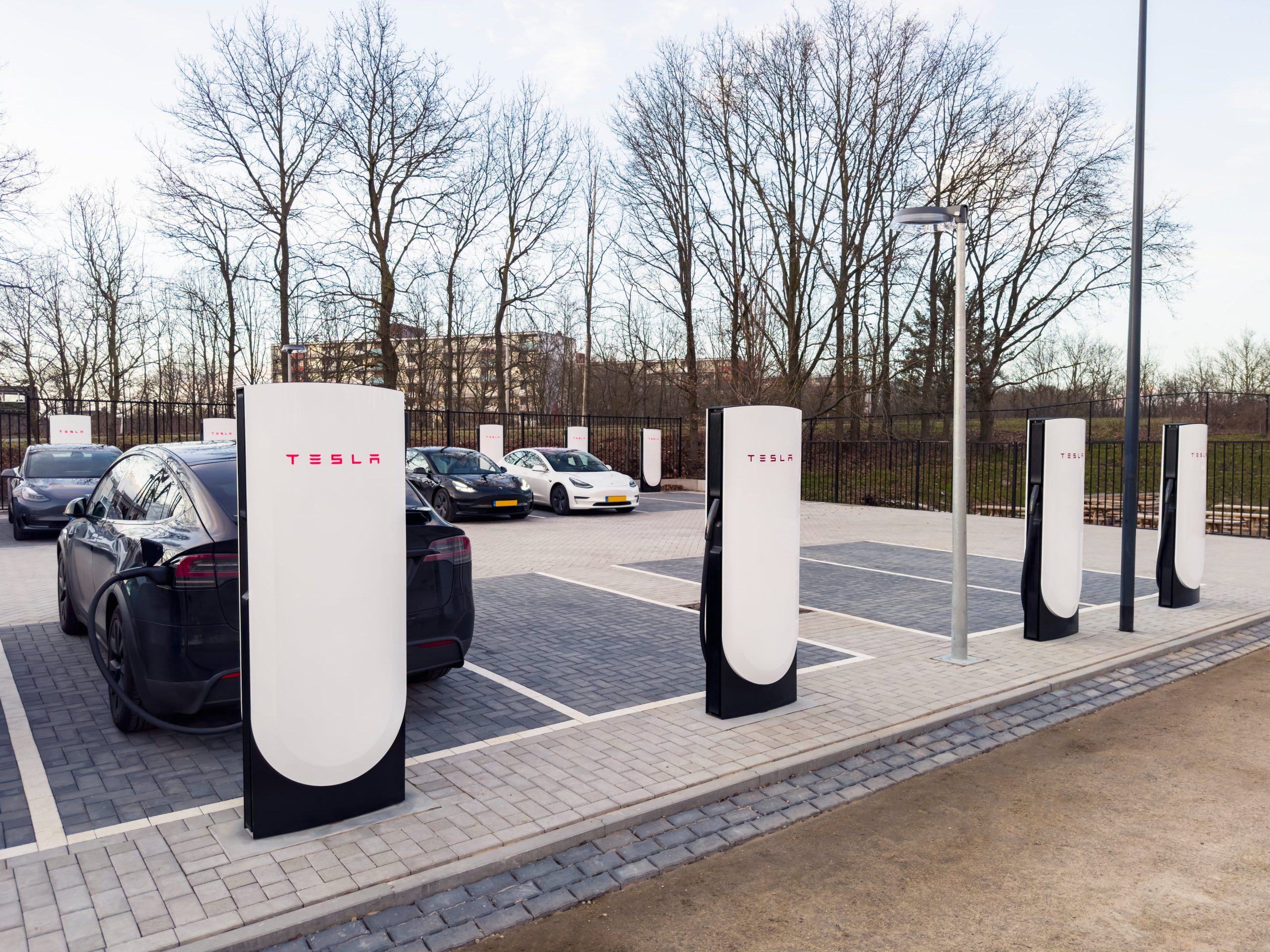
Tesla has launched an online calculator for its Supercharger for Business program, giving property owners their first transparent look at what it really costs to install Superchargers on site and what kind of return they can expect.
The program itself launched in September 2025, allowing businesses to purchase and operate Supercharger hardware on their own property while Tesla handles installation, maintenance, software, and 24/7 driver support. As Teslarati reported at launch, hosts also get their logo placed on the chargers and their location integrated into Tesla’s in-car navigation, meaning drivers are actively routed there. The stalls are open to all EVs, not just Teslas.
We launched Supercharger for Business in 2025 to help companies get charging right. We found simplicity and transparency to be a problem in this industry.
We’re now sharing pricing and a financial calculator to help make informed decisions. The goal is to accelerate investments,…
— Tesla Charging (@TeslaCharging) April 8, 2026
The new online calculator, announced by Tesla on Wednesday with the note that “simplicity and transparency” have been a problem in the industry, lets any business enter a U.S. address and get a real cost and revenue model. A standard 8-stall V4 Supercharger site runs approximately $500,000 in hardware and $55,000 per post for installation, bringing an all-in price just shy of $1 million. Tesla charges a flat $0.10 per kWh fee to cover software, billing, and network operations. Businesses set their own retail price and keep the margin above that fee.
Taking a look at Tesla’s Supercharger for Business online calculator, we can see that ROI is not uniform, and the gap between a strong location and a poor one can stretch the breakeven point by several years.
The biggest driver is foot traffic and how long people stay. A busy rest station, hotel, or outlet mall brings in repeat visitors who need to charge while they’re already stopped, pushing utilization numbers higher and shortening payback time.
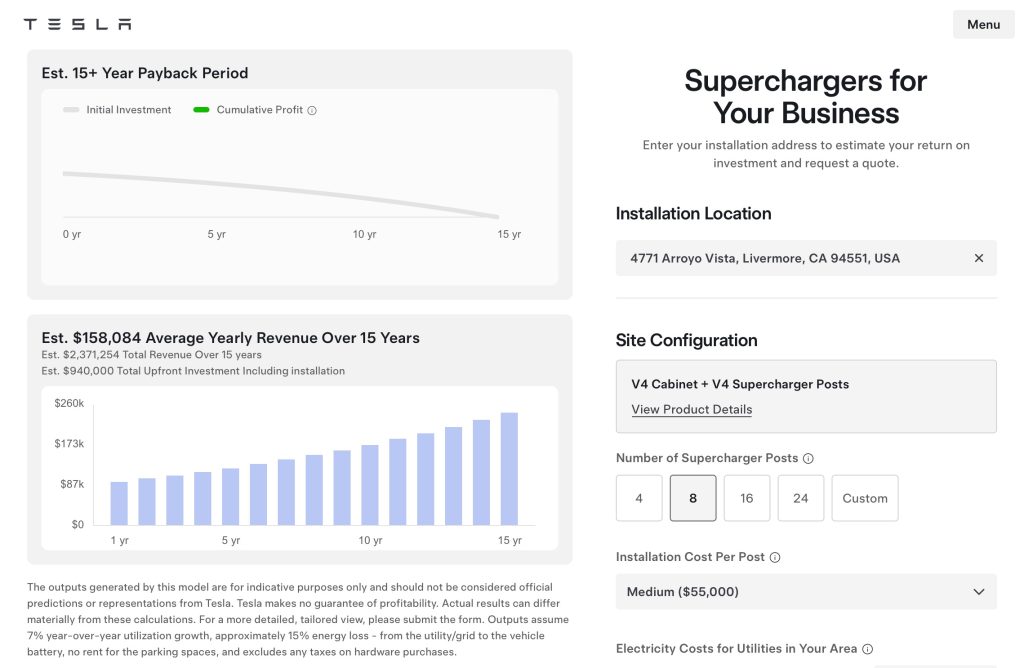
Tesla Supercharger for Business ROI calculator
Local electricity rates matter just as much on the cost side. Markets like California carry some of the highest commercial electricity rates in the country, which eats into the margin between what a host pays per kWh and what they charge drivers. At the same time, dense urban areas with high EV adoption tend to support higher retail charging prices, which can offset that cost if demand is strong enough. Weather also plays a role. Cold climates reduce battery efficiency and increase charging frequency, but they can also suppress utilization in winter months if drivers avoid stopping in exposed outdoor locations. Suburban and rural sites face a different problem: lower baseline EV traffic, which means a site with cheaper power and lower operating costs can still take longer to pay back simply because the stalls sit idle more often. Tesla’s calculator uses real fleet data to pre-fill utilization estimates by ZIP code, so businesses can run their specific address against these variables rather than relying on averages.
The program has seen real adoption. Wawa, already the largest host of Tesla Superchargers with over 2,100 stalls across 223 locations, opened its first fully owned and branded site in Alachua, Florida earlier this year. Francis Energy of Oklahoma and the city of Alpharetta, Georgia have also deployed branded stations through the program, as Teslarati covered in January.
Tesla now exceeds 80,000 Supercharger stalls worldwide, and the calculator makes the economic case for accelerating that number through private investment rather than company-owned sites alone.
Elon Musk
Elon Musk reveals unfortunate truth of Tesla Full Self-Driving development
In a candid reply to a dramatic video of Tesla’s Full Self-Driving (FSD) system averting disaster, Elon Musk laid bare a harsh reality facing autonomous vehicle technology.

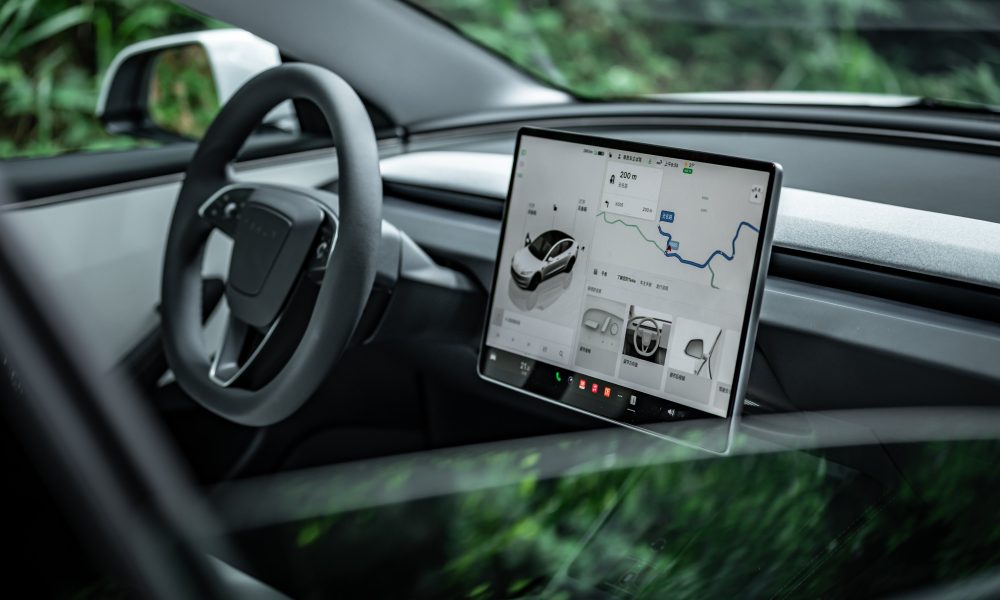
Tesla’s Full Self-Driving suite is one of the most significant technological developments in terms of passenger travel in decades, but it is not all sunshine and rainbows, even with major strides in safety, CEO Elon Musk revealed.
In a candid reply to a dramatic video of Tesla’s Full Self-Driving (FSD) system averting disaster, Elon Musk laid bare a harsh reality facing autonomous vehicle technology.
The clip shows a Model 3 traveling at over 65 mph on a foggy, rain-soaked highway when a pedestrian suddenly steps into traffic.
Full Self-Driving instantly detects the threat and swerves safely, preventing what could have been a fatal collision for both the pedestrian and the driver’s cousin.
Musk’s response was unequivocal:
“Tesla self-driving saves a lot of lives – the statistics are unequivocal. That doesn’t mean it’s perfect, of course.” Even with a projected 10x safety improvement over human drivers, FSD would still prevent roughly 90% of the world’s approximately one million annual auto fatalities. The remaining 10%—roughly 100,000 deaths—would expose Tesla to relentless lawsuits. Meanwhile, the vast majority of lives saved would go unnoticed. “The 90% who are still alive mostly won’t even know that Tesla saved them. Nonetheless, it is the right thing to do.”
This “unfortunate truth,” as Musk implicitly framed it, highlights a fundamental asymmetry in how society perceives safety technology. Human drivers cause the overwhelming majority of crashes through distraction, fatigue, or error.
Tesla self-driving saves a lot of lives – the statistics are unequivocal.
That doesn’t mean it’s perfect, of course.
Even when we improve safety 10X, saving 90% of the million lives lost in auto accidents every year, Tesla will still get sued for the 10% who did die. The 90%… https://t.co/OrNB1mO5eF
— Elon Musk (@elonmusk) April 6, 2026
Yet when FSD errs, the incident becomes headline news and a courtroom target. Prevented tragedies, by contrast, leave no trace.
Survivors simply continue their journeys, unaware of the split-second intervention that kept them alive. The result is a distorted public narrative that amplifies failures while rendering successes invisible.
We have seen this through various headlines throughout the years, including the mainstream media’s obsession with only mentioning the manufacturer’s name in the instance of an accident when it is “Tesla.”
Opinion: Tesla Autopilot NHTSA investigation headlines are out of control
The video’s real-world example underscores FSD’s current capabilities. In near-zero visibility, the system’s cameras and neural network reacted faster than any human could, demonstrating the life-saving potential Musk cites.
Tesla’s latest safety data already shows FSD (Supervised) performing significantly better than the U.S. average, with crashes occurring far less frequently per mile driven.
Still, regulatory scrutiny, liability concerns, and media focus on edge-case failures continue to slow widespread adoption. Musk’s frank admission suggests Tesla is prepared to push forward despite the legal and perceptual headwinds.
As FSD edges closer to unsupervised autonomy, Musk’s post serves as both a progress report and a reality check. The technology is already saving lives today.
The unfortunate truth is that proving it and scaling it responsibly will require society to value statistical lives saved as much as dramatic stories of those lost. In the race toward safer roads, perception may prove as formidable an obstacle as the fog and rain in that viral video.

Tesla is using a redesigned Cybertruck battery cell to mitigate Semi challenges

SpaceX is keeping the Space Station alive again this weekend


