News
NIO sets its sights on overtaking Tesla in China

One of the latest electric car companies looking to challenge Tesla’s dominance has made known its intentions of overtaking the Silicon Valley car manufacturer in China’s luxury auto market. In a recent 60 Minutes interview, founder and CEO William Li described plans for NIO, his Chinese EV startup company to capture Tesla’s upper-middle class audience in the country, ultimately moving on to position its products as highly desired status symbols. With potentially 50% of the worldwide electric car market soon to be located in China, NIO’s ambitions are certainly poised in a promising direction, and their native knowledge of their customer market just may help give them the edge they’re seeking.
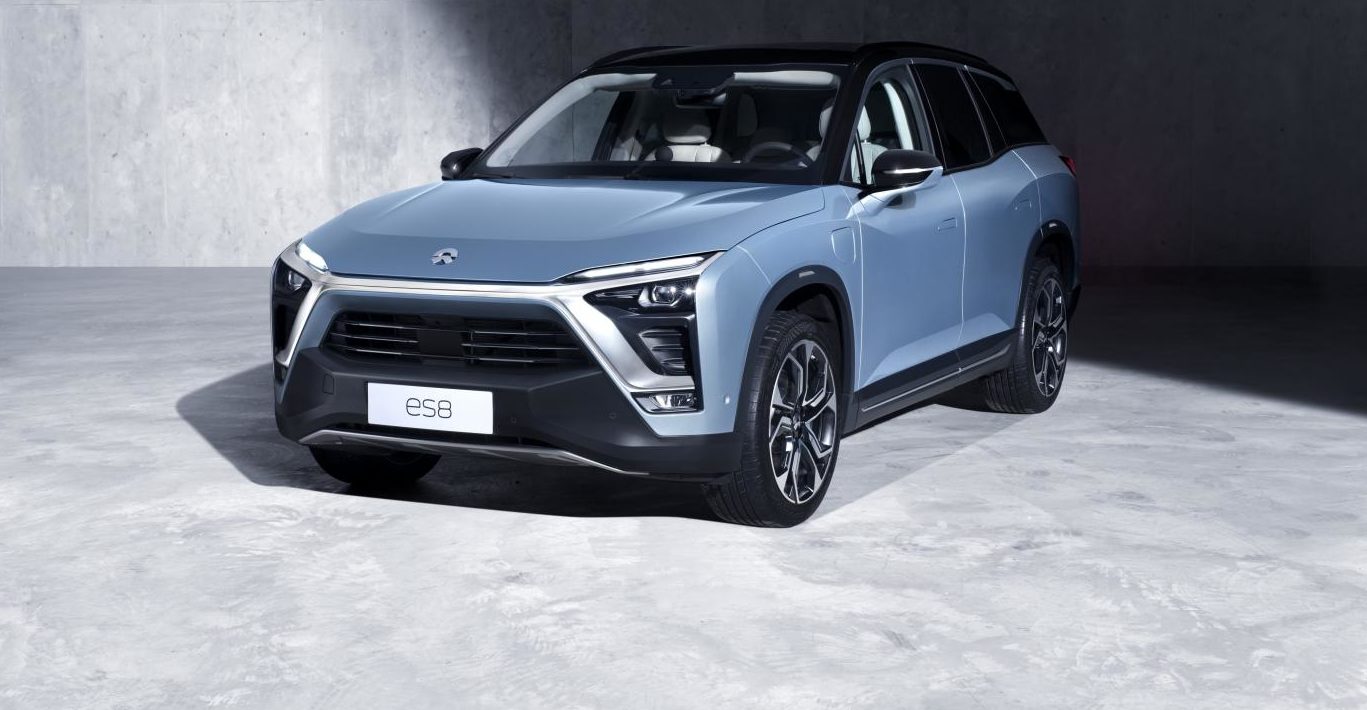
NIO’s strategy to appeal to the EV customer market is similar to Tesla’s in several ways and has earned it the nickname “Tesla of China.” The Chinese auto maker currently sells two high-performance SUVs, the ES6 and the ES8, both of which have an advanced autonomous driving system (not yet in operation) and an on-board pilot system. These, of course, are all features enjoyed by current Tesla drivers in Tesla’s own flavor, and with one look at NIO’s vehicles’ large center console control screen, it’s clear which auto maker’s customer base NIO is targeting. A phone app is incorporated into the NIO ownership experience, providing basic car services like roadside assistance and maintenance scheduling (as well as several other features). Customers can also purchase NIO vehicles via the app, similar to Tesla’s sales model. While significant commonalities exist between the two car makers, NIO has significant unique offerings as well.
-
- NIO’s ES6 electric SUV interior. | Credit: NIO
-
- NIO’s ES6 electric SUV command panel. | Credit: NIO
-
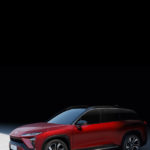
- NIO’s ES6 electric SUV. | Credit: NIO
-
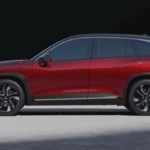
- The NIO ES6 electric SUV. | Credit: NIO
-
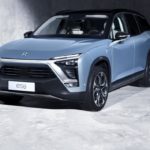
- The NIO ES8 electric SUV. (Credit: NIO)
Owning a Tesla certainly comes with an incorporated sense of community, but NIO seeks to expand on that concept, eventually transforming its brand into a symbol of social standing by connecting customers with one another. The car maker presents itself as a lifestyle company, offering membership in exclusive NIO-owner-only clubs called NIO Houses with regular social activities and perks one might see at, say, a country or yacht club in the US – classes, meeting rooms, etc. The customer app also connects users to an entire social network of other owners – a bit beyond basic Internet forums.
NIO has further padded its ‘lifestyle’ perception with first-of-its-kind battery swapping technology, allowing customers to switch out their drained car batteries for fully charged ones via an automated system that’s faster than refueling at a gas station, saving time. Also, a mobile charging subscription service is an owner option, wherein NIO company vehicles travel to the vehicle’s location to supply it with power on request. Along with customer-oriented charging services and community perks, subscription packages offering free repairs and maintenance (with valet pickup/delivery options), cellular data boosts, car washing, airport parking, and several others all foster a lifestyle for NIO customers that’s only available via vehicle ownership.
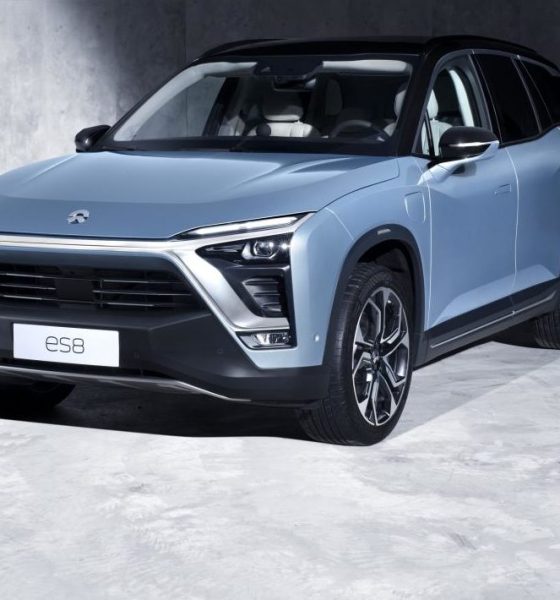
For about $60,000 (before tax breaks and subsidies), a customer in China can own one of NIO’s two all-electric SUVs. The company’s flagship SUV, the ES8, is all-wheel drive, uses two 240 kW motors, and has a swappable 70 kWh/84 kWh battery. Impressively, it also has a 0-100 km/h (0-62 mph) time of 4.4 seconds. The newly released ES6 uses dual 160 kW high efficiency or 240 kW high performance motors with a swappable 70 kWh/84 kWh battery. The 0-100 km/h time is 4.7 seconds.
One of the major factors in NIO’s favor (as well as any electric car maker in the country) is the Chinese government’s major push to bring electric vehicles to the country’s roads. With air pollution a problem literally looming over the heads of major city populations, China’s leadership has maneuvered its tax system to provide major incentives for EV purchases to address the dirty air situation via clean energy. In Shanghai, for example, the $12,000+ license fee required to purchase a car in the city is waived if it’s electric. Additionally, several Chinese cities offer thousands of dollars in rebates for EV purchases.
Tesla CEO Elon Musk has experienced this motivated government favoritism first hand with a sped up permit and construction process for Gigafactory 3 in Shanghai. As an established EV maker and leader in the EV revolution, paving the way for Tesla to have a major presence in China is in line with the leadership’s desires for market transformation. As described in the 60 Minutes segment, hundreds of native electric vehicle companies have also popped up as a result of incentive efforts, all hoping to achieve major success with government backing. NIO hopes to cut through the competition with its lifestyle branding.
-
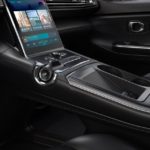
- NIO’s ES6 electric SUV command panel. | Credit: NIO
-
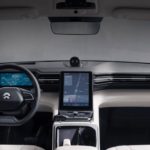
- NIO’s ES8 electric SUV command panel. | Credit: NIO
-
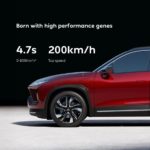
- NIO’s ES6 electric SUV. | Credit: NIO
-
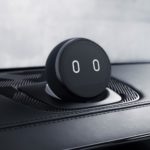
- NIO’s AI personal assistant NOMI. | Credit: NIO
While Tesla may have entertainment features like TeslAtari and Easter eggs, NIO boasts its own unique fun feature: an artificial intelligence personal assistant named NOMI, touted by the company as the world’s first such in-car device. On the dashboard, a little sphere with digital eyes chats with vehicle passengers and interacts to provide music playlists, adjust cabin temperature, and even take selfies. NOMI seems to be inspired by other existing AI robot personal assistants like the personality-filled Vector Robot by Anki.
If you’re a fan of Amazon’s (hit) car show, The Grand Tour, you may have seen NIO’s EP9 supercar racer on display in the “Chinese Food for Thought” episode, driven by the crash-tested Richard Hammond demonstrating the car’s 1,341 brake horsepower. While not road legal, for the price of around $1.5 million dollars, owners of this insanely fast vehicle can enjoy a 0-125 mph acceleration of about 7 seconds and an octopus-like grip around track corners thanks to 5,395 pounds of downforce (2X the amount of Formula 1 cars). When it’s time to recharge the batteries, a full charge takes only 45 minutes; however, that’s where usability complications set in. The battery must be completely removed by a specialty team in order to recharge, something that just might be on hand to begin with since the vehicle is a track-only hobby car.
Last year, NIO achieved its goal of delivering 10,000 vehicles, all made-to-order. CEO Li expects to be able to ramp up production quickly in the coming years thanks to the Chinese manufacturing capabilities, and he eventually hopes to have NIO vehicles on the road in the United States. The company already has a presence in San Jose, California where its global software development center employs over 700 people.
In a final nod to Tesla similarities, NIO’s mission as an EV company is environmentally-involved. The Chinese name for the company is Weilai, meaning “Blue Sky Coming”, and it represents their guiding philosophy based on building a sustainable future with clean energy. Per their website, “When the ownership experience exceeds expectations, electric vehicles will simply become the natural choice for everyone, leading to a more sustainable tomorrow. With that, our vision of a blue sky will come true.”



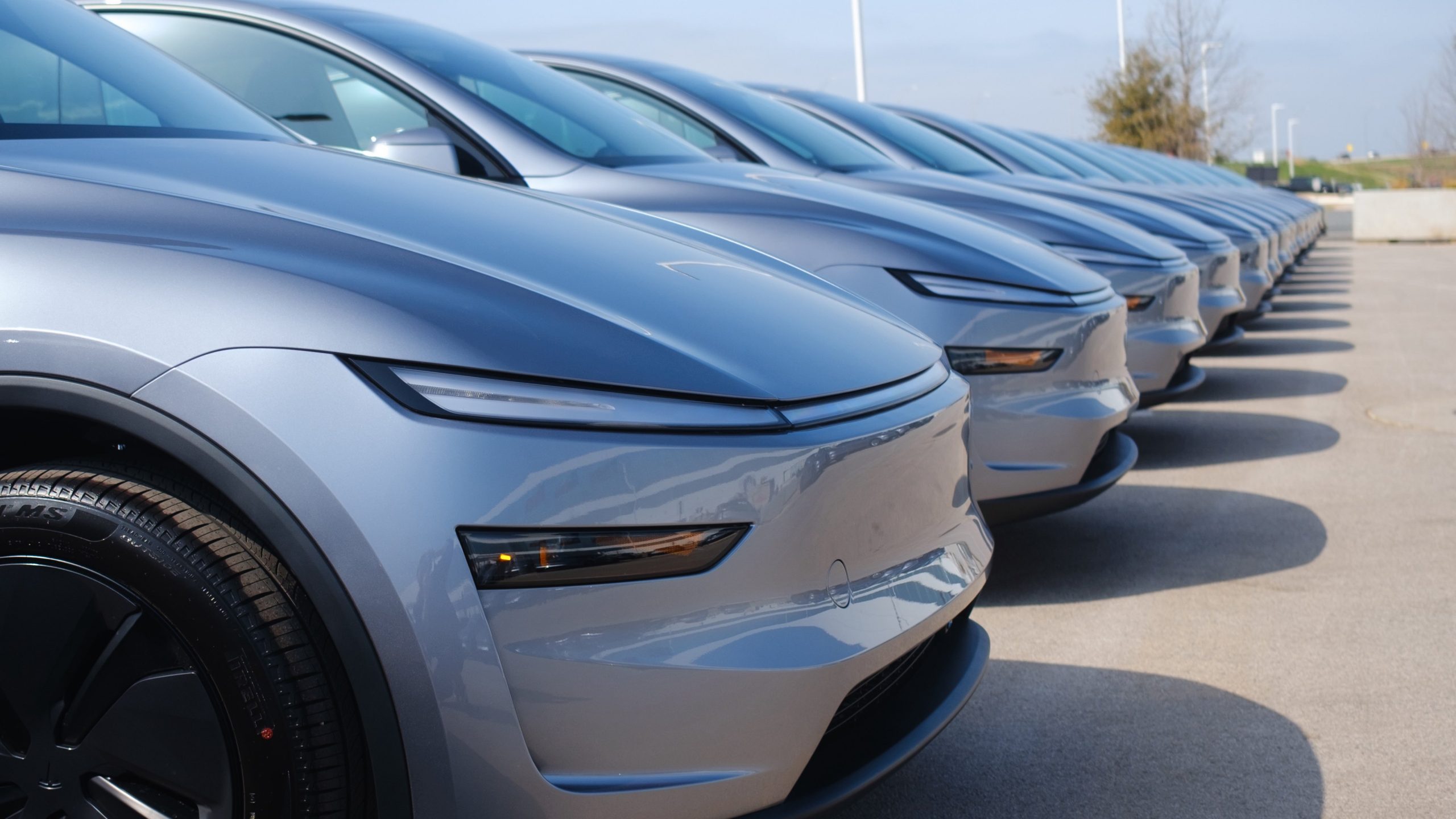
In a notable shift for electric vehicle perceptions, Tesla has emerged as a standout performer in the latest iSeeCars longevity study, which analyzed over 174 million used vehicles.
The data reveals that Tesla models have a 4.6 percent chance of reaching 250,000 miles, matching the industry average of 4.8 percent and tying for sixth place among 32 brands. This positions Tesla ahead of many established names, including Subaru (2.3 percent, roughly half of Tesla’s rate), Nissan (2.4 percent), Mazda, BMW, Mercedes-Benz, and Porsche.
Toyota leads with an impressive 17.8 percent likelihood, followed by Lexus (12.8 percent), Honda, and Acura. Yet Tesla’s result stands out for a relatively young EV brand. Experts attribute this to the inherent simplicity of electric powertrains: fewer moving parts mean no oil changes, timing belts, or complex engine components that typically fail in internal combustion vehicles.
Fewer things to maintain means fewer things to break, and ultimately, fewer things to go wrong.
A Tesla is twice as likely to reach 250,000 miles as a Subaru⁰⁰“No engine, no oil changes, no timing chains, no fuel injectors, and far fewer moving parts overall”⁰⁰https://t.co/k8iJwbzrrp
— Tesla North America (@tesla_na) June 8, 2026
This design advantage helps Teslas defy unfounded skepticism about battery longevity and overall durability, two things that have plagued the company from outsider perspectives without much proof.
The iSeeCars reliability ratings further bolster Tesla’s case. The Tesla Model S earns a strong 7.9/10 reliability score, ranking No. 1 out of 35 most reliable electric cars. It boasts a predicted average lifespan of about 154,419 miles (around 16.9 years) and a 21.9 percent chance of hitting 200,000 miles.
Tesla, as an electric car brand, also scores 7.9/10 overall, securing the top spot among electric vehicle manufacturers in several luxury and segment categories.
Real-world examples reinforce the data. High-mileage Teslas, including Model S vehicles exceeding one million miles, demonstrate that EVs can endure when properly maintained. Owners report minimal mechanical issues beyond typical wear items like tires and brakes, which regenerative braking often extends.
Tesla Model 3 hits quarter million miles with original battery and motor
This performance challenges narratives around EV reliability, especially amid mixed reports from other sources like Consumer Reports or regional inspections. iSeeCars‘ massive dataset emphasizes long-term durability over short-term defect rates, painting Tesla as a leader in sustainable, high-mileage ownership.
For buyers prioritizing longevity and low maintenance, Tesla’s results signal strong value. While no brand is flawless, factors like driving habits, climate, and software updates matter—the numbers suggest Tesla belongs among the elite for those seeking vehicles built to last.
As EV adoption grows, this iSeeCars data underscores Tesla’s engineering edge in creating enduring, future-proof automobiles.
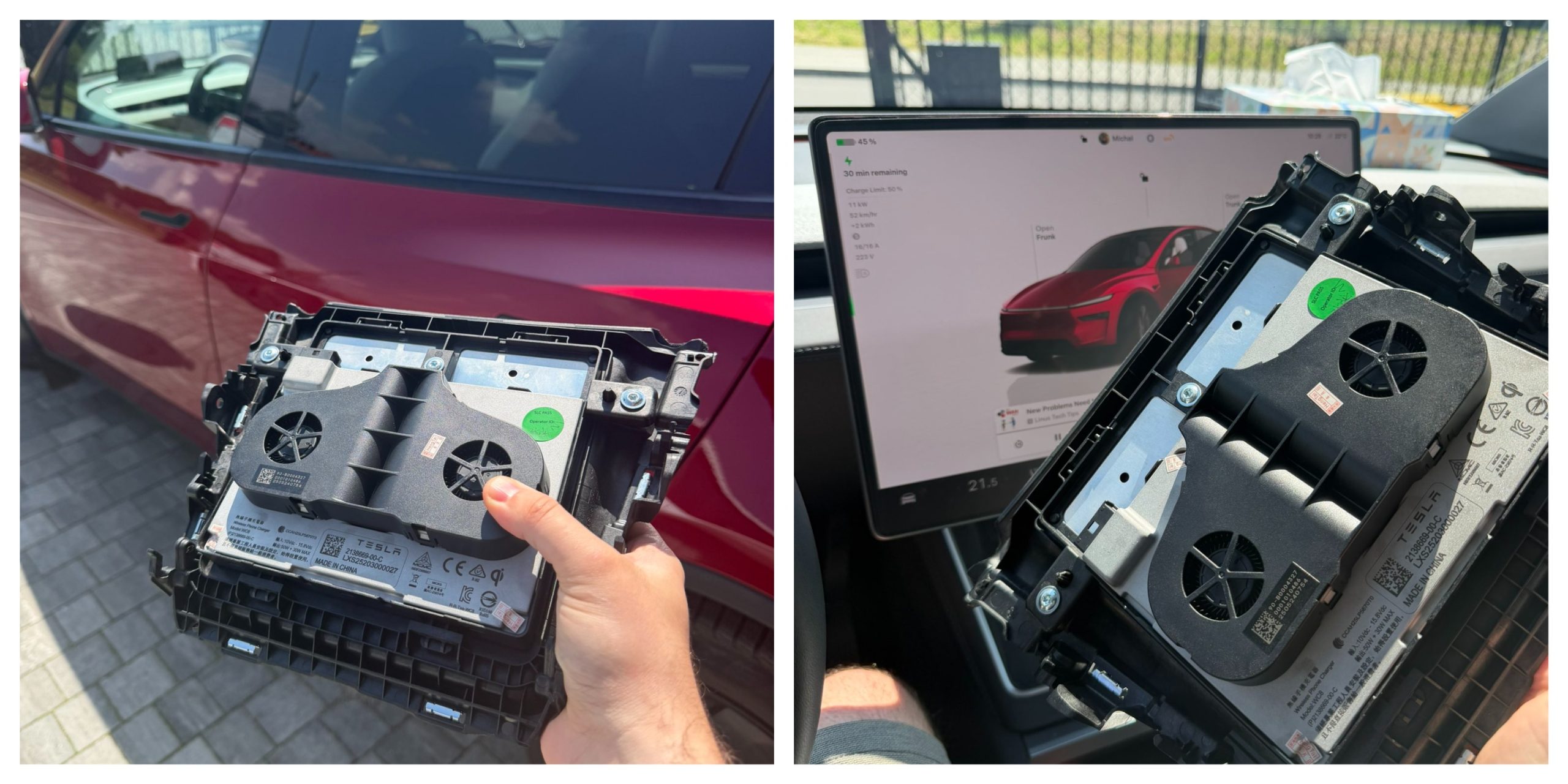
Tesla owners have long griped about the wireless phone charger in the Model Y and other vehicles. It often turns smartphones into miniature ovens rather than reliably topping them up.
Software engineer and Model Y owner Michał Gapiński tackled this issue head-on with a clever DIY upgrade, swapping the cooled wireless charger pad from the China-made Model YL in for the one that came standard in his vehicle.
There are several key differences between the U.S.-built Model Y’s wireless charging pad and the one that Tesla has been installing in the Model YL. The one installed in U.S.-built vehicles lacks active cooling and relies on basic heat dissipation, leading to rapid temperature buildup during charging. In contrast, the Model YL integrates a small fan for active cooling.
Will it fit? Fingers crossed, I want a first YL charger deployed in the regular juniper pic.twitter.com/wWDqSNFVkW
— Michał Gapiński (@mikegapinski) June 2, 2026
This design maintains lower temperatures even in warm ambient conditions, though it does not support faster Qi2 charging on iPhones. The connector matches exactly, making physical swaps feasible on compatible consoles, but coding is required to enable full functionality.
Owners in the U.S. have complained about the wireless charging pad, with many reporting that overheating is fairly common. Within 20 or 30 minutes of placing a phone on the wireless charging pad, many have reported overheating messages on their phones, which halt charging and essentially turn the pad into a fancy place to rest your phone.
Many owners have opted to simply plug their phones into a charging cord. Tesla has acknowledged the problem by releasing several solutions for owners, including a relatively new feature that allows you to simply turn off the charging and simply act as a holder for your phone while driving.
Gapiński said that he sourced the cooled pad affordably from China, and it cost under $200 for the part.
He removed the existing console charger, swapped in the new unit, confirming a perfect connector fit, and handled the trim differences. Since the parameter isn’t fully secured, he enabled it through custom coding outside official Toolbox.
Connector is identical, she fits, now time to code it. https://t.co/Y9idgDrpCq pic.twitter.com/uwwgq6blg7
— Michał Gapiński (@mikegapinski) June 2, 2026
The fan activates quietly, blending with AC and seat cooling. He reported the installation was effective and the wireless charging pad worked perfectly; it even kept the phone cool as it stayed at just 86 degrees Fahrenheit. Many times, the wireless charging pad will bring the phone’s temperature well above 100 degrees, sometimes even being relatively hot to the touch.
The retrofit worked, no issues. First Model Y with a cooled wireless charger! No QI2/faster charging on the iPhone but it does not boil the phone even when it is 30 degrees outside.
The fan kicks in, it is not audible especially with the air conditioning and seat cooling. The… https://t.co/JOyR8Tb1Yo pic.twitter.com/kJcYhQIlYq
— Michał Gapiński (@mikegapinski) June 2, 2026
This retrofit highlighted an elegant, owner-driven solution to a factory shortcoming. It is expected that Tesla will begin installing the cooled charging pads into new cars in the U.S. soon, and hopefully, it will offer some sort of retrofit service or kit to owners here who want to use the charging pad effectively.
For those who love to tinker, it’s an accessible upgrade, proving that innovation thrives beyond the production line.
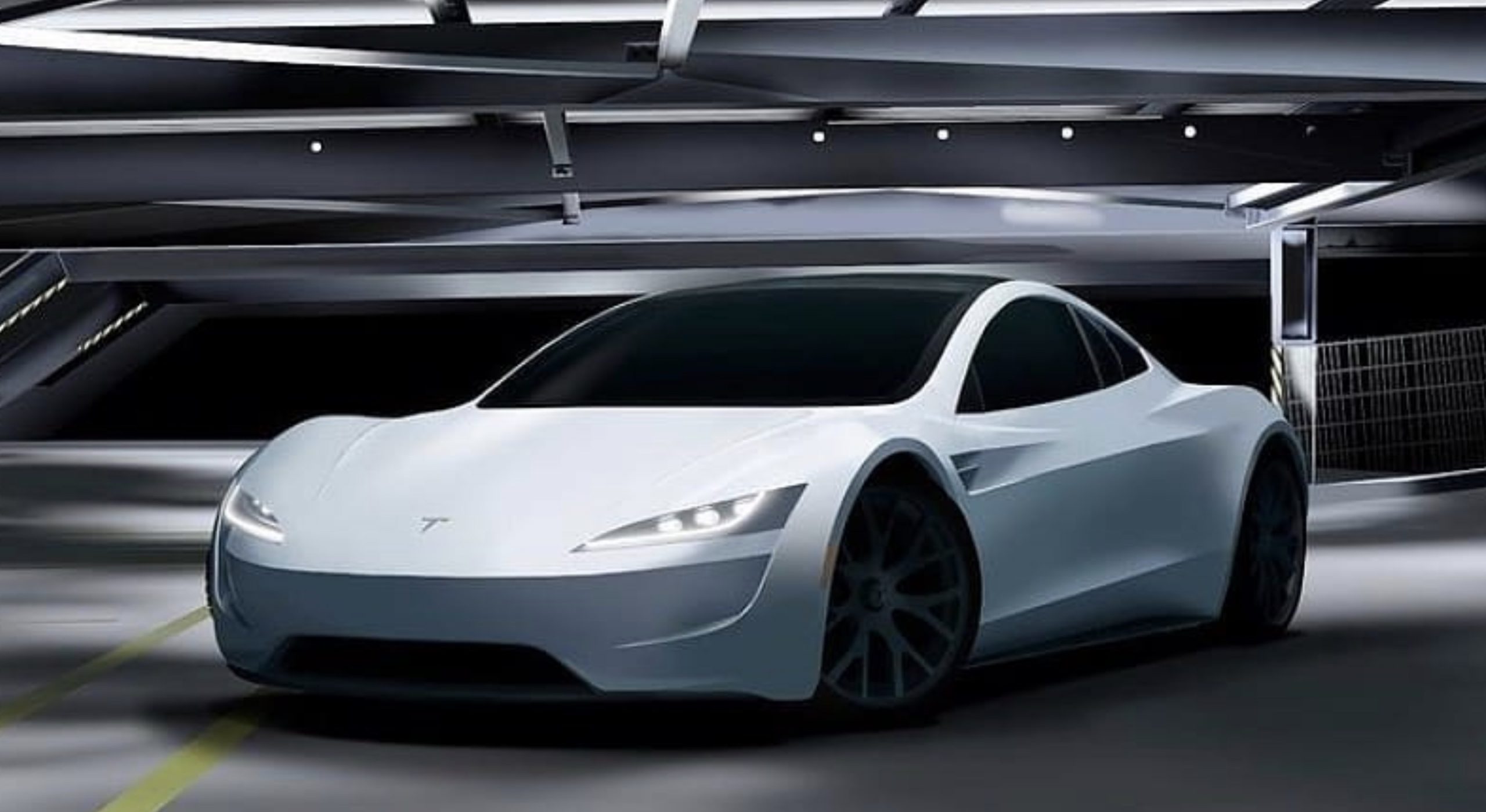
The Tesla Roadster unveiling could be coming “in a few weeks,” according to the company’s Chief Designer Franz von Holzhausen, who said at the Tesla Takeover Europe Event in Austria that the all-electric hypercar could finally make its way to the production line after years of anticipation.
Von Holzhausen delivered the news just days after The Information reported that Tesla planned to push the Roadster unveiling to August. It was slated for both April and May of this year, but now it seems the company is leaning toward a late Summer event to cap off the heat with perhaps its most anticipated vehicle of all-time.
🚨 Tesla Chief Designer Franz Von Holzhausen, speaking to the crowd at Tesla Takeover Europe, said at the event that the Roadster is coming “in a few weeks,”
Multiple attendees have confirmed this pic.twitter.com/B1v6yb2Geq
— TESLARATI (@Teslarati) June 6, 2026
Franz has been with Tesla since 2008, and has played a pivotal role in the iconic design language the company has utilized with its vehicles. Speaking to the crowd in Austria virtually, von Holzhausen’s comments injected fresh excitement into a project that has been plagued by delays for nine years.
The second-generation Roadster promises to redefine supercar standards. Tesla’s website still highlights ambitious targets: 0-60 mph in under 1.9 seconds (with optional SpaceX thruster pack potentially achieving 1.1 seconds or less), a top speed exceeding 250 mph, and a range of about 620 miles.
Equipped with a tri-motor all-wheel-drive setup delivering over 1,000 horsepower, the four-seater aims to blend blistering acceleration, everyday usability, and innovative features like cold gas thrusters for short-hop capabilities, technology that will combine the project with SpaceX.
But years after the company promised to start production, which was slated for 2020, the timeline for the Roadster has continued to shift.
Tesla has strung along those who have put $50,000 deposits down, as well as fans and enthusiasts of the company who have been long awaiting the company to bring forth a car truly designed for the human driver, and not autonomy. The Roadster is more than just a halo vehicle for Tesla; it showcases the company’s ability to push the boundaries while incorporating synergies from other Musk companies.
However, it has to make it to production, which is something Musk and Co. have pushed back repeatedly.
As Tesla navigates Robotaxi development and broader autonomy goals, the Roadster serves as a reminder of its performance roots. If von Holzhausen’s timeline holds, fans could witness this engineering marvel by late June or early July 2026. Whether a full unveiling, demo, or initial deliveries, it marks a milestone for electric supercars.

Tesla skeptics will hate what this new reliability study says

Tesla owner fixes common feature complaint with crafty DIY retrofit


