News
SpaceX adjusts Starship Flight 13 test launch target date once again

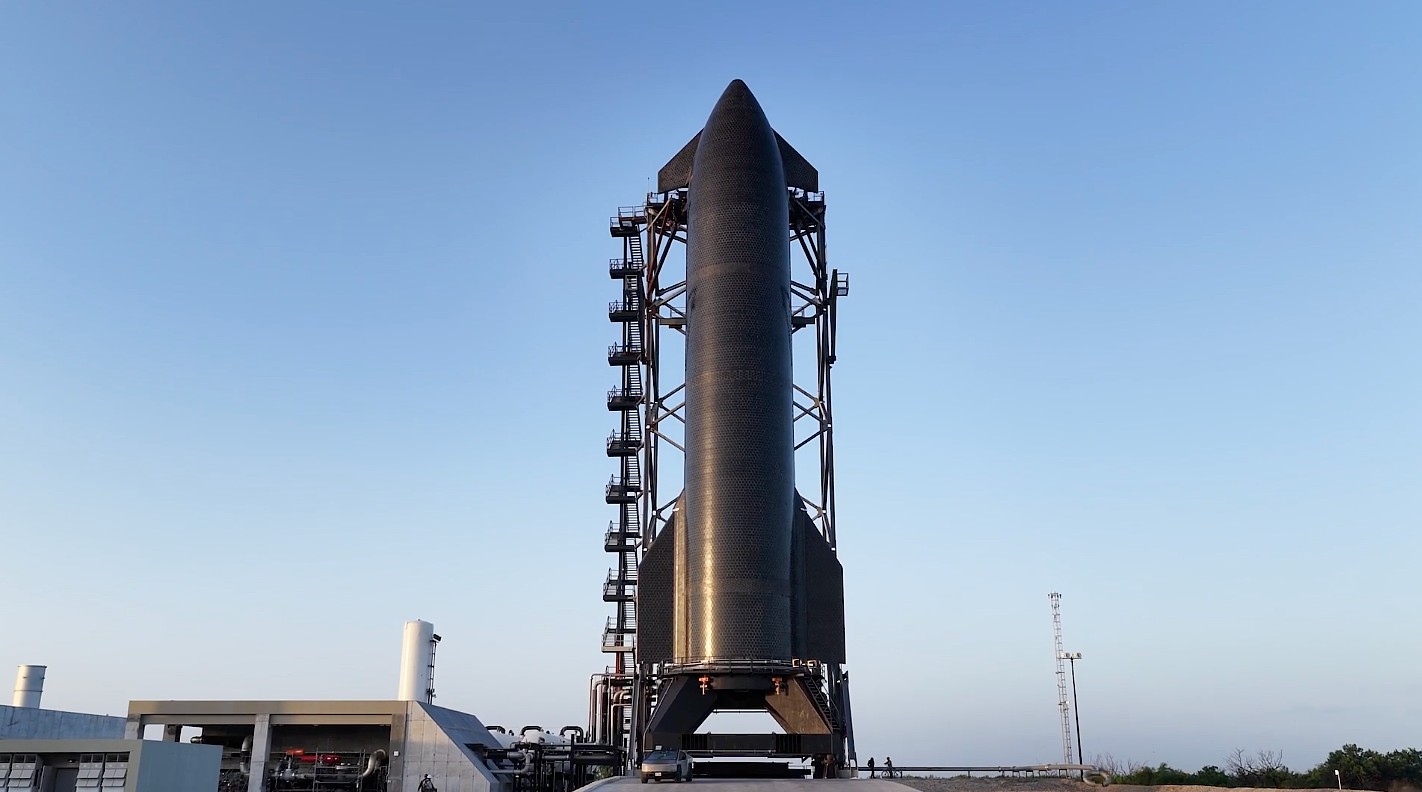
SpaceX has updated its target for the thirteenth integrated flight test of Starship, aiming for as early as Thursday, July 23. The 90-minute launch window opens at 5:45 p.m. CT from the company’s Starbase facility in South Texas.
The target flight was initially rescheduled for today, but SpaceX pushed it back again.
This latest adjustment follows an aborted attempt earlier in the week and reflects the iterative, rapid-development approach that has defined the Starship program. With the vehicle already stacked and ground teams making final preparations, the mission represents another step toward proving the full reusability of the world’s most powerful rocket system.
Now targeting to launch Starship’s thirteenth flight test as early as Thursday, July 23 → https://t.co/Rp7VwBzpWx pic.twitter.com/Y0YNzfc5zk
— SpaceX (@SpaceX) July 19, 2026
The original launch attempt on July 16 was scrubbed at T-0 when several Raptor engines on the Super Heavy booster failed to ignite properly. The automatic abort system triggered just as the engines began their startup sequence, preventing liftoff.
SpaceX CEO Elon Musk confirmed that some engines did not start as expected, prompting the decision to replace two Raptors on Booster 20 to ensure reliability. The issue occurred despite a successful full-duration static fire earlier, highlighting the complexities of coordinating 33 engines under flight conditions.
This cautious approach underscores SpaceX’s commitment to safety amid an aggressive test cadence.
Flight 13 builds directly on the lessons from Flight 12 in May 2026. The Super Heavy booster’s primary goals include a successful liftoff, ascent, stage separation, boostback burn, and controlled splashdown in the Gulf of America.
Hardware and software modifications address the off-nominal flip and boostback burn problems from the prior flight, where propellant slosh and engine relight issues led to an uncontrolled impact.
For the Starship upper stage, objectives include deploying 20 operational Starlink V3 satellites, the first real payload of this type, performing a single Raptor engine relight in space, and executing a controlled entry, descent, and splashdown in the Indian Ocean. Propulsion upgrades aim to improve engine-out capability after one vacuum Raptor was lost on Flight 12.
Additional test elements focus on heat shield performance. Six satellites carry cameras to image the tiles during flight, while white-painted tiles and upgraded attachments on flaps and the aft skirt will gather data for future reusability.
The FAA completed its mishap investigation into Flight 12 earlier this month, clearing the regulatory path.
This suborbital mission, the second with V3 vehicles, advances Starship toward operational missions, including potential crewed flights and support for NASA’s Artemis program. Success would mark significant progress in rapid reusability and satellite deployment from the massive system.


News
Tesla’s Cybercab fleet jumped 8x in a month, with Dallas up next
Tesla confirms its first official Cybercab fleet number as Austin scales fast and Dallas looms.

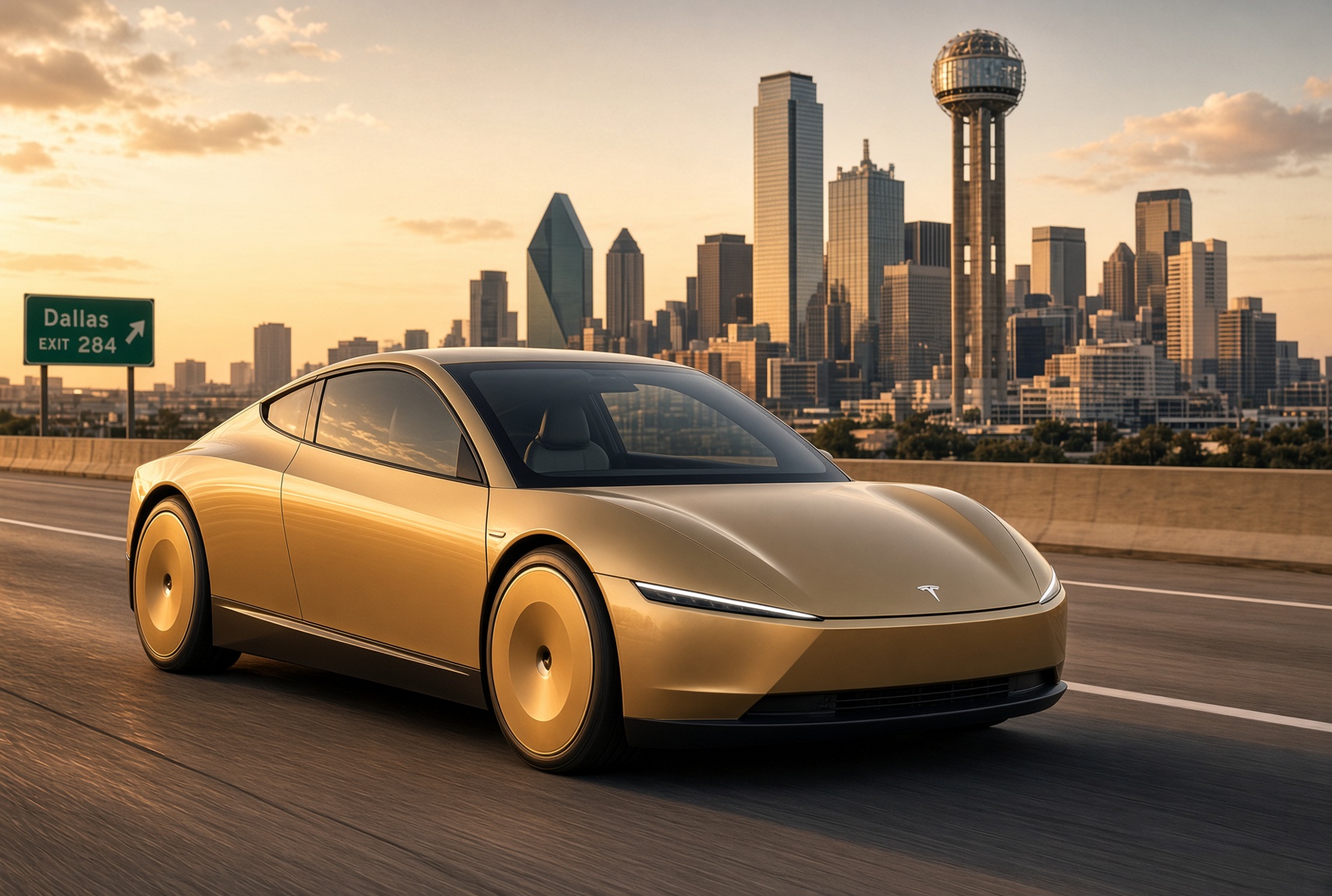
Tesla says more than 300 Cybercabs are now serving Austin, the first time the company has put an official number on its active Cybercab fleet. The figure came from the Robotaxi account on X on Saturday, which wrote that one month after launch the service had “scaled to 300+ Cybercabs serving Austin – an 8x increase in 30 days.”
Ashok Elluswamy, Tesla’s head of AI software, quoted the post with a line that carried the bigger news. “Two years since the 10/10 Cybercab WeRobot event, the cabs are everywhere in Austin now. Dallas soon,” he wrote. It is the first time Tesla has named the next city for public Cybercab rides.
One month after launch, we’ve scaled to 300+ Cybercabs serving Austin – an 8x increase in 30 days https://t.co/EagJy2JAsm
— Robotaxi (@robotaxi) October 10, 2026
Tesla opened Cybercab rides to the public in Austin on September 4, as Teslarati reported, a day after an invite only launch event. The ramp since then has been steep. Our September 28 report had the fleet at well over 100 units after availability jumped from 58 to 125 in a single week. On Thursday, Tesla added 150 Cybercabs to the Texas automated vehicle registry, lifting its registered count to 319 from 169. The first seven appeared on the registry on August 31.
RobotaxiTracker, a community site that counts vehicles from sightings and state records, listed 275 vehicles in unsupervised service in Austin on Saturday, 105 of them Cybercabs, which is well below Tesla’s figure. Tracker counts can lag official numbers, though Sawyer Merritt noted that Cybercab wait times in Austin stayed short on Saturday evening even with more than 2,000 fans in town for X Takeover.
Regulators are watching the rollout. NHTSA opened an audit query into Tesla’s certification that the Cybercab meets federal safety standards, and sworn answers are due October 30. Tesla reports third quarter earnings on October 21, which gives the company a natural venue to define its fleet numbers and put a date on Dallas.
Elon Musk
Elon Musk roasts India’s billionaire Mukesh Ambani as Starlink fight heats up
Elon Musk sarcastically calls Mukesh Ambani ‘Prime Minister’ as the Starlink India standoff escalates again.

Elon Musk escalated his public fight over Starlink’s launch in India on Friday, addressing Reliance chairman Mukesh Ambani as “Prime Minister Ambani” in a sarcastic post on X. “Please accept my humble apologies for not realizing that you are the real boss of India,” Musk wrote, before accusing Ambani of “monopolistic exploitation” and asking whether he would “consider allowing Starlink to compete.” In follow up posts, he said Starlink has proven essential during natural disasters and would help parts of India with no internet access.
The post came two days into a fight that Musk sparked up on Wednesday, when he said Starlink was “being blocked by certain oligarchs in order to maintain their monopolistic chokehold on the Indian people.” He called it “a crime against the people of India” and left the names out, adding only, “You can guess who they are.” Jio and Airtel together hold more than 80% of India’s telecom market. On Thursday, Musk asked whether Ambani is “the real boss of India” and said Starlink has spent five years complying with “every single law and requirement” of the Indian government.
Dear Prime Minister Ambani,
Please accept my humble apologies for not realizing that you are the real boss of India.
Naturally, you would prefer to maintain your monopolistic exploitation of the great people of India, but would you nonetheless consider allowing Starlink to compete?
There are many areas of India, as there are in all countries, with no Internet access, which denies children the opportunity for education and for small businesses the opportunity to sell their goods to a global market. Starlink would change their lives for the better.
Thank you 🙏
— Elon Musk (@elonmusk) October 9, 2026
India’s government has pushed back each time. The Ministry of Communications called the suggestion that its framework is unfair or discriminatory “baseless and misconceived.” Communications Minister Jyotiraditya Scindia said Friday that three companies hold satcom licenses: Starlink, Jio Satellite Communications, and Bharti backed Eutelsat OneWeb. Amazon’s Kuiper, now Amazon Leo, is still going through the process. None can launch until regulators finalize satellite spectrum pricing and the Home Ministry signs off on each company’s security compliance. Scindia said the telecom regulator and the Department of Telecommunications are close to a decision on pricing, The Hindu reported. Bharti chairman Sunil Mittal also said OneWeb is still waiting on approvals.
Starlink received its operator license in 2025 after a three year wait, and the space regulator IN-SPACe granted what industry executives called the last approval needed in July. The holdup since then centers on security, particularly concern that foreign operators could bypass Indian gateways.
Musk and Ambani have been on opposite sides of this before. In late 2024, Ambani argued for auctioning satellite spectrum, which Musk criticized as out of step with the rest of the world, and India chose administrative allocation instead. By March 2025, the two sides had signed a deal to sell Starlink devices in Reliance stores, and Starlink secured its telecom license that June. That partner is now also a competitor. Jio is reportedly weighing a constellation of 1,600 to 1,650 satellites costing an estimated $10 billion to $15 billion, while Akash Ambani has told shareholders Jio plans to lease capacity from global providers to move quickly.
Elon Musk
Elon Musk’s surprise addition to the X Takeover lineup has fans talking
Elon Musk will join Saturday’s X Takeover at Giga Texas for a live virtual interview.
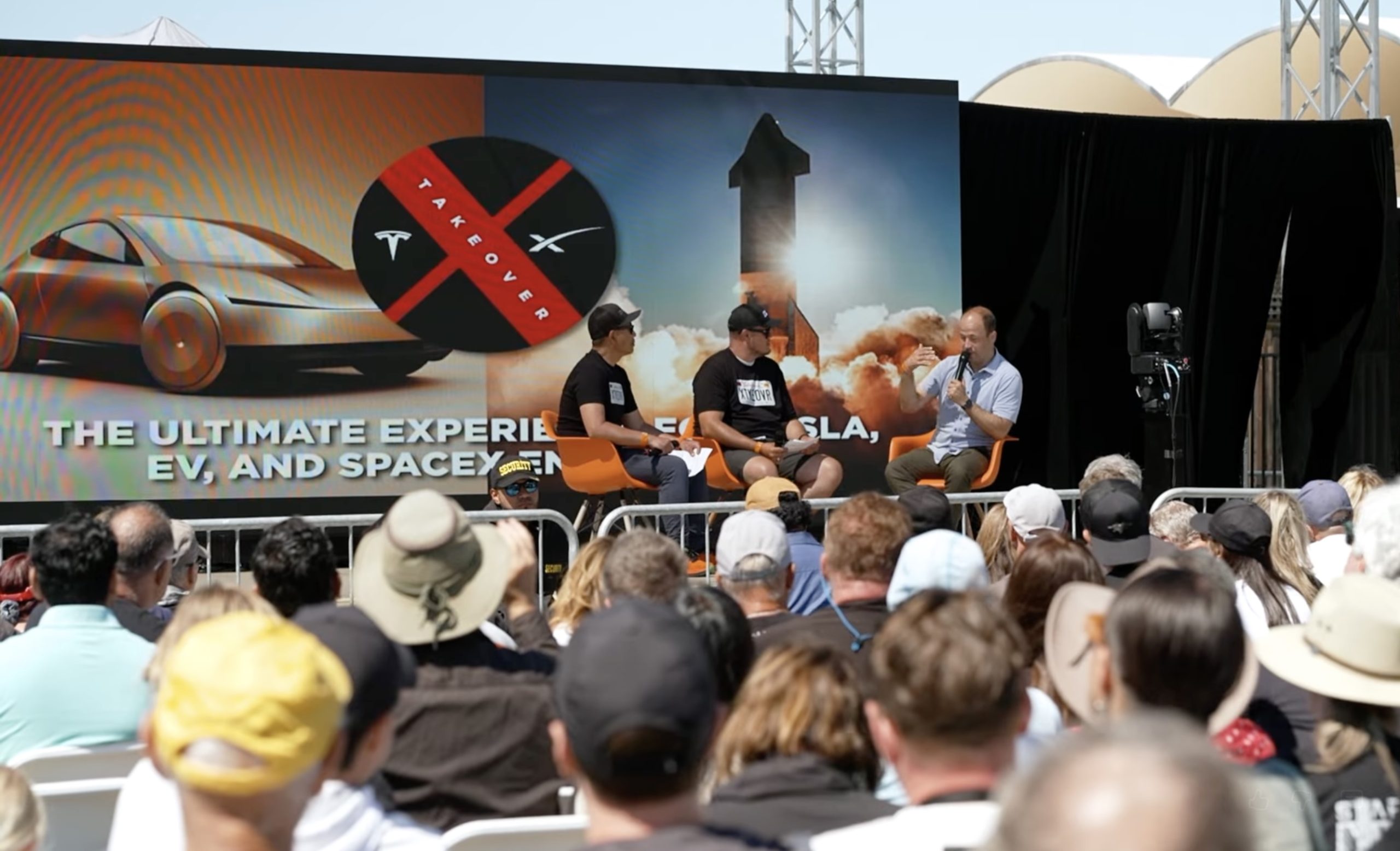
Elon Musk will join X Takeover at Giga Texas on Saturday for a live virtual interview, according to Sawyer Merritt, who shared the news late Thursday. Musk will not be on stage in Austin. The conversation is set to stream for free on the @teslaownersSV account on X.
Organizers had kept expectations in check. In a September update, Tesla Owners Silicon Valley said Musk had appeared at the event twice before but was not promising a third appearance, even as fans hoped he would walk the Giga Texas grounds in person. A virtual spot matches 2024, when Musk gave a surprise interview of about an hour to the crowd in San Luis Obispo, as Teslarati reported at the time.
Wasn’t expecting this 🫡
— Tesla Owners Silicon Valley (@teslaownersSV) October 9, 2026
This year’s edition is a first in several ways. It is the first X Takeover held outside California and the first at a Tesla facility, with tickets selling out in eight days. Tesla provides the venue, but the event is produced independently by Tesla Owners Silicon Valley. The main event runs from 10 a.m. to 6 p.m. CT, followed by a drone and light show at 9 p.m. Maye Musk is the keynote speaker, Franz von Holzhausen is set for a virtual keynote, and Nicki Minaj is the special guest. Joe Tegtmeyer, whose drone footage Teslarati used to track the Optimus factory steel frame at Giga Texas, is also on the speaker list.
Musk’s interview topics have not been revealed, but the backdrop is busy. Tesla doubled its Cybercab fleet in Austin in late September, and last week Musk explained why Robotaxi hours only moved from 10 p.m. to 11 p.m.. Merritt also reported Thursday that Texas DMV records now show 319 registered Cybercabs, up from 169. NHTSA’s deadline for Tesla’s sworn answers on Cybercab certification is October 30, and Tesla reports third quarter earnings on October 21.
Fans who cannot make it to Austin can watch the livestream on X. Musk tends to say more in unscripted settings than he does in prepared remarks, which is the reason this one is worth having open on Saturday.

Tesla’s Cybercab fleet jumped 8x in a month, with Dallas up next

Elon Musk roasts India’s billionaire Mukesh Ambani as Starlink fight heats up

Elon Musk’s surprise addition to the X Takeover lineup has fans talking

The Pentagon taps Elon Musk to design the battlefield of the future

Tesla Roadster’s new patent preps white-knuckle speeds, keeping it grounded


