Elon Musk
The real reason Elon Musk wants every car connected to space
Elon Musk says all cars will eventually need Starlink to handle massive AI bandwidth demand.

Elon Musk is making the case that satellite internet, not fiber or cellular towers, will end up wired into every car on the road. In a string of posts on X, the SpaceX CEO wrote that all cars will have Starlink in the future and called satellite connectivity the only way to get super high bandwidth to billions of vehicles.
The posts started with Musk endorsing a Cloudflare forecast that traffic generated by autonomous AI agents will soon dwarf traffic generated by humans browsing the internet, a shift he described as not a close call at all. From there he narrowed the argument to infrastructure, writing that the only system that can support the insanely fast bandwidth growth needed by AI is Starlink, before extending the logic to cars specifically.
AI agentic Internet traffic will obviously VASTLY exceed human usage. Not a close call at all.
Cloudflare’s forecast is accurate. https://t.co/VztgrinN5k pic.twitter.com/Wo4FiRKjPU
— Elon Musk (@elonmusk) August 9, 2026
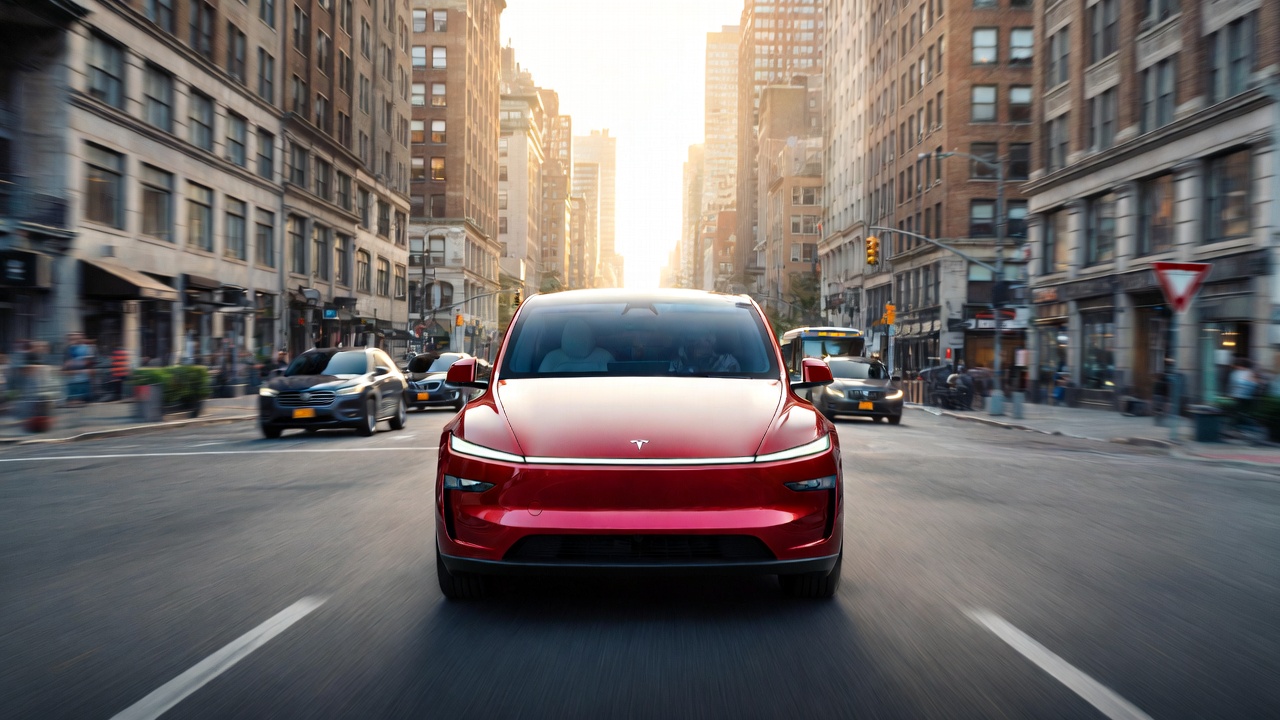
The timing lines up with Tesla’s own hardware decisions. On July 20, Tesla confirmed the Cybercab would ship with a Starlink V5 terminal built into its roof, the first time the company had put satellite hardware in a production vehicle. A day later, Tesla’s head of AI, Ashok Elluswamy, explained the connection wasn’t there for safety and that Cybercab’s driving stack runs entirely on onboard cameras and compute, while the satellite link exists for navigation, customer service, and fleet management instead. Musk followed with his own post about the feature, saying riders would be able to watch 4K streaming video during rides.
By July 22, Musk had already said Starlink would extend beyond Cybercab to Tesla’s full lineup. Sunday’s posts push that same logic outward again, this time framed as a requirement across the industry rather than a feature specific to Tesla, and tied directly to the bandwidth AI systems are expected to consume.
SpaceX’s newest Starmind will make earth data centers obsolete
The AI argument has been building on SpaceX’s side for months. The company has an FCC filing pending for a third generation Starlink constellation, and it has separately proposed Starmind, a constellation of up to a million satellites designed to run AI computation directly in orbit rather than just relay data. Musk has said he expects space to become the cheapest place to deploy AI compute within two to three years. Starlink and Starmind serve different jobs inside that vision, one moving data and the other processing it, but Sunday’s posts treat vehicles as one more category of hardware that will eventually need both.
None of this changes anything for Tesla owners today. Cars already on the road keep running on LTE and Wi-Fi, and Tesla hasn’t outlined a retrofit path for existing vehicles. The July 22 commitment applies to future production, not the fleet already delivered. What Musk added on Sunday is the reasoning: satellite connectivity isn’t a Cybercab novelty, it’s a bet that ground based networks won’t keep up with how much data cars, robots, and AI systems are about to generate.


Elon Musk
Elon Musk roasts India’s billionaire Mukesh Ambani as Starlink fight heats up
Elon Musk sarcastically calls Mukesh Ambani ‘Prime Minister’ as the Starlink India standoff escalates again.
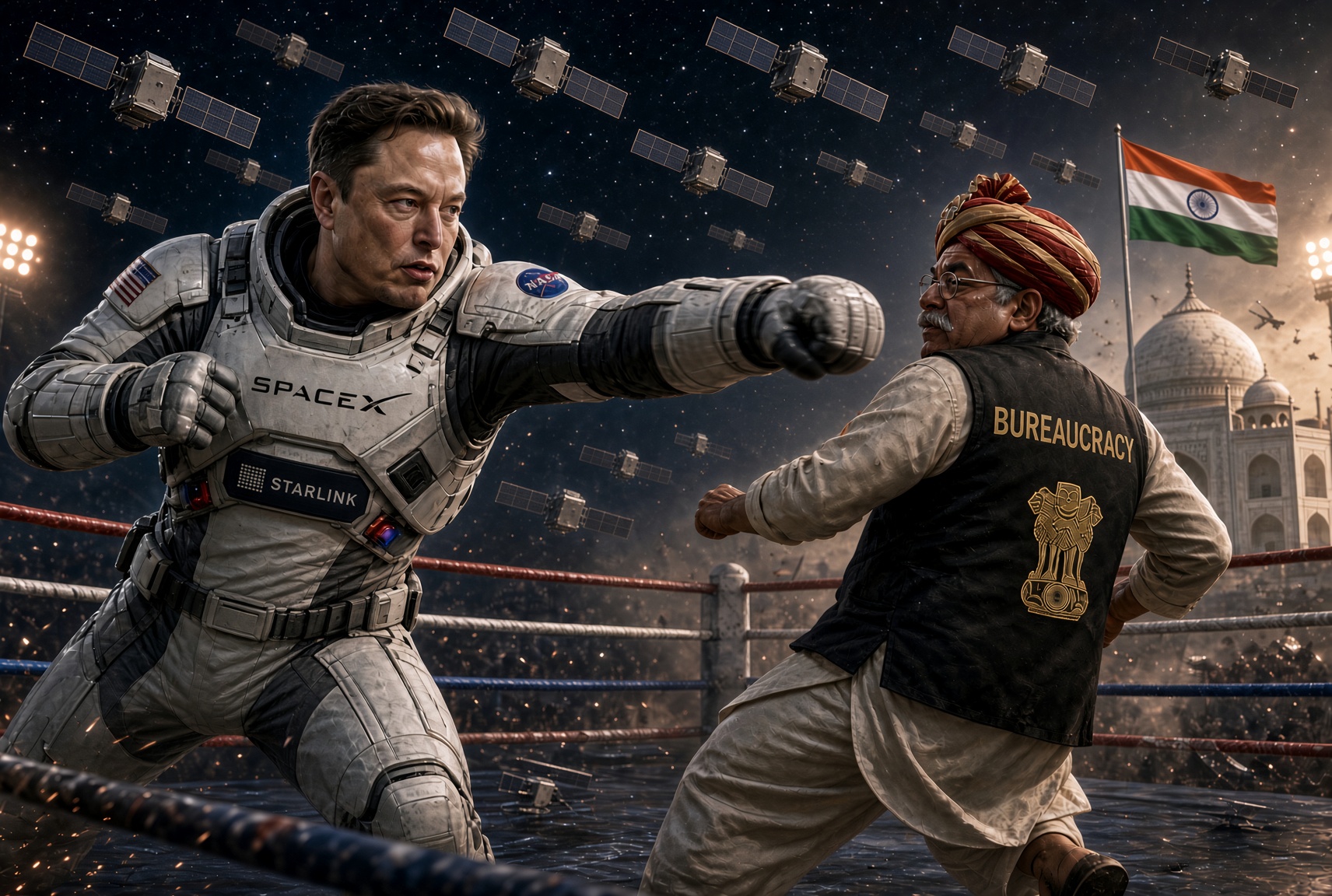
Elon Musk escalated his public fight over Starlink’s launch in India on Friday, addressing Reliance chairman Mukesh Ambani as “Prime Minister Ambani” in a sarcastic post on X. “Please accept my humble apologies for not realizing that you are the real boss of India,” Musk wrote, before accusing Ambani of “monopolistic exploitation” and asking whether he would “consider allowing Starlink to compete.” In follow up posts, he said Starlink has proven essential during natural disasters and would help parts of India with no internet access.
The post came two days into a fight that Musk sparked up on Wednesday, when he said Starlink was “being blocked by certain oligarchs in order to maintain their monopolistic chokehold on the Indian people.” He called it “a crime against the people of India” and left the names out, adding only, “You can guess who they are.” Jio and Airtel together hold more than 80% of India’s telecom market. On Thursday, Musk asked whether Ambani is “the real boss of India” and said Starlink has spent five years complying with “every single law and requirement” of the Indian government.
Dear Prime Minister Ambani,
Please accept my humble apologies for not realizing that you are the real boss of India.
Naturally, you would prefer to maintain your monopolistic exploitation of the great people of India, but would you nonetheless consider allowing Starlink to compete?
There are many areas of India, as there are in all countries, with no Internet access, which denies children the opportunity for education and for small businesses the opportunity to sell their goods to a global market. Starlink would change their lives for the better.
Thank you 🙏
— Elon Musk (@elonmusk) October 9, 2026
India’s government has pushed back each time. The Ministry of Communications called the suggestion that its framework is unfair or discriminatory “baseless and misconceived.” Communications Minister Jyotiraditya Scindia said Friday that three companies hold satcom licenses: Starlink, Jio Satellite Communications, and Bharti backed Eutelsat OneWeb. Amazon’s Kuiper, now Amazon Leo, is still going through the process. None can launch until regulators finalize satellite spectrum pricing and the Home Ministry signs off on each company’s security compliance. Scindia said the telecom regulator and the Department of Telecommunications are close to a decision on pricing, The Hindu reported. Bharti chairman Sunil Mittal also said OneWeb is still waiting on approvals.
Starlink received its operator license in 2025 after a three year wait, and the space regulator IN-SPACe granted what industry executives called the last approval needed in July. The holdup since then centers on security, particularly concern that foreign operators could bypass Indian gateways.
Musk and Ambani have been on opposite sides of this before. In late 2024, Ambani argued for auctioning satellite spectrum, which Musk criticized as out of step with the rest of the world, and India chose administrative allocation instead. By March 2025, the two sides had signed a deal to sell Starlink devices in Reliance stores, and Starlink secured its telecom license that June. That partner is now also a competitor. Jio is reportedly weighing a constellation of 1,600 to 1,650 satellites costing an estimated $10 billion to $15 billion, while Akash Ambani has told shareholders Jio plans to lease capacity from global providers to move quickly.
Elon Musk
Elon Musk’s surprise addition to the X Takeover lineup has fans talking
Elon Musk will join Saturday’s X Takeover at Giga Texas for a live virtual interview.
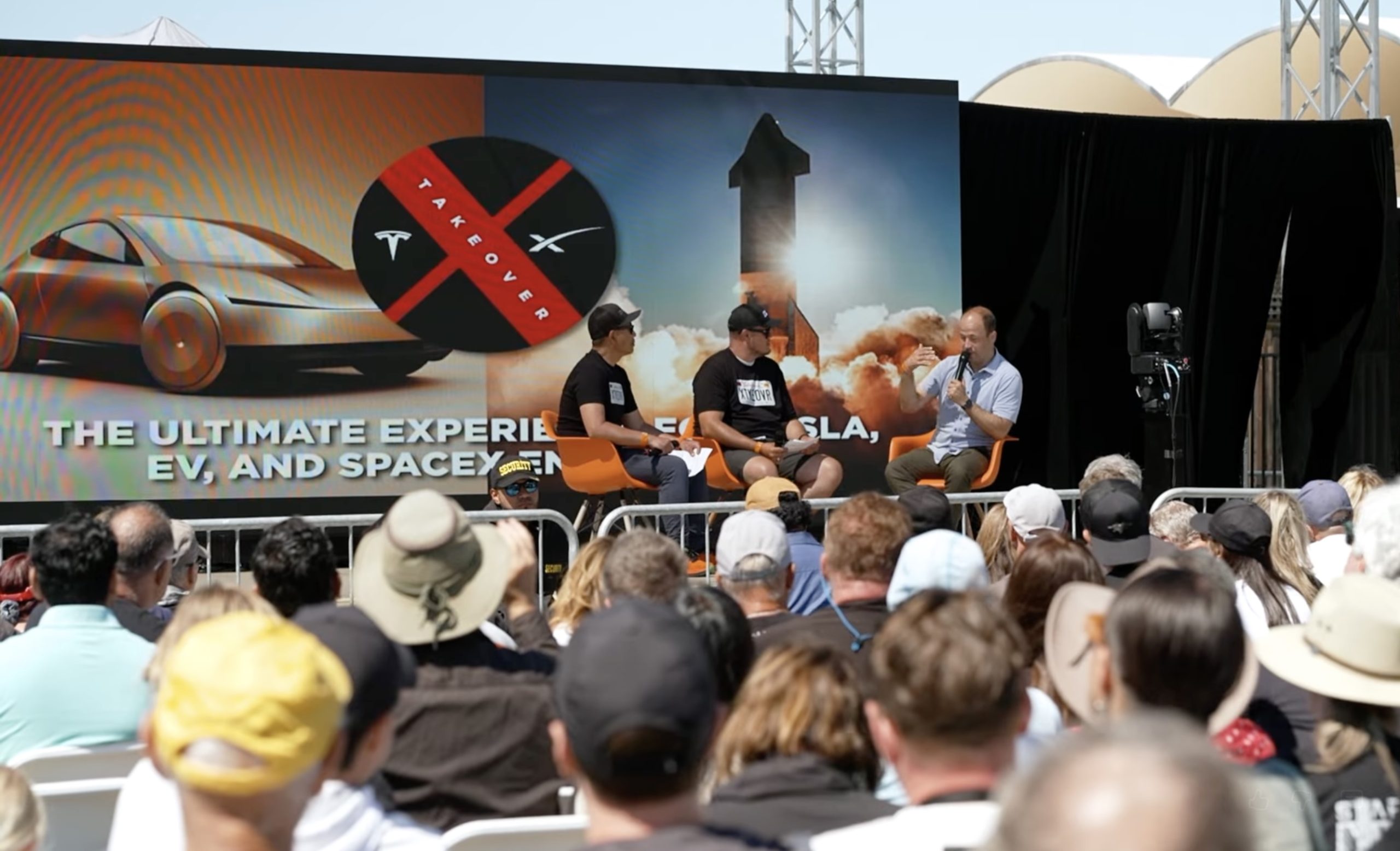
Elon Musk will join X Takeover at Giga Texas on Saturday for a live virtual interview, according to Sawyer Merritt, who shared the news late Thursday. Musk will not be on stage in Austin. The conversation is set to stream for free on the @teslaownersSV account on X.
Organizers had kept expectations in check. In a September update, Tesla Owners Silicon Valley said Musk had appeared at the event twice before but was not promising a third appearance, even as fans hoped he would walk the Giga Texas grounds in person. A virtual spot matches 2024, when Musk gave a surprise interview of about an hour to the crowd in San Luis Obispo, as Teslarati reported at the time.
Wasn’t expecting this 🫡
— Tesla Owners Silicon Valley (@teslaownersSV) October 9, 2026
This year’s edition is a first in several ways. It is the first X Takeover held outside California and the first at a Tesla facility, with tickets selling out in eight days. Tesla provides the venue, but the event is produced independently by Tesla Owners Silicon Valley. The main event runs from 10 a.m. to 6 p.m. CT, followed by a drone and light show at 9 p.m. Maye Musk is the keynote speaker, Franz von Holzhausen is set for a virtual keynote, and Nicki Minaj is the special guest. Joe Tegtmeyer, whose drone footage Teslarati used to track the Optimus factory steel frame at Giga Texas, is also on the speaker list.
Musk’s interview topics have not been revealed, but the backdrop is busy. Tesla doubled its Cybercab fleet in Austin in late September, and last week Musk explained why Robotaxi hours only moved from 10 p.m. to 11 p.m.. Merritt also reported Thursday that Texas DMV records now show 319 registered Cybercabs, up from 169. NHTSA’s deadline for Tesla’s sworn answers on Cybercab certification is October 30, and Tesla reports third quarter earnings on October 21.
Fans who cannot make it to Austin can watch the livestream on X. Musk tends to say more in unscripted settings than he does in prepared remarks, which is the reason this one is worth having open on Saturday.
Elon Musk
Trump presents Elon Musk with National Medal of Science, calls him “modern-day Thomas Edison”
Trump gave Elon Musk the National Medal of Science and compared him to Thomas Edison.
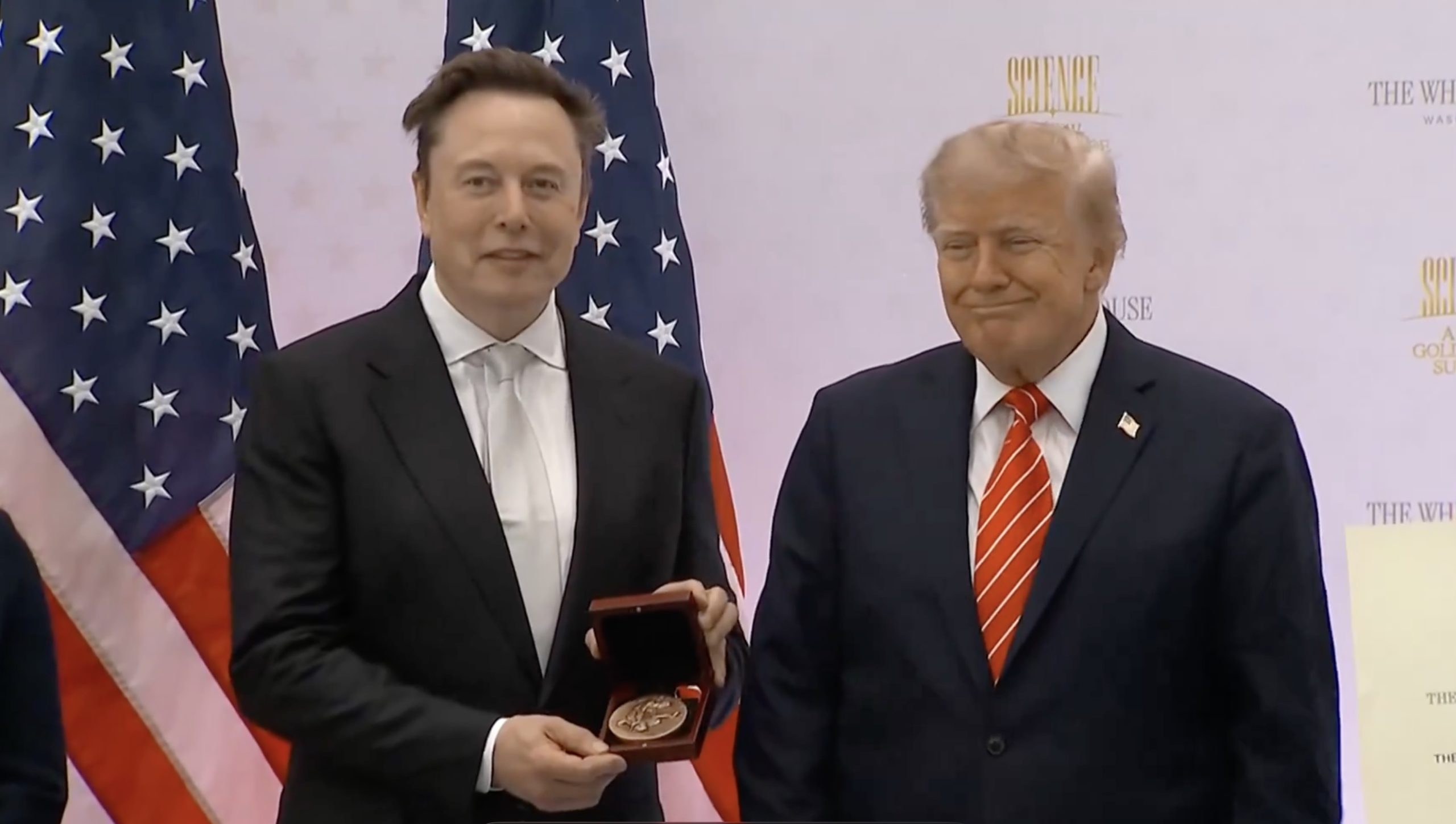
Elon Musk now has the highest honor the U.S. government gives to scientists and engineers. President Donald Trump presented him with the National Medal of Science on Thursday at the White House’s “Science: A New Golden Age” summit, held at the Institute of Peace in Washington, according to the White House.
Trump called Musk a “national treasure” and “our modern-day Thomas Edison.” “Few Americans in history have done more to advance America’s national interest than Elon in one field after another,” the president said. He also described Musk as an “industrial titan, brilliant engineer and one of the greatest technology founders to ever live.”
The official citation credits Musk “for engineering achievements of extraordinary ambition and scale that have pushed the frontiers of space exploration, intelligent systems, communications, and beyond, renewing American technological leadership and opening a new chapter in American manufacturing.” Tesla is not named in it, but “intelligent systems” and “American manufacturing” cover a lot of ground that Tesla and the Terafab chip project occupy.
Google co-founder Sergey Brin, Nvidia CEO Jensen Huang and AMD CEO Lisa Su received the same medal. Microsoft CEO Satya Nadella and Dell Technologies CEO Michael Dell were given the National Medal of Technology and Innovation. It was the first time Trump has handed out either award in his two terms. As Teslarati noted when the list was first reported on Wednesday, the National Science Foundation says 529 people have received the Medal of Science since Congress created it in 1959.
🚨 IT’S OFFICIAL: President Trump just PERSONALLY presented Elon Musk the National Medal of Science for his INCREDIBLE contributions to our nation
I can’t think of ANYONE who deserves this honor more 👏🏻
Congratulations, @elonmusk! https://t.co/GkAaVp9wb9
— Nick Sortor (@nicksortor) October 8, 2026
The ceremony closes a loop that opened in 2025, when Musk left DOGE and criticized the “Big Beautiful Bill,” sparking a public feud. Al Jazeera noted that Musk was the largest contributor to Trump’s 2024 campaign, and CNBC reported that all of the honorees have given financially to Trump or Republican causes in some form. The reconciliation has moved quickly in recent weeks. Musk sat at Trump’s left at the September 29 White House AI lunch, was named to help lead the Pentagon’s Project Meridian study on the future of warfare, and adopted the administration’s “super intelligence” wording when he said SpaceXAI will become SpaceXSI.
For Tesla and SpaceX shareholders, the practical question is what the closer relationship means for federal approvals. Tesla’s Robotaxi and Cybercab expansion depends on national autonomy rules, and SpaceX’s Starship and Starlink plans run through the FAA, FCC and NASA. Thursday’s ceremony did not change any of that directly.

Tesla’s Cybercab fleet jumped 8x in a month, with Dallas up next

Elon Musk roasts India’s billionaire Mukesh Ambani as Starlink fight heats up

Elon Musk’s surprise addition to the X Takeover lineup has fans talking

The Pentagon taps Elon Musk to design the battlefield of the future

Tesla Roadster’s new patent preps white-knuckle speeds, keeping it grounded


