News
Tesla’s Elon Musk shuts the door on Gigafactory Texas talk, but for how long?

George Strait once said that all of his exes live in Texas, and maybe Elon Musk doesn’t want his new electric vehicle facility to be infiltrated by the country music legend’s past lovers.
Just kidding.
While we all patiently wait for Tesla’s CEO to announce the location of its next vehicle production plant, I was pretty sure that Texas had been confirmed as the spot. After seeing some reports, I dug a little deeper and found that the State of Texas had some records, including purchase price agreements, on a plot of land just outside of Austin.
However, when I reported the news, Elon responded and told us at Teslarati that the company had the option to buy the land, but they had not secured a purchase agreement and exercised its right to purchase the property.
I have to admit, I was pretty shocked. I have been following the situation closely for months, and it is pretty evident that Texas certainly has the most advantages. Not to mention, Elon definitely seems to be leaning toward it. He’s been talking about Texas since January, and we’ve already talked about the distinct advantages the state holds over any other location.
However, Musk wasn’t done there. He then added that Tesla was looking at several locations. I’m assuming Tulsa, Oklahoma, is also in the mix considering that has been a location that is very open to taking its oil roots and trading them in for a new electrified infrastructure that will create a string of sustainable transportation production lines in the state.
However, it is really evident that Tesla might be having some second thoughts on the Lone Star State…or are they?
First, let’s consider the details of the land plot in question in Texas. It’s 2,100 acres, its $5.2 million bucks, and its really perfect for what Tesla has wanted. We know that the new factory is set to be the biggest one yet because both Zachary Kirkhorn and Elon said they are going to start calling the factories “Tera” instead of “Giga.”
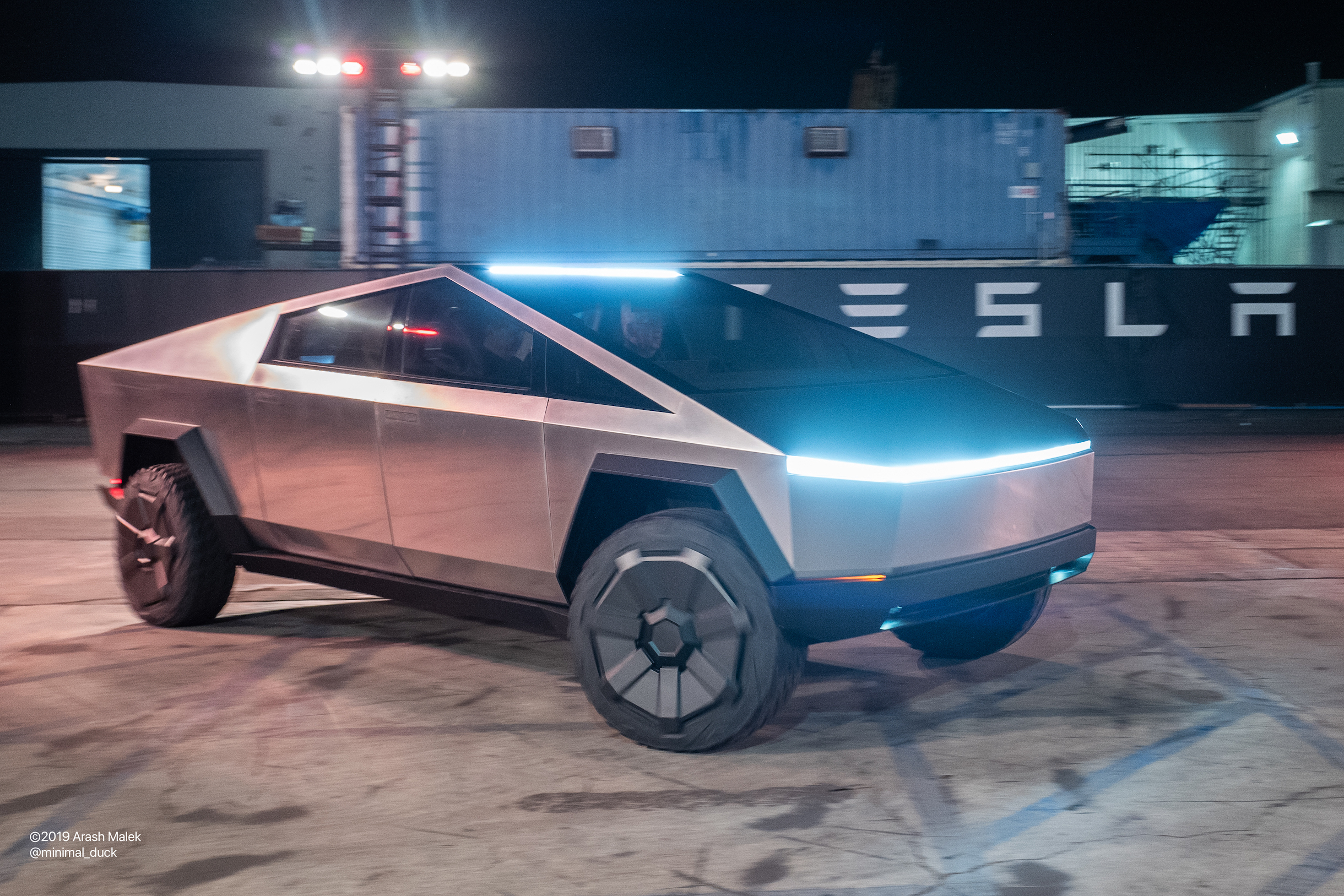
To put the size of the land into perspective, Fremont sits on 370 acres, Giga Shanghai on 210 acres, and Giga Berlin on 740 acres. This means the prospective Texas land plot is nearly three times as big as Giga Berlin, which is the factory that will produce Tesla cars for all of Europe, and it is all going to be used to create the Cybertruck and the Model Y.
We know the demand for the Cybertruck is enormous. The pre-order number is not officially public knowledge. Still, there is some indication that Tesla is getting near three-quarters of a million reservations for the truck and its tough, robust exterior.
This is a preview from our weekly newsletter. Each week I go ‘Beyond the News’ and handcraft a special edition that includes my thoughts on the biggest stories, why it matters, and how it could impact the future.
A big thanks to our long-time supporters and new subscribers! Thank you.
We know that Tesla wants to build the plant in the middle of the country. That could mean anything, from North Dakota to Texas literally, and it could go slightly West to Colorado, and slightly East to Missouri. That’s what is confusing.
Now that there are apparently “several locations” in the mix, the real question is: Why is the Texas deal taking so long? Is Tesla looking to negotiate an even lower price? I decided to dig a little more.
According to Texas A&M University’s “Texas Rural Land Prices” page, where the college has the price of land from Q4 1971 up until Q1 2020, the most recent cost of an acre of property in the state is $2,986. The prospective plot of land where Tesla could build its next factory is 2,100 acres. So the value of the property, according to these statistics, is $6,270,600. According to the application that Tesla and the State of Texas have, the land price that was agreed upon is $5,298,275, giving the company a nearly $1 million discount. It is about a 16% discount according to my handy, dandy calculator.
Texas has also announced its intentions to give the automaker a sweet incentive package to the tune of $68 million, according to reports. That’s a lot of scratch, and it could certainly help with the purchase price, the labor costs of constructing the building, and more.
It is just tough to say why the deal is taking a while. The Cybertruck’s Dual and Tri-Motor variants are going to be produced at the tail-end of 2021, and with Tesla’s track record with the Model Y in the US and the Model 3 in China, they’ll be built well before then. That would give Tesla, if the company started construction in July, 18 months to complete the Cybertruck portion of the factory. Fremont could handle Model Y production until the new factory’s Phase 2 is completed.
I am personally excited to see where the factory ends up, and I really, genuinely think that Texas is where the factory will end up.
Where do you think the factory will be when its all said and done? And why do you think Tesla is kind of dragging its feet through the purchase process?


Elon Musk
Tesla Full Self-Driving’s newest behavior is the perfect answer to aggressive cars
According to a recent video, it now appears the suite will automatically pull over if there is a tailgater on your bumper, the most ideal solution for when a driver is riding your bumper.
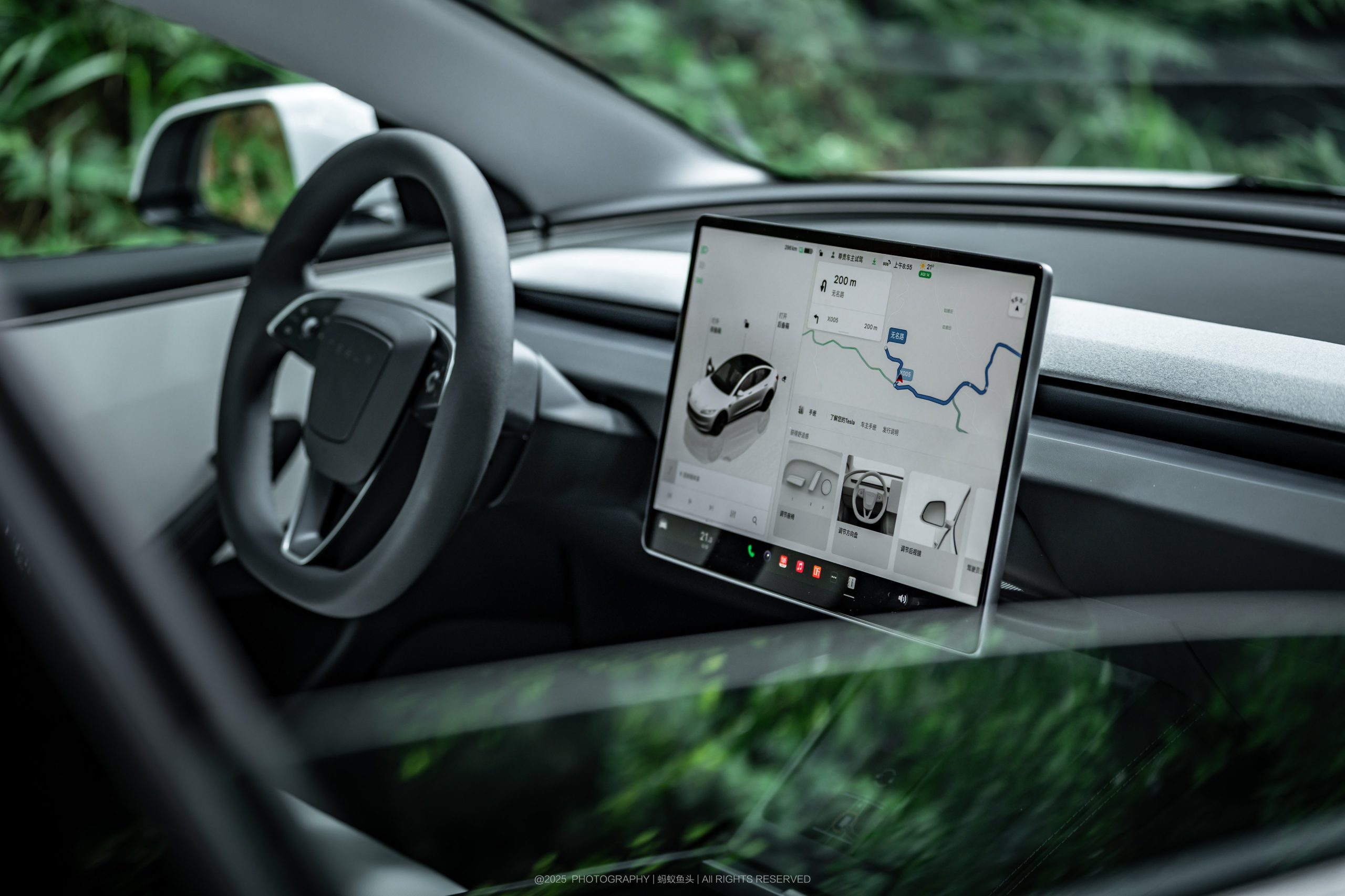
Tesla Full Self-Driving appears to have a new behavior that is the perfect answer to aggressive drivers.
According to a recent video, it now appears the suite will automatically pull over if there is a tailgater on your bumper, the most ideal solution for when a driver is riding your bumper.
With FSD’s constantly-changing Speed Profiles, it seems as if this solution could help eliminate the need to tinker with driving modes from the person in the driver’s seat. This tends to be one of my biggest complaints from FSD at times.
A video posted on X shows a Tesla on Full Self-Driving pulling over to the shoulder on windy, wet roads after another car seemed to be following it quite aggressively. The car looks to have automatically sensed that the vehicle behind it was in a bit of a hurry, so FSD determined that pulling over and letting it by was the best idea:
Tesla appears to be implementing some sort of feature that will now pull over if someone is tailgating you to let the car by
Really cool feature, definitely get a lot of this from those who think they drive race cars
— TESLARATI (@Teslarati) February 26, 2026
We can see from the clip that there was no human intervention to pull over to the side, as the driver’s hands are stationary and never interfere with the turn signal stalk.
This can be used to override some of the decisions FSD makes, and is a great way to get things back on track if the semi-autonomous functionality tries to do something that is either unneeded or not included in the routing on the in-car Nav.
FSD tends to move over for faster traffic on the interstate when there are multiple lanes. On two-lane highways, it will pass slower cars using the left lane. When faster traffic is behind a Tesla on FSD, the vehicle will move back over to the right lane, the correct behavior in a scenario like this.
Perhaps one of my biggest complaints at times with Full Self-Driving, especially from version to version, is how much tinkering Tesla does with Speed Profiles. One minute, they’re suitable for driving on local roads, the next, they’re either too fast or too slow.
When they are too slow, most of us just shift up into a faster setting, but at times, even that’s not enough, see below:
What has happened to Mad Max?
At one point it was going 32 in a 35. Traffic ahead had pulled away considerably https://t.co/bjKvaMVTNX pic.twitter.com/aaZSWmLu5v
— TESLARATI (@Teslarati) January 24, 2026
There are times when it feels like it would be suitable for the car to just pull over and let the vehicle that is traveling behind pass. This, at least up until this point, it appears, was something that required human intervention.
Now, it looks like Tesla is trying to get FSD to a point where it just knows that it should probably get out of the way.
Elon Musk
Tesla Megapack powers $1.1B AI data center project in Brazil
By integrating Tesla’s Megapack systems, the facility will function not only as a major power consumer but also as a grid-supporting asset.

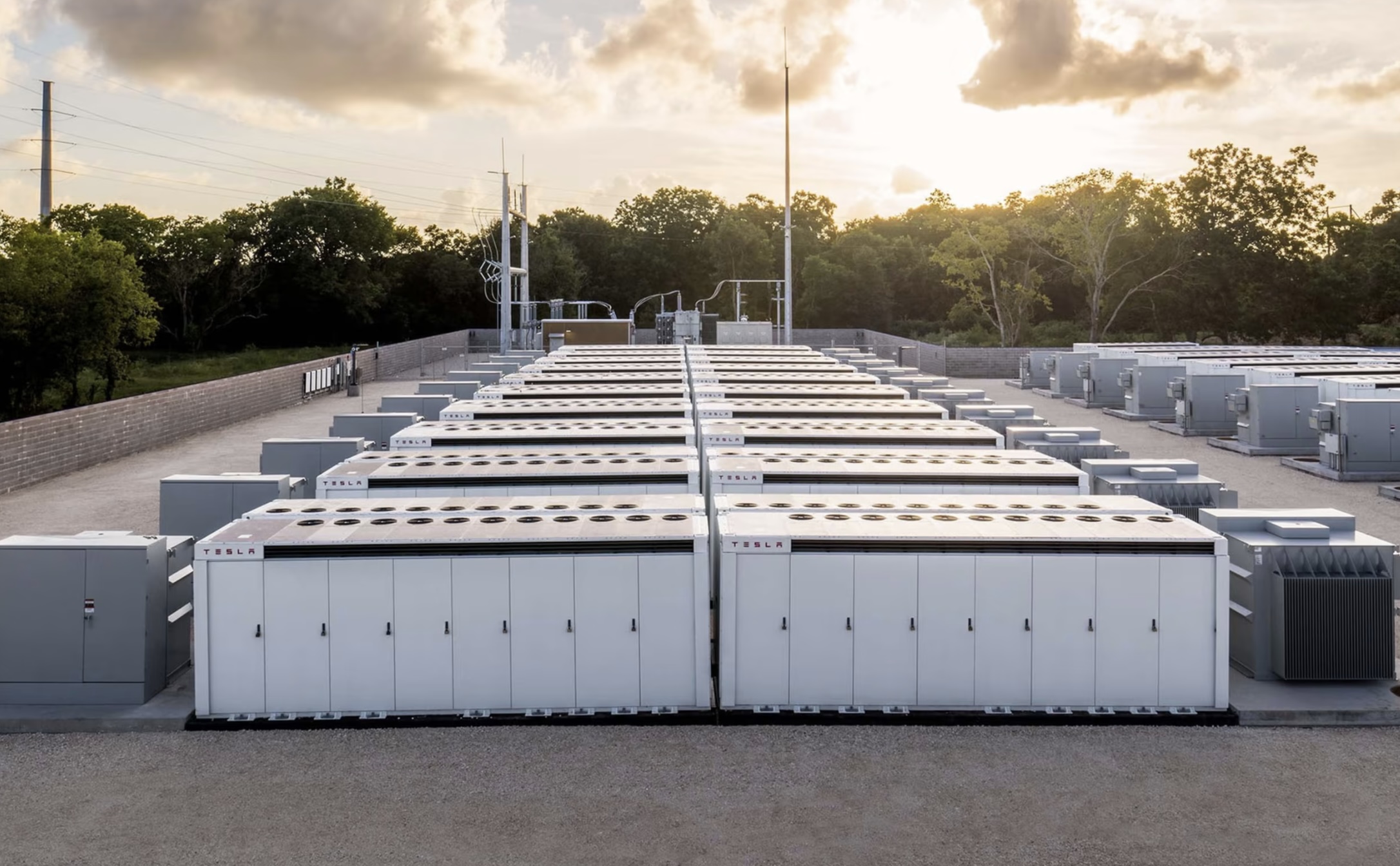
Tesla’s Megapack battery systems will be deployed as part of a 400MW AI data center campus in Uberlândia, Brazil. The initiative is described as one of Latin America’s largest AI infrastructure projects.
The project is being led by RT-One, which confirmed that the facility will integrate Tesla Megapack battery energy storage systems (BESS) as part of a broader industrial alliance that includes Hitachi Energy, Siemens, ABB, HIMOINSA, and Schneider Electric. The project is backed by more than R$6 billion (approximately $1.1 billion) in private capital.
According to RT-One, the data center is designed to operate on 100% renewable energy while also reinforcing regional grid stability.
“Brazil generates abundant energy, particularly from renewable sources such as solar and wind. However, high renewable penetration can create grid stability challenges,” RT-One President Fernando Palamone noted in a post on LinkedIn. “Managing this imbalance is one of the country’s growing infrastructure priorities.”
By integrating Tesla’s Megapack systems, the facility will function not only as a major power consumer but also as a grid-supporting asset.
“The facility will be capable of absorbing excess electricity when supply is high and providing stabilization services when the grid requires additional support. This approach enhances resilience, improves reliability, and contributes to a more efficient use of renewable generation,” Palamone added.
The model mirrors approaches used in energy-intensive regions such as California and Texas, where large battery systems help manage fluctuations tied to renewable energy generation.
The RT-One President recently visited Tesla’s Megafactory in Lathrop, California, where Megapacks are produced, as part of establishing the partnership. He thanked the Tesla team, including Marcel Dall Pai, Nicholas Reale, and Sean Jones, for supporting the collaboration in his LinkedIn post.
Elon Musk
Starlink powers Europe’s first satellite-to-phone service with O2 partnership
The service initially supports text messaging along with apps such as WhatsApp, Facebook Messenger, Google Maps and weather tools.
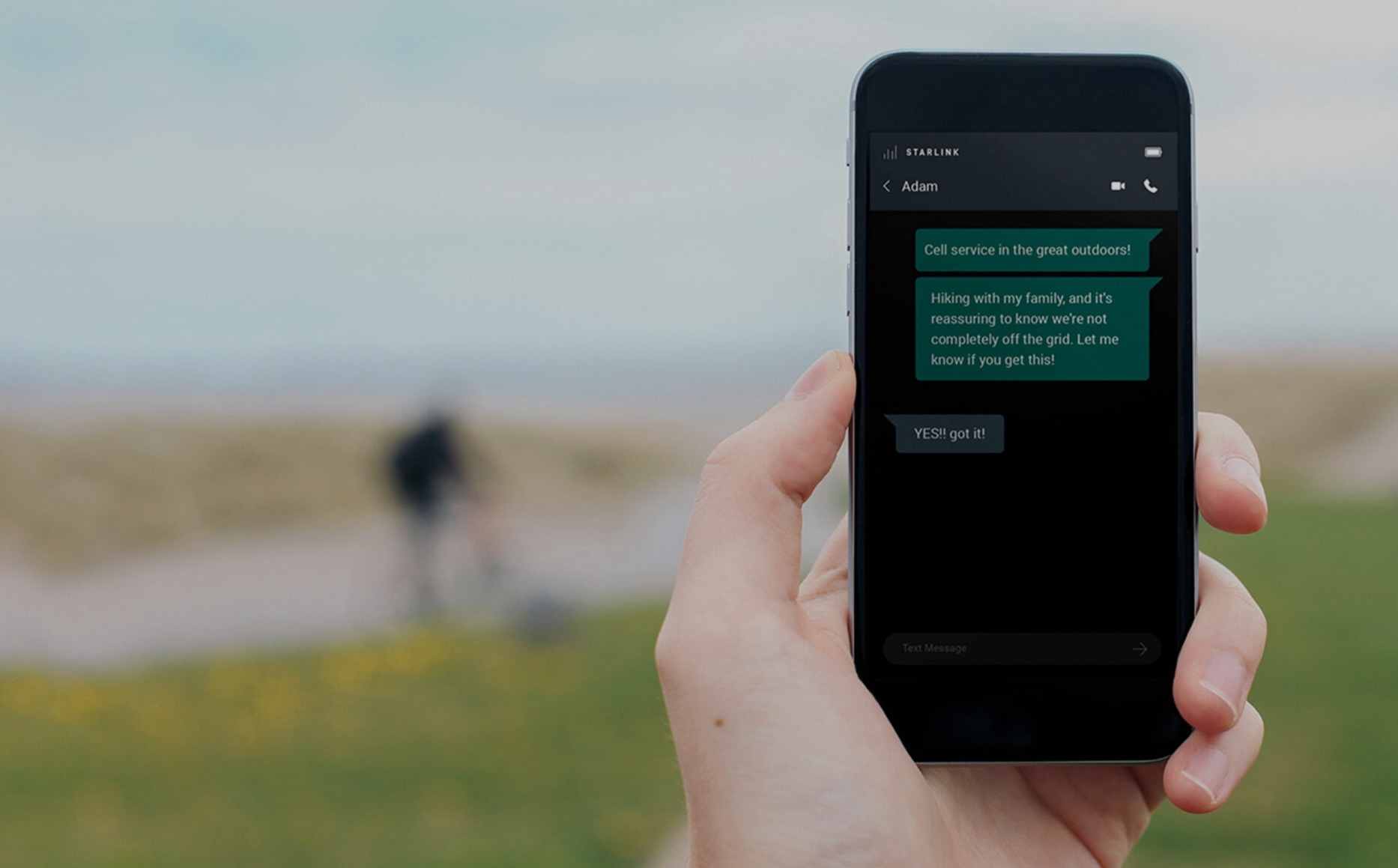
Starlink is now powering Europe’s first commercial satellite-to-smartphone service, as Virgin Media O2 launches a space-based mobile data offering across the UK.
The new O2 Satellite service uses Starlink’s low-Earth orbit network to connect regular smartphones in areas without terrestrial coverage, expanding O2’s reach from 89% to 95% of Britain’s landmass.
Under the rollout, compatible Samsung devices automatically connect to Starlink satellites when users move beyond traditional mobile coverage, according to Reuters.
The service initially supports text messaging along with apps such as WhatsApp, Facebook Messenger, Google Maps and weather tools. O2 is pricing the add-on at £3 per month.
By leveraging Starlink’s satellite infrastructure, O2 can deliver connectivity in remote and rural regions without building additional ground towers. The move represents another step in Starlink’s push beyond fixed broadband and into direct-to-device mobile services.
Virgin Media O2 chief executive Lutz Schuler shared his thoughts about the Starlink partnership. “By launching O2 Satellite, we’ve become the first operator in Europe to launch a space-based mobile data service that, overnight, has brought new mobile coverage to an area around two-thirds the size of Wales for the first time,” he said.
Satellite-based mobile connectivity is gaining traction globally. In the U.S., T-Mobile has launched a similar satellite-to-cell offering. Meanwhile, Vodafone has conducted satellite video call tests through its partnership with AST SpaceMobile last year.
For Starlink, the O2 agreement highlights how its network is increasingly being integrated into national telecom systems, enabling standard smartphones to connect directly to satellites without specialized hardware.

Tesla Full Self-Driving’s newest behavior is the perfect answer to aggressive cars

Tesla Megapack powers $1.1B AI data center project in Brazil


