News
Tesla’s Elon Musk addresses Taycan comparison, confirms +50 hp OTA update for Model S

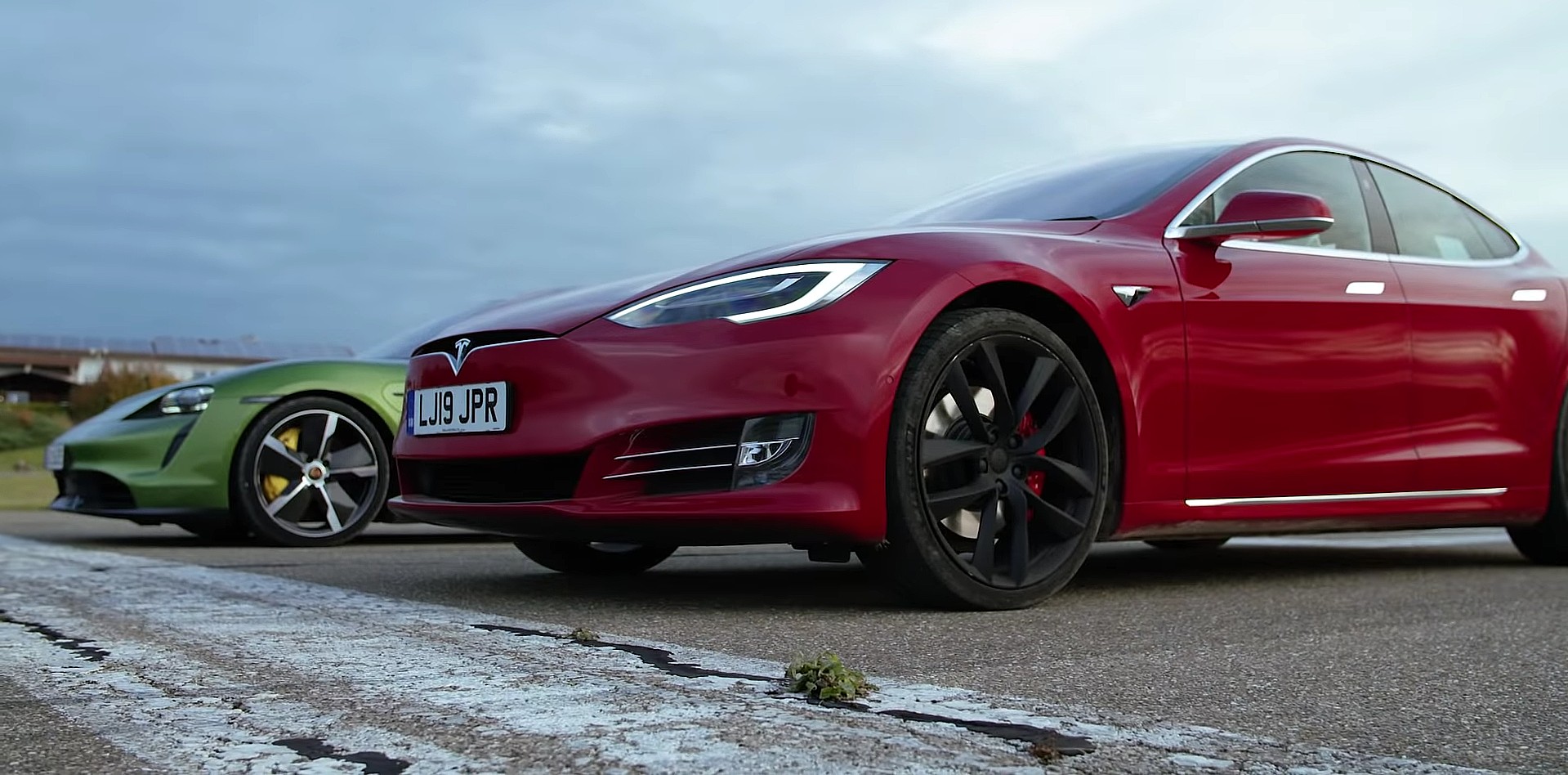
Tesla CEO Elon Musk has provided a response to Top Gear‘s recent test of the Porsche Taycan Turbo S and the Tesla Model S Performance. In a couple of posts on Twitter, Musk noted that the Model S performance figures posted by the motoring publications are incorrect, and that an upcoming over-the-air update will be released for the flagship sedan to give it an additional edge against the top-tier Taycan.
Top Gear‘s Taycan vs Model S comparison was pretty balanced for the most part, with the publication noting that the Tesla is more comfortable for hauling passengers on long trips due to its superior range and large interior space. That being said, Top Gear also included a quarter-mile drag race between the two all-electric sedans, which reportedly ended with the Model S posting a 0-60 mph time of 2.68 seconds, a 0-100 mph of 6.46 seconds, and a quarter-mile time of 11.08 seconds at 124.0 mph.
These times, which were exactly identical to the results of a Model S P100D vs Mercedes AMG E63S drag race from 2017, as well as signs that Top Gear did not engage the Model S’ Launch Mode and full Ludicrous Plus Mode during its race with the Taycan Turbo S, were highlighted in a video by veteran drag racer and DragTimes host Brooks. According to the longtime drag racer, the figures posted by Top Gear were suspicious, to say the least, as it did not reflect the actual capabilities of a Model S performing at optimum capacity.
Musk responded to this comparison, stating that the DragTimes host is indeed correct in his observations. Never one to stand down, Musk also stated that the Model S Performance will be receiving a peak power increase through an upcoming over-the-air update. The update should add 50 hp to the flagship Model S, which should allow the flagship sedan to outrun the Porsche Taycan Turbo S in a 0-60 mph and quarter-mile sprint.
Elon Musk’s recent announcement provides a bit more detail to the upcoming OTA update that is being prepared for the Model S, X, and Model 3. The update was initially mentioned during the company’s third-quarter earnings call, with CEO Elon Musk and CTO Drew Baglino describing the upcoming improvements.
“We’re also expecting there’s going to be an over-the-air improvement that will improve the power of the Model S, X, and 3. That’s, by the way coming in a few weeks. Should be in the order of 5% power improvement due to improved firmware,” Musk said. Baglino added that the improvements are possible as Tesla continues to learn “how to optimize the motor control in our products.”
With Musk’s recent tweets, it appears that Tesla’s upcoming update will give the Model S Performance a 50 hp boost. That’s a 50 hp improvement that will be received by the all-electric sedan through a free over-the-air update. Once the update is fully rolled out, it would be very interesting to see how the Model S Performance stacks up against the Porsche Taycan Turbo S.



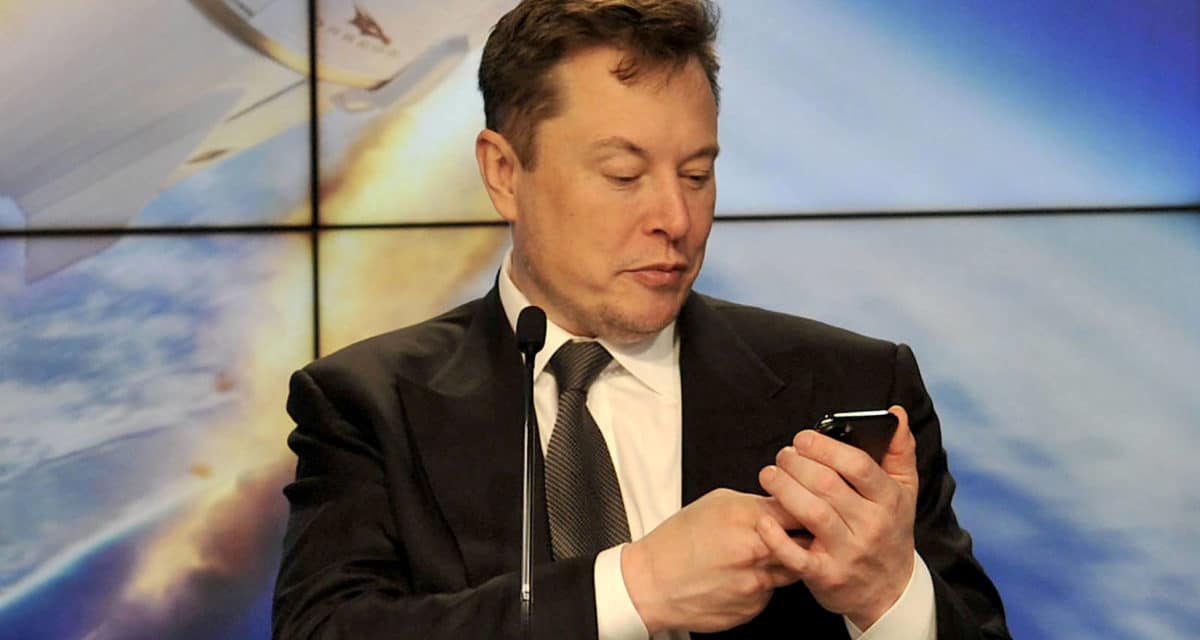
For years, there have been images and videos across social media platforms that have reminded me of when I was a 15-year-old kid teased by “Xbox 720” videos on YouTube. These videos are of the supposed “Tesla Phone” that Elon Musk was secretly developing in between leading Tesla with its electric cars and SpaceX with its reusable rockets.
Would you buy a Tesla phone ? pic.twitter.com/aaTwvvIJit
— Tesla Owners Silicon Valley (@teslaownersSV) October 6, 2023
Although Musk has put those rumors to bed several times, it was never completely out of the realm that he could get involved in cell phones in some capacity. Think outside the box and more macro-level, though. Instead of reinventing the computer, Musk reinvented connectivity by developing Starlink with SpaceX.
It could be something similar, TD Cowen analyst Gregory Williams said in a note last week, where he hinted SpaceX could be gathering some steam to acquire T-Mobile.
Williams said it would be the “clear choice” for SpaceX if it decided to go through with a network acquisition. He also suggested AT&T.
The move would be possible through selling more of its own stock, which would help SpaceX raise the money to purchase T-Mobile, which would cost roughly $300 billion. It could be one of the moves SpaceX makes post-IPO in terms of an acquisition: it already acquired Cursor AI for $60 billion.
Other analysts, like Dan Ives of Wedbush, believe SpaceX and Tesla will eventually merge into one anyway, and that conglomeration could come as soon as this year, some have said.
The implications of SpaceX purchasing T-Mobile are massive. A combined entity would create a truly ubiquitous network: T-Mobile’s terrestrial 5G towers and Starlink’s growing constellation of Direct-to-Cell satellites. This would essentially eliminate dead zones across the U.S. and potentially globally.
SpaceX would instantly become a full-scale facilities-based carrier with satellite differentiation; a huge advantage. This would pressure AT&T and Verizon heavily.
There are also concerns like a potential reduction in long-term competition, and of course, a deal of that size would face intense scrutiny from government agencies.
The strategic fit is compelling due to the existing Starlink–T-Mobile partnership and complementary technologies (space + terrestrial). It could create a dominant integrated communications player. However, the regulatory, financial, and execution hurdles are enormous — this remains highly speculative with no indication SpaceX is actively pursuing it right now.
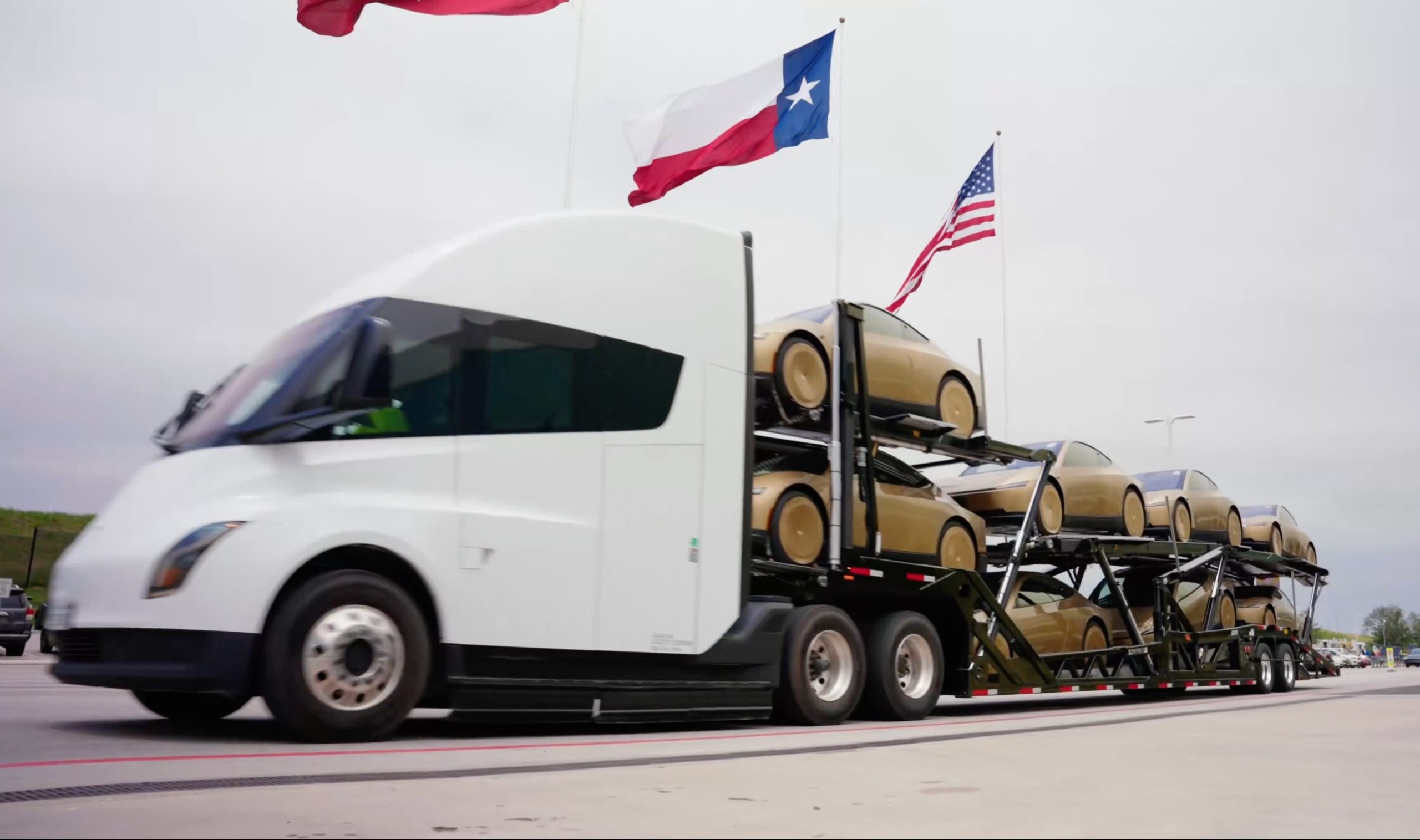
Tesla revealed a major new Cybercab detail in a guide it released for First Responders, showing new territory in its beliefs and intentions for the ride-hailing-focused vehicle that entered production in April.
The First Responders Guide is released to give fire departments, paramedics, and other emergency personnel the proper guidance on what to do in the event of an accident, entrapment, or other situation that would require immediate attention.
On one of the pages of the First Responders Guide, Tesla revealed a stark detail about the Cybercab, which could help personnel enter the vehicle more easily in case of an emergency.
Tesla Cybercab has one important piece that AI4 cars might need for FSD
It shows Tesla has no intention of releasing any Cybercab units that were initially proposed for ride-hailing services for the general public with any manual controls, meaning a steering wheel or pedals:
“A Cybercab equipped with steering wheel, brake pedal, and an acceleration pedal is typically an engineering or test vehicle, and operates at SAE Level 2 autonomy. Cybercab is not typically equipped with a steering wheel or acceleration and brake pedals.”
New official Cybercab documentation from Tesla:
“A Cybercab equipped with steering wheel, brake pedal, and an acceleration pedal is typically an engineering or test vehicle, and operates at SAE Level 2 autonomy. Cybercab is not typically equipped with a steering wheel or… https://t.co/P6ut1mZyzr pic.twitter.com/yq6skl9s2J
— Sawyer Merritt (@SawyerMerritt) June 27, 2026
This is a major development for those who continue to believe Tesla planned to release the Cybercab with any sort of manual controls so that passengers could take over if needed. However, when Tesla started manufacturing production versions of the Cybercab in Giga Texas earlier this year, they were spotted without a steering wheel or pedals.
It essentially confirms the company has no intentions of bringing manual controls to the car’s production versions. Some have argued that the likelihood of Tesla having something
There still are some Cybercab units out there with a steering wheel and pedals, and as Tesla said, these cars are engineering or test vehicles, which have Safety Monitors on board to help the car out of a precarious situation or emergency.
Tesla released the Full Self-Driving v14 ‘Lite’ suite to owners of Hardware 3 or AI3 vehicles today, adding several new features to the vehicles that were once believed to be capable of unsupervised self-driving.
Now, Tesla has released this modified suite to older Tesla vehicles, adding plenty of new features and capabilities.
Here are the full release notes for the suite:
- Distilled the intelligence from HW4 V14 into HW3. This allows HW3 to directly learn how to handle scenarios using HW4 V14 as a guide. This process unlocks the improvements that have been made to HW4 including Reinforcement Learning (RL) and offline models for HW3.
- Improved both proactive and reactive responsiveness across a wide variety of categories including navigation handling, merges and forks, pedestrian interactions, traffic lights, and vehicle cut-in scenarios.
- Improved general comfort in nominal scenarios through fewer false slowdowns, smoother steering and more consistent lane centering.
- Introduced parking, unparking, and reversing capabilities.
- Added Arrival Options for you to select where FSD should park: in a Parking Lot, on the Street, in a Driveway, or at the Curbside.
- Speed Profiles are now available at all times, to further customize driving style preference.
These improvements, according to Tesla’s Head of AI, Ashok Elluswamy, help distill the driving behavior from AI4’s v14 series into both the camera and compute configurations of AI3.
Tesla Full Self-Driving v14 ‘Lite’ for older cars finally gets released
He added:
“It includes destination options and speed profiles on city roads, but more importantly significantly improved safety. We hope you’ll enjoy it, once the build ships wide.”
FSD v14 Lite is now rolling out to AI3 early-access customers. Based on the feedback, will rollout to more customers over the next few weeks.
This build distills the driving behavior from AI4’s v14 series into both the camera and compute config of AI3. It includes destination…
— Ashok Elluswamy (@aelluswamy) June 29, 2026
Tesla will continue to roll out the v14 Lite suite more widely in the coming weeks, the company said.

Tesla Phone? Not quite, but close: analyst

Tesla reveals huge Cybercab detail in new guide for First Responders


