Elon Musk
Tesla engineer explains why Elon Musk deserves new pay package
“When Elon is motivated, it also motivates us, especially in this fork of humanity. I would not be staying in Tesla this long unless he is still leading.”

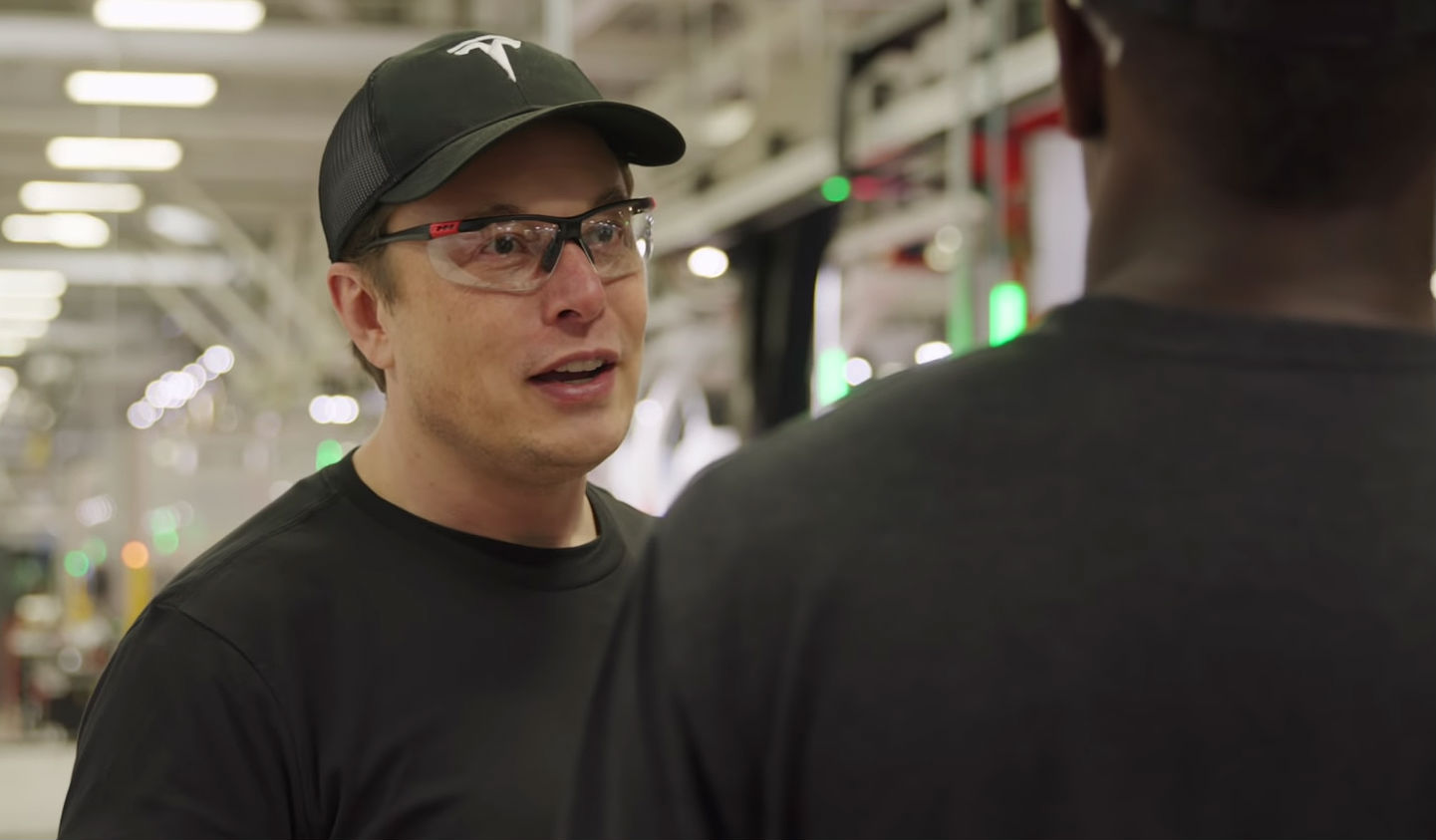
A Tesla engineer took to X to explain why he believes Elon Musk deserved the new 96 million share, $29 billion pay package that the company awarded to him yesterday.
Yun-Ta Tsai, a Senior Staff Engineer in the Autopilot program at Tesla, has worked at the company for five years. He has been in his current position for two years and three months.
Tesla rewards CEO Elon Musk with massive, restricted stock package
Tsai posted a lengthy statement in response to Tesla announcing its new pay package for Musk, which the company’s Board of Directors announced yesterday. He was fully in support of his boss getting paid, especially considering Musk “came to work every day” without being paid for eight years.
Tsai said:
“8 years without pay, but Elon still came to work everyday despite hitting all the milestones.
Most founders, even being paid much better, would simply abandon ships or being “zucked”.
I often joked my annual comp was higher than Elon but it was true.
When Elon is motivated, it also motivates us, especially in this fork of humanity. I would not be staying in Tesla this long unless he is still leading.
Hopefully Elon gets his first paycheck soon after 8 years of grinding in hell. It is time.”
It’s no secret that Musk has the reputation of someone who is incredibly driven, motivated, and determined to come through on his personal and professional goals. In times of need at the company, Musk sleeps at the office and works seven days a week.
Recently, it came to the surface that he nearly missed his brother’s wedding years ago because of work.
8 years without pay, but Elon still came to work everyday despite hitting all the milestones.
Most founders, even being paid much better, would simply abandon ships or being “zucked”.
I often joked my annual comp was higher than Elon but it was true.
When Elon is motivated,… https://t.co/zboBpiMH4u
— Yun-Ta Tsai (@YunTaTsai1) August 4, 2025
Musk’s attitude toward work is what has made Tesla, SpaceX, Neuralink, and other entities so successful.
Musk’s new pay package
Tesla announced the new pay package for Musk yesterday, under the following terms:
- 96 million restricted shares of stock, subject to Elon paying a purchase price upon meeting a two-year vesting term, to be delivered after receipt of antitrust regulatory approval
- The purchase price will be equal to the split-adjusted exercise price of the stock options awarded to Elon under the 2018 CEO Performance Award ($23.34 per share)
- A requirement that Elon serve continuously in a senior leadership role at Tesla during the two-year vesting term
- A pledging allowance to cover tax payments or the purchase price
- A mandatory holding period of five years from the grant date, except to cover tax payments or the purchase price (with any sales for such purposes to be conducted through an orderly disposition in coordination with Tesla); and
- If the Delaware courts fully reinstate the 2018 CEO Performance Award, this interim award will be forfeited or returned or a portion of the 2018 CEO Performance Award will be forfeited. To put it simply, there cannot be any “double dip.” Elon will not be able to keep this new award in addition to the options he will be awarded under the 2018 CEO Performance Award, should the courts rule in our favor
The board added a statement that said it believed now would be an ideal time “to take decisive action to recognize the extraordinary value that Elon created for Tesla shareholders.”


Elon Musk
Elon Musk’s Boring Co. Tunnel Vision Challenge ends with a surprise for Louisiana, Maryland and Dallas
The Boring Company stunned three cities today, awarding New Orleans, Baltimore, and Dallas free underground Loop tunnels.

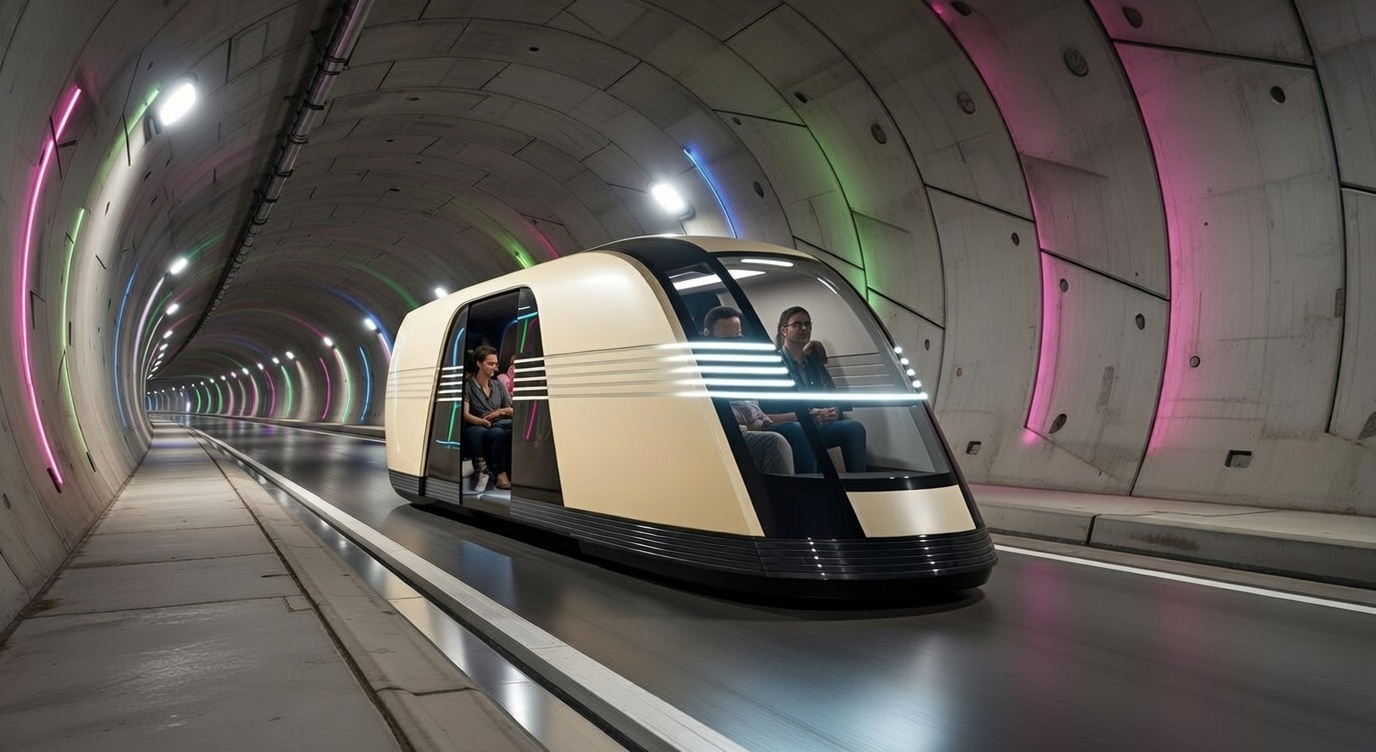
Elon Musk’s The Boring Company (TBC) announced today that it is building free underground Loop tunnels in three American cities: New Orleans, Louisiana; Baltimore, Maryland; and Dallas, Texas. The company had promised one winner when it launched the Tunnel Vision Challenge in January. After receiving 487 submissions, it selected three, committing to fund and construct all of them pending a feasibility review, entirely at its own expense. For a company that has faced years of skepticism over the gap between its promises and its delivered projects, choosing to expand its commitment rather than narrow it is a notable shift in both scale and accountability.
All three projects will now enter a rigorous, fully funded diligence phase that includes meetings with elected officials, regulators, community and business leaders, geotechnical borings, and a complete investigation of subsurface utilities and infrastructure. TBC confirmed that all costs associated with this diligence process are 100% funded by the company. If all three projects pass feasibility, all three get built. If only one clears the bar, that one gets built. The company’s willingness to fund the due diligence regardless of outcome removes one of the most common early-stage barriers that kills promising infrastructure proposals before they leave a spreadsheet.
Beyond the three winners, TBC announced it will continue working with two additional entrants it found compelling enough to pursue independently: the Hendersonville Utility Tunnel in Hendersonville, Tennessee, and the Morgan’s Wonderland Tunnel in San Antonio, Texas, which would notably serve one of the nation’s premier theme parks built specifically for guests with special needs.
The challenge also coincides with TBC’s most active construction period to date. The company recently began drilling on the Music City Loop near the Tennessee State Capitol in Nashville, and in February it broke ground on a Loop in Dubai. Musk has long argued that the fundamental problem with urban infrastructure is cost and bureaucratic inertia, not engineering. “The key to solving traffic is making going 3D either up or down,” he said in 2018, a conviction now reflected in a company structure built to absorb the financial risk that typically stalls public projects for years.
Music City Loop could highlight The Boring Company’s real disruption
The Tunnel Vision Challenge’s most underappreciated element may be what it produced beyond three winners. Submissions came from individuals, companies, and governments across states including Alaska, Arkansas, Colorado, Kansas, Louisiana, Maryland, New York, and Texas, as well as from international entrants. Musk captured the underlying logic years ago when he said, “Traffic is driving me nuts. I’m going to build a tunnel boring machine and just start digging.” Today, three American cities are counting on exactly that.
Tunnel Vision Challenge results!
We’ve been overwhelmed with the amazing submissions…so we are announcing three winners!
The Thrilling Three are:
– NOLA Loop (New Orleans, LA)
– Ravens Loop (Baltimore, MD)
– University Hills Loop (Dallas, TX)What happens next? TBC and the… https://t.co/cY2ULftfiK
— The Boring Company (@boringcompany) March 24, 2026
Elon Musk
Tesla reveals various improvements to the Semi in new piece with Jay Leno
Tesla Chief Designer Franz von Holzhausen and Semi Program Director Dan Priestley joined Leno in a 47-minute segment revealing all of the various things it did to make the Semi even better as it heads toward volume production this year.
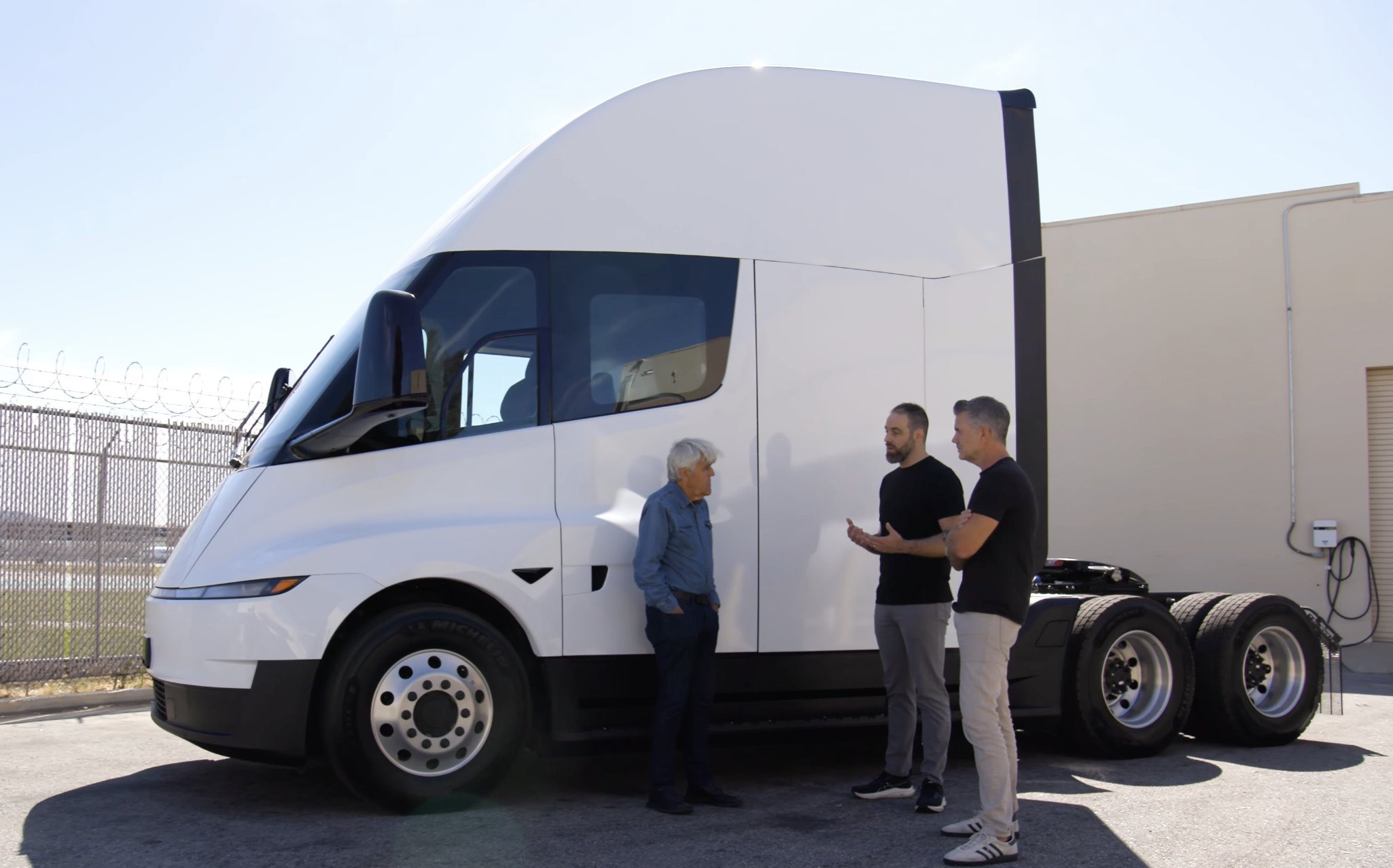
Tesla has revealed the various improvements it has made to the Semi with its redesign, which was unveiled late last year, on a new episode of Jay Leno’s Garage.
Tesla Chief Designer Franz von Holzhausen and Semi Program Director Dan Priestley joined Leno in a 47-minute segment revealing all of the various things it did to make the Semi even better as it heads toward volume production this year.
Last year, Tesla revealed it had updated the Semi design to fit the bill of its aesthetic, which, on its other vehicles, includes things like lightbars and a sleeker and more aerodynamic design. The changes were not all to appease the eye, but the drivers who will use the Semi on a daily basis to haul goods regionally as the program gets off the ground running.
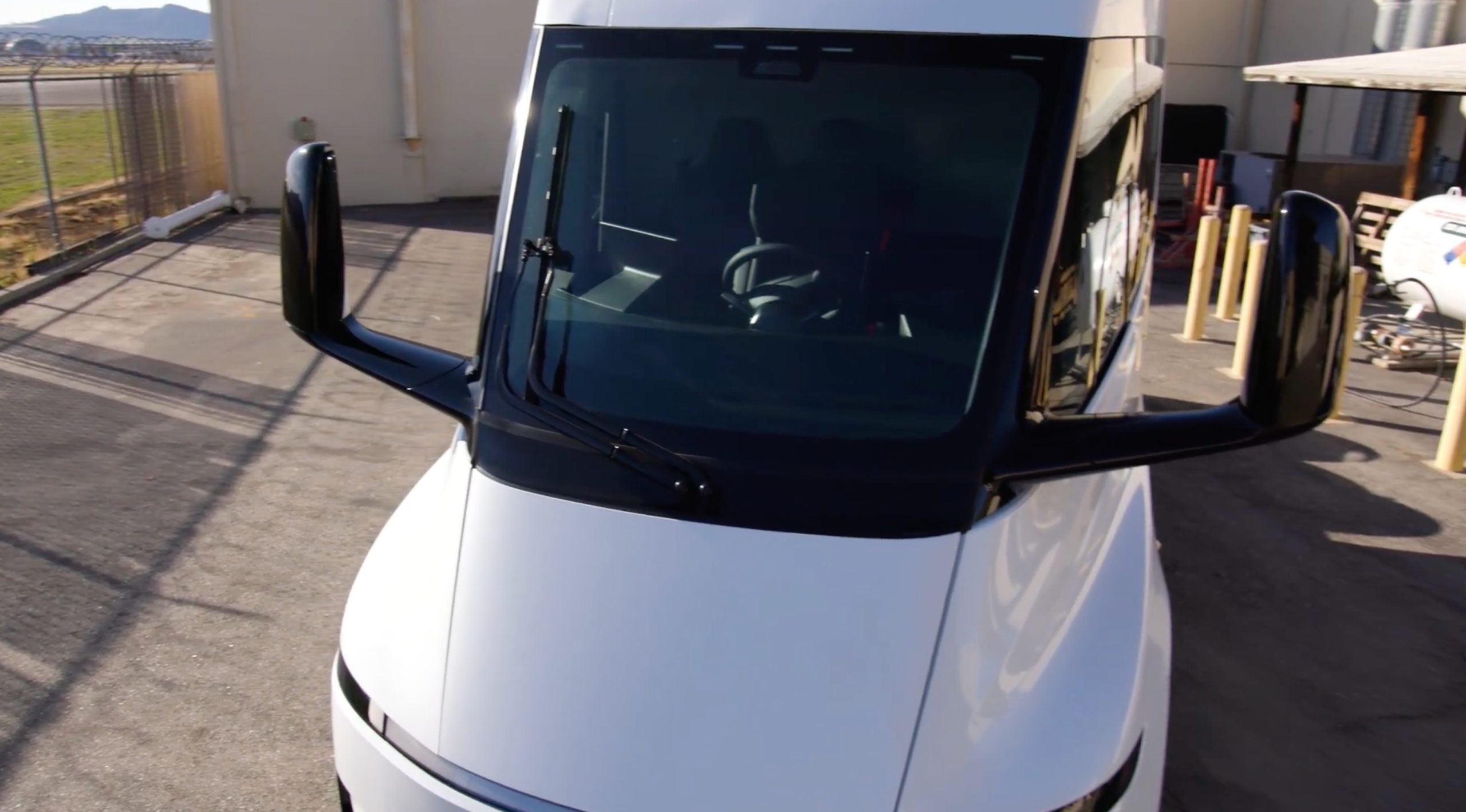
Weight Reduction
Priestley revealed almost immediately that Tesla was able to cut out about 1,000 pounds of weight from the Semi compared to the previous version.
This does several things, all of which are positive to the mission of a Class 8 truck, which is to haul goods and obtain more efficient travel to cut down on logistics costs.
Initially, this can increase payload capacity, which is often the biggest value driver for fleets that frequently hit gross vehicle weight limits. Tesla’s early Pilot Program members, like PepsiCo. and Frito-Lay, are large-scale companies. They will benefit from a decreased overall weight.
Lighter vehicles also require less energy to accelerate, climb hills, and maintain highway speeds. This new design has that advantage, and as Leno said in his first drive with the Semi as he hauled another unit behind, “I don’t feel like I’m pulling anything.”
Drag Coefficient
Franz said one of the goals of the Semi was to get the drag coefficient down below that of a Bugatti Veyron. This would increase efficiency tremendously, a major need with a large truck like a Semi.
Drag coefficient is extremely valuable when it comes to electric vehicles, because the displacement of air is incredibly important for range ratings.
Franz said aerodynamic efficiency has been improved by 7 percent compared to the last model. He says the coefficient is around 0.4.
New Features and Improvements
Priestley shed some additional light on the Semi and some of the improvements the company has made under the hood.
These include:
- Fully Electric Steering Assist
- Cybertruck actuators are being used for more strength
- Tesla included a 48-volt architecture
- Semi will utilize 4680 battery cells, which are designed to last 1 million miles
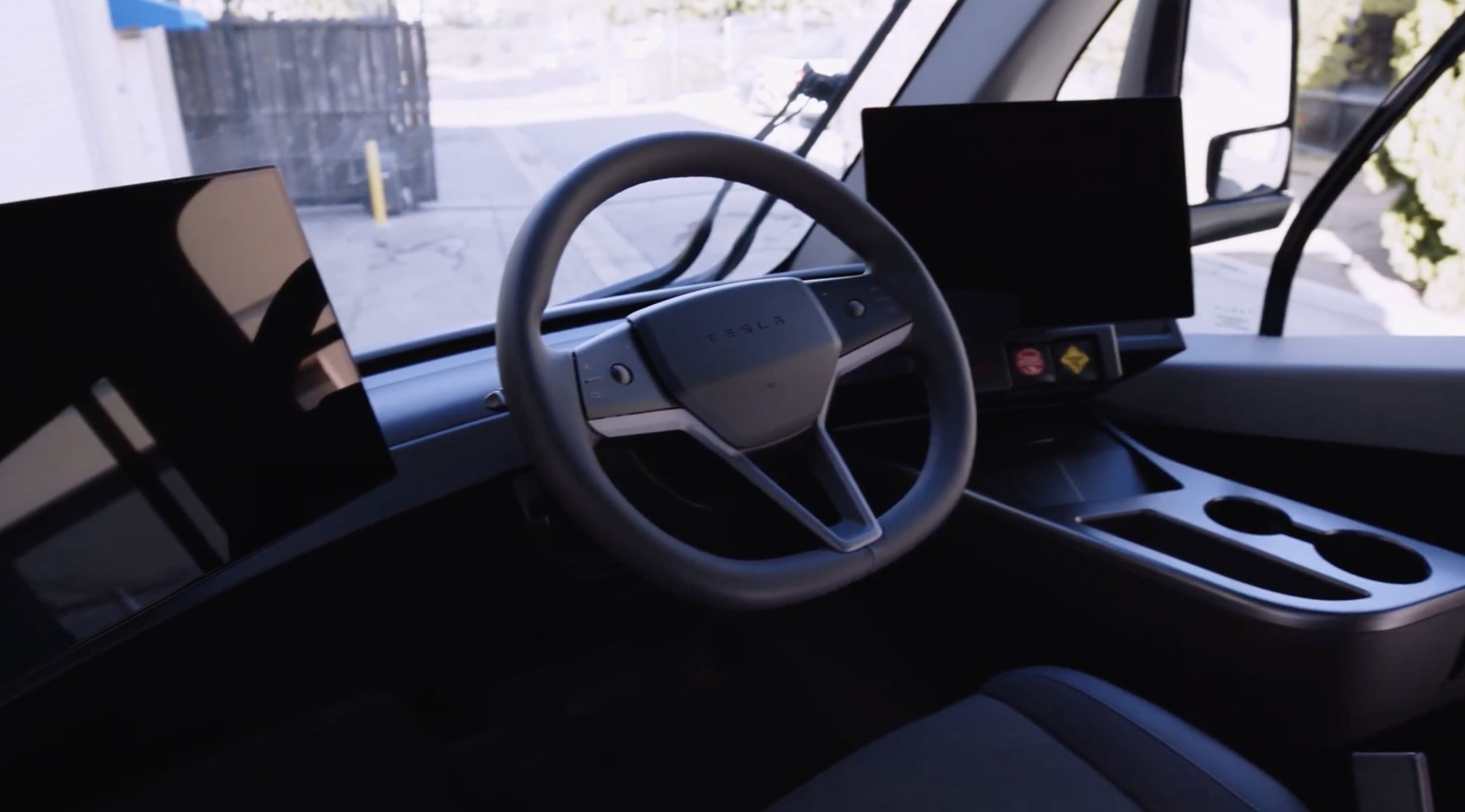
These changes come after Tesla rolled out the Semi to various companies for its Pilot Program, which yielded tremendous results. Due to the years it has been working with those companies, it knew what things it had to change and what it had to improve upon before selling the Semi openly.
Fleet Data
The fleet data Tesla has gathered from the Pilot Program has been one of the most widely discussed parts of the Semi program.
Franz and Priestley said that there are currently a few hundred Semi units in the real world, and Tesla has gathered 13.5 million miles. One of those units has traveled over 440,000 miles in the years it has been on the road.
Tesla Semi’s latest adoptee will likely encourage more of the same
Pilot Program members have reported an uptime of 95 percent, and Tesla’s maintenance and Service teams have kept things running:
“80% of breakdowns if you have one, are returned back to the customer in less than 24 hours, and half are back in less than 1 hour.”
Demand
Priestley says demand for the Semi has never been higher, and due to the recent political climate and the impact things have had on gas prices, Tesla has never received more inquiries for the Semi than it has recently.
Many companies will be surprised to hear that the Semi Pilot Program has been an overwhelming success. As Tesla begins to build out the infrastructure for the vehicle, it will only benefit the all-electric Class 8 trucks that keep things moving.
CEO Elon Musk said Tesla plans to start high-volume production this year. The company also plans to start deliveries this year.
Elon Musk
Elon Musk’s TERAFAB project: Everything you need to know
The CEO has hinted heavily for several quarters that it would probably need to produce its own computing power to stay up to speed on the demand it is facing for its projects. It is now taking matters into its own hands.
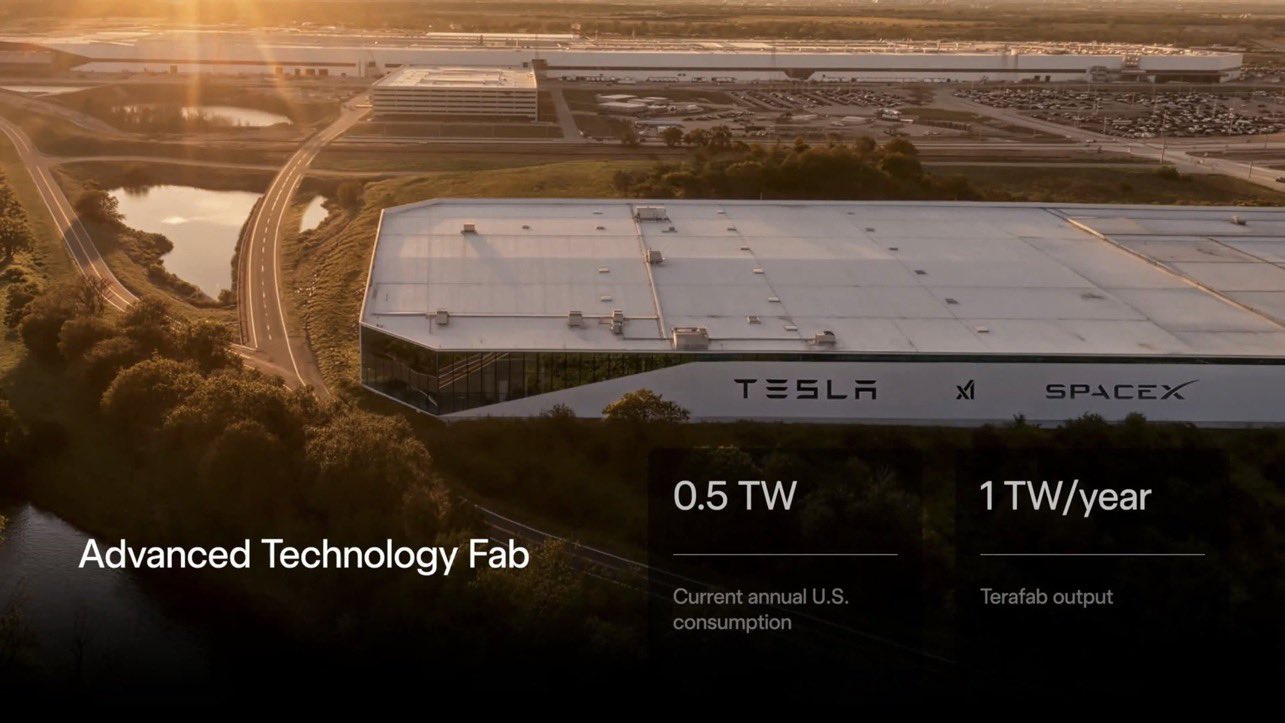
On Sunday, Elon Musk formally made TERAFAB official—a groundbreaking $20-25 billion joint venture uniting Tesla, SpaceX, and xAI, three of the world’s richest man’s most significant and powerful ventures.
Musk described the project as “the most epic chip building exercise in history by far.”
Elon Musk launches TERAFAB: The $25B Tesla-SpaceXAI chip factory that will rewire the AI industry
The initiative aims to produce over one terawatt of AI compute annually, dwarfing the global industry’s current output of roughly 20 gigawatts per year. Musk framed the effort as “the next step towards becoming a galactic civilization,” positioning it as essential for scaling humanity into a multi-planetary species.
The Need for TERAFAB
Existing chip suppliers such as TSMC, Samsung, and Micron cannot expand quickly enough to meet the explosive demand for AI hardware.
We’re building TERAFAB to close the gap between today’s chip production & the future’s demand – a future among the stars.
Join us → https://t.co/512DIlqNgY pic.twitter.com/ATr0e0pRDJ
— SpaceX (@SpaceX) March 22, 2026
Musk explained the situation clearly:
“We’re very grateful to our existing supply chain… but there’s a maximum rate at which they’re comfortable expanding. We either build the Terafab or we don’t have the chips, and we need the chips, so we build the Terafab.”
The CEO has hinted heavily for several quarters that it would probably need to produce its own computing power to stay up to speed on the demand it is facing for its projects. It is now taking matters into its own hands.
Chip Types and Production Goals
The facility will manufacture two specialized chip families, according to the presentation:
- Edge-inference AI5 and AI6 processors optimized for Tesla’s Optimus humanoid robots and Full Self-Driving systems in vehicles and Robotaxis
- High-power D3 chips hardened for space environments
Musk outlined annual output targets, which are between 100 and 200 gigawatts of terrestrial compute for robotics, supporting Musk’s vision of producing 1-10 billion Optimus units per year, and the majority (80%) of chips dedicated to orbital AI data centers. Overall, TERAFAB aims to produce 100-200 billion custom AI and memory chips each year.
Scale and Strategy
The size of the TERAFAB project will be remarkable, as Musk indicated after the presentation that the entire Gigafactory Texas campus would not be large enough to fit the needs of the project. In fact, Musk said it would be around 100 million square feet in size, the equivalent of 15 Pentagons or three Central Parks.
Yes, the one in New York City.
Construction will begin with an “advanced technology fab” on the Giga Texas campus in Austin, enabling rapid iteration: design a chip, fabricate lithography masks, produce and test wafers, all within days.
However, the full-scale TERAFAB requires thousands of acres and over 10 gigawatts of power, far exceeding what Giga Texas can accommodate. Musk stated:
“We couldn’t possibly fit the Terafab on the GigaTexas campus. It will be far bigger than everything else combined there.”
Multiple large sites are currently under consideration, but this will need a sprawling land mass to get started.
The sheer scale of TERAFAB is going to be insane.
Elon said it wouldn’t be suitable for anywhere on Giga Texas property because it’s too big:
“We couldn’t possibly fit the Terafab on the GigaTexas campus. It will be far bigger than everything else combined there.
Several… pic.twitter.com/79GbhNNuf4
— TESLARATI (@Teslarati) March 23, 2026
Key Applications
TERAFAB will be a crucial part of the development of some of Tesla’s most valuable projects, including Optimus and data center development, especially from an orbital standpoint. For that reason, we will break this down into Terrestrial and Orbital applications:
- Terrestrial: Powers autonomous vehicle fleets and billions of Optimus robots performing physical labor
- Orbital: Starship will launch massive AI satellite constellations, starting with 100-kilowatt “Mini” units, and scaling to larger Megawatt models, creating the world’s largest data center in low-Earth orbit.
Space-based advantages include five times greater solar irradiance, efficient vacuum heat rejection, and freedom from terrestrial grid constraints (U.S. electricity generation totals just 0.5 terawatts). Musk emphasized the principle:
“Quantity has a quality all its own.”
We wrote about SpaceX’s recent filing with the FCC for 1 million orbital data center plans.
Strategic Vision
TERAFAB represents vertical integration at an unprecedented scale, combining AI hardware, robotics, and orbital infrastructure.
Musk described the project as “the final missing piece of the puzzle.” With production ramping toward 2027, TERAFAB is set to accelerate an era of abundance, transforming science fiction into reality and positioning Musk’s companies at the forefront of galactic-scale innovation.

Tesla officially begins sunset of Model S and Model X

Tesla shows off mysterious vehicle at Giga Texas

Tesla Cybertruck just won a rare and elusive crash safety honor

What is Digital Optimus? The new Tesla and xAI project explained

Elon Musk launches TERAFAB: The $25B Tesla-SpaceXAI chip factory that will rewire the AI industry


