News
Tesla’s Elon Musk shares FSD Beta rollout strategy, V10.2 release date

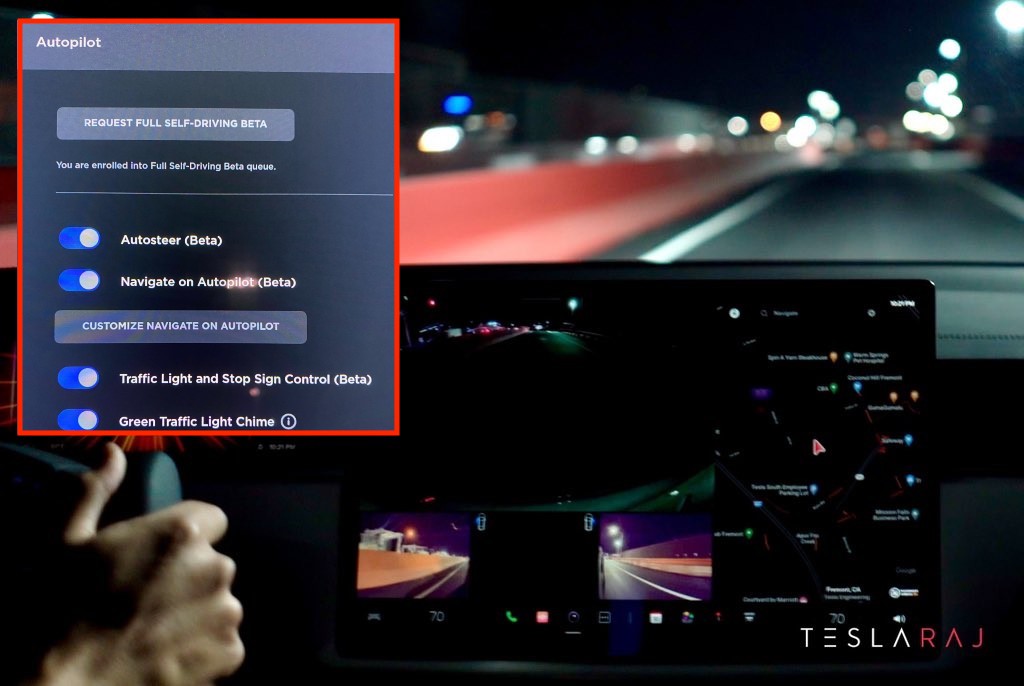
Tesla officially released its long-awaited request Full Self-Driving Beta button a few days ago. Elon Musk also clarified how Tesla plans to roll out the FSD Beta button to drivers, while explaining how the Safety Score system will be used.
Elon Musk explained via Twitter that drivers seeking eligibility to use Tesla’s FSD Beta button will need high scores in the Safety Score system.
“First few days probably 100/100, then 99, 98, etc.,” Musk replied when asked the minimum score drivers needed to access the FSD Beta button.
Many Tesla critics were up in arms after the EV maker released the FSD Beta button, citing safety concerns. The same critics seemed to misunderstand the merits of Tesla’s new Safety Score system and how it is designed to keep the FSD Beta program as safe as possible.
For instance, US Senator Richard Blumenthal claimed that “Tesla is putting untrained drivers on public roads as testers for their misleadingly-name, unproven system—a seeming recipe for disaster.”
Blumenthal’s claim missed that Tesla has released the FSD Beta button with extreme caution, as evidenced by the Safety Score system. Many drivers would want to participate in Tesla’s FSD Beta program, but the Safety Score system sets a clear prerequisite for those who wish to join.
Musk said in his recent tweet that a driver would need a perfect score to be eligible for the FSD Beta program. And according to drivers, getting 100/100 is extremely difficult. Since the FSD Beta program began, Tesla has always erred on the side of caution. There are no signs that Tesla will start doing otherwise anytime soon.
Musk stated that FSD Beta V10.2 would be released a week from this Friday. After V10.2 is released, Tesla plans to ramp access to the FSD Beta button by ~1000 owners per day, prioritized by the safety rating.
The Teslarati team would appreciate hearing from you. If you have any tips, reach out to me at maria@teslarati.com or via Twitter @Writer_01001101.


Elon Musk
Tesla Terafab set for launch: Inside the $20B AI chip factory that will reshape the auto industry
Tesla set to launch “Terafab Project: A vertically integrated chip fabrication effort combining logic processing, memory, and advanced packaging.

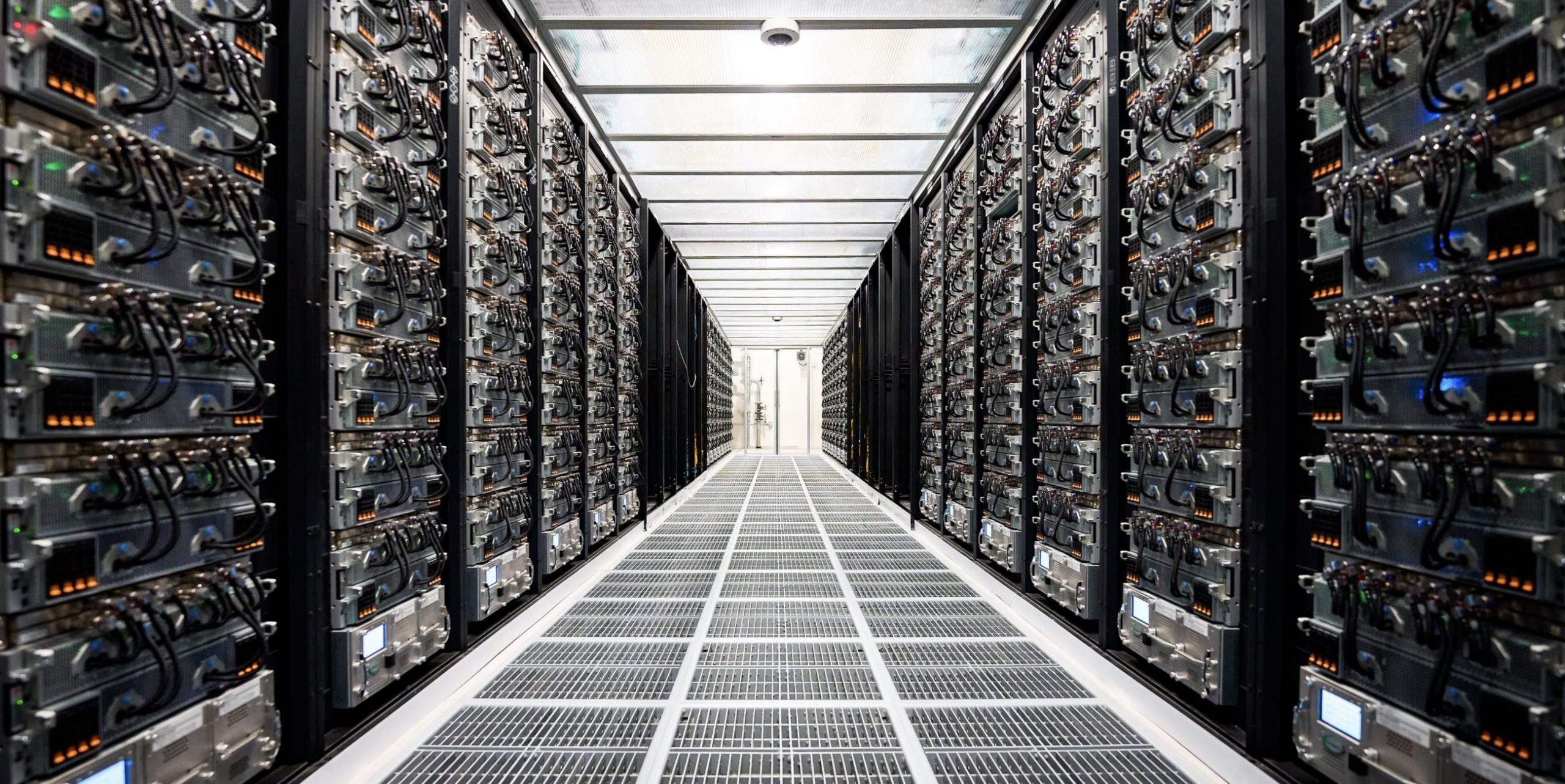
Tesla is making one of the boldest bets in its history. On March 14, Elon Musk posted on X that the “Terafab Project launches in 7 days,” pointing to March 21, 2026 as the start date for what he has described as a vertically integrated chip fabrication effort combining logic processing, memory, and advanced packaging.
Tesla first confirmed Terafab on its January 28, 2026 earnings call, where Musk told investors the company needs to build a chip fabrication facility to avoid a supply constraint projected to materialize within three to four years. But the seeds were planted even earlier. At Tesla’s annual general meeting last year, Musk warned that even in the best-case scenario for chip production from their suppliers, it still wouldn’t be enough, and declared that building a “gigantic chip fab” simply had to be done.
While there has been no official announcement on where Tesla plans to break ground on the massive Terafab, all signs point to the North Campus of Giga Texas in Austin.
Months of speculation has surrounded Tesla’s North Campus expansion at Giga Texas, where drone footage captured by observer Joe Tegtmeyer revealed massive construction site preparation just north of the existing factory on a scale that rivals the original Giga Texas footprint itself.
Samsung’s Tesla AI5/AI6 chip factory to start key equipment tests in March: report
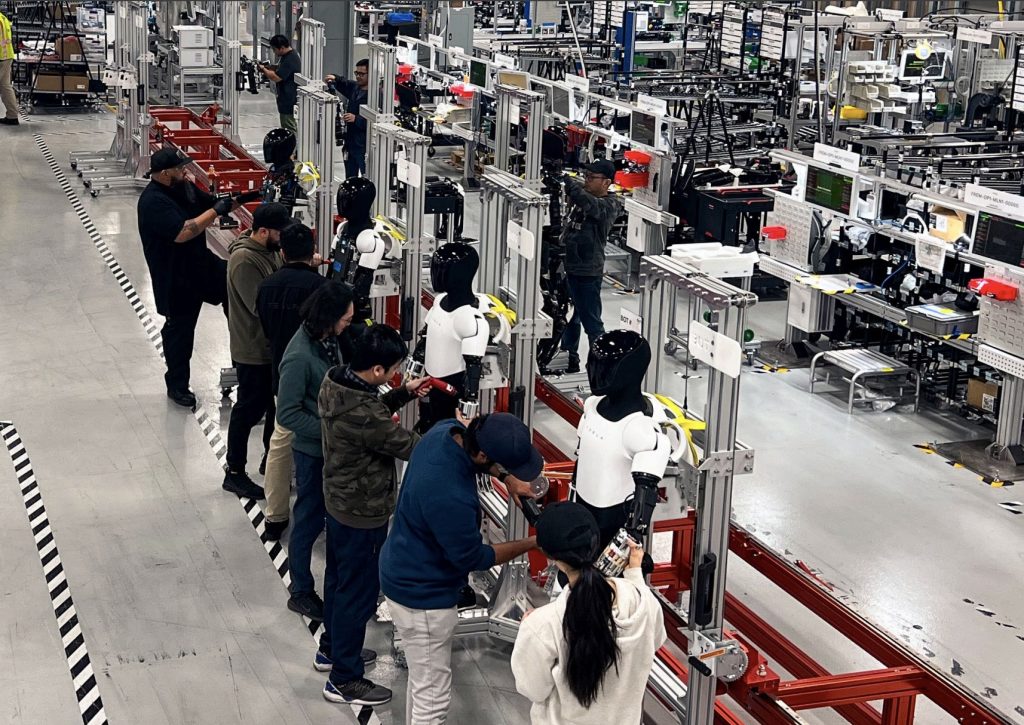
The project is projected to produce 100–200 billion AI and memory chips annually, targeting 100,000 wafer starts per month, at an estimated cost of $20 billion. Tesla is targeting 2-nanometre process technology and anticipated to be the most advanced node currently in commercial production. Dubbed the Tesla AI5 chip, the chip will pack 40x–50x more compute performance and 9x more memory than AI4, and will be among the first products Terafab factory is set to produce. This highly optimized, and massively powerful inference chip is designed to make full self-driving (FSD) and Tesla’s Optimus robots faster, safer, and with full autonomy.
(Credit: Tesla)
This is where Terafab becomes a genuine game-changer. If Tesla successfully builds a 2nm chip fab at scale, it becomes one of only a handful of entities that’s capable of producing AI silicon in-house, with competitive implications that extend far beyond Tesla’s own vehicles, and potentially positioning Tesla as a chip supplier or licensor to other industries.
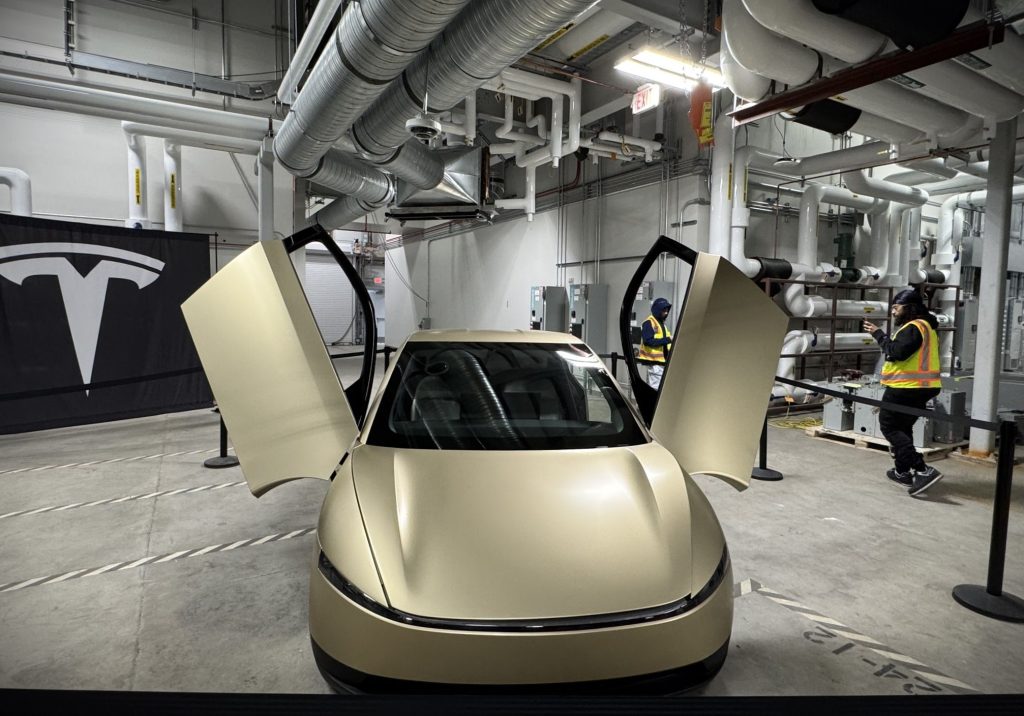
Credit: @serobinsonjr/X
The next-gen Tesla AI chips will power advancements in Full Self-Driving software, the Cybercab Robotaxi program, and the Optimus humanoid robot line. Musk’s projections for Optimus require chip volumes that no existing external supplier can commit to on Tesla’s timeline.Competitors like Waymo and GM’s Cruise remain dependent on third-party silicon, leaving them exposed to the same supply chain vulnerabilities Tesla is now working to eliminate entirely.
The Terafab launch this week may not mean a factory opens its doors overnight, but it signals Tesla is serious about owning the entire AI stack, from software to silicon.
Elon Musk
What is Digital Optimus? The new Tesla and xAI project explained
At its core, Digital Optimus operates through a dual-process architecture inspired by human cognition.

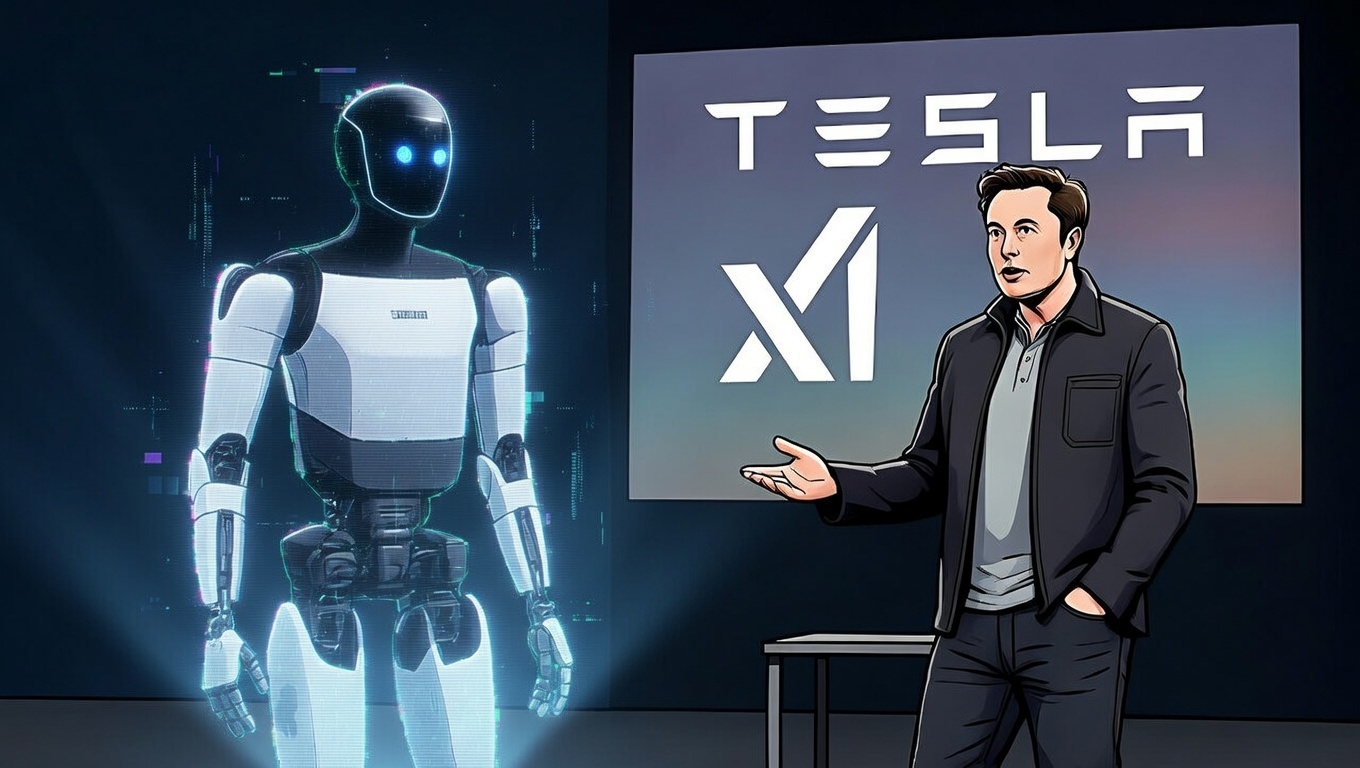
Tesla and xAI announced their groundbreaking joint project, Digital Optimus, also nicknamed “Macrohard” in a humorous jab at Microsoft, earlier this week.
This software-based AI agent is designed to automate complex office workflows by observing and replicating human interactions with computers. As the first major outcome of Tesla’s $2 billion investment in xAI, it represents a powerful fusion of hardware efficiency and advanced reasoning.
At its core, Digital Optimus operates through a dual-process architecture inspired by human cognition.
Macrohard or Digital Optimus is a joint xAI-Tesla project, coming as part of Tesla’s investment agreement with xAI.
Grok is the master conductor/navigator with deep understanding of the world to direct digital Optimus, which is processing and actioning the past 5 secs of…
— Elon Musk (@elonmusk) March 11, 2026
Tesla’s specialized AI acts as “System 1”—the fast, instinctive executor—processing the past five seconds of real-time computer screen video along with keyboard and mouse actions to perform immediate tasks.
xAI’s Grok model serves as “System 2,” the strategic “master conductor” or navigator, providing high-level reasoning, world understanding, and directional oversight, much like an advanced turn-by-turn navigation system.
When combined, the two can create a powerful AI-based assistant that can complete everything from accounting work to HR tasks.
Will Tesla join the fold? Predicting a triple merger with SpaceX and xAI
The system runs primarily on Tesla’s low-cost AI4 inference chip, minimizing expensive Nvidia resources from xAI for competitive, real-time performance.
Elon Musk described it as “the only real-time smart AI system” capable, in principle, of emulating the functions of entire companies, handling everything from accounting and HR to repetitive digital operations.
Timelines point to swift deployment. Announced just days ago, Musk expects Digital Optimus to be ready for user experience within about six months, targeting rollout around September 2026.
It will integrate into all AI4-equipped Tesla vehicles, enabling parked cars to handle office work during downtime. Millions of dedicated units are also planned for deployment at Supercharger stations, tapping into roughly 7 gigawatts of available power.
Oh and it works in all AI4-equipped cars, so your car can do office work for you when not driving.
We’re also deploying millions of dedicated Digital Optimus units in the field at Superchargers where we have ~7 gigawatts of available power.
— Elon Musk (@elonmusk) March 12, 2026
Digital Optimus directly supports Tesla’s broader autonomy strategy. It leverages the same end-to-end neural networks, computer vision, and real-time decision-making tech that power Full Self-Driving (FSD) software and the physical Optimus humanoid robot.
By repurposing idle vehicle compute and extending AI4 hardware beyond driving, the project scales Tesla’s autonomy ecosystem from roads to digital workspaces.
As a virtual counterpart to physical Optimus, it divides labor: software agents manage screen-based tasks while humanoid robots tackle physical ones, accelerating Tesla’s vision of general-purpose AI for productivity, Robotaxi fleets, and beyond.
In essence, Digital Optimus bridges Tesla’s vehicle and robotics autonomy with enterprise-scale AI, promising massive efficiency gains. No other company currently matches its real-time capabilities on such accessible hardware.
It really could be one of the most crucial developments Tesla and xAI begin to integrate, as it could revolutionize how people work and travel.
News
Tesla adds awesome new driving feature to Model Y
Tesla is rolling out a new “Comfort Braking” feature with Software Update 2026.8. The feature is exclusive to the new Model Y, and is currently unavailable for any other vehicle in the Tesla lineup.
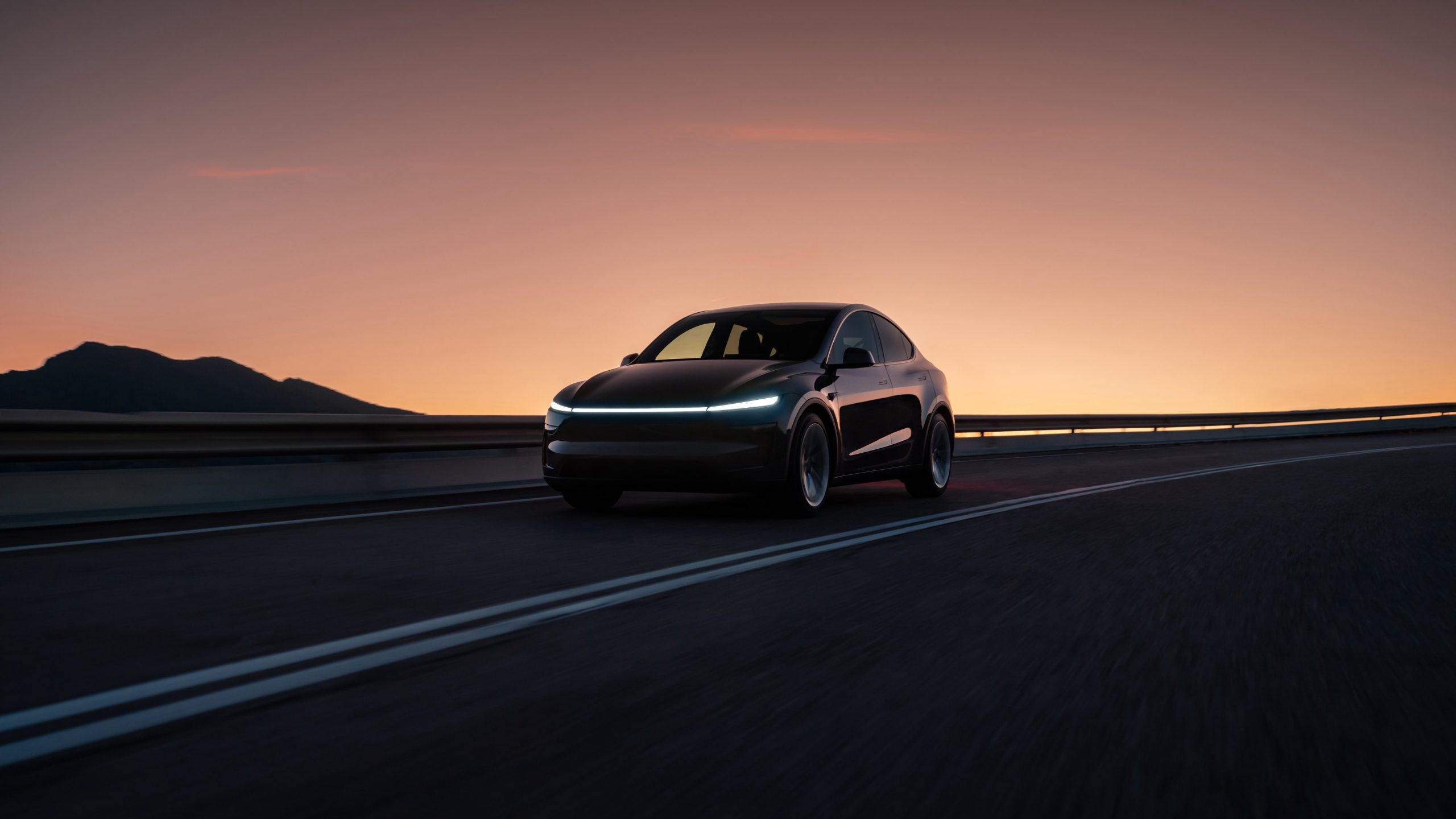
Tesla is adding an awesome new driving feature to Model Y vehicles, effective on Juniper-updated models considered model year 2026 or newer.
Tesla is rolling out a new “Comfort Braking” feature with Software Update 2026.8. The feature is exclusive to the new Model Y, and is currently unavailable for any other vehicle in the Tesla lineup.
Tesla writes in the release notes for the feature:
“Your Tesla now provides a smoother feel as you come to a complete stop during routine braking.”
🚨 Tesla has added a new “Comfort Braking” update with 2026.8
“Your Tesla provides a smoother feel as you come to a complete stop during routine braking.” https://t.co/afqCpBSVeA pic.twitter.com/C6MRmzfzls
— TESLARATI (@Teslarati) March 13, 2026
Interestingly, we’re not too sure what catalyzed Tesla to try to improve braking smoothness, because it hasn’t seemed overly abrupt or rough from my perspective. Although the brake pedal in my Model Y is rarely used due to Regenerative Braking, it seems Tesla wanted to try to make the ride comfort even smoother for owners.
There is always room for improvement, though, and it seems that there is a way to make braking smoother for passengers while the vehicle is coming to a stop.
This is far from the first time Tesla has attempted to improve its ride comfort through Over-the-Air updates, as it has rolled out updates to improve regenerative braking performance, handling while using Full Self-Driving, improvements to Steer-by-Wire to Cybertruck, and even recent releases that have combatted Active Road Noise.
Tesla holds a unique ability to change the functionality of its vehicles through software updates, which have come in handy for many things, including remedying certain recalls and shipping new features to the Full Self-Driving suite.
Tesla seems to have the most seamless OTA processes, as many automakers have the ability to ship improvements through a simple software update.
We’re really excited to test the update, so when we get an opportunity to try out Comfort Braking when it makes it to our Model Y.

Tesla Terafab set for launch: Inside the $20B AI chip factory that will reshape the auto industry

What is Digital Optimus? The new Tesla and xAI project explained


