News
Once-hailed ‘Tesla Killer’ Audi e-tron slows down production to just 6 hrs/day: report

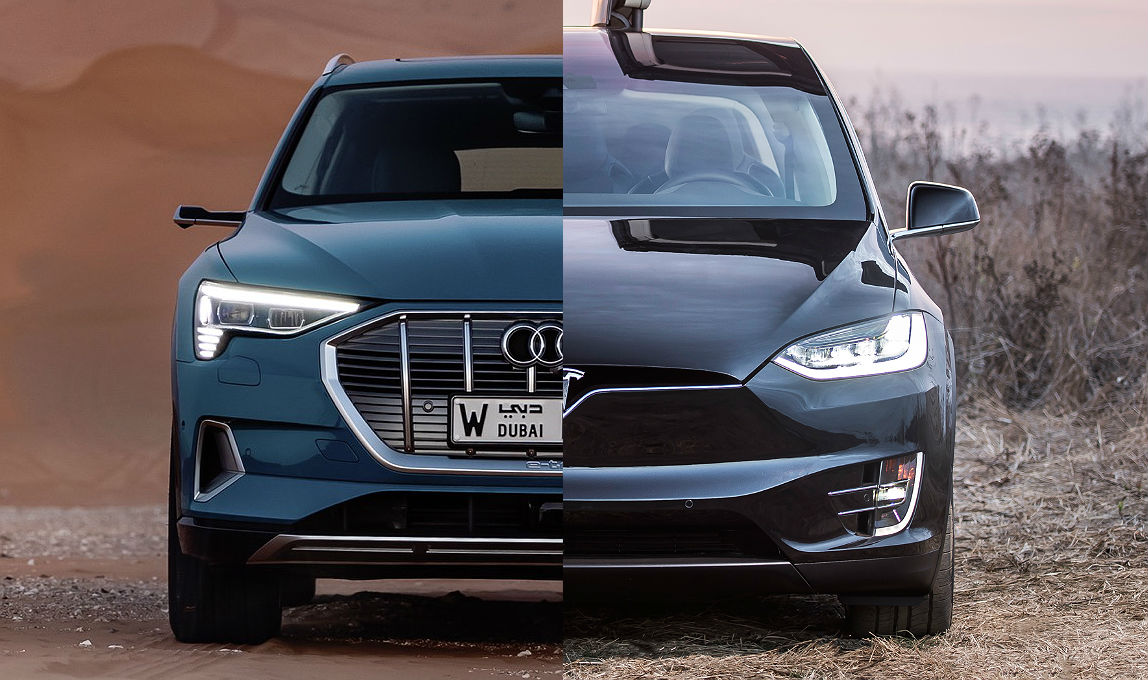
The Audi e-tron, once dubbed by avid Tesla critics as a potential “Tesla Killer,” is reportedly running into production problems due to a constrained supply of batteries and a slower-than-expected delivery of electric motors. These production problems have reportedly caused Audi to postpone the release of its upcoming all-electric car, the e-tron Sportback, to 2020, roughly a year later than its intended 2019 release date.
Sources familiar with the activities in Audi’s Brussels plant have told The Brussels Times that the German carmaker is currently being constrained by LG Chem, which supplies the e-tron’s batteries. LG Chem is the supplier of choice for a number of electric vehicles, such as the Porsche Taycan and the Jaguar I-PACE. The local publication’s sources claim that LG Chem is pushing up prices, resulting in Audi having to compete with rival automakers like BMW and Mercedes-Benz to acquire batteries for the e-tron.
This is but half of the e-tron plant’s current issues, according to the Times‘ sources. Audi is reportedly seeing delays in the deliveries of the e-tron’s electric motors as well. The SUV’s electric motors are delivered from an Audi plant in Györ, Hungary, whose workers participated in a strike earlier this year. As a result of these issues, the Brussels plant has reportedly shortened its operations to just 6 hours a day to match production to parts availability. The sources claimed that Audi will likely shift the plant to a 4-day work week in the near future.

It is unfortunate to see Audi encountering production issues with the e-tron, its first all-electric vehicle. Audi is one of the auto industry’s biggest names, having been founded in 1909. Despite its extensive experience in building cars, the company has proven to not be immune to the difficulties of electric car production, something that younger companies such as Tesla have been dealing with for years. Prior to the e-tron’s launch, the vehicle was hyped by Tesla critics as a potential “Tesla Killer,” citing, among other things, Audi’s experience in car manufacturing. As the company is learning now, it appears that building electric cars might not be as easy as Tesla skeptics would think.
Mass producing electric cars is something that Tesla continues to learn. After a gruelling “production hell” with the Model 3, Tesla has arguably become one of the most experienced electric car makers in the auto industry despite its young age. This has allowed the company to have enough foresight to secure the supply of batteries (at least to a large degree) for its electric vehicles, as represented by Gigafactory 1 in Nevada. The company has also opted for a notable degree of vertical integration, producing its vehicles from the ground up using hardware and software that were developed in-house.
The Audi e-tron is equipped with two electric motors that deliver a total power output of 300 kW, as well as a sizable 95 kWh battery that delivers and EPA rating of 204 miles of range on a full charge. The e-tron is no slouch as well, being capable of sprinting from 0-60 mph in 5.5 seconds in “Boost” mode. The all-electric SUV is expected to start deliveries in the United States next month, though it remains unsure if there will be delays due to the company’s reported issues in the Brussels plant.


Investor's Corner
Tesla Robotaxi gets a massive upgrade in Nevada
Nevada regulators just approved a massive expansion of Tesla’s robotaxi fleet across the entire county.

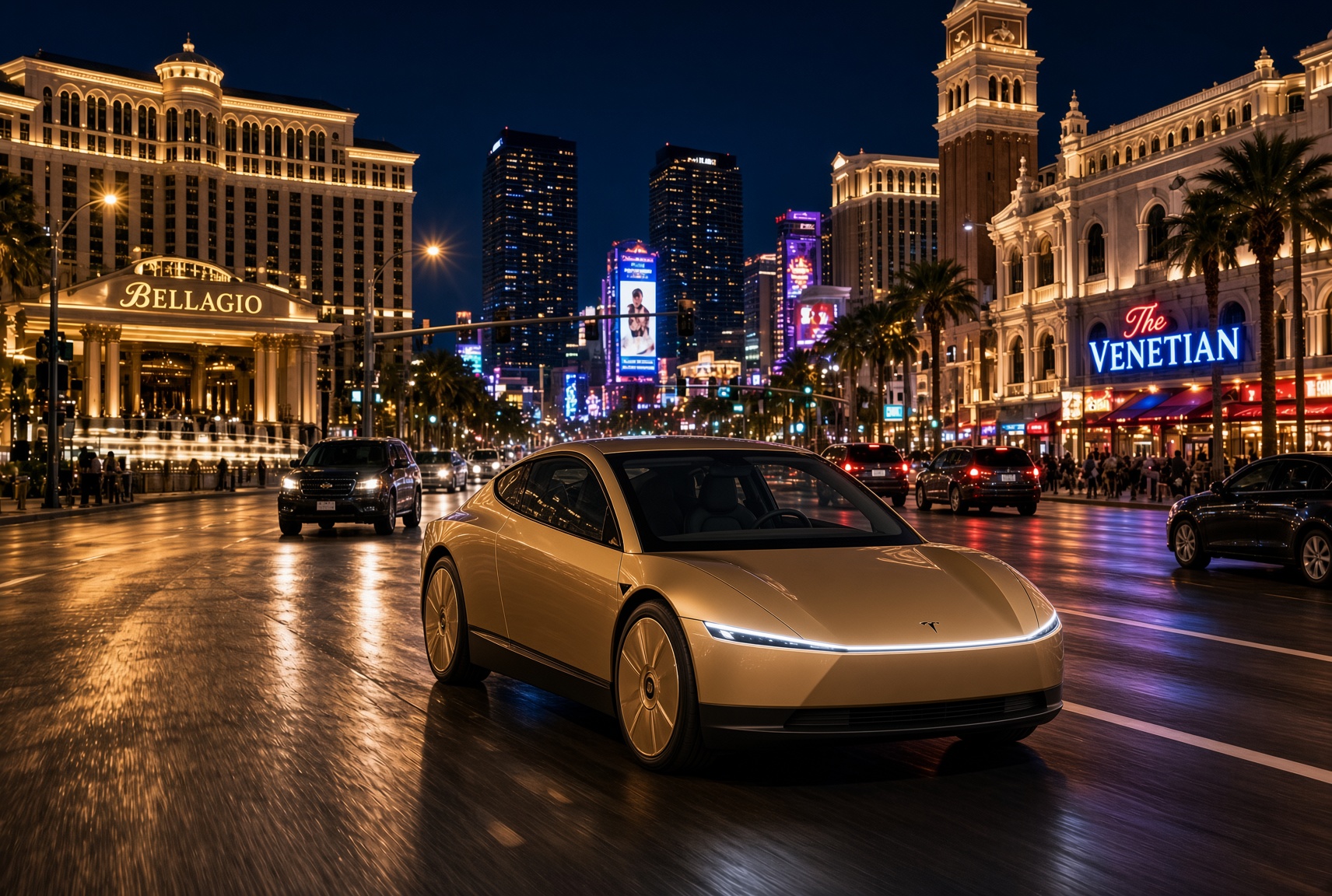
Tesla’s robotaxi footprint in Nevada just grew by roughly 500 times in a single regulatory vote.
The Nevada Transportation Authority approved Tesla’s full Autonomous Vehicle Network Company permit on Thursday, clearing the way for the company to deploy up to 5,000 driverless vehicles across Clark County over the next 12 months. The decision came during a four hour general session meeting that Tesla investor Sawyer Merritt watched live and reported on X, noting the vote replaces the interim order that had limited Tesla to just 10 robotaxis on a narrow stretch of the Las Vegas Strip.
EXCLUSIVE: Tesla has just officially received approval for its full Autonomous Vehicle Network Company permit in Nevada, clearing the way for Tesla to launch a paid public Robotaxi service in Las Vegas.
This officially allows @Tesla to deploy up to 5,000 robotaxis over the next… pic.twitter.com/DPs5UtUlrE
— Sawyer Merritt (@SawyerMerritt) August 20, 2026

That earlier cap, covered here after it surfaced on August 13, came with restrictions that looked stricter than what Tesla runs in Austin: a 45 mph speed ceiling, no airport pickups, and a geofence confined to the Strip corridor. The new approval extends Tesla’s operating authority to all of Clark County, with room to request an even wider geofence across the state.
Tesla representatives at the meeting said they have no intention of putting 5,000 cars on the road right away. Commercial rides are expected to start within 30 days, pending vehicle inspections, insurance filings, and fare approval, the standard steps every robotaxi operator in Nevada has had to clear.
Tesla’s own Robotaxi account replied to the news with a short line, The golden future is upon us.
The timing lines up with Tesla’s broader robotaxi push this month. The company is preparing to open Cybercab rides to the public in Austin as soon as this month, and it opened a sweepstakes for riders to win a seat at the launch event. Tesla filed its original application for a 5,000 vehicle Nevada fleet back in June, a request regulators trimmed to 10 vehicles when they issued the interim order in July. Thursday’s vote effectively grants the number Tesla asked for from the start.
Zoox, the Amazon owned robotaxi operator, has run in Nevada since 2025 and was capped at 100 vehicles before Thursday’s decision. Tesla’s new ceiling puts it well ahead of that comparison on paper, though the company has said its actual fleet size will depend on how quickly FSD v15 rolls out, the software update executives have called the gateway to scaling unsupervised robotaxi operations nationwide.

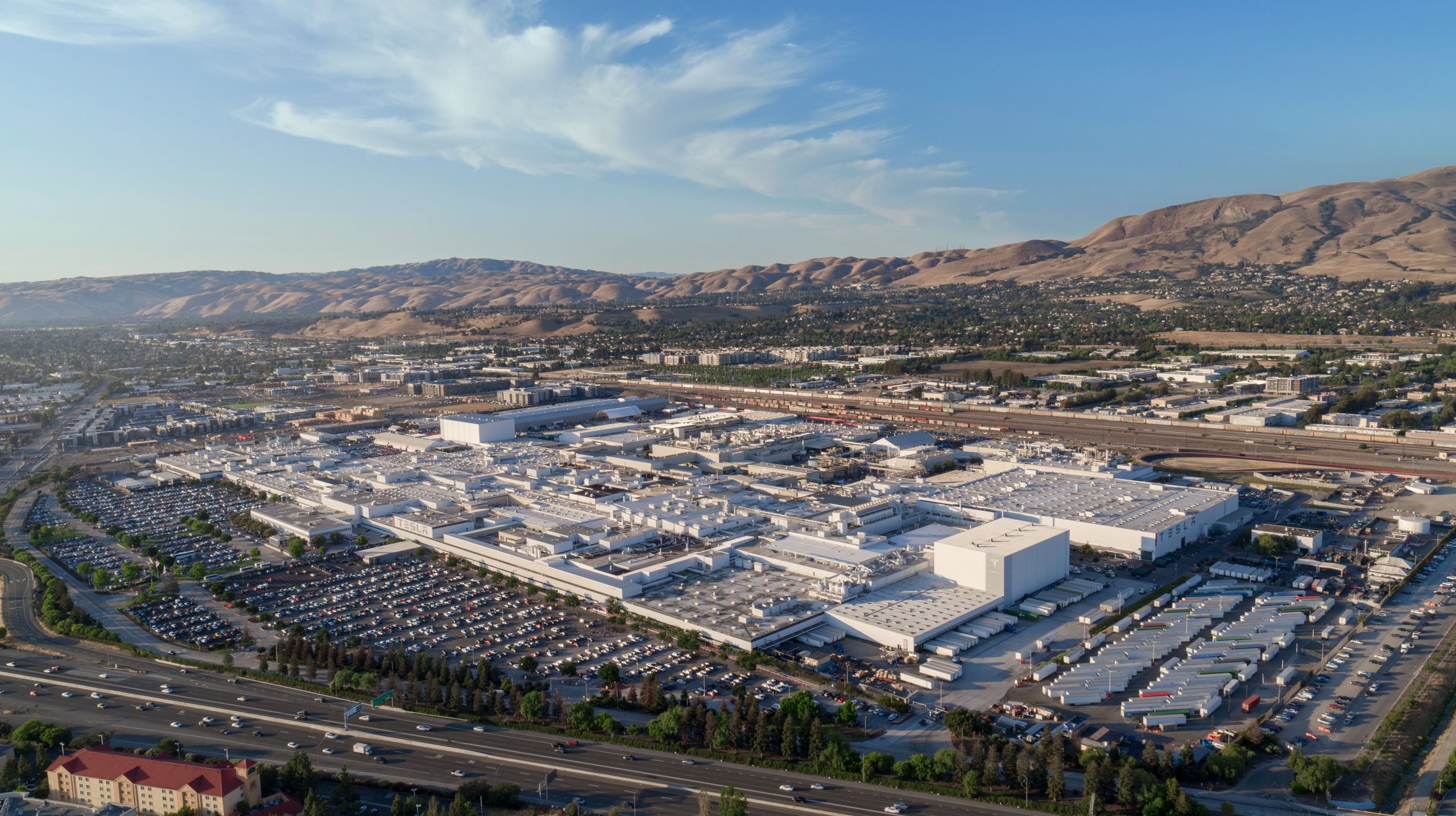
Tesla welcomed JPMorgan analysts to one of its factories earlier this month, with the Wall Street firm highlighting its findings in a new note to investors. One of the more pertinent pieces of information is that Tesla admitted to slowly integrating Model Y vehicles into its Robotaxi fleet, but it has a good reason.
JPMorgan analysts recently toured Tesla’s Fremont Factory and met with the company’s investor relations team, emerging with a clearer picture of the automaker’s Robotaxi strategy. According to the bank’s note, Tesla is intentionally limiting the addition of Model Y vehicles to its existing Robotaxi fleet.
The firm’s analysts said:

TESLARATI Premium Membership
$19.99 USD“Tesla indicated it is intentionally holding back on adding Model Y units to the robotaxi fleet, expressing confidence in its ability to scale Cybercab in the near-term. On FSD V15, Tesla views this release as a step-change in performance, comparable to the leap from V13 to V14. The V15 upgrade encompasses seven core technologies, with ~40% of those currently being tested in the robotaxi fleet, where initial feedback has been encouraging.”
JPMorgan after meeting with Tesla recently in Fremont:
“Tesla indicated it is intentionally holding back on adding Model Y units to the robotaxi fleet, expressing confidence in its ability to scale Cybercab in the near-term. On FSD V15, Tesla views this release as a step-change… pic.twitter.com/W9yGCWRT3C
— Sawyer Merritt (@SawyerMerritt) August 20, 2026
Far from signaling delays or doubts about autonomy, the move reflects strong management confidence in the near-term scalability of the purpose-built Cybercab.
Tesla has operated its Robotaxi service primarily with modified Model Ys since launching in Austin and expanding to other markets. Yet the company is now deliberately holding back further Model Y conversions. The rationale is straightforward: leadership believes the Cybercab, a two-seat, steering-wheel- and pedal-free vehicle optimized for high utilization, can ramp production and deployment more efficiently in the coming months.
This dedicated form factor promises better unit economics for the majority of rides, which typically involve one or two passengers, while freeing consumer Model Y inventory for retail sales.
Supporting this pivot is Full Self-Driving (FSD) software version 15, which Tesla describes as a genuine step-change in performance, comparable to the leap from V13 to V14. The update incorporates seven core technologies; roughly 40 percent are already undergoing real-world testing in the current Robotaxi fleet, with early feedback described as encouraging.
Tesla is carefully managing software development to minimize regressions in core driving functions as new capabilities are added. Management positions V15 as the primary gateway to scaling unsupervised FSD. Importantly, the existing AI and Hardware 4 stack is already capable of running V15 and supporting unsupervised operation.
Cybercab itself is only the first vehicle on the platform. Tesla reiterated that additional form factors will follow, pointing to concepts such as the earlier “Robovan” demonstration as examples of how the architecture can evolve.
Tesla’s mysterious Robovan makes a sneak peek with Optimus in Terafab video
Parallel progress continues on the Optimus humanoid robot, which remains on track for start of production in the coming months, with commercial sales possible as early as the second half of 2027. Generation 3 details will be revealed closer to production to preserve competitive advantages, while Generation 4 scope will draw on real-world Gen 3 experience.
JPMorgan left the meeting with a deeper appreciation for Tesla’s manufacturing automation and maintained its $475 price target. The decision to slow Model Y Robotaxi integration is therefore not a setback but a calculated prioritization of a more efficient, purpose-built solution that management believes is ready to scale.
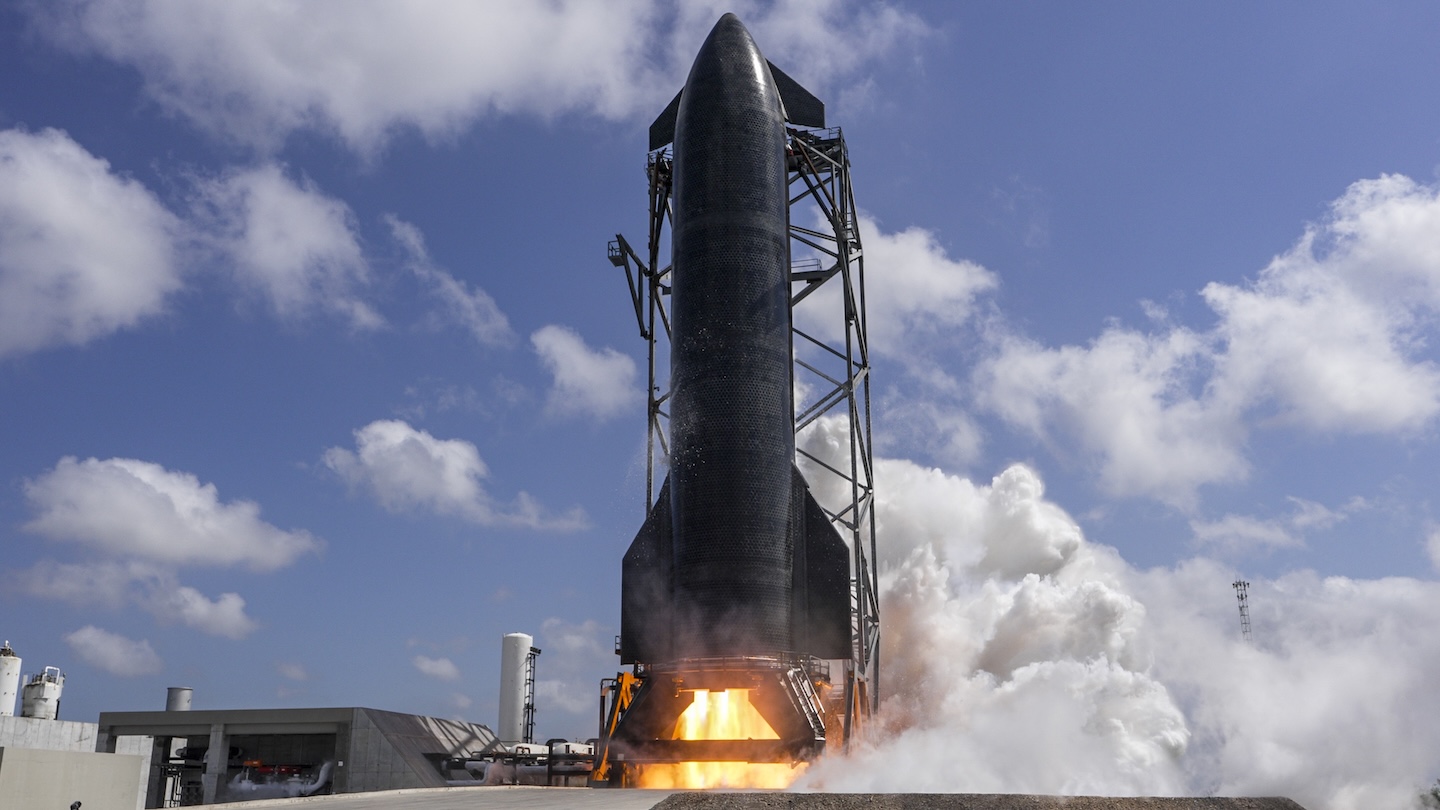
SpaceX CEO Elon Musk announced today that the company will likely attempt to catch the Starship upper stage with its launch tower arms “in a few months.”
In a post on X, Musk wrote, “Looks like we will probably catch the ship with the tower in a few months. If there had been a tower out to sea where we practiced landing the ship, it would have been caught.” He added that the first reflight of a Starship vehicle is expected by the end of 2026 or early 2027, describing it as “a fork in the road of history for consciousness reaching the stars.”
Looks like we will probably catch the ship with the tower in a few months. If there had been a tower out to sea where we practiced landing the ship, it would have been caught.
First reflight of the ship will be either end of this year or early next. That will be a fork in the… https://t.co/O5g9pqrzyo
— Elon Musk (@elonmusk) August 20, 2026
Musk’s prediction comes amid ongoing progress toward full reusability of the Starship system, a two-stage rocket designed for rapid turnaround and dramatically lower launch costs. Catching the upper stage, known simply as “ship,” with the Mechazilla tower’s mechanical arms would mark a major milestone. It would allow both stages to return directly to the launch site for quick refurbishment and reuse, eliminating the need for ocean recovery.
Musk has previously signaled plans for a ship catch. In July, shortly after SpaceX’s wildly successful Starship 13 mission, he stated that the company would attempt to catch the ship with the tower on the next flight unless problems emerged in the mission data review. Earlier comments also outline conditions such as successful soft ocean landings before attempting a land recovery to minimize risk.
SpaceX has solved Starship’s biggest challenge, Elon Musk says
The latest update from Musk adjusts this timeline to a few months, reflecting the iterative nature of the test campaign.
SpaceX has already demonstrated the tower catch technique successfully with the Super Heavy booster on a couple of occasions. The first successful booster catch occurred during Flight 5 in October 2024, when the massive first stage returned to the Starbase pad in Texas and was plucked from the air by the tower arms.
Additional catches followed on later flights, including Flight 7, proving the concept for the booster and building confidence in the system as a whole.
Achieving a similar catch for the upper stage would represent a significant step forward. The ship returns from much higher speeds and greater heat loads after orbital or near-orbital flight. Success would advance SpaceX’s goal of full and rapid reusability, potentially reducing the cost of access to orbit by a factor of 100 or more and supporting ambitions for frequent satellite deployments, lunar missions, and eventual Mars flights.
Musk has long emphasized that true reusability, refueling rather than discarding hardware, is essential for making humanity a multi-planetary species.
As SpaceX continues refining Starship through successive test flights, the coming months will test whether the ambitious catch timeline can be met. The combination of prior booster successes and improving ship landing precision suggests the company is steadily closing in on this historic capability.

Tesla Robotaxi gets a massive upgrade in Nevada

Tesla admits to slow Model Y Robotaxi integration, but for a good reason


