Elon Musk
Tesla isn’t joking about building Optimus at an industrial scale: Here we go
Tesla’s Optimus factory in Texas targets 10 million robots yearly, with 5.2 million square feet under construction.

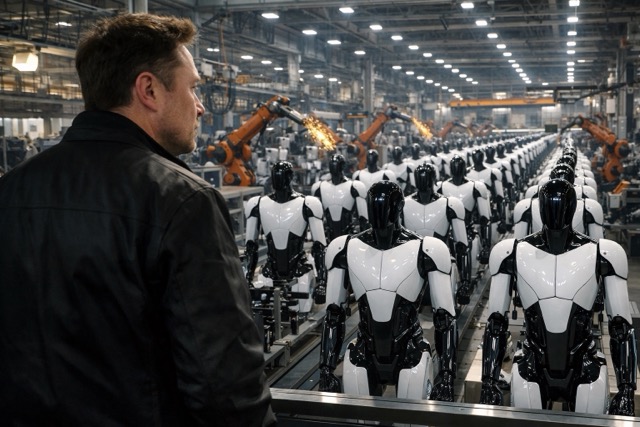
Tesla’s Q1 2026 Update Letter, released today, confirms that first generation Optimus production lines are now well underway at its Fremont, California factory, with a pilot line targeting one million robots per year to start. Of bigger note is a shared aerial image of a large piece of land adjacent to Gigafactory Texas, that Tesla has prominently labeled “Optimus factory site preparation.”
Permit documents show Tesla is seeking to add over 5.2 million square feet of new building space to the Giga Texas North Campus by the end of 2026, at an estimated construction investment of $5 billion to $10 billion. The longer term production target for that facility is 10 million Optimus units per year. Giga Texas already sits on 2,500 acres with over 10 million square feet of existing factory floor, and the North Campus expansion is being built to support multiple projects, including the dedicated Optimus factory, the Terafab chip fabrication facility (a joint Tesla/SpaceX/xAI venture), a Cybercab test track, road infrastructure, and supporting facilities.
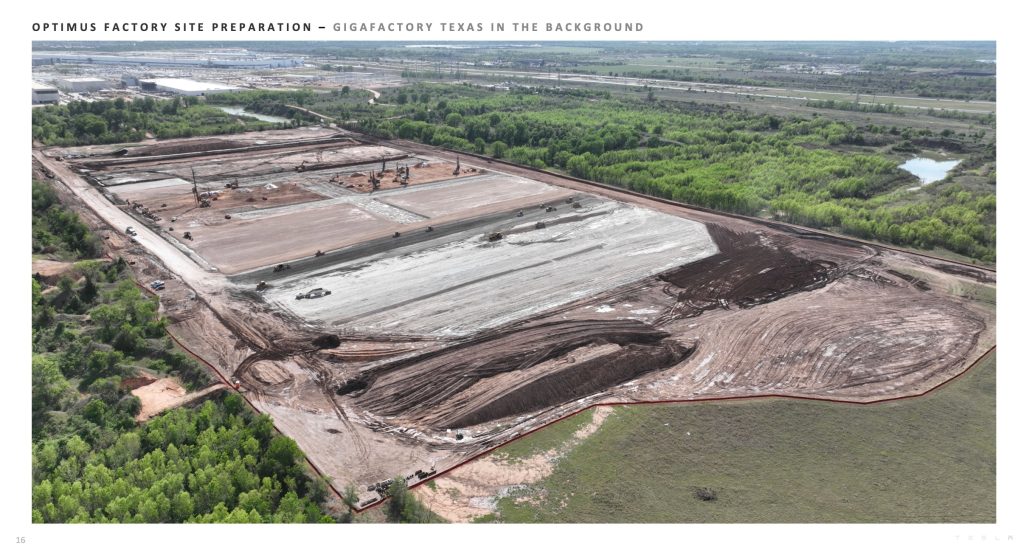
Credit: TESLA
Texas makes strategic sense beyond the existing infrastructure. The state’s tax structure, lower labor costs relative to California, and the proximity to Tesla’s AI training cluster Cortex 1 and 2, both located at Giga Texas and now totaling over 230,000 H100 equivalent GPUs, means the Optimus software stack and the factory producing the hardware will share the same campus. Tesla’s Q1 report also confirmed completion of the AI5 chip tape out in April, the inference processor designed specifically to power Optimus units in the field.
As Teslarati reported, the Texas facility is intended to house Optimus V4 production at full scale. Musk told the World Economic Forum in January that Tesla plans to sell Optimus to the public by end of 2027 at a price between $20,000 and $30,000, stating, “I think everyone on earth is going to have one and want one.” He has previously pegged long term demand for general purpose humanoid robots at over 20 billion units globally, citing both consumer and industrial use cases.


Elon Musk
OpenAI cites distrust of SpaceX in decision to drop Cursor partnership
OpenAI will cut SpaceX-owned Cursor’s model access in November, citing Musk’s history of broken contracts.
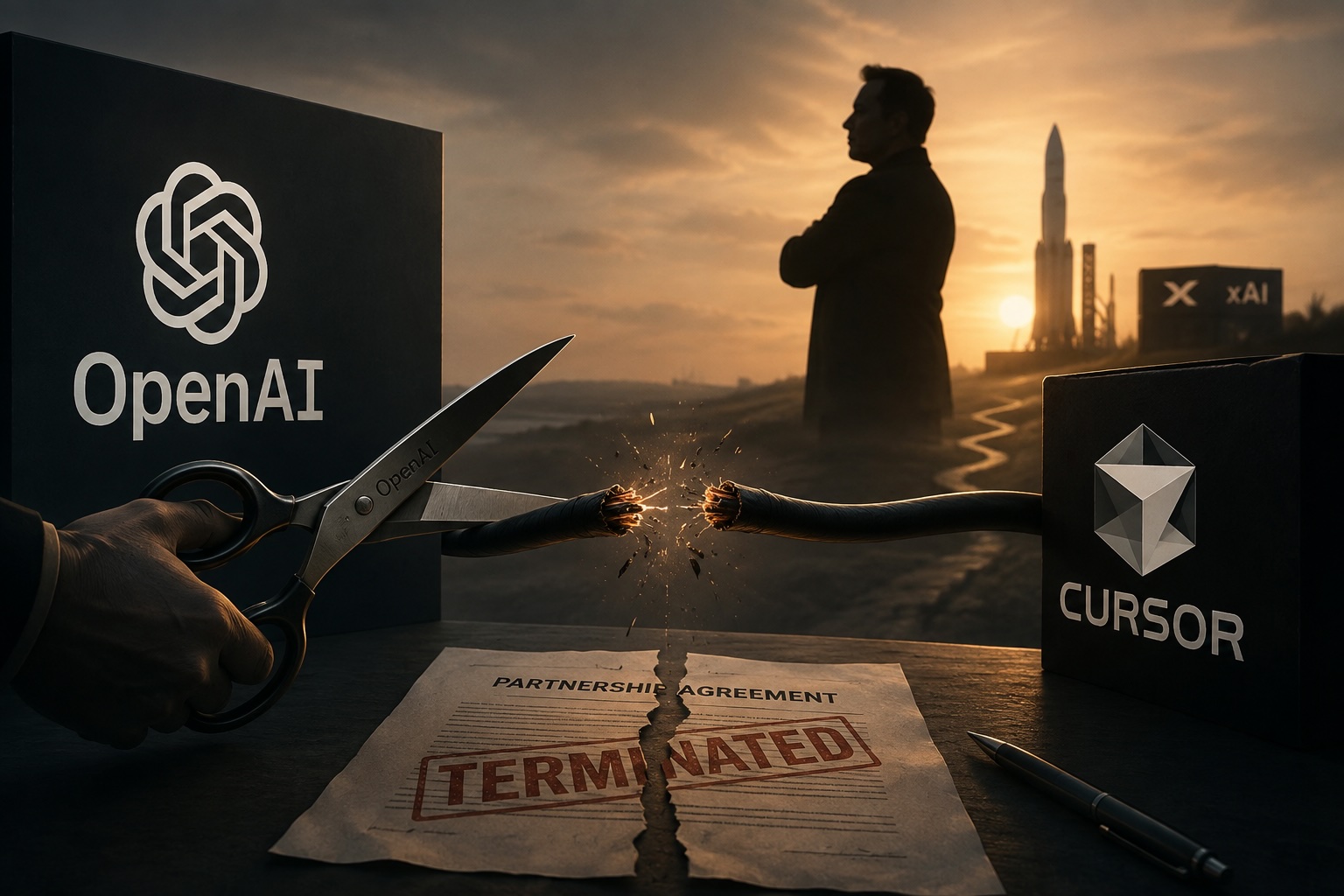
OpenAI, the company behind ChatGPT, announced late Friday that it is ending its partnership with Cursor, cutting off the coding tool’s access to its models on November 12. The move comes two weeks after SpaceX completed its $60 billion acquisition of Cursor’s parent company, Anysphere, folding the popular AI coding assistant into Elon Musk’s growing SpaceXAI division.
In a post on its website, OpenAI said the decision came down to trust, not technology. “We cannot be confident that SpaceX will use our technology within our terms of service, based on our experience with Elon Musk’s companies violating contracts,” the company wrote. OpenAI pointed to two specific incidents: X, now part of SpaceX, allegedly breaking the terms of an existing OpenAI contract after Musk bought Twitter.
That lawsuit is the backdrop for all of this. Musk cofounded OpenAI in 2015, left the board in 2018, and sued Sam Altman and Greg Brockman in 2024, arguing they abandoned the company’s nonprofit mission for profit. A federal jury sided with OpenAI in May, finding Musk waited too long to sue rather than ruling on the merits of his claims. Musk said at the time he would appeal to the Ninth Circuit, calling the outcome a “calendar technicality” rather than a real judgment.
SpaceX’s interest in Cursor predates that verdict by weeks. The company first struck a deal with Cursor in April, securing an option to acquire it for $60 billion or pay $10 billion for joint development work instead. As Teslarati reported at the time, the logic was straightforward: Cursor was paying retail prices to Anthropic and OpenAI, two of its most direct competitors, every time a developer used its product, while SpaceX had idle capacity on its Colossus supercomputer, roughly the equivalent of a million Nvidia H100 GPUs, that Cursor could use to train its own models instead. SpaceX exercised the option in June, days after its own IPO, and the deal closed in mid-August.
Once it closed, Musk moved fast. On an all-hands call with more than 1,000 Cursor employees, he reportedly told staff that SpaceXAI’s Grok was playing catchup in the AI race, unlike Tesla and SpaceX in their own markets, and singled out Anthropic as the company to catch. Cursor CEO Michael Truell now reports directly to Musk inside SpaceXAI.
Losing OpenAI’s models leaves Cursor leaning harder on Anthropic’s Claude, which has its own compute agreement with SpaceX, and on Cursor’s in-house Composer model, the one SpaceX’s compute was supposed to accelerate in the first place. OpenAI framed the November deadline as maximum notice under its contract, and said it wants to “go above and beyond” to help developers through the transition. Whether Anthropic makes the same call is now the open question in AI coding.
Elon Musk
County vote hands Elon Musk’s Vegas tunnel network a huge new target
Clark County approved 19 more Vegas Loop stations, pushing Boring Company’s entitled total to 123.
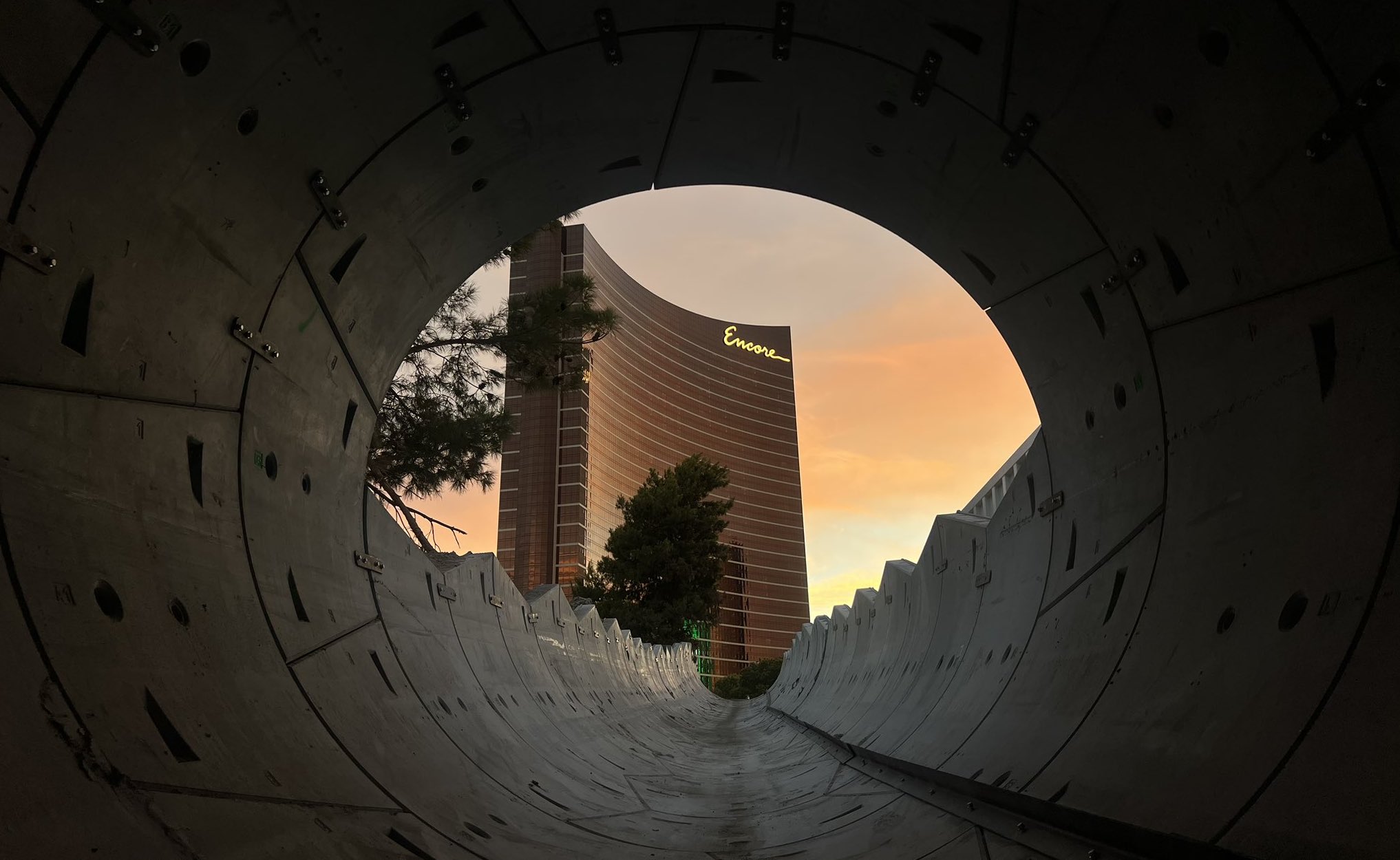
The Boring Company just got permission to nearly double how far Vegas Loop can reach. Clark County commissioners approved 19 additional stations for the underground transit system, bringing the total entitled to 123, the company said in a post on X thanking the county for the vote. Elon Musk’s tunneling company also flagged the direction it sees the project heading long term. “Because Loop is point-to-point with no intermediate stops, in the limit, one could have a Loop station in every driveway,” the company wrote.
That framing captures how far the ambitions have moved. The Vegas Loop opened its first stretch of tunnel in 2021 and has grown its footprint through a string of county approvals since. In 2023, commissioners signed off on 18 additional stations, part of a plan that later doubled the system’s target to 69 stations across 65 miles. By the end of that year the company was describing a build out closer to 93 planned stations. Last year the long term design called for 104 stations across 68 miles of tunnel. The new approval pushes that number to 123, another jump in a project that keeps outgrowing its own blueprints.
The Boring Company gets approval for more stations in Las Vegas
Station count on paper is still well ahead of what riders can actually use. As Teslarati reported earlier this month, the network has about 11 open stations and has carried more than 4 million passengers since it began running, with newer stops at Fontainebleau and Sahara among the latest additions to the Strip corridor. A tunnel connection to Harry Reid International Airport remains under construction and has already slipped past its original first quarter target. The company is also racing to finish a Westgate to Paradise Road segment that Las Vegas Convention and Visitors Authority CEO Steve Hill has said it hopes to have running in time for November’s Formula 1 race.
The gap between entitled stations and operating ones is where the real story sits. Regulatory approval gives Boring Company the legal runway to keep tunneling toward new resorts, residential pockets and eventually the airport, but building each connection still comes down to boring machines, fire safety sign offs and construction timelines that have slipped before. The company’s Prufrock series machines set an internal record in March with a 2.28 mile tunnel near Westgate, evidence that construction has been picking up even as the list of approved destinations grows faster than the tunnels themselves.
Musk’s driveway comment reads as aspirational rather than a near term plan, but it fits how Boring Company has talked about Vegas Loop from the start: treat every approval as a floor, not a ceiling, and keep pushing county officials for room to dig.

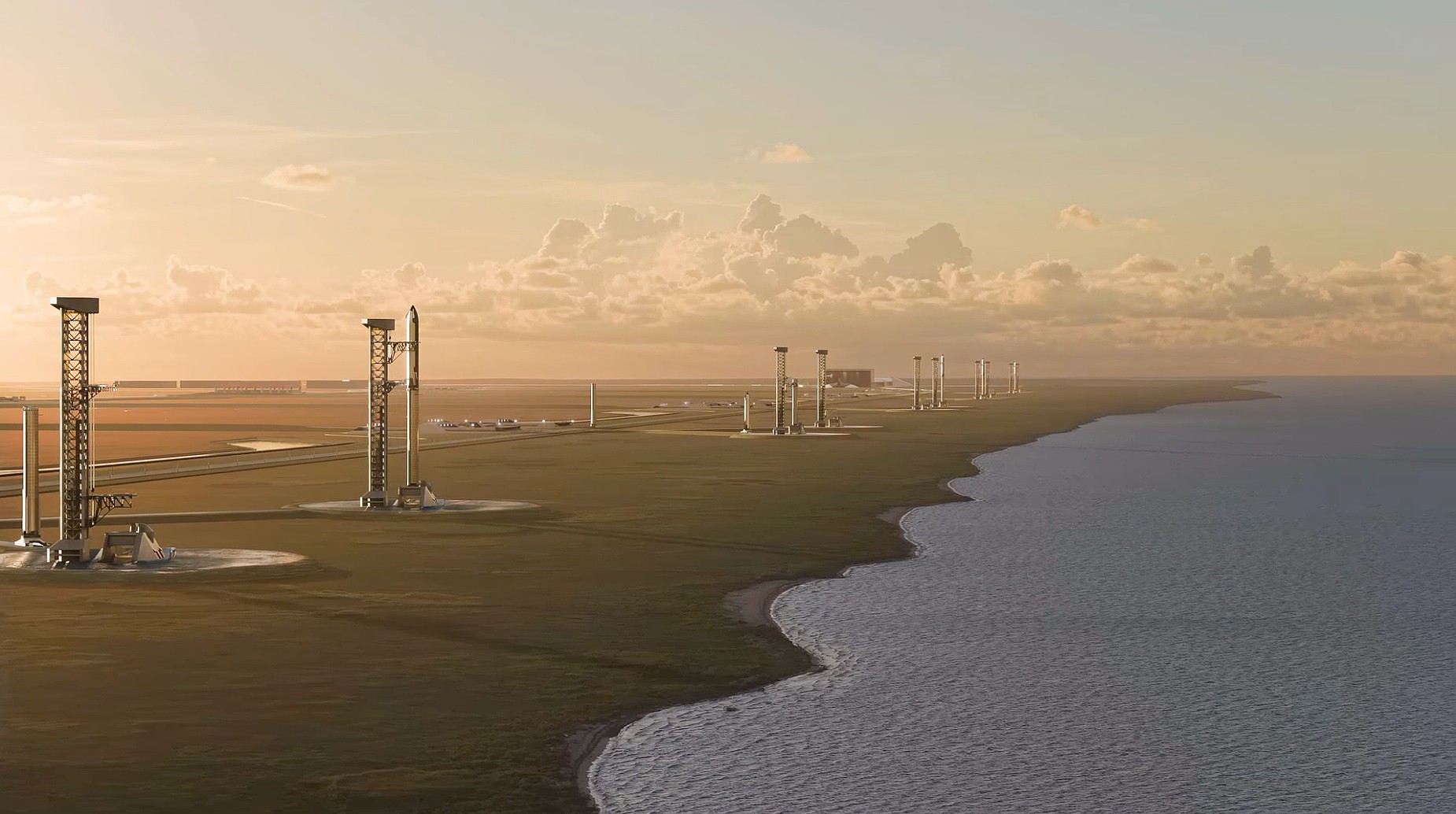
SpaceX announced today that it would expand its launch capabilities into a new U.S. state: Louisiana.
Today, SpaceX, in conjunction with the Louisiana Economic Development Office, said that it will establish a new launch facility, which it will call Starbase, Louisiana. It will be located near Vermilion Parish, supporting thousands of launches each year, at least eventually.
CEO Elon Musk commented by stating, “Starbase Louisiana will ultimately have over a dozen launch towers, enabling more than 30 Starship flights per day and making it the biggest launch site on Earth!”
Starbase Louisiana will ultimately have over a dozen launch towers, enabling more than 30 Starship flights per day and making it the biggest launch site on Earth!
SpaceX makes sci-fi real. https://t.co/C7Ht0U12ba
— Elon Musk (@elonmusk) August 25, 2026
The expansion is SpaceX’s latest move to push its launch cadence to be more frequent than ever. SpaceX said that Starbase, Louisiana, will be built to “support thousands of Starship flights a year,” with the first coming in 2029.
SpaceX announced the new facility in partnership with the Louisiana Economic Development Office as it will bring a major influx of jobs and investments into the area. Currently, it will produce more than 3,000 new jobs in Louisiana, and SpaceX plans to invest at least $100 billion into the entire facility, ensuring that many jobs are created as a result.
Environmental Responsibility
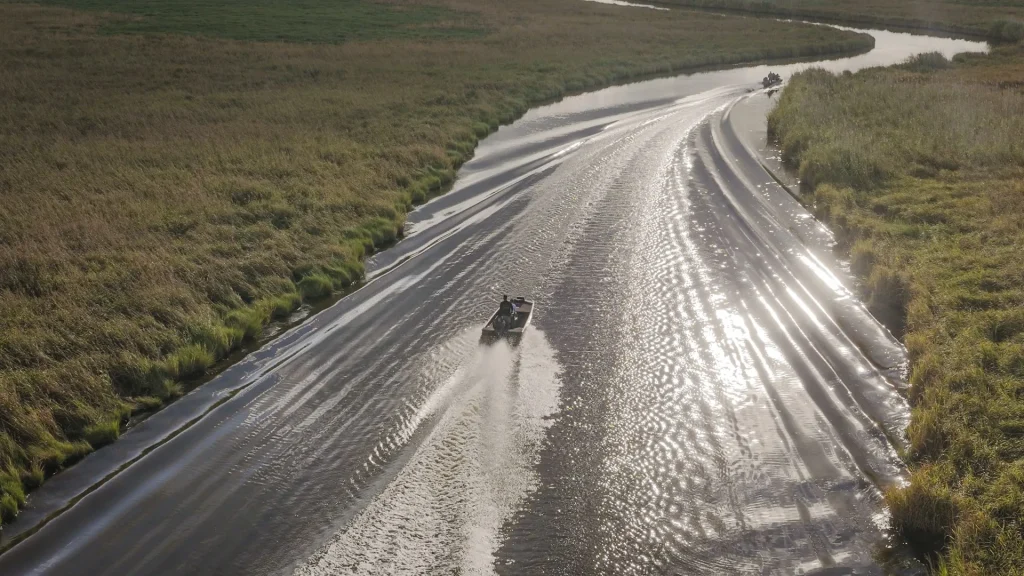
SpaceX acknowledges the impact launches could have on marshlands, local wildlife, and water sources. Here’s how the company plans to help with the issues in Vermilion Parish:
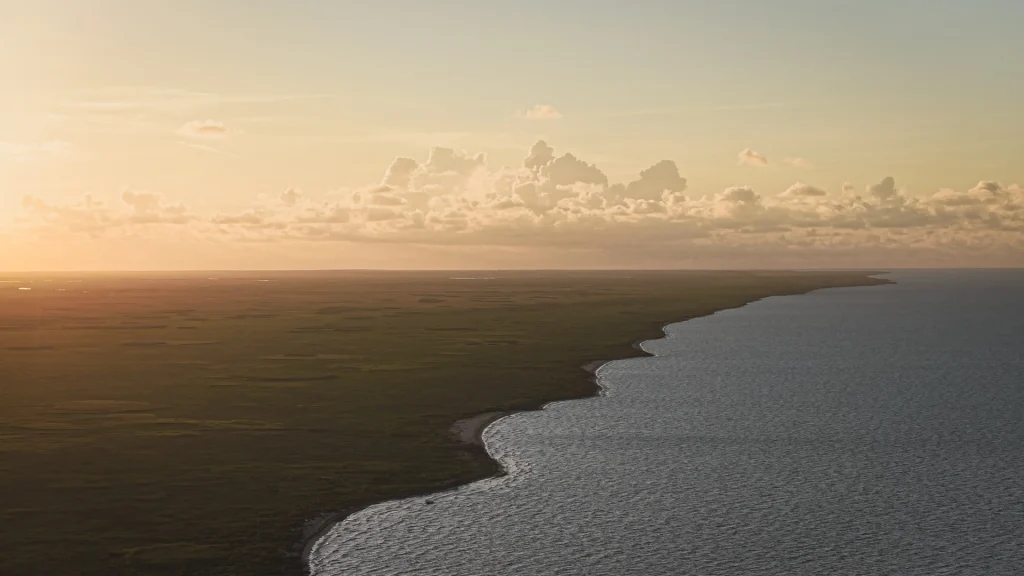
- Restoring the Shoreline: “In Vermilion Parish, the shoreline is eroding between 3.3 and 23 feet per year. We’re partnering with state and federal agencies to expand Louisiana’s Coastal Master Plan and Coastal Wetlands Planning, Protection and Restoration Act projects, including Gulf shoreline protection breakwaters designed to reduce wave energy and slow loss along the Gulf edge.”
- Rebuilding the Marshlands: “In working with the state, we’re planning thousands of acres of marsh creation using beneficial-use placement of dredged material and offshore sediment sources. Restoration will also include interior marsh bank stabilization and rebuilding marsh in remnant canals. These projects can reconnect fragmented wetlands, restore natural buffers against storms, and return habitat that has been lost to erosion and historic canalization.”
- Preserving Coastal Wildlife: “Pecan Island and nearby wetlands are high-value habitat for migratory waterfowl, shorebirds, wading birds, and other coastal wildlife. SpaceX is not developing the full footprint of the land and will preserve wetlands and wildlife habitat. At existing launch sites, waterfowl and other birds continue to use nearby habitat during operations. Working with wildlife agencies, landowners, and conservation groups, SpaceX will support monitoring and management so this habitat stays productive and hunting, fishing, birding, and other recreational activities that are part of this coast’s culture can continue.”
SpaceX shares rose about 2.5 percent on the news.

OpenAI cites distrust of SpaceX in decision to drop Cursor partnership

Tesla Theater might be getting plenty more streaming platforms


